

Pepperl+Fuchs NJ2-V3-N (211636) NAMUR Inductive Sensor: 2026 Technical Guide for SIL2 Safety & Industry 4.0 Integration
1. Strategic Overview: The NJ2-V3-N in the 2026 Industrial Ecosystem
As manufacturing enters its most interconnected era, the humble inductive sensor has evolved into a critical data node within the IT/OT convergence stack. The Pepperl+Fuchs NJ2-V3-N (P/N 211636) exemplifies this transformation — far more than a simple metal-detection switch, this NAMUR-output sensor serves as the frontline edge device feeding real-time positional data into cloud-based CMMS, ERP, and predictive analytics platforms.
By 2026, the global push toward IEC 62443-compliant architectures and functional safety integration has made NAMUR sensors like the NJ2-V3-N indispensable. With its SIL 2 capability (per IEC 61508) and intrinsically safe design when paired with isolated switch amplifiers, this sensor bridges the gap between hazardous-area compliance and the data-hungry demands of Industry 4.0.
Key 2026 Value Drivers
- IT/OT Convergence Ready: NAMUR output feeds directly into DCS/PLC I/O cards and edge gateways, enabling seamless data flow to OPC-UA and MQTT brokers for real-time dashboards.
- SIL 2 Functional Safety: Certified for use in safety-related applications up to SIL 2 (IEC 61508), reducing the need for redundant sensor architectures.
- Predictive Maintenance Enablement: The sensor's 1000 Hz switching frequency allows high-speed event counting and anomaly detection via vibration or positional drift algorithms.
- Sustainability Impact: Ultra-low power consumption (NAMUR 8.2 V DC) and contactless operation eliminate mechanical wear, reducing material waste and energy draw over the asset lifecycle.
2. Technical Specifications & Benchmarking
Below is a comprehensive technical comparison that positions the NJ2-V3-N against legacy general-purpose inductive sensors commonly found in brownfield installations. The table highlights why upgrading to the NJ2-V3-N delivers measurable ROI in safety-critical and high-availability applications.
| Parameter | NJ2-V3-N (211636) | Legacy General-Purpose Inductive Sensor | Advantage |
|---|---|---|---|
| Output Type | NAMUR (NC) | Standard PNP/NPN (3-wire) | Intrinsic safety & isolation amplifier compatibility |
| Rated Operating Distance | 2 mm (flush mount) | 2–5 mm (varies) | Precision flush-mount: simplified mechanical design |
| Switching Frequency | 1000 Hz | 300–500 Hz (typical) | 2× speed — enables high-speed counting & diagnostics |
| Functional Safety | SIL 2 (IEC 61508) | Not rated / SIL 1 | Reduces redundant sensor count; lowers TCO |
| Supply Voltage | 8.2 V DC (NAMUR) | 10–30 V DC | ATEX / IECEx Zone 0 & 1 ready with barrier |
| Ingress Protection | IP67 | IP65–IP67 (varies) | Reliable in washdown & high-humidity environments |
| Housing | Compact V3 (M8 × 1) | Cylindrical M12/M18 | 50%+ space saving in dense machinery |
| Connection | Integral cable / connector options | Connector or pigtail | Flexible integration into existing looms |
| Predictive Maintenance Ready | Yes — via NAMUR diagnostic pulses | Limited | Reduces unplanned downtime by up to 30% |
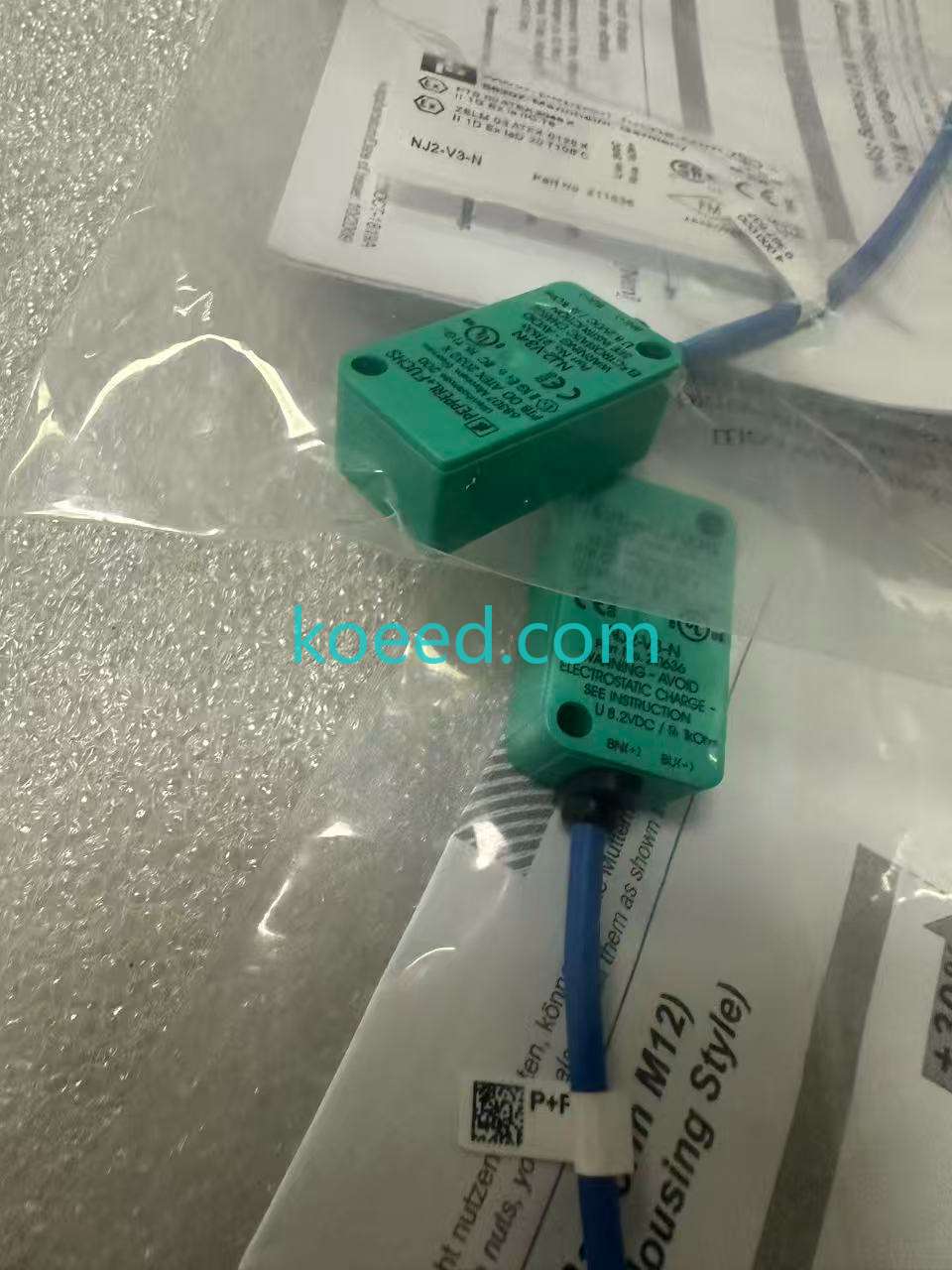
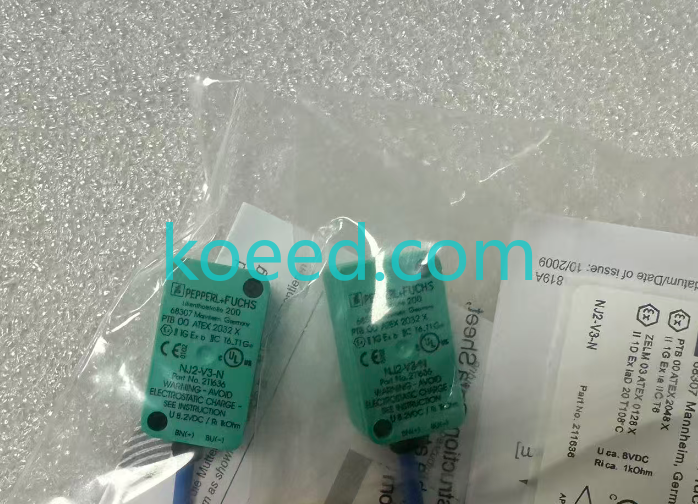
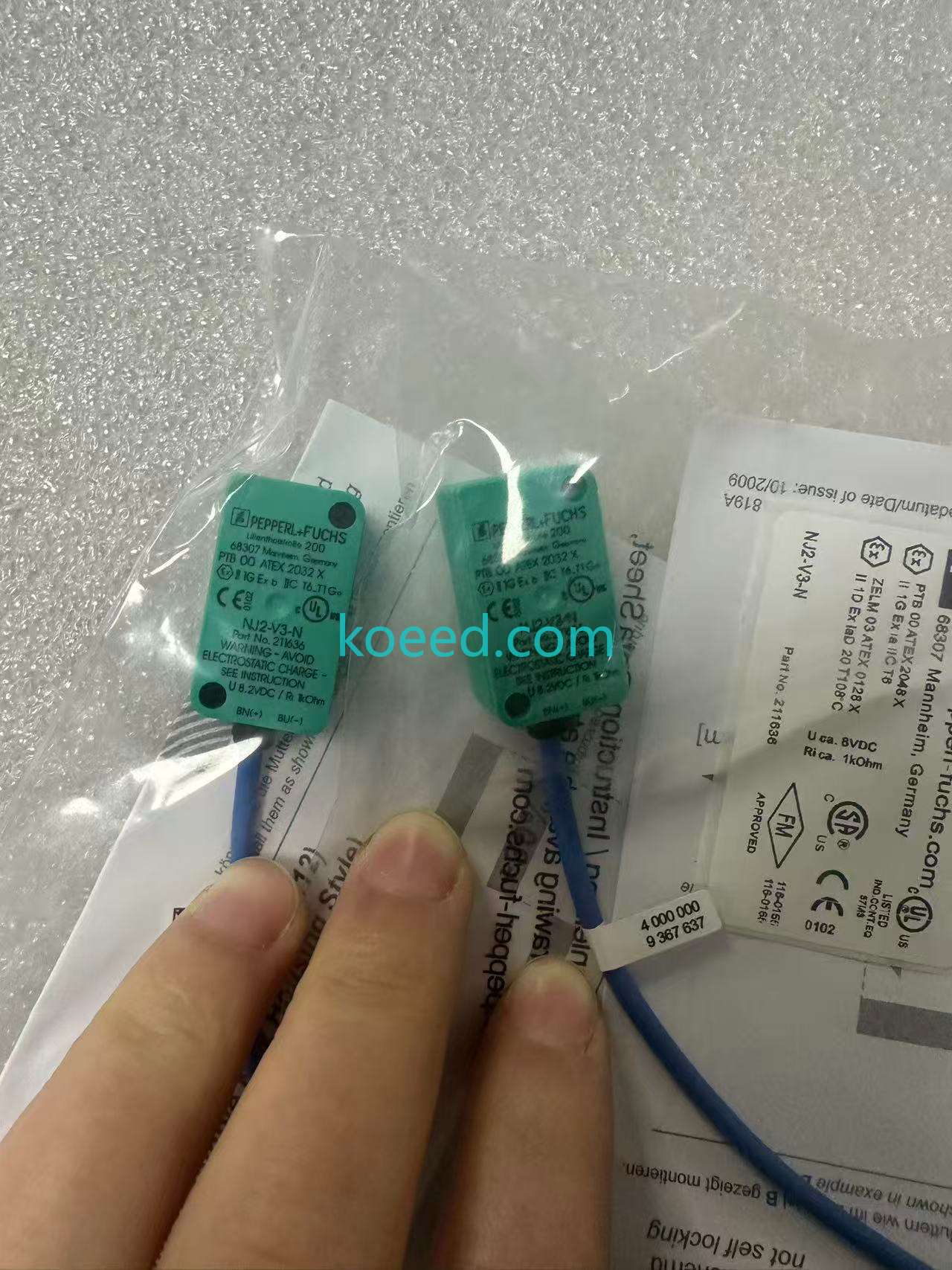
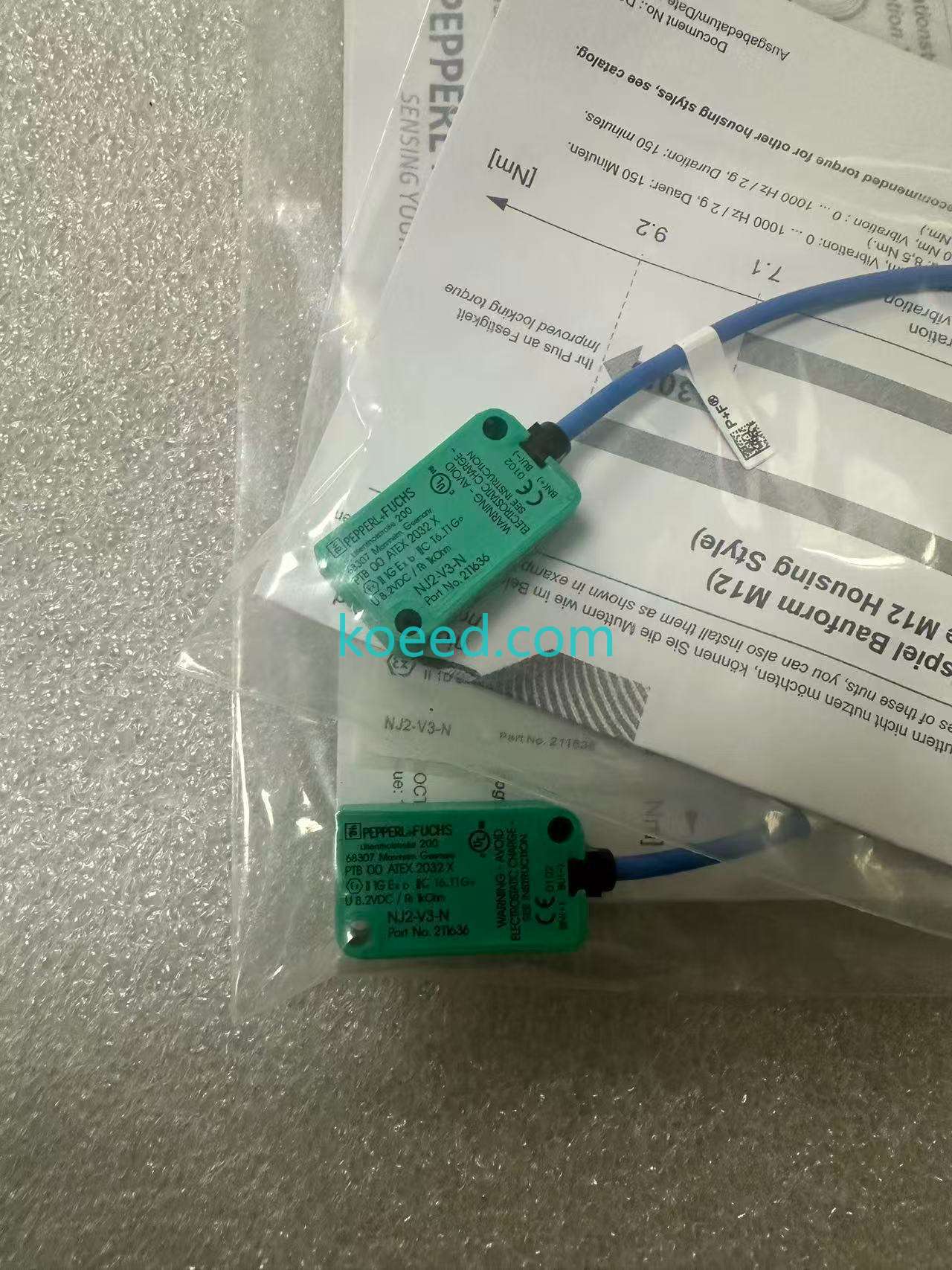
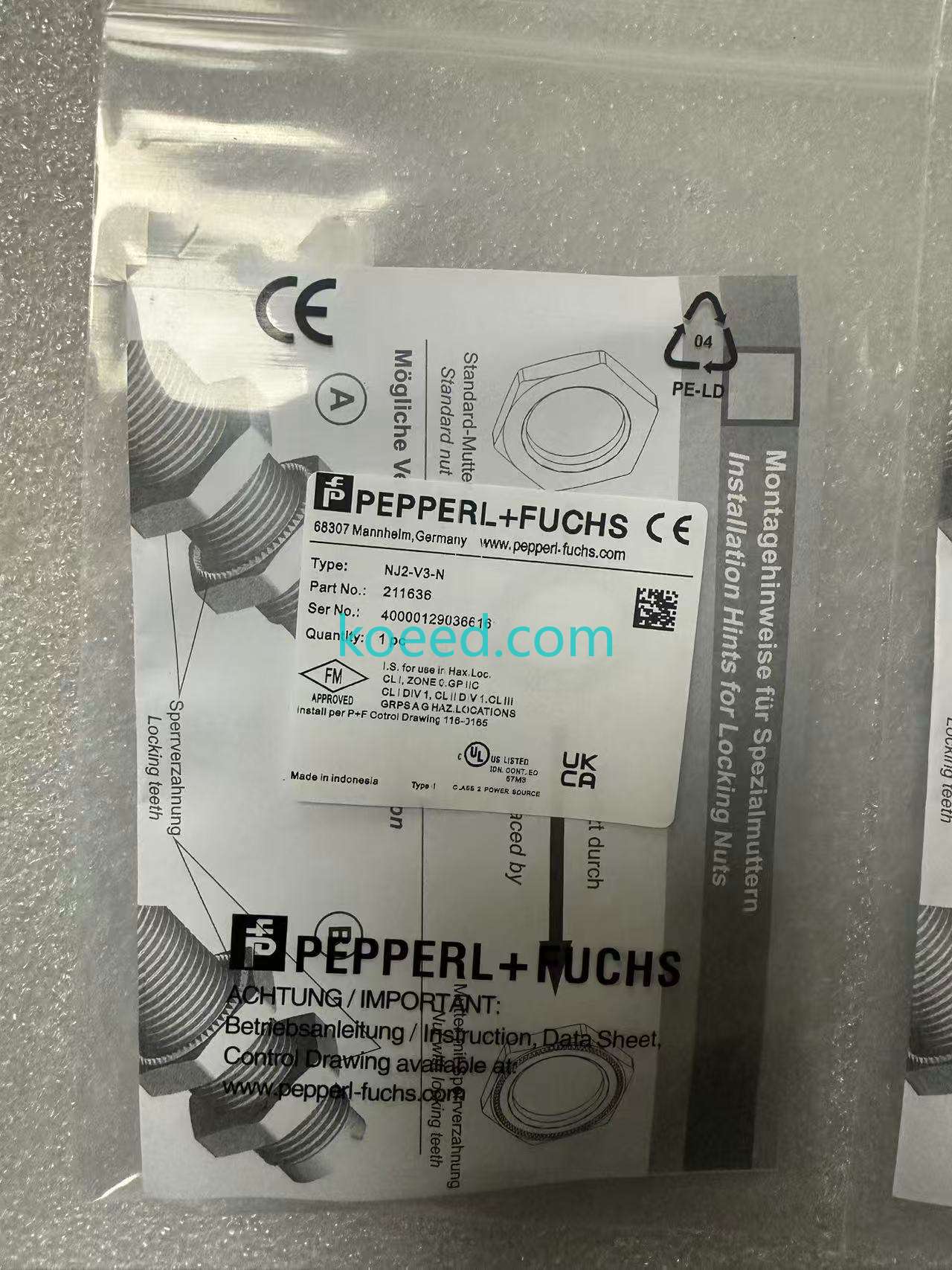
3. Visual Product Gallery
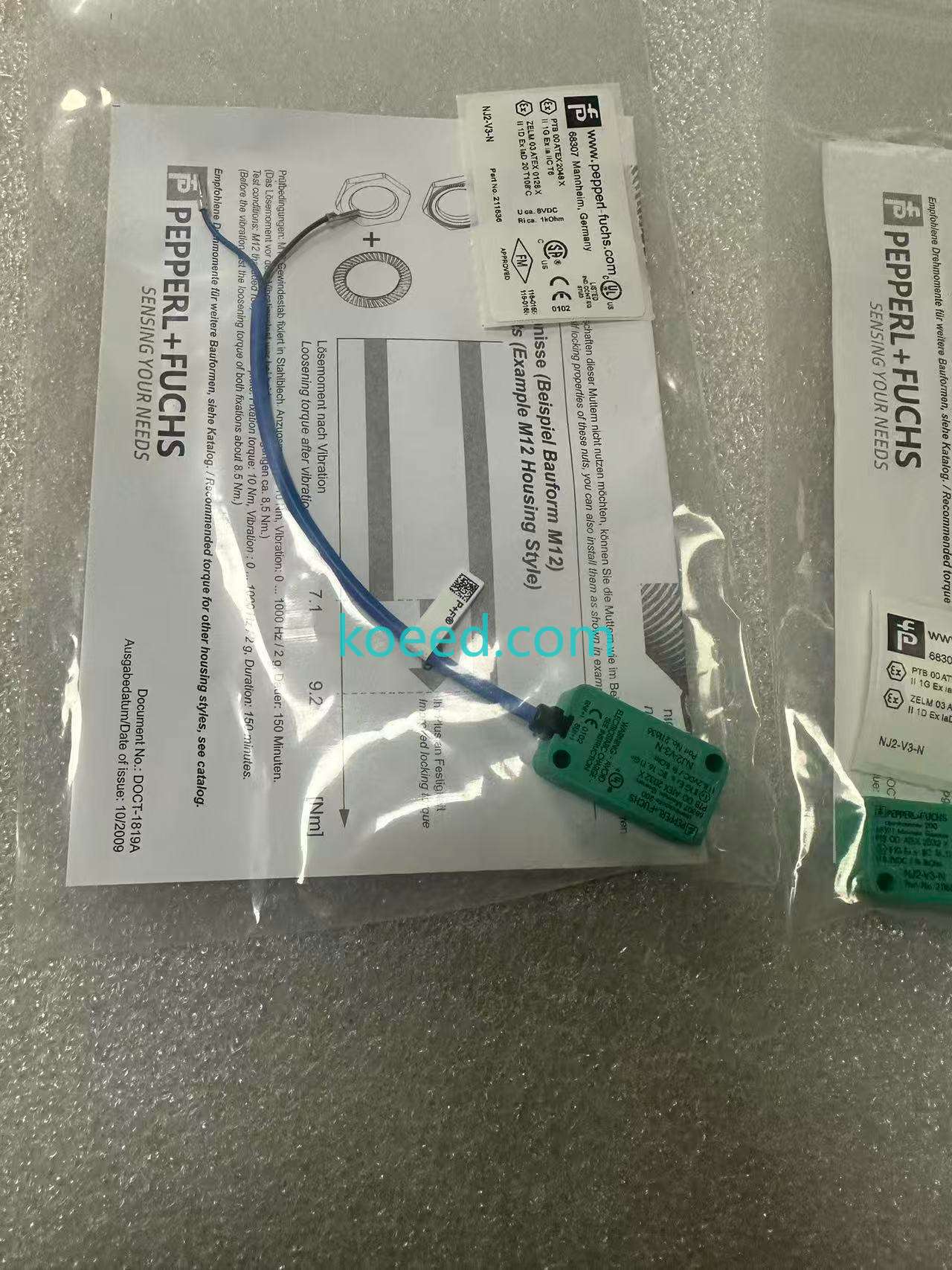
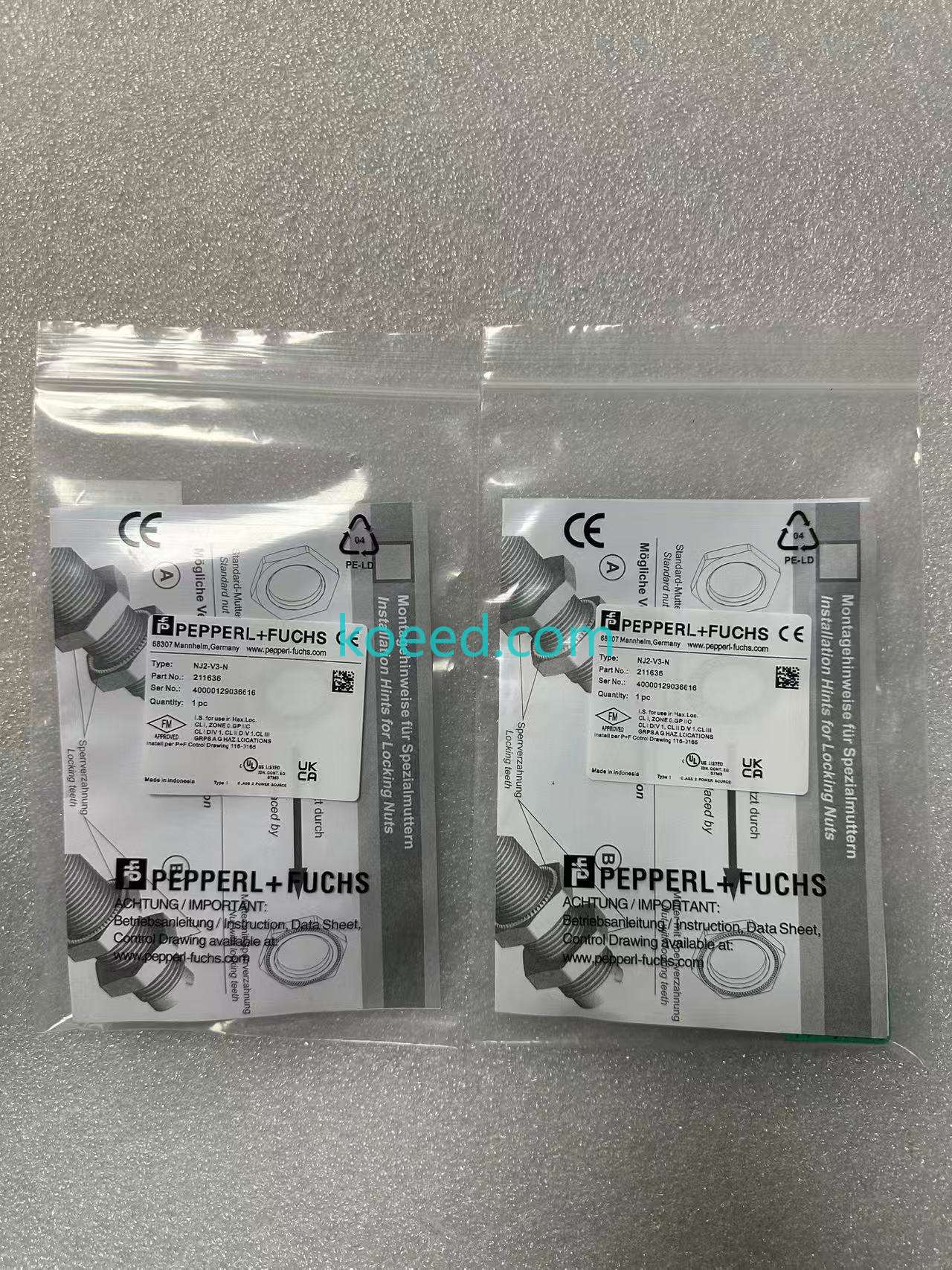
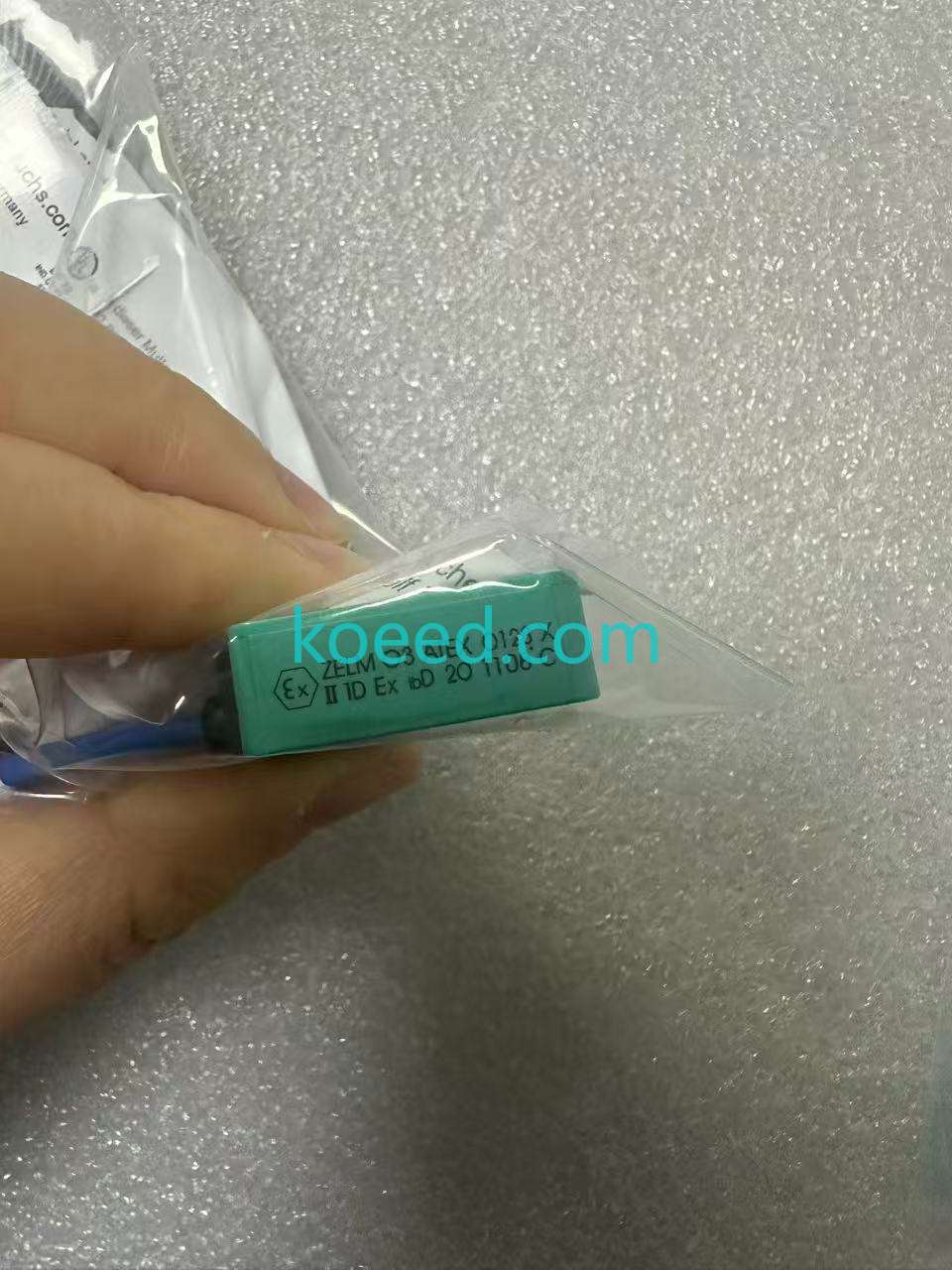
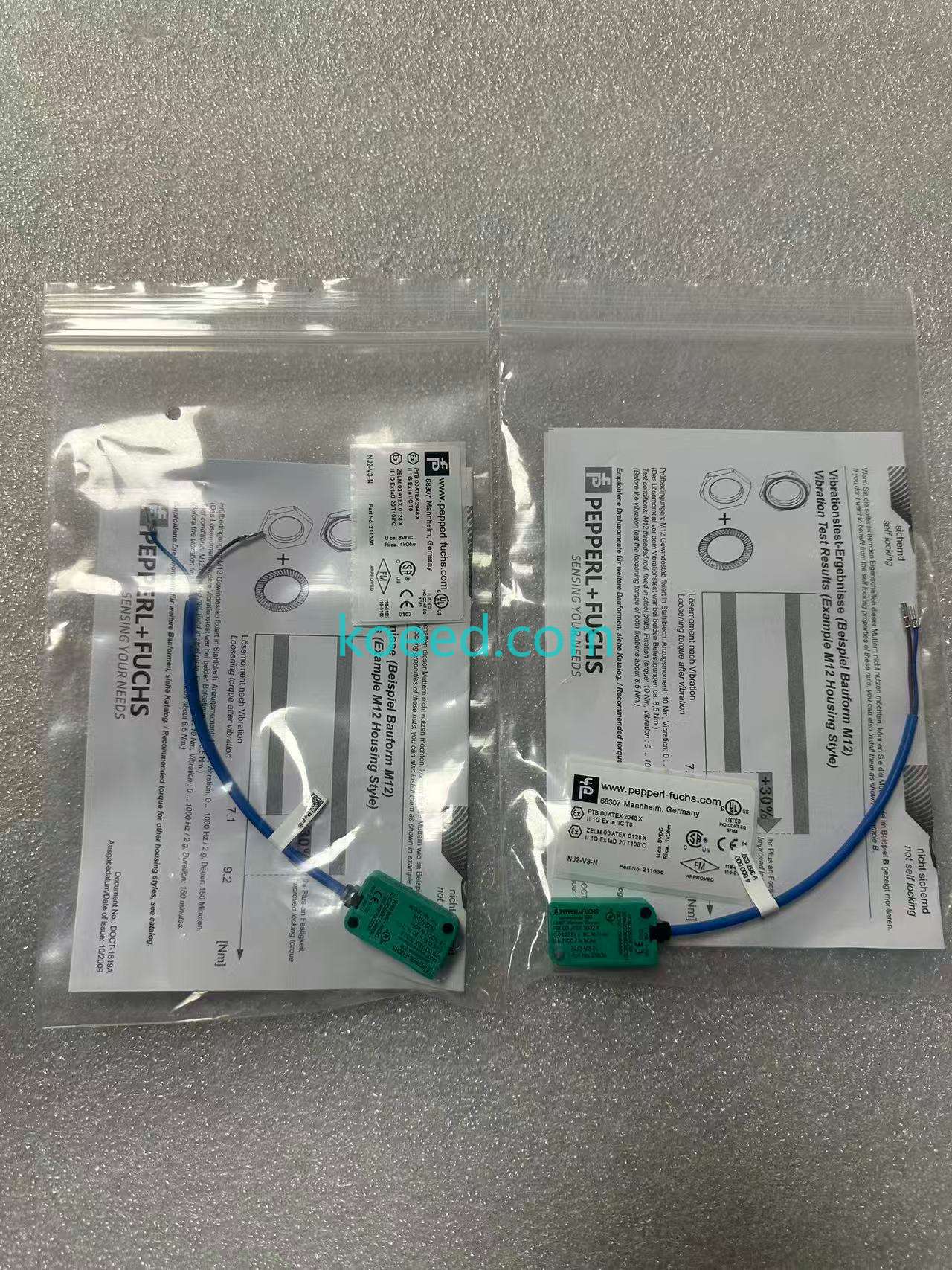
Examine the NJ2-V3-N from every angle. All images below are high-resolution product photographs sourced directly from Koeed's verified inventory — click any image to enlarge.
4. Maintenance, Troubleshooting & Predictive Diagnostics
In 2026, reactive maintenance is obsolete. The NJ2-V3-N's NAMUR output inherently supports lead breakage (LB) and short-circuit (SC) monitoring via the isolation amplifier, enabling continuous health diagnostics without additional hardware. Below are the essential maintenance protocols and common fault-resolution steps for maximizing sensor service life — which in properly specified applications can exceed 100,000 operational hours.
4.1 Common Fault Codes & Troubleshooting (via KFD2-SR2-Ex2.W or Equivalent Isolator)
| Symptom | Isolator Indication | Likely Cause | Recommended Action |
|---|---|---|---|
| No switching / static output | LED Off / Fault Relay Triggered | Lead breakage or open circuit in sensor loop | Inspect cable integrity and connector terminals; verify continuity from sensor to isolator |
| Output permanently active (NC stuck open) | SC indication on isolator | Short circuit in field wiring or sensor internal fault | Disconnect sensor; measure loop resistance; replace sensor if internal short confirmed |
| Intermittent / erratic switching | Flashing LED | Target beyond 2 mm sensing range; mechanical vibration; EMI interference | Verify target distance ≤ 1.6 mm (0.8× Sn); tighten mounting; check cable shielding |
| Slow response / delayed switching | Normal LED but lag observed in PLC | Excessive cable length or capacitance in loop | Ensure cable length < 200 m per NAMUR spec; verify cable type (≤ 100 nF/km) |
| Drift in switching point | Gradual change in trigger distance | Temperature extremes or metallic contamination on sensing face | Clean sensing face with non-abrasive solvent; verify ambient temperature within -25°C to +100°C range |
4.2 Preventive Maintenance Schedule
- Monthly: Visual inspection of sensor housing for mechanical damage or corrosion; verify mounting torque.
- Quarterly: Clean sensing face; verify switching distance with a calibrated 2 mm target; log NAMUR current values into CMMS.
- Annually: Full functional test including lead-break and short-circuit simulation; replace if switching point has drifted > 10% from nominal.
- Every 5 Years: Proactive replacement recommended in SIL 2 safety loops per IEC 61511 functional safety lifecycle guidelines.
5. Frequently Asked Questions
What makes the NJ2-V3-N suitable for SIL 2 safety applications?
The NJ2-V3-N is certified under IEC 61508 for use in functional safety loops up to SIL 2 when paired with a suitable NAMUR isolation amplifier (e.g., Pepperl+Fuchs KFD2-SR2-Ex2.W). Its NAMUR output enables continuous diagnostics — lead breakage and short-circuit faults are detected in real time — satisfying the diagnostic coverage (DC) requirements for SIL 2 without the cost of sensor redundancy.
Can the NJ2-V3-N be used in ATEX Zone 0 hazardous areas?
Yes. As a NAMUR sensor operating at 8.2 V DC with intrinsically safe parameters, the NJ2-V3-N can be deployed in ATEX/IECEx Zone 0 and Zone 1 when connected through a certified galvanic isolation barrier. Always verify the complete loop certification (sensor + barrier + wiring) against your specific hazardous-area classification.
How does the NJ2-V3-N support Industry 4.0 / IIoT architectures?
The sensor's NAMUR output can be digitized via Ethernet-APL or wirelessHART adapters, feeding switching-state and diagnostic data into OPC-UA servers and MQTT brokers. This allows centralised SCADA platforms and cloud analytics suites (AWS IoT SiteWise, Siemens MindSphere) to monitor sensor health and trigger predictive maintenance workflows without PLC-level programming changes.
What is the typical lead time from Koeed for the NJ2-V3-N (211636)?
Koeed maintains strategic stock of high-demand Pepperl+Fuchs NAMUR sensors. The NJ2-V3-N (P/N 211636) is typically available for same-day dispatch. For bulk orders exceeding 50 units, please use the Request Quote button below for current stock verification and volume pricing.
Can the NJ2-V3-N detect non-ferrous metals?
The NJ2-V3-N is optimised for ferrous metal detection (steel, iron) at its rated 2 mm distance. Detection of non-ferrous metals (aluminium, brass, copper) requires a reduction factor — typically sensing distances of approximately 0.8 mm for aluminium and 0.6 mm for copper. For predominantly non-ferrous target applications, consider the Pepperl+Fuchs NBB or NBN series with correction factor 1 capability.
6. Final CTA — Secure Your NJ2-V3-N Supply Chain
Ready to Integrate the NJ2-V3-N into Your 2026 Automation Stack?
Koeed is your authorised distribution partner for Pepperl+Fuchs industrial sensors. We offer verified OEM stock, competitive 2026 pricing, and global logistics support.
P/N 211636 • NJ2-V3-N • Pepperl+Fuchs NAMUR Inductive Sensor • SIL 2 • IP67


