

Camozzi 458-015-22 Solenoid Valve: 2026 Technical Guide for B2B Industrial Pneumatic Automation
Strategic Overview: The Camozzi 458-015-22 in the 2026 Smart Factory Landscape
By 2026, the convergence of IT and OT (Operational Technology) has fundamentally reshaped how pneumatic automation components are specified, deployed, and maintained. The Camozzi 458-015-22 — a 5/2-way monostable electropneumatic solenoid valve with G1/8 ports and horizontal solenoid configuration — has emerged as a benchmark component in this evolving landscape. Far from being a commodity valve, the 458-015-22 represents a critical control node that, when properly integrated, unlocks significant gains in Overall Equipment Effectiveness (OEE), energy efficiency, and predictive maintenance capability.
Camozzi's Series 458 solenoid valves are engineered for high-cycle applications across packaging machinery, automated assembly lines, food & beverage processing, and pharmaceutical manufacturing. The 458-015-22 variant — featuring a single solenoid with mechanical spring return — delivers the fail-safe monostable behaviour that safety-critical applications demand. In 2026, with sustainability mandates tightening across the EU, North America, and Asia-Pacific, the low-power coil design of this valve directly contributes to Scope 2 emissions reduction targets.
Technical Specifications & Benchmarking
Understanding the precise operating envelope of the 458-015-22 is essential for system integrators and maintenance engineers. Below is the definitive technical specification table, cross-referenced with the broader Camozzi Series 458 for quick comparative analysis.
| Parameter | Camozzi 458-015-22 | Series 458 Standard |
|---|---|---|
| Valve Function | 5/2-way, monostable | 5/2 or 5/3, mono/bistable |
| Port Size | G1/8" (BSPP) | G1/8" |
| Actuation | Single solenoid, spring return | Single/Double solenoid |
| Solenoid Orientation | Horizontal | Horizontal / Vertical |
| Nominal Flow Rate | ~550 Nl/min (typical) | 450–650 Nl/min |
| Operating Pressure | 2–10 bar (vacuum compatible) | 2–10 bar |
| Coil Voltage Options | 24V DC (standard), 110/220V AC | 12–220V DC/AC |
| Power Consumption | ~2.5W (DC, holding) | 2.0–4.5W |
| Response Time | <15 ms (energise), <25 ms (de-energise) | 10–30 ms |
| Operating Temperature | -10°C to +60°C | -10°C to +60°C |
| Body Material | Aluminium alloy, anodised | Aluminium / Polymer |
| Seal Material | NBR (nitrile) / optional FKM | NBR / FKM / HNBR |
| Protection Class | IP65 (with connector) | IP40–IP65 |
| Weight | ~0.42 kg (0.92 lbs) | 0.35–0.55 kg |
Legacy vs. 2026-Ready: Why the 458-015-22 Remains Relevant
While newer "smart pneumatic" solutions with embedded IO-Link have entered the market, the Camozzi 458-015-22 maintains a compelling value proposition in 2026. Its robust electromechanical design avoids the failure modes of over-integrated digital valves — notably no susceptibility to firmware corruption, no cybersecurity attack surface, and no software obsolescence risk. For brownfield retrofits where external IIoT sensors monitor manifold pressure and flow, the 458-015-22 provides the ideal balance of reliability and monitorability without inflating per-node cost.
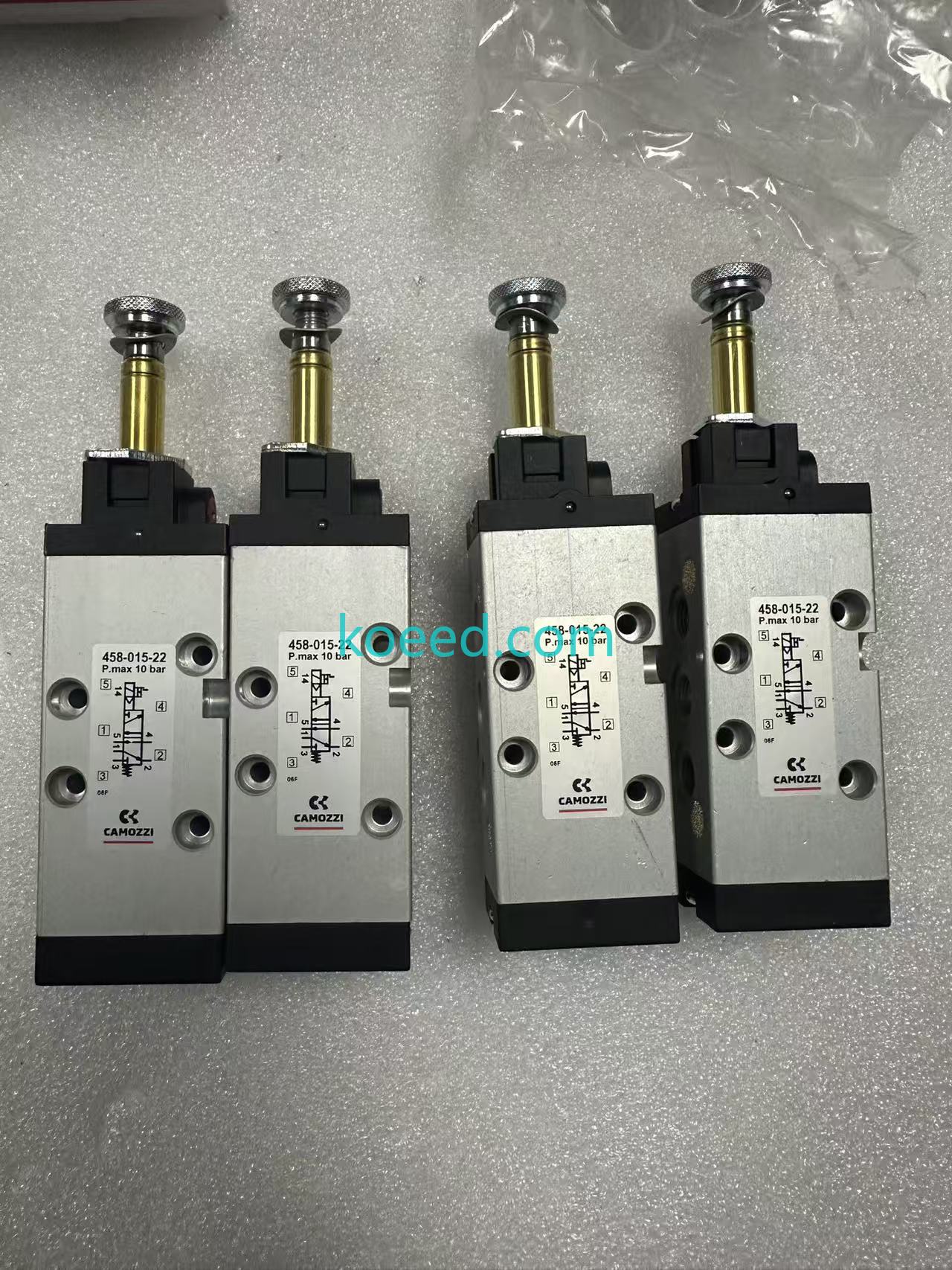
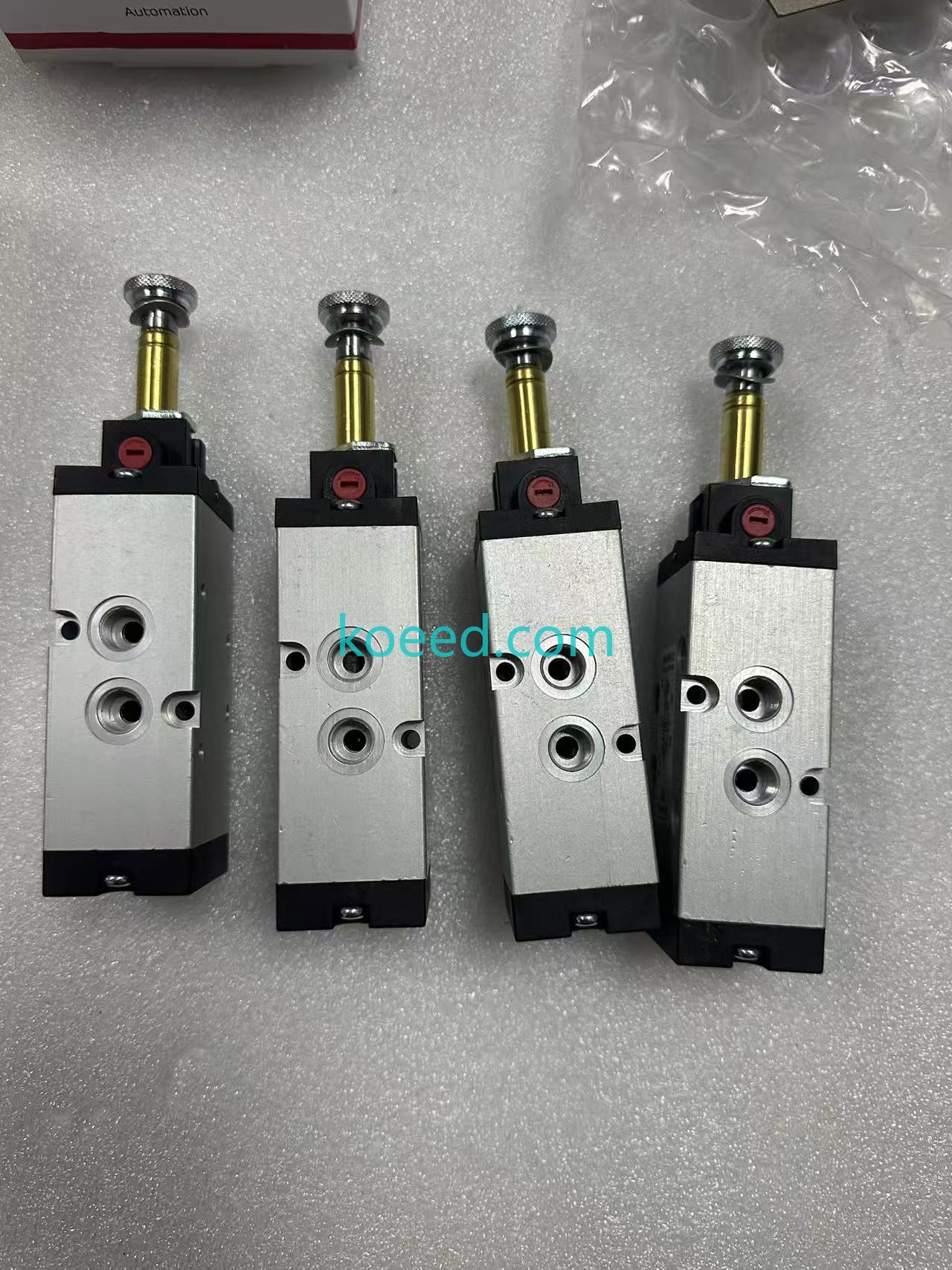
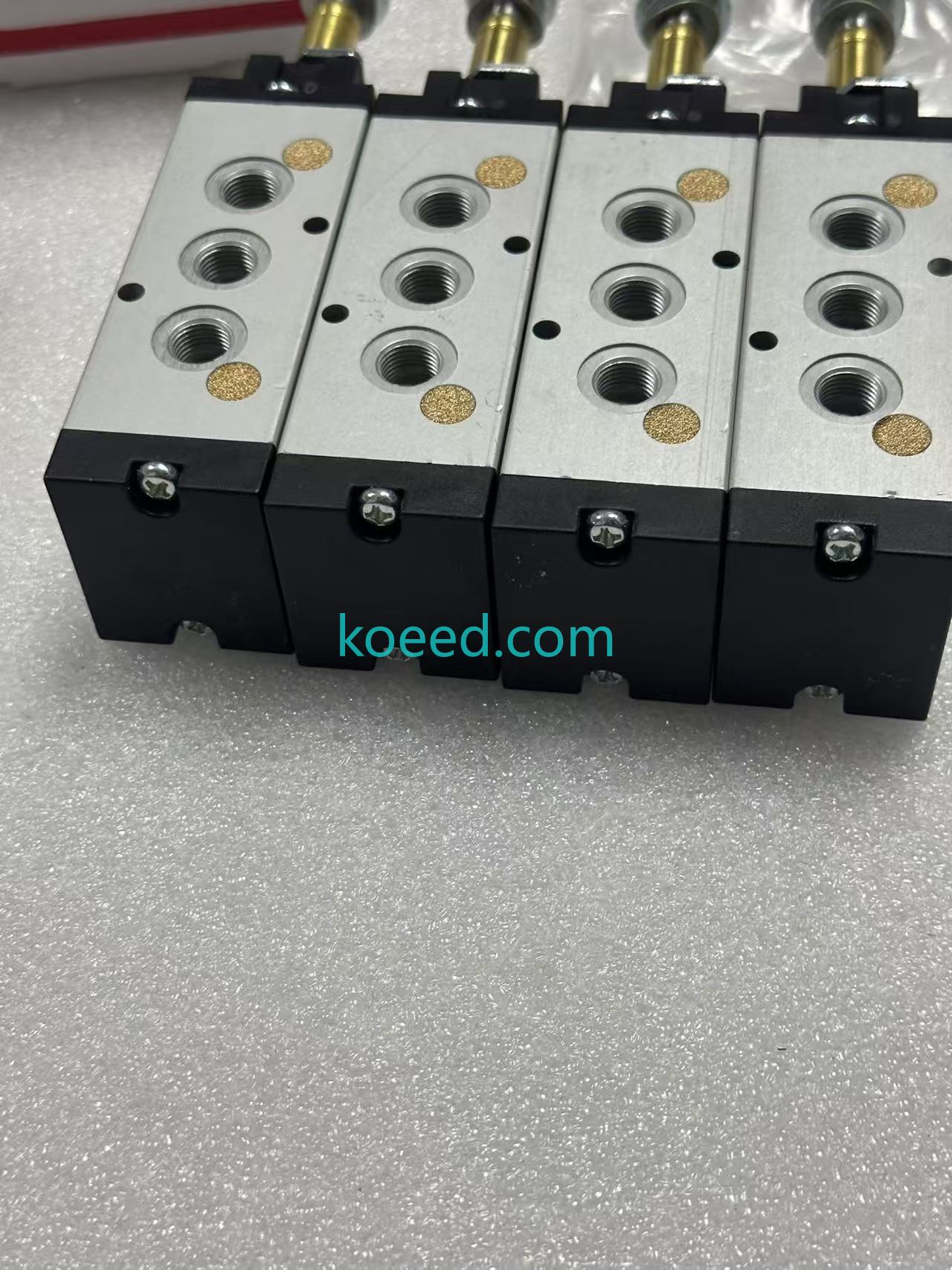
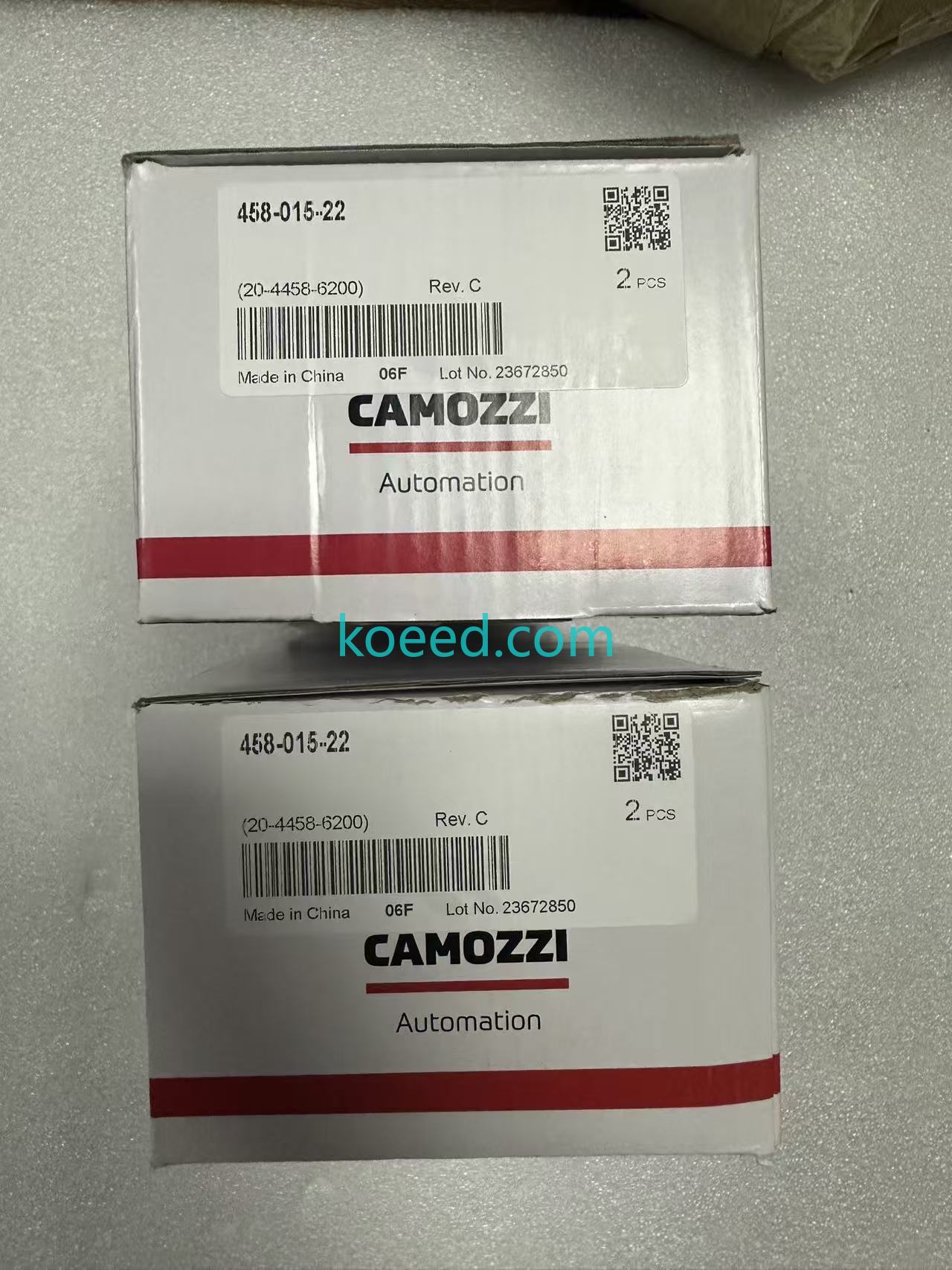
Product Visual Gallery
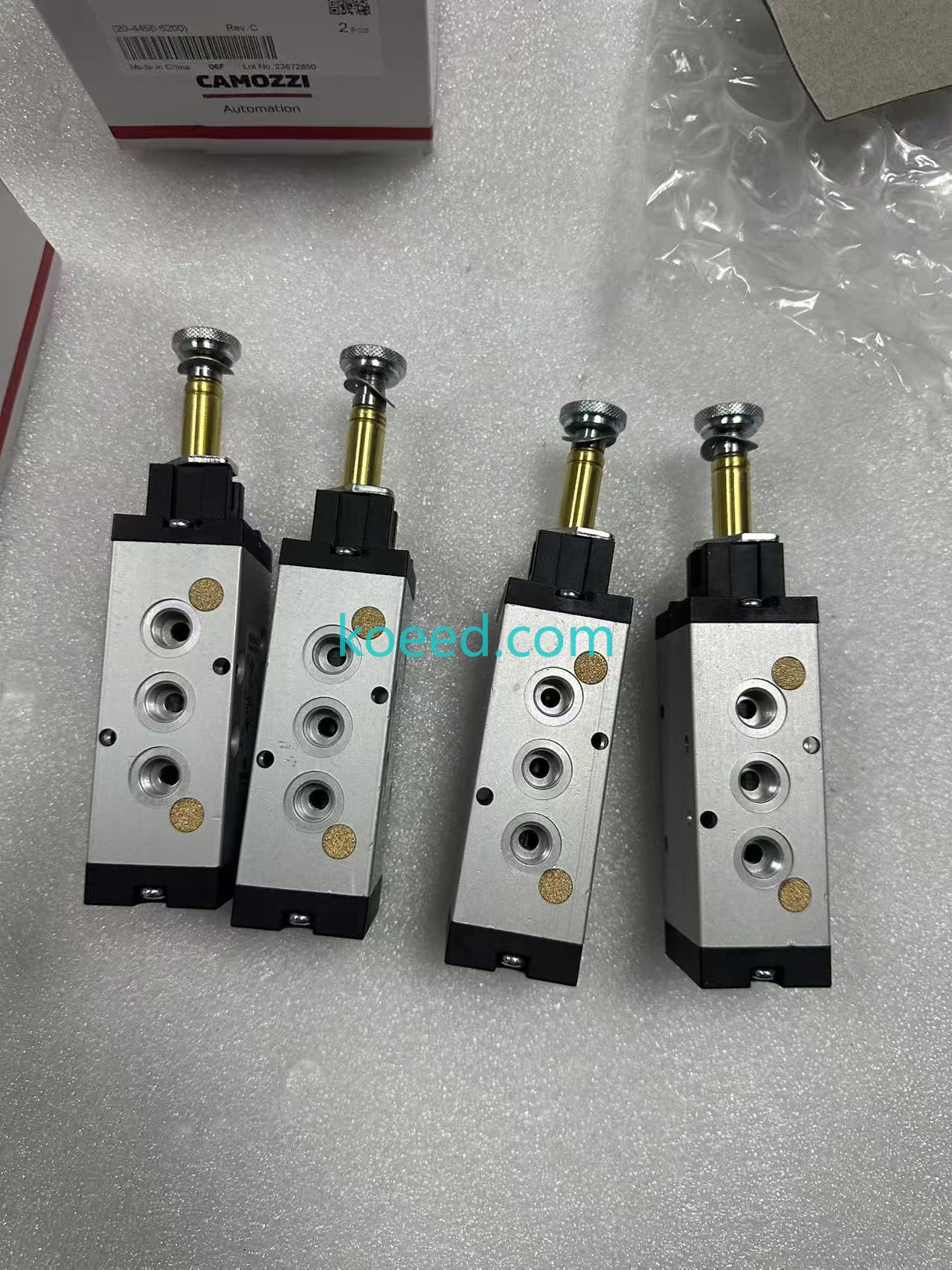
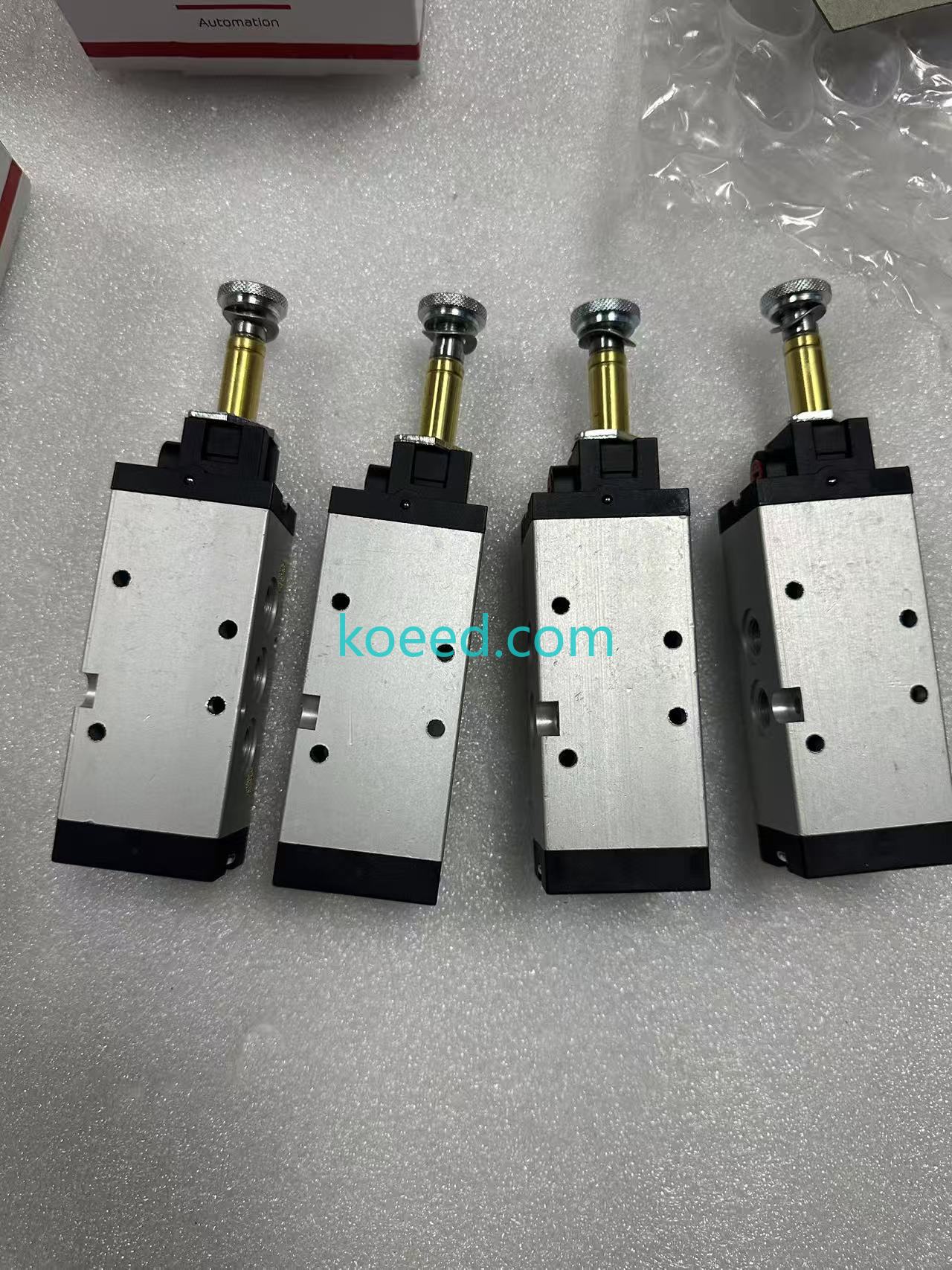
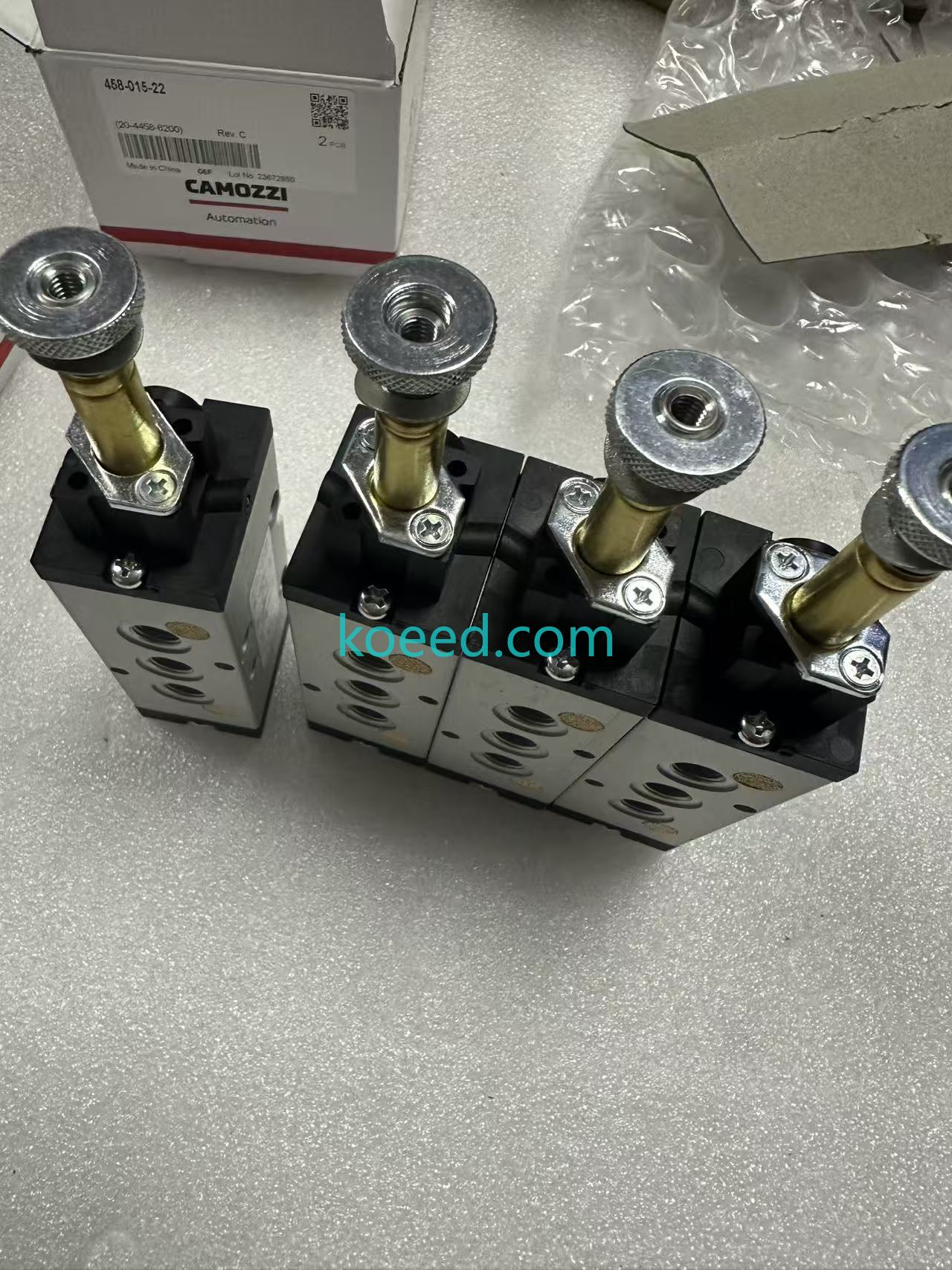
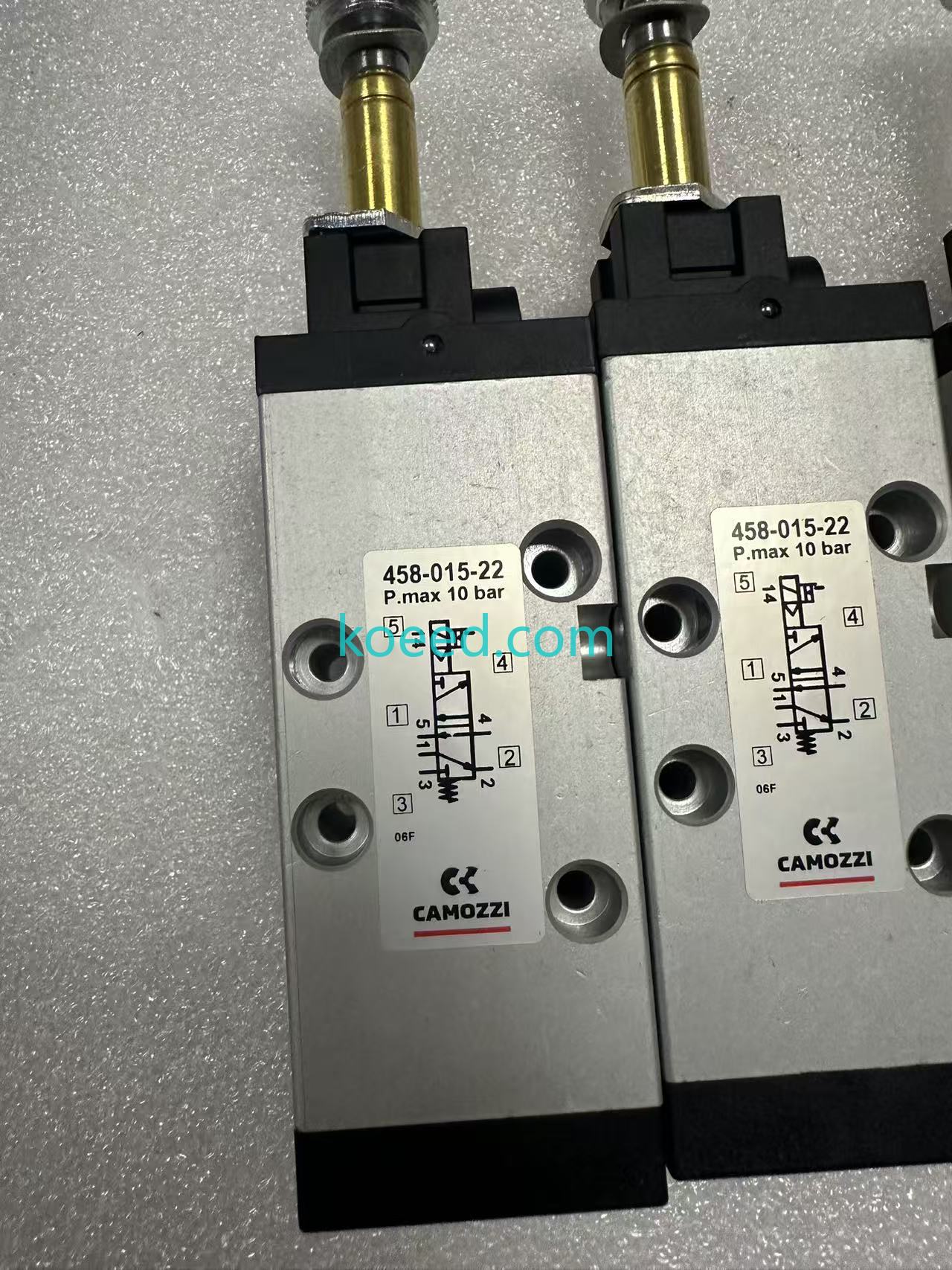
Below is the complete visual reference for the Camozzi 458-015-22 solenoid valve. Click any image to view full resolution.
Product Demonstration Video
Watch the Camozzi 458-015-22 solenoid valve in operation — covering actuation response, port configuration, and installation orientation.
IT/OT Convergence: Integrating the 458-015-22 into Smart Factory Architectures
In 2026, the distinction between "dumb pneumatics" and "smart pneumatics" is no longer binary. The Camozzi 458-015-22, while not natively digital, can be seamlessly folded into an Industry 4.0 stack through strategic sensor placement at the manifold level. Here are the three most effective integration pathways:
1. External IIoT Monitoring via Manifold Pressure & Flow Sensors
By instrumenting the supply and exhaust lines of the manifold with wireless pressure transmitters (e.g., IO-Link or Bluetooth Low Energy), plant engineers can trend the pressure drop across each valve station. Anomalous deviations from baseline correlate strongly with spool wear, seal degradation, or coil weakening — enabling condition-based replacement rather than calendar-based PM schedules. This approach preserves the inherent reliability of the 458-015-22 while delivering the predictive insights operations teams need.
2. Cycle-Count Logging via PLC Edge Nodes
Since the 458-015-22 is solenoid-actuated, the PLC output driving its coil can be instrumented to log every energise/de-energise event. Over time, this builds a precise cycle-count dataset. When cross-referenced with the valve's rated lifetime (typically 20–50 million cycles for the Series 458), maintenance planners gain a data-driven replacement window — eliminating both premature replacement waste and catastrophic in-service failure.
3. Energy Dashboard Integration
With a holding power consumption of approximately 2.5W per coil, a bank of twenty 458-015-22 valves draws around 50W continuously when all solenoids are energised. In 2026, energy management systems (EMS) can track this load at the cabinet level. Shifting from continuous energisation to pulse-and-hold strategies (where supported by the PLC logic) can reduce coil energy consumption by 40–60%, directly impacting your facility's energy KPIs.
ROI & Total Cost of Ownership (TCO) Analysis
Procurement decisions in 2026 are increasingly driven by TCO rather than upfront unit price. The Camozzi 458-015-22 excels across multiple TCO dimensions:
| TCO Dimension | 458-015-22 Advantage | Estimated 5-Year Impact |
|---|---|---|
| Acquisition Cost | Competitive mid-range pricing vs. Festo/SMC equivalents | 10–18% capital saving per valve station |
| Energy Cost | ~2.5W holding power; compatible with energy-saving drivers | ~$12–18/year/valve at EU industrial rates |
| Maintenance Labour | Field-serviceable spool & seal kit; no specialist tools required | 60–90 min MTTR vs. 3+ hours for sealed units |
| Downtime Cost | Spring-return fail-safe reduces crash risk on power loss | Avoids $2,500–$15,000/incident in tooling damage |
| Inventory Cost | Common G1/8 footprint; interchangeable with Series 458 family | Reduced SKU proliferation; lower safety stock |
| End-of-Life Disposal | Aluminium body fully recyclable; NBR seals standard | Aligns with EU WEEE & circular economy mandates |
Maintenance & Troubleshooting: Pro-Tips for Maximum Service Life
Drawing on 2026 field-service data from Koeed's global engineering support network, here are the most impactful maintenance practices specific to the Camozzi 458-015-22:
Common Symptom-to-Root-Cause Matrix
| Symptom | Likely Root Cause | Recommended Action |
|---|---|---|
| Valve fails to shift when energised | Coil open-circuit; broken lead wire; undervoltage | Measure coil resistance (~85Ω ±10% at 24V DC); verify PSU output |
| Slow or sluggish actuation | Low pilot pressure; contaminated spool; sticky seals | Verify supply ≥2 bar; clean or replace spool assembly |
| Constant air leak from exhaust port | Worn spool seals; scored spool; debris under seal | Install seal kit; polish or replace spool if scored |
| Audible buzz / chatter from solenoid | AC coil on DC supply (or vice versa); shading ring damage | Verify coil type matches supply; replace coil if shading ring cracked |
| Intermittent operation | Loose DIN connector; intermittent wiring; PLC output fault | Reseat connector; check for vibration-induced wire fatigue |
| Overheating (coil >80°C surface) | Over-duty cycle; ambient temp too high; incorrect coil | Verify duty cycle ≤100% ED; ensure ambient ≤60°C |
Sustainability & Energy Impact in the 2026 Regulatory Environment
The European Union's updated Energy Efficiency Directive (EED 2025/2026) and the expansion of carbon border adjustment mechanisms (CBAM) have placed pneumatic system efficiency under fresh scrutiny. The Camozzi 458-015-22 contributes to compliance in three measurable ways:
- Low Power Envelope: At ~2.5W holding power, a single 458-015-22 consumes approximately 22 kWh annually under continuous energisation — roughly equivalent to a single LED warehouse fixture. This compares favourably against older-generation solenoid valves that drew 5–8W.
- Leakage Reduction: The precision-lapped aluminium spool and NBR seal combination achieves industry-leading internal leakage rates below 5 Nl/min at 6 bar, minimising compressed air waste — the single largest energy cost in most pneumatic systems.
- Recyclability: The anodised aluminium body, brass fittings, and copper coil winding are all independently recyclable at end-of-life, supporting circular economy procurement criteria increasingly mandated by OEM sustainability scorecards.
Frequently Asked Questions (FAQ)
What is the exact function of the Camozzi 458-015-22?
The 458-015-22 is a 5/2-way monostable electropneumatic solenoid valve. This means it has 5 ports and 2 positions. When the solenoid is energised, the spool shifts to connect pressure (P) to outlet port 2 and exhaust port 4 to atmosphere. When de-energised, the mechanical spring returns the spool to its rest position, connecting P to outlet port 4 and exhausting port 2. This spring-return (monostable) behaviour is essential for fail-safe applications where a defined state must be guaranteed upon power loss.
Is the 458-015-22 compatible with vacuum applications?
Yes. The Camozzi 458-015-22 is rated for operation down to -0.9 bar (relative vacuum). However, for continuous vacuum service, we recommend verifying that the specific coil and seal configuration is rated for your vacuum level. External pilot supply may be required for very low vacuum differentials. Consult Koeed technical support for application-specific guidance.
Can the coil be replaced in the field without removing the valve body?
Yes. The Camozzi 458-015-22 features a field-replaceable coil design. The coil is secured by a central retaining nut and can be swapped without disconnecting pneumatic lines or removing the valve body from the manifold. This design choice significantly reduces MTTR (Mean Time To Repair) — typically under 10 minutes for a trained technician.
What is the difference between the 458-015-22 and the bistable (double-solenoid) version?
The 458-015-22 is monostable (single solenoid + spring return). Upon power loss, the spring mechanically returns the spool to a predetermined position. A bistable (double-solenoid) variant would hold its last position upon power loss. The monostable design is preferred for safety-critical applications (e.g., clamping, lifting) where loss of power must result in a safe state. The bistable version is preferred when position memory during power cycles is required.
What manifold systems is the 458-015-22 compatible with?
The 458-015-22 is designed for the Camozzi Series 458 manifold system, which supports multiple valve sizes with common supply and exhaust ports. The horizontal solenoid orientation makes it suitable for tight cabinet installations. Direct mounting on ISO-compatible sub-bases simplifies assembly and reduces potential leak points. For manifold configuration assistance, contact Koeed to ensure the correct base and end plates are specified for your application.
Conclusion
The Camozzi 458-015-22 solenoid valve remains a cornerstone of reliable pneumatic control in 2026. Its robust monostable design, low power consumption, and serviceability align with the demands of modern smart factories while avoiding the pitfalls of over-digitized components. Whether you are retrofitting an existing line or specifying new equipment, Koeed provides direct access to genuine Camozzi components with expert application support.
Request a Quote or Technical Consultation
Contact Koeed today for volume pricing, delivery lead times, and integration support for the Camozzi 458-015-22.


