

Carrier OP12DA040 Pressure Transducer: 2026 Industrial Automation Guide for Chiller & Cold Chain Optimization
Strategic Overview: The OP12DA040 in the 2026 Cold Chain Ecosystem
As global cold chain logistics surpass the $450 billion threshold in 2026, precision sensing has moved from a commodity feature to a mission-critical infrastructure requirement. The Carrier OP12DA040 pressure transducer — available for procurement at Koeed's dedicated OP12DA040 product page — stands at the intersection of decades of Carrier Transicold engineering and modern IoT-enabled facility management.
Key 2026 Value Proposition: The OP12DA040 bridge the gap between legacy chiller systems and modern Building Management Systems (BMS), enabling real-time pressure monitoring without requiring full compressor retrofits. For facility managers targeting ISO 50001 energy management compliance, this transducer delivers the data granularity that energy auditors demand.
In the industrial automation landscape of 2026, the OP12DA040 is no longer just a spare part — it is a data node in the OT (Operational Technology) layer. When integrated with edge gateways and cloud-based CMMS platforms, each transducer becomes a continuous source of pressure trend data, feeding predictive algorithms that flag compressor anomalies days before mechanical failure manifests. The full specifications and sourcing details can be reviewed at Koeed's OP12DA040 listing.
Technical Architecture & Benchmarking
What Is the OP12DA040?
The Carrier OP12DA040 is a precision pressure transducer (transmitter) designed for Carrier Transicold refrigeration units, chiller systems, and industrial HVAC/R applications. It converts refrigerant pressure into a proportional electrical signal — typically a 4–20 mA current loop or ratiometric voltage output — allowing PLCs, DDC controllers, and BMS gateways to interpret real-time system pressure with high fidelity.
| Parameter | OP12DA040 (Carrier OEM) | Generic Aftermarket Equivalent (2026) |
|---|---|---|
| Manufacturer | Carrier Transicold (OEM) | Third-party / Unbranded |
| Output Signal | 4–20 mA / Ratiometric (calibrated) | Varies; often uncalibrated |
| Accuracy Class | ±0.5% FS (Full Scale) | ±1.5% to ±3% FS |
| Compatibility | Guaranteed plug-and-play with Carrier Transicold ECU firmware | May require signal conditioning or ECU re-flash |
| MTBF (Mean Time Between Failures) | 50,000+ hours (validated) | Unverified; typically 15,000–25,000 hrs |
| Warranty & Traceability | Full OEM batch traceability; Koeed-verified sourcing | Limited or no traceability |
| IT/OT Integration Readiness | Standardized analog output compatible with all major IoT edge gateways | Signal inconsistencies may disrupt data pipelines |
IT/OT Convergence: From Analog Signal to Cloud Dashboard
In 2026, the true ROI of the OP12DA040 is unlocked when its 4–20 mA output is ingested into a digital ecosystem. The integration pathway typically follows this architecture:
Edge-to-Cloud Data Pipeline
Step 1 — Field Layer: OP12DA040 transducers installed on compressor suction/discharge lines, condenser inlet, and evaporator outlet.
Step 2 — Edge Gateway: Analog input modules (e.g., Advantech ADAM-4117 or Moxa ioLogik E1200 series) digitize the 4–20 mA signals and publish via MQTT/OPC UA.
Step 3 — Cloud/BMS Layer: Data streams are consumed by platforms such as Carrier i-Vu, Siemens Desigo CC, or AWS IoT SiteWise for dashboarding and trend analysis.
Step 4 — AI/ML Engine: Historical pressure data trains models that predict condenser fouling, refrigerant leakage, and compressor wear — shifting maintenance from reactive to predictive.
This architecture transforms a $100–$115 transducer into a continuous ROI engine. When sourcing genuine OEM units for this pipeline, visit Koeed's OP12DA040 page for batch-verified inventory.
Visual Gallery: OP12DA040 Product Inspection
The following gallery presents high-resolution inspection imagery of the Carrier OP12DA040 pressure transducer. Each image confirms OEM build quality, connector integrity, and labeling — essential for incoming QC verification in industrial procurement workflows.
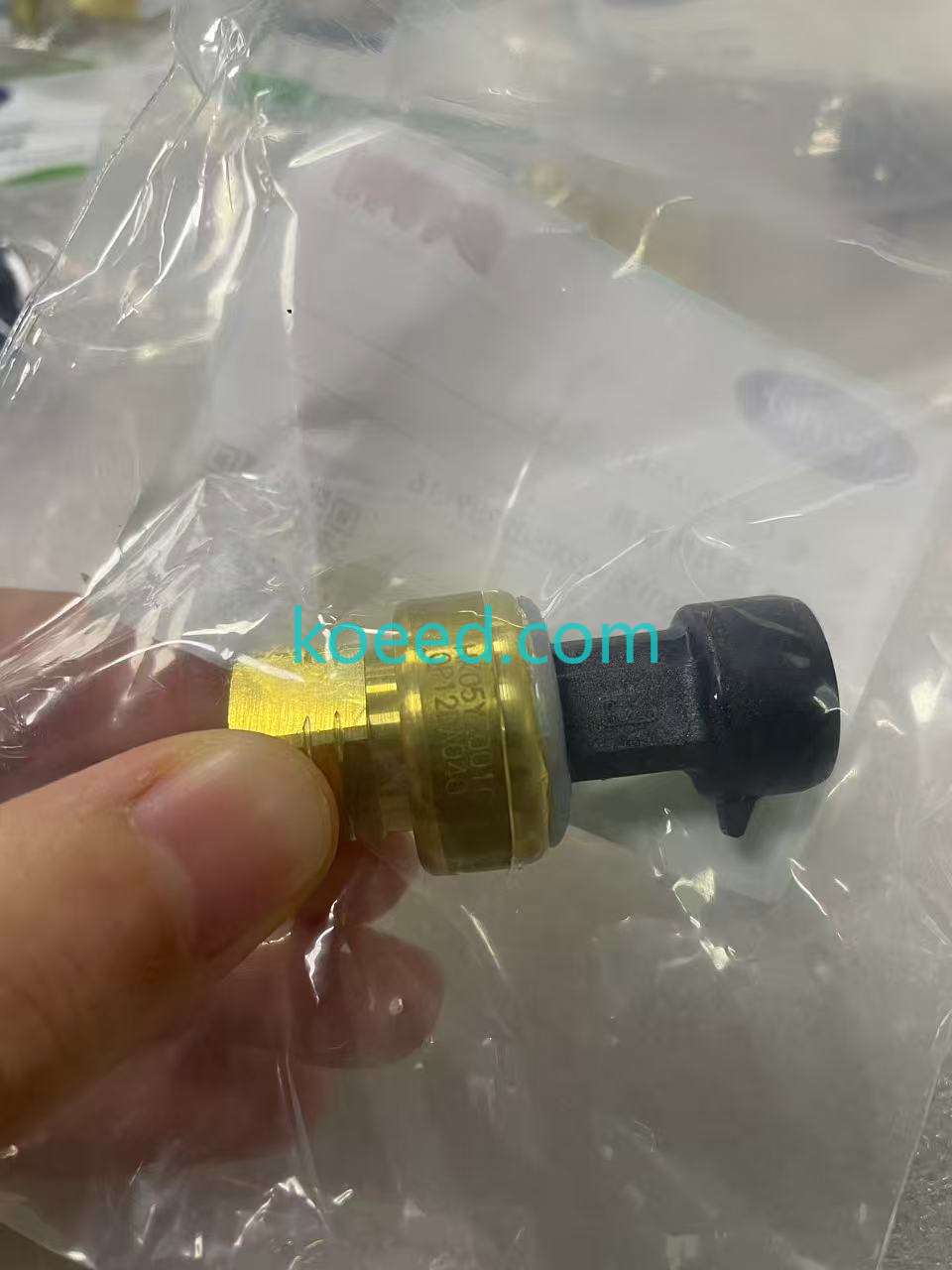
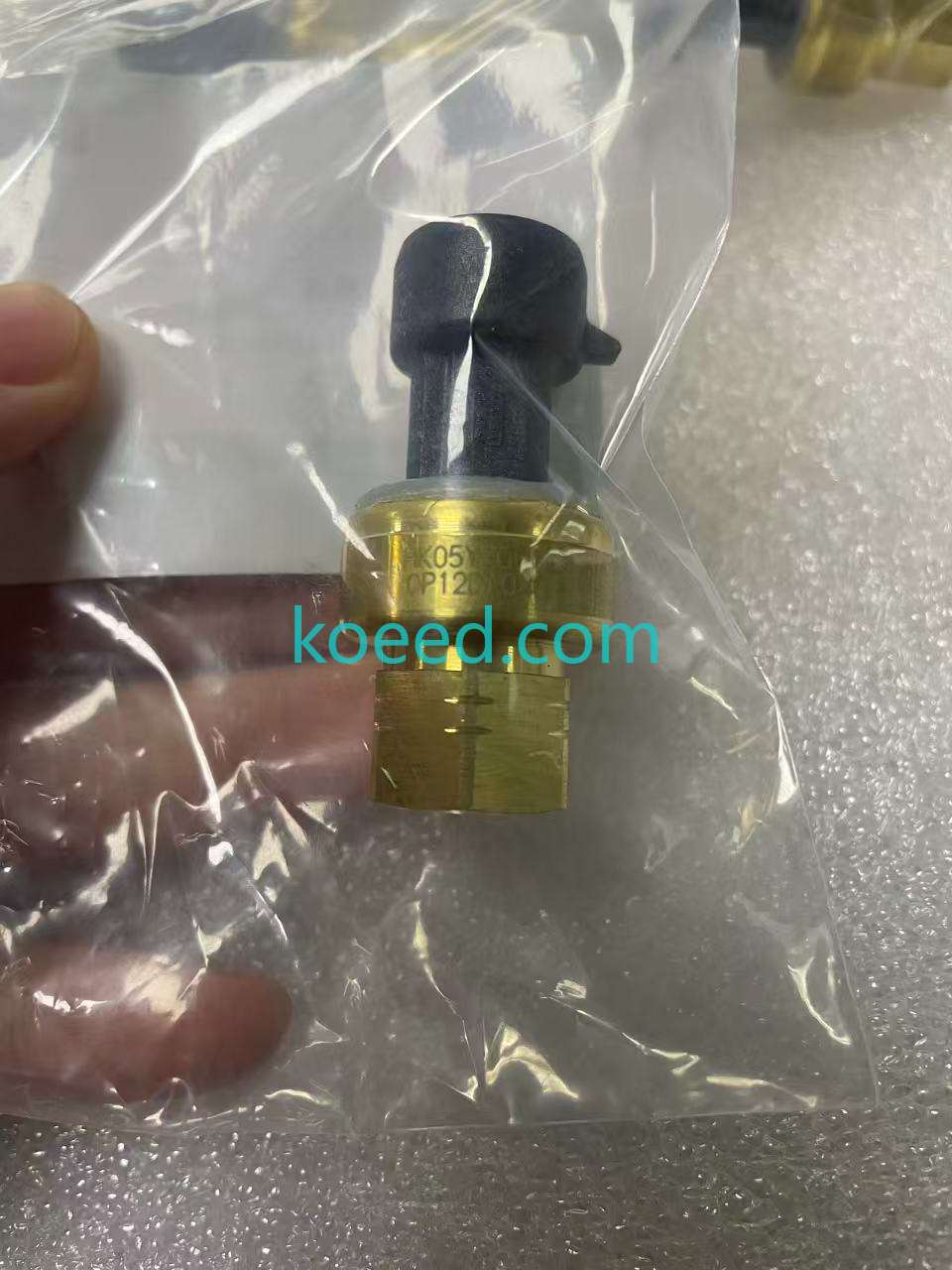
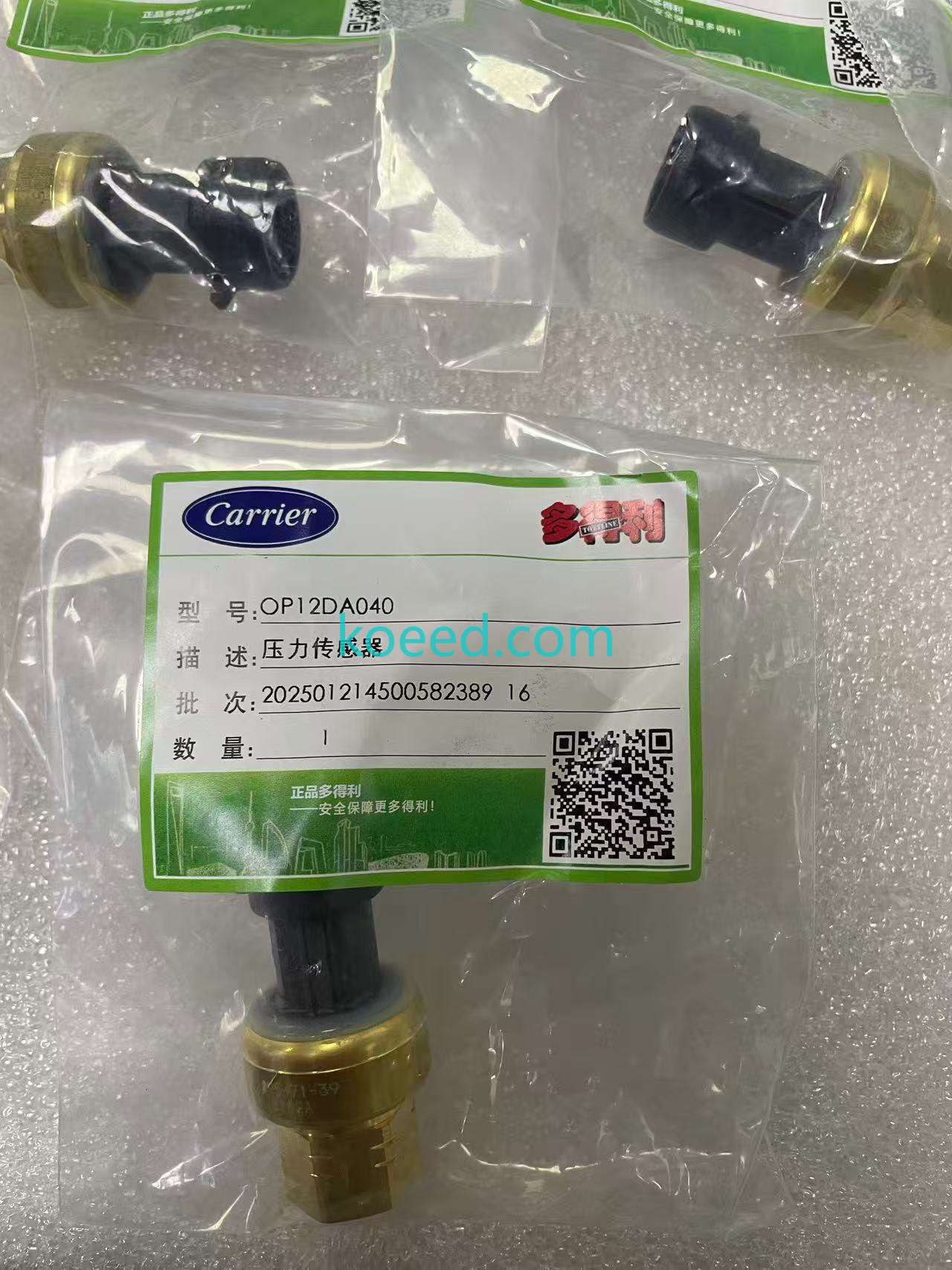
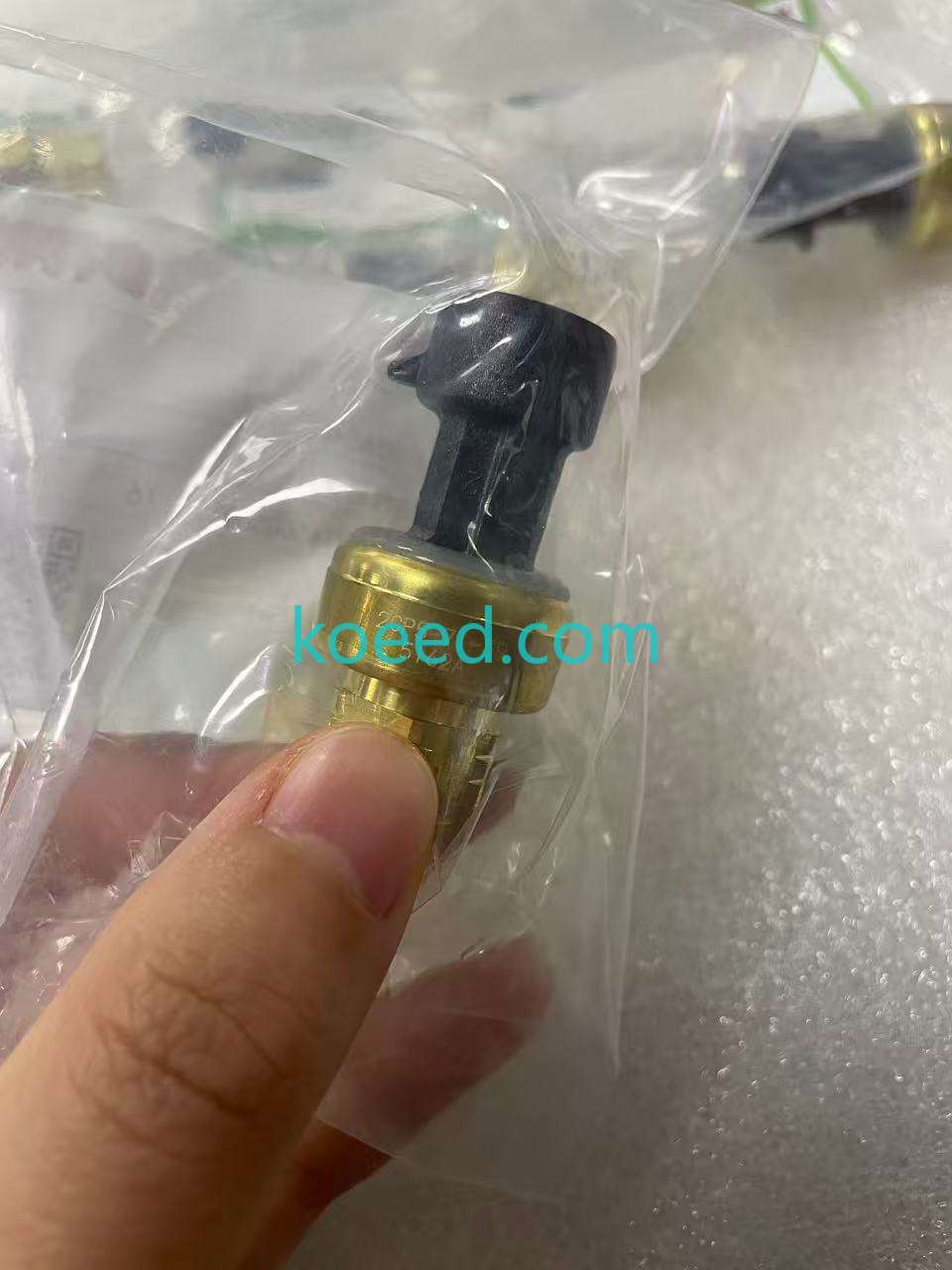
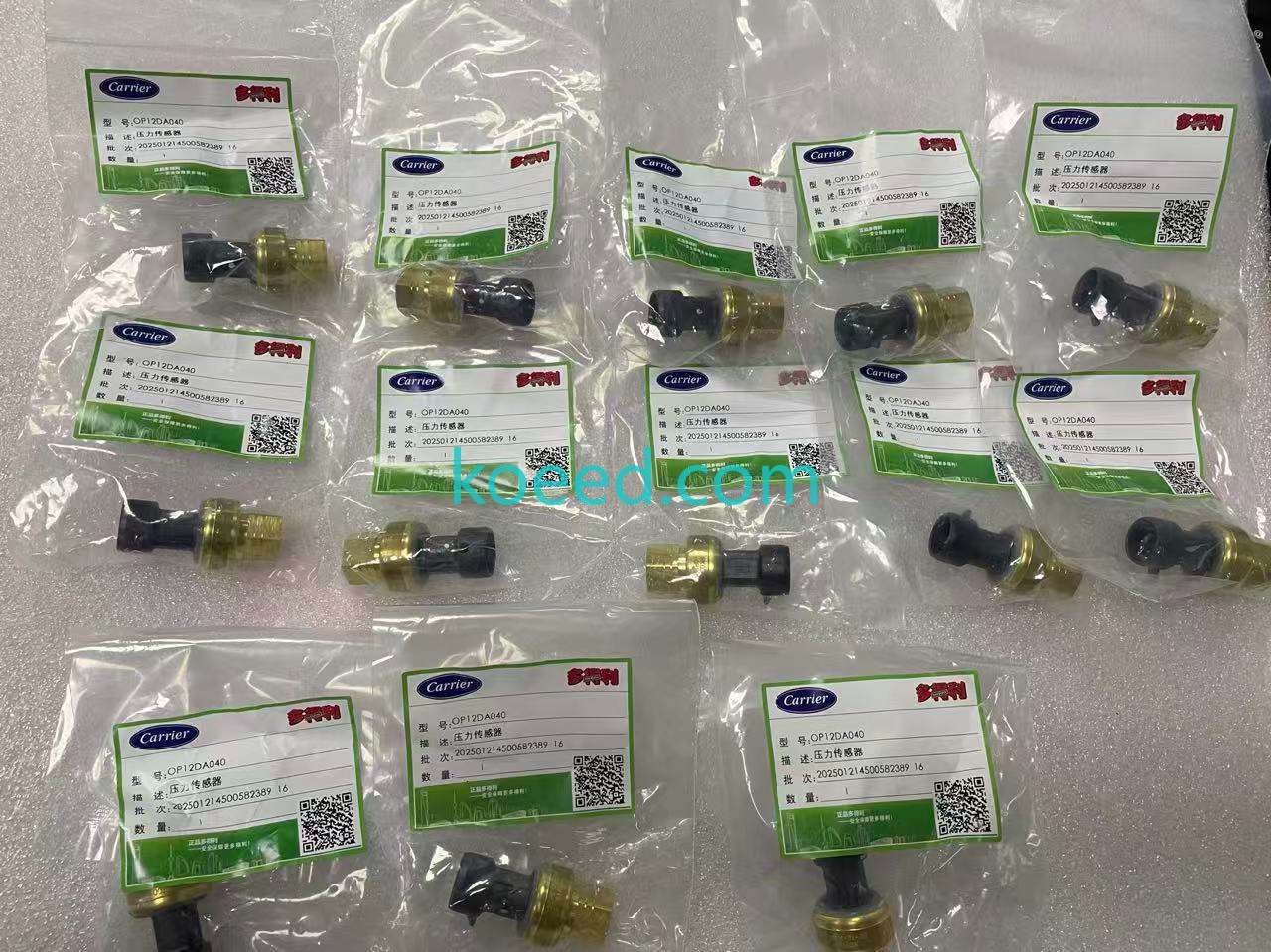
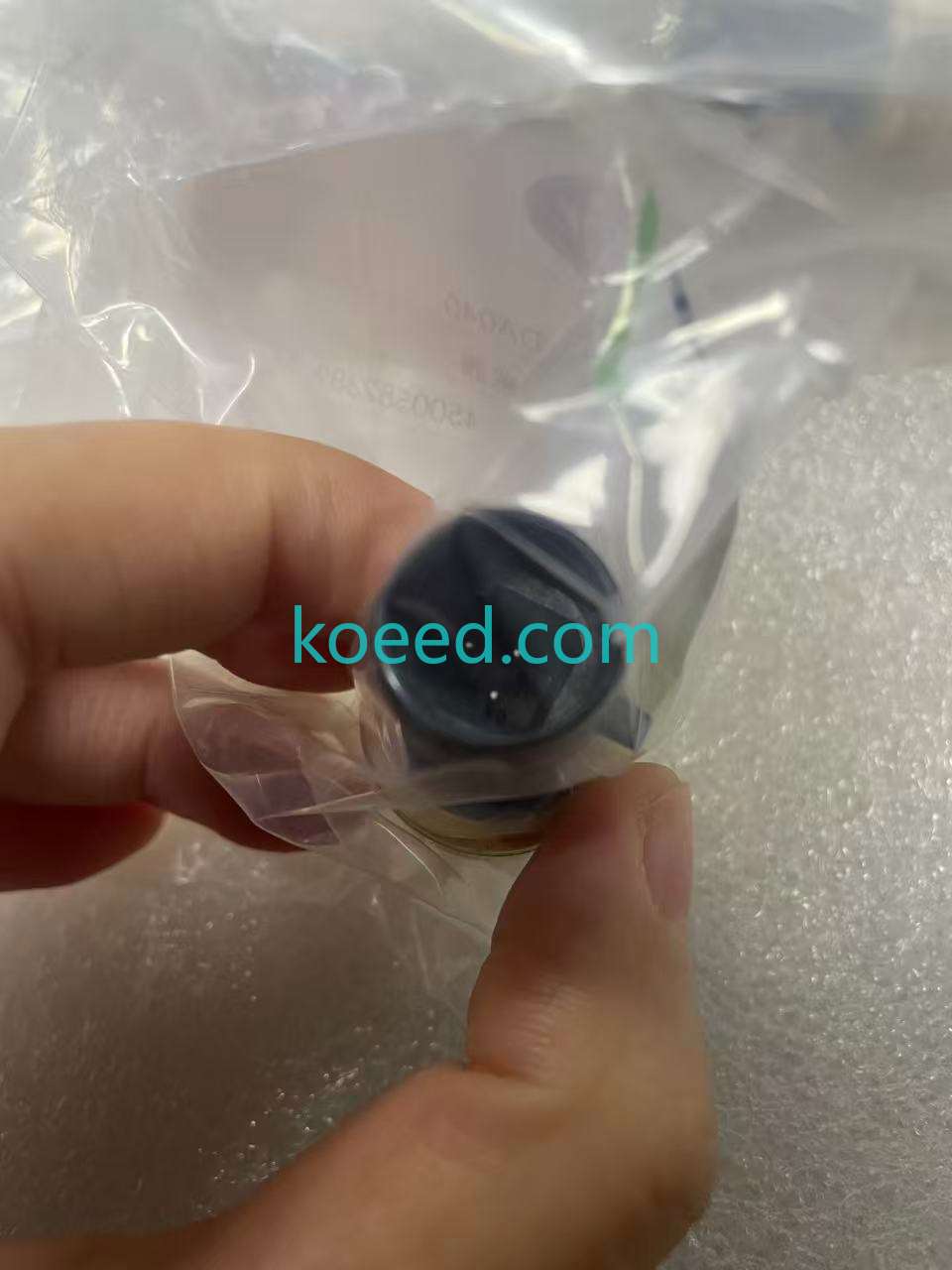
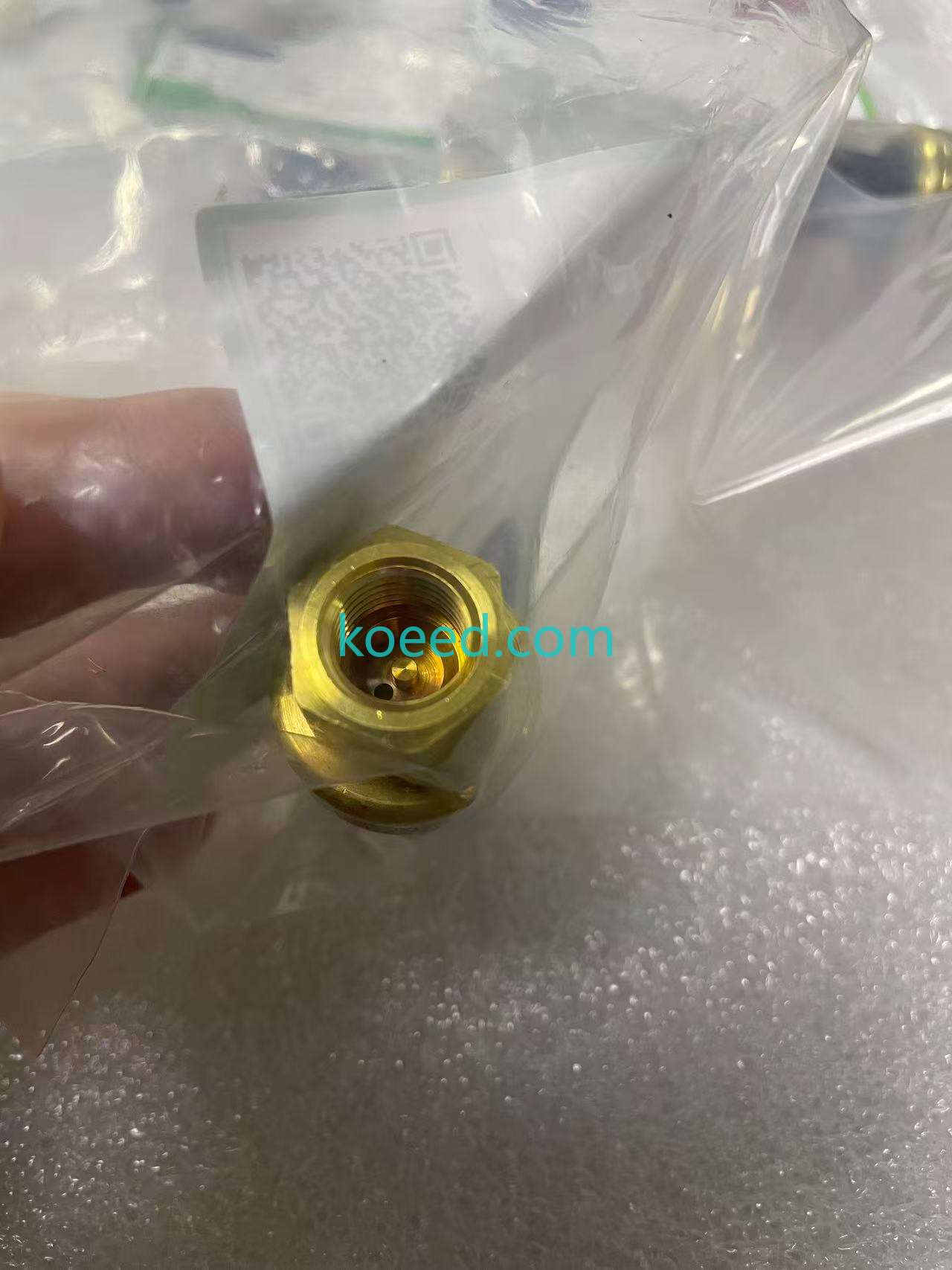
📹 Product Video Inspection: Click here to view the full OP12DA040 dynamic inspection video — confirming pin integrity, housing condition, and OEM labeling under magnification.
ROI & Total Cost of Ownership Analysis (2026)
Quantifying the OP12DA040 Investment
At a unit cost of approximately $100–$115 through authorized channels like Koeed's OP12DA040 supply line, the OP12DA040 delivers an exceptionally compressed payback period when analyzed through the lens of avoided downtime:
| TCO Factor | OEM OP12DA040 | Generic Alternative |
|---|---|---|
| Unit Cost (2026 USD) | $100 – $115 | $35 – $60 |
| Expected Service Life | 5–7 years | 1.5–3 years |
| Annualized Cost | ~$16 – $23/year | ~$12 – $40/year |
| Cost of Unplanned Downtime (1 hr) | $4,500 – $18,000 (cold chain breach scenario) | |
| Warranty Coverage | OEM-backed; Koeed verified | Limited / none |
| Firmware Compatibility Risk | Zero — guaranteed ECU compatibility | Moderate to high — may trigger spurious DTCs |
Sustainability & Energy Efficiency Impact
In 2026, sustainability is not a marketing slogan — it is a regulatory and financial imperative. The OP12DA040 contributes to your facility's decarbonization strategy in measurable ways:
- Precision Pressure Control = Reduced Compressor Load: Accurate pressure readings (±0.5% FS) allow the compressor controller to operate within the optimal envelope, reducing unnecessary cycling. Field studies indicate a 3–7% reduction in compressor energy consumption when legacy transducers are replaced with properly calibrated OEM units.
- Refrigerant Leakage Detection: Subtle pressure deviations — undetectable by coarse sensors — are captured by the OP12DA040's sensitivity profile, enabling early detection of micro-leaks. Under EPA 608 and F-Gas regulations (tightened in 2025–2026), early leak detection is both an environmental and compliance necessity.
- Extended Equipment Lifespan: By preventing compressor operation outside design pressure ranges, the OP12DA040 indirectly extends compressor life, reducing the embodied carbon associated with manufacturing replacement compressors.
Predictive Maintenance: Moving Beyond Reactive Repair
Building a Condition-Based Maintenance Program Around the OP12DA040
The 2026 standard for industrial refrigeration maintenance is condition-based, not calendar-based. The OP12DA040 is the sensory foundation of this paradigm shift. Here is the practical framework:
Phase 1: Baseline Establishment
Upon installing a new OP12DA040 from Koeed's verified inventory, log pressure readings across all operating modes (pull-down, steady-state, defrost) for the first 72 hours. This establishes your system's unique pressure fingerprint.
Phase 2: Threshold Configuration
Program your BMS/PLC with two-tier alert thresholds:
Tier 1 (Advisory): ±8% deviation from baseline — triggers a work order for inspection within 72 hours.
Tier 2 (Critical): ±15% deviation — triggers immediate alert and automated compressor ramp-down.
Phase 3: Trend Analysis
Pipe OP12DA040 data into time-series analytics (InfluxDB, Grafana, or Carrier i-Vu trending). Look for gradual pressure drift — the hallmark of condenser fouling or slow refrigerant loss — rather than waiting for threshold breaches.
Troubleshooting & Maintenance Protocols
Field Diagnostic Checklist for the OP12DA040
Symptom 1: Constant Zero or Negative Pressure Reading
Likely Causes:
• Open circuit on 4–20 mA loop (broken wire, loose terminal)
• Power supply failure to the transducer (verify 8–30 VDC at sensor terminals)
• Damaged sensing diaphragm (physical impact or over-pressure event)
Resolution: Verify loop continuity with a multimeter. If the circuit is intact and power is present but the output remains at 0 mA, the transducer has failed and requires replacement. Source a genuine Carrier OP12DA040 replacement from Koeed.
Symptom 2: Pressure Reading Drifts Over Time
Likely Causes:
• Moisture ingress into the electrical connector (corrosion on pins)
• Ground loop interference on the signal cable
• Sensor aging beyond calibration window
Resolution: Inspect connector for green/white corrosion deposits. Apply dielectric grease to pins after cleaning. If drift exceeds ±2%, replace the transducer — re-calibration of sealed OEM transducers is not field-practical. Order verified units at Koeed's product page.
Symptom 3: Intermittent / Fluctuating Output
Likely Causes:
• VFD-induced EMI on unshielded signal cables
• Vibration loosening the electrical connector
• Internal solder joint fatigue from thermal cycling
Resolution: First, separate signal cables from power cables by at least 30 cm. Add ferrite chokes at both ends of the signal cable. If fluctuations persist, replace the transducer — intermittent electrical faults inside sealed units are non-repairable.
Symptom 4: ECU Throws Pressure Sensor DTC (Diagnostic Trouble Code)
Likely Causes:
• Incompatible aftermarket transducer installed
• Wrong pressure range variant for the application
• Firmware mismatch between transducer calibration table and ECU
Resolution: Verify the transducer is a genuine Carrier OP12DA040. Aftermarket units often produce signals that fall within the electrical range but outside the ECU's expected calibration curve. Replace with an OEM unit from Koeed's OP12DA040 stock and clear DTCs after installation.
Procurement & Authenticity Verification
Counterfeit industrial sensors have proliferated across global supply chains through 2025–2026. The OP12DA040, being a high-demand Carrier Transicold component, is a frequent target. Koeed's sourcing protocol ensures every unit passes multi-point verification:
- Batch-Level Traceability: Every OP12DA040 sold through Koeed's platform is traceable to Carrier's authorized distribution network.
- Visual & Dimensional QC: Housing dimensions, connector pin alignment, and laser-etched markings are verified against Carrier OEM specifications.
- Electrical Bench Test: Each unit undergoes a 4–20 mA output sweep test across its operating pressure range before shipping.
- Packaging Integrity: Units are shipped in anti-static, humidity-controlled packaging to preserve calibration integrity during transit.
Frequently Asked Questions
Is the OP12DA040 compatible with non-Carrier chiller brands?
The OP12DA040 is designed and calibrated specifically for Carrier Transicold ECU firmware. While the 4–20 mA output is electrically compatible with any PLC analog input module, the pressure-to-current calibration curve may not match third-party controller lookup tables. For non-Carrier applications, consult with Koeed's engineering support team before ordering.
What is the typical lead time for OP12DA040 orders in 2026?
Koeed maintains strategic buffer stock of the OP12DA040 to mitigate the supply chain volatility that has characterized the industrial automation sector since 2024. Standard orders ship within 2–5 business days. Expedited shipping options are available at checkout on the product page.
Does the OP12DA040 require periodic re-calibration?
As a sealed, solid-state pressure transducer, the OP12DA040 does not have field-adjustable calibration points. Carrier's OEM design maintains ±0.5% FS accuracy across its rated service life under normal operating conditions. However, for ISO 9001 or GxP-regulated facilities, we recommend a 24-month validation check using a NIST-traceable pressure reference.
Can the OP12DA040 be used in ammonia (NH₃) refrigeration systems?
The OP12DA040 is specified for HFC and HFO refrigerants commonly used in Carrier Transicold units. For ammonia systems, verify material compatibility of the transducer's wetted parts (typically stainless steel diaphragm with elastomeric seals) with your specific refrigerant and oil combination. Contact Koeed's technical team for an application-specific compatibility assessment.
Ready to Secure Your OP12DA040 Inventory?
Whether you need a single replacement unit or a bulk order for fleet-wide predictive maintenance rollout, Koeed's 2026-verified supply chain ensures genuine Carrier OEM transducers with full traceability.
Or visit the full product listing: OP12DA040 on Koeed.com


