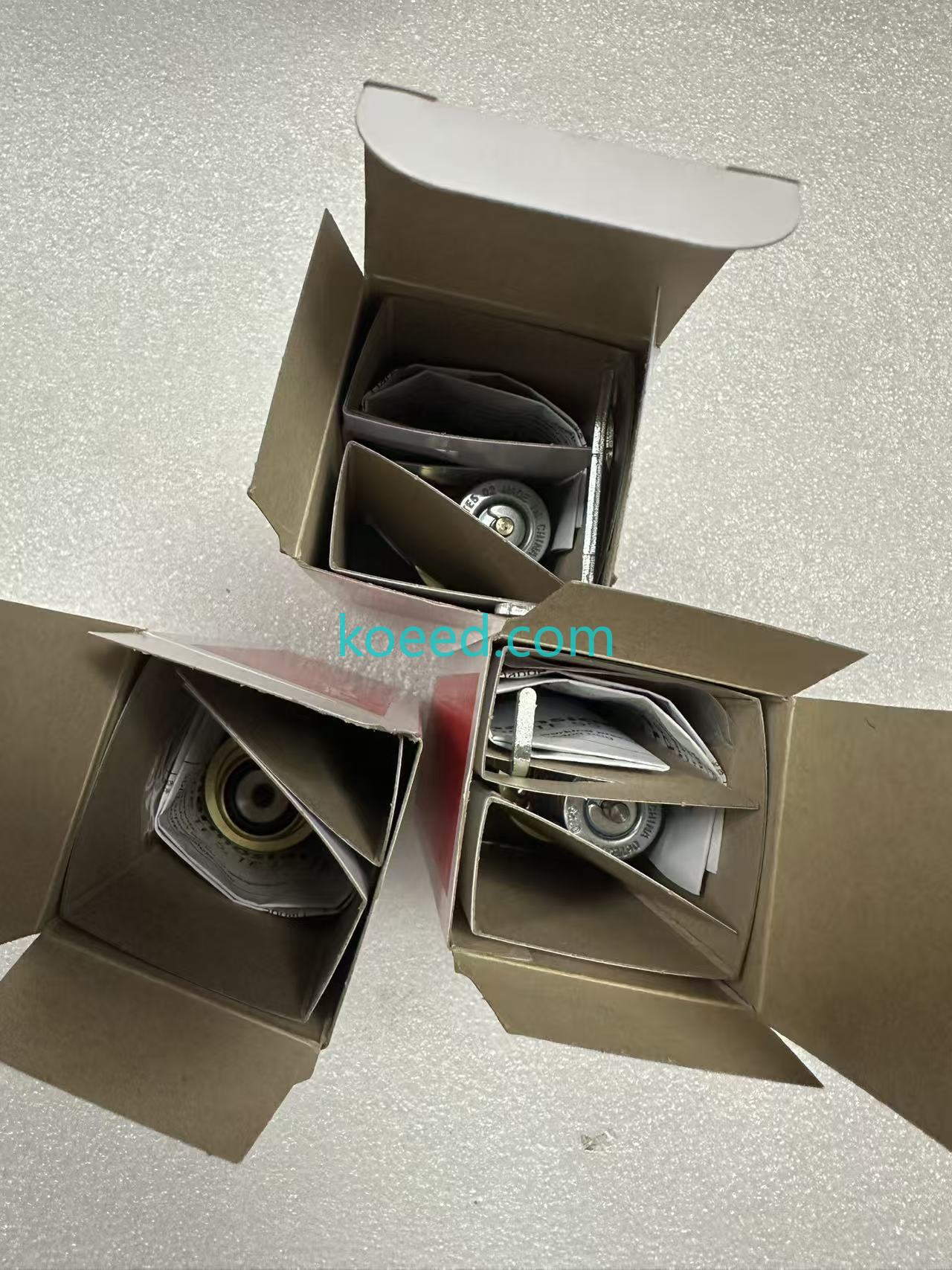
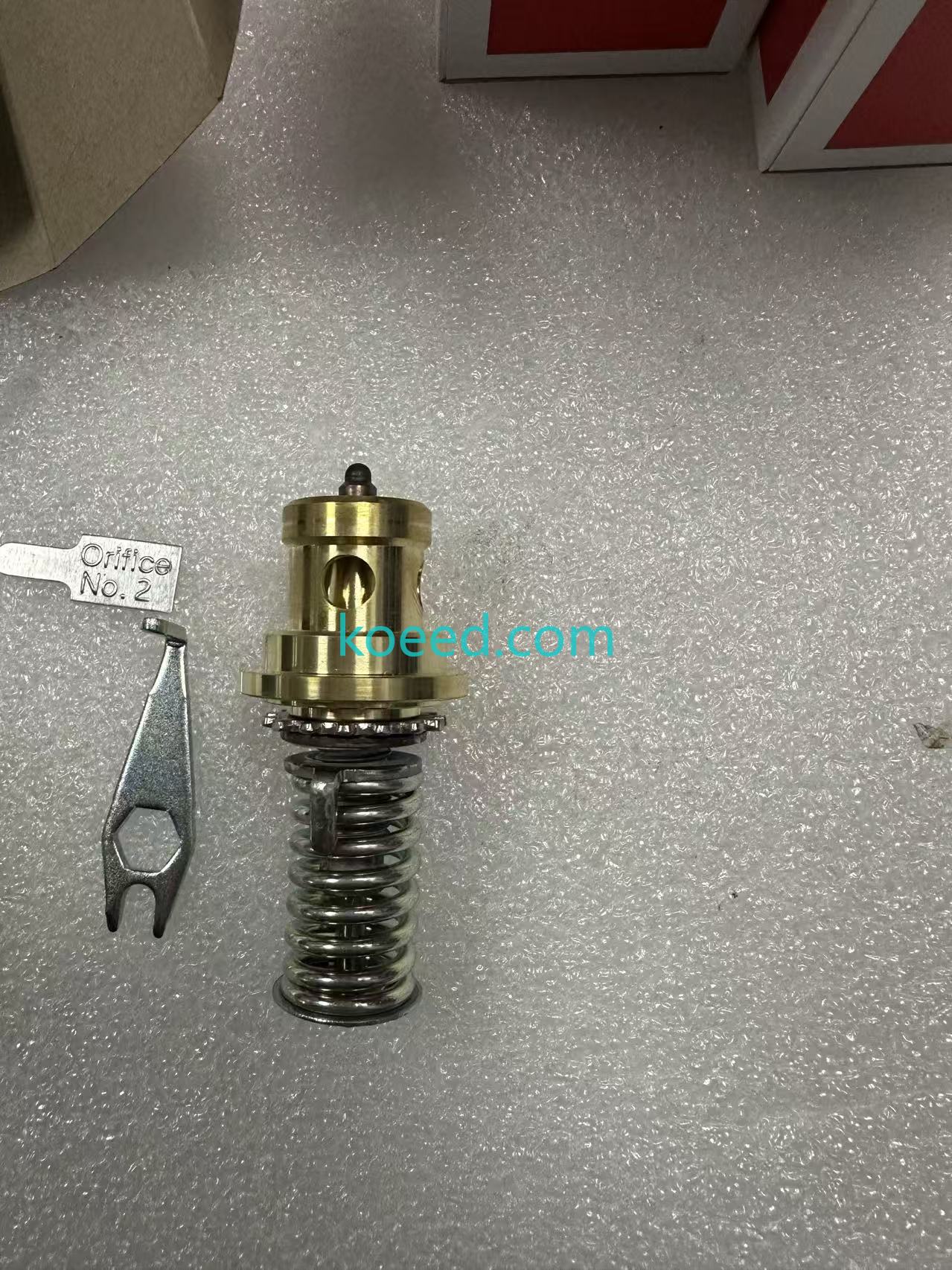
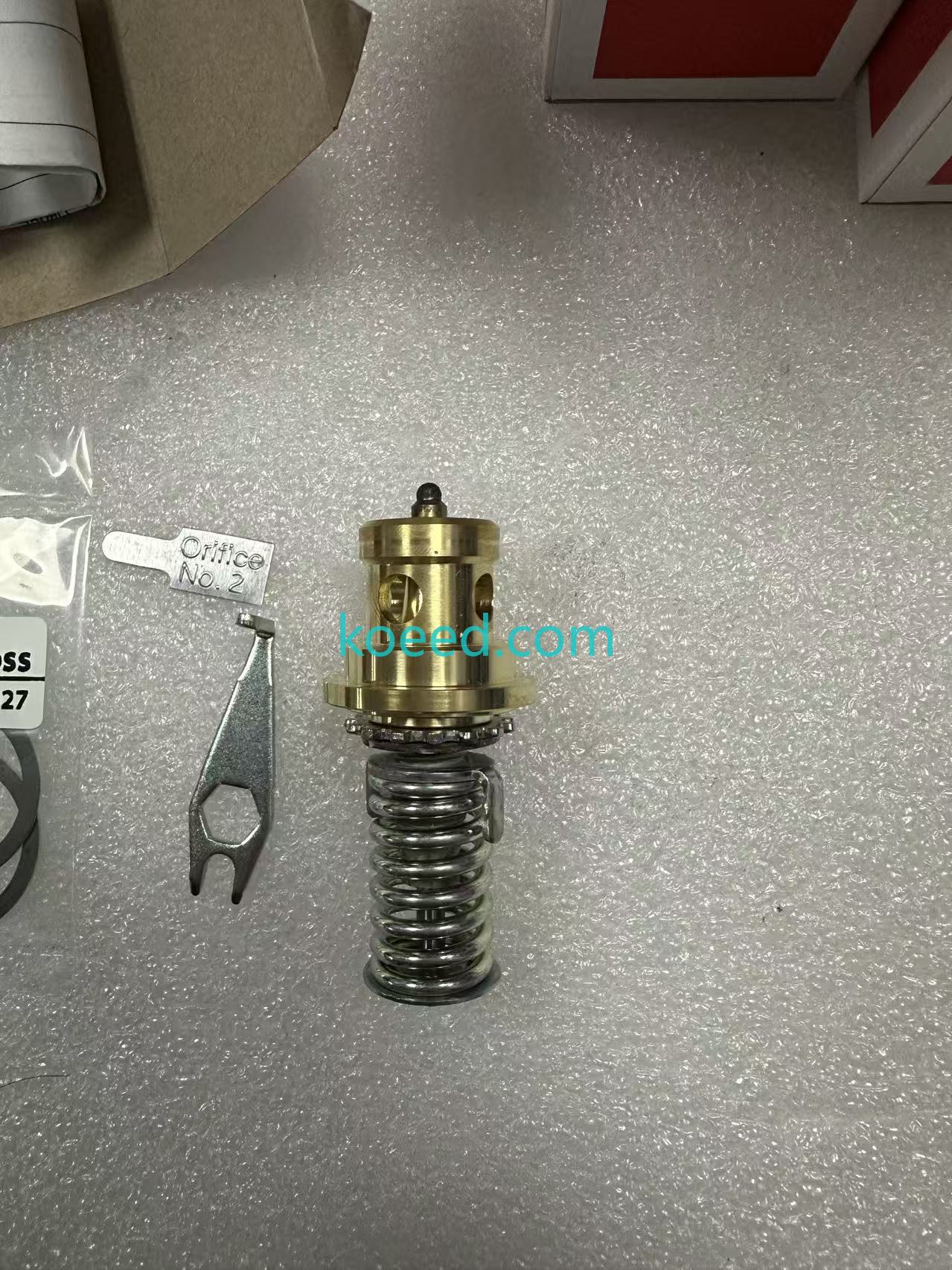
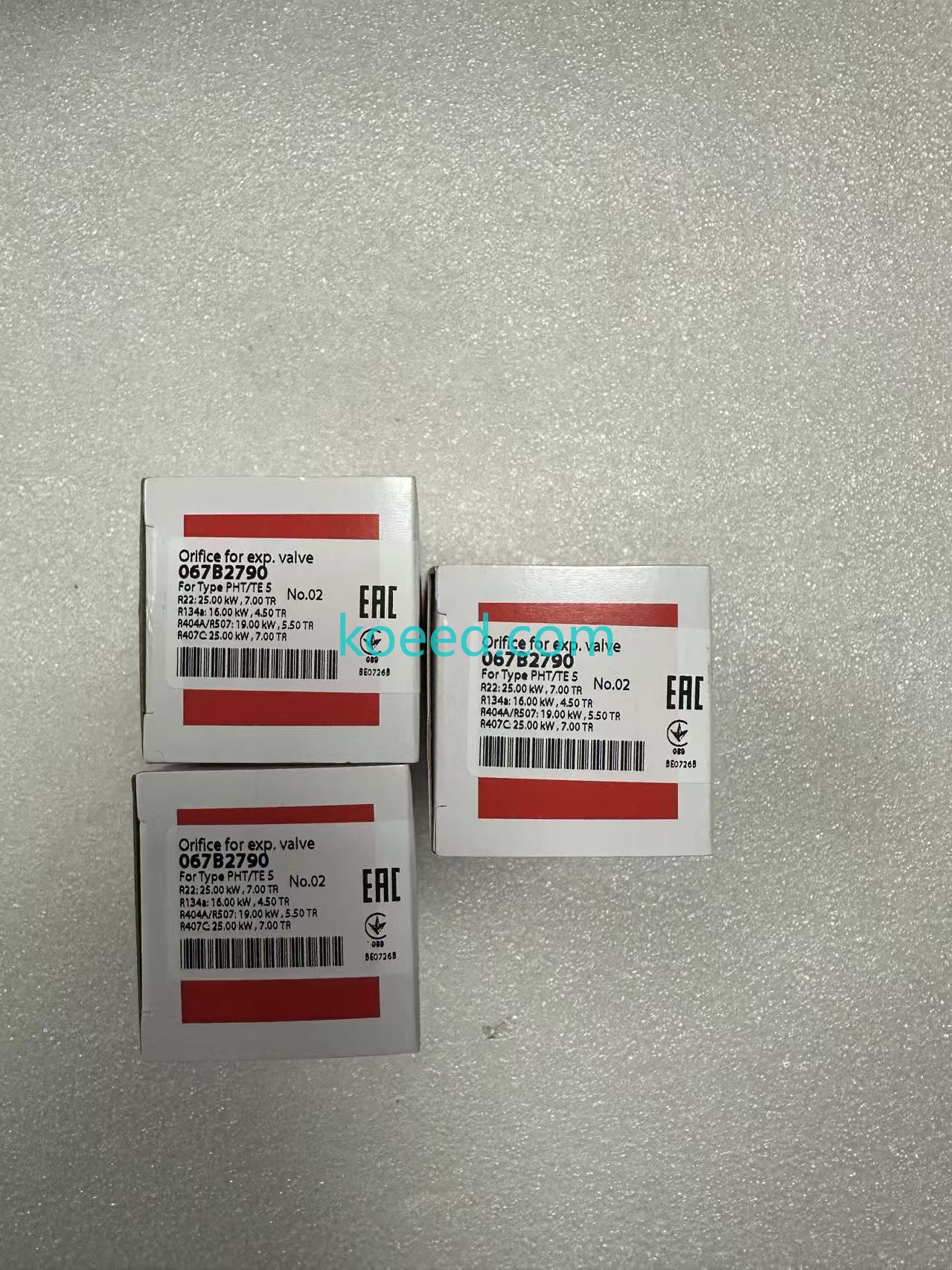
The Danfoss 067B2790 precision orifice assembly represents a critical component within modern thermostatic expansion valve (TXV) systems, engineered for exact refrigerant metering across industrial cooling, cold-chain logistics, and commercial HVAC applications. In the 2026 automation landscape — where IT/OT convergence demands real-time performance data and predictive analytics — this orifice enables the precision flow control that underpins energy-efficient, sustainable refrigeration architectures.
1. Strategic Overview: The 067B2790 in the 2026 Industrial Cooling Ecosystem
As global refrigeration systems transition toward Industry 5.0-ready architectures, the humble expansion valve orifice has emerged as an unexpectedly vital data point in the smart cooling stack. The Danfoss 067B2790 orifice — part of the widely deployed Danfoss T2/TE2 and TUA/TUB series thermostatic expansion valve families — serves as the calibrated gateway determining refrigerant mass flow into the evaporator. Its precision directly impacts superheat control accuracy, which in turn governs compressor efficiency, system COP (Coefficient of Performance), and long-term equipment longevity.
In 2026, three macro-trends elevate the importance of selecting the correct orifice assembly:
1.1 IT/OT Convergence & Smart Refrigeration
Modern industrial refrigeration plants now integrate TXV performance data — superheat values, suction pressure, discharge temperature — into centralized SCADA and cloud-based ERP platforms via OPC UA and MQTT protocols. The Danfoss 067B2790, when paired with compatible smart sensors (such as Danfoss DST P1xx pressure transmitters and AKS temperature sensors), becomes a node in a digital twin environment. Facility managers can remotely monitor whether the orifice is correctly sized for prevailing load conditions, receiving automated alerts when superheat deviates beyond ±1.5K of the target setpoint.
1.2 Sustainability & F-Gas Compliance
With the 2025–2026 phasedown of HFC refrigerants under the Kigali Amendment accelerating globally, systems are transitioning to low-GWP alternatives such as R-290 (propane), R-744 (CO₂), and R-1234yf. The 067B2790 orifice's material compatibility and precise flow characteristics ensure stable operation with these newer refrigerants, minimizing leakage risks and supporting ESG reporting requirements.
1.3 Predictive Maintenance Paradigm
Rather than reactive orifice replacement after valve failure, 2026 best practice leverages continuous superheat trend analysis to predict orifice degradation — caused by erosion, particulate contamination, or waxing from refrigerant oil breakdown — before catastrophic system performance loss occurs. This shifts maintenance from calendar-based to condition-based models, reducing unplanned downtime by up to 35% in benchmarked facilities.
2. Technical Benchmarking: Danfoss 067B2790 Specifications
The table below provides a structured technical comparison of the 067B2790 against its adjacent orifice sizes in the Danfoss modular TXV ecosystem, alongside legacy-equivalent cross-references:
| Parameter |
Danfoss 067B2790 |
Legacy Equivalent (067B2xxx Series) |
Notes |
| Product Type |
Orifice Assembly for TXV |
Replaceable Orifice (Threaded) |
Interchangeable within T2/TE2 family |
| Compatible Valve Series |
T2, TE2, TUA, TUB, TCAE |
T2, TE2 (legacy) |
Extensive backward compatibility |
| Orifice Material |
Precision-Machined Brass / Stainless Steel |
Brass (legacy builds) |
Enhanced corrosion resistance in 2026 production |
| Refrigerant Compatibility |
R-22, R-134a, R-404A, R-407C, R-410A, R-290, R-744, R-1234yf |
Primarily R-22, R-134a, R-404A |
Full low-GWP refrigerant support |
| Capacity Range (Nominal) |
Application-dependent (refer to Danfoss capacity tables) |
— |
Select based on evaporator load |
| Connection Type |
Threaded / Flanged (valve-body dependent) |
Threaded |
Tool-free servicing on modern valves |
| Max Operating Pressure |
Up to 46 bar (R-410A subcritical) |
Varies |
Verify against system PS rating |
| Temperature Range |
-40°C to +70°C |
-40°C to +65°C |
Extended upper limit |
| IoT Readiness |
Compatible with Danfoss Smart TXV monitoring kits (2025+) |
Not supported |
Retrofit sensor packages available |
3. Visual Gallery: Danfoss 067B2790 Orifice Assembly
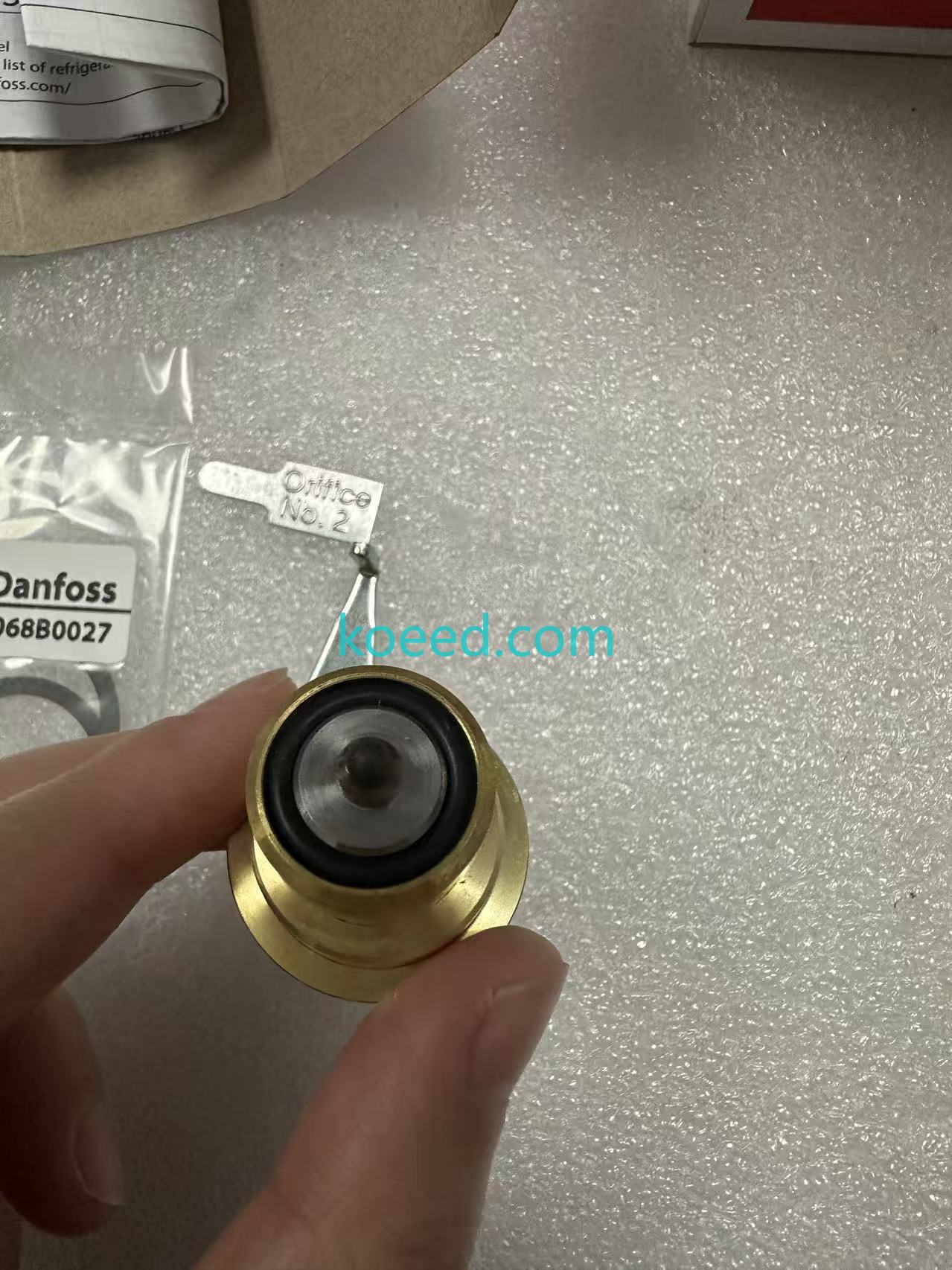
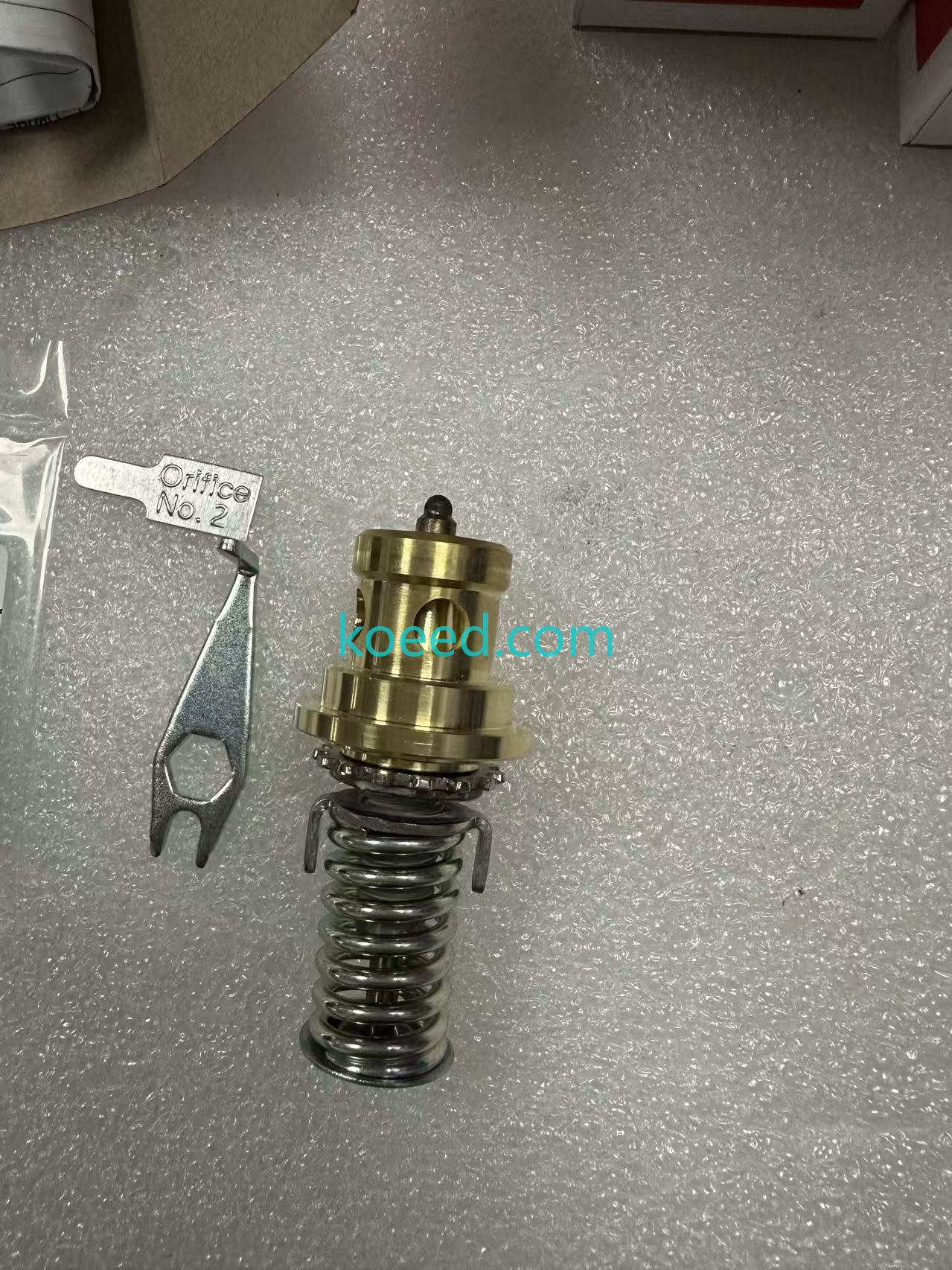
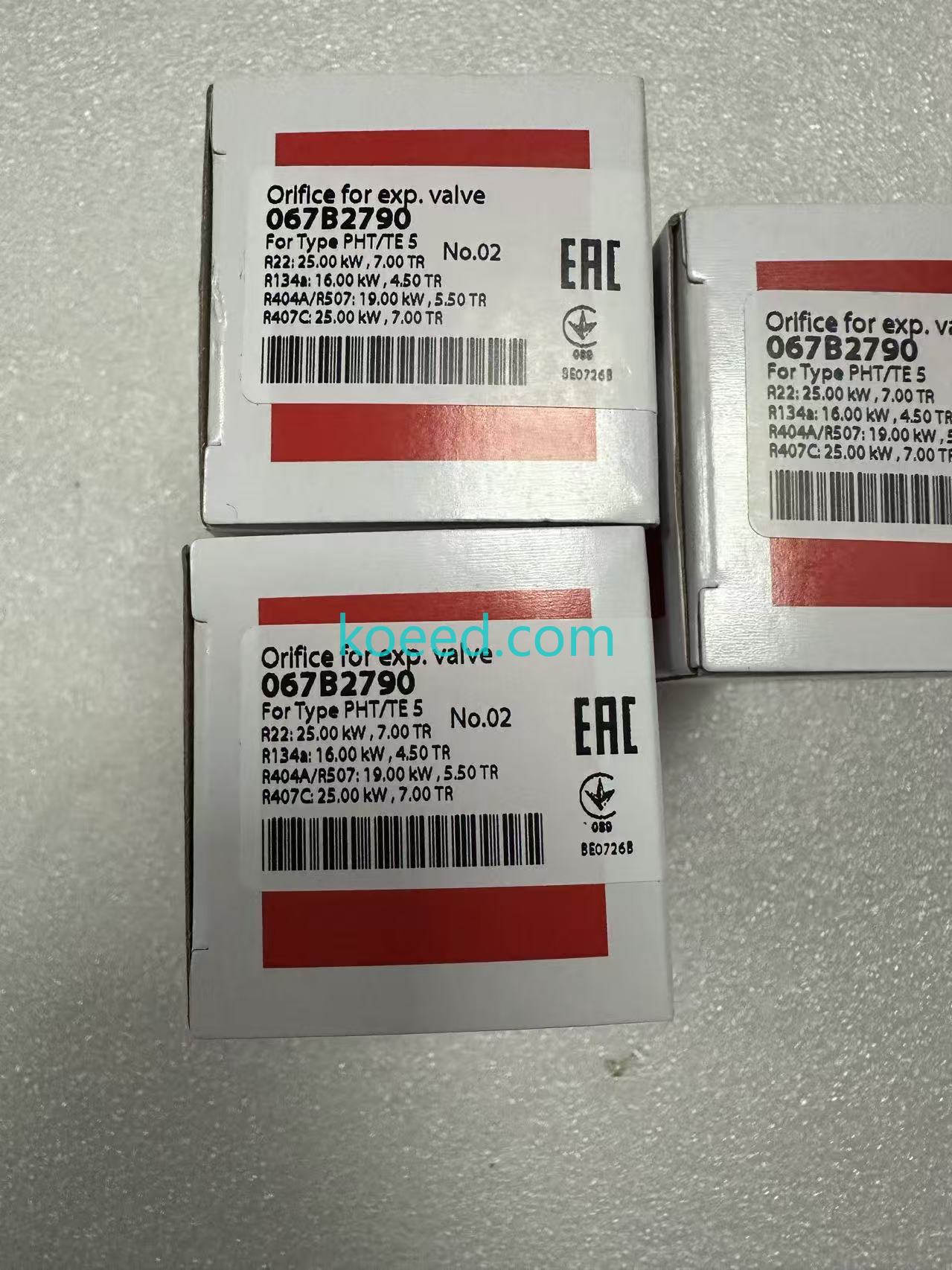
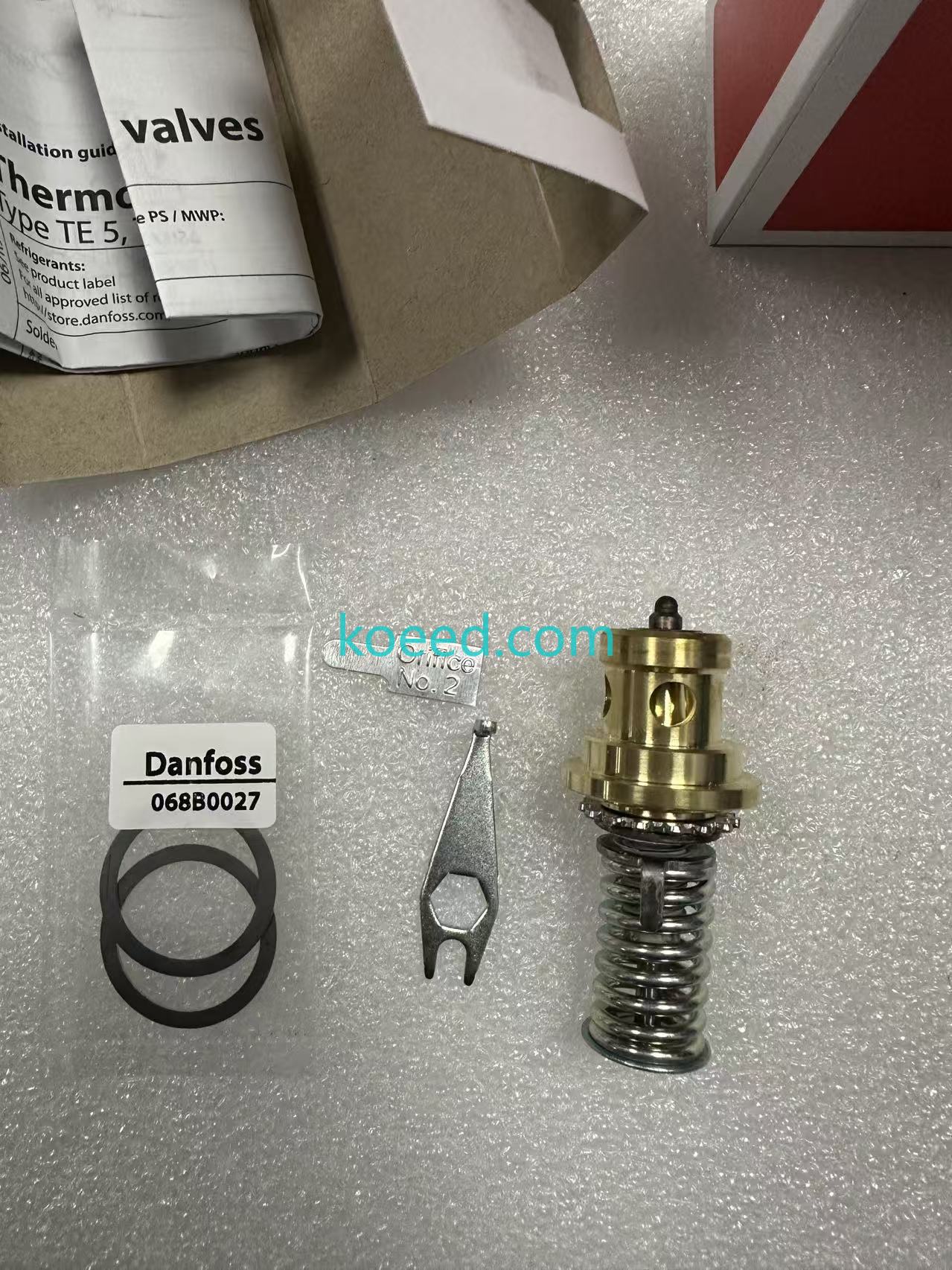
The following images depict the Danfoss 067B2790 orifice from multiple angles, including its precision-machined metering port, threaded interface, and complete assembly context for quality assurance and integration reference:
4. Maintenance & Troubleshooting: Maximizing Orifice Service Life
4.1 Proactive Maintenance Protocol (2026 Best Practice)
⚡ PRO TIP — Predictive Orifice Health Monitoring: Install a Danfoss DST P1xx pressure transmitter and AKS 21M temperature sensor at the evaporator outlet. Feed these signals into a PLC or edge gateway running a real-time superheat calculation algorithm. Configure alert thresholds at SH_target ±2K. Trending superheat data over 30-day windows allows early detection of orifice erosion — typically manifesting as a gradual superheat increase of 0.3–0.5K per week under stable load conditions.
4.2 Common Fault Conditions & Resolution
Fault 1: High Superheat (>12K above target) — Starved Evaporator
Symptoms: Elevated discharge temperature, reduced cooling capacity, compressor overheating risk. Root Cause: Partially blocked orifice due to debris, moisture ice formation (if system not properly evacuated), or incorrect orifice sizing (undersized). Resolution: (1) Verify system moisture content via sight glass; replace filter-drier if indicated. (2) Remove orifice and inspect for particulate blockage — clean or replace with new 067B2790. (3) Cross-check capacity selection against current evaporator load using Danfoss CoolSelector™ 2026 software.
Fault 2: Low Superheat (<2K) — Flooded Evaporator / Liquid Slugging Risk
Symptoms: Compressor suction superheat below safe threshold, risk of liquid refrigerant entering compressor, foaming oil. Root Cause: Oversized orifice for current load, worn orifice (enlarged port due to erosion), or TXV bulb/charge issue. Resolution: (1) Confirm TXV bulb is correctly mounted and insulated on the suction line. (2) Inspect orifice for erosion — replace if port diameter exceeds nominal by >5%. (3) Consider downsizing to a smaller orifice or installing a suction accumulator for compressor protection.
Fault 3: Hunting / Oscillating Superheat (±5K amplitude)
Symptoms: Cyclic superheat swings, audible valve chatter, unstable system pressures. Root Cause: TXV hunting due to oversized valve/orifice combination, insufficient subcooling, or rapid load transients. Resolution: (1) Verify minimum stable signal (MSS) rating of the TXV — the 067B2790 should be paired with a valve whose capacity range comfortably brackets the design load. (2) Ensure ≥5K subcooling at the TXV inlet under all operating conditions. (3) Add a liquid receiver or suction-line heat exchanger to dampen load transients.
4.3 Installation Best Practices
-
Cleanliness: Always purge the liquid line with dry nitrogen before orifice installation. Even microscopic particulates (>25 microns) can cause premature erosion.
-
Torque Specification: Follow Danfoss torque guidelines precisely — over-tightening can deform the orifice seat; under-tightening risks internal leakage and poor superheat control.
-
Lubrication: Apply a thin film of approved refrigerant oil to the orifice O-ring/gasket prior to assembly to ensure proper sealing without twisting.
-
Orientation: Verify correct flow direction — the orifice inlet side faces the liquid line; the outlet meters into the valve body distribution chamber.
-
Documentation: Record the installed orifice part number (067B2790), installation date, and baseline superheat reading in your CMMS for future trend analysis.
5. ROI & Total Cost of Ownership Analysis
Selecting the correctly sized Danfoss 067B2790 orifice delivers measurable financial returns across the asset lifecycle:
| TCO Factor |
Impact with Correct Orifice (067B2790) |
Impact with Incorrect/Generic Orifice |
| Energy Consumption |
COP improvement of 6–12% via optimal superheat |
COP degradation of 8–20% |
| Compressor Lifespan |
Extended by 15–25% (no liquid slugging) |
Reduced by 30–50% (flooded starts, overheating) |
| Unscheduled Downtime |
<2 incidents/year (predictive model) |
4–8 incidents/year (reactive model) |
| Refrigerant Loss |
Minimal (proper system stability) |
Elevated leakage risk from pressure excursions |
| Service Call Frequency |
1–2 planned inspections/year |
6–12 emergency callouts/year |
| Annual Energy Savings (100kW System) |
€1,800–€3,600 (at €0.15/kWh) |
Baseline or negative |
6. Frequently Asked Questions
Q: Is the Danfoss 067B2790 compatible with R-290 (propane) systems?
Yes. The 067B2790 orifice assembly is fully compatible with R-290 (propane) and other A3-class flammable refrigerants when installed within a system designed to relevant safety standards (IEC 60335-2-89, EN 378). Always verify the complete valve body's ATEX/IECEx rating for the specific installation zone.
Q: What is the difference between the 067B2790 and generic aftermarket orifices?
The Danfoss 067B2790 is manufactured to OEM tolerances of ±0.01 mm on the metering port diameter, with material specifications validated for the full range of modern refrigerants. Generic aftermarket parts often lack this precision, leading to superheat control deviation, accelerated wear, and potential warranty voiding on the complete TXV assembly.
Q: Can the 067B2790 be retrofitted into existing legacy Danfoss T2 valves?
Yes. The Danfoss T2/TE2 modular design allows the 067B2790 orifice to be retrofitted into legacy valve bodies dating back to the early 2000s, provided the valve body threads are in serviceable condition. This makes it an ideal drop-in upgrade when converting older R-22 systems to modern low-GWP refrigerants.
Q: How do I verify I have selected the correct orifice capacity?
Use Danfoss CoolSelector™ 2 software (2026 edition), which incorporates the latest refrigerant property databases and allows simulation of part-load conditions. Input your evaporator capacity, refrigerant type, condensing/evaporating temperatures, and subcooling value to receive the recommended orifice code. The 067B2790 will appear in the selection results if it matches your operating envelope.
Ready to Optimize Your Refrigeration System?
Our Koeed B2B automation specialists can provide same-day pricing, volume discounts, and technical compatibility verification for the Danfoss 067B2790 orifice assembly. Integrated logistics ensure delivery to your facility or project site within 3–5 business days globally.