

Yaskawa SGDV-2R8A01A Sigma-5 SERVOPACK: 2026 Retrofit, Specs & SGMJV-04ADA6C Pairing Guide
Yaskawa SGDV-2R8A01A: The 400 W Σ-V SERVOPACK That Still Sets the Benchmark in 2026
Model-code decoding, verified specifications, legacy-to-modern migration math, and a field-proven maintenance playbook for one of the most widely deployed 200 V-class servo drives in the global installed base.
Strategic Overview: Why a Sigma-5 Drive Still Anchors 2026 Production Lines
The Yaskawa SGDV-2R8A01A is a 400 W, 200–230 VAC class SERVOPACK from the Σ-V (Sigma-5) platform — a drive family that shipped in the millions and remains the backbone of semiconductor handlers, packaging lines, CNC tool changers, and legacy SCARA gantries. Because the SERVOPACK is the control component sitting between an AC servo motor and the plant network, its health is a direct input into Overall Equipment Effectiveness (OEE).
Even in 2026, with Sigma-7 and Sigma-X well established, procurement teams keep specifying the SGDV-2R8A01A for one reason: drop-in continuity. Machines were mechanically and electrically designed around Σ-V terminal blocks, connector pinouts, and SigmaWin+ parameter maps. Sourcing tested, guaranteed replacement units from the Yaskawa SGDV-2R8A01A SERVOPACK product page is frequently an order of magnitude cheaper than re-engineering an axis onto a current-generation platform.
Three Forces Shaping Demand for This Drive in 2026
- IT/OT convergence. Drives are no longer dumb actuators — they are data sources. Torque reference, position error, and DC bus voltage telemetry from the SGDV family now feed condition-monitoring and OEE dashboards at the enterprise layer.
- Brownfield preservation vs. rip-and-replace. The matched set of Yaskawa SGMJV-04ADA6C AC servo motor plus SGDV-2R8A01A SERVOPACK is still the fastest, lowest-risk route to restoring a downed axis.
- Decarbonization mandates. A 400 W axis is small; a plant with 300 of them is not. Correct gain tuning (Pn100/Pn101/Pn102) cuts torque ripple, heat rejection, and kWh per produced part.
TL;DR — Key Facts at a Glance
- Model: Yaskawa SGDV-2R8A01A — Σ-V (Sigma-5) SERVOPACK, analog voltage / pulse-train reference type.
- Power class: 400 W (0.4 kW), 3-phase 200–230 VAC, 2.8 Arms continuous output current.
- Best-fit motor: SGMJV-04ADA6C (400 W, 20-bit serial encoder, 3000 rpm rated).
- Modern counterpart: Sigma-7 SGD7S-2R8A00A002 — electrically comparable, not a bolt-for-bolt drop-in.
- Bottom line: Repair and re-source before you re-engineer. Verified stock beats a redesign every time.
Technical Benchmarking: Model Code Decoder & Full Specification Set
Decoding the Model Number SGDV-2R8A01A
| Code Segment | Meaning |
|---|---|
| SGDV | Yaskawa Sigma-5 (Σ-V) SERVOPACK product family |
| 2R8 | Continuous output current rating: 2.8 Arms (≈ 400 W class) |
| A | 200–230 VAC main circuit input, 3-phase, 50/60 Hz |
| 01 | Reference interface: analog voltage (±10 V) and pulse-train command |
| A | Design revision — STO-capable hardware in this revision class |
That trailing revision character matters in the field. A revision mismatch between a replacement SERVOPACK and an existing motor encoder can surface as A.810 or A.820 encoder alarms on first power-up. Always confirm encoder type, bit count, and battery status before commissioning a replacement unit.
Full Specification Table — SGDV-2R8A01A
| Parameter | Specification | Field Notes |
|---|---|---|
| Series / family | Yaskawa Sigma-5 (Σ-V), SGDV series | Legacy platform, still broadly supported |
| Rated output capacity | 400 W (0.4 kW) | Constant-torque duty at rated load |
| Continuous output current | 2.8 Arms | Derived directly from the “2R8” code |
| Peak (instantaneous) current | ≈ 3× continuous for short acceleration peaks | Governed by I²t electronic overload protection |
| Main circuit input | 3-phase 200–230 VAC (+10% / −15%), 50/60 Hz | Confirm single-phase allowance against your manual revision |
| Control method | Sine-wave PWM, vector control | Position, speed, and torque control modes |
| Compatible motors | SGMJV-04A, SGMGV-04A, SGMPS-04A, SGMAV-04A | 400 W class rotary servo motors |
| Encoder feedback | 20-bit serial (1,048,576 ppr) | Incremental and absolute variants |
| Command interface | Analog ±10 V / pulse train | “01” suffix denotes reference-input type |
| Fieldbus options | MECHATROLINK-II, DeviceNet, PROFIBUS-DP, EtherCAT (option module) | Module availability depends on drive revision |
| Safety function | Safe Torque Off (STO) | Verify wiring and SIL claim against the manual |
| Tuning & monitoring | SigmaWin+ over USB | Trace, autotuning, alarm history, parameter copy |
| Cooling | Natural convection / internal fan by rating | Maintain minimum 50 mm panel clearance |
Matching Motor & Encoder Ecosystem
The canonical pairing is the SGMJV-04ADA6C — a 400 W, 200 VAC servo motor with a 20-bit serial encoder and 3000 rpm rated speed. Yaskawa engineered encoder pairing logic, gain defaults, and electronic gear ratios (Pn202/Pn203) around this exact motor-drive couple. Deviating from it is possible, but it forces manual re-derivation of the gear ratio and can degrade settling time on high-cycle indexing axes.
Legacy vs. Modern: SGDV-2R8A01A Against the Sigma-7 SGD7S-2R8A00A002
| Attribute | SGDV-2R8A01A (Σ-V) | SGD7S-2R8A00A002 (Σ-7) | Migration Note |
|---|---|---|---|
| Platform era | Sigma-5 (2007 generation) | Sigma-7 (current generation) | Both supported; Σ-V is legacy tier |
| Power class | 400 W / 2.8 Arms | 400 W / 2.8 Arms | Identical shaft-power envelope |
| Encoder resolution | 20-bit (1,048,576 ppr) | 24-bit (16,777,216 ppr) | Higher resolution requires the newer motor |
| Autotuning | Advanced autotuning + one-parameter tuning | Tuning-less, model-based autotuning | Σ-7 dramatically shortens commissioning |
| Network options | MECHATROLINK-II, DeviceNet, PROFIBUS-DP, EtherCAT module | MECHATROLINK-III, EtherCAT, EtherNet/IP, PROFINET | Σ-7 aligns with modern plant networks |
| Mechanical footprint | Baseline Σ-V envelope | Smaller, higher panel density | Not a bolt-for-bolt drop-in |
| Best used when… | Restoring an existing Σ-V machine quickly | Net-new axis or full controls refresh | Match the sourcing strategy to the asset |
If the axis is a like-for-like repair, stay with Σ-V. If you are rebuilding the machine’s controls layer anyway, the Yaskawa SGD7S-2R8A00A002 SERVOPACK is the forward-compatible choice — but budget for re-termination, new motor cables, and a re-tune.
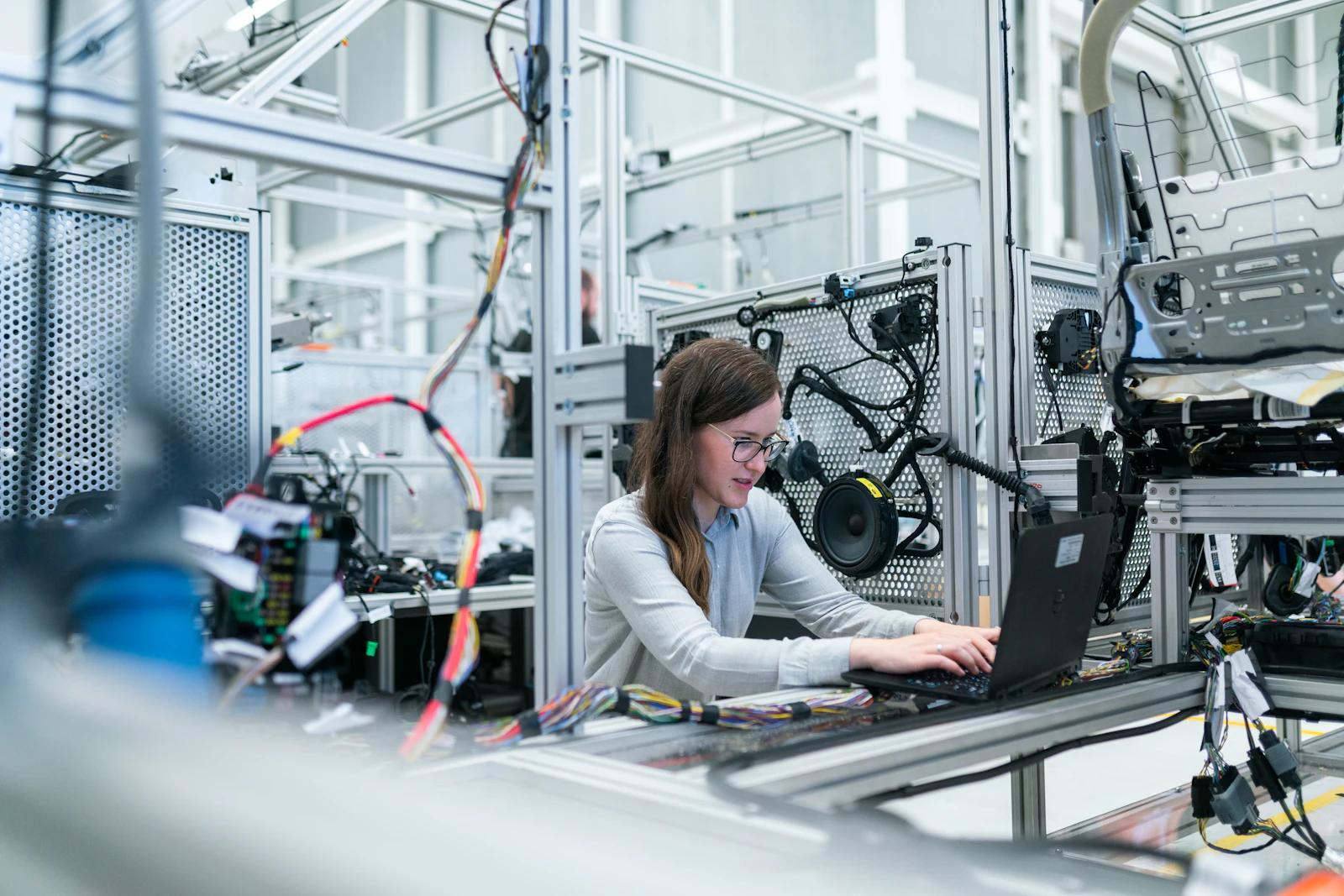
Visual Gallery: Inside a Σ-V Deployment


Video Walkthroughs: Commissioning, Tuning & Thermal Checks
Two reference clips: an external Sigma-5 commissioning walkthrough, and two short MP4 segments covering basic drive checkout and a thermal/load verification pass.

External walkthrough — Sigma-5 SERVOPACK power-up, JOG operation, and parameter verification.
IT/OT Convergence, ROI & the 2026 Energy Mandate
Total Cost of Ownership: Repair vs. Re-Engineer
For a single 400 W axis, the arithmetic is rarely close. A re-engineered axis typically carries a new SERVOPACK, a new motor, new cables, bracket modification, PLC program changes, and 8–20 hours of engineering time. Restoring the existing SGDV-2R8A01A axis with verified stock usually requires the drive, a parameter load, and a two-hour validation run. In most brownfield cases the retrofit path lands at 20–35% of the total cost of a platform migration, with a fraction of the production downtime.
Decarbonization & Energy Efficiency
A 400 W axis at 60% average load draws roughly 0.25 kWh per hour of run time. Across 300 axes and 6,000 operating hours a year, that is on the order of 450 MWh annually — a figure sustainability teams now track line by line. Three low-capital interventions deliver measurable reductions: re-tuning the speed loop (Pn100) to eliminate hunting, enabling regenerative energy reuse where the DC bus is common, and replacing a chronically overloaded drive rather than allowing it to run hot and inefficient.
Predictive Maintenance: Turning the Drive into a Sensor
The SGDV platform exposes real-time monitors (Un000 motor speed, Un001 torque reference, Un007 input signal monitor, Un008 output signal monitor) that can be polled through SigmaWin+ or an optional fieldbus module. The practical playbook is trend-based:
- Rising torque reference at constant load → mechanical binding, failing bearing, or lubrication breakdown.
- Growing position error (following error) → gain drift, coupling backlash, or encoder degradation.
- Increasing DC bus voltage excursions → regenerative energy not being absorbed; check brake resistor and cycle profile.
Capturing these trends on a 30-day rolling baseline converts the drive from a reactive failure point into an early-warning node in your IT/OT data architecture.
Maintenance & Troubleshooting Playbook
Preventive Maintenance Cadence
- Monthly: verify cabinet cooling fans and intake filters; confirm ambient stays under the rated temperature.
- Quarterly: back up parameters via SigmaWin+; trend the torque reference monitor for drift.
- Annually: inspect and re-torque main circuit terminals; test STO wiring integrity; replace absolute-encoder backup batteries on schedule.
- Every 5–7 years: plan for DC bus capacitor aging. Ripple current and capacitance loss are the primary end-of-life mechanisms on this platform.
Alarm Code Resolution Table
| Alarm | Name | Most Common Root Cause | First Action |
|---|---|---|---|
| A.100 | Overcurrent | Short circuit in motor or power cable, IGBT failure | Disconnect motor leads and insulation-test |
| A.400 | Overvoltage (main circuit) | Excess regenerative energy, wrong brake resistor | Check deceleration profile and resistor sizing |
| A.410 | Undervoltage (main circuit) | Phase loss, blown fuse, sagging supply | Measure L1/L2/L3 at the drive terminals |
| A.510 | Overspeed | Runaway command, reversed encoder direction | Verify reference polarity and encoder wiring |
| A.520 | Vibration alarm | Resonance, loose coupling, gain too high | Enable vibration suppression filters; reduce Pn100 |
| A.710 | Overload (high load) | Mechanical binding, wrong inertia ratio | Run JOG unloaded; compare torque reference trend |
| A.720 | Overload (continuous max) | Sustained duty above rating, undersized motor | Recalculate load cycle against continuous rating |
| A.731 | Overcurrent (gate drive) | Internal drive fault or arc in power cable | Bench-test the drive before replacing |
| A.810 | Encoder backup alarm | Absolute encoder battery depleted | Replace battery and reset multiturn data |
| A.820 | Encoder checksum error | Faulty encoder or damaged encoder cable | Swap cable first, then motor |
| A.830 | Battery alarm | Battery voltage low, normal aging | Schedule battery replacement; do not defer |
| A.860 | Encoder overheat | Motor overloading, poor ventilation | Check duty cycle and cabinet airflow |
| A.C10 | Servo overrun | Excessive position error, blocked axis | Inspect mechanics before resetting |
| A.C90 | Encoder communications error | Shield grounding, cable routing, EMI | Separate encoder cable from motor power |
| A.E02 | Encoder data error (multiturn) | Data corruption, battery loss during power-down | Clear and re-initialize multiturn data |
Always cross-reference the alarm list in the Yaskawa Sigma-5 SERVOPACK manual for your exact firmware revision — code naming has been refined across revisions.
Pro Tips for Longevity
Interactive FAQ
Is the SGDV-2R8A01A a direct replacement for other SGDV-2R8A models?
Mechanically and electrically, yes within the 2R8 current class. However the trailing suffix characters encode the reference interface and revision level. A “01” unit is analog/pulse reference; fieldbus-native suffixes are not interchangeable without a control architecture change. Always match the suffix.
Can I run the SGDV-2R8A01A with a Sigma-7 motor?
Not directly. Sigma-7 motors use 24-bit encoders and a different serial protocol. Pair the SGDV-2R8A01A with Sigma-5 generation motors such as the SGMJV-04ADA6C, or move the whole axis to Sigma-7.
How do I reset the absolute encoder on a Sigma-5 axis?
Use the utility function for multiturn reset (Fn011-class) via SigmaWin+ or the drive front panel, after replacing the backup battery. Confirm the encoder battery is healthy first, or the alarm will return after the next power cycle.
What causes A.710 overload alarms at low mechanical load?
Usually one of three things: an incorrect moment-of-inertia ratio (Pn103), excessive gain producing oscillation, or a partially seized mechanical element. Run the axis unloaded in JOG and trend the torque reference monitor to isolate it quickly.
Is Sigma-5 still supported in 2026?
Yes. The Σ-V platform remains supported with service and replacement inventory across the aftermarket. Availability of specific ratings fluctuates, which is why verified-stock sourcing matters for planned and unplanned maintenance alike.
Ready to Restore Your Σ-V Axis?
Get a quote on tested, verified Yaskawa SGDV-2R8A01A SERVOPACK units and matched SGMJV-04ADA6C servo motors — or ask our engineers whether a Sigma-7 migration makes sense for your specific machine.
Request a QuoteChat on WhatsApp


