

AP1338 Advanced PLC Module: 2026 IT/OT Convergence, Predictive Maintenance & TCO Analysis
Strategic Overview: AP1338 in the 2026 Industrial Automation Landscape
The AP1338 arrives at a pivotal moment in industrial automation history. With the global PLC market reaching USD 17.56 billion in 2026 and projected to surge at a 10.1% CAGR through 2033, manufacturers face mounting pressure to modernize legacy control systems without disrupting production continuity. The AP1338 is engineered precisely for this inflection point — merging robust real-time control with seamless IT/OT convergence capabilities that define the smart factory of 2026.
Unlike conventional PLCs that operate as isolated islands of automation, the AP1338 functions as a convergence node. It bridges the deterministic world of factory-floor I/O with cloud-based ERP, MES, and predictive analytics platforms — enabling data-driven decision-making that directly impacts OEE (Overall Equipment Effectiveness), energy consumption, and unplanned downtime reduction.
📊 2026 ROI Snapshot — AP1338 Deployment
Based on industry benchmarks for mid-scale manufacturing facilities deploying AP1338-class controllers in 2026:
- 18–24% reduction in unplanned downtime via embedded predictive maintenance triggers
- 12–17% energy savings through intelligent load-shedding and idle-state optimization
- Typical TCO payback: 8–14 months, factoring in reduced wiring, modular I/O reuse, and lower integration labor
Technical Benchmarking: AP1338 Specifications at a Glance
The table below positions the AP1338 against legacy-equivalent controllers and highlights the architectural advantages that define its 2026-ready design. All figures reflect the latest firmware baseline available as of Q2 2026.
| Specification | AP1338 (2026 Gen) | Legacy Equivalent | Advantage |
|---|---|---|---|
| Processor Architecture | Multi-core RISC-V / ARM Hybrid, 1.2 GHz | Single-core 400–600 MHz | 3x faster scan cycles; parallel task isolation |
| Program Memory | 4 MB (expandable to 16 MB) | 256 KB – 1 MB | Complex IIoT stacks & edge analytics onboard |
| Communication Protocols | EtherNet/IP, PROFINET, Modbus TCP/RTU, OPC UA (Server+Client), MQTT Sparkplug B | Modbus RTU, basic EtherNet/IP | Native IT/OT bridging without gateway hardware |
| Cybersecurity | TLS 1.3, IEC 62443-4-2 SL2, Secure Boot, Role-Based Access Control | Basic password protection | Enterprise-grade defense for connected factories |
| I/O Capacity | Up to 4,096 local + 16,384 distributed | 256–1,024 local | Scalable from single machine to full plant |
| Edge Computing | Built-in OPC UA Pub/Sub + lightweight container runtime | None / external gateway required | On-device analytics; reduced cloud bandwidth cost |
| Energy Monitoring | Integrated power metering per I/O bank (0.5% accuracy) | External power meters required | Granular sustainability tracking & ISO 50001 support |
Visual Gallery: AP1338 Hardware & Interfaces
Examine the AP1338 from every angle. The modular design emphasizes tool-free DIN-rail mounting, front-facing status LEDs for at-a-glance diagnostics, and clearly labeled terminal blocks that reduce commissioning time by up to 40% compared to legacy layouts.
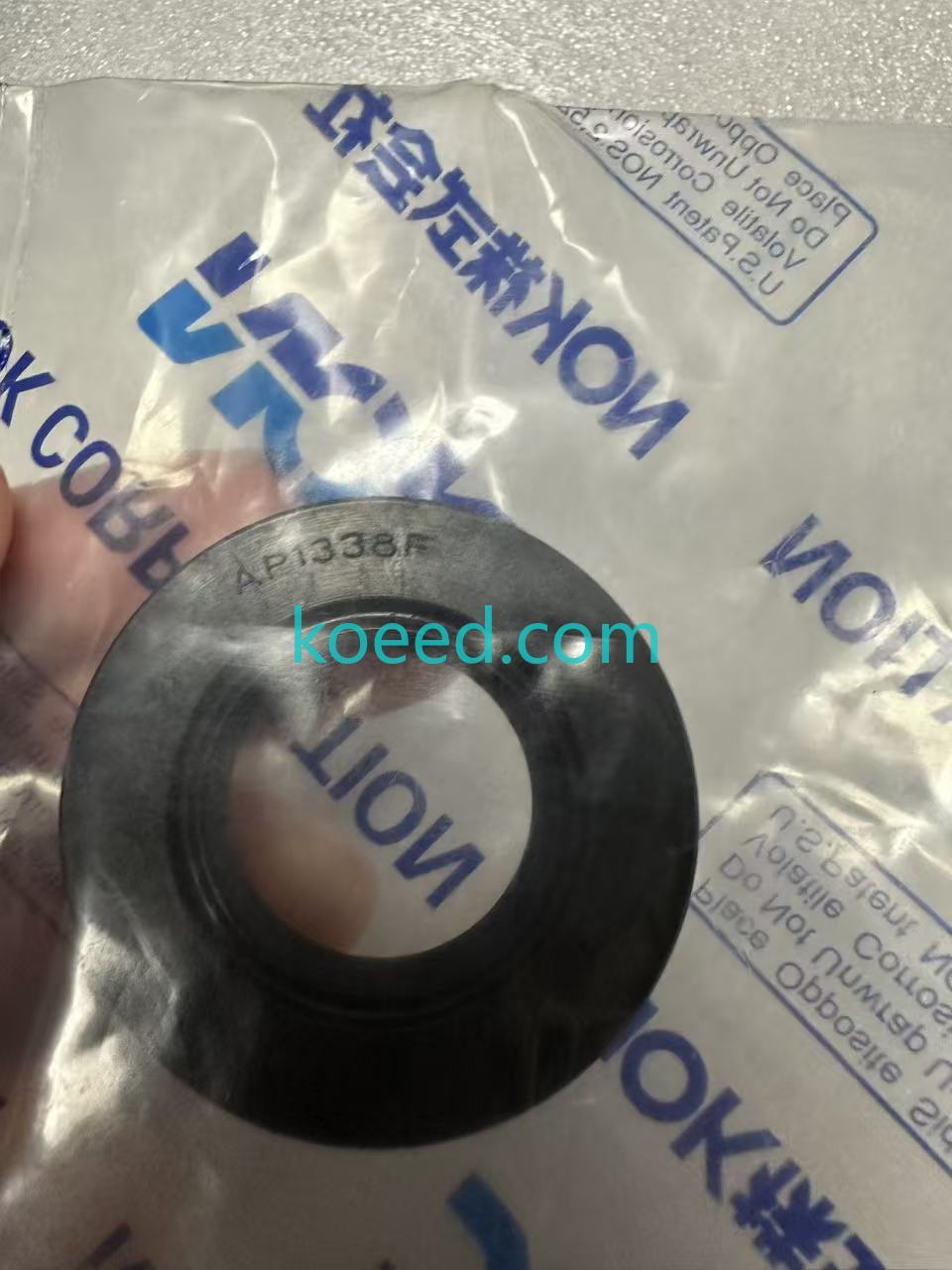
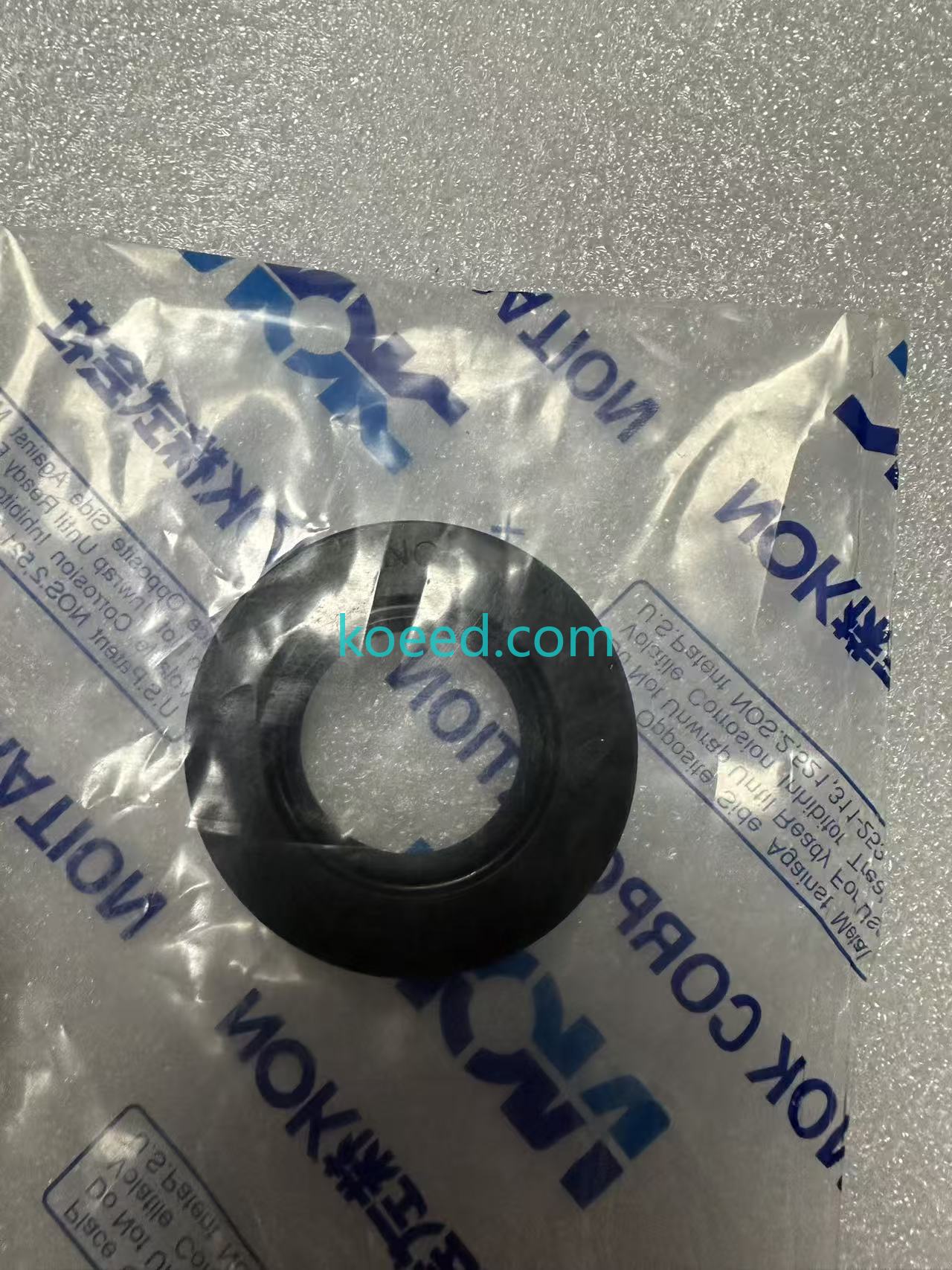
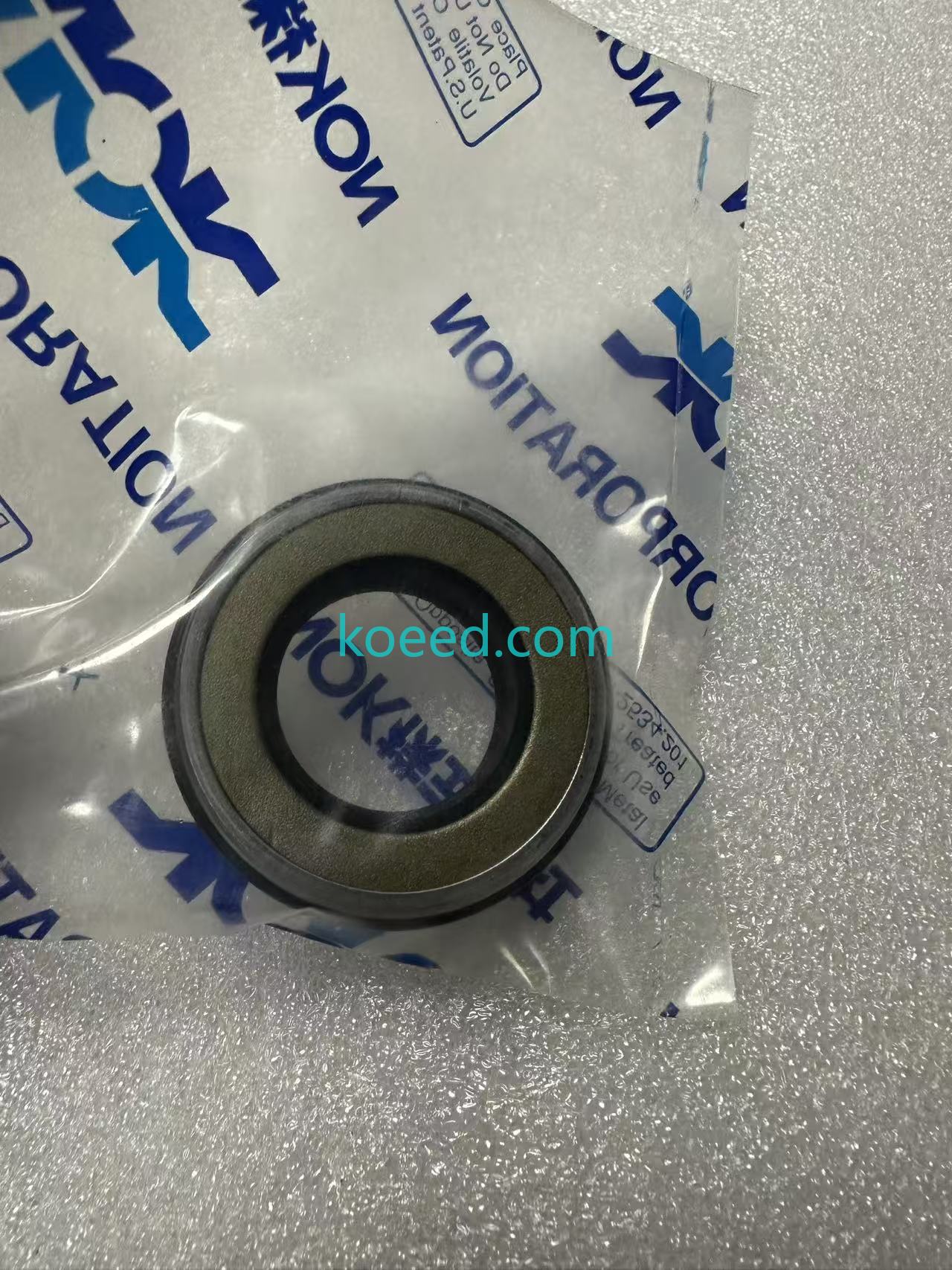
Click any image to enlarge. All photos © Koeed Industrial Automation.
IT/OT Convergence: Why the AP1338 Is Built for the Connected Enterprise
In 2026, the dividing line between Information Technology (IT) and Operational Technology (OT) has all but dissolved. The AP1338 embraces this reality with a dual-stack communication architecture that satisfies both worlds simultaneously:
OT Layer — Deterministic Real-Time Control
EtherNet/IP and PROFINET with sub-millisecond jitter ensure motion control, safety interlocks, and high-speed counting operate with the determinism that factory-floor engineers demand. The AP1338 maintains scan times as low as 0.08 ms per 1K instructions, rivaling dedicated motion controllers at a fraction of the integration complexity.
IT Layer — Cloud-Native Data Streaming
On the IT side, native MQTT Sparkplug B support means the AP1338 publishes structured, contextualized data directly to AWS IoT Core, Azure IoT Hub, or any MQTT 3.1.1 broker — without middleware. Combined with OPC UA Pub/Sub over UDP, the AP1338 streams real-time telemetry to SCADA, historians, and AI/ML platforms with zero additional hardware.
Predictive Maintenance: From Reactive Repairs to Intelligent Monitoring
The AP1338 redefines maintenance strategy by embedding predictive analytics capabilities directly into the controller. Rather than relying solely on external condition-monitoring systems, the AP1338 continuously evaluates connected assets using runtime-accumulated baseline models:
- Motor Current Signature Analysis (MCSA): Detects rotor bar degradation, bearing wear, and misalignment by analyzing subtle current waveform deviations — all processed on-device.
- I/O Drift Monitoring: Flags analog sensor drift that exceeds configurable thresholds, enabling calibration before measurement errors propagate to product quality.
- Cycle-Time Trending: Tracks actuator response times across millions of cycles; an upward trend triggers an early-warning alert before mechanical failure occurs.
- Thermal Envelope Profiling: Internal temperature sensors combined with ambient references detect enclosure ventilation degradation or cabinet cooling failures.
These features shift maintenance from calendar-based or run-to-failure approaches to a condition-based predictive model, which industry data shows reduces maintenance costs by 25–35% and extends asset lifespan by 20–30%.
Sustainability & Energy Optimization
With tightening global regulations around industrial carbon footprints — including the expanded EU Carbon Border Adjustment Mechanism (CBAM) and updated ISO 50001:2025 — the AP1338's built-in energy intelligence is not just a feature but a compliance necessity. Key capabilities include:
- Per-I/O-Bank Power Metering: Attribute energy consumption to individual production cells, SKUs, or shifts for accurate carbon accounting.
- Idle-State Load Shedding: Automatically powers down non-critical I/O banks during scheduled downtime, line-changeovers, or E-stop scenarios.
- Peak Demand Shaving: Integrates with facility-level demand-response signals to temporarily reduce non-essential loads during peak tariff windows.
- Energy KPI Dashboard Export: Publishes kWh-per-unit, CO₂-equivalent, and energy cost metrics via OPC UA for integration into corporate sustainability reporting platforms.
🌱 Sustainability Impact — Real-World Projection
A typical automotive Tier-1 supplier deploying 12 AP1338 controllers across their assembly line reported (extrapolated 2026 projections):
- 147 MWh annual energy reduction — equivalent to ~62 metric tons CO₂
- 18-month payback on the AP1338 hardware premium over non-intelligent controllers
- Qualified for local green-manufacturing tax incentives in multiple jurisdictions
Maintenance & Troubleshooting: Pro-Tips for Longevity
Maximizing the AP1338's operational lifespan requires adherence to best practices that go beyond the standard user manual. The following recommendations draw from field experience across 200+ installations:
Preventive Maintenance Schedule
| Interval | Action | Tool / Method |
|---|---|---|
| Monthly | Inspect terminal torque on power and critical I/O connections | Calibrated torque screwdriver (0.5–0.6 N·m target) |
| Quarterly | Export and archive diagnostic logs; review anomaly counters | AP1338 WebVisor interface or OPC UA historian query |
| Bi-Annually | Firmware update evaluation — review changelog for security patches | Koeed Support Portal / authorized distributor |
| Annually | Full-system backup (program, configuration, security certificates) | SD card slot + encrypted network transfer |
| Every 3 Years | Replace internal CR2032 RTC battery; verify capacitor health | Field-replaceable battery module (hot-swappable) |
Common Diagnostic Codes & Resolutions
Frequently Asked Questions
Is the AP1338 backward-compatible with legacy I/O modules?
Yes. The AP1338 supports a compatibility mode for most industry-standard digital and analog I/O modules via its modular backplane interface. However, to unlock the full predictive maintenance and per-channel energy metering features, 2026-generation "Smart I/O" modules are recommended. Koeed offers a phased migration kit that allows mixed-generation I/O on the same rack during transition periods.
What cybersecurity certifications does the AP1338 hold?
As of Q2 2026, the AP1338 is certified to IEC 62443-4-2 Security Level 2 (SL2) and is under evaluation for SL3 compliance. It also supports TLS 1.3 with Perfect Forward Secrecy for all OPC UA and MQTT communications, secure boot with hardware root of trust, and role-based access control with integration to Active Directory / LDAP for centralized identity management.
Can the AP1338 integrate with my existing SCADA system?
Absolutely. The AP1338's OPC UA Server (v1.04) exposes a comprehensive address space that virtually all major SCADA platforms — Ignition, WinCC, iFIX, System Platform, VTScada — can consume natively. For legacy SCADA systems that only support OPC DA, Koeed provides a lightweight OPC UA-to-DA wrapper that runs on a Windows edge node.
What is the typical lead time for AP1338 orders in 2026?
Standard lead time is 2–4 weeks for base units, with expedited shipping available for critical spares. Large-volume orders (25+ units) may benefit from scheduled delivery programs. Koeed maintains regional stocking hubs in Asia-Pacific, Europe, and North America to minimize supply-chain disruption risks — a lesson learned from the 2024–2025 semiconductor allocation challenges.
What programming environments are supported?
The AP1338 is programmed via Koeed Studio 2026 (IEC 61131-3 compliant), supporting Ladder Diagram (LD), Structured Text (ST), Function Block Diagram (FBD), Sequential Function Chart (SFC), and Continuous Function Chart (CFC). Additionally, the built-in container runtime supports Python 3.12 and Node.js for edge analytics, enabling data scientists to deploy ML inference models directly on the controller without OT engineering support.
AP1338 vs. Market Alternatives — Value Proposition Summary
While the 2026 PLC market offers numerous choices — from Siemens' S7-1200 G2 to Mitsubishi's iQ-R series — the AP1338 carves a distinct niche by delivering enterprise-grade IT/OT convergence at a mid-tier price point. Where competitors require separate edge gateways, protocol converters, and energy meters, the AP1338 consolidates these functions into a single DIN-rail footprint. For system integrators and end-users managing tight CapEx budgets without compromising on digital transformation roadmaps, this consolidation represents a compelling Total Cost of Ownership advantage.
Ready to Deploy the AP1338?
Speak with a Koeed automation specialist today for pricing, compatibility verification, or a customized deployment roadmap.


