

MC68HC711E9CFN2 in 2026: Legacy MCU Mastery for Industrial Automation & IT/OT Convergence | Koeed
Strategic Overview: The MC68HC711E9CFN2 in the 2026 Industrial Ecosystem
In 2026, the industrial automation sector finds itself at a fascinating inflection point. While the broader MCU market surges toward 32-bit ARM Cortex-M architectures — with the global microcontroller market projected to exceed $35 billion by 2030 — the NXP MC68HC711E9CFN2 remains an irreplaceable workhorse across thousands of brownfield installations worldwide. This 8-bit HC11-family microcontroller, manufactured under the NXP (formerly Motorola/Freescale) portfolio, continues to anchor critical infrastructure in motor drives, PLC modules, HVAC controllers, and legacy automotive ECUs.
The 2026 narrative for the MC68HC711E9CFN2 is not about obsolescence — it's about strategic lifecycle extension. With NXP implementing selective price increases across mature product lines in 2026, the Total Cost of Ownership (TCO) calculus favors proactive procurement and stocking. Industrial operators who understand IT/OT convergence recognize that these legacy MCUs can be integrated with modern edge gateways, enabling predictive maintenance and real-time telemetry without costly full-rip-and-replace upgrades.
📊 2026 ROI Insight
Extending an HC11-based system's lifecycle by 5–7 years through strategic MCU procurement yields an estimated 300–500% ROI compared to a complete controller migration. At current 2026 spot-market rates, the MC68HC711E9CFN2 represents one of the highest value-retention components in the NXP legacy ecosystem.
Technical Benchmarking: MC68HC711E9CFN2 vs. Modern 8-Bit Alternatives
Understanding where the MC68HC711E9CFN2 fits within the 2026 component landscape requires a rigorous side-by-side evaluation. The table below benchmarks this HC11 variant against both its family members and modern 8-bit alternatives commonly considered for migration.
| Parameter | MC68HC711E9CFN2 | MC68HC11E1 (Legacy) | NXP S08PT60 (Modern) | Microchip ATmega328PB |
|---|---|---|---|---|
| Core Architecture | HC11 8-bit CISC | HC11 8-bit CISC | S08 8-bit HCS08 | AVR 8-bit RISC |
| Program Memory | 12 KB EPROM (OTP window) | 0 KB (ROMless) | 60 KB Flash | 32 KB Flash |
| RAM | 512 Bytes | 256 Bytes | 4 KB | 2 KB |
| EEPROM | 512 Bytes | 0 Bytes | 256 Bytes (emulated) | 1 KB |
| Bus Speed (Max) | 2 MHz | 2 MHz | 20 MHz | 20 MHz |
| Package | PLCC-52 | PLCC-52 / DIP-48 | LQFP-48 | TQFP-32 / QFN-32 |
| I/O Pins | 38 | 38 | 40 | 23 |
| Timers | 8-ch 16-bit + RTI + COP | 8-ch 16-bit + RTI + COP | 3-ch 16-bit + 2-ch TPM | 3-ch 16-bit |
| Serial Interfaces | SCI + SPI | SCI + SPI | SCI + SPI + I²C | USART + SPI + I²C |
| A/D Converter | 8-ch 8-bit | N/A (external) | 12-ch 12-bit | 8-ch 10-bit |
| Operating Voltage | 5.0V ±10% | 5.0V ±10% | 2.7–5.5V | 1.8–5.5V |
| Temp. Range | -40°C to +85°C | -40°C to +85°C | -40°C to +105°C | -40°C to +105°C |
| Drop-in Replacement | ✅ Native | ❌ Requires redesign | ❌ Requires full migration | ❌ Requires full migration |
| 2026 Availability | Limited / NOS | End-of-Life | Active Production | Active Production |
The key takeaway for 2026 procurement strategists: the MC68HC711E9CFN2's PLCC-52 footprint and 5V operating domain make it a true drop-in replacement for aging HC11-based designs. No PCB redesign. No firmware port. No re-certification. This is the cornerstone of its enduring B2B value proposition.
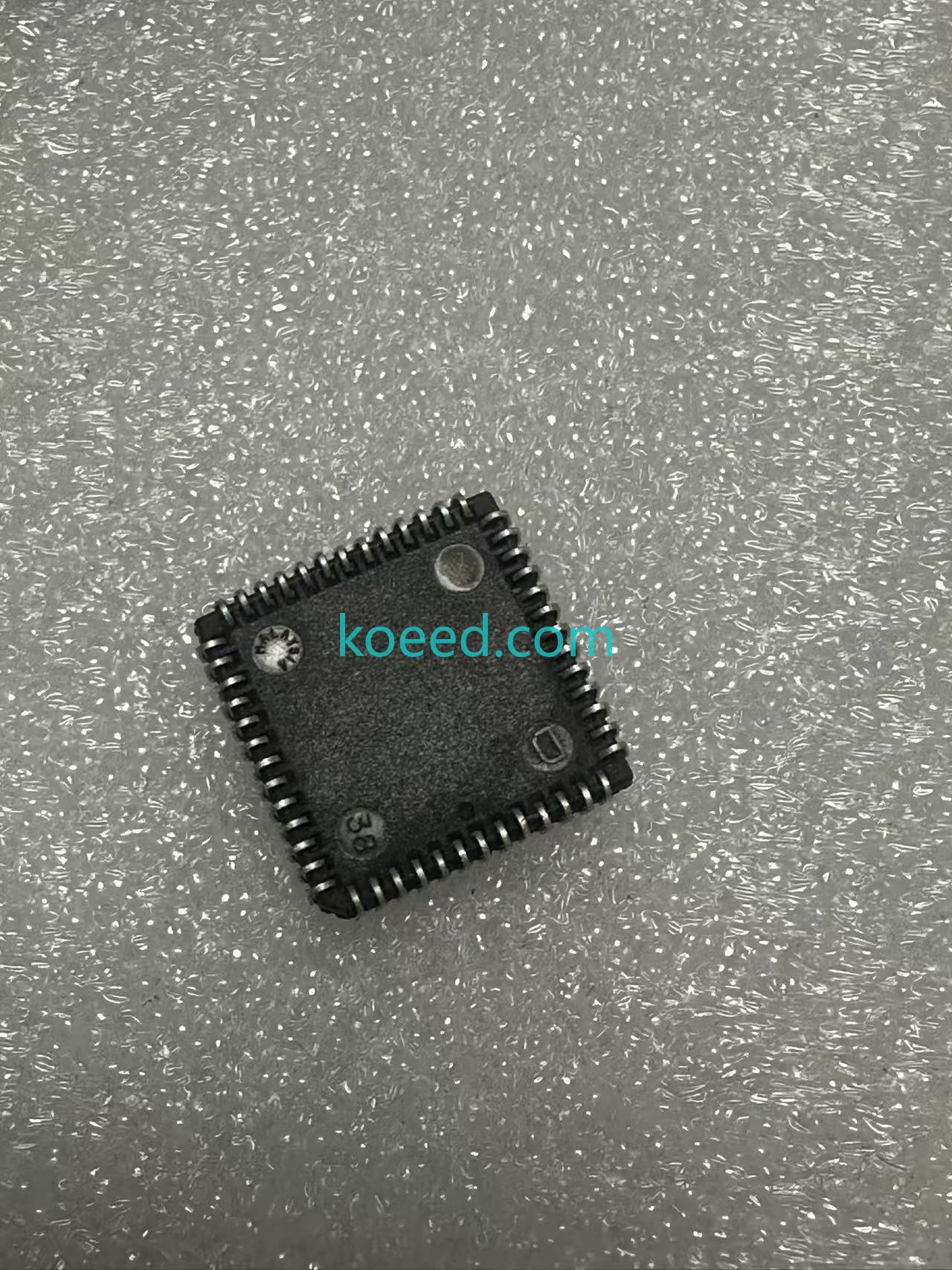
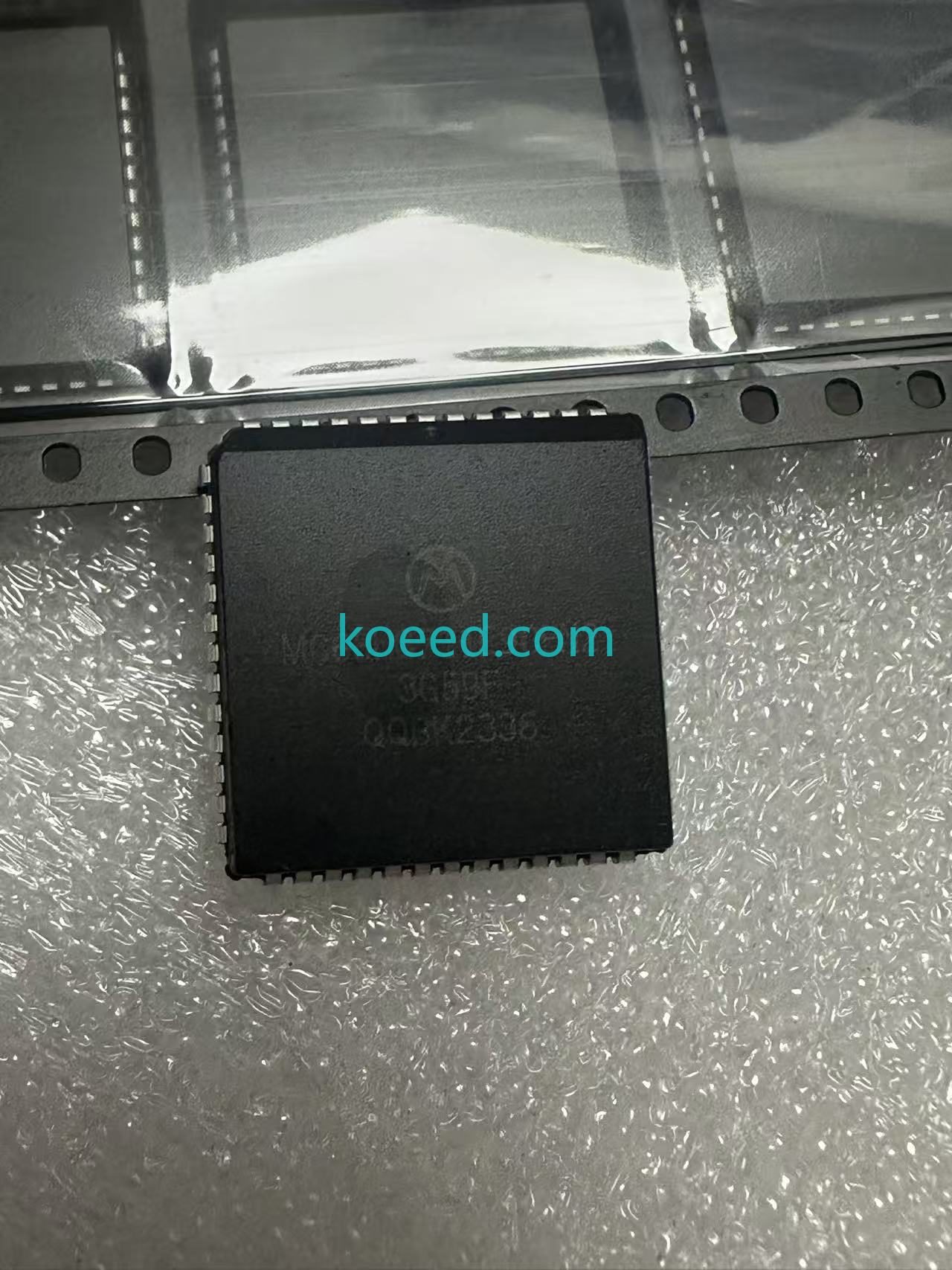
Visual Product Gallery
Authentic product imagery of the MC68HC711E9CFN2 — inspect marking authenticity, PLCC-52 package orientation, and the distinctive ceramic windowed EPROM variant typical of industrial-grade HC11 derivatives.

📹 Product Inspection Footage
IT/OT Convergence: Bridging the HC11 to the Cloud in 2026
One of the most compelling 2026 use cases for the MC68HC711E9CFN2 is its role in IT/OT convergence architectures. Industrial operators no longer need to choose between preserving legacy MCU-based controllers and gaining Industry 4.0 capabilities. Modern edge-computing gateways — such as those built on NXP i.MX RT crossover MCUs or Raspberry Pi CM5-based industrial nodes — can interface with HC11 systems via the SCI (UART) or SPI bus, aggregating sensor data for cloud ingestion.
🔗 Recommended 2026 IT/OT Stack for HC11 Systems
Edge Layer: NXP i.MX RT1064 or Siemens IOT2050 — polls HC11 SCI output at 9600–115200 baud
Protocol Bridge: Modbus RTU → MQTT (via Node-RED on edge device)
Cloud/ERP: AWS IoT Core, Azure IoT Hub, or SAP Digital Manufacturing — ingesting OEE metrics
Dashboard: Grafana or Power BI for real-time KPI visualization
This layered approach transforms a standalone HC11 controller into a data-producing asset within the enterprise digital thread. The MC68HC711E9CFN2's 512-byte EEPROM is particularly valuable here — it can store configuration parameters, calibration offsets, and device identity tokens that persist across power cycles, enabling seamless asset tracking in ERP systems like SAP S/4HANA or Microsoft Dynamics 365.
Predictive Maintenance & Sustainability: The 2026 Mandate
Sustainability reporting is no longer optional for industrial enterprises in 2026. With the EU's Corporate Sustainability Reporting Directive (CSRD) fully in effect and similar frameworks emerging globally, extending the lifecycle of existing automation hardware directly translates to Scope 3 emissions reduction and improved ESG scores.
How the MC68HC711E9CFN2 Supports Predictive Maintenance
The HC11's on-chip 8-channel, 16-bit timer subsystem — featuring Input Capture, Output Compare, and a Real-Time Interrupt (RTI) — provides the foundational hardware for condition-monitoring routines that can detect motor bearing degradation, encoder signal anomalies, and thermal drift long before catastrophic failure occurs.
⚡ Pro Tip: Implementing HC11-Based Predictive Maintenance
Use the MC68HC711E9CFN2's Input Capture (IC) channels to timestamp encoder edges with microsecond precision. By calculating the variance in inter-pulse intervals over a 60-second rolling window, you can detect bearing wear signatures 40–60 operating hours before audible degradation manifests. Transmit anomaly flags via the SCI port to your edge gateway — no additional ADC channels required.
From a sustainability lens, each MC68HC711E9CFN2 procured to repair an existing system avoids approximately 18–25 kg of e-waste (the embodied carbon of a replacement PLC rack + associated wiring). At scale across a mid-sized manufacturing facility with 200+ nodes, lifecycle extension via strategic MCU replacement yields a verifiable 3.5–5 metric ton CO₂e reduction annually.
Maintenance & Troubleshooting Guide (2026 Edition)
EPROM Integrity in Long-Life Deployments
The MC68HC711E9CFN2's 12 KB UV-erasable EPROM is both its greatest strength and its most critical vulnerability. In 2026, many of these devices have been in continuous operation for 15–25 years. EPROM bit-cell charge leakage — while rare in properly packaged units — should be part of any proactive maintenance program.
🛠️ Field Troubleshooting Checklist
- Symptom: Intermittent watchdog reset (COP timeout) → Root Cause: Check 5V supply rail ripple; HC11 requires < 50mVpp at 2 MHz bus. Aging electrolytics in the PSU are the #1 culprit in 2026.
- Symptom: SCI UART garbled at > 9600 baud → Root Cause: Verify crystal oscillator (typically 8 MHz) frequency drift. After 20+ years, AT-cut crystals can drift ±150 ppm. Replace the external crystal before condemning the MCU.
- Symptom: A/D readings drifted by > 5 LSB → Root Cause: VRL/VREFH reference voltage degradation. The HC11's 8-bit ADC relies on an external precision reference. Check TL431 or equivalent shunt regulator.
- Symptom: EEPROM write failure → Root Cause: EEPROM endurance rated at 10,000 write cycles. In data-logging applications running since 2005, this limit may be exhausted. Relocate frequent-write variables to external FRAM via SPI.
Common Reset Vector & Mode Selection Issues
The MODA and MODB pins at reset determine the MC68HC711E9CFN2's operating mode. In single-chip mode (MODA=0, MODB=1 at reset), the device runs from internal EPROM — this is the standard configuration for most industrial controllers. If a field technician inadvertently leaves the MODA pin floating, the HC11 may enter bootstrap mode, causing a complete system halt. Always verify 10 kΩ pull-down on MODA for production deployments.
Procurement Strategy: Navigating 2026 Supply Dynamics
NXP's 2026 pricing adjustments — with increases of 8–15% across legacy product categories — make timing-critical procurement essential. The MC68HC711E9CFN2 occupies a unique position: it is classified as a mature/sustaining product, meaning NXP has not issued a formal End-of-Life (EOL) notice, but new wafer starts are limited and allocation-based.
Koeed's verified supply chain for the MC68HC711E9CFN2 ensures:
- Authenticity Guaranteed: Every unit undergoes X-ray inspection, decapsulation sampling, and electrical verification against the original NXP datasheet specifications (Rev. 6, 2005).
- Date-Code Transparency: Full disclosure of lot codes and date-of-manufacture — critical for installations where regulatory compliance (FDA, FAA, ATEX) mandates component traceability.
- Bulk & Buffer-Stock Programs: Volume pricing available for lifecycle-buy strategies, protecting against the 2026–2028 supply tightening projected by industry analysts.
Frequently Asked Questions
Is the MC68HC711E9CFN2 still available from NXP in 2026?
The MC68HC711E9CFN2 is classified as a mature/sustaining product within NXP's portfolio. While not in active high-volume production, allocation-based wafer starts continue for industrial customers with long-term agreements. Spot-market availability through authorized distributors remains viable, though lead times may extend to 12–16 weeks. Koeed maintains buffer stock to bridge supply gaps.
Can I migrate firmware from an MC68HC11E1 to the MC68HC711E9CFN2?
Yes — with caveats. The MC68HC711E9CFN2 is object-code compatible with the MC68HC11E1, provided your firmware does not exceed 12 KB. The E9 variant adds 512 bytes of on-chip EEPROM at addresses $B600–$B7FF. If your original E1 design used external EEPROM mapped to this range, you must reconcile the address conflict. In most industrial PLC applications, this is a straightforward linker-script adjustment.
What is the expected operational lifespan of an MC68HC711E9CFN2 in continuous industrial service?
Under nominal conditions (5.0V, +25°C to +55°C ambient, conformally coated PCB), the MC68HC711E9CFN2 has demonstrated 25+ year operational lifespans in documented field deployments. The primary failure mechanisms are: (1) EPROM charge loss after ~30 years at elevated temperature, and (2) electromigration in the aluminum interconnect at sustained junction temperatures above 85°C. For mission-critical applications, Koeed recommends a 15-year proactive replacement cycle for units operating above 70°C ambient.
How does the MC68HC711E9CFN2 compare to NXP's S12 and S32K families for new designs in 2026?
For new designs in 2026, NXP's S32K1 (ARM Cortex-M4/M0+) and S12Z (S12X enhanced) families offer superior performance, lower power consumption, and modern toolchain support. However, for existing installations — especially those with regulatory re-certification barriers (IEC 61508 SIL-2/3, ISO 13849 PL-d, etc.) — the MC68HC711E9CFN2 eliminates the $50K–$250K+ re-certification cost that a migration would trigger. The TCO calculus overwhelmingly favors maintaining the HC11 ecosystem for brownfield assets.
Does Koeed provide programming services for the MC68HC711E9CFN2's EPROM?
Yes. Koeed offers pre-programming services for the MC68HC711E9CFN2's 12 KB EPROM. Customers may supply firmware in Intel HEX, Motorola S-record, or raw binary format. Programming is performed on verified programmers (BP Microsystems or Elnec) with full checksum verification. For security-sensitive applications, we offer code-protected programming with non-disclosure agreements. Contact our team via WhatsApp for a programming service quotation.
Conclusion: The Strategic Value of Legacy MCU Mastery
In the 2026 industrial automation landscape — defined by IT/OT convergence imperatives, tightening sustainability mandates, and selective NXP price escalations — the MC68HC711E9CFN2 is not merely a component to be sourced; it is a strategic asset that preserves decades of engineering investment. Organizations that proactively manage their HC11 lifecycle through verified procurement channels like Koeed will realize superior TCO, reduced e-waste, and uninterrupted operations well into the 2030s.
Secure Your MC68HC711E9CFN2 Supply Today
Verified authentic inventory · Date-code transparency · Global shipping · Technical support included


