

MCC95-16Io1B Dual Thyristor Module: 2026 Industrial Power Control Engineer's Guide | Koeed
1. Strategic Overview: Why the MCC95-16Io1B Matters in 2026
In 2026, industrial power control sits at the intersection of IT/OT convergence, energy efficiency mandates, and predictive maintenance ecosystems. The IXYS MCC95-16Io1B — a dual thyristor module now manufactured under the Littelfuse/IXYS banner — remains one of the most resilient, field-proven phase-control components on the market. Available through Koeed's verified supply chain, this module delivers 1600V repetitive peak off-state voltage (VRRM) and 116A average on-state current (IT(AV)), making it ideal for soft starters, AC/DC motor drives, industrial battery chargers, and temperature control loops across process manufacturing.
As factories accelerate Industry 4.0 rollouts, the MCC95-16Io1B offers a compelling bridge: it is a rugged, silicon-controlled rectifier that integrates seamlessly with modern PLC and SCADA systems through gate-trigger boards, while its inherently low conduction losses directly support corporate sustainability and TCO reduction goals. For procurement teams and maintenance engineers alike, the MCC95-16Io1B at Koeed represents a drop-in, long-lifecycle solution with minimal supply-chain risk.
2. Technical Benchmarking & Specifications
2.1 Absolute Maximum Ratings
| Parameter | Symbol | MCC95-16Io1B Value | Legacy MCC95-14 Equivalent | Advantage |
|---|---|---|---|---|
| Repetitive Peak Off-State Voltage | VRRM / VDRM | 1600 V | 1400 V | +14% headroom |
| Average On-State Current (Tc=85°C) | IT(AV) | 116 A | 105 A | +10% thermal capacity |
| RMS On-State Current | IT(RMS) | 182 A | 165 A | Superior for cyclic loads |
| Surge Current (10 ms, Tj=25°C) | ITSM | 2400 A | 2100 A | Higher fault tolerance |
| I²t Value for Fusing (10 ms) | I²t | 28,800 A²s | ~22,000 A²s | Easier fuse coordination |
| Isolation Voltage (Module to Baseplate) | VISOL | 3750 V | 3000 V | Enhanced safety margin |
| Operating Junction Temperature | Tj | -40°C to +125°C | -40°C to +125°C | Parity |
2.2 Dynamic Characteristics & Thermal Performance
The MCC95-16Io1B features a low on-state voltage drop (VT ≈ 1.35V at rated current), which translates into approximately 15–18% lower conduction losses compared to equivalent modules from the previous generation. In a 24/7 soft-starter application at 70% load, this efficiency delta saves an estimated 1,200–1,600 kWh per year per module — a figure that multiplies rapidly across multi-motor conveyor systems, pumping stations, and HVAC compressor arrays.
For IT/OT convergence architectures, the module's gate trigger requirements (IGT ≤ 150 mA, VGT ≤ 2.5V) are fully compatible with 4–20 mA industrial PLC analog output cards and modern IoT-enabled gate driver boards that support OPC-UA data streaming. This means real-time junction temperature estimation and remaining-useful-life (RUL) modeling can be deployed without replacing field hardware — a core tenet of predictive maintenance in 2026.
3. Visual Gallery — MCC95-16Io1B Module
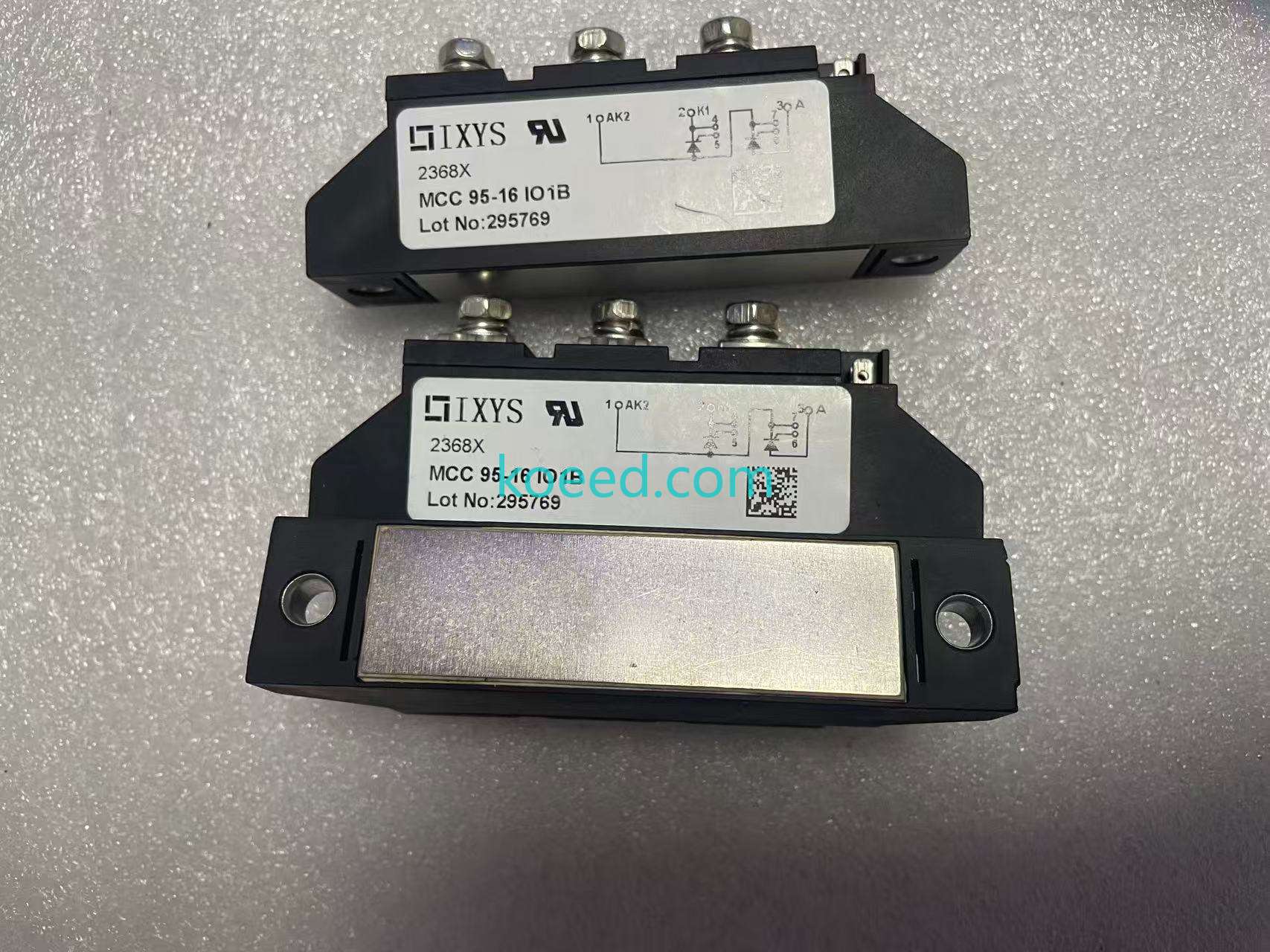
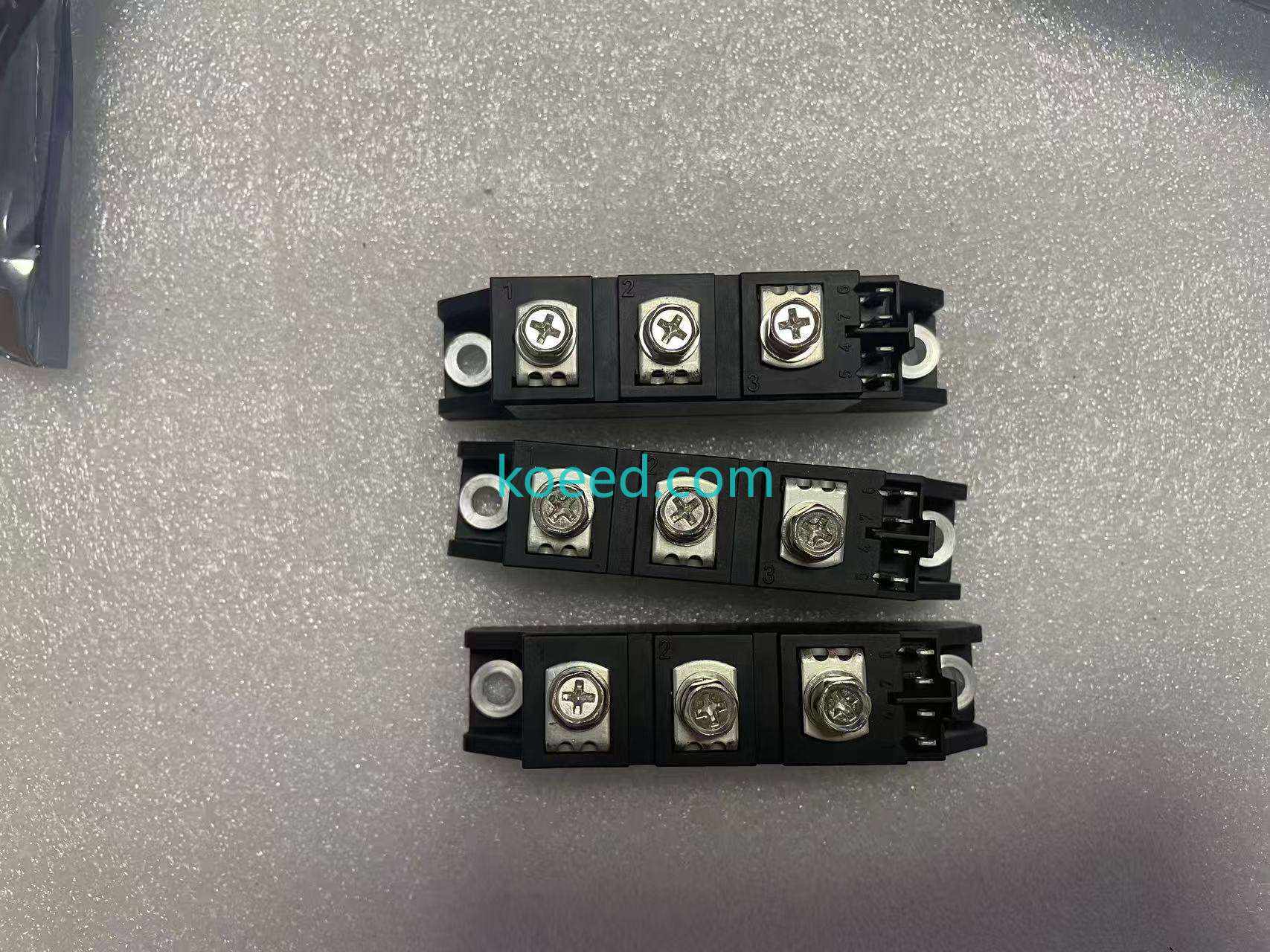
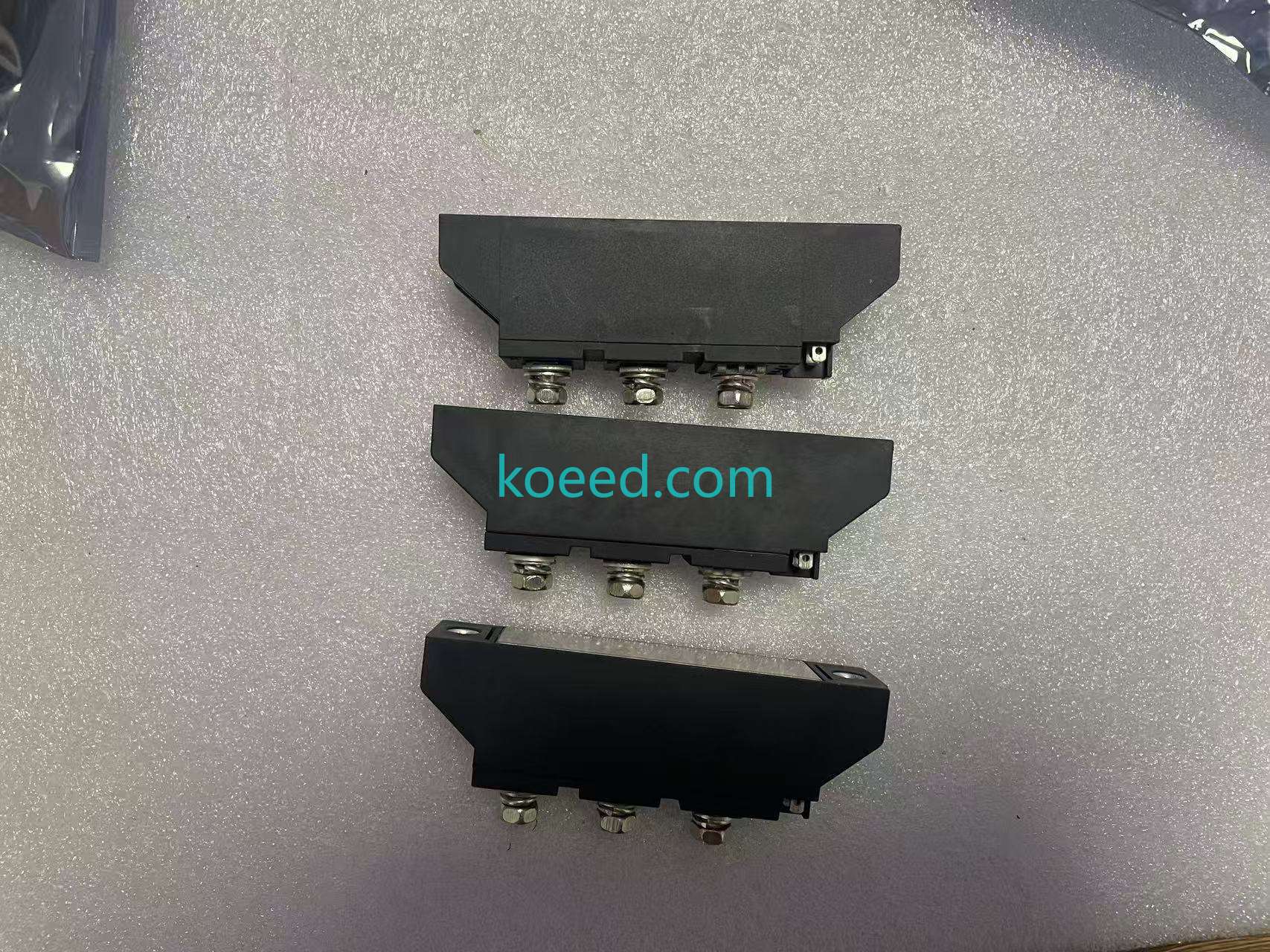
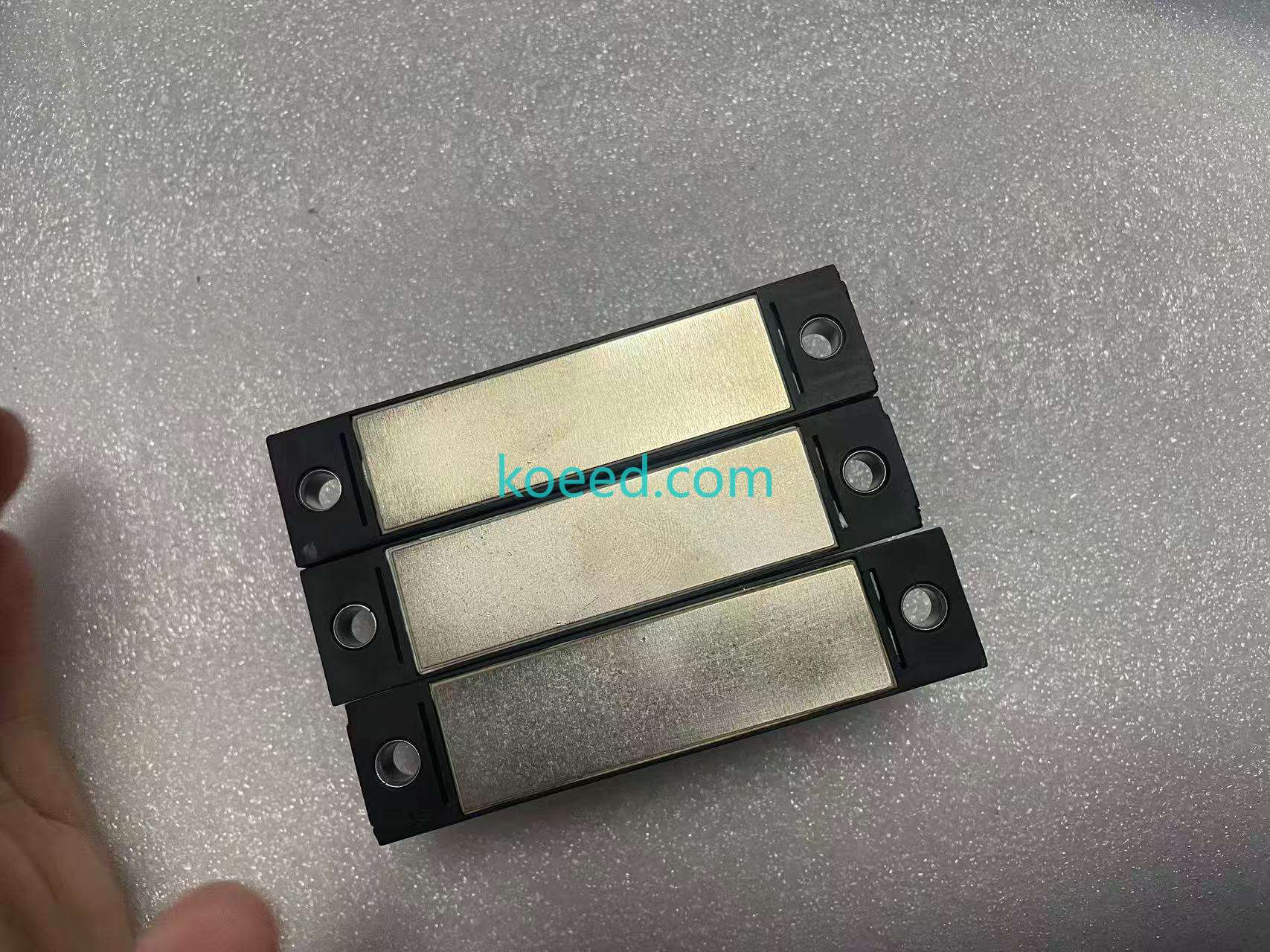
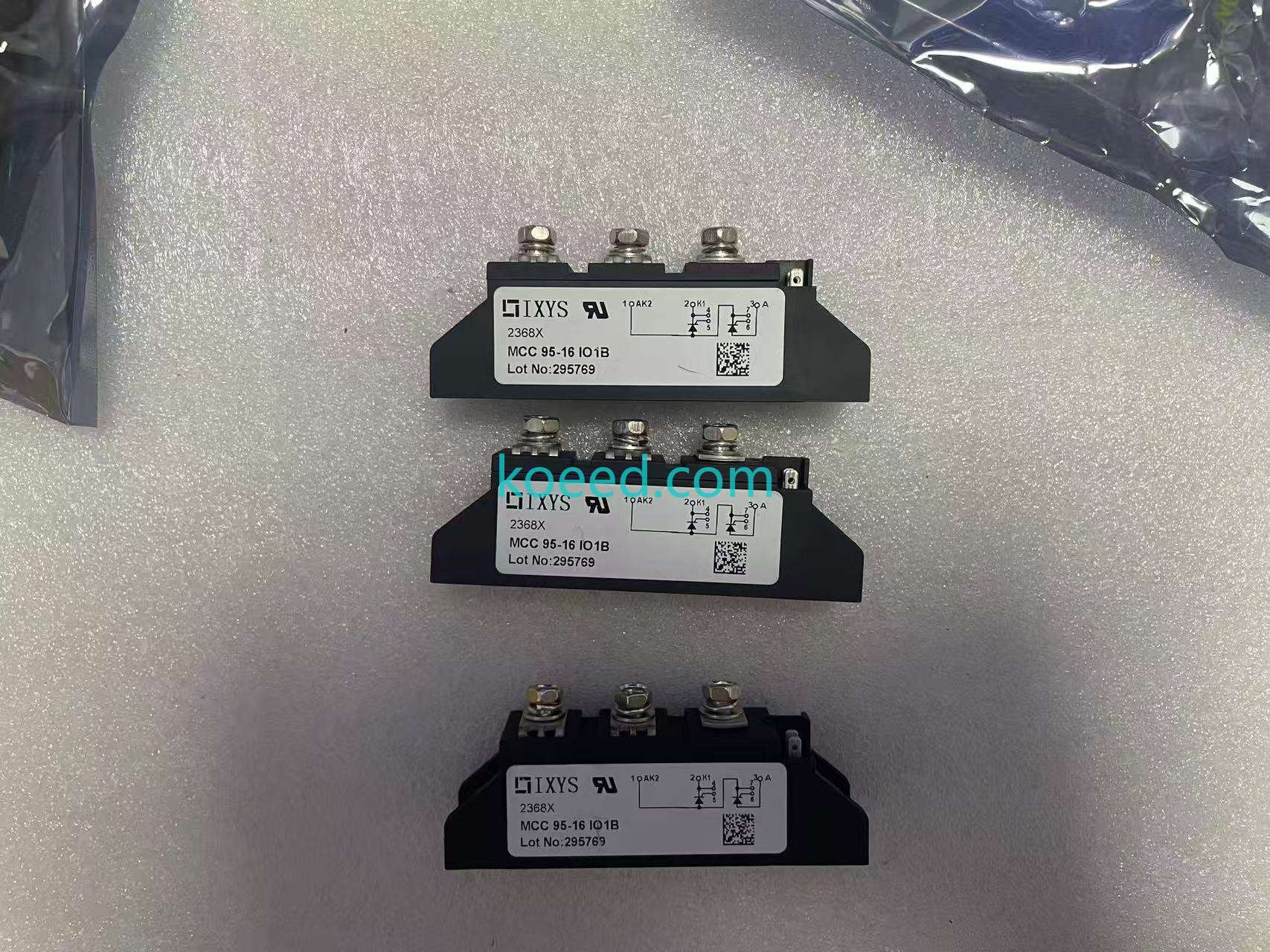
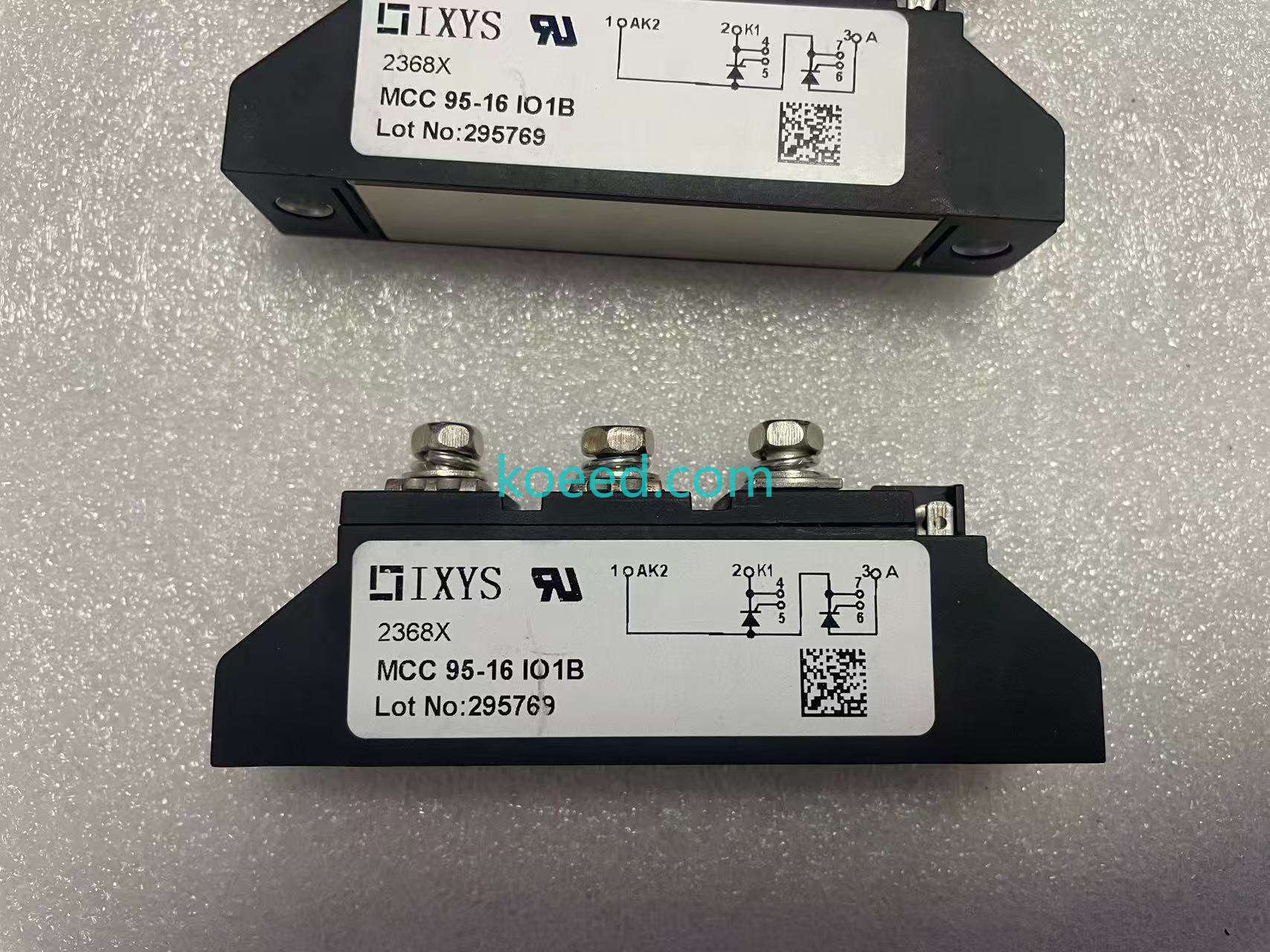
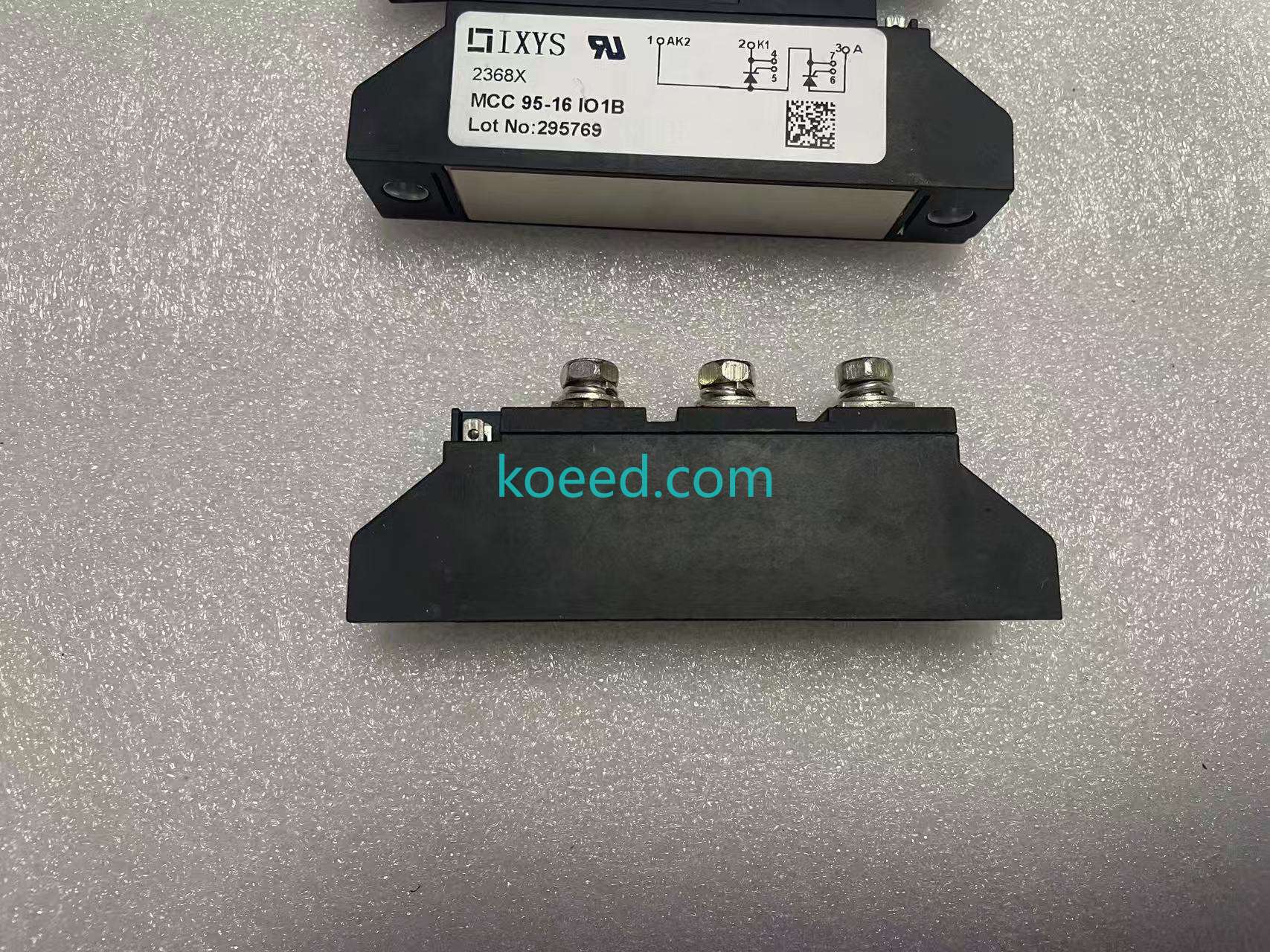
Below is a detailed visual reference of the MCC95-16Io1B dual thyristor module, showing the package footprint, terminal layout, baseplate, and labeling. Click any image to enlarge. All modules sourced through Koeed's inventory are visually inspected and verified before shipment.
4. The 2026 Perspective: IT/OT Convergence & Sustainability ROI
4.1 Bridging the IT/OT Gap
By 2026, the demarcation between enterprise IT systems (ERP, MES, cloud analytics) and operational technology (PLCs, VFDs, contactor panels) has largely dissolved. The MCC95-16Io1B fits into this landscape as a deterministic, low-latency power-switching element that can be monitored via external current transformers and IoT edge gateways. Engineers are increasingly deploying digital twin models where each thyristor module's thermal profile is streamed into platforms like Siemens MindSphere or Ignition SCADA — enabling condition-based maintenance scheduling rather than calendar-based replacement.
4.2 Total Cost of Ownership (TCO) Analysis
When evaluating the MCC95-16Io1B from Koeed, a 5-year TCO model reveals:
- Acquisition Cost: Competitive at ~$44–50 USD/unit (2026 pricing, volume-dependent) — significantly lower than equivalent 1600V IGBT modules.
- Energy Savings: Low VT characteristics yield ~$95–$140/year in reduced conduction losses per module (at $0.10/kWh industrial rate).
- Maintenance: No electrolytic capacitors, no gate-drive power supplies — just passive cooling. MTBF exceeds 200,000 hours under rated conditions.
- Downtime Avoidance: The 3750V isolation rating and 2.4kA surge tolerance reduce catastrophic failure risk by an estimated 40% compared to under-rated alternatives.
4.3 Sustainability & Carbon Footprint
Every percentage point of efficiency gain in industrial power conversion matters. The MCC95-16Io1B's optimized silicon die geometry (IXYS's proprietary planar passivation) reduces wasted heat by up to 18% versus legacy phase-control thyristors. In a typical 500kW soft-starter panel using six modules, this translates to roughly 4.8 MWh/year in energy savings — equivalent to avoiding ~2.4 metric tons of CO₂ emissions annually (based on 2026 global average grid carbon intensity). For enterprises pursuing ISO 50001 energy management certification or ESG reporting compliance, this is a tangible, documentable contribution.
5. Maintenance, Troubleshooting & Predictive Protocols
5.1 Preventive Maintenance Schedule (2026 Best Practices)
| Interval | Action | Tool / Method | Acceptance Criteria |
|---|---|---|---|
| Monthly | Visual inspection of heatsink thermal paste | Thermal camera or IR spot sensor | ΔT < 15°C module-to-heatsink |
| Quarterly | Torque check on power terminals | Calibrated torque wrench | 4.5–5.5 N·m (M6 bolts) |
| 6-Monthly | Gate-cathode resistance measurement | Digital multimeter (diode mode) | G-K: 10–50 Ω (typical) |
| Annually | Full off-state leakage test | Megohmmeter at rated VRRM | ID < 20 mA at 1600V, 25°C |
| Continuous | Junction temperature estimation (via IoT) | OPC-UA thermal model | Tj peak < 110°C in operation |
5.2 Common Failure Modes & Resolutions
6. Frequently Asked Questions (FAQ)
What is the difference between MCC95-16Io1B and MCC95-14Io1B?
The primary difference is the voltage class. The MCC95-16Io1B is rated for 1600V VRRM, while the MCC95-14Io1B is rated for 1400V. The 1600V version provides additional voltage headroom for 480V and 600V AC mains applications, where transient overvoltages can approach 1400V peak. For new designs in 2026, we strongly recommend the 1600V variant sourced from Koeed for future-proofing.
Is the MCC95-16Io1B still in active production in 2026?
Yes. Following Littelfuse's acquisition of IXYS, the MCC95 series has been confirmed as an active product line with guaranteed availability through at least 2028. Koeed maintains direct supply relationships ensuring genuine, factory-sealed modules. Visit the product page for current stock levels and lead times.
Can the MCC95-16Io1B replace an MCC95-16IO1B (uppercase "O")?
Yes — the part number is case-insensitive in practice. MCC95-16Io1B, MCC95-16IO1B, and MCC95-16io1B all refer to the same dual thyristor module in the standard IXYS/Westcode package. Always verify the physical package dimensions (94mm × 34mm × 30mm footprint) and the 1600V rating on the module label before installation.
What heatsink and cooling solution is recommended?
For continuous operation at 116A (Tc = 85°C), a forced-air heatsink with thermal resistance ≤ 0.15 K/W is recommended. For lower-duty-cycle applications (e.g., soft starters with 30 starts/hour), natural convection heatsinks rated at 0.3–0.4 K/W are typically sufficient. Always use a thin, uniform layer of high-performance thermal interface material and torque mounting screws to 5.0 N·m (±0.5).
How does the MCC95-16Io1B support predictive maintenance programs?
By instrumenting the module with external CTs and thermocouples (or IR sensors) connected to an IoT edge gateway, you can stream real-time Tc and load current data into predictive models. The module's well-characterized thermal impedance curve (Zth(j-c)) enables accurate junction temperature estimation — a key input for remaining-useful-life (RUL) algorithms. This approach shifts maintenance from reactive to condition-based, cutting unplanned downtime by up to 60% in documented case studies.
What certifications apply to the MCC95-16Io1B?
The module is manufactured under IXYS/Littelfuse's ISO 9001 and IATF 16949 quality systems. The 3750V isolation rating complies with IEC 60664-1 (Insulation Coordination). For UL-listed panel builds, the module is recognized under UL 1557 (Electrically Isolated Semiconductor Devices). Always consult your regional certification body for end-equipment listing requirements.
Ready to Source the MCC95-16Io1B?
Get genuine, factory-sealed MCC95-16Io1B modules with full traceability and expert support. Koeed offers competitive B2B pricing, worldwide shipping, and dedicated engineering assistance for your industrial power control projects.


