

Keyence LK-H2 Laser Displacement Sensor: 2026 Legacy Integration Guide for Industrial Automation Engineers
Strategic Overview: The Keyence LK-H2 in the 2026 Smart Factory Ecosystem
As manufacturing enters an era defined by IT/OT convergence and AI-driven quality assurance, the Keyence LK-H2 laser displacement sensor occupies a unique and strategically important niche. While Keyence has since introduced the LK-G5000 series as its flagship ultra-high-speed platform, thousands of LK-H2 units remain deployed across automotive, semiconductor, packaging, and precision machining lines worldwide. For plant engineers and procurement specialists in 2026, the LK-H2 represents a proven, cost-effective backbone for non-contact measurement—delivering reliable micron-level accuracy without the capital expenditure of a full next-generation migration.
The Keyence LK-H2 Series Software and sensor package continues to serve as a critical bridge between legacy production lines and modern ERP/MES ecosystems. With the right integration strategy, the LK-H2 can feed real-time displacement data into cloud-based quality dashboards, enabling predictive maintenance workflows that were not envisioned when these sensors were originally commissioned. This guide provides a holistic 2026 reference—from technical benchmarking to sustainability ROI—for engineers maintaining, expanding, or evaluating LK-H2 deployments.
Technical Specifications & Competitive Benchmarking
Understanding where the Keyence LK-H2 fits within the broader laser displacement sensor landscape is essential for making informed sourcing decisions. The table below benchmarks the LK-H2 against its successor, the LK-G5000 series, and a representative competing model, contextualizing performance for 2026 industrial requirements.
| Parameter | Keyence LK-H2 | Keyence LK-G5000 (2026 Flagship) | Industry Competitor Benchmark |
|---|---|---|---|
| Measurement Principle | Laser Triangulation (Visible Red) | Laser Triangulation (Blue Laser Option) | Laser Triangulation / Confocal |
| Typical Accuracy | ±0.5 μm – ±2 μm (model-dependent) | ±0.1 μm – ±0.5 μm | ±0.3 μm – ±1.5 μm |
| Sampling Rate | Up to 50 kHz | Up to 392 kHz | Up to 100 kHz |
| Interface Protocols | RS-232C, Analog (±10V), I/O | EtherNet/IP™, EtherCAT®, RS-232C, Analog | EtherNet/IP™, PROFINET, Analog |
| Software Ecosystem | LK-H2 Series Software (PC-based config) | LK-Navigator 2 (Cloud-ready) | Vendor-specific / OPC UA Gateway |
| IT/OT Convergence Readiness | Requires Edge Gateway / Protocol Converter | Native Industrial Ethernet | Varies; gateway often required |
| Typical 2026 Unit Price (New) | $460 – $500 USD | $1,200 – $2,800 USD | $600 – $1,500 USD |
| Energy Consumption | < 5 W (estimated) | < 8 W | 3–10 W |
| Best-Suited 2026 Application | Legacy line sustainment, budget expansion, spares | Greenfield high-speed lines, AI-integrated QA | Mixed-vendor brownfield upgrades |
For organizations seeking to maintain or expand existing LK-H2 fleets, the 1pc new-in-box Keyence LK-H2 Series Software package available through Koeed provides a reliable procurement path with full OEM compatibility—avoiding the risks associated with uncertified third-party alternatives.
Visual Product Gallery: Keyence LK-H2 Series
Below is a detailed visual reference of the Keyence LK-H2 laser displacement sensor and software package. These images showcase the sensor head, controller interface, connection ports, and labeling details essential for system integrators and maintenance teams verifying component authenticity and compatibility.
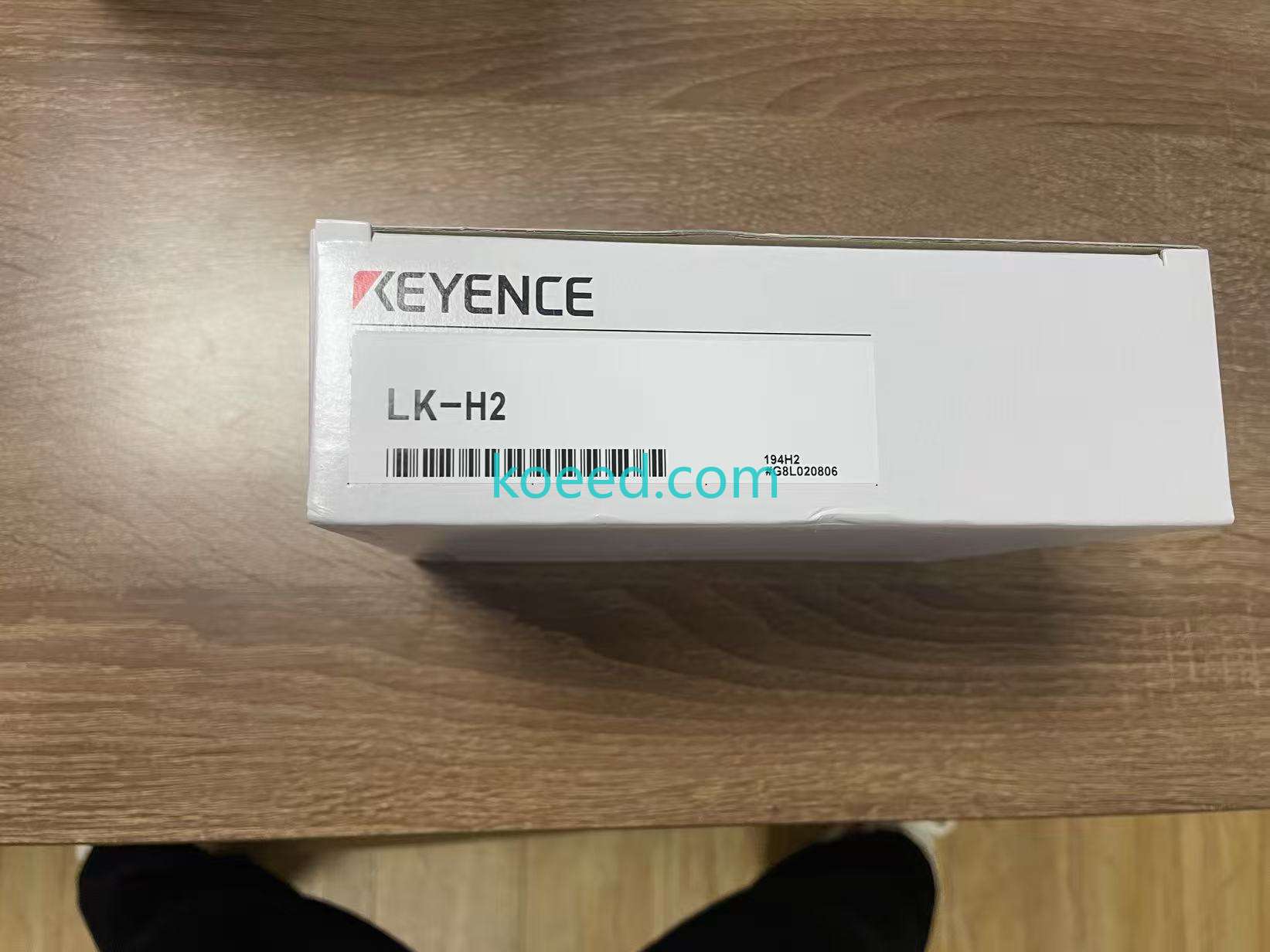
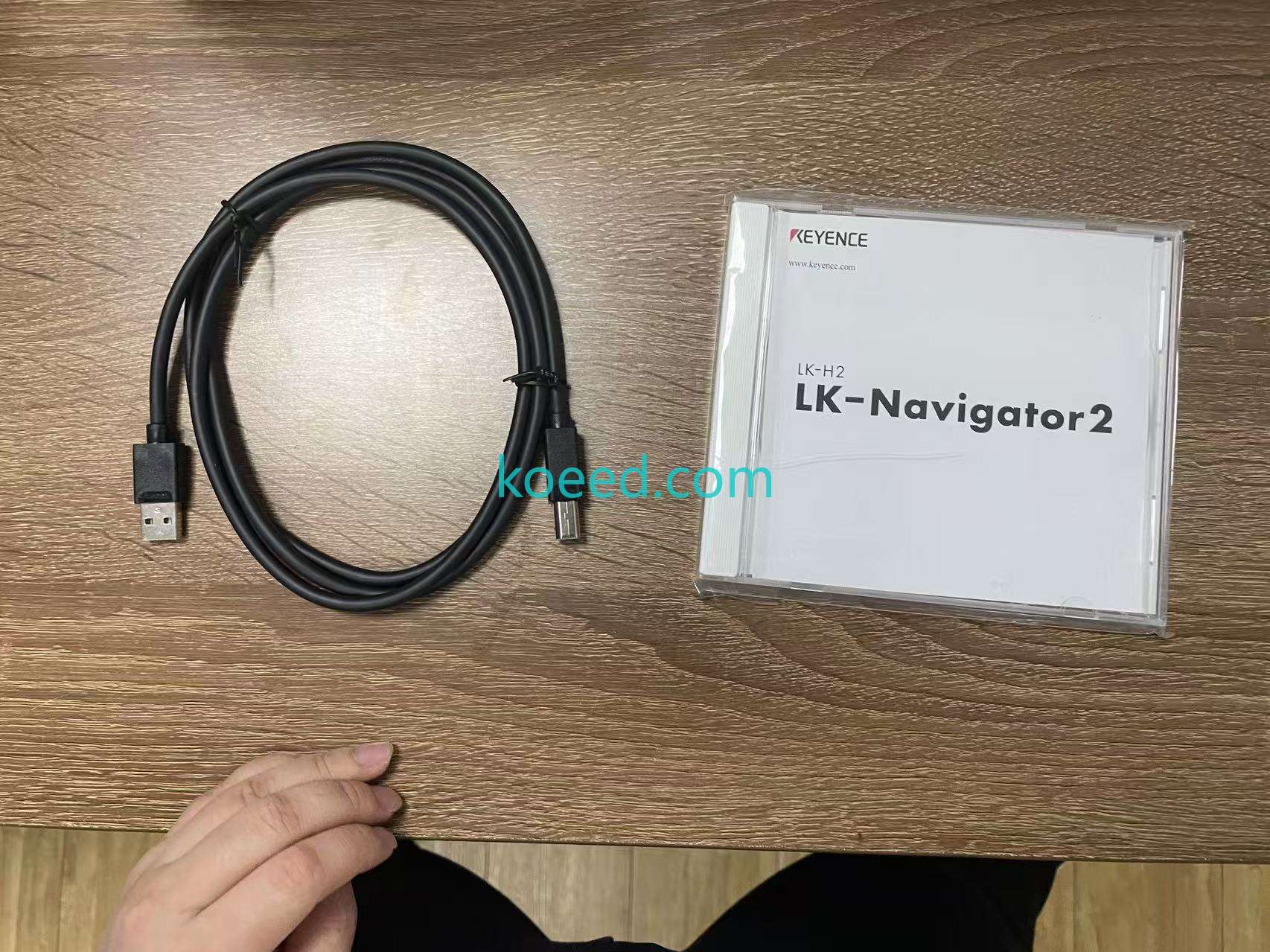
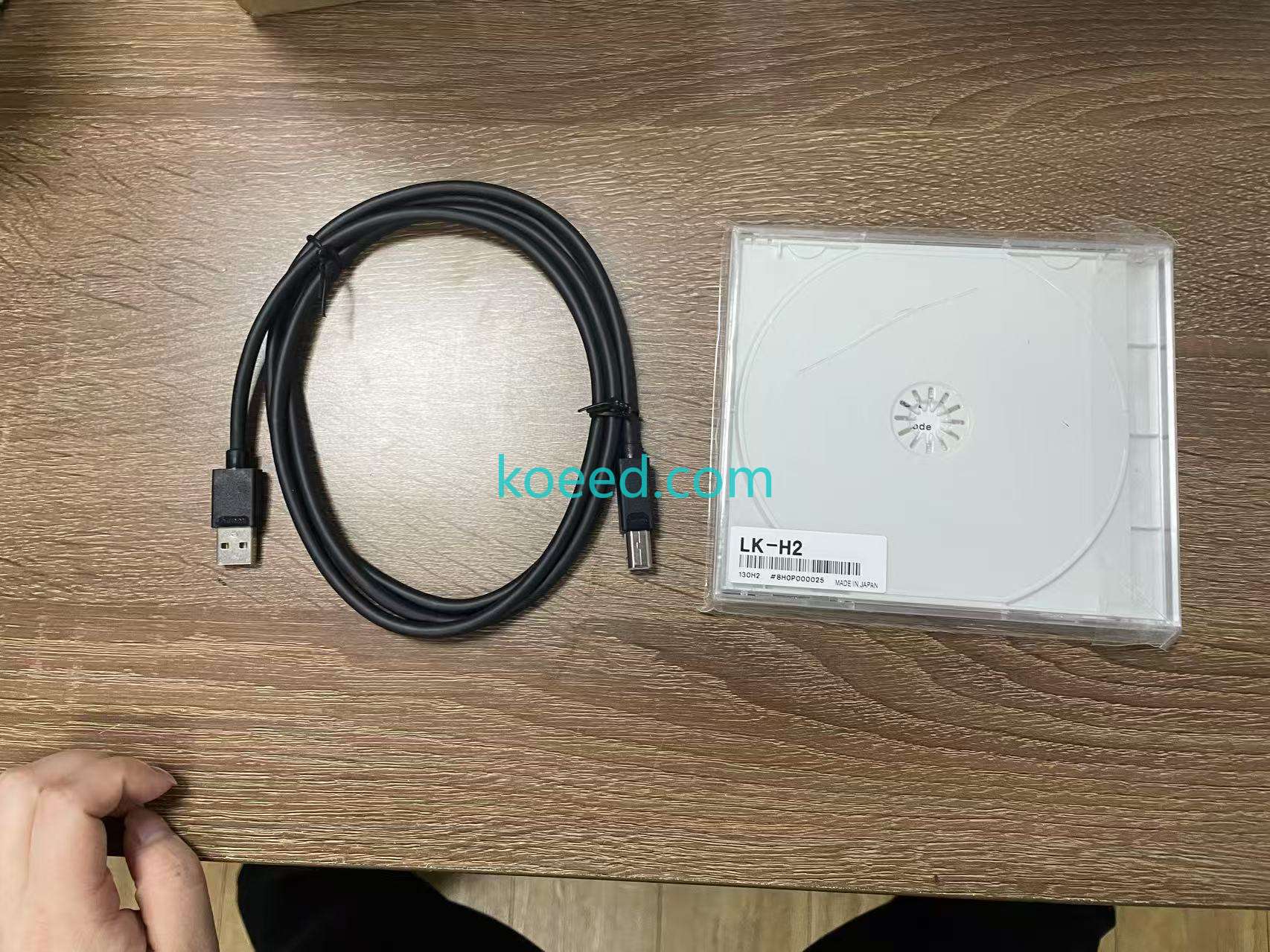
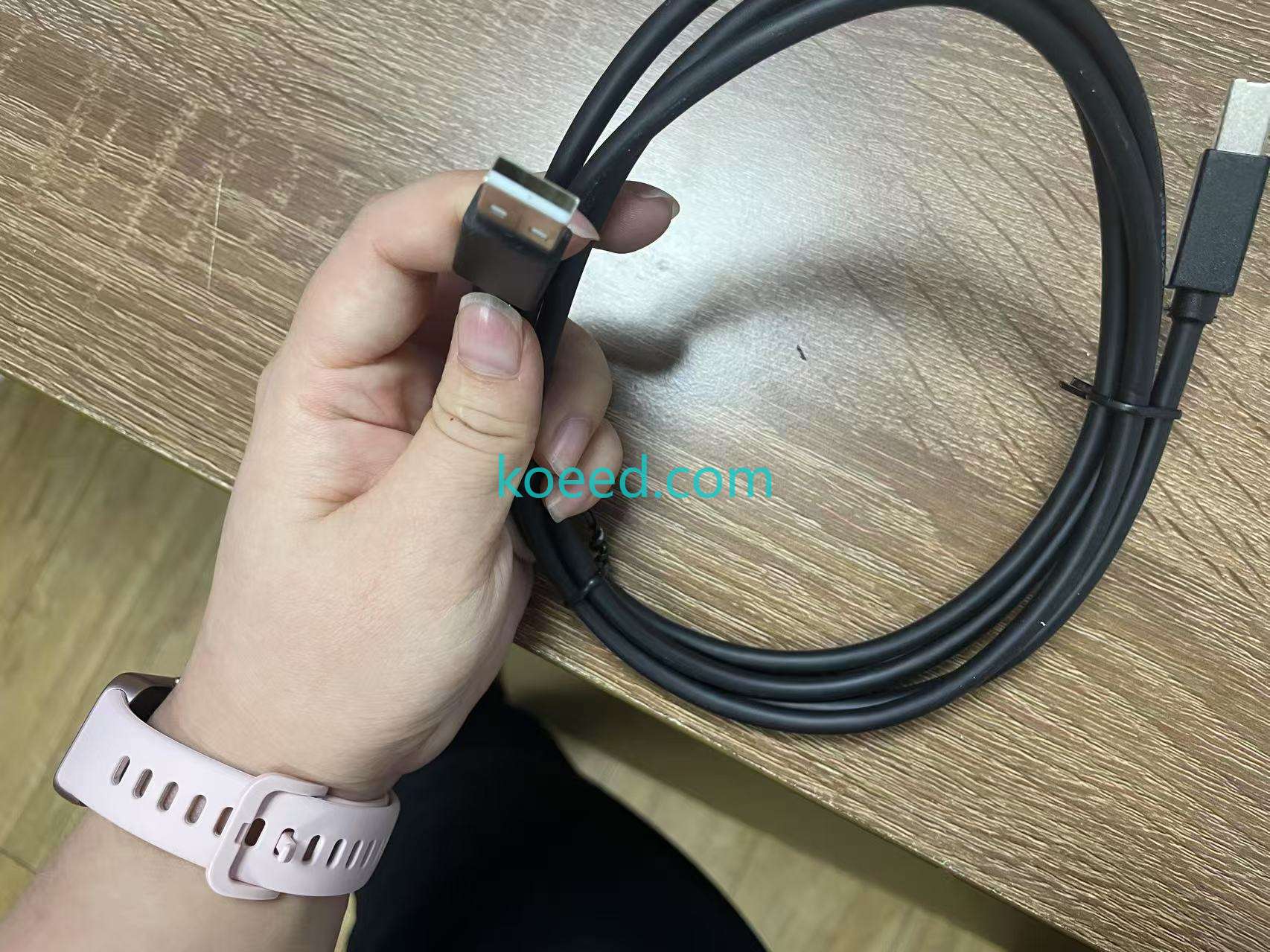
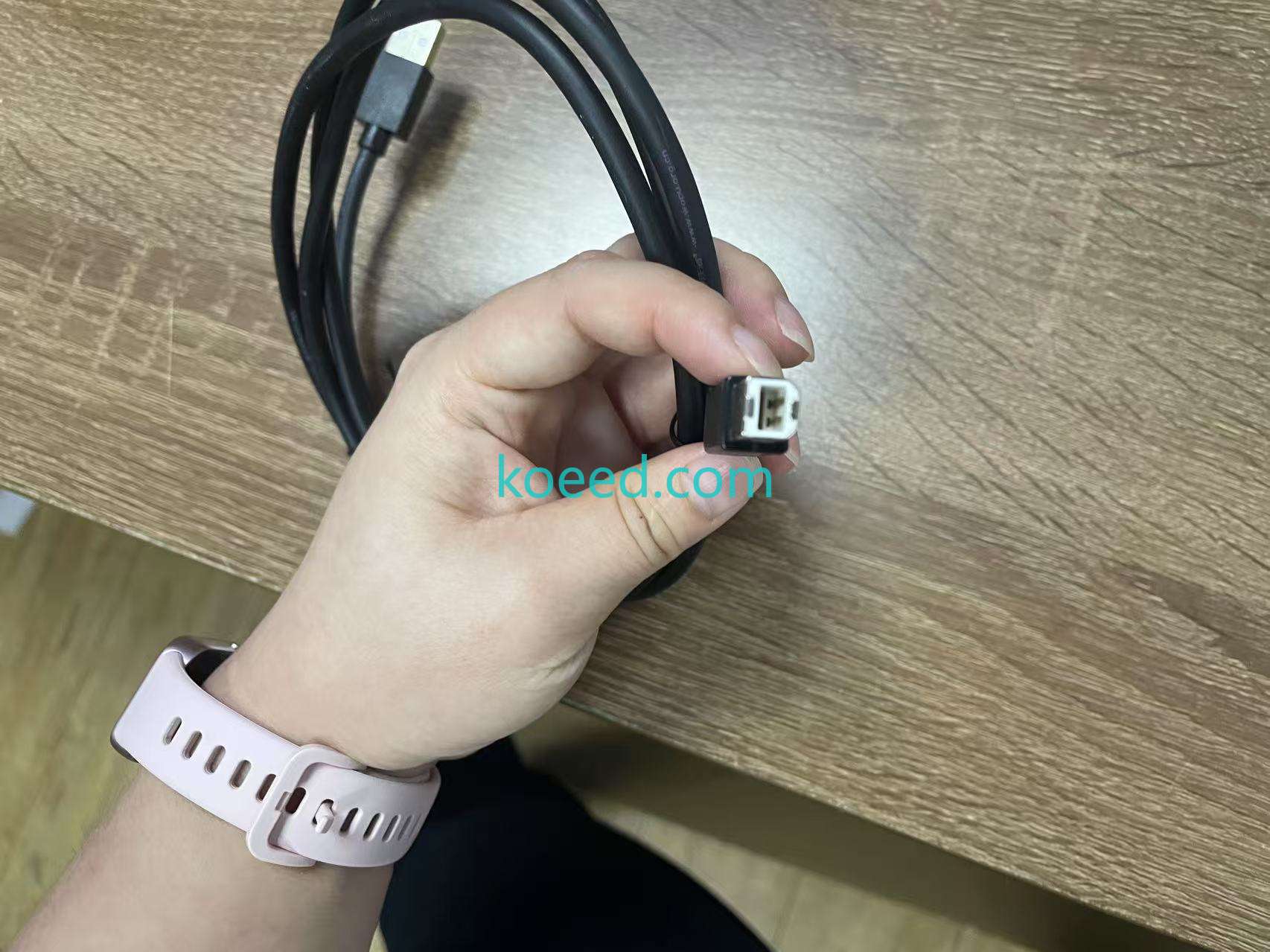
All images above are from verified Koeed inventory. For updated stock availability, visit the Keyence LK-H2 product page.
IT/OT Convergence: Integrating the LK-H2 into 2026 Digital Infrastructure
One of the most pressing challenges for 2026 industrial engineers is bridging legacy serial/analog devices with modern Ethernet-based control and monitoring systems. The Keyence LK-H2—designed in an era when RS-232C and analog voltage outputs were standard—requires a thoughtful integration architecture to participate in today's smart factory data loops.
Integration Architecture Patterns
Pattern 1 — Edge Gateway Translation: The most common 2026 approach uses an industrial edge gateway (e.g., Softing, Moxa, or Hilscher devices) to convert the LK-H2's RS-232C or analog ±10V output into MQTT Sparkplug or OPC UA payloads. This allows the LK-H2 to appear as a first-class node in cloud-based SCADA dashboards, enabling real-time statistical process control (SPC) without replacing the sensor hardware.
Pattern 2 — PLC-Mediated Bridging: For lines already running Siemens S7-1500, Rockwell ControlLogix, or Mitsubishi iQ-R PLCs, the LK-H2 analog output can be wired directly to an analog input module. The PLC then handles protocol translation and data contextualization, pushing structured displacement data to the MES layer via built-in OPC UA server functionality—a method that leverages existing automation assets and minimizes incremental hardware cost.
Pattern 3 — Software-Driven Configuration: The Keyence LK-H2 Series Software remains the primary tool for sensor parameterization. In 2026, many integrators run this software within virtualized Windows environments on industrial PCs that also host edge analytics engines, creating a unified configuration-and-analytics node at the line level.
ROI & Total Cost of Ownership Analysis
When evaluating whether to replace or retain LK-H2 sensors, consider the following 2026 TCO comparison for a typical 10-sensor production line:
| TCO Factor | Retain LK-H2 + Edge Gateway | Full LK-G5000 Migration |
|---|---|---|
| Hardware Acquisition | $500 (gateway) + $0 (existing sensors) | $14,000 – $28,000 (10× sensors) |
| Integration Engineering | ~40 hours @ $120/hr = $4,800 | ~60 hours @ $120/hr = $7,200 |
| Downtime During Cutover | Minimal (parallel integration) | 1–2 shifts (estimated $8,000–$16,000) |
| Annual Software Licensing | $0 (existing LK-H2 software) | $0–$1,200 (LK-Navigator 2) |
| 3-Year TCO Estimate | ~$5,300 | ~$29,200 – $51,200 |
Predictive Maintenance: Transforming the LK-H2 from Sensor to Strategic Asset
In 2026, the concept of predictive maintenance has evolved beyond vibration analysis and thermal imaging. Laser displacement sensors like the Keyence LK-H2 can serve as frontline detectors of mechanical degradation—provided their data streams are properly captured, trended, and analyzed.
Implementing LK-H2-Based Predictive Monitoring
The LK-H2's high-accuracy displacement readings can detect sub-micron shifts in tooling position, guide rail wear, bearing play, and thermal expansion—all leading indicators of impending mechanical failure. By streaming LK-H2 data into a time-series database (e.g., InfluxDB, OSIsoft PI, or AWS IoT SiteWise) via the edge gateway patterns described above, maintenance teams can establish baselines and set deviation thresholds that trigger early warnings.
Key Predictive Indicators Detectable via LK-H2:
- Gradual drift in part positioning accuracy → Guide rail or ballscrew wear
- Cyclic displacement spikes synchronized with spindle rotation → Bearing degradation
- Progressive zero-point shift during warm-up → Thermal compensation required
- Increased high-frequency noise in steady-state readings → Electrical noise or laser diode aging
For teams procuring spare or replacement units to support predictive maintenance programs, the Keyence LK-H2 new-in-box package at Koeed ensures you receive authentic, factory-calibrated hardware ready for immediate deployment.
Maintenance, Troubleshooting & Longevity Best Practices
Maximizing the service life of your LK-H2 investment requires disciplined maintenance routines. The following pro-tips are distilled from field engineering experience and updated for 2026 operational standards.
Routine Maintenance Schedule
| Interval | Action | Notes |
|---|---|---|
| Weekly | Visual inspection of laser emission window for contamination | Use lint-free optical wipe; never use solvents directly on lens |
| Monthly | Verify analog output calibration against known reference | Use certified gauge blocks; document deviation trend |
| Quarterly | Check all cable connections, strain relief, and connector seating | Inspect for micro-fretting on connector pins |
| Annually | Full system recalibration; review measurement uncertainty budget | Consider factory recalibration if accuracy drift exceeds 2× spec |
| Every 3–5 Years | Evaluate laser diode output intensity; replace sensor if degraded | Source replacement LK-H2 units here |
Common Error Codes & Resolutions
⚠️ Error E-03 (Insufficient Light Intensity): Caused by dirty optics, excessively dark/absorptive target surfaces, or laser diode aging. Clean the emitter and receiver windows first. If persistent after cleaning, source a replacement LK-H2 sensor before the diode fails completely.
⚠️ Error E-07 (Internal Communication Fault): Power cycle the controller. If recurring, inspect RS-232C termination and cable shielding. In high-EMI environments, add ferrite cores to the communication cable.
Environmental Hardening for 2026 Demands
Modern smart factories increasingly push automation into harsher environments—near CNC coolant spray, in washdown zones, or adjacent to induction heating. While the LK-H2 was not originally designed for IP67 environments, 2026 retrofit solutions include:
- Aftermarket IP65-rated enclosures with optical-grade borosilicate windows
- Positive-pressure air purge systems to prevent dust/mist ingress on the laser window
- Thermoelectric cooling mounts for installations exceeding 40°C ambient
Frequently Asked Questions
Is the Keyence LK-H2 still a viable choice for new installations in 2026?
For greenfield high-speed lines requiring sub-micron accuracy at 300+ kHz, the LK-G5000 series is the recommended path. However, for budget-conscious expansions, legacy line duplication, or spare-pool replenishment, the LK-H2 remains an excellent value proposition. At approximately 60–75% lower unit cost than the G5000 series, the LK-H2 delivers robust triangulation-based measurement for the vast majority of general industrial displacement applications. Procure authentic units via the Koeed LK-H2 product page.
Can I use the LK-H2 Series Software on Windows 11 or Windows Server 2025?
The LK-H2 Series Software was originally developed for Windows 7/10 environments. In 2026, most engineering teams run it successfully on Windows 11 using compatibility mode (Windows 10 setting) or within a lightweight Windows 10 LTSC virtual machine on the industrial PC. For Windows Server 2025, a Hyper-V isolated VM is recommended. The software does not have native ARM64 support, so avoid Windows on ARM (Snapdragon) hosts.
How does the LK-H2 compare to the LK-G5000 in terms of measurement stability on shiny/metallic targets?
The LK-H2 uses a visible red laser with standard triangulation optics. On highly reflective or mirror-like surfaces, measurement stability can degrade due to specular reflection. The LK-G5000 addresses this with optional blue laser heads and advanced algorithms (ABLE technology). For LK-H2 installations on shiny targets, apply a thin matte coating or use cross-polarization filters on the sensor window. In many cases, this achieves stability within ±1 μm—sufficient for most industrial QA thresholds.
What is the typical lead time for a new-in-box Keyence LK-H2 in 2026?
As the LK-H2 is a legacy series, factory-new availability from Keyence direct channels is increasingly limited. Koeed maintains verified new-in-box inventory of the Keyence LK-H2 Series Software and hardware package with typical dispatch within 1–3 business days. For bulk orders (5+ units), contact the Koeed sales team to confirm batch availability.
Does the LK-H2 support IO-Link communication?
No. The LK-H2 predates the widespread adoption of IO-Link and does not natively support it. To integrate an LK-H2 into an IO-Link architecture, use an analog-to-IO-Link converter module (available from vendors such as ifm, Balluff, or Turck) that maps the ±10V analog output to IO-Link process data. This preserves the LK-H2 investment while enabling modern plug-and-play sensor management.
Procurement & Next Steps
The Keyence LK-H2 represents a strategic intersection of proven reliability and sensible economics for 2026 industrial operations. Whether you are maintaining a mature production line, building a cost-effective redundancy pool, or integrating legacy precision sensors into a modern IIoT architecture, the LK-H2 delivers measurable value with a fraction of the TCO of next-generation alternatives.
Koeed is your trusted partner for authentic, new-in-box Keyence automation components. Every LK-H2 unit is verified for authenticity, factory calibration, and complete accessory inclusion before dispatch. Explore the full product details, check real-time stock, and review technical documentation at the official Koeed Keyence LK-H2 product page.
Ready to Secure Your Keyence LK-H2?
Speak with a Koeed automation specialist today—get pricing, confirm compatibility, or request bulk inventory availability for your 2026 production requirements.


