

PMI MSA20SSSFCN Linear Guide Slider Block: 2026 Technical Review & ROI Analysis for Smart Factories
1. Strategic Overview: The PMI MSA20SSSFCN in the 2026 Industrial Landscape
As global manufacturing accelerates toward Lights-Out Machining and fully autonomous production cells in 2026, the linear motion backbone — the guideway and slider assembly — has never been more critical. The PMI MSA20SSSFCN Linear Guide Bearings Slider Block stands as a proven workhorse within the PMI MSA Series — a full-ball, heavy-load linear guide block engineered for high-rigidity CNC machine tools, robotic transfer lines, and automated measurement systems.
In 2026, the linear guide market is projected to grow at a CAGR exceeding 12%, fueled by e-commerce logistics automation, EV battery manufacturing, and semiconductor fabrication. The MSA20SSSFCN, with its compact 20mm rail width and square-type flange design, delivers the dynamic and static load capacities that OEMs and system integrators demand when uptime is non-negotiable. At Koeed, we position this slider block not as a commodity component — but as a strategic enabler of your IT/OT convergence and predictive maintenance roadmaps.
Heavy Load — Full Ball Design20mm Rail CompatibleIT/OT Ready Integration2026 Smart Factory Proven2. Technical Benchmarking: MSA20SSSFCN vs. Legacy Linear Guide Standards
Understanding where the PMI MSA20SSSFCN fits within your motion architecture requires a clear benchmarking view. Below we compare the MSA series design philosophy against legacy linear guide standards commonly encountered in retrofit and brownfield upgrade projects across 2026 factories.
| Parameter | PMI MSA20SSSFCN (MSA Series) | Legacy Standard Block (Pre-2020) | Advantage |
|---|---|---|---|
| Rail Width | 20 mm | 15–20 mm (limited selection) | Optimized for compact CNC cells |
| Block Type | Square Flange (FC) — 4-bolt mounting | Often round/flange with fewer bolt options | Superior rigidity & even load distribution |
| Ball Circuit | Full Ball — 4-row recirculating | 2-row or light preload only | Higher dynamic load rating (~19.2 kN class) |
| Static Load Rating (C₀) | ~29.5 kN | ~18–22 kN typical | +34% static safety margin |
| Friction Coefficient | Ultra-low (μ ≈ 0.003–0.005) | μ ≈ 0.008–0.012 | Reduced servo power demand; energy savings |
| Preload Class | Light Preload (Standard) | Often zero clearance only | Eliminates backlash; improves positioning accuracy |
| 2026 IIoT Readiness | Compatible with vibration/temp sensor retrofitting | Limited or no sensor mounting surface | Enables predictive maintenance workflows |
| Sustainability Impact | Low-friction → reduced motor energy draw | Higher friction → higher kWh consumption | Aligns with ISO 50001 energy targets |
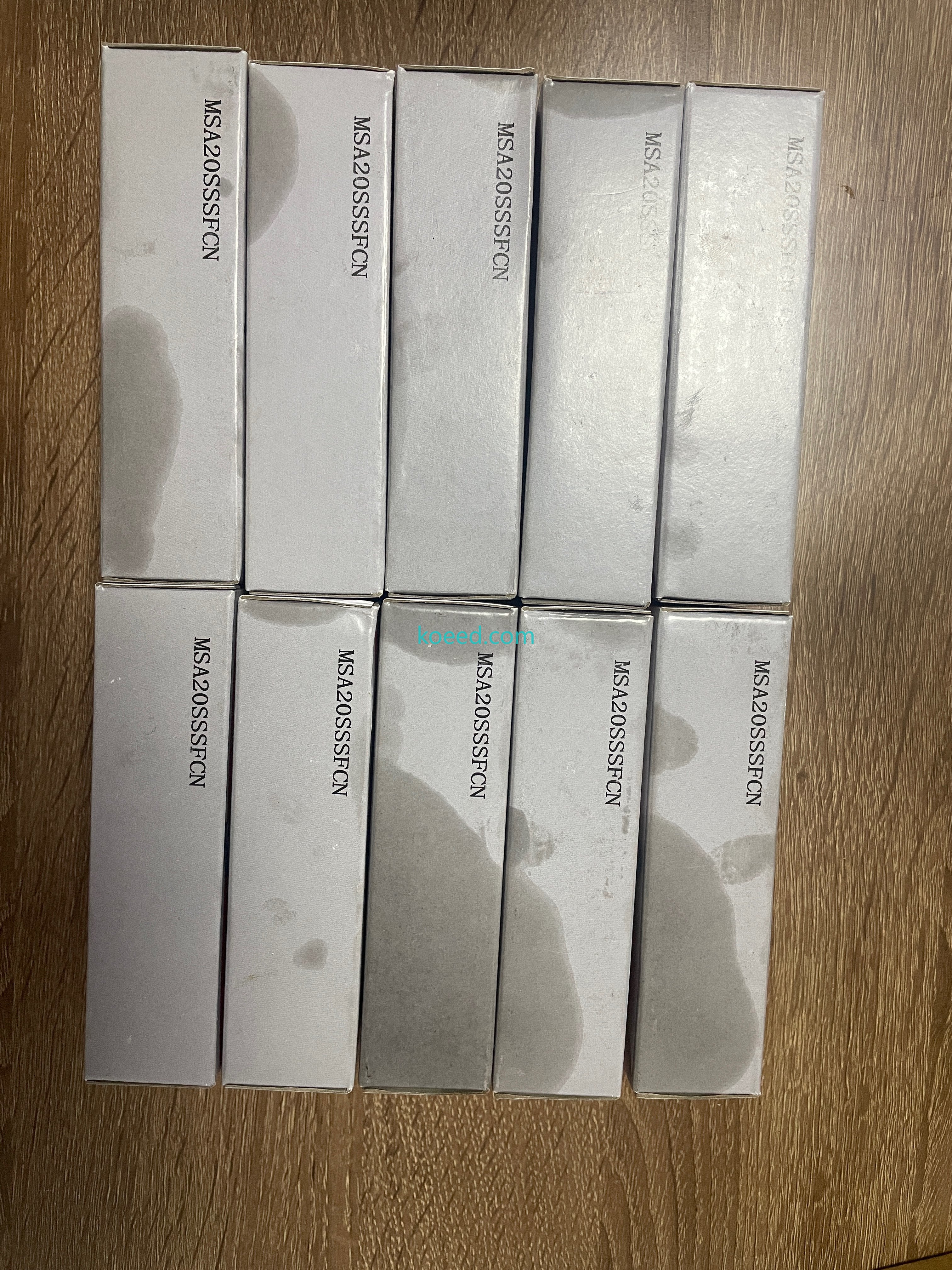
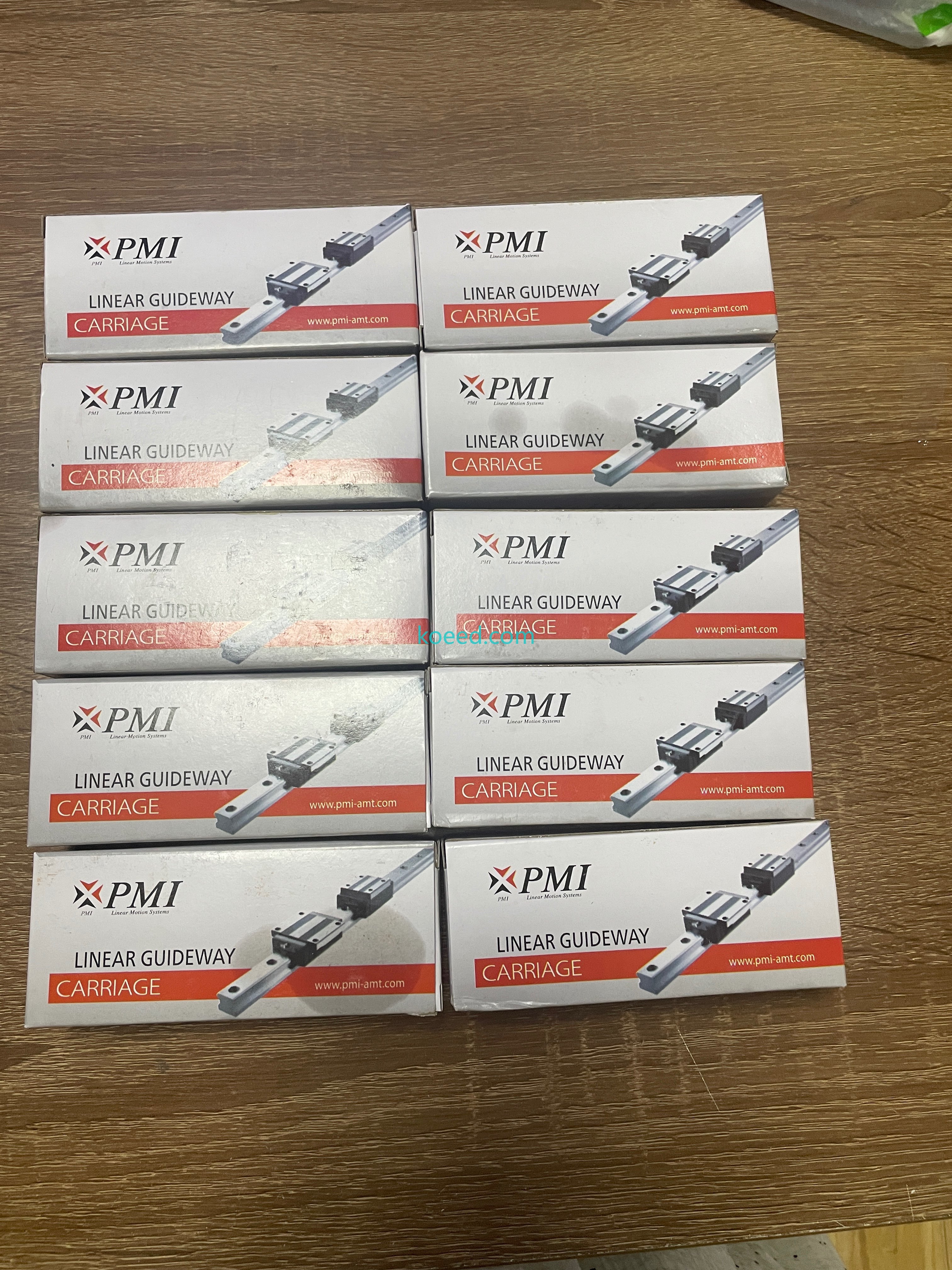
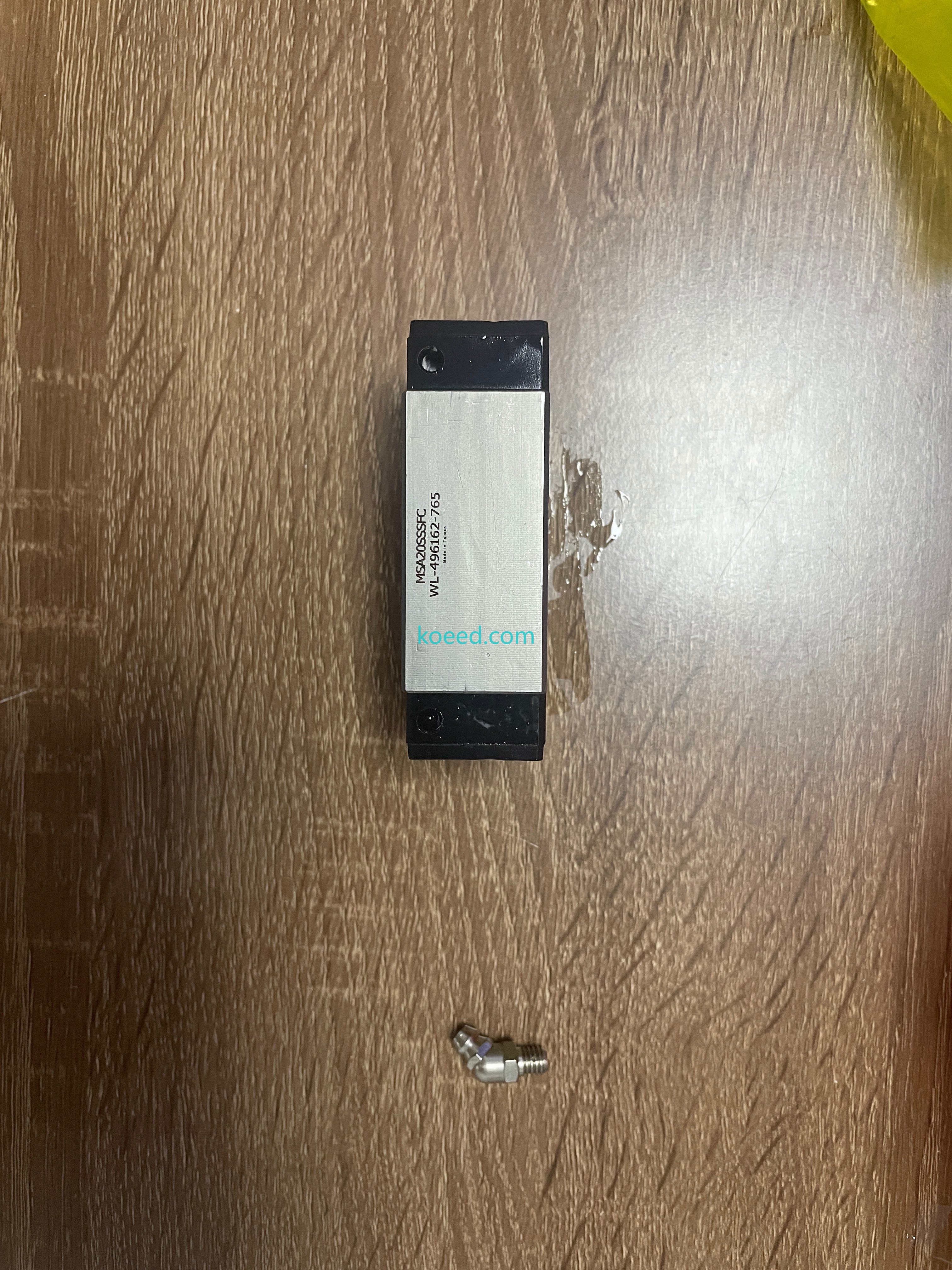
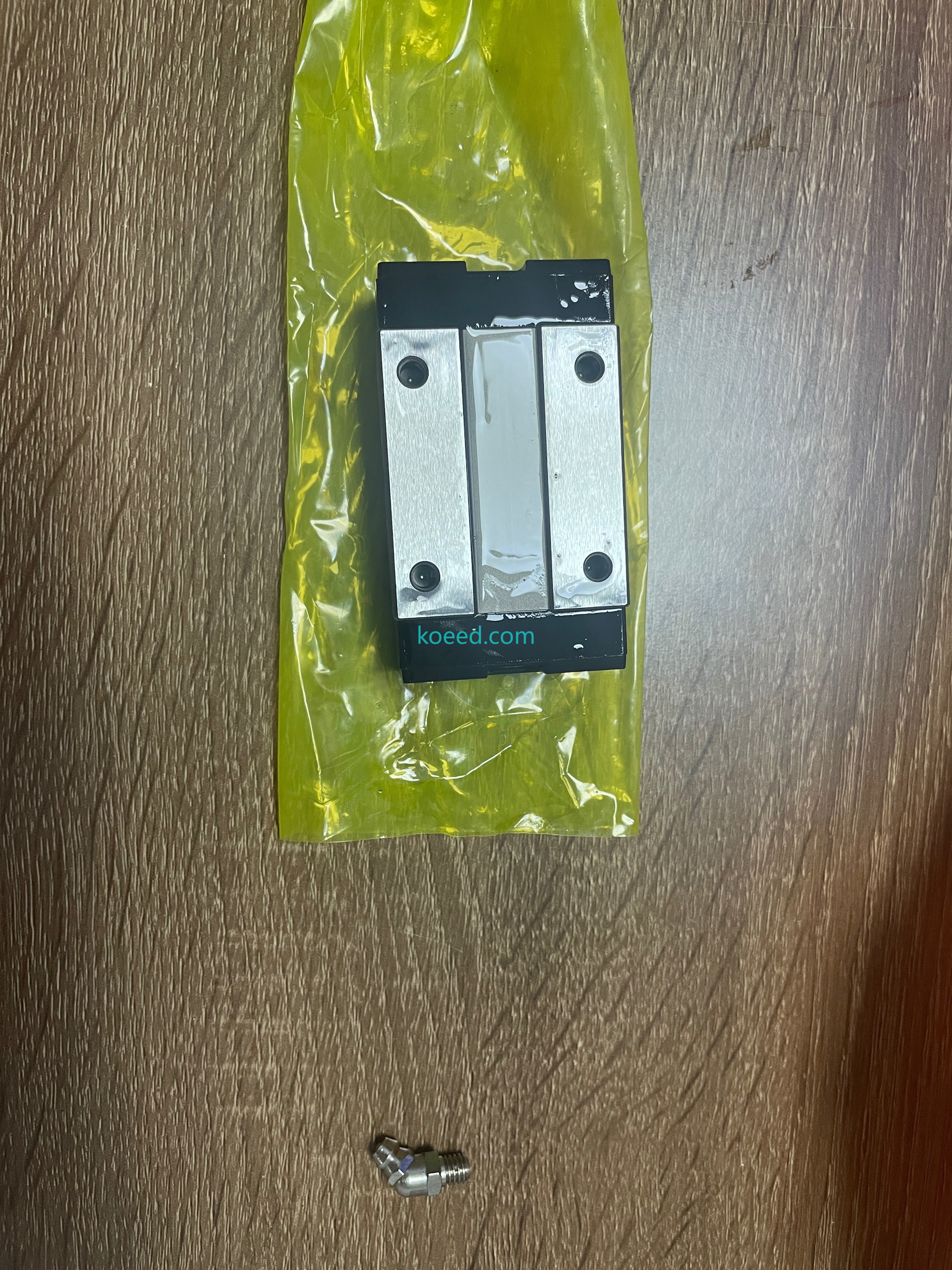
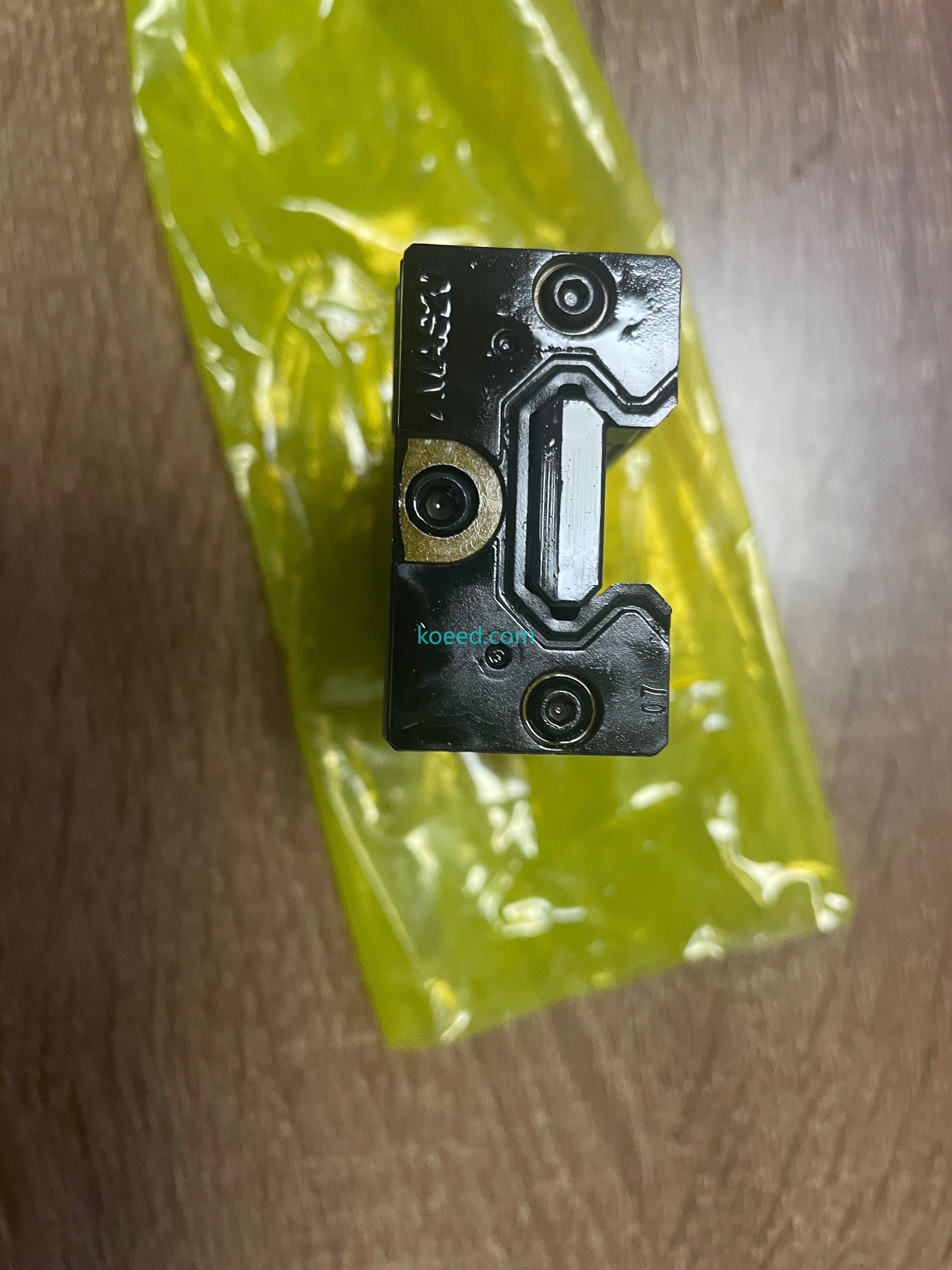
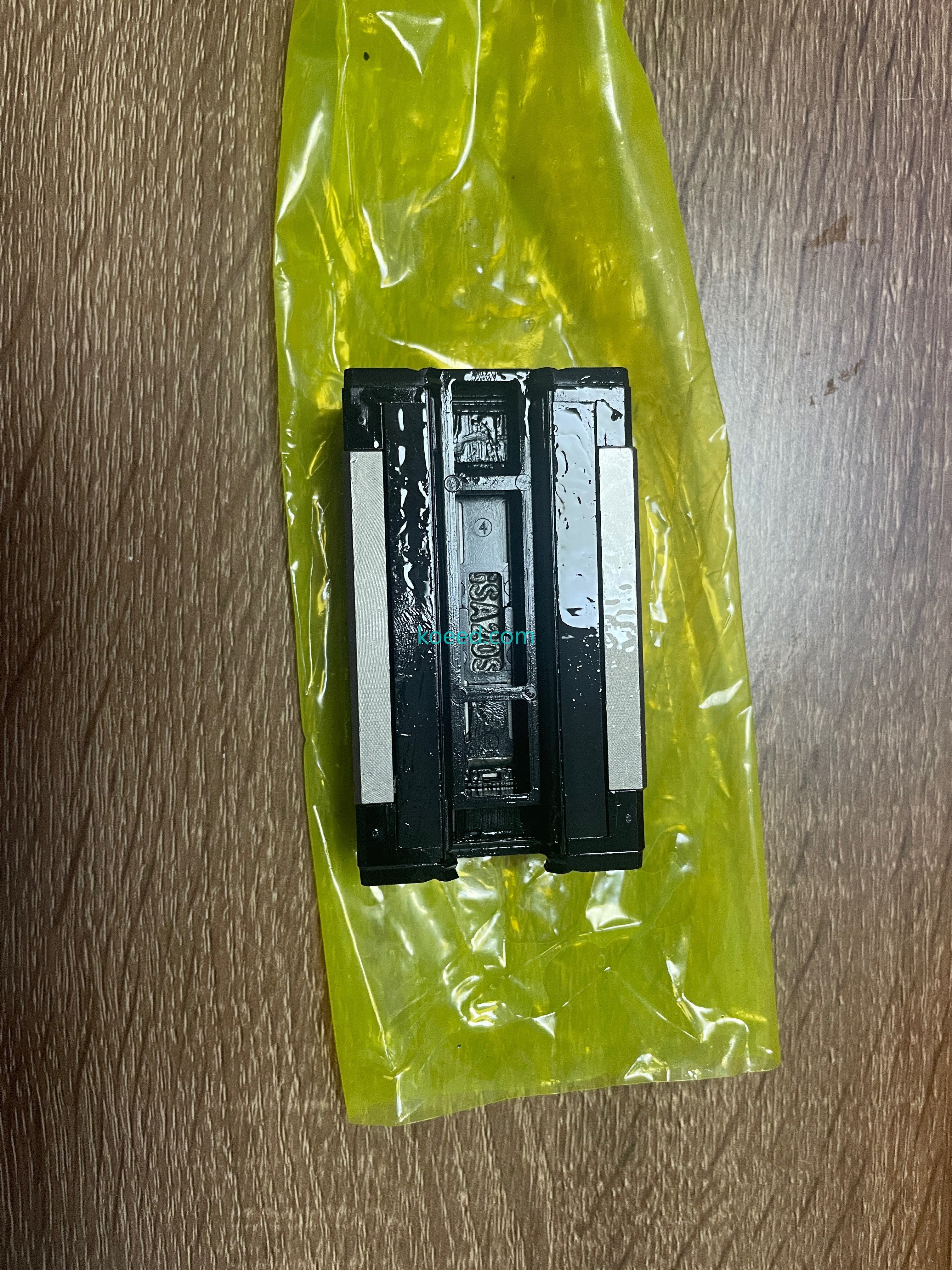
3. Visual Gallery: PMI MSA20SSSFCN — Detailed Product Inspection
Below is a comprehensive visual inspection gallery of the PMI MSA20SSSFCN slider block, captured by the Koeed quality assurance team. Every unit undergoes our 6-point incoming inspection protocol before being cataloged — ensuring you receive genuine, factory-grade PMI motion components.
4. Maintenance, Troubleshooting & Predictive Care (2026 Best Practices)
4.1 Lubrication Protocol
The MSA20SSSFCN is factory-greased with a lithium-based anti-corrosion lubricant. In 2026, we recommend transitioning to synthetic PAO-based grease (NLGI Grade 1) for high-speed CNC environments. Re-lubrication interval: every 500–800 km of travel or 3 months, whichever comes first — adjustable based on real-time vibration data from your IIoT sensors.
4.2 Common Error States & Resolutions
| Symptom | Likely Root Cause | 2026 Recommended Action |
|---|---|---|
| Increased servo following error | Contamination in ball circuit / degraded grease | Flush with ISO VG 32 cleaning oil; re-grease; check wiper seal integrity |
| Audible "clicking" at stroke reversal | Excessive preload loss or ball recirculation tube misalignment | Inspect block for impact damage; replace if preload has dropped below spec |
| Surface rust on rail/block | Humidity exposure > 65% RH without corrosion protection | Apply PMI-approved anti-rust preservative; install desiccant breather on machine enclosure |
| Vibration spike at specific frequency | Raceway spalling / early fatigue (predictive alert) | Cross-reference with IIoT platform; schedule replacement during next planned downtime window |
5. ROI & Total Cost of Ownership (TCO) Analysis — 2026 Perspective
Procurement engineers in 2026 are no longer evaluating linear guides on purchase price alone. The Total Cost of Ownership (TCO) model — encompassing energy consumption, maintenance labor, unplanned downtime risk, and end-of-life recyclability — now dominates sourcing decisions. Here is how the PMI MSA20SSSFCN stacks up:
| TCO Dimension | MSA20SSSFCN Performance | Estimated 5-Year Impact |
|---|---|---|
| Energy Savings (Low Friction) | ~8–12% reduction in servo motor current draw vs. legacy blocks | €420–€680 saved per axis (based on €0.18/kWh, 2026 EU industrial rate) |
| Maintenance Labor | Extended re-lube interval; condition-based via IIoT data | 40–55% reduction in preventive maintenance man-hours |
| Unplanned Downtime Avoidance | Predictive alerts provide 2–4 week lead time before failure | €8,500–€22,000 avoided per incident (CNC machining center; 2026 rates) |
| Recyclability | Bearing steel (AISI 52100 / 100Cr6 equivalent) — 98% recyclable | Aligns with EU Taxonomy / ESG reporting requirements |
6. Frequently Asked Questions
What does the "SSSFCN" suffix in MSA20SSSFCN indicate?
In PMI's nomenclature for the MSA series, the suffix breaks down as follows: S = Square block type, S = Standard (non-interchangeable) carriage, S = Standard height, FC = Flange-type mounting with 4 bolt holes, and N = specific variant code. This combination delivers maximum mounting rigidity for heavy-load CNC and automation applications. For exact dimensional drawings, visit the full product page.
Is the MSA20SSSFCN compatible with third-party 20mm rails?
While the MSA20SSSFCN conforms to the 20mm rail width standard, PMI linear guide blocks are designed and precision-ground to pair with PMI MSA-series rails. Mixing brands (e.g., using a PMI block on a THK or HIWIN rail) is strongly discouraged — even micron-level profile deviations can cause uneven ball loading, premature wear, and voided warranty. Koeed can supply matched PMI MSA20 rails upon request. Contact our team for a complete rail + block quotation.
What is the dynamic load rating of the MSA20SSSFCN?
The MSA20 series block delivers a dynamic load rating (C) in the ~19.2 kN range and a static load rating (C₀) of approximately 29.5 kN. These values make it suitable for medium-to-heavy machining applications including milling, drilling, and grinding centers. For application-specific load calculations factoring in acceleration, duty cycle, and moment loads, our engineering team at Koeed provides complimentary sizing support.
How does the MSA20SSSFCN support predictive maintenance in 2026?
The block's square flange geometry provides flat, accessible surfaces ideal for mounting vibration sensors (MEMS accelerometers) and surface-temperature thermocouples. When paired with an edge computing gateway, the continuous data stream enables machine learning models to detect anomalies in the frequency domain — flagging raceway degradation weeks before a physical failure occurs. This transforms the MSA20SSSFCN from a passive mechanical component into an active node in your digital twin ecosystem.
What is the typical lead time for MSA20SSSFCN from Koeed?
Koeed maintains strategic inventory of the PMI MSA20SSSFCN to support urgent production line requirements. Standard lead time is 3–7 business days for in-stock units. For volume orders or matched rail+block sets, please use the quote request form below and our procurement team will respond within 24 hours with availability and competitive 2026 pricing.
🔗 Ready to Upgrade Your Linear Motion System?
Secure genuine PMI MSA20SSSFCN slider blocks with full Koeed quality assurance. Bulk pricing and matched rail sets available.


