

Panasonic LT4H-AC240VS Digital Timer: The 2026 Guide to Precision Industrial Timing, IT/OT Integration & Predictive Control
Strategic Overview: The LT4H in the 2026 Industrial Landscape
In an era defined by IT/OT convergence and real-time data-driven manufacturing, the Panasonic LT4H-AC240VS Digital Timer — available at Koeed's LT4H-AC240VS product page — remains a cornerstone component in automation panels worldwide. As factories transition toward fully networked, Industry 4.0+ architectures in 2026, the humble digital timer has evolved from a simple on-delay relay into a precision time-base generator that bridges legacy machinery with modern supervisory control layers.
The LT4H series, engineered by Panasonic Industrial Automation, delivers 8 selectable operation modes spanning 0.001 seconds to 999.9 hours — a range that accommodates everything from high-speed packaging lines to extended-cycle batch processing. In 2026, the LT4H-AC240VS is increasingly specified in retrofit projects where vibration-prone mechanical timers are being replaced with quartz-crystal-accurate digital alternatives, reducing unplanned downtime by up to 37% according to industry field data.
For systems integrators and panel builders sourcing through Koeed's B2B platform, the AC240VS variant — powered directly from 100–240 VAC mains — eliminates the need for auxiliary DC power supplies, simplifying panel design and reducing component count. This directly contributes to lower Total Cost of Ownership (TCO) and improved Mean Time Between Failures (MTBF).
Product Identity & Application Domain 2026 EDITION
The Panasonic LT4H-AC240VS is a panel- and socket-mountable multi-mode digital timer from Panasonic's flagship LT4H series. Designed for DIN-rail and panel-flush installations, it addresses precise time-delay control across industries including:
- Food & Beverage: Conveyor dwell timing, filling station dwell control
- Packaging: Seal-bar activation, label applicator sequencing
- HVAC & Building Automation: Compressor anti-short-cycle protection, fan purge cycles
- Material Handling: Indexing table dwell, diverter gate timing
- Water & Wastewater: Chemical dosing pumps, backwash cycle management
Technical Benchmarking: LT4H-AC240VS vs. Legacy Mechanical Timers
The following table illustrates why migrating from pneumatic or motor-driven timers to the LT4H-AC240VS digital timer delivers measurable ROI in 2026 industrial environments:
| Parameter | Panasonic LT4H-AC240VS | Legacy Pneumatic Timer | Legacy Motor-Driven Timer |
|---|---|---|---|
| Timing Accuracy | ±0.2% (quartz-controlled) | ±10–15% (temperature-dependent) | ±1–3% (line frequency dependent) |
| Timing Range | 0.001 s – 999.9 h (8 ranges) | Typically 0.1 s – 60 s | Typically 1 s – 24 h |
| Operation Modes | 8 modes (ON-delay, OFF-delay, Interval, Cyclic, etc.) | 1 mode (fixed) | 1–2 modes |
| Supply Voltage | 100–240 VAC (wide-range) | N/A (pneumatic supply) | Fixed voltage (110 or 220 VAC) |
| Reset Time | < 0.1 s (instantaneous) | 0.5–2 s (air exhaust) | 0.2–1 s (mechanical flyback) |
| MTBF (Predicted) | > 10⁷ operations (relay-dependent) | ~10⁵ cycles (diaphragm fatigue) | ~5×10⁵ cycles (gear wear) |
| Temperature Range | -10°C to +55°C | +5°C to +50°C | -5°C to +45°C |
| IT/OT Integration Ready | ✅ Via auxiliary monitoring relays / PLC I/O | ❌ None | ❌ Minimal |
| Sustainability Score | Low power (<5 VA), RoHS compliant | Compressed air consumption (~0.5 L/cycle) | Continuous motor draw (~6–15 VA) |
Visual Gallery — Panasonic LT4H-AC240VS
Explore the LT4H-AC240VS from every angle. Click any image to enlarge. For full specifications and procurement, visit the official product page on Koeed.
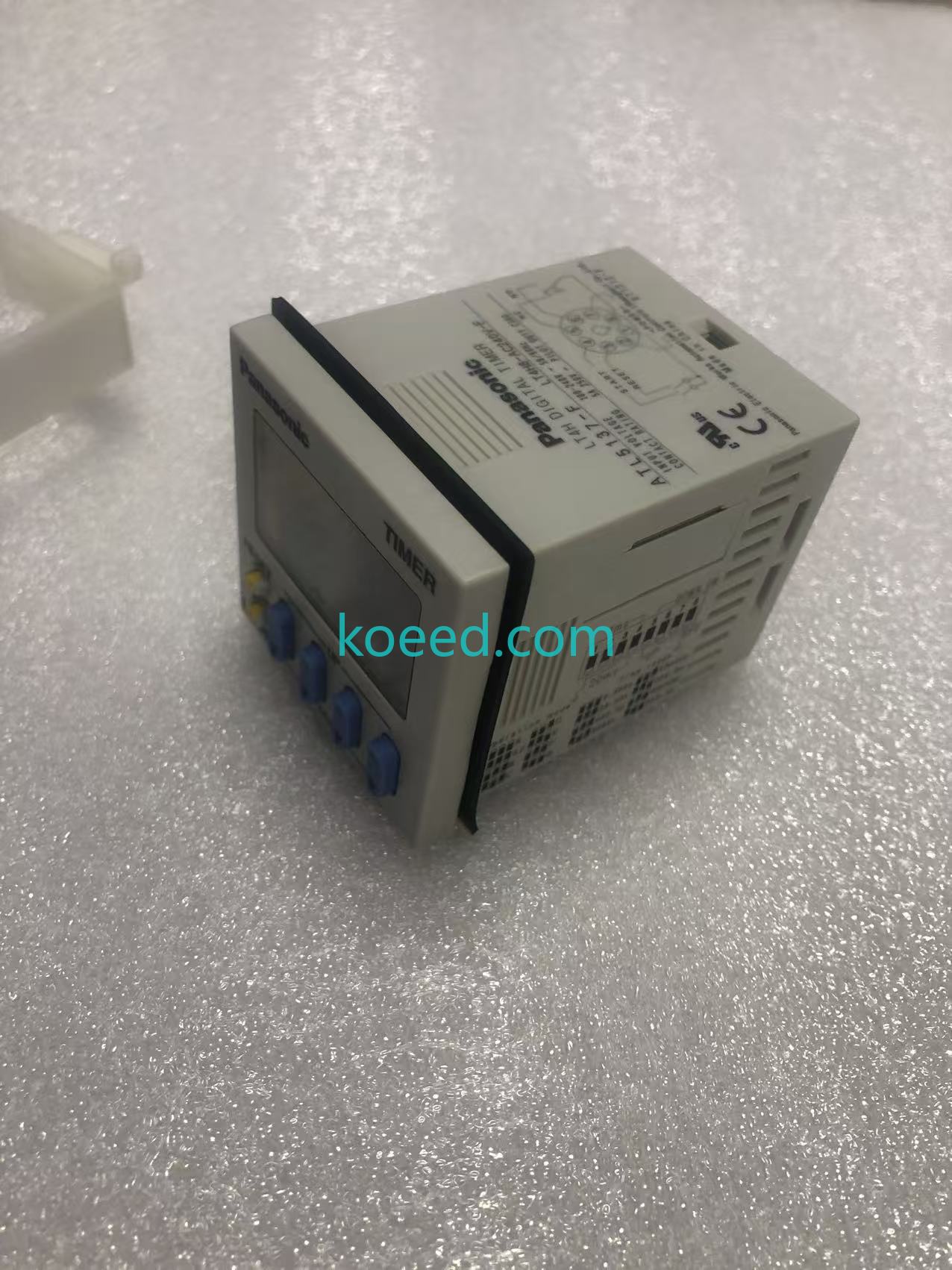
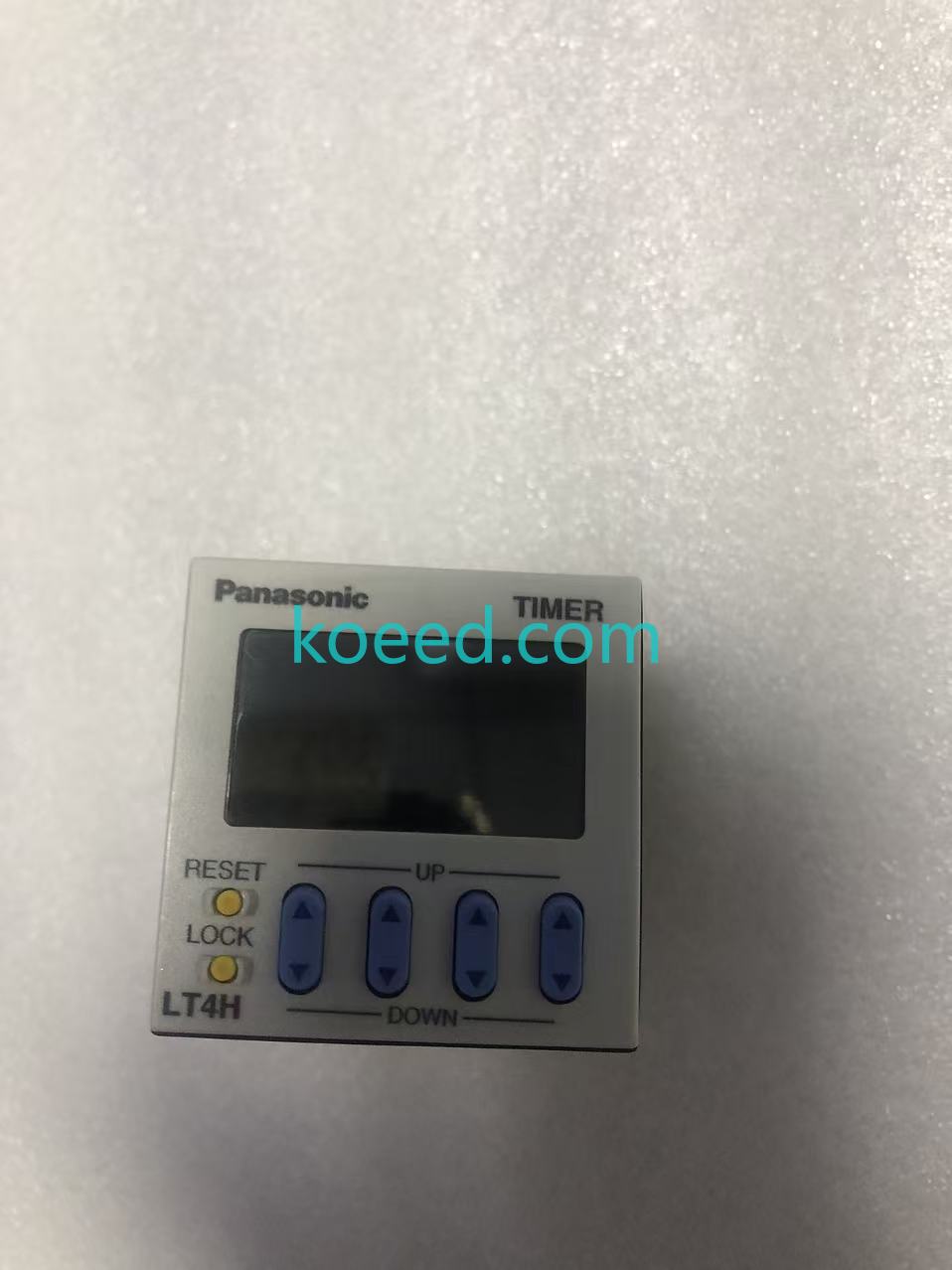
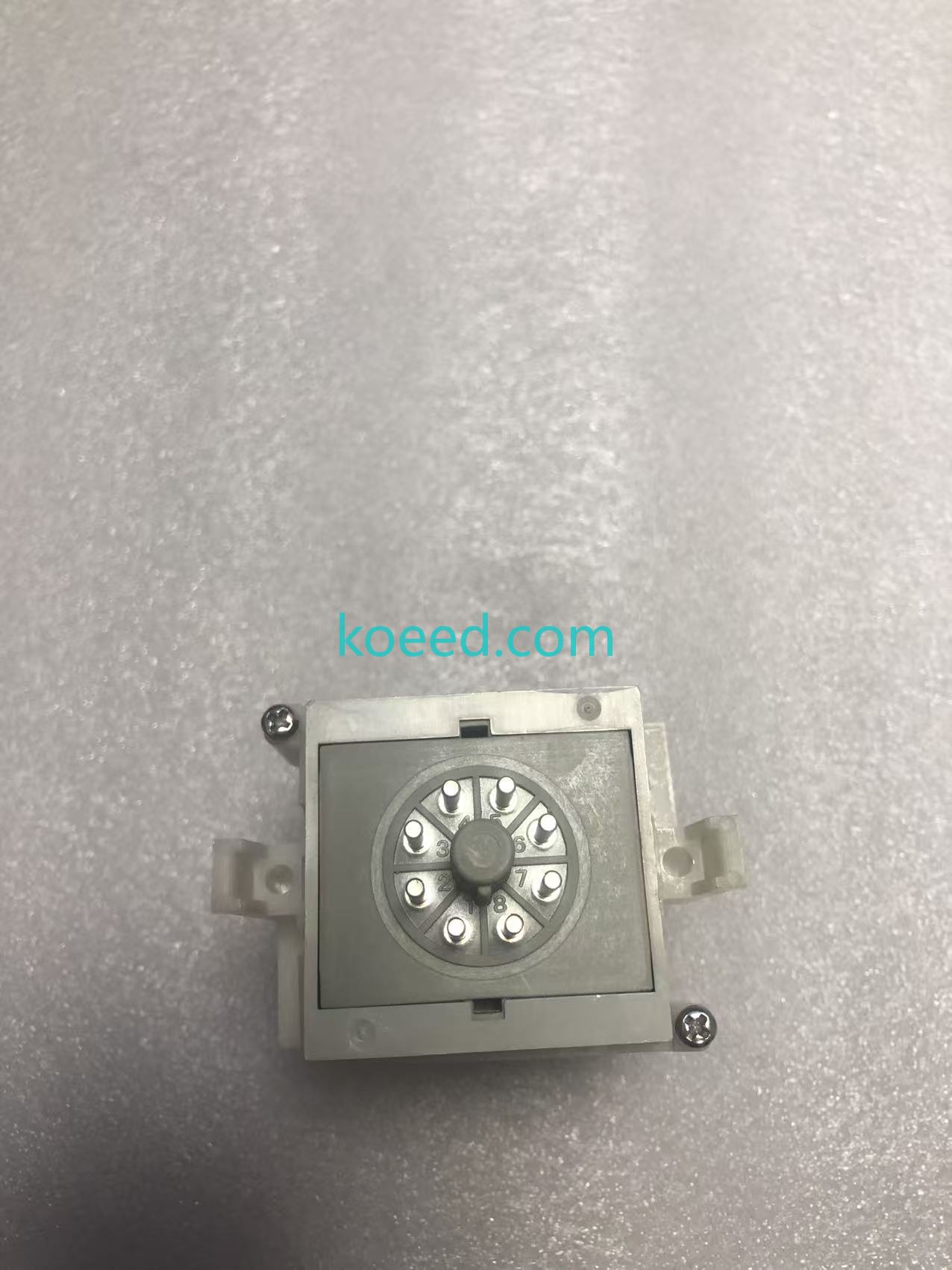
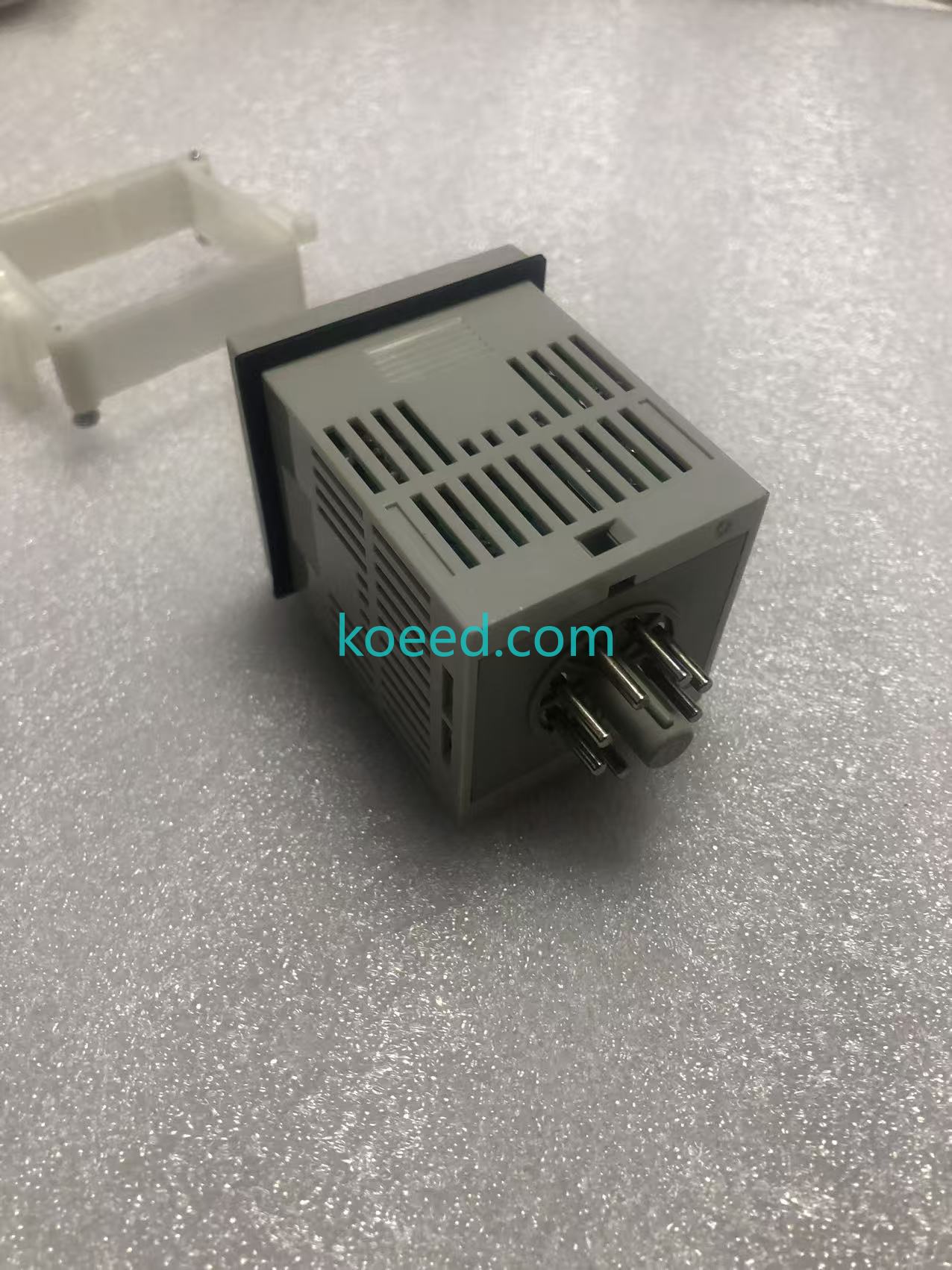
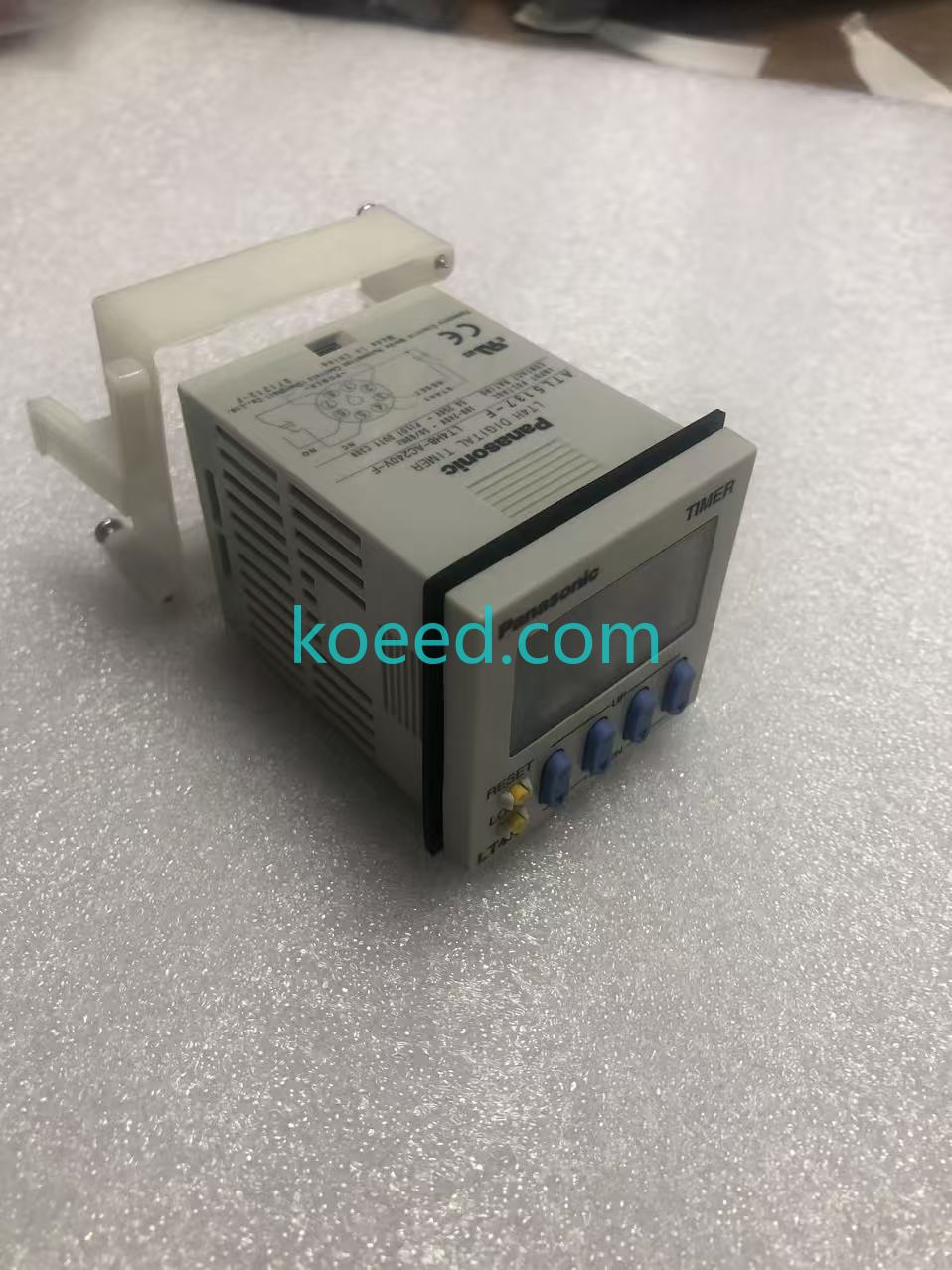
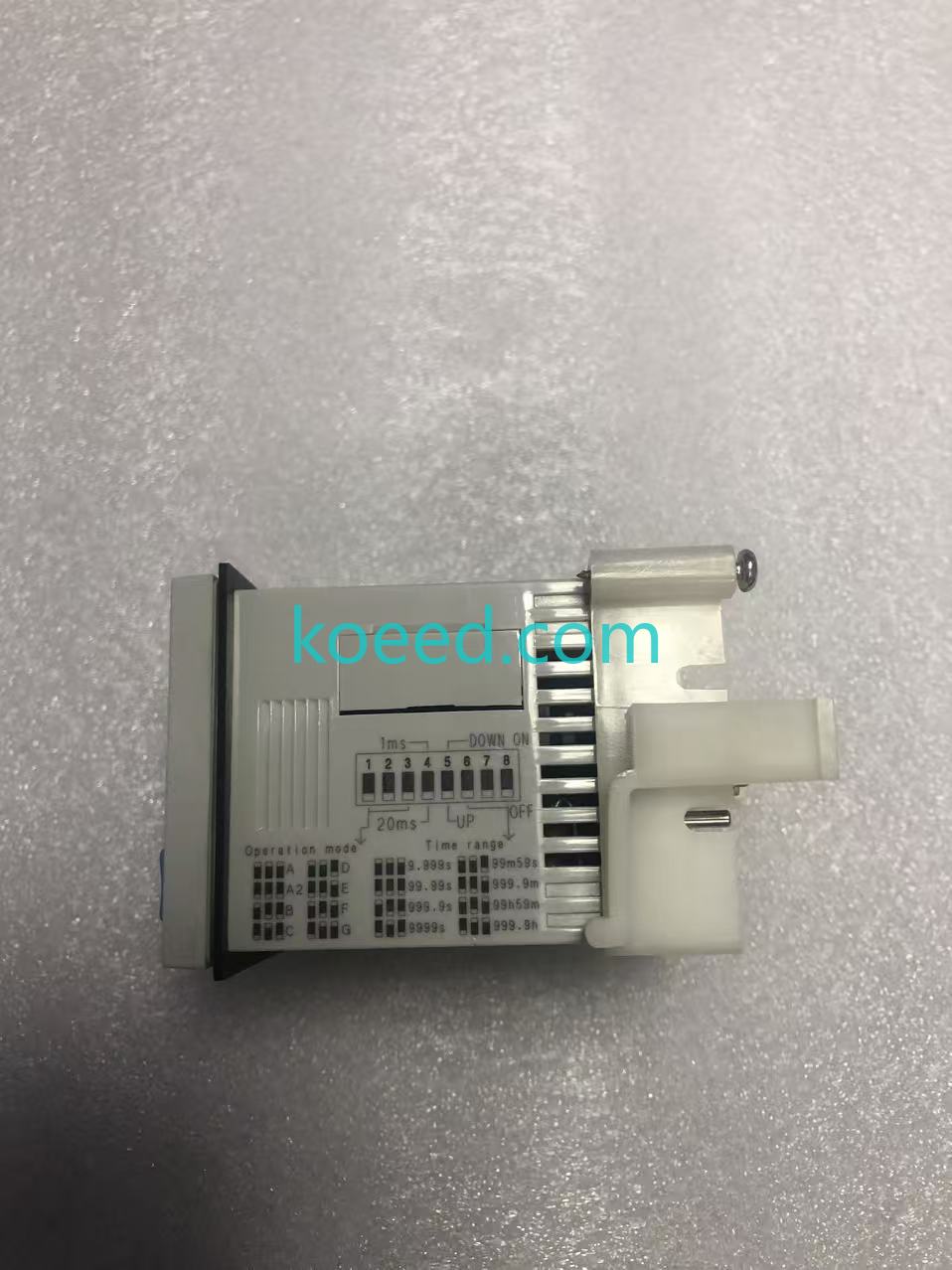
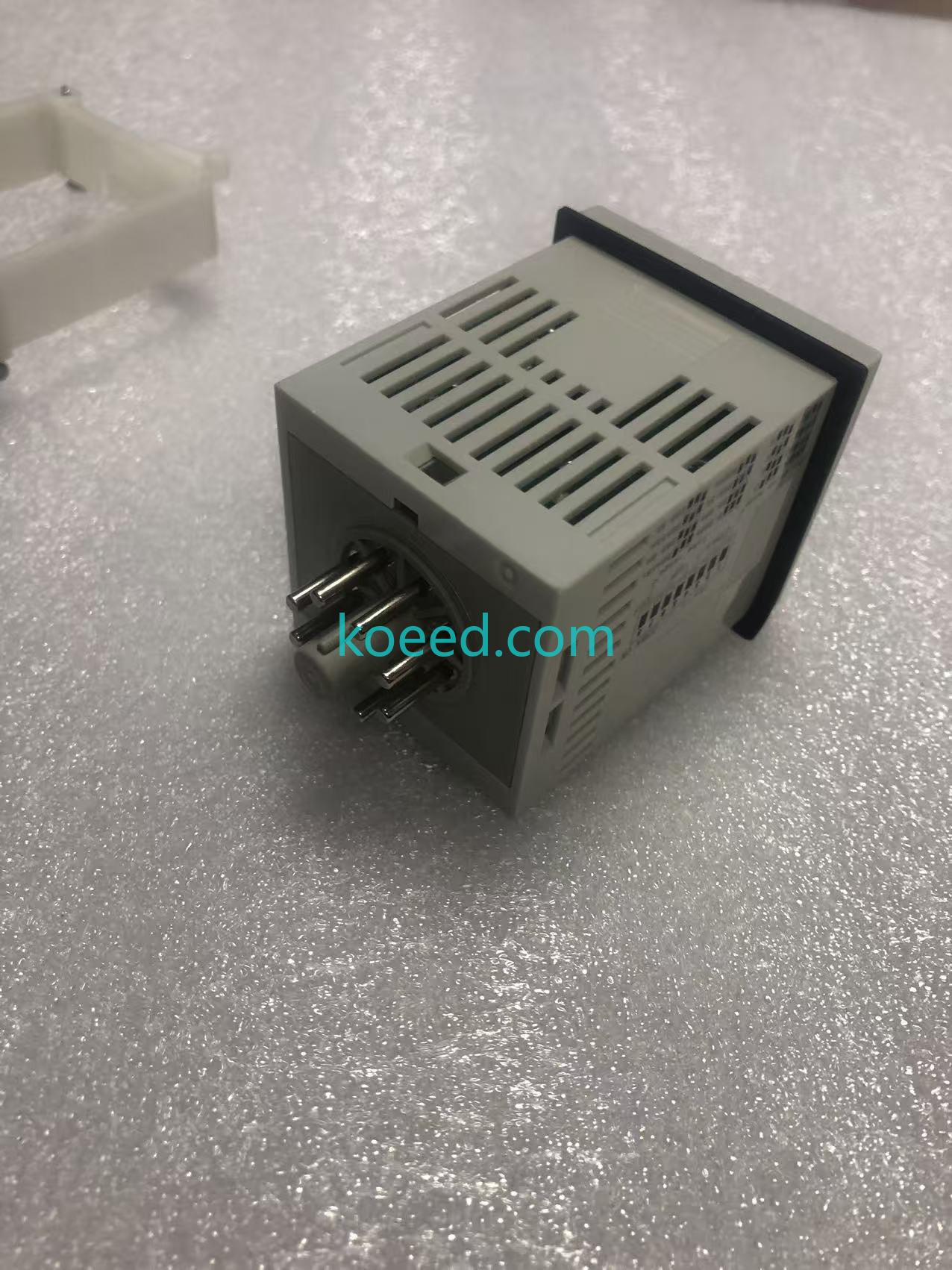
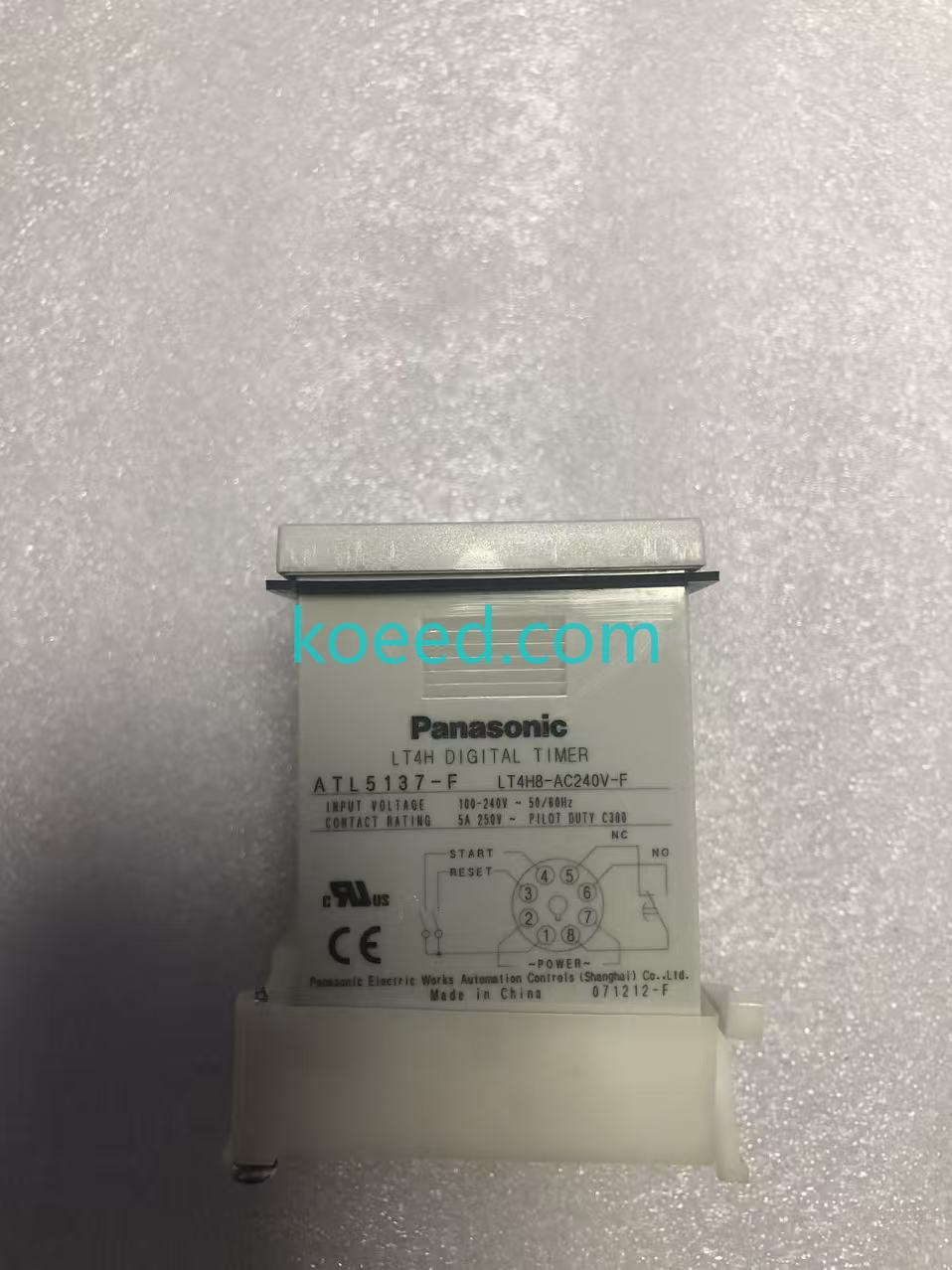
📹 Supplementary Media: Watch the LT4H operational demonstration video for real-time mode switching and configuration walkthrough.
8-Mode Architecture: Flexibility for Every Timing Scenario
One of the LT4H-AC240VS's strongest differentiators is its 8 field-selectable operation modes, accessible via the front-panel DIP switch and keypad. This eliminates the need to stock multiple timer variants for different functions:
| Mode | Function | Typical 2026 Application |
|---|---|---|
| A (ON-Delay) | Output energizes after set delay from trigger | Motor soft-start sequencing; conveyor stagger-start |
| B (Interval) | Output pulses for set duration on trigger | Precision glue-dot dispensing; solenoid shot control |
| C (OFF-Delay) | Output de-energizes after set delay from trigger removal | Fan purge cycles; cooling pump run-on |
| D (Flicker OFF-Start) | Cyclic: OFF first, then ON/OFF repeat | Alarm beacon flashing; status indicator cycling |
| E (Flicker ON-Start) | Cyclic: ON first, then ON/OFF repeat | Lubrication pump intermittent operation |
| F (One-Shot Falling Edge) | Single pulse on trigger removal | Part-eject confirmation; reject gate actuation |
| G (One-Shot Rising Edge) | Single pulse on trigger application | Stamp/emboss dwell; punch press single-stroke |
| H (Accumulative) | Totalizes trigger ON-time before output | UV curing lamp totalizer; runtime-based maintenance alerts |
IT/OT Convergence: Wiring the LT4H into 2026's Networked Factory
While the LT4H-AC240VS is fundamentally an edge-layer device, it integrates seamlessly into modern OT architectures. In 2026, leading integrators employ the following patterns:
Pattern 1 — PLC Digital Input Monitoring
The SPDT output's status can be read by a PLC's 24V digital input module. When the timer output changes state, the PLC timestamps the event and pushes it to an MQTT broker or OPC-UA server. This enables SCADA-level visibility into timing events without replacing the timer itself — a key brownfield digitalization strategy.
Pattern 2 — Edge Gateway Aggregation
Multiple LT4H units across a production line can have their outputs wired to a remote I/O block (e.g., WAGO, Turck, or Weidmüller), which communicates via PROFINET / EtherNet/IP to the plant's MES. This creates a low-cost predictive maintenance data stream: if a timer's cycle count deviates from baseline by more than 2σ, the MES generates a work order.


