

Pepperl+Fuchs NBB20-U1-UU (238884): The 2026 Universal Inductive Proximity Sensor for Smart Factory IT/OT Convergence
Strategic Overview: Why the NBB20-U1-UU Defines Universal Sensing in 2026
As industrial automation accelerates toward fully converged IT/OT architectures in 2026, the demand for universal, protocol-agnostic sensing hardware has never been more critical. The Pepperl+Fuchs NBB20-U1-UU (238884) inductive proximity sensor stands at the forefront of this evolution — a two-wire, AC/DC universal voltage sensor designed to operate seamlessly across both legacy brownfield installations and cutting-edge greenfield smart factories.
With an ultra-wide operating voltage range of 20–253 VAC and 20–300 VDC, the NBB20-U1-UU eliminates the inventory fragmentation that plagues multi-voltage factory floors. One sensor. Any voltage. This is the universal sensing philosophy that drives 2026's lean automation strategies. The model 238884 variant, featuring a robust terminal compartment connection, delivers sensing distances up to 16.2 mm — exceptional for its 20 mm diameter form factor — while maintaining a switching frequency of 30 Hz suitable for the vast majority of positioning, presence detection, and end-of-travel applications across material handling, packaging, machine tool, and automotive assembly lines.
In the 2026 industrial landscape where predictive maintenance has shifted from aspiration to operational mandate, the NBB20-U1-UU's two-wire design simplifies integration with modern IO-Link masters and edge gateways via retrofittable condition-monitoring modules. This sensor, available now at Koeed, is not just a component — it is a strategic asset in your digital transformation roadmap.
Technical Benchmarking: NBB20-U1-UU Versus Legacy & Competing Solutions
Core Specifications at a Glance
| Parameter | NBB20-U1-UU (238884) | Typical DC-Only Competitor | Legacy AC-Only Sensor |
|---|---|---|---|
| Operating Voltage | 20–253 VAC / 20–300 VDC Universal | 10–30 VDC only | 90–250 VAC only |
| Wiring Configuration | Two-wire (polarity insensitive for DC) | Three-wire (PNP/NPN) | Two-wire (AC only) |
| Rated Operating Distance | 0–16.2 mm | 0–12 mm (typical at 20 mm dia.) | 0–10 mm |
| Output Type | NO/NC — field-selectable via wiring | Fixed NO or NC (model-dependent) | Fixed NO or NC |
| Connection | Terminal compartment (IP67-rated) | M12 connector or cable pigtail | Screw terminals |
| Housing Diameter | 20 mm | 18–30 mm | 30 mm+ |
| Switching Frequency | 30 Hz | 50–200 Hz | 25 Hz |
| IT/OT Ready (2026) | ✅ IO-Link compatible via gateway | ⚠️ Partial (requires specific model) | ❌ Not natively supported |
| Sustainability Impact | Single-SKU multi-voltage: reduced logistics CO₂ | Multiple SKUs required | High inrush; lower efficiency |
IT/OT Convergence: The NBB20-U1-UU as a Digitalization Enabler
In 2026, the line between factory-floor OT (Operational Technology) and enterprise IT has dissolved. The NBB20-U1-UU's two-wire architecture is strategically significant here. Unlike three-wire sensors that demand separate signal and power conductors — complicating retrofits into existing conduit — the two-wire design allows plant engineers to drop the NBB20-U1-UU directly into legacy wiring without pulling new cables. This dramatically lowers the barrier to entry for condition-monitoring deployments.
When paired with a modern edge gateway (such as Pepperl+Fuchs' ICE series or third-party IO-Link masters via adapter modules), the NBB20-U1-UU's switching events can be timestamped, logged, and streamed into cloud platforms like AWS IoT SiteWise, Siemens MindSphere, or Microsoft Azure Digital Twins. This transforms a humble proximity sensor into a data-generating node capable of feeding predictive algorithms with real-time cycle-count, dwell-time, and anomaly-frequency data — the raw material of 2026's AI-driven maintenance platforms.
The NBB20-U1-UU (238884) at Koeed ships ready for this converged reality — with documentation that includes wiring diagrams for both traditional relay-logic interfaces and modern digital input modules.
ROI & Total Cost of Ownership: The 2026 Business Case
SKU Rationalization
One universal-voltage sensor replaces 3–5 voltage-specific models. Reduce inventory carrying costs by 40–60% annually.
Installation Cost Reduction
Two-wire, polarity-insensitive DC wiring eliminates miswiring errors. Terminal compartment design cuts installation time by ~35% versus connectorized alternatives in retrofit scenarios.
Downtime Avoidance
NO/NC field-selectable output means a single replacement covers both logic polarities. MTTR (Mean Time to Repair) drops by up to 50% when the right sensor is always on hand.
At 2026 market pricing, the NBB20-U1-UU sits in the mid-tier for inductive sensors — but its total cost of ownership is among the lowest in its class when factoring in inventory consolidation, reduced training complexity for multi-voltage plants, and avoided downtime from stockouts. For enterprises managing 500+ sensor endpoints across multiple facilities, the annual TCO advantage can exceed $12,000–$18,000 per facility when compared to maintaining separate AC and DC sensor inventories.
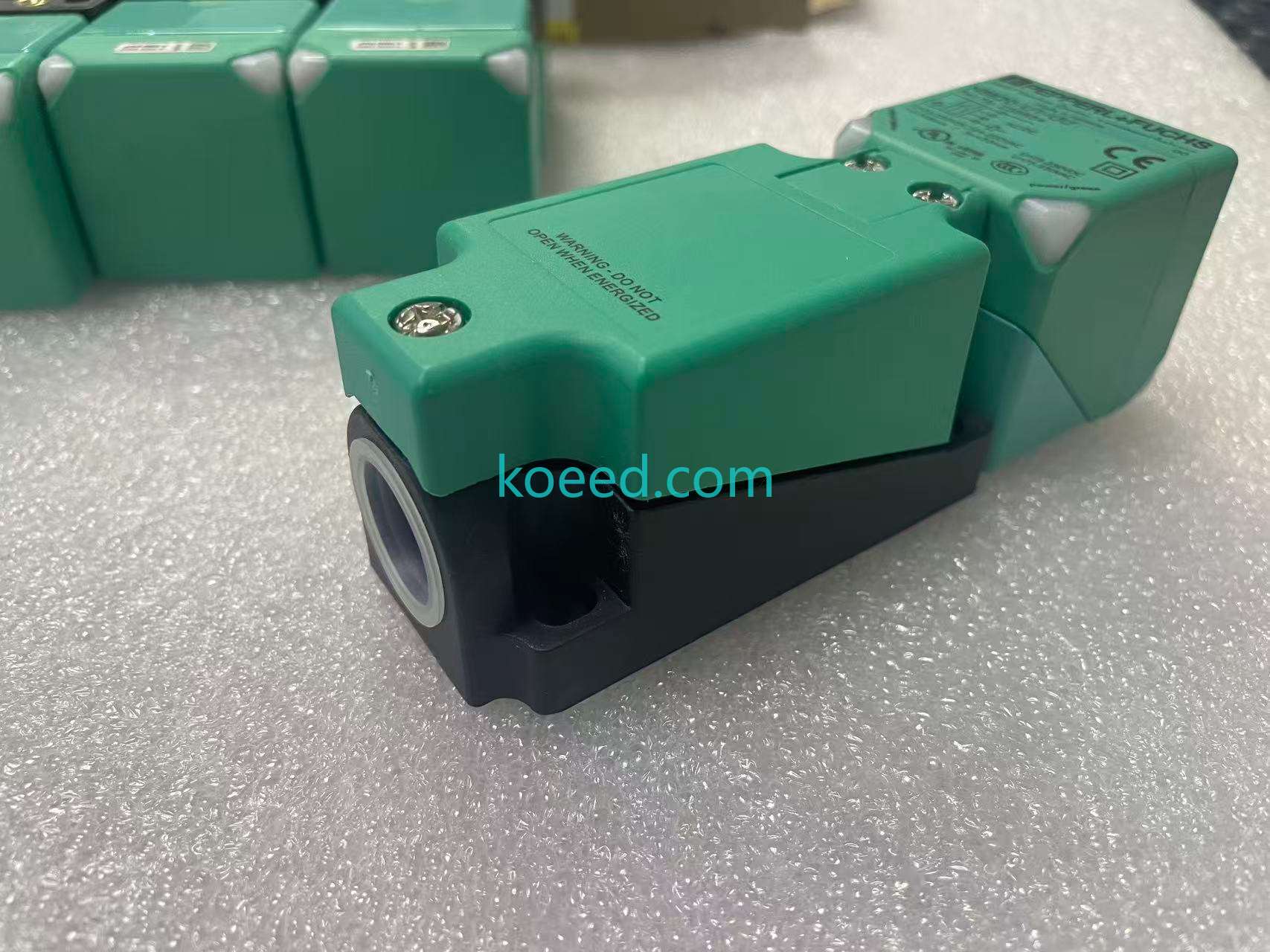
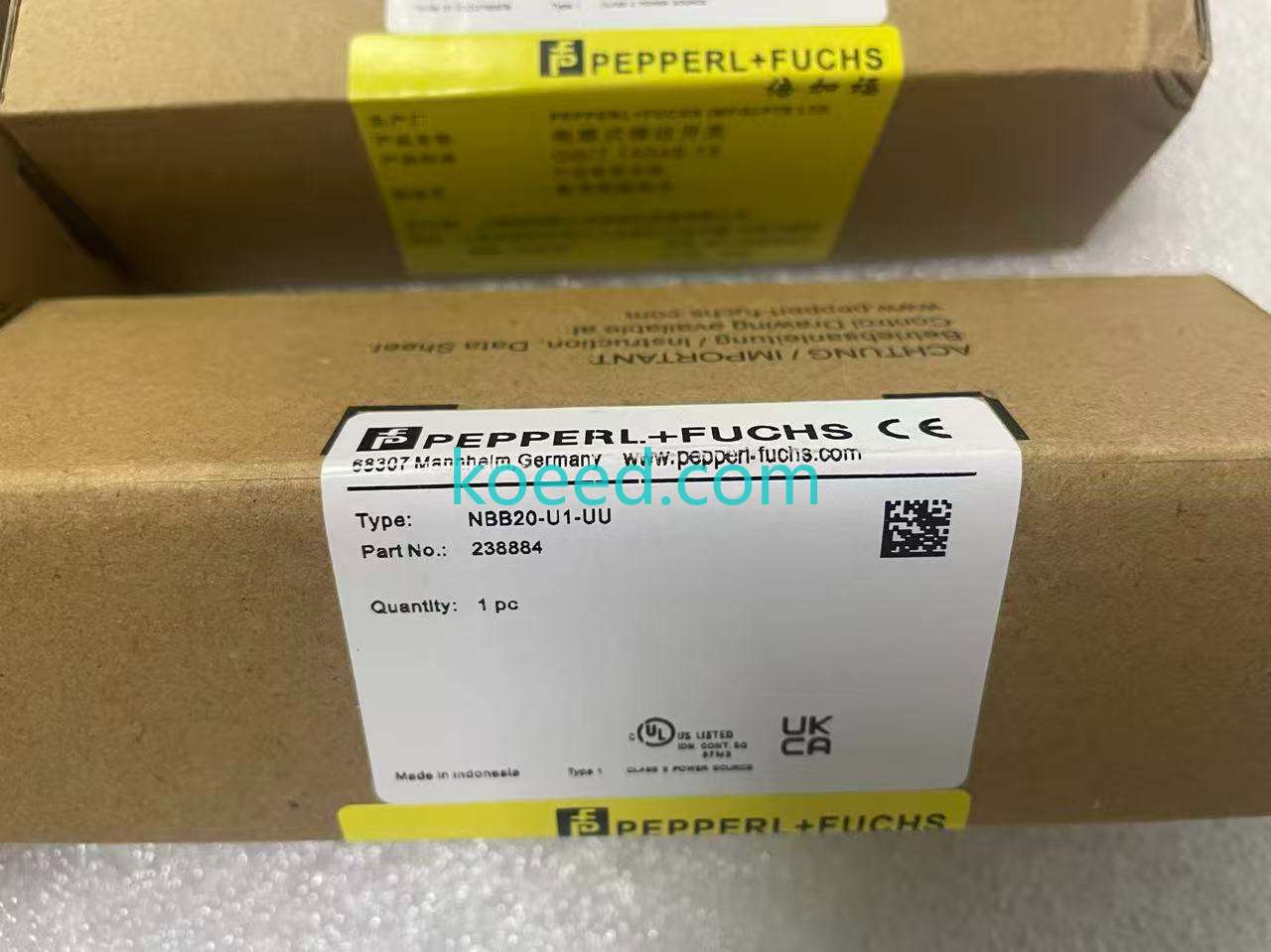
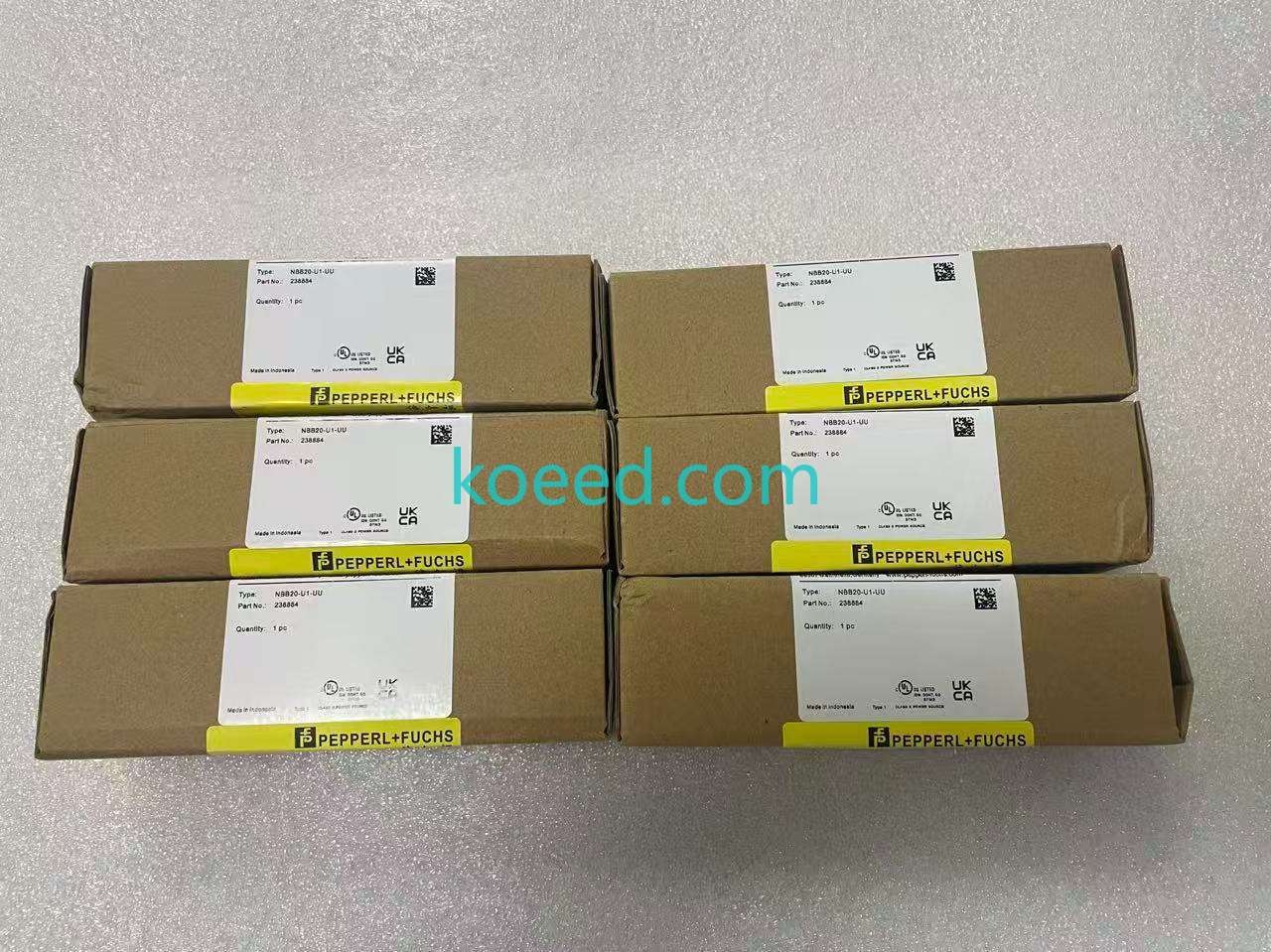
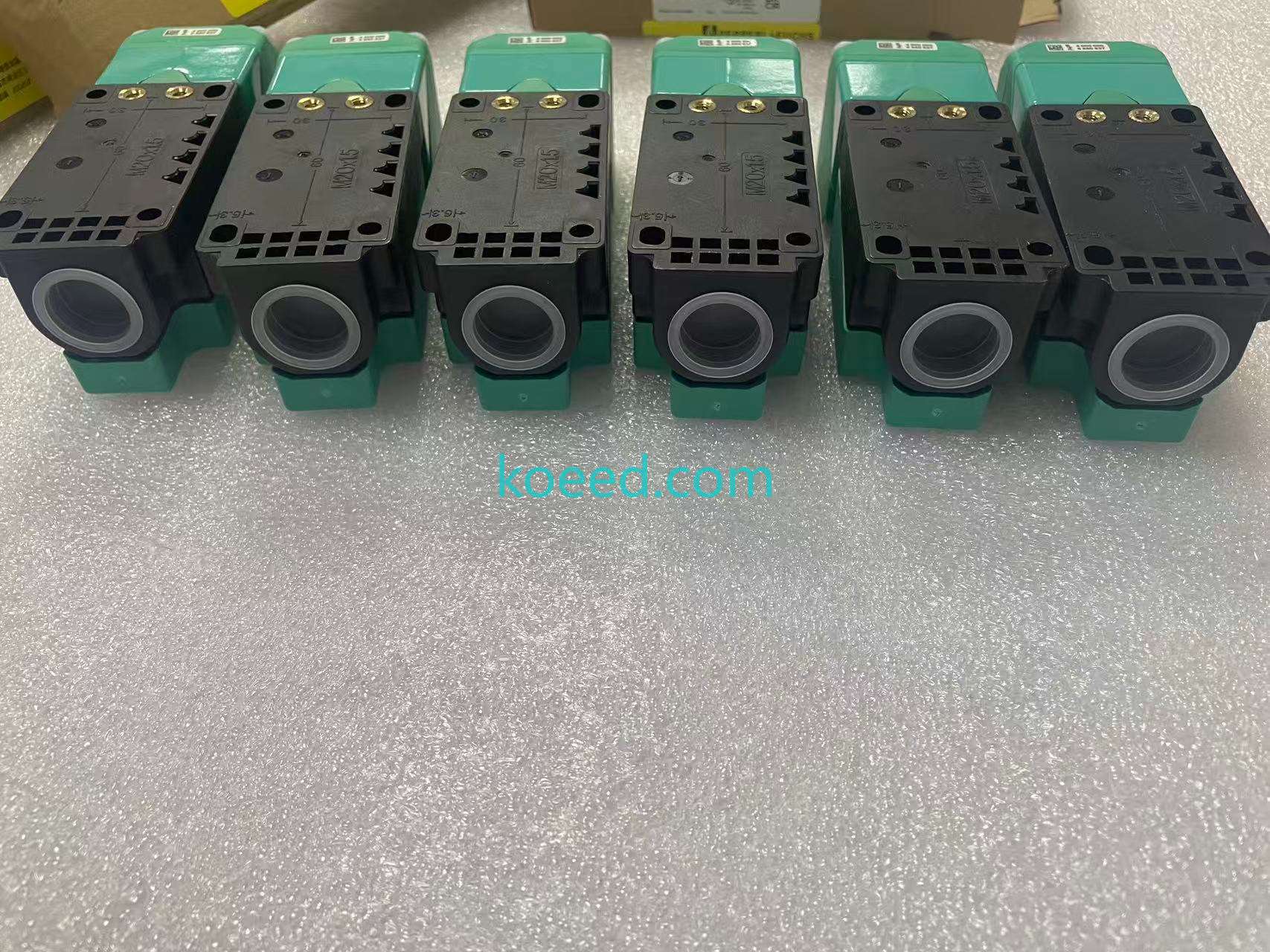
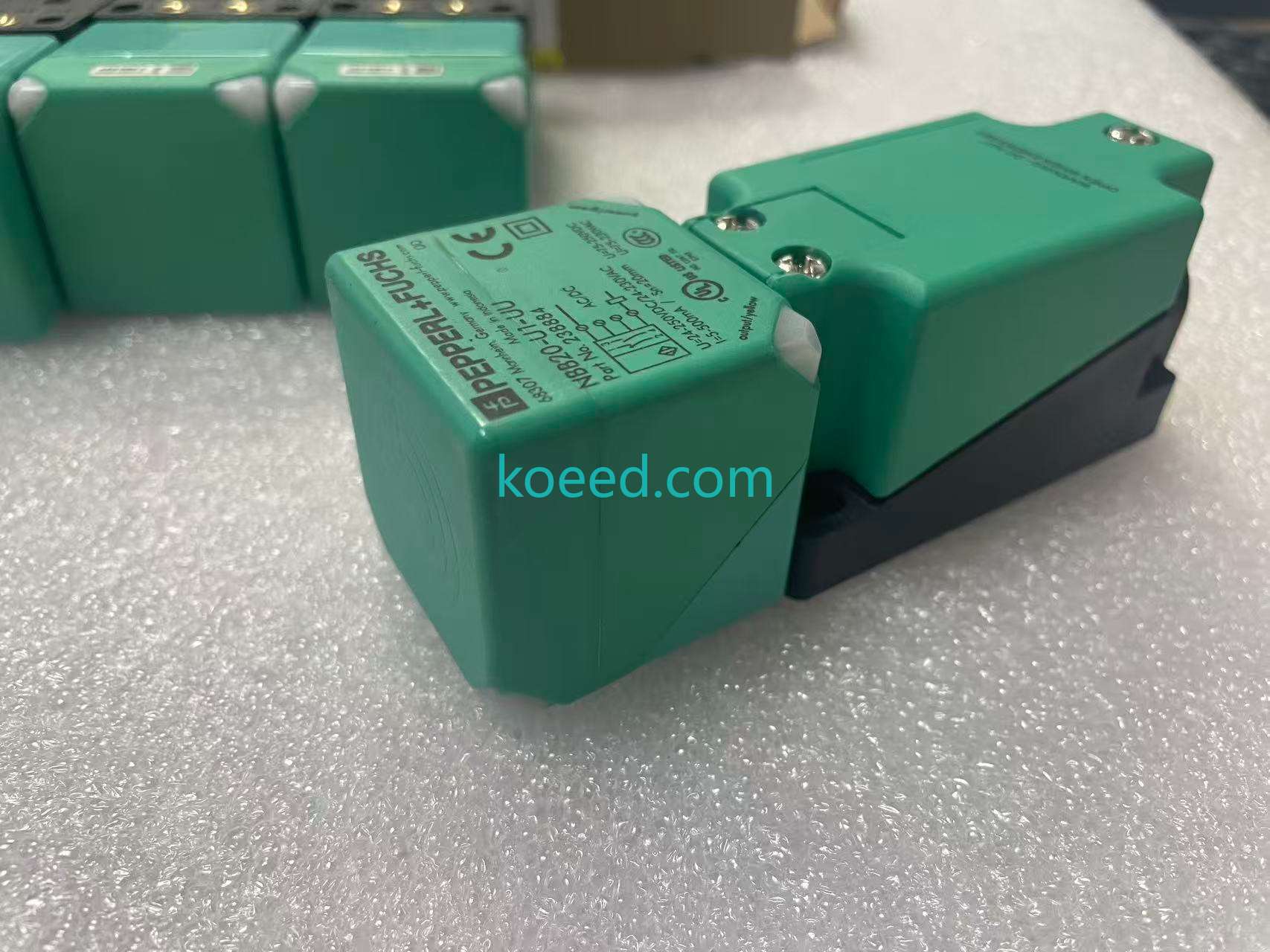
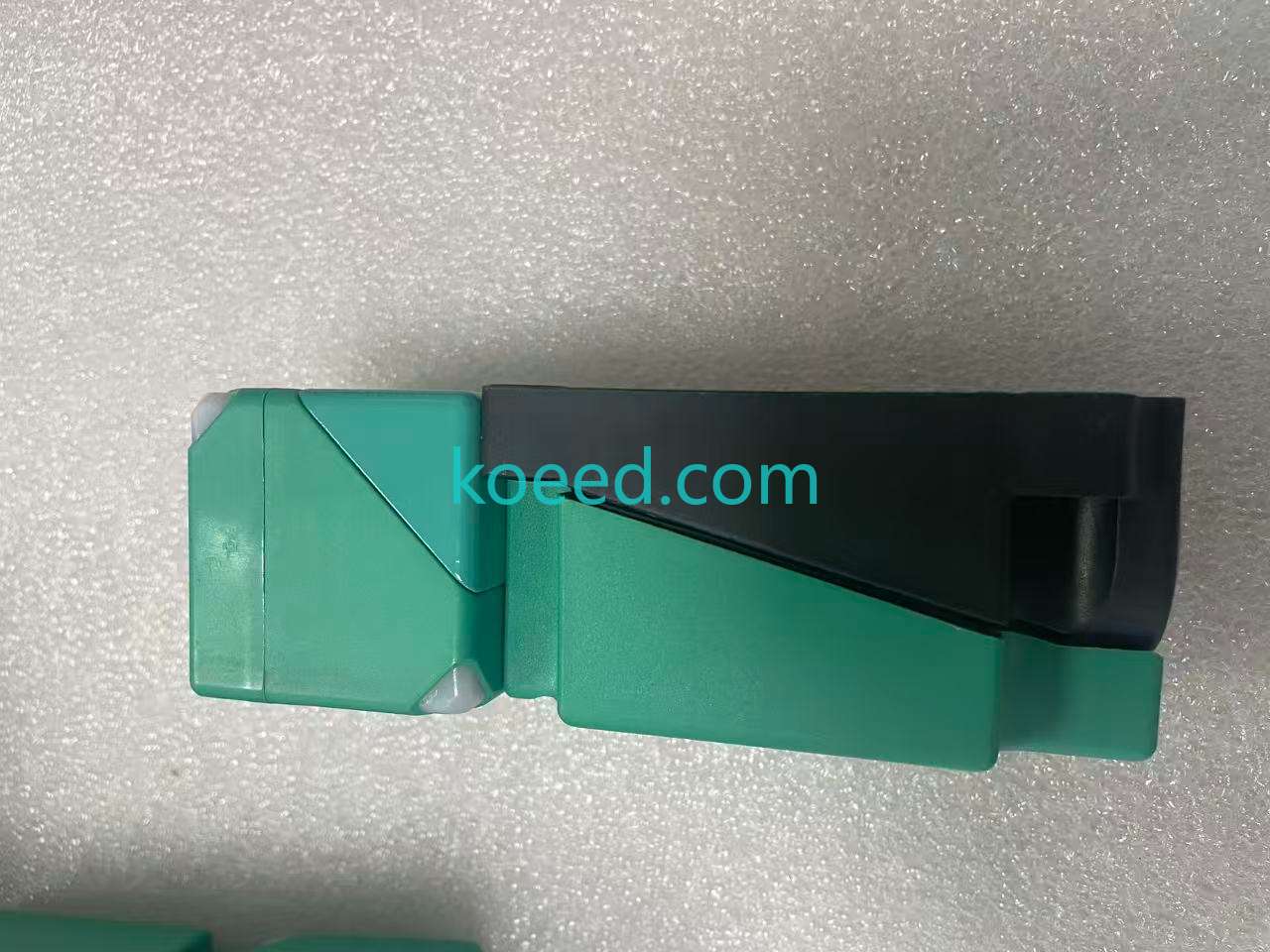
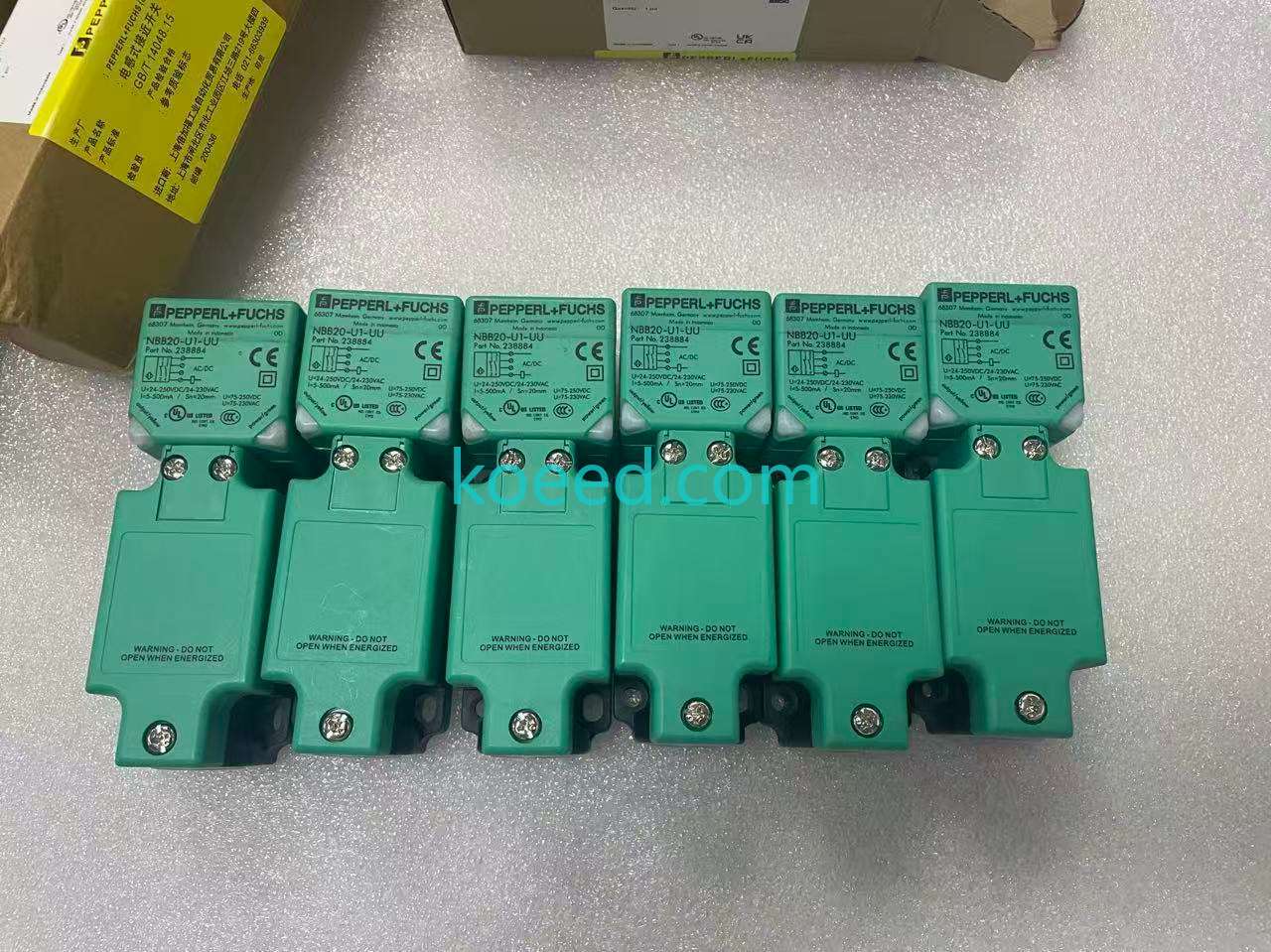
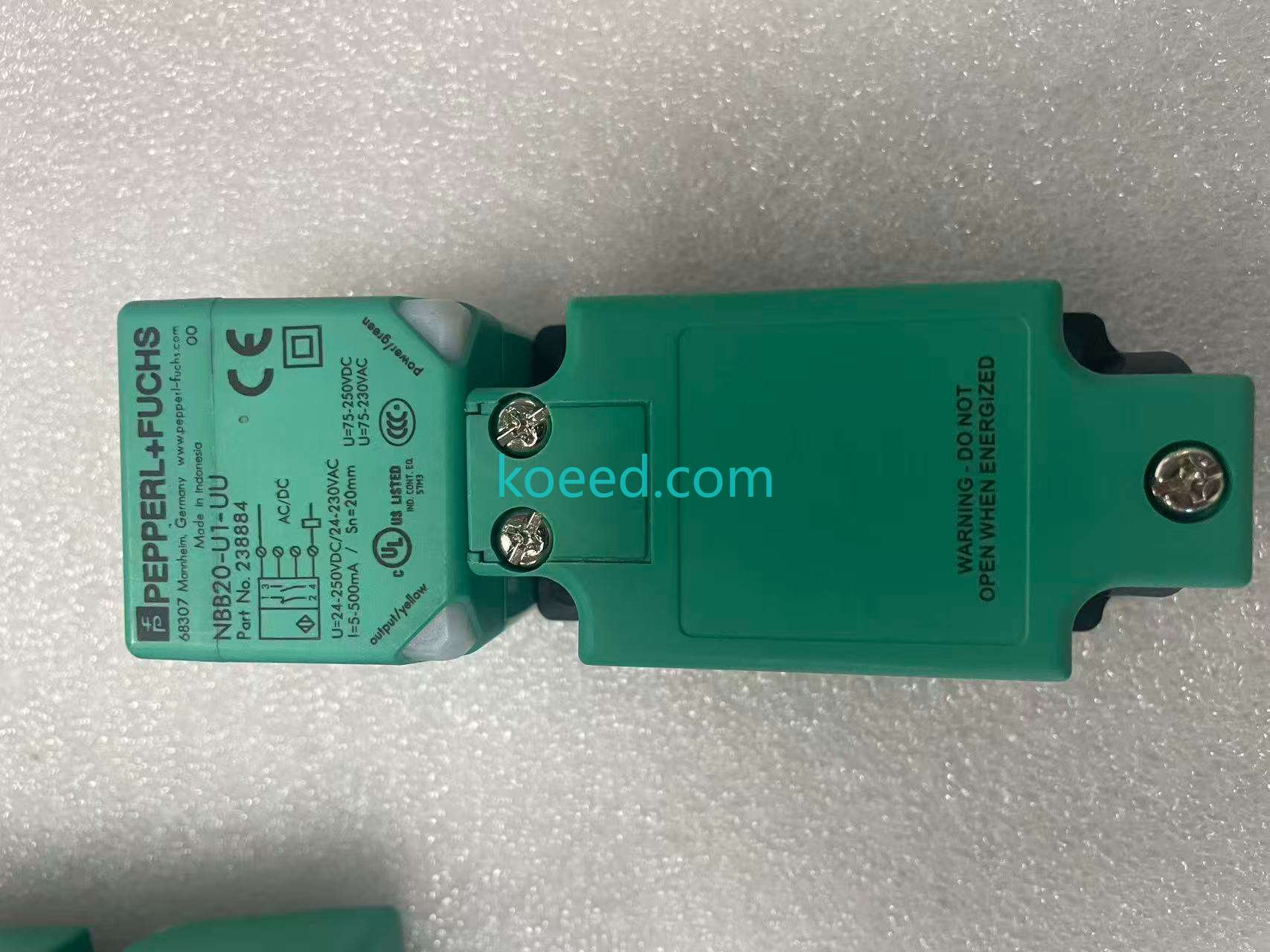
Visual Gallery: NBB20-U1-UU (238884) — Full Product Inspection
Below is a comprehensive visual inspection of the Pepperl+Fuchs NBB20-U1-UU (238884). Click any image to enlarge. All product images are sourced directly from Koeed's quality-assurance photography suite.
Ready to Upgrade Your Sensing Infrastructure?
Order the genuine Pepperl+Fuchs NBB20-U1-UU (238884) from Koeed — your trusted automation partner for 2026 and beyond. Bulk pricing, same-day shipping, and expert technical support.
Buy Now at Koeed Chat on WhatsAppFrequently Asked Questions
Q: Can the NBB20-U1-UU really handle both AC and DC without any configuration change?
A: Yes. The sensor automatically accepts any voltage within the 20–253 VAC / 20–300 VDC range. No internal switches or jumpers are required.
Q: How do I wire the NO/NC selectable output?
A: The terminal compartment includes clearly marked terminals. Connecting the load to one terminal gives NO, the other gives NC. The product manual provides simple diagrams.
Q: Is this sensor suitable for high-speed counting?
A: With a switching frequency of 30 Hz, it is designed for general position and presence detection. For high-speed applications above 100 Hz, consider Pepperl+Fuchs' DC-only NBB series variants.
Q: What is the warranty and lead time through Koeed?
A: All our Pepperl+Fuchs products are 100% genuine with manufacturer warranty. Typical lead time is 1–2 business days from our global stock.


