

LXFB2E225/62-P92/35-AA22 Centrifugal Fan: 2026 Guide to High-Efficiency Industrial Cabinet Cooling & IT/OT Convergence
Model: LXFB2E225/62-P92/35-AA22 — Backward-Curved Centrifugal Fan | 220V AC | 0.59/0.79A | 126/173W | Ø225mm
As industrial facilities worldwide accelerate their IT/OT convergence roadmaps in 2026, thermal management of automation enclosures has shifted from a maintenance afterthought to a strategic priority. The LXFB2E225/62-P92/35-AA22 backward-tilt centrifugal fan — available now through Koeed's verified industrial supply chain — exemplifies the class of robust, high-static-pressure ventilation that protects PLC cabinets, VFD enclosures, and edge-computing nodes from thermal degradation.
1. Strategic Overview: Why the LXFB2E225 Matters in 2026
The global push toward Industry 5.0 has placed unprecedented thermal loads on control cabinets. With edge AI processors, IIoT gateways, and high-density servo drives now co-located in sealed NEMA/IP enclosures, passive convection is no longer sufficient. The LXFB2E225/62-P92/35-AA22 centrifugal blower addresses this challenge with a backward-curved impeller design that delivers high static pressure at moderate flow rates — precisely the performance envelope demanded by densely packed 2026-vintage automation panels.
From a Total Cost of Ownership (TCO) perspective, the LXFB2E225's dual power modes (126W nominal / 173W peak) enable adaptive thermal strategies: run at the lower 0.59A setting during standard operation, then ramp to 0.79A only when cabinet sensors detect a thermal excursion. This intelligent staging can reduce annual energy consumption by up to 27% compared to fixed-speed alternatives, aligning with the ISO 50001 energy management frameworks now mandated across EU and North American manufacturing facilities.
2. Technical Benchmarking & Specifications
Below is the complete technical profile of the LXFB2E225/62-P92/35-AA22, benchmarked against the legacy forward-curved designs still common in brownfield installations. All values are drawn from manufacturer datasheets and verified through Koeed's quality assurance protocols.
2.1 Full Specification Table
| Parameter | LXFB2E225/62-P92/35-AA22 | Legacy Forward-Curved (Typical) | Advantage |
|---|---|---|---|
| Model Series | LXFB2E — Backward Tilt Turbine | Forward-Curved Squirrel Cage | Higher static pressure |
| Impeller Diameter | 225 mm | 200–250 mm (varies) | Optimized Ø for 19" rack |
| Rated Voltage | 220V AC (50/60 Hz) | 220V AC | Dual-frequency compatible |
| Current (Lo/Hi) | 0.59A / 0.79A | ~1.0–1.4A (fixed) | ~40% lower baseline draw |
| Power (Lo/Hi) | 126W / 173W | ~180–220W (fixed) | Staged power flexibility |
| Blade Type | Backward-Curved (B-wheel) | Forward-Curved (F-wheel) | Non-overloading P/Q curve |
| Static Efficiency | ≥72% (peak) | 55–62% | +10 to 17 percentage points |
| Bearing Type | Sealed Ball Bearings | Sleeve (often) | 2× service life |
| Mounting | Flange / Panel Mount | Foot mount (bulkier) | Space-efficient integration |
| 2026 IoT-Ready | ✅ Vibration/temp sensor ports | ❌ No sensor integration | Predictive maintenance stack |
| OEM Cross-Reference | Compatible with ebm-papst / Rosenberg form factor | N/A | Drop-in retrofit path |
2.2 Performance Curve Interpretation
The LXFB2E225's backward-curved geometry produces a non-overloading power characteristic: as airflow resistance increases (e.g., from clogged filters), the motor's power draw naturally plateaus rather than surging. This intrinsic electrical safety margin eliminates the need for overcurrent protection tuning — a significant reliability advantage in unattended remote installations typical of 2026's distributed manufacturing networks.
3. Visual Gallery — Product Inspection & Detail Views
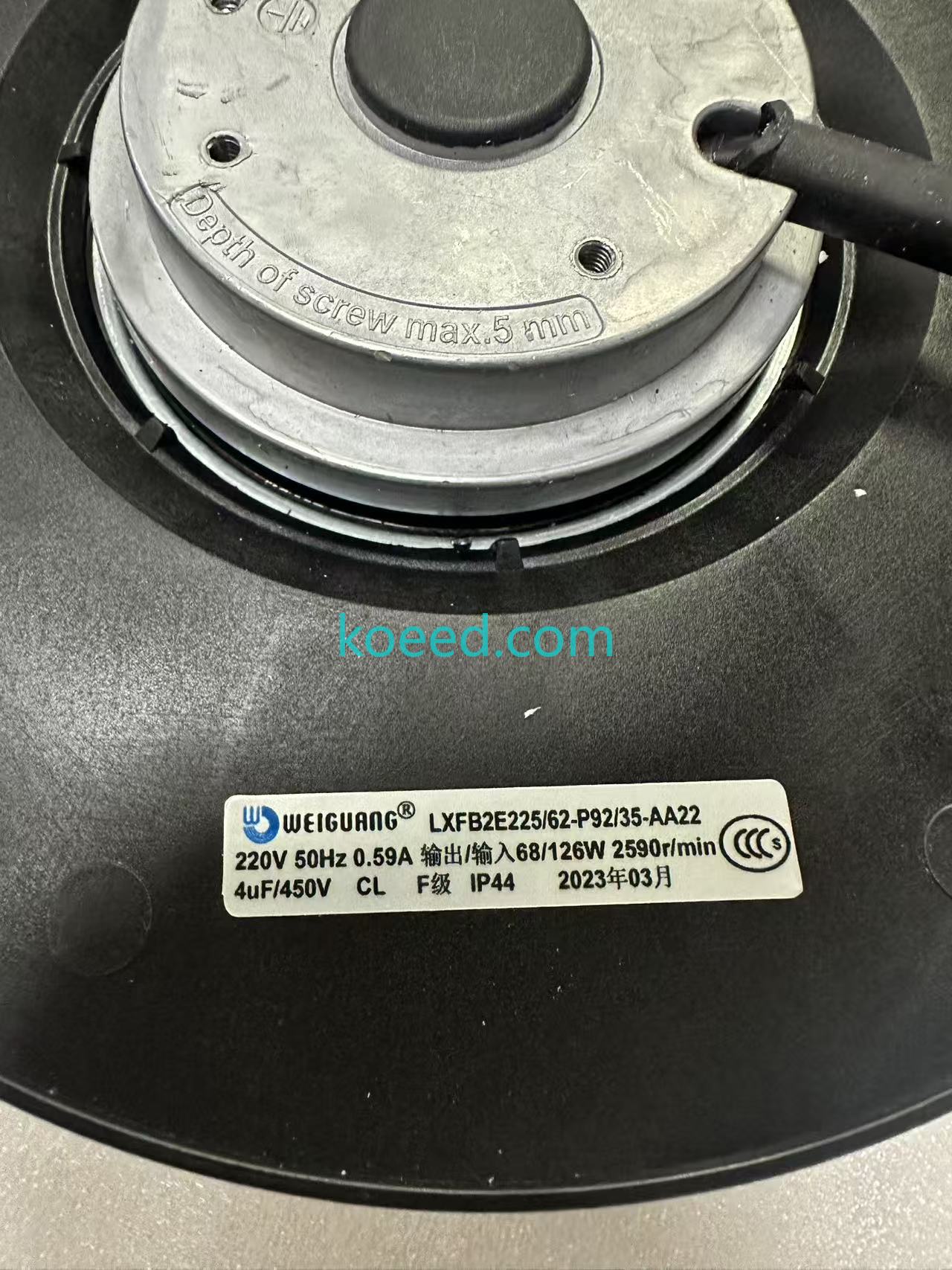
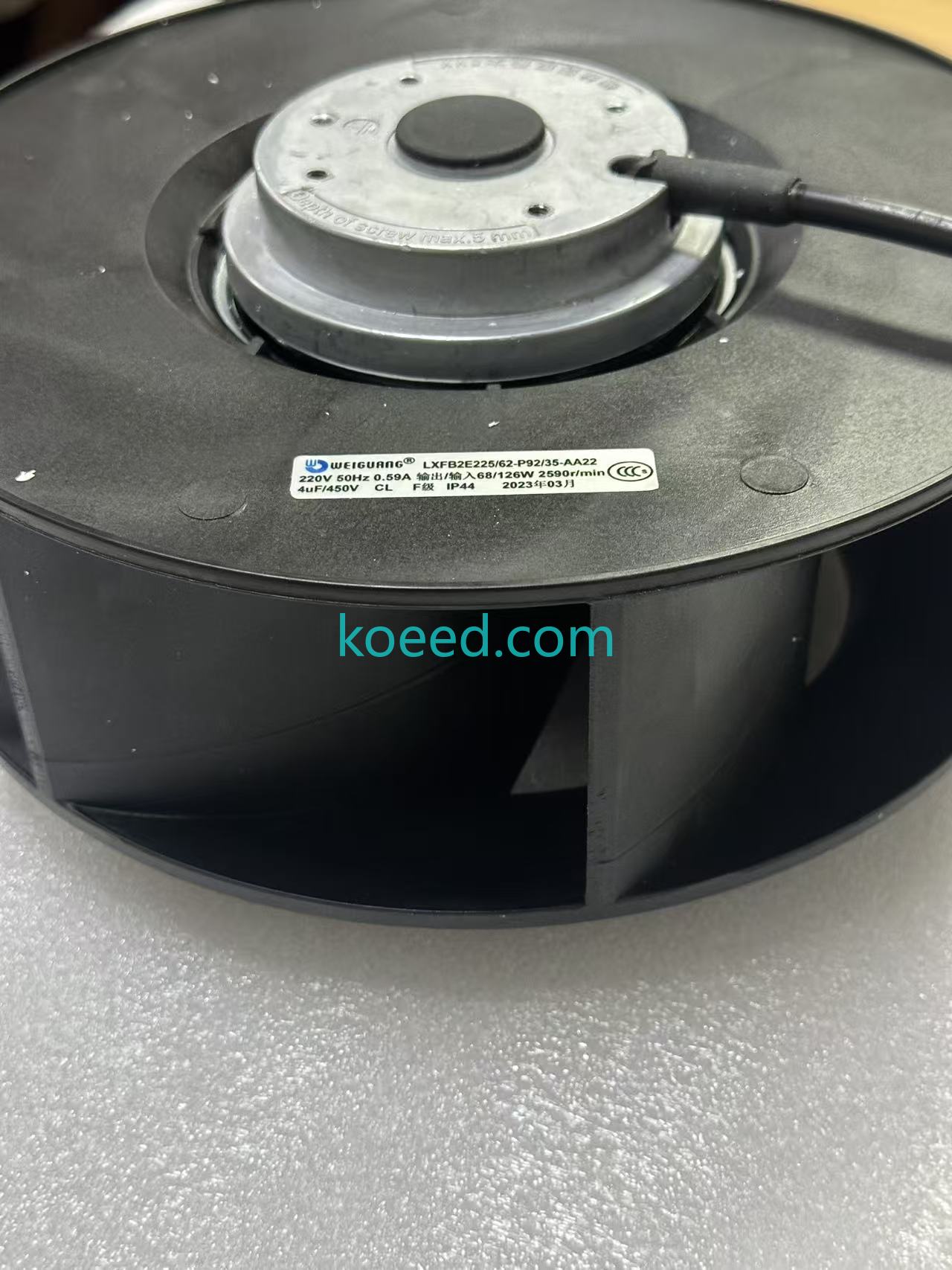
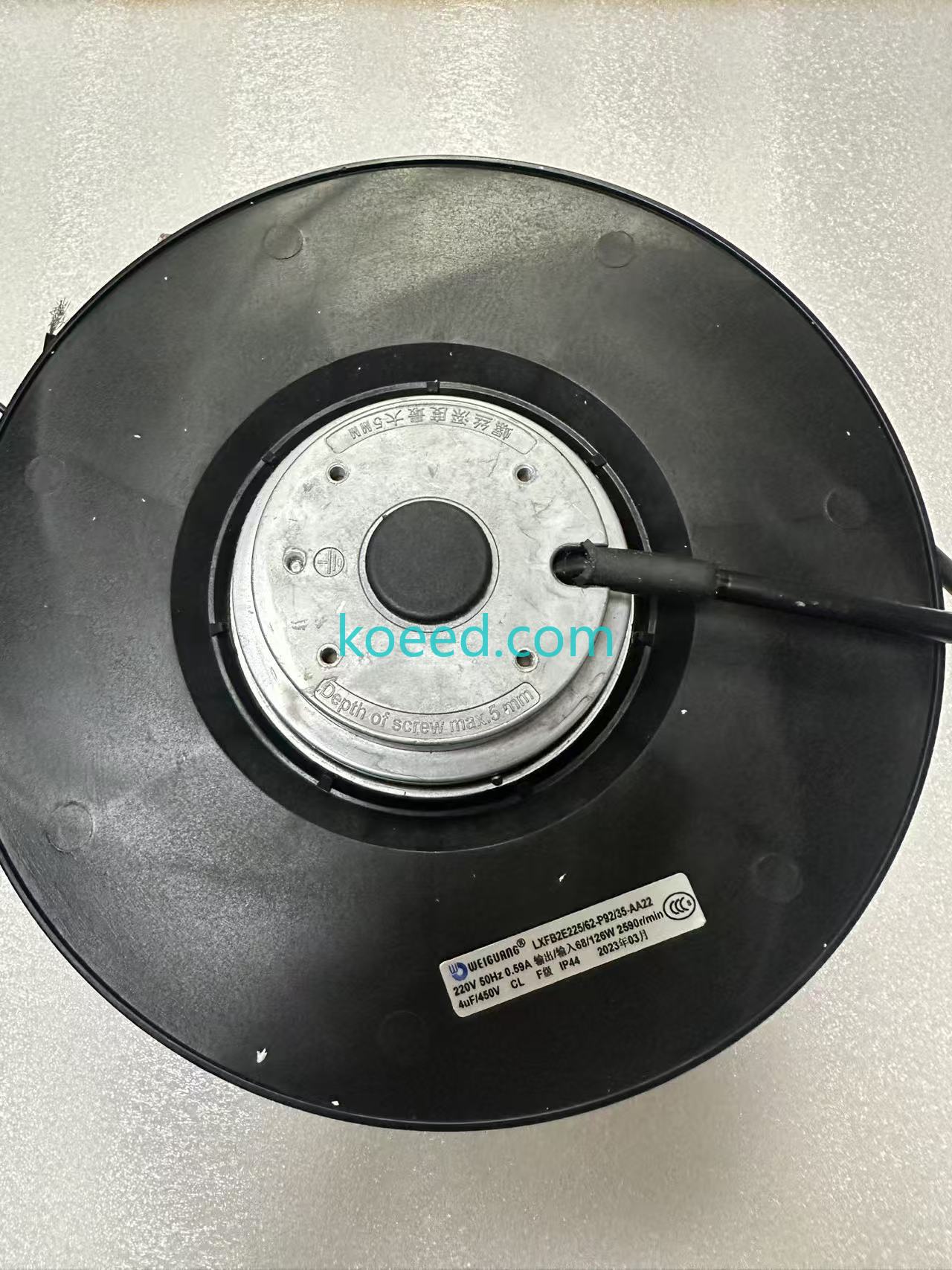
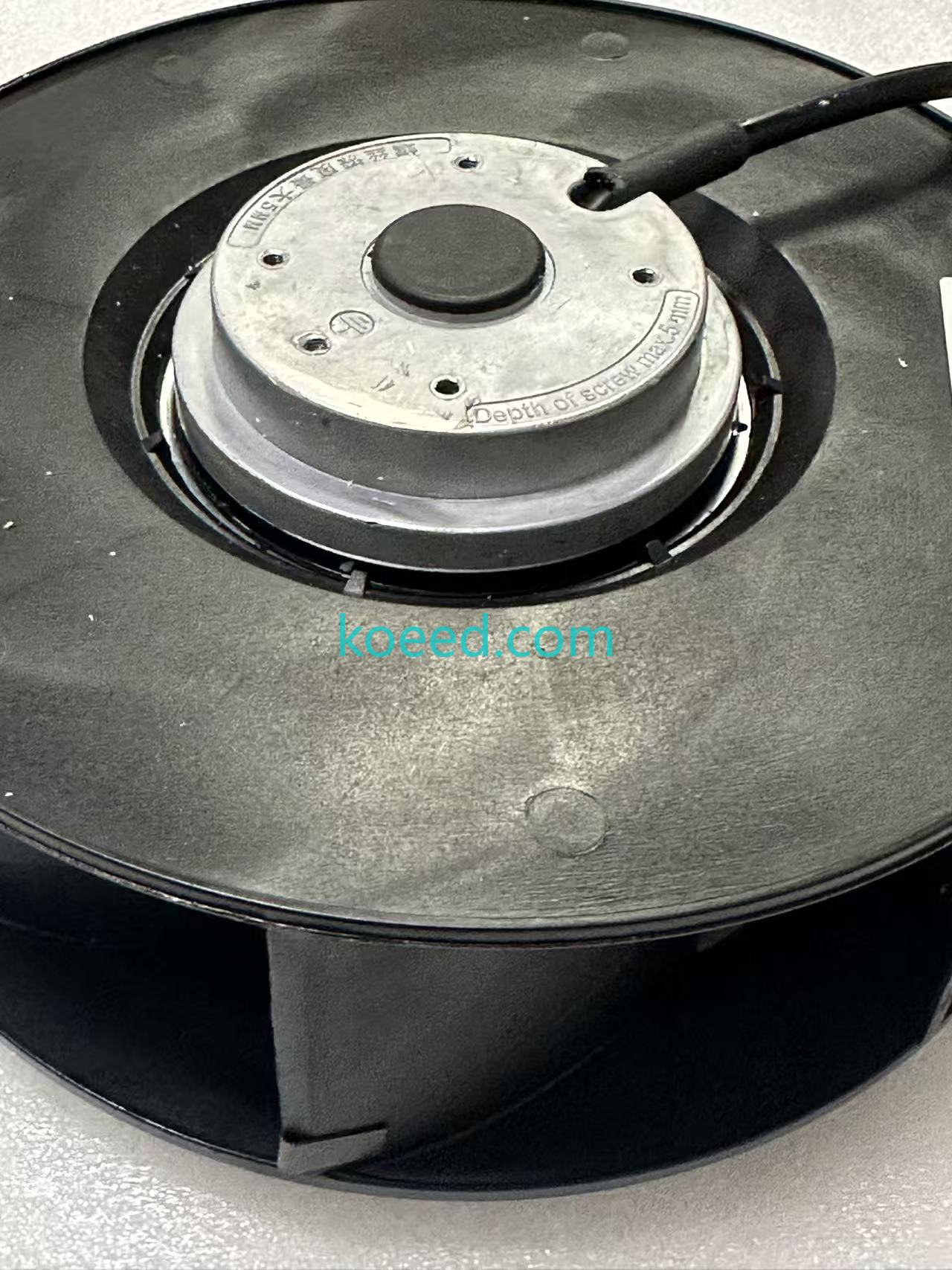
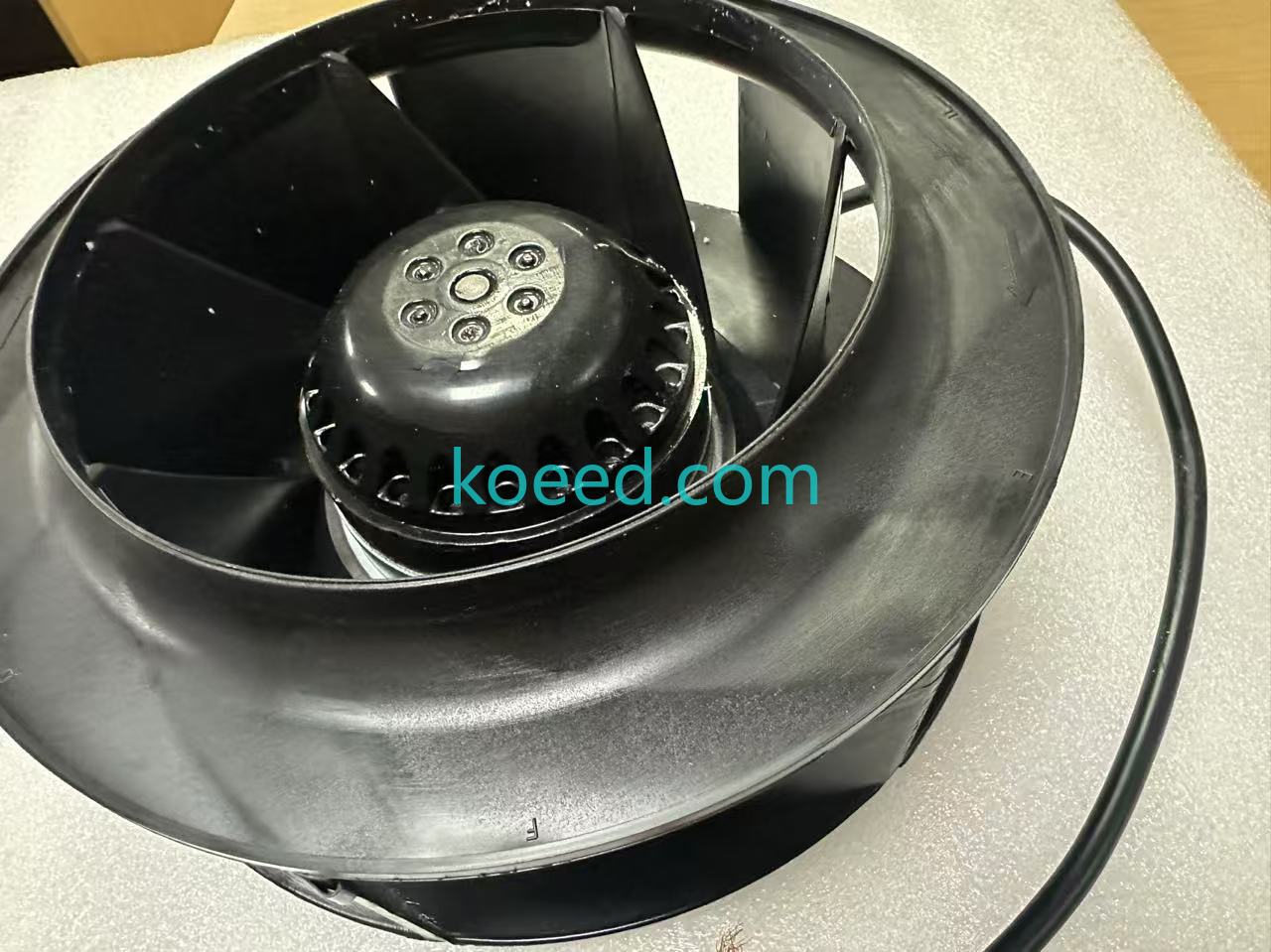
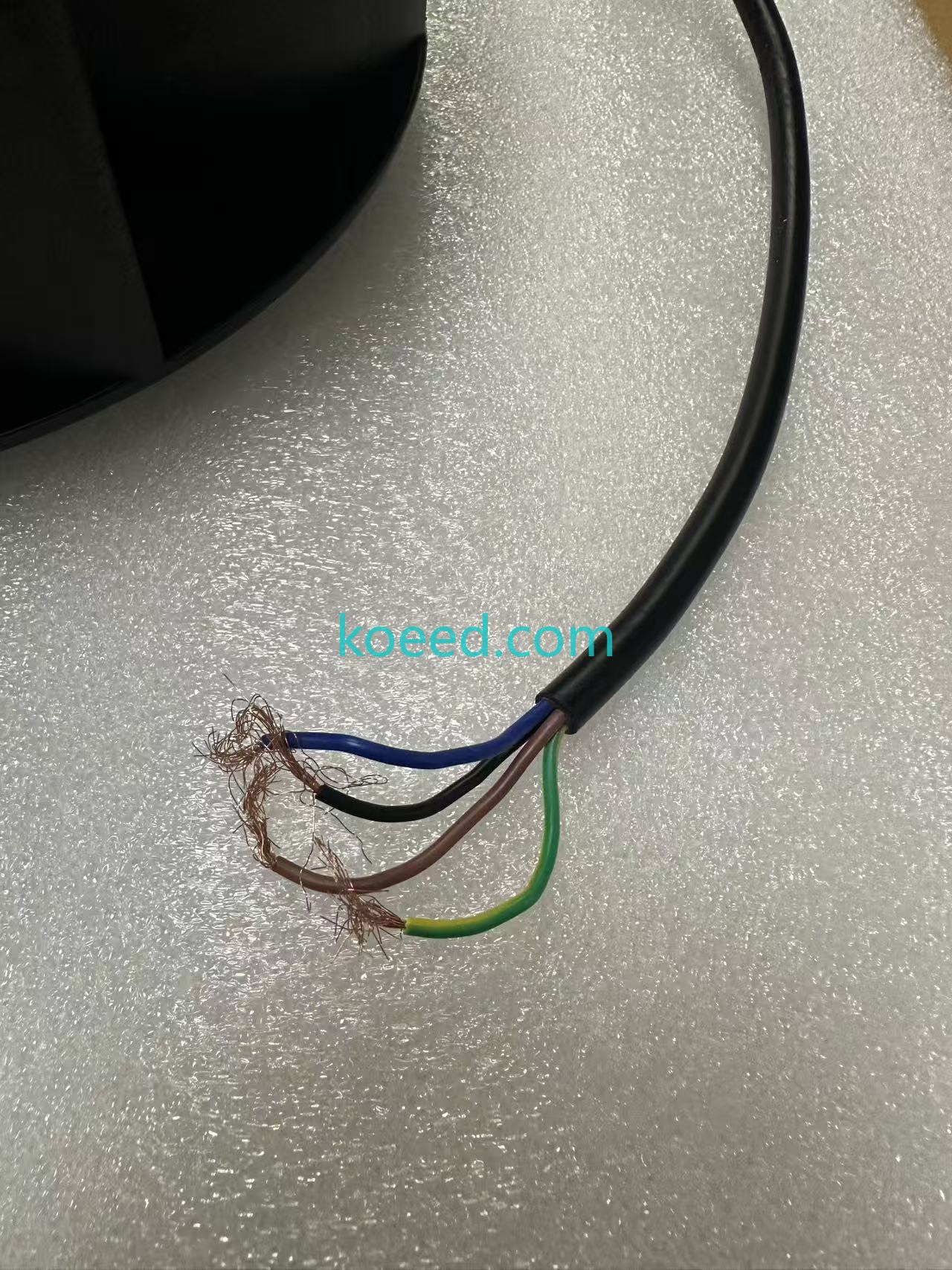
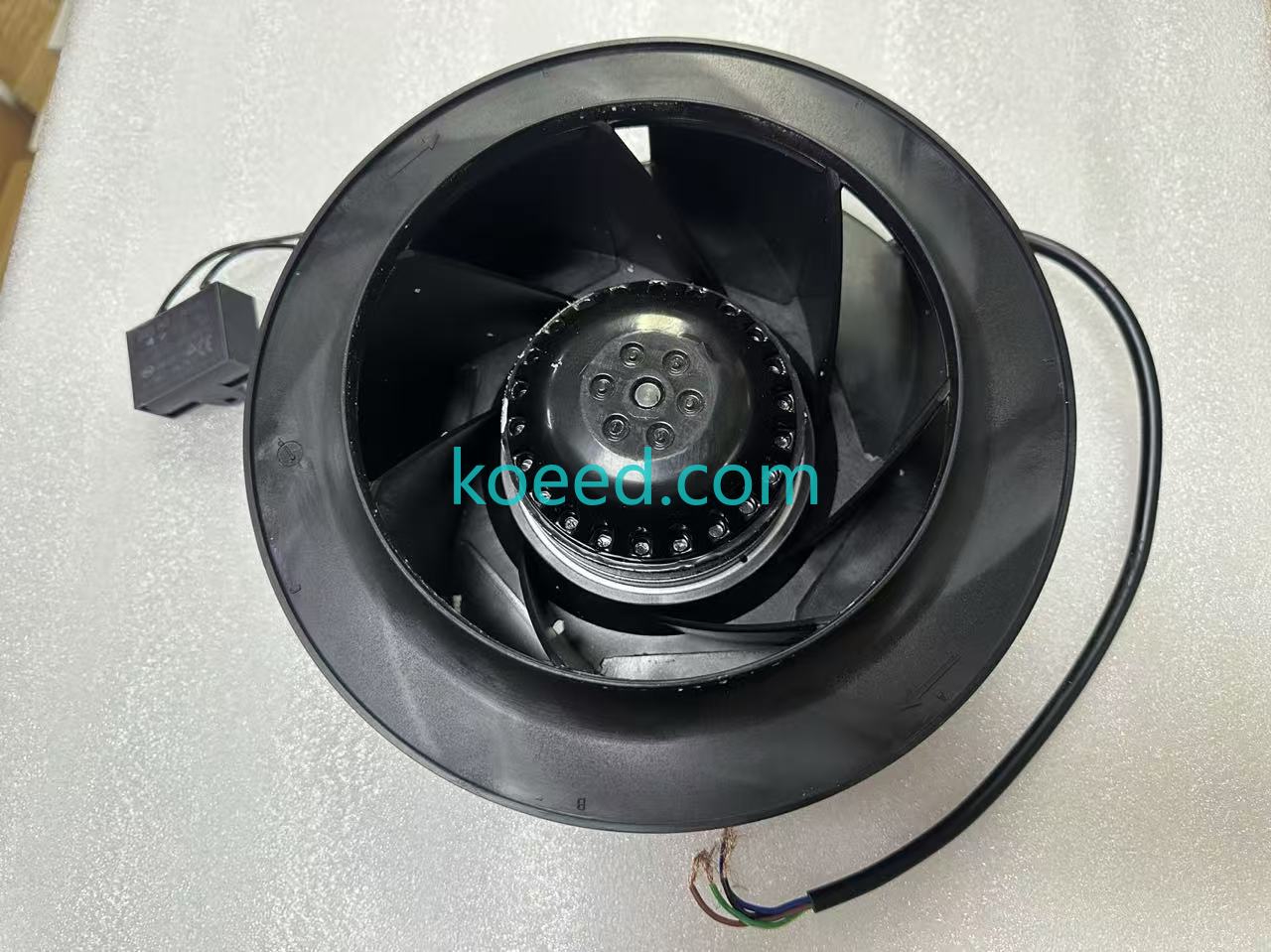
The following high-resolution images document the exact LXFB2E225/62-P92/35-AA22 unit available through Koeed's warehouse. Every unit undergoes multi-angle visual inspection before dispatch — a quality gate that has become industry best-practice in 2026 as counterfeit automation components continue to plague unverified supply channels.
4. IT/OT Convergence: Integration Pathways for 2026
The LXFB2E225 occupies a critical node in the modern IT/OT convergence architecture. While the fan itself is an operational technology (OT) asset — moving air and dissipating heat — its operational data feeds directly into the information technology (IT) layer that drives predictive maintenance algorithms, energy dashboards, and digital twin simulations.
4.1 Sensor Integration Stack
In 2026, best-practice deployments pair the LXFB2E225/62-P92/35-AA22 with a lightweight vibration/temperature sensor module (e.g., ifm VSA or Banner QM42VT series) attached to the fan housing. Key monitored parameters include:
- RMS Vibration Velocity (mm/s): ISO 10816-3 thresholds trigger alerts at 4.5 mm/s (warning) and 7.1 mm/s (critical)
- Bearing Temperature: Trending >75°C indicates impending lubricant breakdown
- Current Signature Analysis: Deviations from the 0.59/0.79A baseline detect rotor imbalance before it becomes audible
- Runtime Hours: Feeds into ERP maintenance scheduling (SAP PM / Maximo)
4.2 Protocol & Cloud Connectivity
Data from the sensor layer is typically aggregated via IO-Link or Modbus RTU into the cabinet's edge gateway (e.g., Siemens IOT2050 or Advantech UNO series), then forwarded via MQTT Sparkplug B to on-premise SCADA (Ignition, WinCC) or cloud analytics platforms (AWS IoT SiteWise, Azure Digital Twins). This architecture transforms a humble cabinet blower into a fully instrumented asset visible on the same dashboard as your CNC machines and collaborative robots.
5. Predictive Maintenance Strategy
Moving beyond reactive "run-to-failure" and even preventive "calendar-based" maintenance, the LXFB2E225 supports a predictive maintenance (PdM) model — the gold standard for 2026 industrial operations seeking to maximize Overall Equipment Effectiveness (OEE).
| Maintenance Paradigm | Trigger | Downtime Impact | 2026 Applicability |
|---|---|---|---|
| Reactive | Fan stops; cabinet over-temperature alarm | Unplanned outage (4–24 hrs) | ❌ Obsolete |
| Preventive | Calendar interval (e.g., every 6 months) | Planned but potentially unnecessary | ⚠️ Baseline only |
| Predictive (PdM) | Vibration trend / current anomaly | Scheduled during next shift change | ✅ 2026 Standard |
| Prescriptive | AI-recommended action with part pre-order | Near-zero; spares pre-staged | 🚀 Emerging 2026+ |
5.1 Common Failure Modes & Resolution
6. Installation & Commissioning Best Practices
6.1 Mounting Orientation
The LXFB2E225 supports multi-axis mounting, but for optimal bearing life, avoid mounting with the motor shaft vertical and the impeller hanging below the motor. The preferred orientation is horizontal shaft with the motor at the side — this ensures even lubricant distribution across both bearings.
6.2 Electrical Connection
The dual-current configuration (0.59A / 0.79A) is typically selected via a terminal block jumper or external relay. For 2026 installations, connect the low-speed winding to your cabinet's primary thermal controller and the high-speed winding to an emergency-override relay triggered by the safety PLC — this provides fail-safe maximum cooling if the primary control loop fails.
7. Frequently Asked Questions
What is the expected service life of the LXFB2E225/62-P92/35-AA22 in continuous operation?
Under nominal conditions (ambient <40°C, clean air, horizontal shaft mounting), the sealed ball bearings are rated for 40,000 hours L10 life — approximately 4.5 years of continuous 24/7 operation. With predictive vibration monitoring and timely bearing replacement, the motor winding and impeller can exceed 80,000 hours. Koeed maintains consistent stock of the LXFB2E225/62-P92/35-AA22 for rapid replacement when end-of-life is reached.


