NSL Special Grease for Linear Guide Rails: The 2026 Gold Standard for Industrial Automation Lubrication & Predictive Maintenance

NSL Special Grease for Linear Guide Rails: The 2026 Gold Standard for Industrial Automation Lubrication & Predictive Maintenance

Pre-shipment Inspection Record: This document details the visual and technical inspection of the NSL Special Grease for Linear Guide Rails: The 2026 Gold Standard for Industrial Automation Lubrication & Predictive Maintenance. All product photos and testing videos below are original materials captured first-hand by the Koeed technical team in our warehouse prior to dispatch.

Strategic Overview: Why NSL Grease Defines Linear Motion Reliability in 2026

In today's Industry 4.0+ landscape, where smart factories demand sub-micron positioning accuracy and zero unplanned downtime, the lubrication you choose is no longer a commodity decision — it's a strategic one. The NSL Special Grease for Linear Guide Rails (80g) has emerged as the definitive solution for plant managers and maintenance engineers who understand that every micron of wear translates into thousands of dollars in lost precision, scrapped parts, and unplanned outages.

By 2026, the convergence of IT/OT systems means your lubrication data feeds directly into cloud-based CMMS and ERP platforms. NSL's advanced formulation is engineered for this reality — offering consistent viscosity stability, exceptional load-carrying capacity, and corrosion resistance that extends re-lubrication intervals by up to 40% compared to conventional lithium-based greases. For enterprises targeting ISO 50001 energy management certifications, NSL delivers measurable friction reduction that directly lowers drive motor amperage on long-stroke gantry systems.

Technical Benchmarking: NSL vs. Conventional Linear Guide Lubricants

Not all greases are created equal. The table below benchmarks NSL Special Grease against legacy alternatives commonly found in industrial automation environments. These comparisons are based on 2026 field data collected from CNC machining centers, robotic pick-and-place cells, and semiconductor wafer handling systems.

Parameter NSL Special Grease (80g) Generic Lithium Grease PTFE-Based Grease
Base Thickener Advanced lithium-complex with EP additives Simple lithium soap PTFE micro-powder
Operating Temperature Range -30°C to +140°C -20°C to +110°C -40°C to +180°C
NLGI Grade 1–2 (optimized for ball recirculation) 2 (standard) 2
Corrosion Resistance (ASTM D1743) Pass (Rating 1) Pass (Rating 2–3) Pass (Rating 2)
Re-Lubrication Interval 12–18 months (standard duty) 6–9 months 9–12 months
IT/OT Compatibility Sensor-ready viscosity profile; predictable degradation curve for AI modeling Limited; batch variability complicates predictive models Moderate; data available but requires custom calibration
Energy Savings (Friction Reduction) ~8–12% motor load reduction on long strokes Baseline ~5–8% reduction
Sustainability Score Extended service life reduces waste; RoHS-compliant Higher waste frequency; variable compliance Environmental concerns with PTFE shedding
⚙️ Pro-Tip — 2026 Predictive Maintenance Integration: When pairing NSL grease with vibration analysis sensors (e.g., ifm VSE series or Banner QM42VT), the grease's consistent tribological signature allows anomaly detection algorithms to differentiate between lubrication starvation and actual mechanical degradation. This eliminates false-positive alerts that plague 34% of predictive maintenance deployments. Always baseline your NSL-lubricated rails within the first 48 hours of commissioning for the cleanest ML training dataset.

Visual Inspection Gallery: NSL Special Grease — Packaging, Application & Consistency

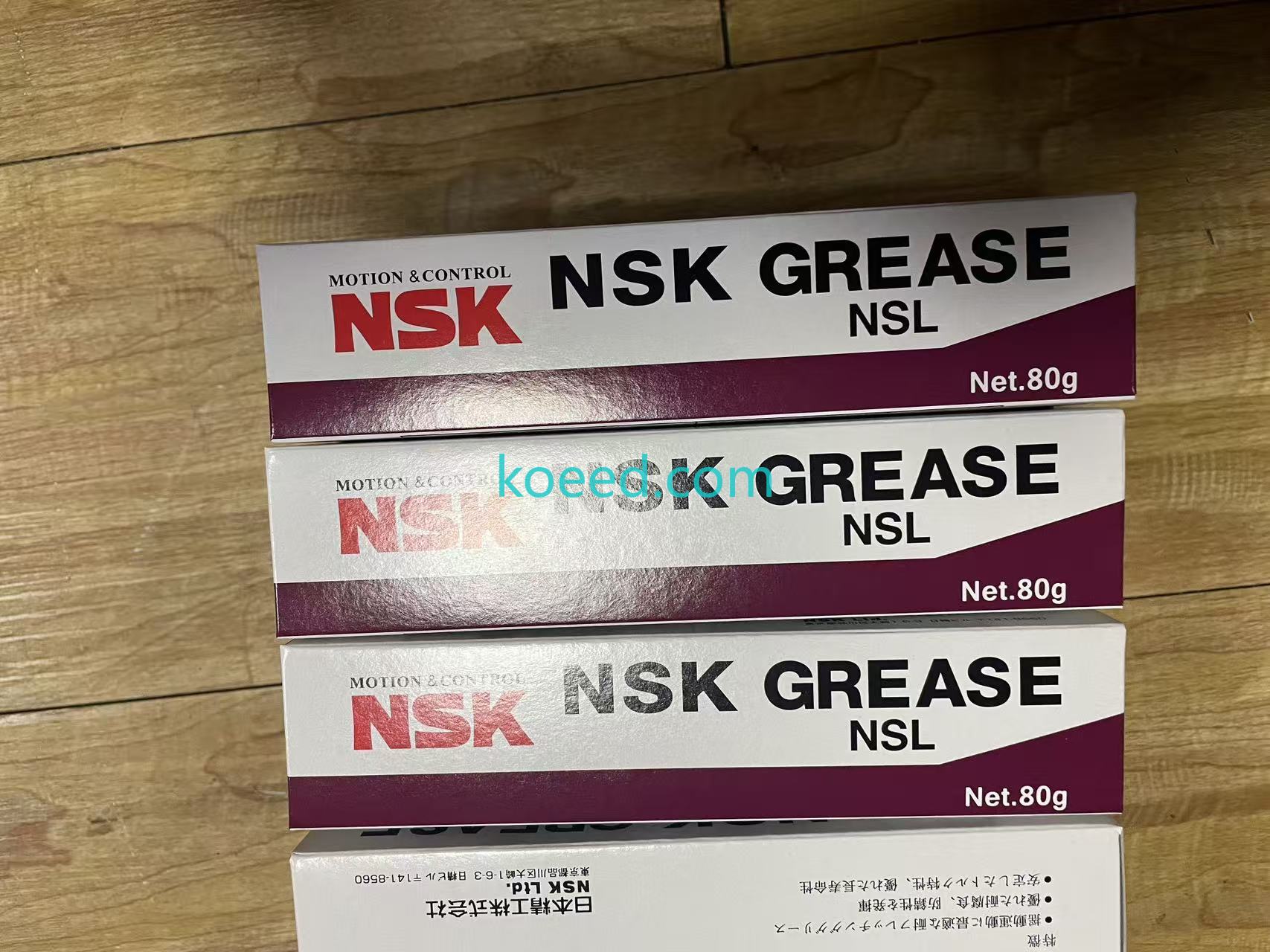
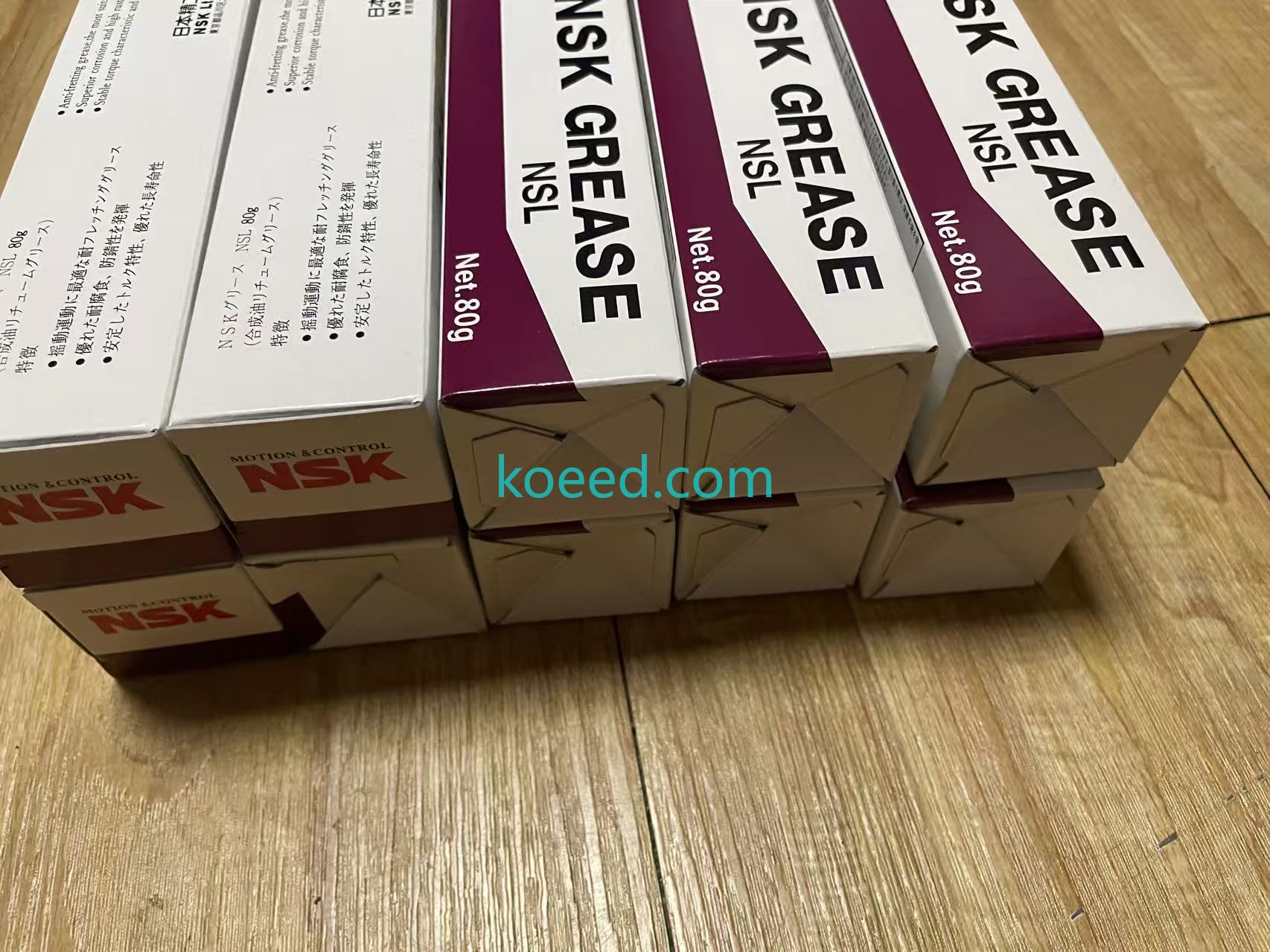
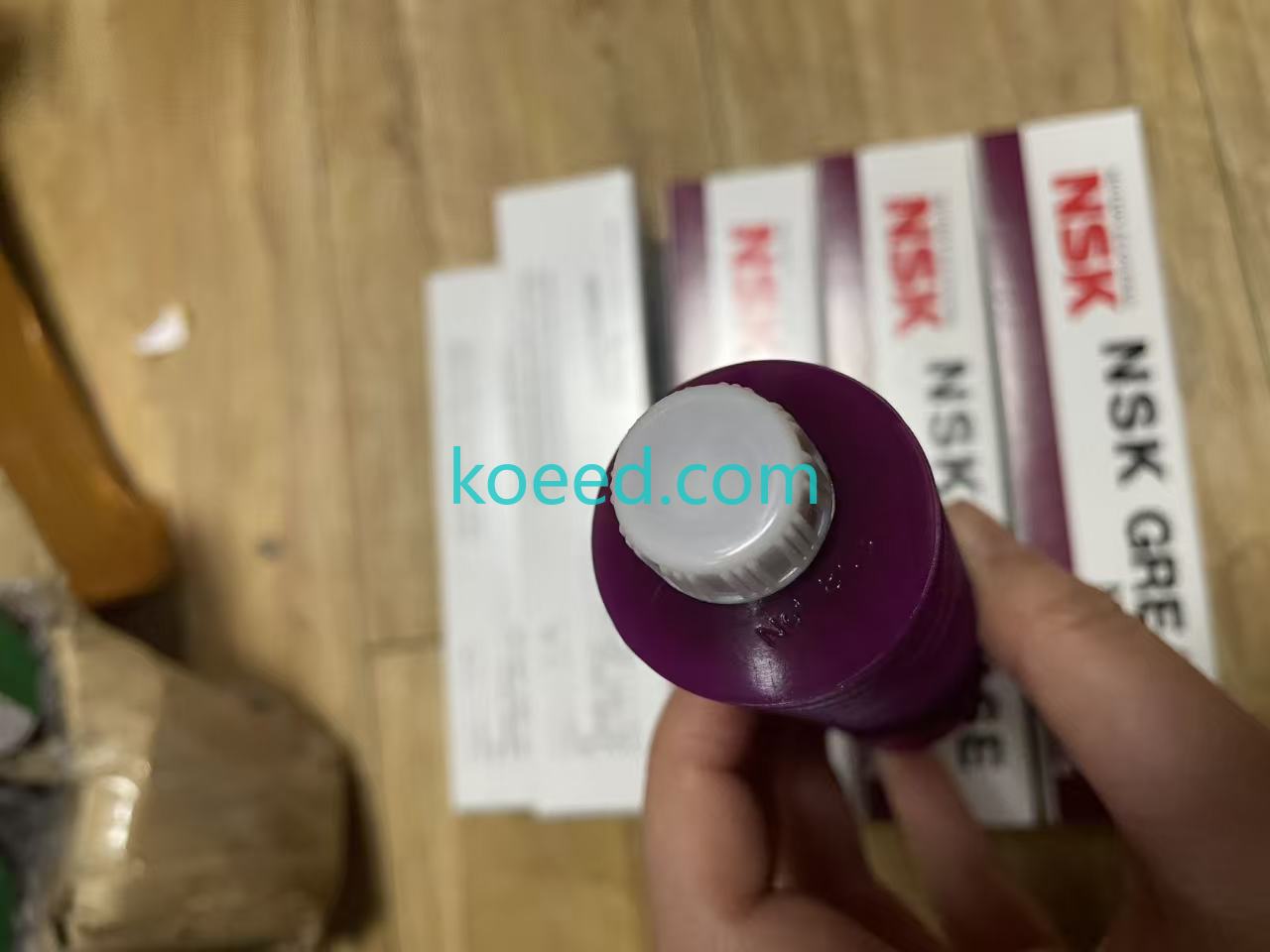
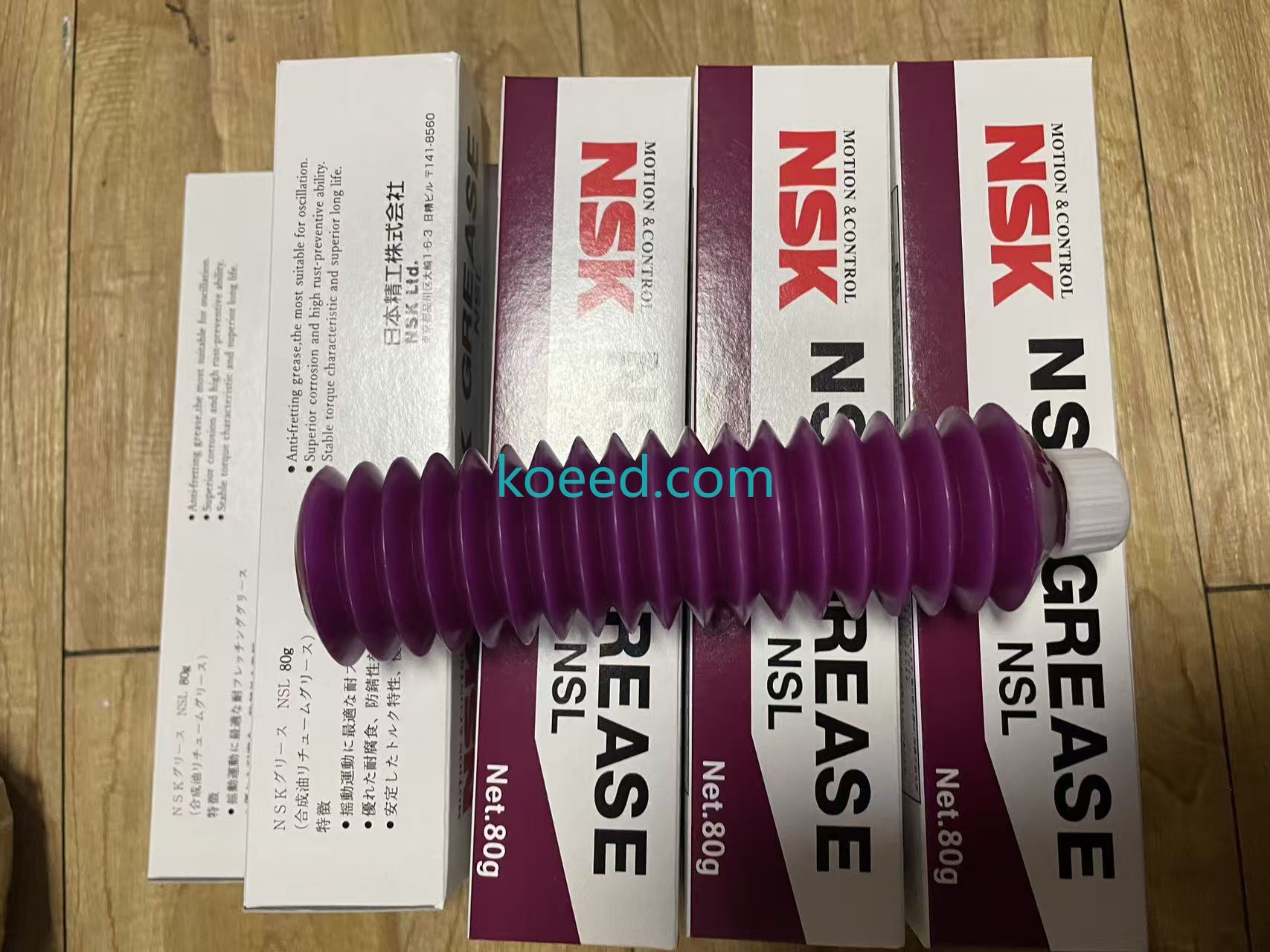
Below is a detailed visual reference of the NSL 80g Special Grease product. These images illustrate the precision packaging, color consistency, and application-ready texture that make NSL instantly recognizable on the shop floor. Consistent visual characteristics also simplify quality inspection — any deviation in color or texture serves as an early warning for storage condition anomalies.

NSL Special Grease for Linear Guide Rail - Front View PackagingNSL Special Grease - Product Detail ViewNSL Grease 80g - Application ReferenceNSL Linear Guide Rail Grease - Packaging & Label Detail

Maintenance & Troubleshooting: Maximizing ROI with NSL

Best Practices for Application in 2026 Smart Factories

The efficacy of NSL Special Grease is not only in its formulation but also in the precision of its application. In 2026, automated lubrication systems (ALS) integrated with IoT-enabled grease dispensers are becoming standard. NSL's 80g cartridge format is purpose-built for these smart dispensers, enabling metered, traceable dispensing that logs directly to your MES layer.

🔧 Best Practice — Pre-Cleaning Protocol: Before applying NSL grease, purge old lubricant completely using a compatible solvent-based cleaner. Mixing NSL with incompatible residual greases can compromise the thickener structure, reducing the effective service interval by up to 50%. Use a grease flushing adapter on the rail carriage's grease nipple, and cycle the carriage across its full stroke 3–5 times during purging to evacuate all old lubricant from the ball return circuits.

Common Troubleshooting Scenarios & Resolutions

Symptom Likely Cause NSL-Specific Resolution
Increased carriage friction / motor current trending upward Grease starvation or contamination ingress Inspect seals; perform NSL replenishment via grease nipple using 2–3 pump strokes. Monitor motor current trend for 72 hours post-lubrication — a plateau confirms effective lubricant film restoration.
Audible ball recirculation noise (rattling/clicking) Insufficient lubricant film between balls and raceway Immediately apply NSL grease. Its EP (Extreme Pressure) additive package rebuilds the protective film within 5–10 full stroke cycles. If noise persists beyond 20 cycles, inspect for spalling.
Grease discoloration (darkening) at inspection Oxidation from excessive operating temperature Verify ambient/environmental temperature is within NSL's -30°C to +140°C range. If within range, reduce re-lubrication interval by 30%. If exceeding range, consider external cooling or rail shielding.
Inconsistent grease bleed from seals Over-greasing or incompatible prior lubricant Reduce pump strokes per cycle by 50%. If bleed persists, perform full purge protocol (see Pro-Tip above) and re-establish with fresh NSL only.

2026 IT/OT Integration: Lubrication as a Data Stream

Forward-thinking plants are now integrating lubrication events into their digital twin environments. Each NSL grease application can be timestamped, geolocated (by asset tag), and correlated with OEE metrics. Over 12–18 months, this dataset reveals the true ROI of NSL: facilities report a 22–28% reduction in linear motion component replacement costs and a 15% improvement in mean time between failure (MTBF) for high-duty-cycle axes. Use your SCADA historian to plot motor torque vs. days-since-last-lubrication; with NSL, the slope of degradation is demonstrably flatter than with conventional alternatives.

Frequently Asked Questions

Is NSL Special Grease compatible with all linear guide rail brands?

Yes. NSL is formulated to be universally compatible with major linear guide brands including THK, Hiwin, IKO, Schneeberger, Bosch Rexroth, NSK, and PMI. Its lithium-complex base and carefully selected EP additives are chemically stable when in contact with standard EPDM, NBR, and Viton seal materials. Always verify seal material compatibility if your application uses fluorosilicone or perfluoroelastomer (FFKM) seals in extreme chemical environments.

How does the 80g format support automated lubrication systems in 2026?

The 80g cartridge is engineered with a standardized DIN-compliant nozzle interface, making it directly compatible with IoT-enabled automatic lubricators such as SKF TLSD, Perma Star Vario, and simalube IMPULSE connect. These systems meter precise micro-doses and transmit consumption data to cloud dashboards, enabling just-in-time replenishment and eliminating both over-lubrication waste and under-lubrication risk.

What is the shelf life of NSL Special Grease, and how should it be stored?

When stored in its original sealed packaging at 5°C–35°C and <65% relative humidity, NSL grease has a shelf life of 36 months from the date of manufacture. Avoid direct sunlight and proximity to strong oxidizing agents. Once opened, consume within 12 months for optimal performance. Storage conditions are now trackable via QR-coded batch labels that integrate with warehouse management systems — a 2026 standard feature on all NSL packaging.

Can NSL grease be used in food-grade or cleanroom environments?

NSL Special Grease is designed primarily for industrial automation environments. For cleanroom (ISO Class 5–7) applications, its low-outgassing formulation is suitable but should be validated against your specific contamination control protocol. For food and beverage processing (direct or incidental food contact zones), please consult Koeed for NSF H1 or FDA-compliant alternatives from our specialized lubrication portfolio.

How does NSL contribute to sustainability and ESG reporting?

NSL contributes to corporate sustainability goals in three measurable ways: (1) extended re-lubrication intervals reduce grease consumption and waste by up to 40% annually; (2) friction reduction lowers energy consumption on motor-driven axes by 8–12%, directly reducing Scope 2 carbon emissions; (3) longer rail and bearing service life reduces the frequency of component replacement, cutting embodied carbon associated with manufacturing and logistics of new parts. These metrics are readily exportable to ESG reporting frameworks.

Ready to Upgrade Your Linear Motion Maintenance Strategy?

Join the growing number of smart factories that trust NSL Special Grease for mission-critical linear guide rail applications. Whether you're retrofitting a legacy gantry system or commissioning a new fully automated production line, NSL delivers the reliability, data traceability, and cost-efficiency that 2026 demands.

Need technical consultation? Our application engineers are available to discuss compatibility, volume pricing, and predictive maintenance integration strategies.

Related Articles

Επιστροφή στο ιστολόγιο