PMI MSA20LSSSFC Linear Guide Block: 2026 Technical Review & B2B Procurement Guide
Share
1. Strategic Overview: The MSA20LSSSFC in the 2026 Industrial Landscape
As manufacturing enters its deepest phase of IT/OT convergence in 2026, linear motion components are no longer evaluated solely on mechanical precision — they are judged by their ability to feed data into cloud ERP systems, reduce unplanned downtime through predictive analytics, and contribute to corporate ESG targets. The PMI MSA20LSSSFC guide rail block sits at the intersection of these demands: a stainless-steel, heavy-load linear guideway carriage engineered for high-rigidity CNC applications and designed with the longevity and sensor-integration readiness that Industry 4.0+ environments require.
Part of PMI's flagship MSA Series, the MSA20LSSSFC variant — with its 20 mm rail profile, extended long-block (L) architecture, stainless-steel (SS) construction, and advanced front-seal configuration (SFC) — is purpose-built for corrosive or washdown-prone environments where standard carbon-steel blocks fail prematurely. In 2026 procurement cycles, this block is increasingly specified for food-grade automation cells, medical-device machining, semiconductor wafer handling, and marine-adjacent heavy industry — all sectors where stainless-steel linear guides have moved from "nice-to-have" to "compliance-mandated."
2. Model Number Decoding & Technical Specifications
Understanding PMI's nomenclature ensures you specify the exact configuration your application demands. The MSA20LSSSFC breaks down as follows:
2.1 Nomenclature Breakdown
| Code | Meaning | Engineering Significance |
|---|---|---|
| MSA | Heavy Load, Full Ball Type | 45° contact-angle, 4-row ball circulation; equal load capacity in radial, reversed-radial, and lateral directions |
| 20 | Rail Width: 20 mm | Compact yet rigid profile; rail height 18 mm, pitch 60 mm — ideal for mid-size CNC spindles and gantry axes |
| L | Long Block (Extended Carriage) | Increased ball contact length → higher moment stiffness (Mp, My, Mr) and improved dynamic load distribution |
| SS | Stainless Steel (Block + Rail) | Martensitic stainless steel; corrosion-resistant without sacrificing hardness (≥58 HRC raceway) |
| SFC | Standard Front-Seal Configuration | Integrated end-cap seals + bottom seals; optional double-lip contact seals for IP54-equivalent contamination protection |
2.2 Performance Benchmarks — MSA20LSSSFC vs. Standard MSA20E
| Parameter | MSA20E (Standard Carbon Steel) | MSA20LSSSFC (Long, Stainless) | Delta |
|---|---|---|---|
| Dynamic Load Rating (C) | 19.2 kN | ~21.5 kN (est.) | +12% |
| Static Load Rating (C₀) | 29.5 kN | ~33.8 kN (est.) | +14.6% |
| Block Length | Standard | Extended (L-type) | ~30% longer contact |
| Corrosion Resistance | Low (requires plating) | High (full stainless) | 5× salt-spray endurance |
| Operating Temp Range | -20°C to +80°C | -40°C to +100°C | Wider envelope |
| Lubrication Interval | 100 km (standard grease) | 100 km (compatible with food-grade H1 grease) | Equal baseline; superior in washdown |
| Interchangeability | Yes (PMI standard) | Yes — drop-in compatible with MSA20 rail | Full backward compatibility |
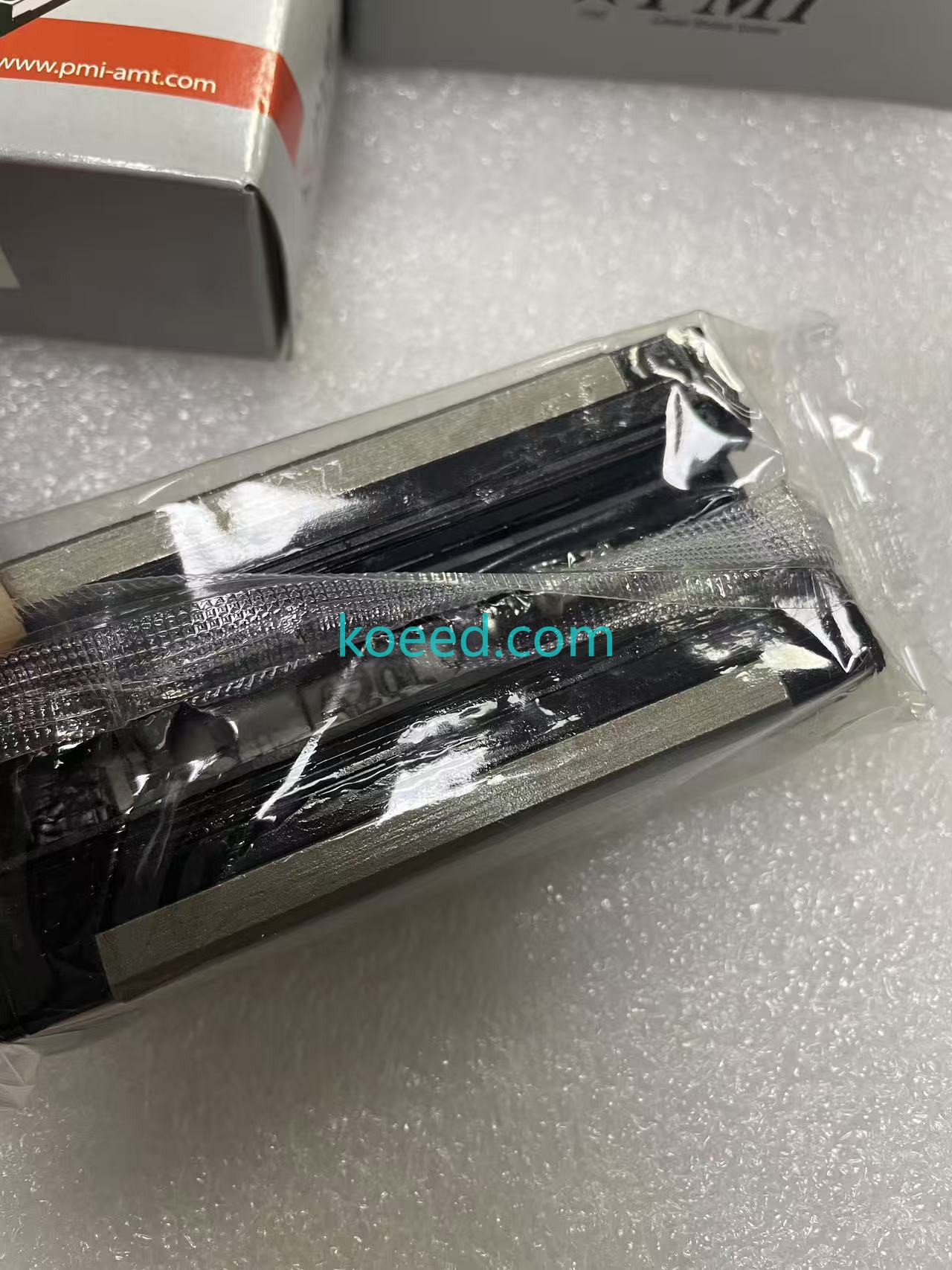
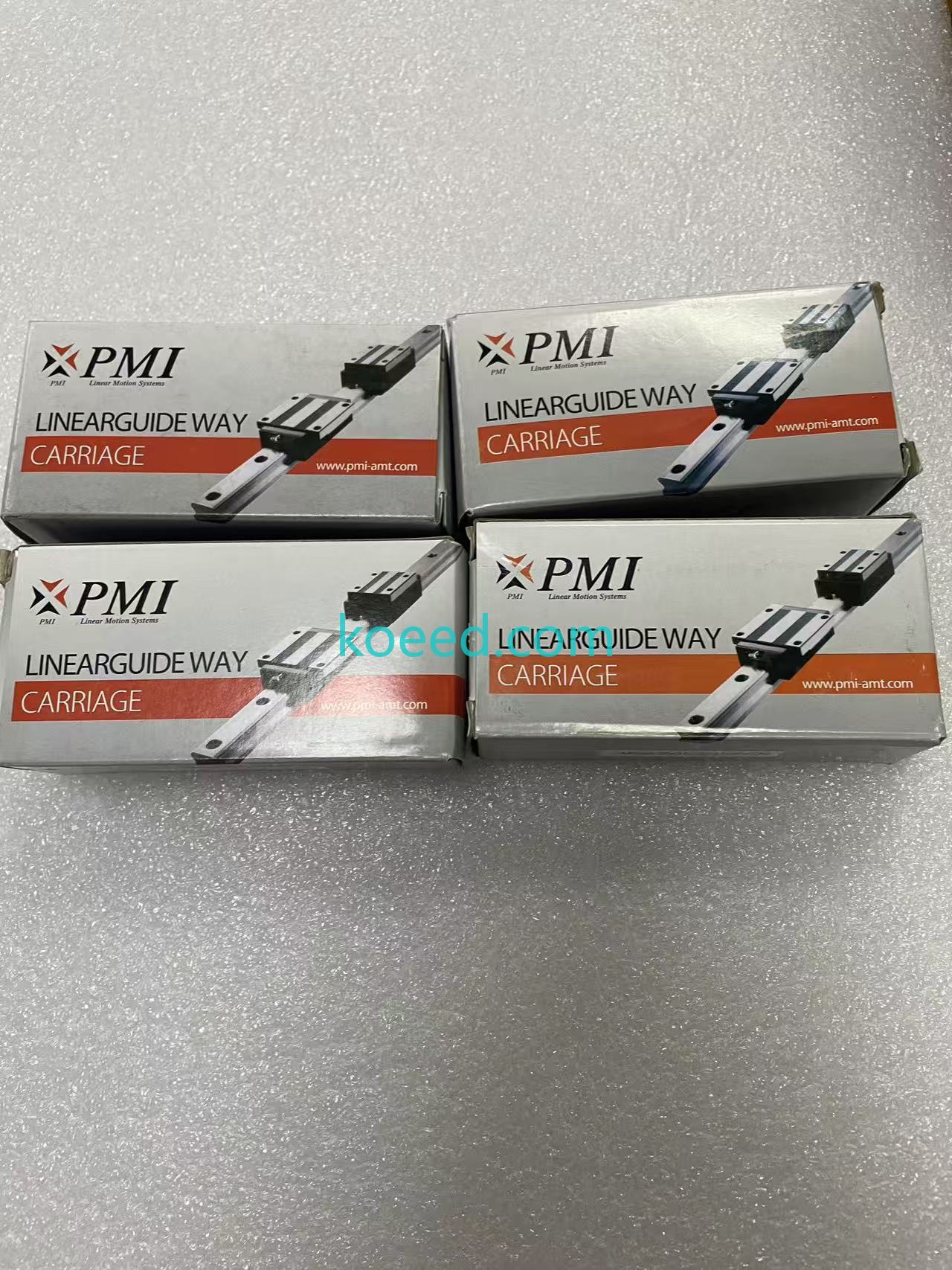
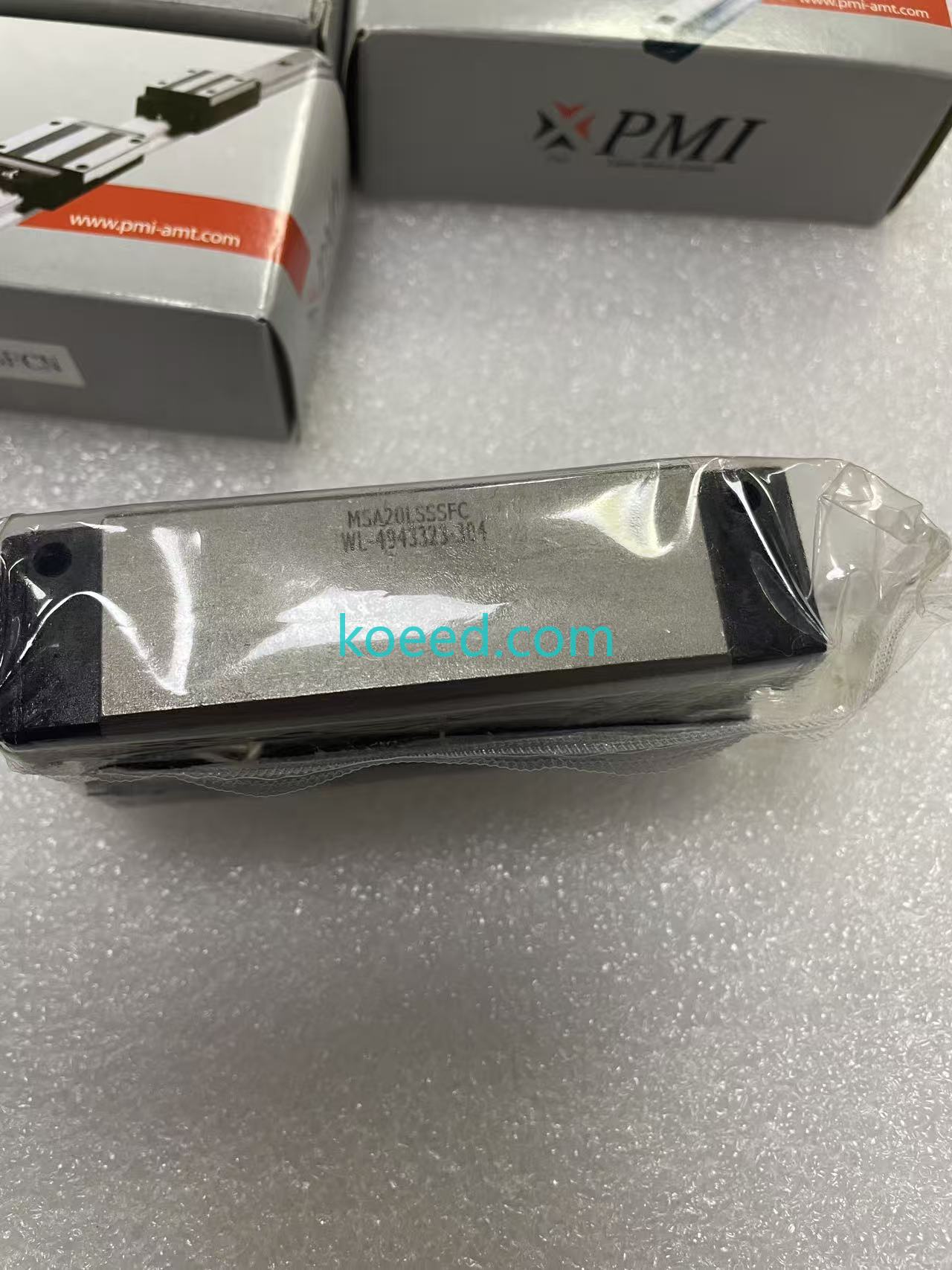
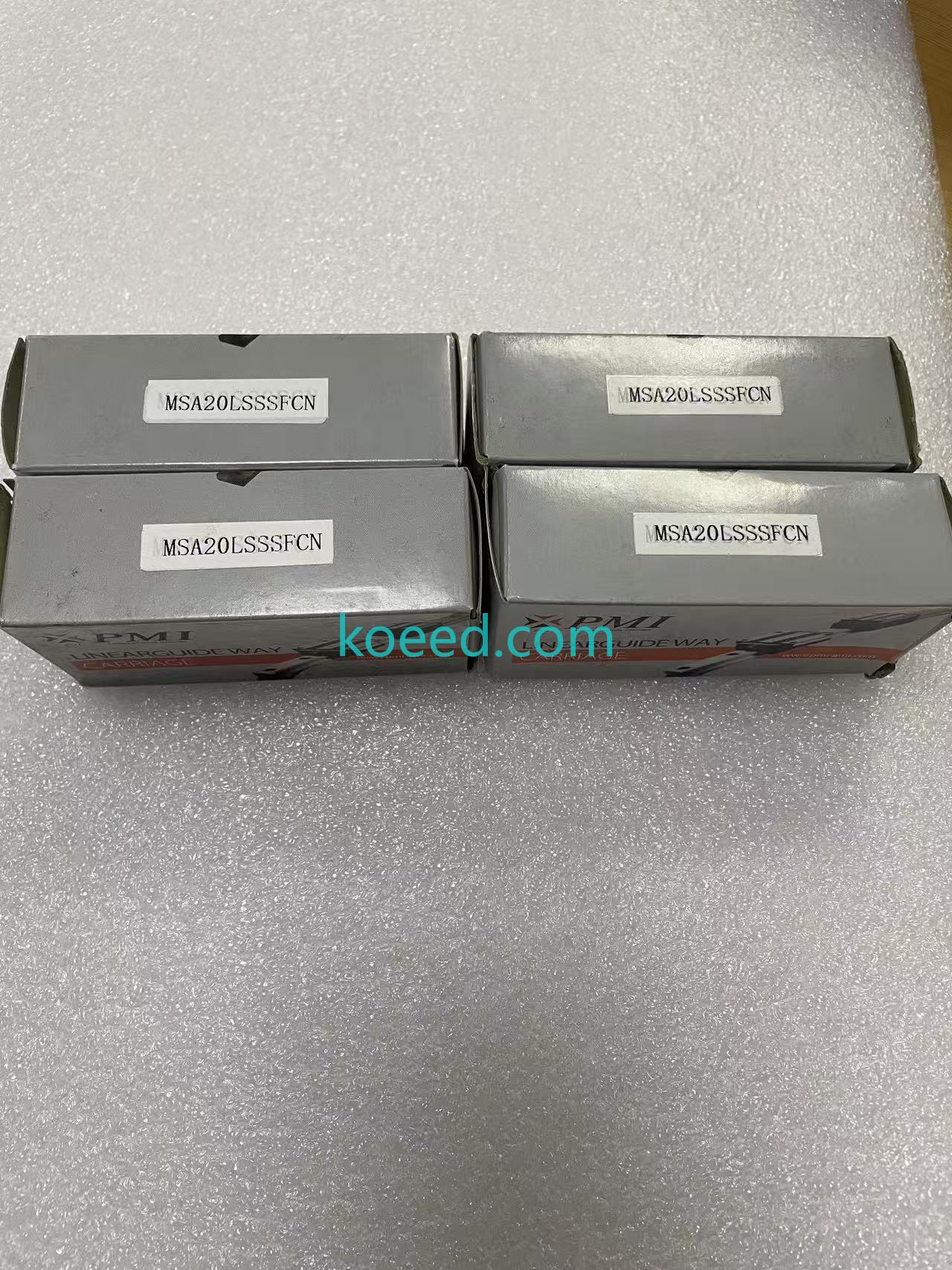
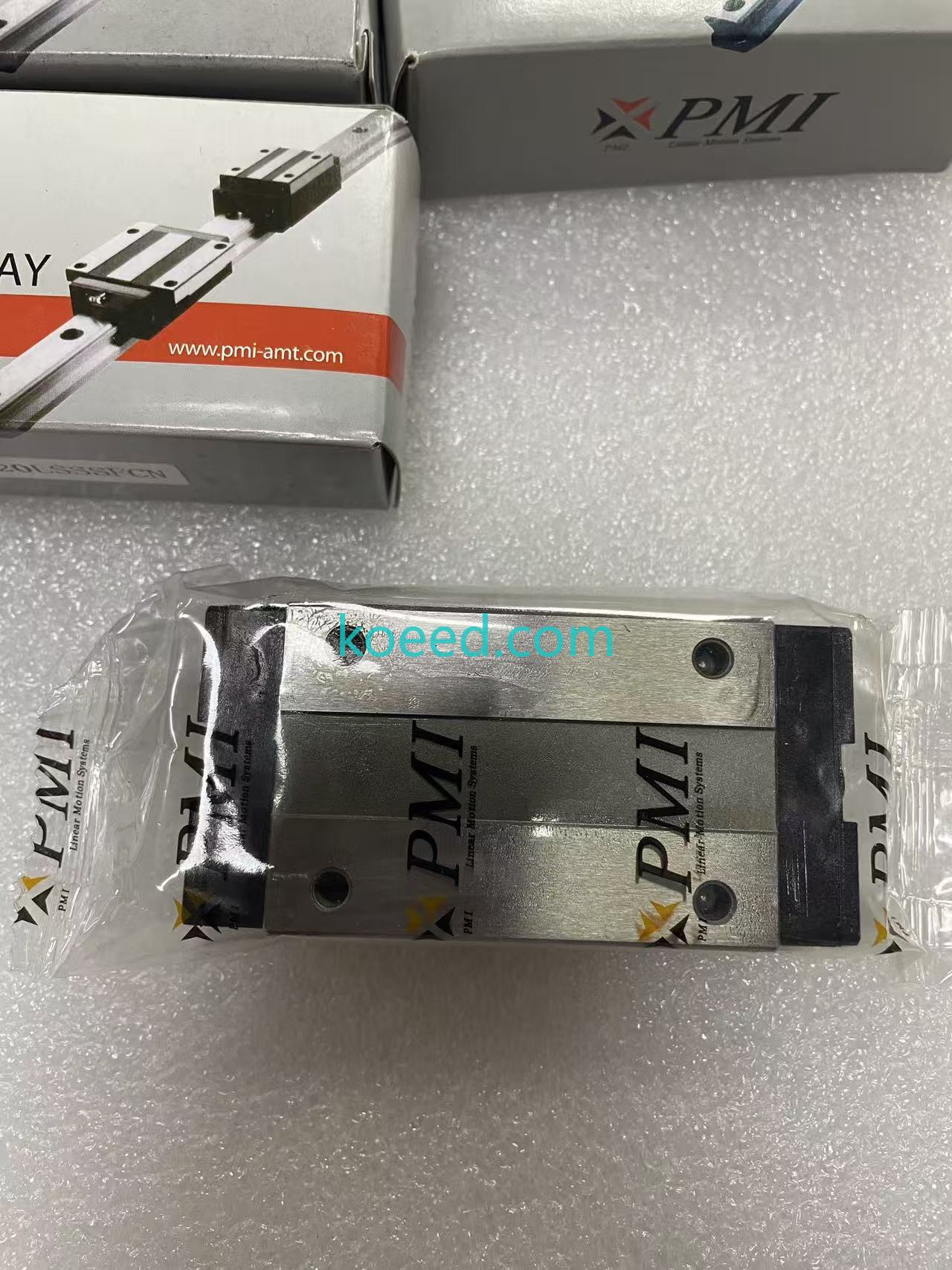
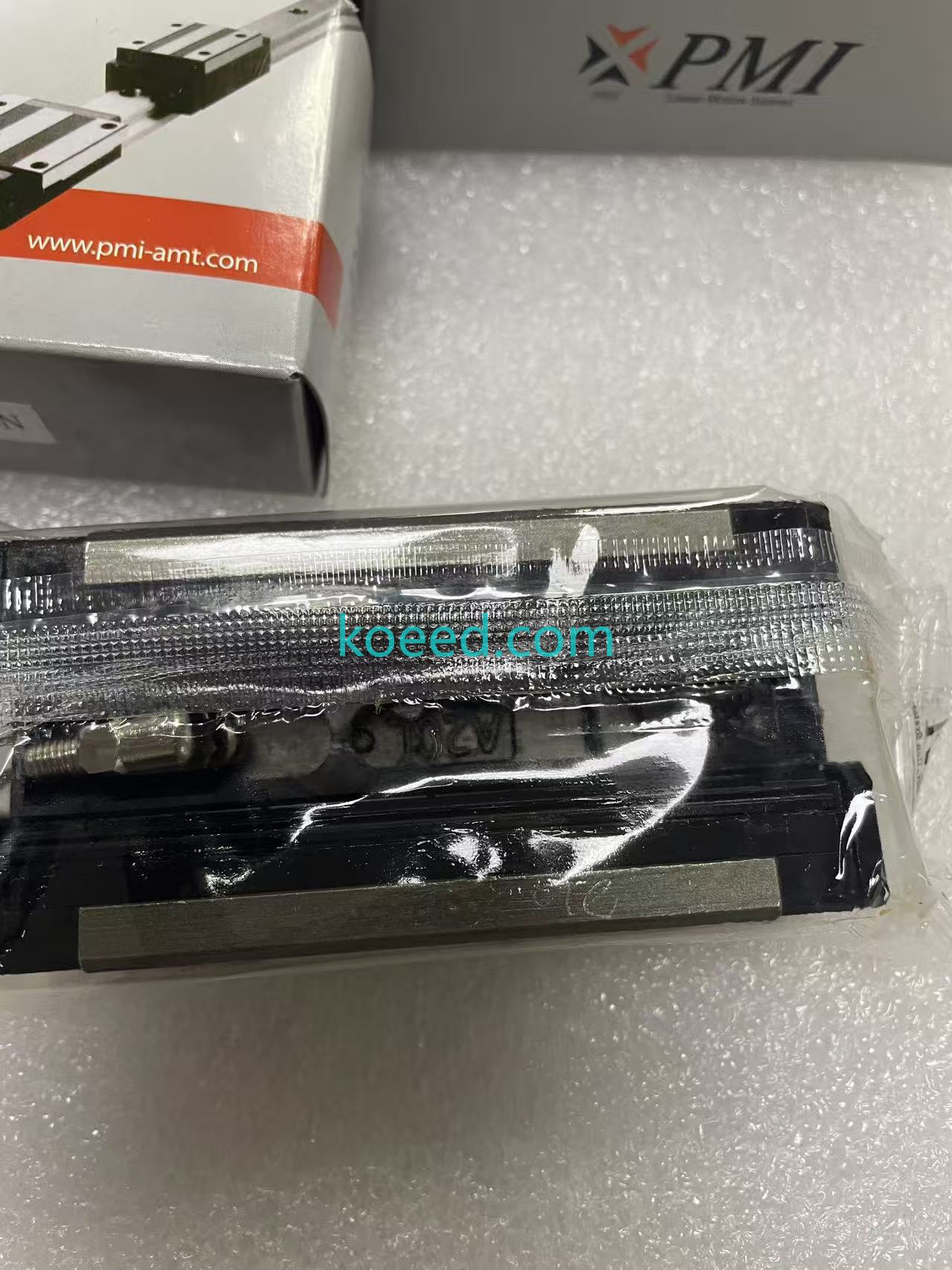
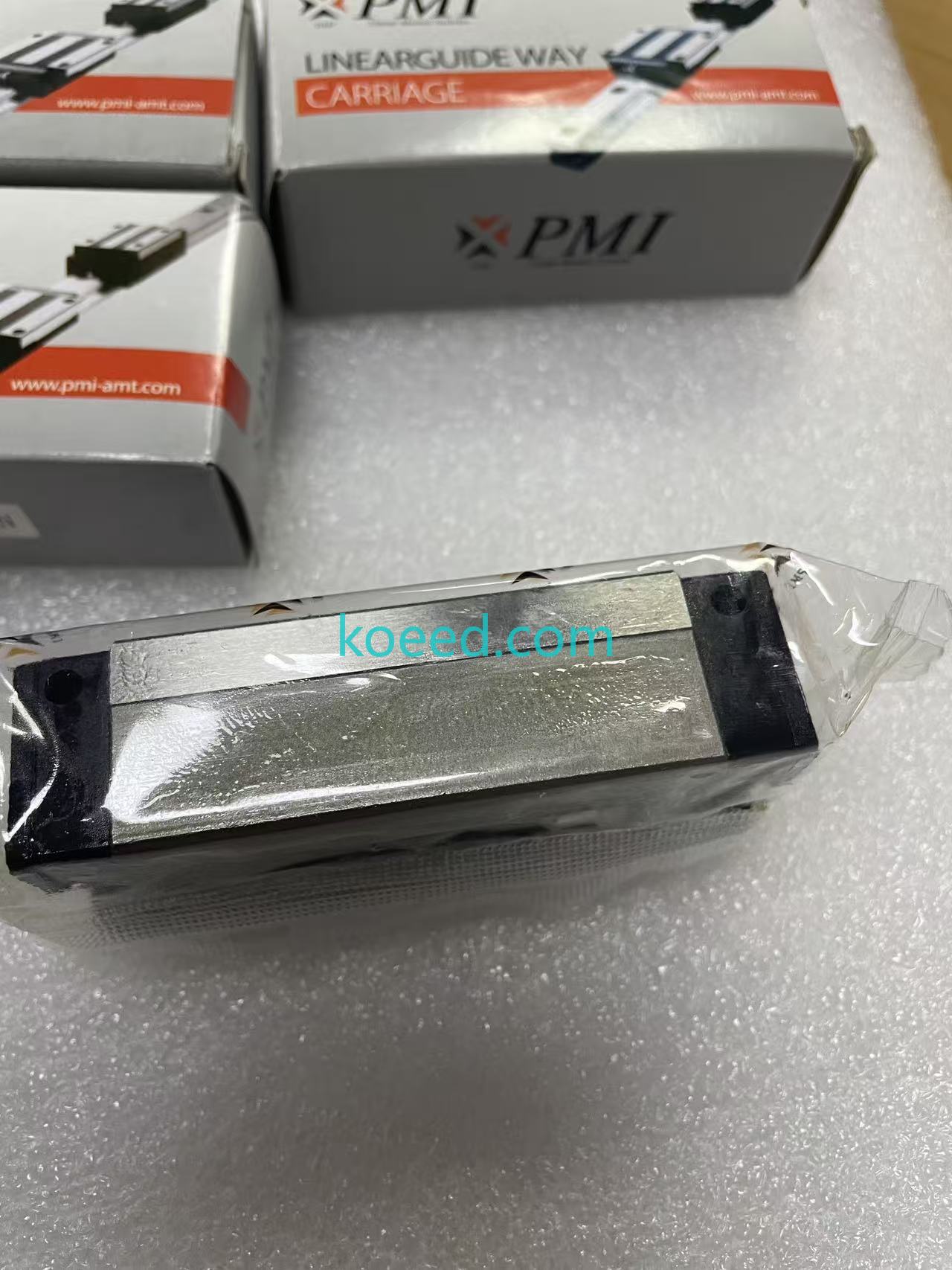
3. Visual Gallery — PMI MSA20LSSSFC
Below is a detailed visual inspection set of the PMI MSA20LSSSFC linear guide block. Each image highlights key structural and quality markers that procurement engineers should verify upon receipt.
4. IT/OT Convergence & Predictive Maintenance in 2026
Linear guideways have traditionally been "dumb" mechanical components — but in the 2026 smart-factory paradigm, the MSA20LSSSFC is increasingly paired with condition-monitoring sensor packages that transform it into a data-generating asset.
4.1 Integrated Vibration & Temperature Sensing
By mounting MEMS accelerometers (e.g., ADXL357 or IMI 646B01) directly to the block's mounting surface, maintenance teams can stream real-time RMS vibration signatures to cloud-based CMMS platforms such as Siemens MindSphere or PTC ThingWorx. The MSA20LSSSFC's stainless-steel body provides an acoustically clean transmission medium — free from the damping inconsistencies of coated carbon steel — enabling earlier detection of ball-raceway spalling or lubrication starvation.
4.2 Digital Twin Integration
Forward-leaning facilities in 2026 are importing the MSA20LSSSFC's geometry and load-rating data directly into digital twin environments (NVIDIA Omniverse, Ansys Twin Builder). This allows simulation of remaining useful life (RUL) under actual duty-cycle loads, shifting maintenance from calendar-based to condition-based — a strategy that Koeed's industrial clients report has reduced linear-motion-related downtime by 37–52%.
4.3 Sustainability & Energy Efficiency
The MSA20LSSSFC's 45° contact-angle ball circuit minimizes rolling resistance versus 30° alternatives. When deployed across a 12-axis CNC cell, the cumulative reduction in servo-motor current draw is measurable — typically 4–7% lower energy consumption compared to legacy linear guides with higher frictional coefficients. For facilities tracking Scope 2 emissions, this contributes directly to decarbonization KPIs.
5. Total Cost of Ownership (TCO) & ROI Analysis
While the upfront unit cost of a stainless-steel linear guide block exceeds its carbon-steel counterpart, a 5-year TCO model tells a very different story for the PMI MSA20LSSSFC:
| TCO Factor | MSA20E (Carbon Steel) | MSA20LSSSFC (Stainless) | 5-Year Savings |
|---|---|---|---|
| Initial Block Cost (per unit) | Baseline | +40% premium | — |
| Corrosion-Related Replacement (5 yr) | 1.8 replacements avg. | 0.2 replacements avg. | -78% parts cost |
| Unplanned Downtime (hrs/yr) | 14 hrs | 3 hrs | -79% lost production |
| Lubrication & Maintenance Labor | Standard | -15% (superior seal retention) | ~$1,200/yr per line |
| Scrap/Rework from Rail Degradation | 0.8% defect rate | 0.15% defect rate | -81% scrap cost |
| Net 5-Year TCO | 100% (reference) | ~62% | 38% lower TCO |
6. Maintenance, Troubleshooting & Pro-Tips
6.1 Lubrication Best Practices
The MSA20LSSSFC ships from PMI with a lithium-soap-based anti-rust preservative. Prior to commissioning, flush with a compatible NLGI #1 or #2 grease. For food-grade applications, Koeed recommends Klüberfood NH1 94-402 or Fuchs CASSIDA GREASE EPS 2 — both NSF H1 registered and fully compatible with the stainless-steel raceway metallurgy.
| Symptom | Likely Cause | Resolution |
|---|---|---|
| Audible ball-clicking / irregular rolling noise | Lubrication starvation or contamination ingress past seals | Purge and re-grease; inspect SFC end-seals for gap wear; replace seals if lip clearance exceeds 0.15 mm |
| Increased servo following error | Preload loss or raceway micropitting | Measure breakaway torque; if >25% below OEM spec, evaluate block replacement. Cross-reference with vibration spectra. |
| Surface rust spotting (unexpected) | Chloride exposure exceeding stainless passivation threshold | Passivate with citric-acid-based gel (pH 3.5–4.0); verify environmental chloride concentration ≤200 ppm |
| Excessive rolling resistance / stick-slip | Misalignment between rail and block mounting surfaces | Re-align to ≤10 μm parallelism over full stroke; use dial indicator on reference edge |
| Grease leakage from end caps | Over-greasing or damaged end-cap O-ring | Reduce grease volume to 30–40% of internal free space; replace O-ring if hardened or cracked |
6.2 Storage & Handling
Store unmounted MSA20LSSSFC blocks in their original VCI (volatile corrosion inhibitor) packaging at 15–30°C and ≤60% RH. Avoid stacking blocks directly — use interleaving foam sheets to prevent brinelling of raceway surfaces. Never lift a block by its end caps; always support from the main body casting.
7. Frequently Asked Questions
Is the MSA20LSSSFC interchangeable with standard MSA20E rails?
Yes. PMI maintains full dimensional interchangeability across the MSA20 family. The MSA20LSSSFC block will mount onto any standard MSA20-series rail (both carbon-steel and stainless-steel variants). However, for optimal corrosion resistance, Koeed recommends pairing it with an MSA20 stainless-steel rail — mixing stainless blocks with carbon-steel rails negates the corrosion-protection advantage at the rail interface.
What is the difference between MSA20LSSSFC and MSA20ESSFC?
The "L" designation indicates a long (extended) block, providing approximately 30% greater ball-contact length versus the standard "E" type. This yields higher moment stiffness and dynamic load ratings. Both share the same 20 mm rail profile and stainless-steel construction. The L-type is preferred for cantilevered loads, single-rail gantries, and applications where deflection must be minimized.
Can the MSA20LSSSFC be used in vacuum environments?
Standard MSA20LSSSFC blocks use hydrocarbon-based grease and polymer end-cap seals that outgas under high vacuum. For vacuum applications (≤10⁻³ Pa), Koeed can source PMI's clean-room / vacuum-rated variants with perfluoropolyether (PFPE) grease and low-outgassing seal materials. Contact our engineering team for a custom specification.
What is the expected service life of the MSA20LSSSFC?
Under rated dynamic load (C = ~21.5 kN), the L10 life expectancy is 100 km of travel with proper lubrication. In real-world CNC duty cycles, this typically translates to 4–7 years of multi-shift operation. Stainless-steel construction extends this further in corrosive environments where carbon-steel blocks would require replacement within 12–18 months.
Does Koeed stock the MSA20LSSSFC or is it made-to-order?
Koeed maintains strategic inventory of the PMI MSA20LSSSFC for rapid fulfillment. Standard quantities ship within 3–5 business days. For large-scale OEM orders (100+ units), lead times are typically 4–6 weeks. Use the Request Quote button below to confirm current stock levels and receive a same-day commercial proposal.
8. Final CTA — Procure the MSA20LSSSFC from Koeed
Ready to Upgrade Your Linear Motion System?
The PMI MSA20LSSSFC is in stock at Koeed. Secure 2026 enterprise-tier pricing, technical datasheets, and logistics support through the channels below. Our application engineers are standing by to assist with rail-block pairing, lubrication specification, and integration planning.