

ADLINK cPCI-3970D/655L/M4G 3U CompactPCI Blade: 2026 Retrofit, Specs & TCO Guide
ADLINK cPCI-3970D/655L/M4G - The 3U CompactPCI Blade Still Carrying the Load in 2026
While greenfield edge projects rush toward COM Express and COM-HPC, thousands of revenue-critical CompactPCI racks in rail signalling rooms, naval combat systems, telecom central offices and semiconductor fabs still run on the 3U processor blade. The ADLINK cPCI-3970D/655L/M4G is one of the most widely deployed members of that fleet: a PICMG 2.0-compliant, 2nd Gen Intel Core i7 blade pairing deterministic backplane I/O with IPMI health telemetry.
In 2026 the engineering question is no longer how fast it is, but how many more compliant years a slot can deliver before the chassis is re-platformed.
Sourced and bench-verified units: ADLINK cPCI-3970D/655L/M4G - 1PCS 3U Motherboard on Koeed.com
1. Strategic Overview: Why a 3U cPCI Blade Is Still a 2026 Asset
The 2026 industrial landscape has bifurcated. Greenfield AI edge nodes ship on DDR4/DDR5 modular architectures, while the brownfield installed base that actually produces revenue today remains physically, electrically and contractually locked into CompactPCI chassis. Rail signalling certified to EN 50155, legacy defence programmes and PSTN/SS7-adjacent telecom racks cannot be replaced without re-certification cycles costing more than the compute itself.
The cPCI-3970D/655L/M4G sits in the sweet spot of that brownfield economy: a single-slot 3U blade built around a quad-core 2nd Gen Intel Core i7 processor with ECC-capable DDR3 memory and an integrated IPMI controller. That combination delivers four things 2026 operators actually budget for:
IT/OT Convergence Without a Forklift Upgrade
Because the blade exposes standard Gigabit Ethernet, SATA and USB paths plus an IPMI sideband channel, it can be wrapped into a modern OT data layer. A plant historian or MES gateway can poll board-level telemetry over IPMI/LAN while the blade keeps executing its original deterministic control role, with no chassis re-engineering required.
Predictive Maintenance, Not Reactive Repair
The onboard IPMI subsystem reports voltage rails, temperature sensors and fan health independently of the operating system. In 2026 terms that is a free sensor array. Trending those values in a CMMS converts a board failure at 03:00 into a planned swap during the next scheduled outage window.
Sustainability Through Life Extension
Every reused 3U blade avoids the embodied carbon of a new chassis, backplane and enclosure. For organisations reporting Scope 3 emissions, blade-level sparing is one of the highest-leverage and lowest-cost decarbonisation actions available in the automation estate.
TCO Discipline Under Supply Pressure
Second-generation Core i7 silicon is now firmly in the mature, plentiful and predictable phase of its supply curve. Lead times and unit costs are stable, the opposite of the allocation volatility that still affects newer embedded platforms.
Procurement Note: Configuration Codes Matter
The 655L suffix identifies the validated board and chipset configuration; M4G denotes the factory-fitted 4 GB memory population. Always cross-check the full part number against your installed rack before ordering a spare, because a mismatched SKU can force an unnecessary chassis investigation.
2. Technical Benchmarking: Legacy Blade vs. Modern Successor
The most useful comparison for a 2026 modernisation decision is not old versus theoretical best, but incumbent versus the drop-in successor. ADLINK's own CompactPCI roadmap shows where the platform has moved. The table below benchmarks the cPCI-3970D/655L/M4G against the current-generation cPCI-3520D class blade.
| Parameter | cPCI-3970D/655L/M4G (Incumbent) | cPCI-3520D Class (Successor) | Migration Impact |
|---|---|---|---|
| Form Factor | 3U CompactPCI, single slot (4HP), PICMG 2.0 | 3U CompactPCI, 2-slot (8HP) option | Slot budget must be re-planned on 8HP variants |
| Processor | Quad-core 2nd Gen Intel Core i7, micro-FCBGA, roughly 2.1 GHz base and 3.0 GHz Turbo, 6 MB LLC, 45 W TDP | Intel Core i7-9850HL class (8th/9th Gen) | Three to four times compute uplift available when re-platforming |
| Memory | DDR3-1333 SDRAM with ECC via SODIMM, expandable to 16 GB (this SKU ships 4 GB) | DDR4-2666 soldered, 16 GB | ECC retention is a key safety and signalling advantage |
| Health Monitoring | IPMI for system health monitoring (voltage, temperature, fans) | IPMI plus richer platform telemetry | Both are automation-friendly; legacy IPMI is sufficient for trending |
| Networking | Dual Gigabit Ethernet on front panel | Dual Gigabit Ethernet | No change to OT network design |
| Storage and I/O | SATA, USB, COM, VGA via integrated controller | SATA, USB 3.0, COM, DVI | USB 3.0 and DVI are the main peripheral gains |
| Graphics | Integrated Intel HD Graphics on-die | Integrated Intel UHD-class graphics | Higher multi-display capability on newer silicon |
| Thermal and Power | 45 W TDP class, conduction and convection cooled chassis compatible | Comparable TDP class, higher efficiency per watt | Marginal PSU headroom benefit under newer blade |
| Compliance | RoHS, PICMG 2.0 hot-swap ecosystem | RoHS, PICMG 2.0 | Chassis and backplane remain interchangeable |
| 2026 Availability | Mature secondary market, short lead times | Active production, longer lead times | Legacy wins on spares velocity; modern wins on headroom |
Reading the Benchmark Correctly
Two conclusions follow from the data, and both matter for budget approval. First, retention is technically defensible: if the workload is deterministic control, data concentration, protocol conversion or HMI hosting, the cPCI-3970D throughput envelope is rarely the bottleneck, because network and storage latency usually dominate. Second, ECC memory is the underrated differentiator: in rail signalling and process-control nodes, single-bit error correction is a functional-safety argument, not a performance one, so any modernisation business case must demonstrate that the successor preserves ECC.
Benchmark the Chassis, Not Just the Board
Before approving a blade swap, measure three chassis-level values: available +5 V, +3.3 V and +12 V current headroom; airflow in CFM at the slot; and CompactPCI backplane revision. A newer 8HP blade can exceed both the slot width and the thermal envelope of an ageing enclosure, turning a simple upgrade into a full rack replacement.
3. Visual Gallery: Physical Inspection Reference
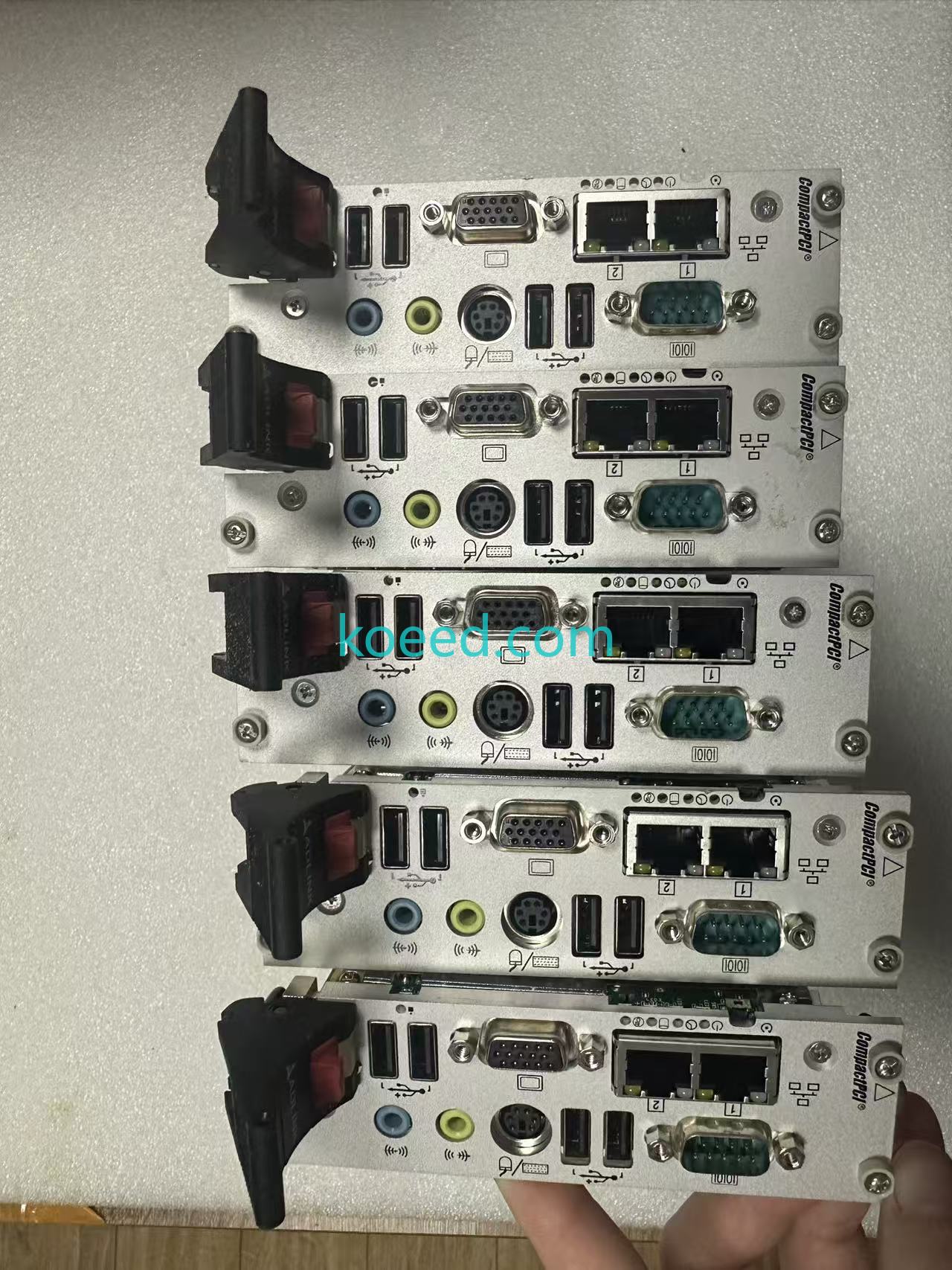
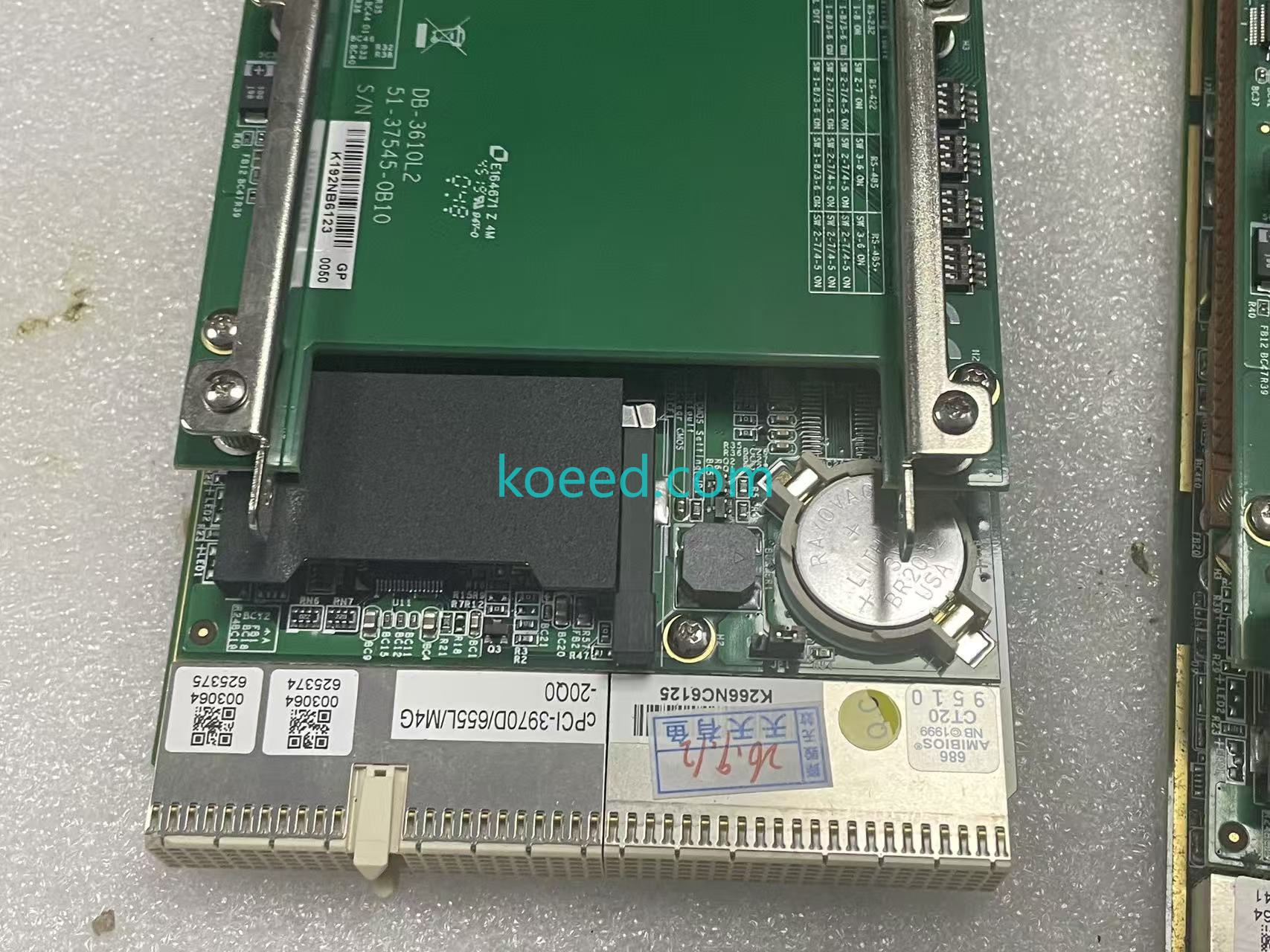
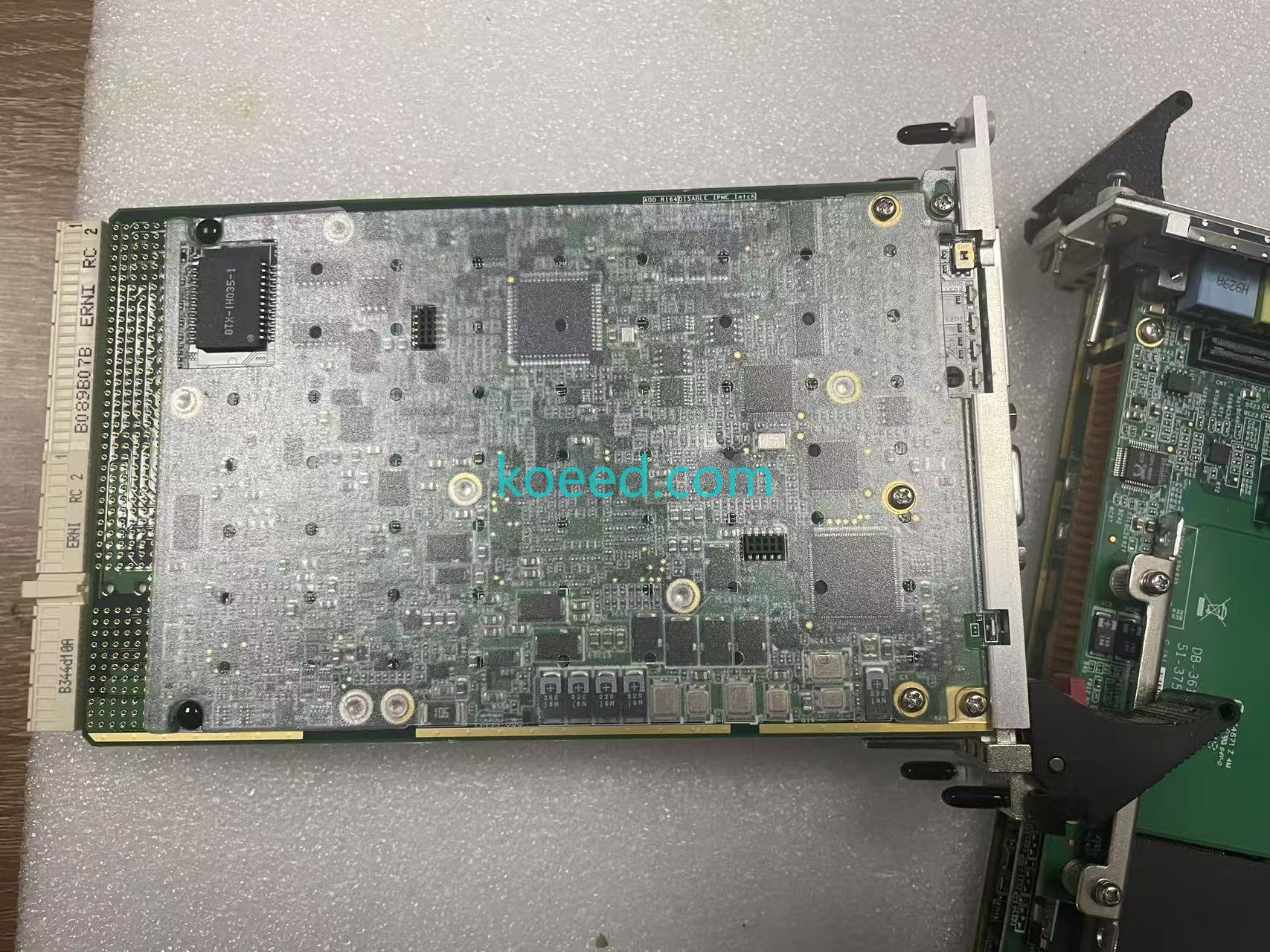
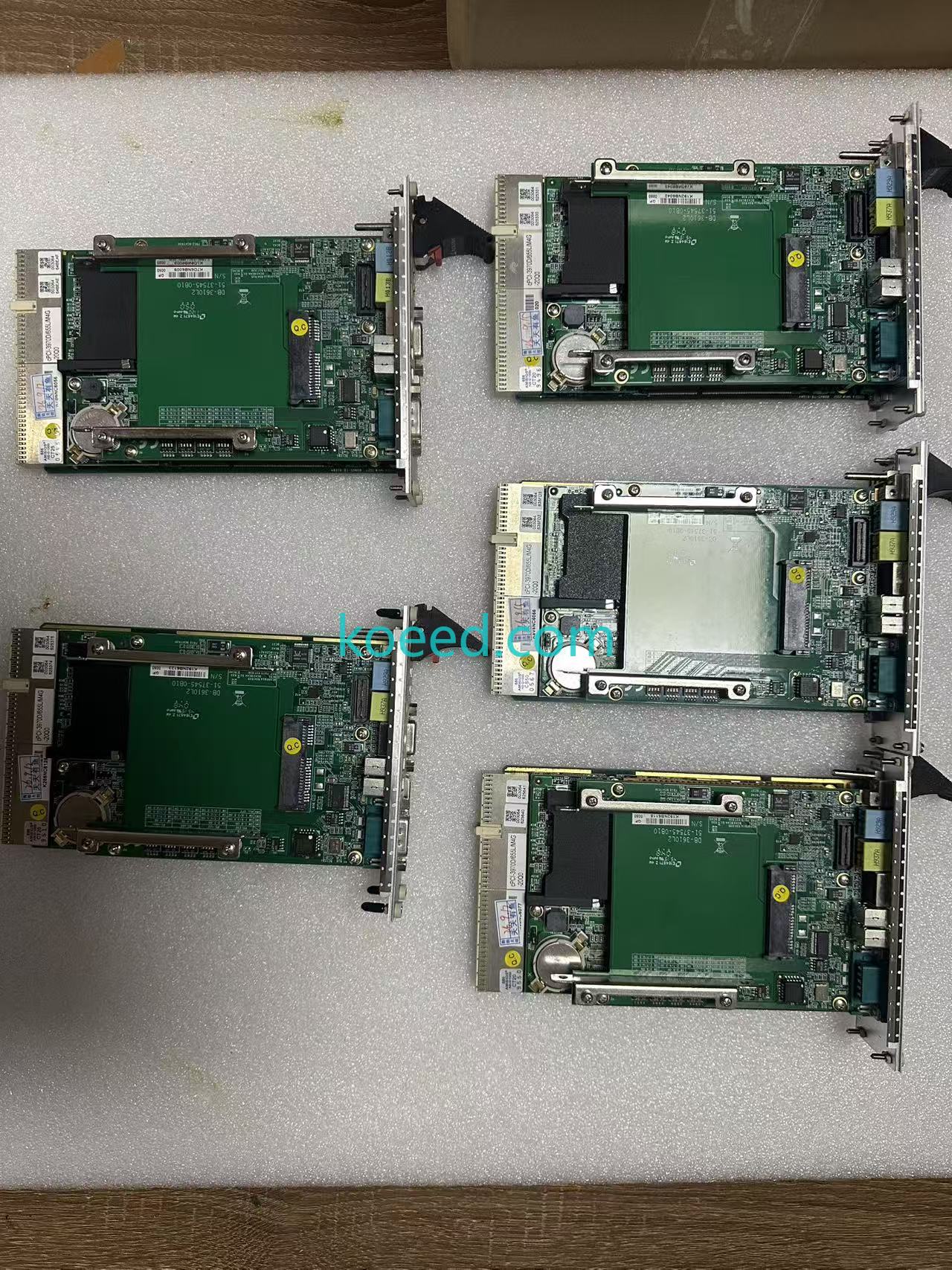
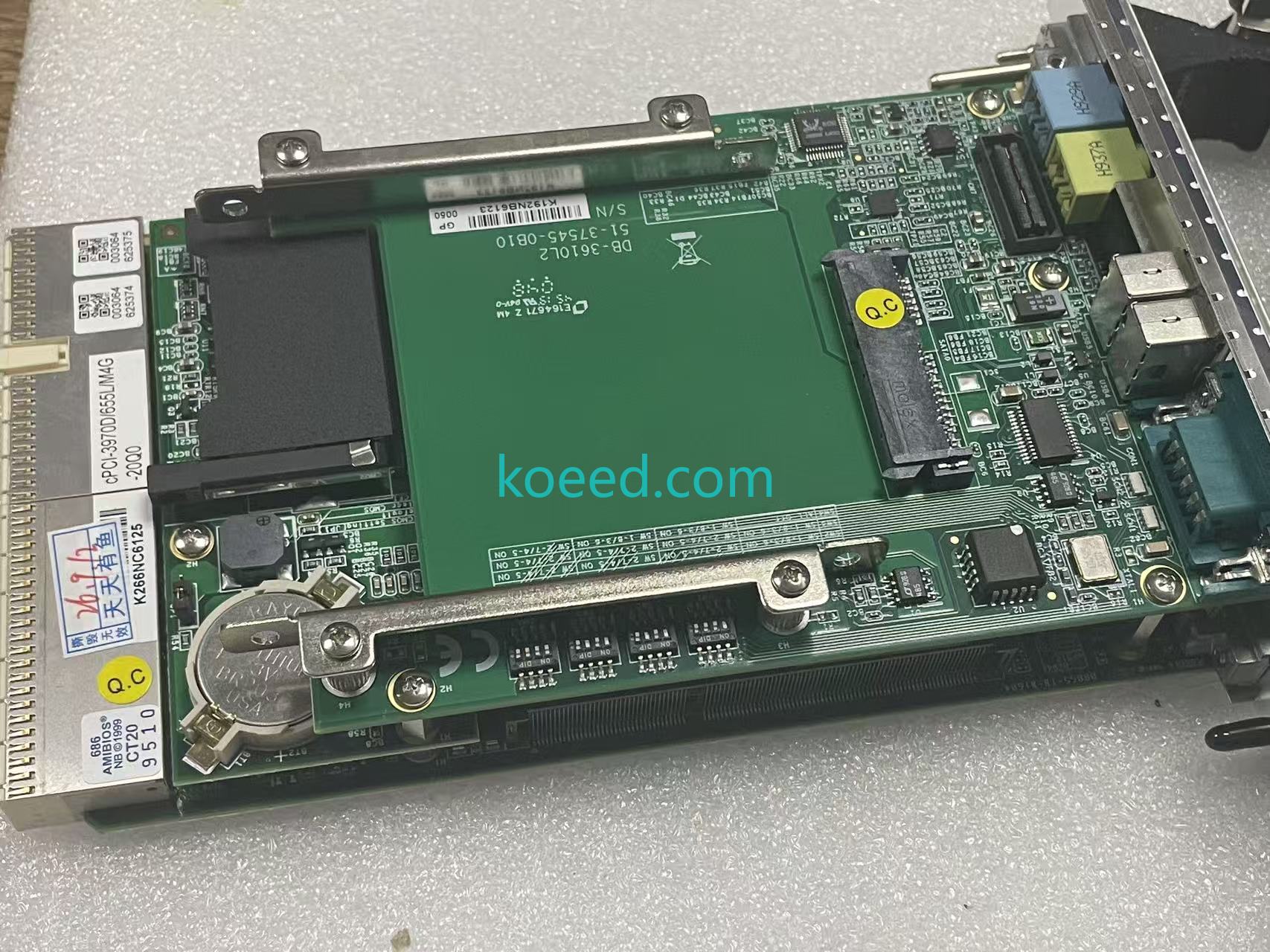
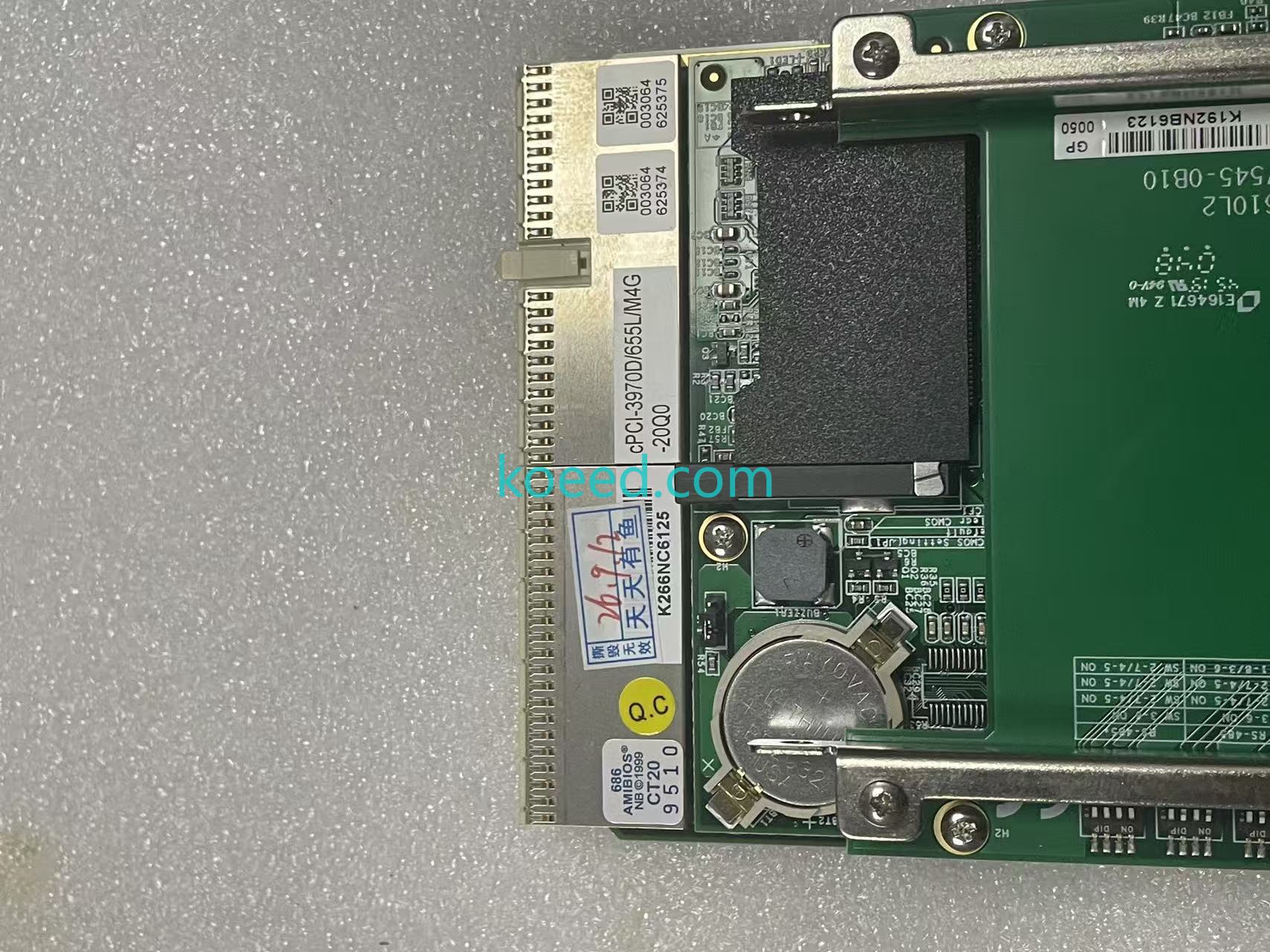
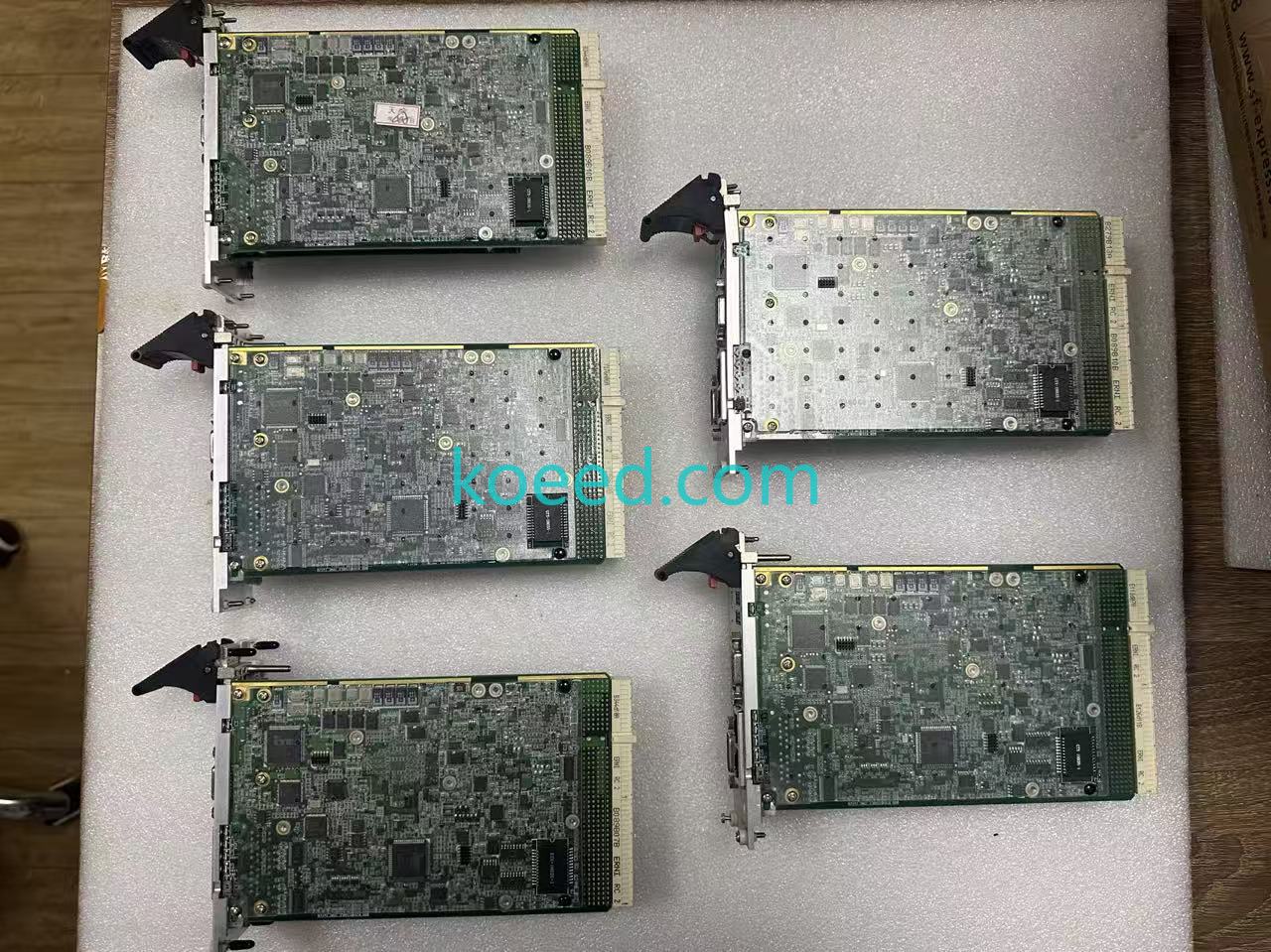
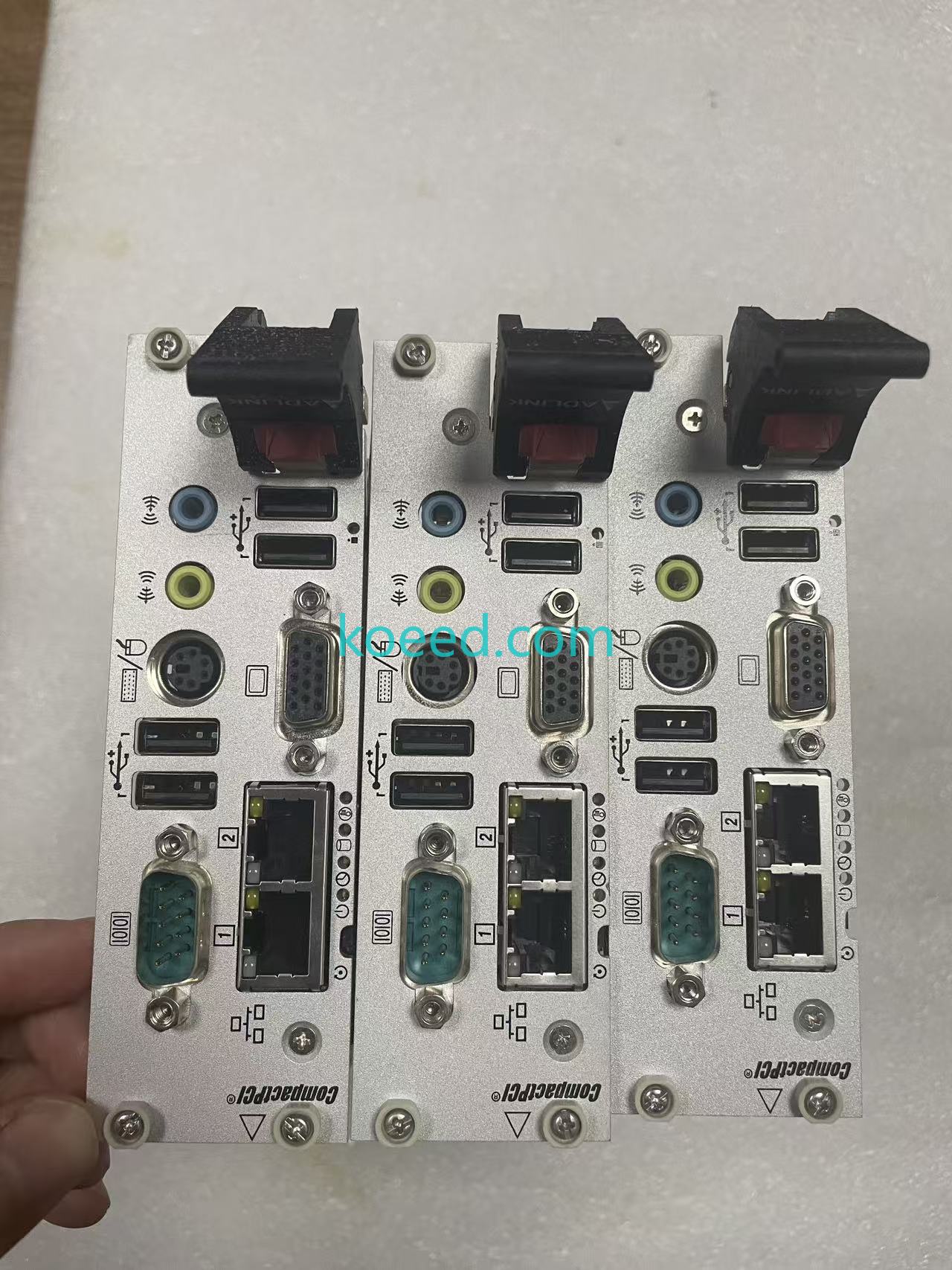
Board-level due diligence is a visual exercise. Use the gallery below to verify connector placement, memory population, heatsink configuration and front-panel port layout against your installed unit before committing to a spare or replacement order. Full listing with condition detail: ADLINK cPCI-3970D/655L/M4G 3U Motherboard.
4. IPMI-Driven Predictive Maintenance in Practice
The cPCI-3970D includes an IPMI controller that operates independently of the host operating system. In a 2026 IT/OT convergence programme, that controller is the cheapest sensor array in the rack. The workflow has three stages.
- Baseline: capture voltage rail, temperature and fan RPM readings from a known-good blade to establish normal envelopes per slot.
- Trend: forward IPMI sensor data over the sideband LAN to a time-series database or CMMS. A slow upward drift in inlet temperature often precedes filter blockage, while a falling fan RPM trend can predict bearing failure weeks ahead.
- Act: set thresholds that trigger a work order rather than an alarm. The goal is to convert unplanned downtime into a scheduled swap during the next maintenance window.
Pro-Tip: Poll the Right Interval
Sub-minute IPMI polling adds network chatter without adding diagnostic value on a passively cooled 45 W blade. Five-minute intervals are usually sufficient for thermal trending, while voltage rails benefit from tighter sampling only during commissioning.
5. Obsolescence Management and Total Cost of Ownership
The economic case for retaining a cPCI-3970D/655L/M4G rests on three TCO levers, each of which can be quantified for a capital request.
A. Acquisition and Sparing
A refurbished or new-old-stock blade typically costs a fraction of a full chassis re-platform. Because the platform is mature, second-source availability is broad and lead times are measured in days rather than quarters, which lowers both working capital and safety-stock requirements.
B. Downtime Avoidance
Site visits to remote rail cabinets or offshore platforms dominate the cost of failure. A rack-mounted spare blade plus IPMI trending can cut mean time to repair from days to under an hour, provided the maintenance team has documented the slot configuration in advance.
C. Certification and Documentation Amortisation
EN 50155, defence and safety certifications attach to the chassis configuration, not the blade alone. Reusing the same CompactPCI form factor preserves the certification evidence already on file, whereas changing slot width or thermal profile re-opens that work and its associated cost.
Simple TCO Decision Rule
If the workload is I/O-bound, latency-sensitive and certification-locked, retention wins. If the workload needs AI inference, DDR5 bandwidth or multi-display capability, plan a full chassis migration and treat the legacy blades as a bridge asset that protects production until cutover.
6. Frequently Asked Questions
What does the 655L/M4G suffix mean?
655L identifies the validated board and chipset configuration; M4G denotes the factory-fitted 4 GB memory population. Always match the full part number to your chassis documentation before ordering.
Is the cPCI-3970D hot-swappable?
Yes. It follows the PICMG 2.0 hot-swap ecosystem with a front-panel handle and injector/ejector mechanism. Verify that your backplane and power supply support hot-swap before relying on it in a live system.
Does the blade support ECC memory?
Yes, DDR3 SDRAM with ECC via SODIMM is supported, expandable to 16 GB. ECC is a significant advantage for rail signalling and process-control workloads where single-bit errors are a safety concern.
Can it run modern operating systems?
The 2nd Gen Intel Core i7 platform supports current Linux distributions and Windows editions within the constraints of the chipset. Validate driver availability for any proprietary backplane or fieldbus device before deployment.
Where can I source a verified unit?
Sourced and bench-verified units are listed at Koeed.com - ADLINK cPCI-3970D/655L/M4G 3U motherboard.
7. Conclusion: A Bridge Blade With a Business Case
The ADLINK cPCI-3970D/655L/M4G is not a nostalgia purchase. It is a calculated retention asset for operators whose revenue depends on CompactPCI racks that cannot be re-certified quickly or cheaply. With ECC DDR3, IPMI health telemetry, dual Gigabit Ethernet and PICMG 2.0 compliance, it delivers the three things a 2026 modernisation programme needs: predictable spares, measurable health data and a defensible path to IT/OT convergence.
For engineering teams deciding whether to swap or retain, the answer is workload-dependent. Characterise the I/O and certification envelope first; the blade's throughput is rarely the limiting factor.
Ready to Source a Verified cPCI-3970D/655L/M4G?
Bench-verified 3U CompactPCI blades with condition detail and configuration photos.


