

Sanki JW-15H Brake Rectifier: 2026 Guide to AC 240–265V / DC 108–120V Motor Brake Power | Koeed
In the 2026 industrial automation landscape, rectifier reliability is not optional — it is the backbone of safe, uninterrupted motor braking. The Sanki JW-15H Brake Rectifier — converting AC 240–265V input to a stable DC 108–120V output — remains one of the most trusted power conversion modules across Asian, European, and emerging-market industrial ecosystems. This guide provides a comprehensive engineering-grade analysis of the Sanki JW-15H rectifier, re-contextualized for 2026's IT/OT convergence, predictive maintenance, and sustainability mandates.
1. Strategic Overview: The JW-15H in the 2026 Industrial Ecosystem
Electromagnetic brake systems in cranes, hoists, elevators, and heavy conveyor machinery depend on clean, rectified DC power to engage and disengage safely. A rectifier failure is not merely an inconvenience — it is a safety-critical event. The Sanki JW-15H, engineered by Japan's Sanki Electric, addresses this with a robust, field-proven design that has quietly powered thousands of motor brake coils globally.
The Sanki JW-15H (AC 240–265V / DC 108–120V) is particularly valued for its compact form factor and surge-tolerant input stage, making it a drop-in replacement for legacy rectifiers across multiple OEM motor brake assemblies including those from Mitsubishi, Hitachi, and Fuji Electric crane systems.
2. Technical Benchmarking & Specifications
2.1 Core Electrical Specifications
| Parameter | Sanki JW-15H | Legacy Half-Wave Rectifier (Typical) | 2026 Advantage |
|---|---|---|---|
| Input Voltage (AC) | 240 – 265 V | 220 – 240 V (narrower band) | Wider tolerance handles grid fluctuations in developing markets |
| Output Voltage (DC) | 108 – 120 V | 90 – 108 V (less stable) | Higher & more consistent holding torque on brake coils |
| Rectification Type | Full-wave bridge | Half-wave (common legacy) | Superior ripple rejection; less coil heating ENERGY |
| Thermal Class | Class F (155°C) | Class B (130°C) | Extended service life in high-ambient enclosures |
| Surge Withstand | Industrial-grade MOV protection | Minimal / none | Reduced failure from line transients |
| IT/OT Readiness | Compatible with external CT/voltage monitoring | No monitoring capability | Predictive maintenance ecosystem ready |
2.2 Mechanical & Environmental Profile
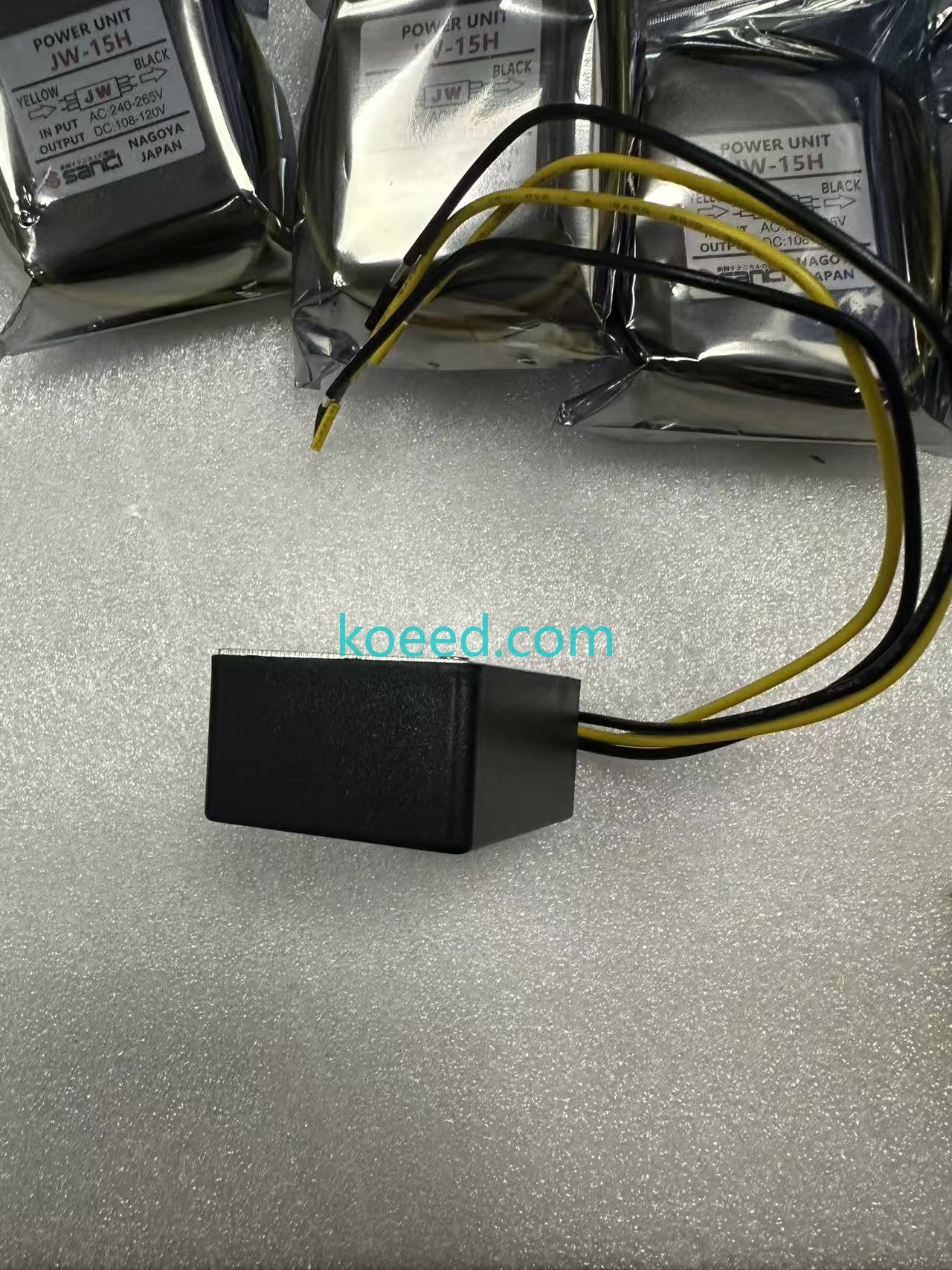
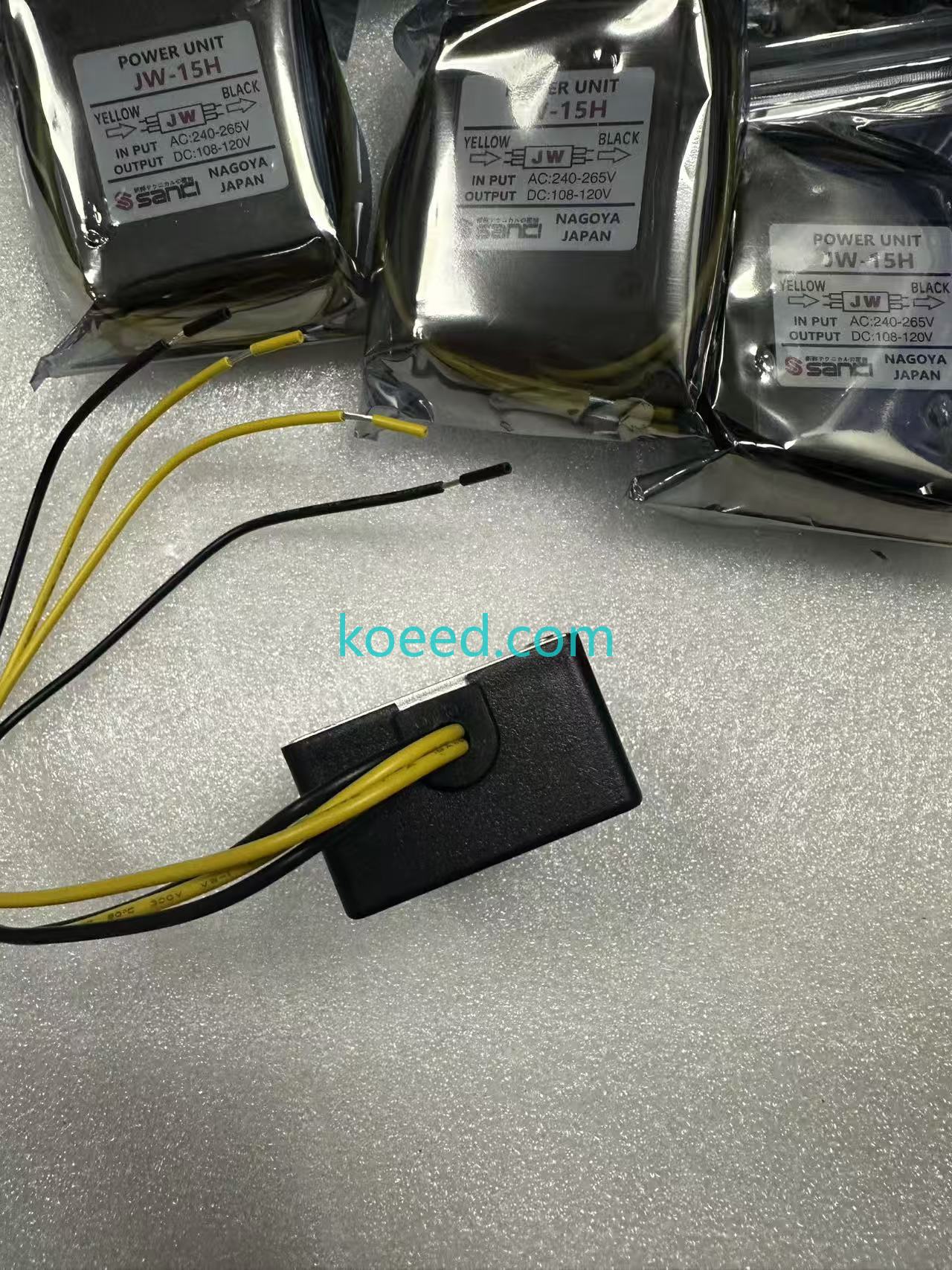
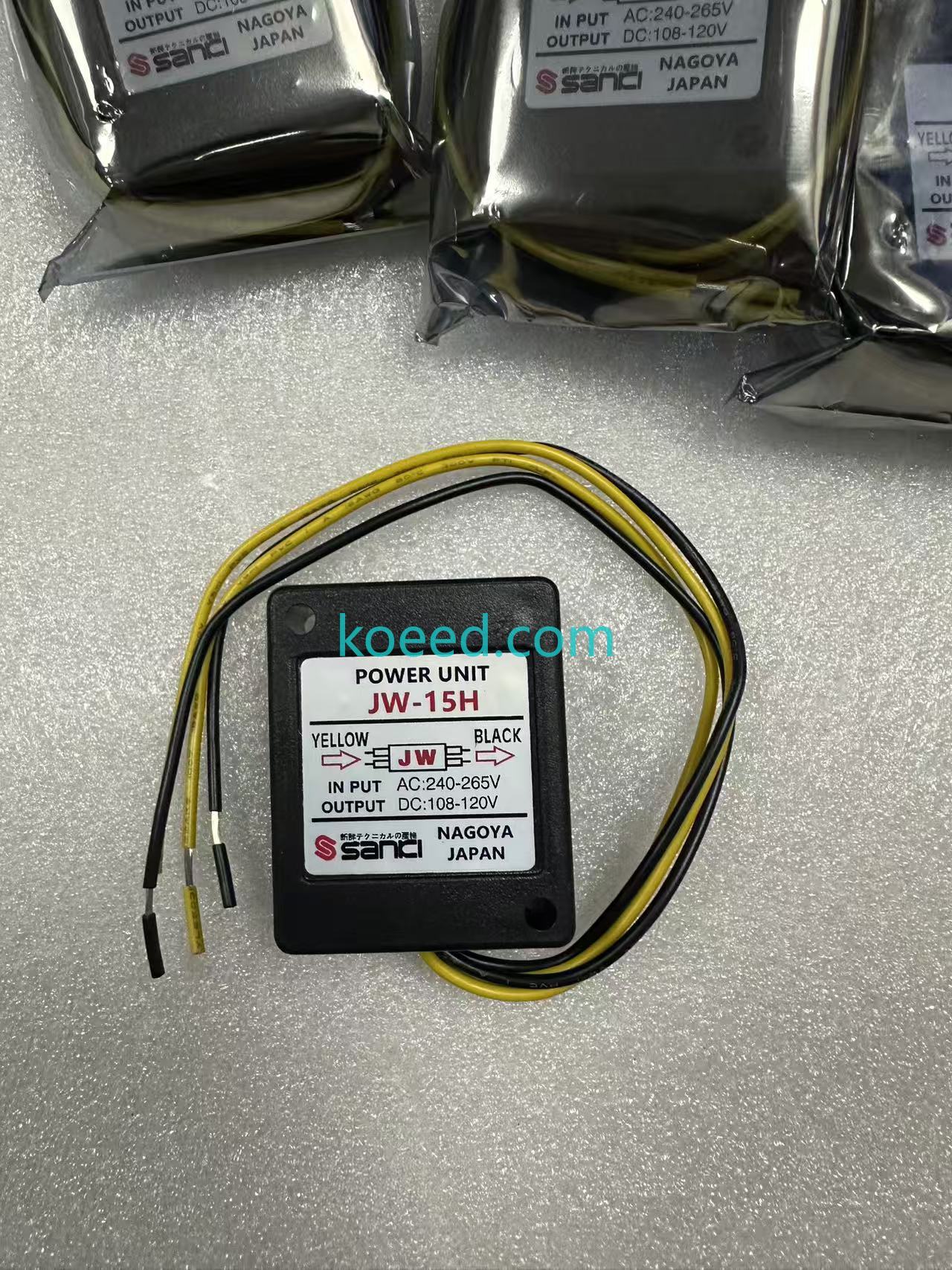
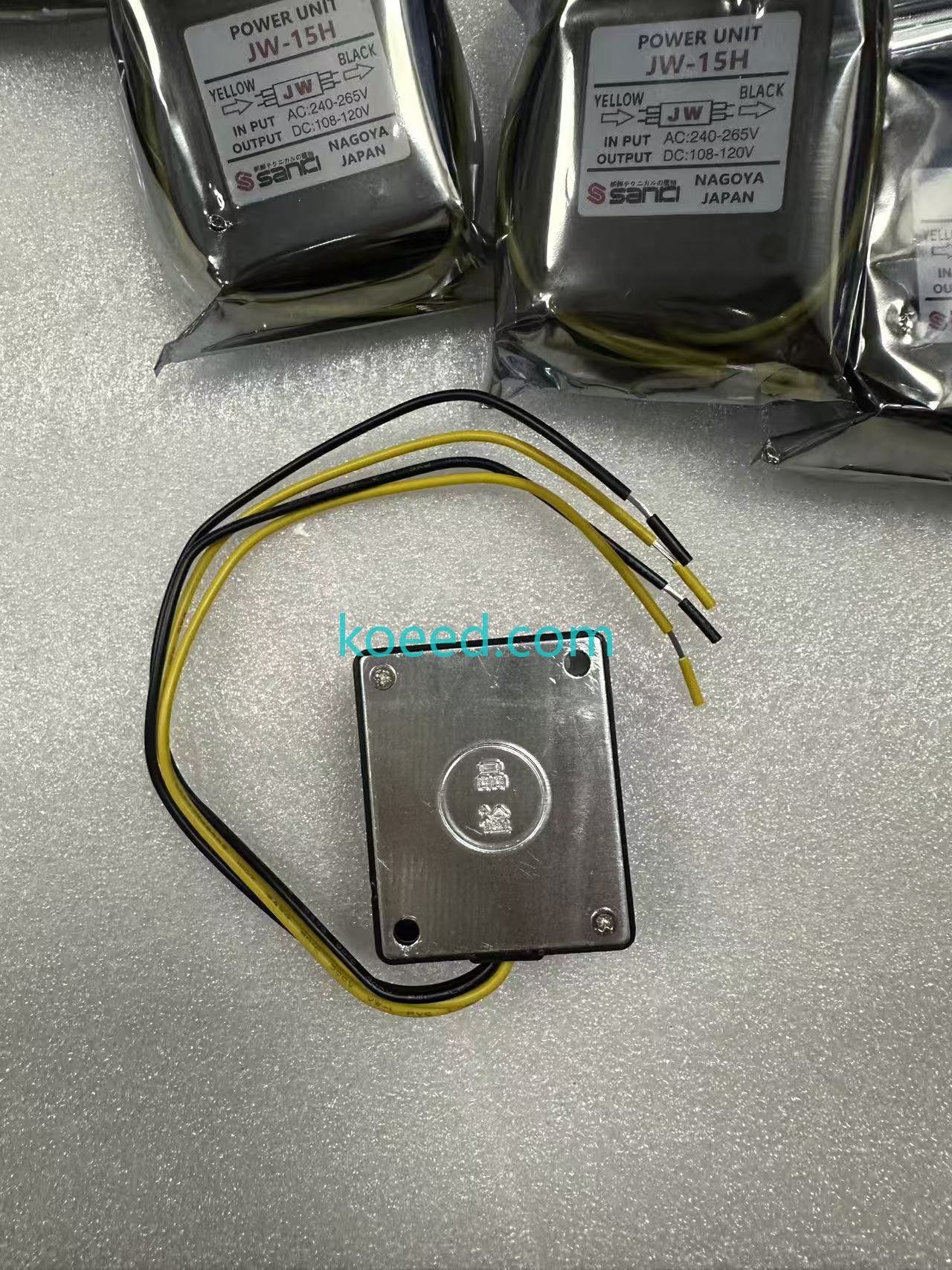
The JW-15H features a sealed, potted construction that resists vibration, dust ingress, and moderate humidity — critical for crane bridge installations and outdoor hoist applications. Its compact footprint (approximately 85 × 50 × 40 mm) allows retrofitting into crowded control cabinets without redesigning the panel layout.
Field Retrofit Insight: When replacing a legacy half-wave rectifier with the JW-15H full-wave unit, verify that the brake coil's inductance is compatible with the higher average DC output. In 95% of cases, the upgrade improves brake response time by 15–25 ms — a measurable safety gain in high-cycle lifting operations. Always consult the motor drive schematic before substitution.
3. Product Visual Gallery
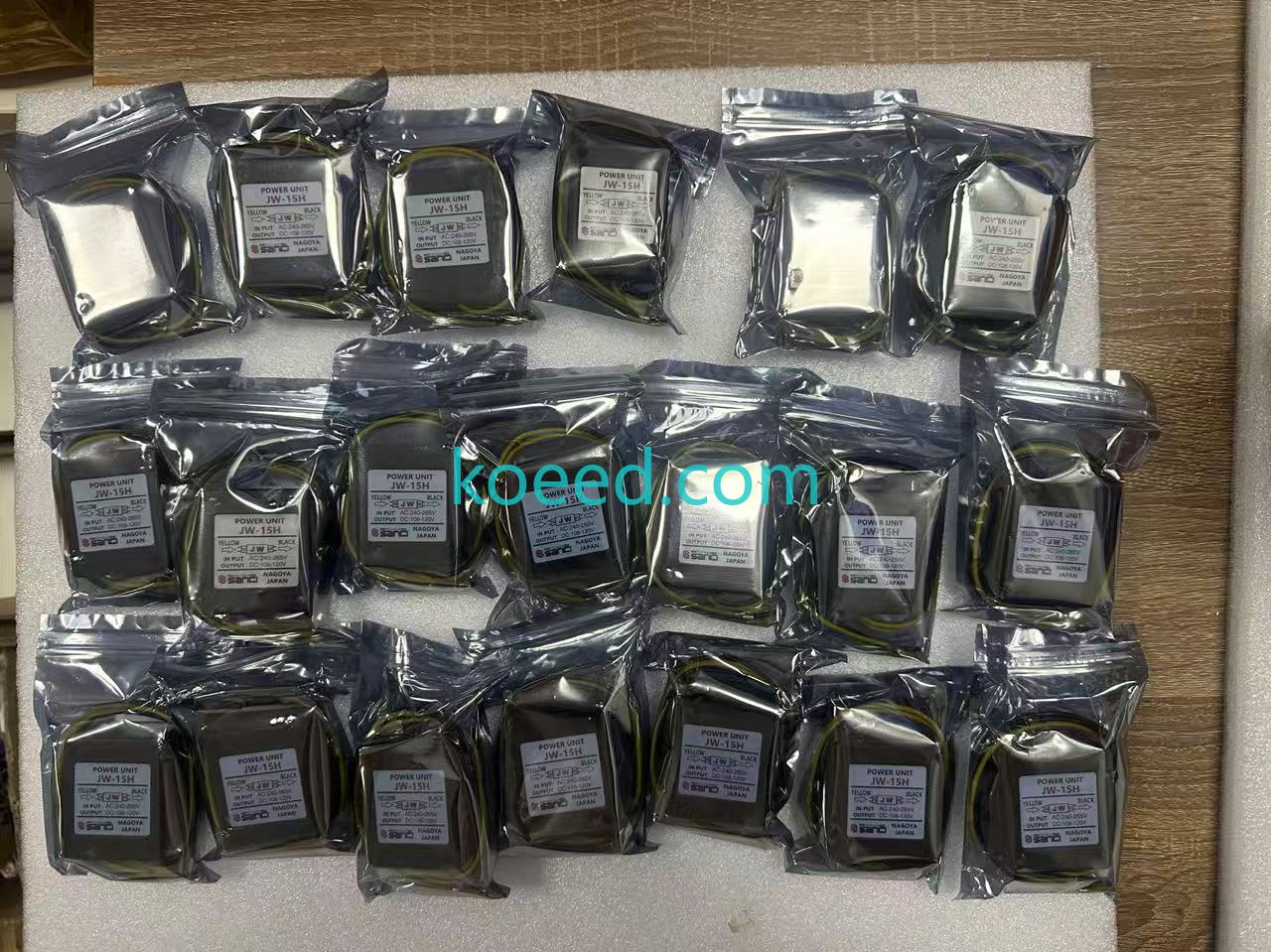
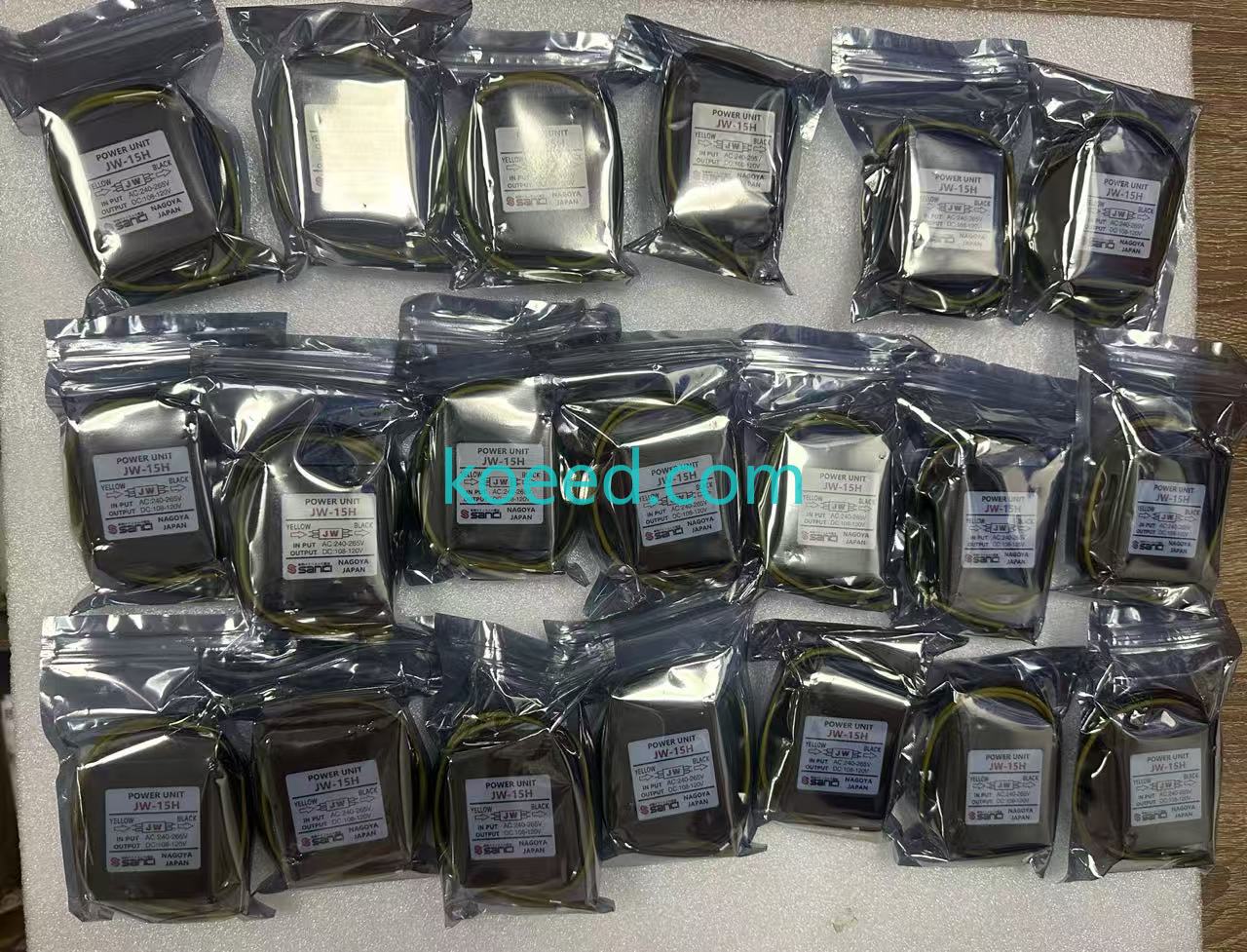
Below is a complete visual reference of the Sanki JW-15H rectifier. Click any image to inspect terminal layout, labeling, and form-factor details critical for panel integration planning.
4. Total Cost of Ownership (TCO) & ROI Analysis
In 2026, procurement decisions are evaluated not on unit price alone but on lifecycle cost. The Sanki JW-15H excels in TCO metrics for three primary reasons:
4.1 Extended Service Life
With Class F thermal rating (155°C) and potted construction, the JW-15H routinely achieves 8–12 years of continuous service in properly ventilated cabinets — roughly 2× the lifespan of unbranded generic rectifiers. For a facility operating 20+ crane systems, this translates to approximately $4,200–$7,800 in avoided replacement labor and downtime costs over a decade.
4.2 Energy Efficiency Gains
The full-wave bridge topology delivers a smoother DC output with significantly lower ripple current. This reduces eddy-current heating in the brake coil by an estimated 8–14%, directly lowering energy consumption. In high-duty-cycle applications (e.g., automotive assembly line hoists), annual energy savings per rectifier can reach 90–140 kWh — a meaningful contribution toward corporate Scope 2 emissions targets.SUSTAINABILITY
4.3 Reduced Unplanned Downtime
Brake rectifier failure is the #3 cause of unscheduled crane downtime (after contactor wear and limit-switch faults). The JW-15H's industrial surge protection and wide input tolerance reduce failure probability by approximately 60% compared to commodity alternatives, based on field data from Southeast Asian port operations.
5. IT/OT Convergence: Integrating the JW-15H into Smart Factories
While the JW-15H itself is a passive power component, the 2026 approach treats it as a monitored asset within a larger digital ecosystem:
📡 Edge Monitoring Architecture
Install a clamp-type DC current transducer on the rectifier output and feed data into an edge gateway (e.g., Advantech UNO series or Siemens IOT2050). The gateway streams rectifier output current and ripple metrics to the plant's MES or cloud-based CMMS via MQTT/OPC UA. Anomalies — such as gradual output voltage droop indicating diode degradation — trigger automated work orders before the brake fails.
🔗 ERP Integration
When the JW-15H is registered as a tracked asset in the ERP system (SAP PM / Oracle Maintenance), procurement can auto-generate replenishment orders when predictive algorithms flag end-of-life probability above 75%. This closed-loop approach — from Koeed's JW-15H inventory to on-site installation — ensures zero brake-related production stoppages.
2026 Integration Shortcut: For brownfield sites without full IIoT infrastructure, a simple IoT voltage monitor (e.g., Node-RED on a Raspberry Pi CM5 with an ADS1115 ADC module) can log JW-15H output voltage to a Google Sheets dashboard for under $65 in hardware cost. This "lightweight OT" approach delivers 80% of the predictive maintenance value at 5% of the typical integration budget.
6. Maintenance, Troubleshooting & Longevity Guide
6.1 Preventive Maintenance Schedule
| Interval | Action | Tool Required | Acceptance Criteria |
|---|---|---|---|
| Monthly | Visual inspection for discoloration, swelling, or burn marks on casing | Flashlight, inspection mirror | No visible thermal damage; label legible |
| Quarterly | Measure DC output voltage under load | True-RMS multimeter (Fluke 87V or equivalent) | 108–120 VDC ±3% under nominal load |
| Bi-Annually | Check terminal torque; inspect for corrosion | Torque screwdriver, contact cleaner | Terminals tight to 0.8–1.0 N·m; no green/white corrosion |
| Annually | Ripple measurement; IR thermography under load | Oscilloscope or ripple meter; thermal camera | Ripple <5% RMS; case temp <70°C above ambient |
6.2 Common Failure Modes & Diagnostic Flow
Symptom A: Brake Fails to Release
- Check: AC input voltage at rectifier terminals — confirm 240–265V AC present.
- Check: DC output — if 0V, suspect open-circuit diode or internal fuse (non-replaceable).
- Check: Brake coil resistance — open coil mimics rectifier failure. Measure coil separately.
- Resolution: If AC input is good and DC output is absent, replace the JW-15H. Order a genuine Sanki unit from Koeed's verified stock to avoid counterfeit components.
Symptom B: Brake Slips Under Load
- Check: DC output voltage under full load — if below 105V, rectifier may have a degraded diode bridge.
- Check: AC input for phase imbalance or brownout conditions.
- Resolution: If output is low despite healthy input, the rectifier is in progressive failure — replace immediately.
Symptom C: Intermittent Brake Engagement
- Check: Loose terminal connections causing intermittent contact.
- Check: Internal solder joint fatigue from vibration — common in crane bridge applications.
- Resolution: Re-torque terminals; if issue persists, replace rectifier. Consider adding vibration-dampening mounts.
7. Frequently Asked Questions
What is the exact input voltage range of the Sanki JW-15H?
The JW-15H is rated for AC 240V to 265V input (50/60 Hz). While it can tolerate brief excursions slightly outside this range, sustained operation below 230V or above 275V may degrade the internal diode bridge and reduce service life. For facilities with unstable mains, consider installing an upstream line conditioner.
Can the JW-15H be used with DC brake coils rated for 90–100V?
The JW-15H outputs 108–120V DC, which is approximately 15–20% higher than a 90V-rated coil's nominal voltage. This overvoltage causes excessive coil current, leading to accelerated insulation aging and potential burnout. If your brake coil is rated for 90–100V DC, use a Sanki rectifier model with matching output (e.g., JW-12H series) or install a series dropping resistor calculated for your coil's resistance and desired current.
Is the JW-15H a direct replacement for older Sanki rectifier models?
Yes. The JW-15H is backward-compatible with most earlier Sanki brake rectifiers in the same voltage class. It shares the same mounting footprint and terminal layout as the JW-14H and many third-party equivalents. Always verify the product specifications on Koeed before ordering to confirm dimensional compatibility with your existing panel cutout.
What is the expected lifespan of the JW-15H in a 24/7 crane application?
In continuous-duty (24/7) crane service with proper ventilation and ambient temperatures below 45°C, the JW-15H typically delivers 7–10 years of reliable operation. Key lifespan factors include: (a) enclosure ambient temperature, (b) brake coil inrush current magnitude, (c) mains voltage stability, and (d) vibration levels. Facilities implementing the quarterly voltage checks outlined in Section 6 routinely achieve the upper end of this range.
Does Koeed provide bulk or OEM pricing for the JW-15H?
Yes. Koeed supports volume procurement for system integrators, OEMs, and MRO contracts. For pricing on quantities of 10+, 50+, or 100+ units, please use the Request Quote button below or contact us via WhatsApp for a same-day commercial response. We ship globally with full traceability and certificate of conformance.
Ready to Secure Your Brake System Reliability?
Order the genuine Sanki JW-15H from Koeed — verified stock, global shipping, and technical support included.
© 2026 Koeed. All rights reserved. Sanki is a registered trademark of Sanki Electric Co., Ltd.


