

Reopenable & Rotatable Soft Tissue Clip (2026 Endoscopic Hemostasis Procurement Guide)
On this page
Reopenable & Rotatable Soft Tissue Clip (2026 Endoscopic Hemostasis Procurement Guide)
Reopenable & Rotatable Soft Tissue Clip (2026 Endoscopic Hemostasis Procurement Guide)
Detail
The 2026 therapeutic endoscopy market has moved decisively toward mechanical, procedure-ready closure. Analysts tracking endoscopic closure systems estimate that endoscopic clips and over-the-scope clips will represent roughly 63.2% of segment share in 2026, with gastrointestinal GI bleeding management holding about 28.5% of procedural revenue and hospitals accounting for around 58% of end use. Th
Two forces drive that number: procedural urgency and device capability. Manufacturers are now standardizing on rotatable and repositionable clip platforms that allow precise targeting, controlled tissue grasping and deliberate release. The Endoscope One-Time Rotation and Repeated Opening/Closing Soft Tissue Clip sits squarely in that category: a through-the-scope (TTS) device whose jaw orientation can be set with a dedicated rotation mechanism, whose jaws can be opened and closed repeatedly to confirm bite quality, and which is supplied sterile for single-patient use.
Repositionable devices reduce consumable waste. A clip that can be reopened before release prevents the most expensive event in the room: a misfired clip that must be abandoned, plus the extra device used to correct it.
Single-use accessories are the new default. Cross-contamination risk, reprocessing labour shortages and channel-damage costs have pushed adoption of single-use endoscopic accessories upward across every region.
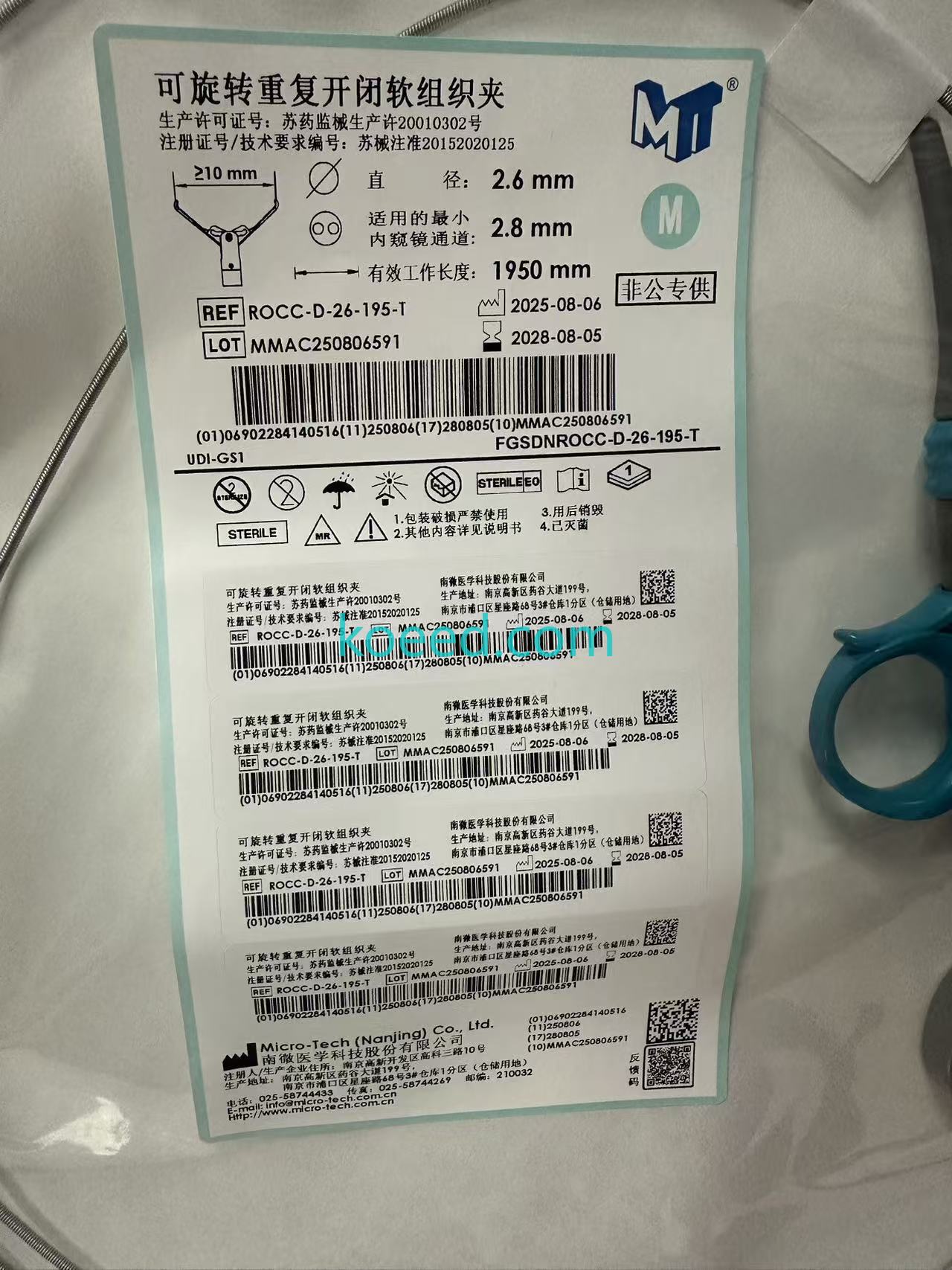
Documentation and traceability are now tender requirements. UDI-labelled pouches with lot-level traceability are increasingly mandated in hospital framework agreements, not optional extras.
Correct clip orientation is the single largest determinant of whether jaws bite healthy tissue perpendicular to the defect. The device uses a dedicated rotational control executed as a controlled single set: the operator rotates the delivery assembly to align jaw orientation with the target axis, rather than cycling the wire repeatedly and risking kinking or loss of grip. This gives predictable alignment at the gastric wall, antrum, or a sharply angulated colonic fold where axial alignment is difficult to achieve by scope manipulation alone.
The closing mechanism permits multiple open, close cycles before final release. In practice that enables the four-point confirmation sequence recommended in current clinical guidance:
Photos and video
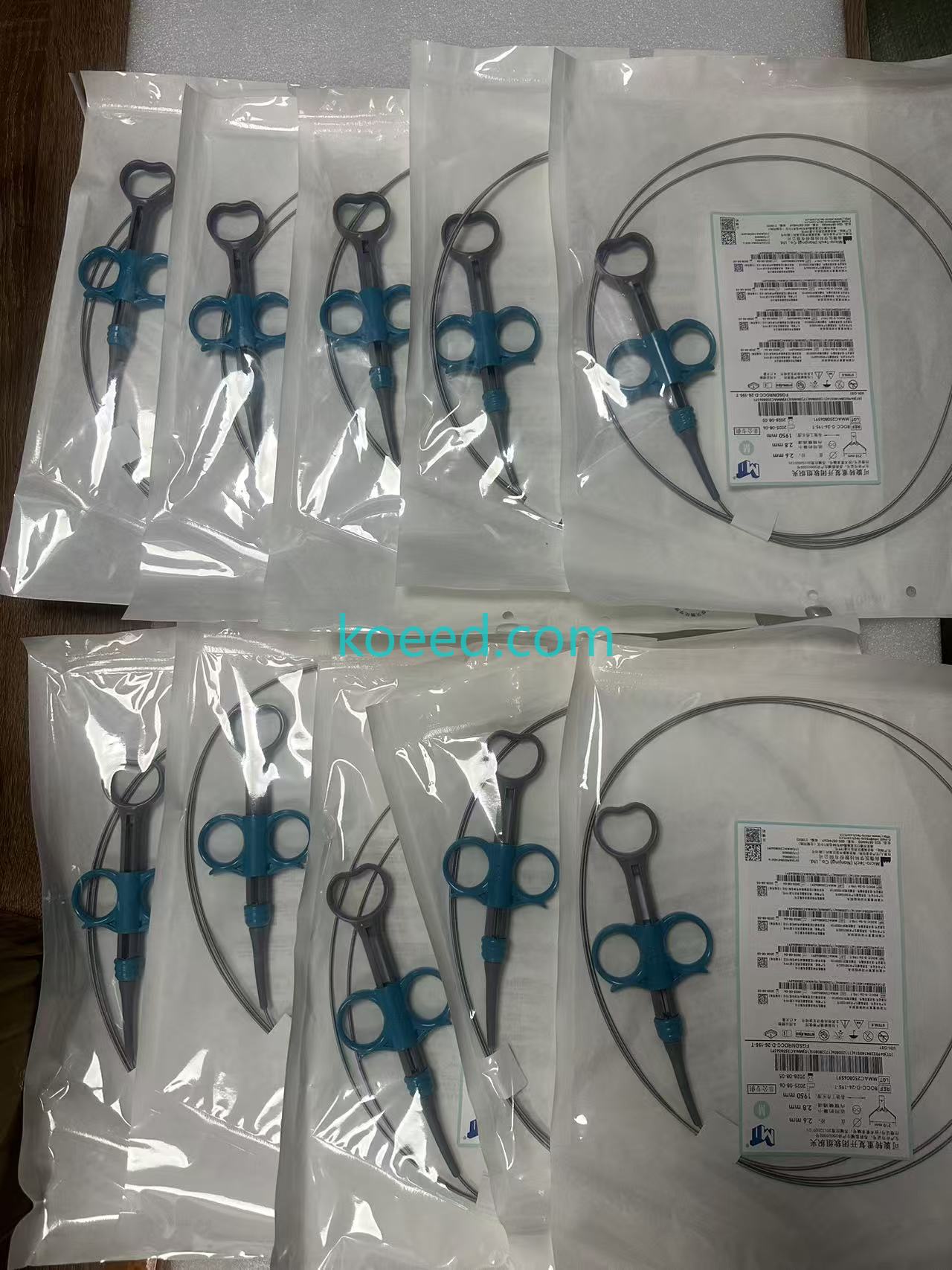
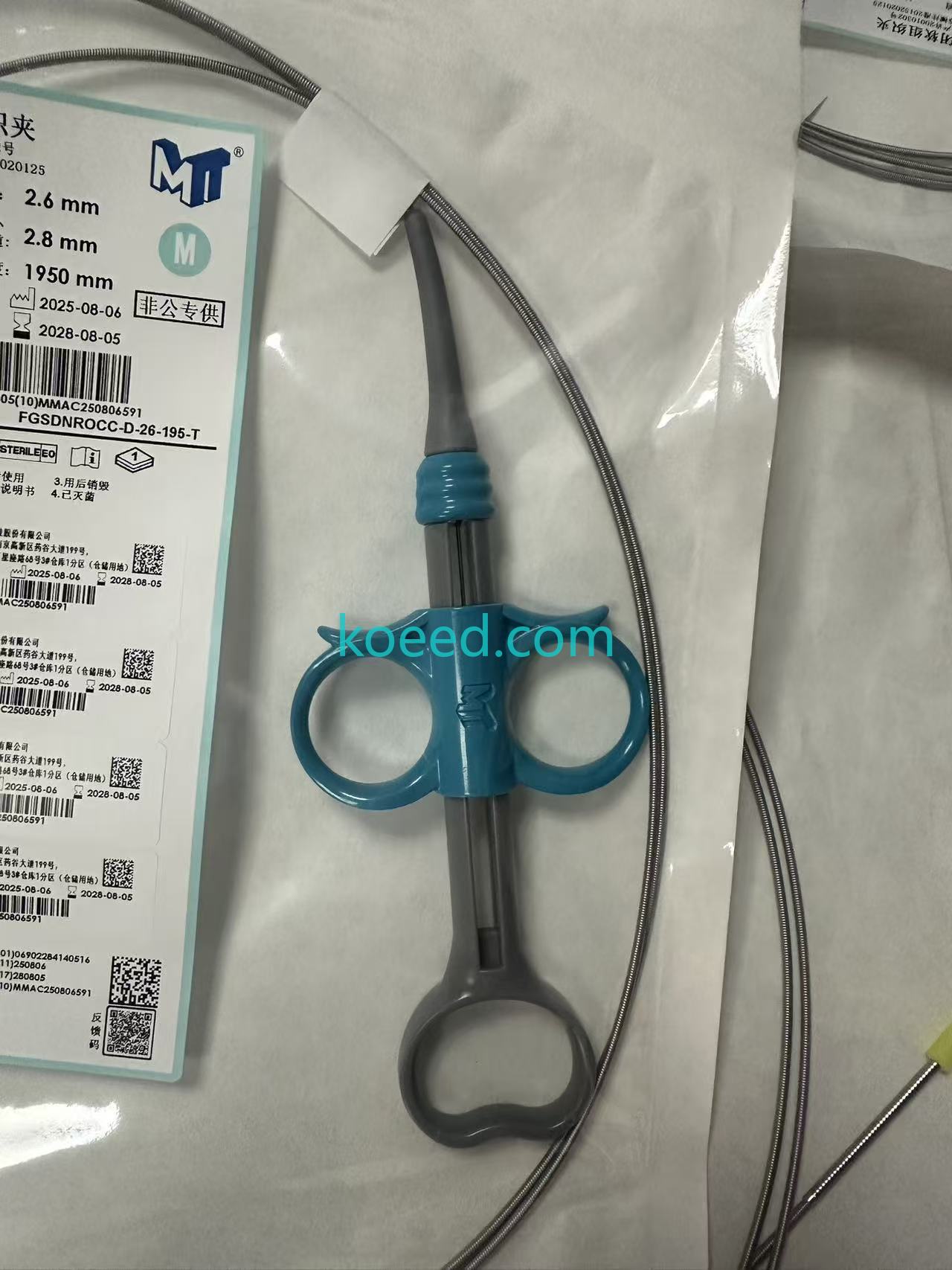
All images below are original warehouse photos of the exact units covered by this record, taken before dispatch. Click any photo to view it full size.




Sourcing help
Send the BOM for one quote covering active stock, EOL stock and cross-references.
Need a quote for this part?
Send us the part number or article link — we will confirm price, availability and lead time.


