

Cosel LEB100F-0524 Switching Power Supply: 2026 Industrial Automation Guide for Dual-Output 5V/24V Precision
1. Strategic Overview: Why the LEB100F-0524 Matters in 2026
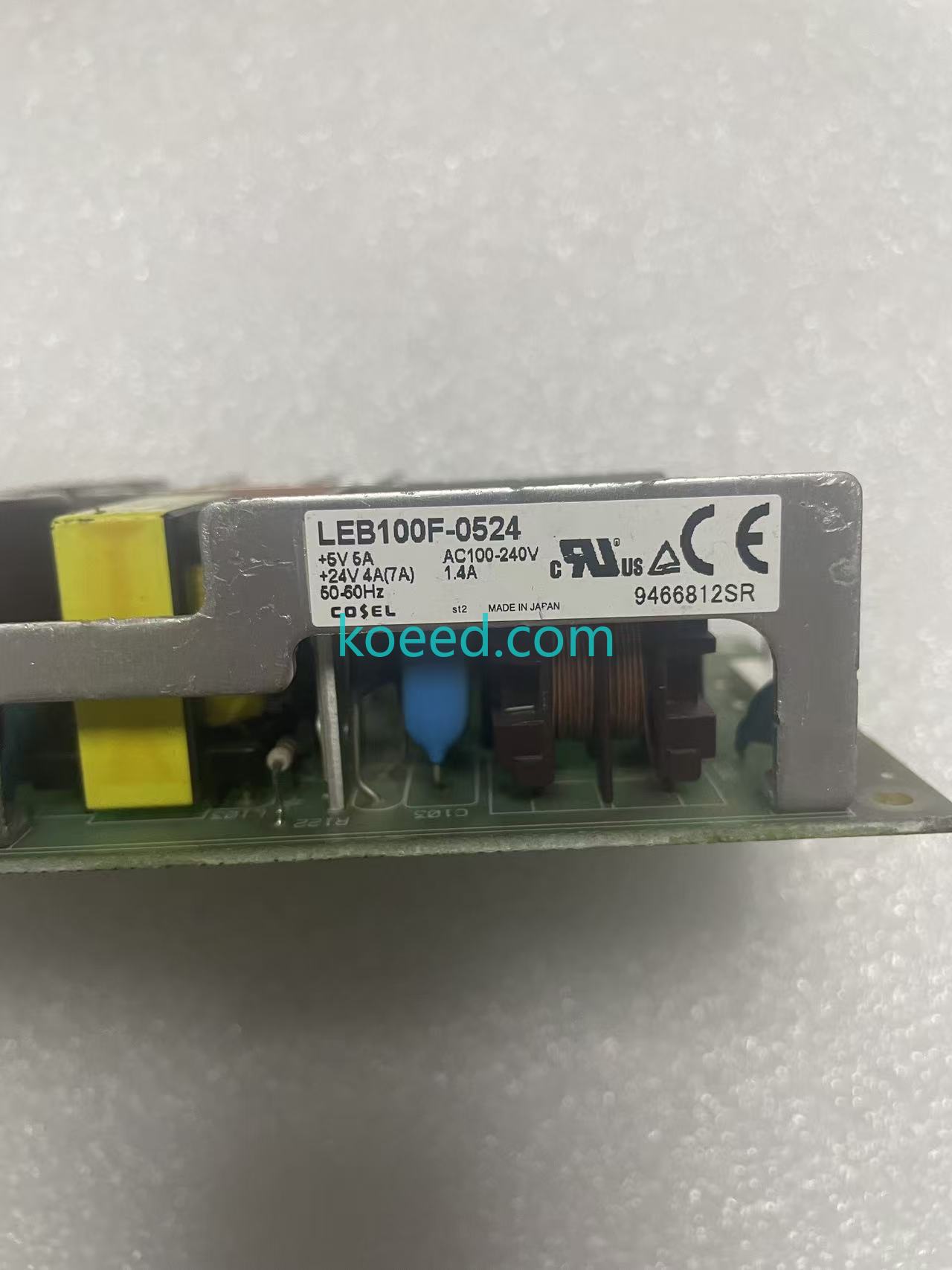
As global manufacturing accelerates toward fully converged IT/OT environments, the humble switching power supply has evolved from a commodity component into a mission-critical infrastructure element. The Cosel LEB100F-0524 — part of Cosel's renowned LEB series — exemplifies this transformation. With its dual-output architecture (5V/5A + 24V/4A, 7A peak) and a robust 100W total power envelope, this AC-DC converter is purpose-built for the exacting demands of Industry 4.0+ deployments where mixed-voltage logic and field devices coexist.
In 2026, three macro-trends define power supply selection criteria: edge-compute density (more controllers in tighter enclosures), energy transparency mandates (ISO 50001 compliance), and predictive maintenance readiness. The LEB100F-0524 addresses all three. Its wide-range 85–264 VAC input accommodates unstable grid conditions common in brownfield retrofits, while its compact form factor — a hallmark of the LEB series — maximizes panel real estate for additional I/O modules. For engineers evaluating the Cosel LEB100F-0524 switching power supply board, the value proposition extends well beyond the datasheet: this is a unit designed for decade-scale operational longevity.
2. Technical Benchmarking: LEB100F-0524 Specifications at a Glance
Understanding the LEB100F-0524's place in the Cosel portfolio — and against legacy alternatives — requires a structured comparison. The table below benchmarks the unit against the broader LEB series context and highlights what makes the 0524 variant uniquely suited for mixed-voltage automation panels.
| Parameter | LEB100F-0524 | Legacy Single-Output PSU | Significance (2026 Context) |
|---|---|---|---|
| Input Voltage Range | 85–264 VAC / 120–370 VDC | Typically 100–240 VAC | Survives brownouts & DC bus integration |
| Output Configuration | Dual: +5V (5A) / +24V (4A, 7A pk) | Single rail only | Powers logic + field devices from one unit |
| Total Rated Power | 100W | Varies (typically 50–75W) | Higher density; fewer PSUs per panel |
| Peak Current (24V Rail) | 7A (inrush capable) | Limited or unspecified | Handles motor starts & solenoid surges |
| Efficiency (Typical) | ≥82% (LEB series benchmark) | Often 75–78% (legacy linear) | Lower TCO, reduced cooling load |
| Form Factor | Compact open-frame / enclosed | Bulky DIN-rail or chassis | Frees panel space for IIoT modules |
| Protection Suite | OVP, OCP, thermal shutdown | Often basic or external only | Self-preserving; fewer field failures |
| MTBF (Calculated) | Industry-leading (Cosel design) | Varies widely | Predictive maintenance scheduling feasible |
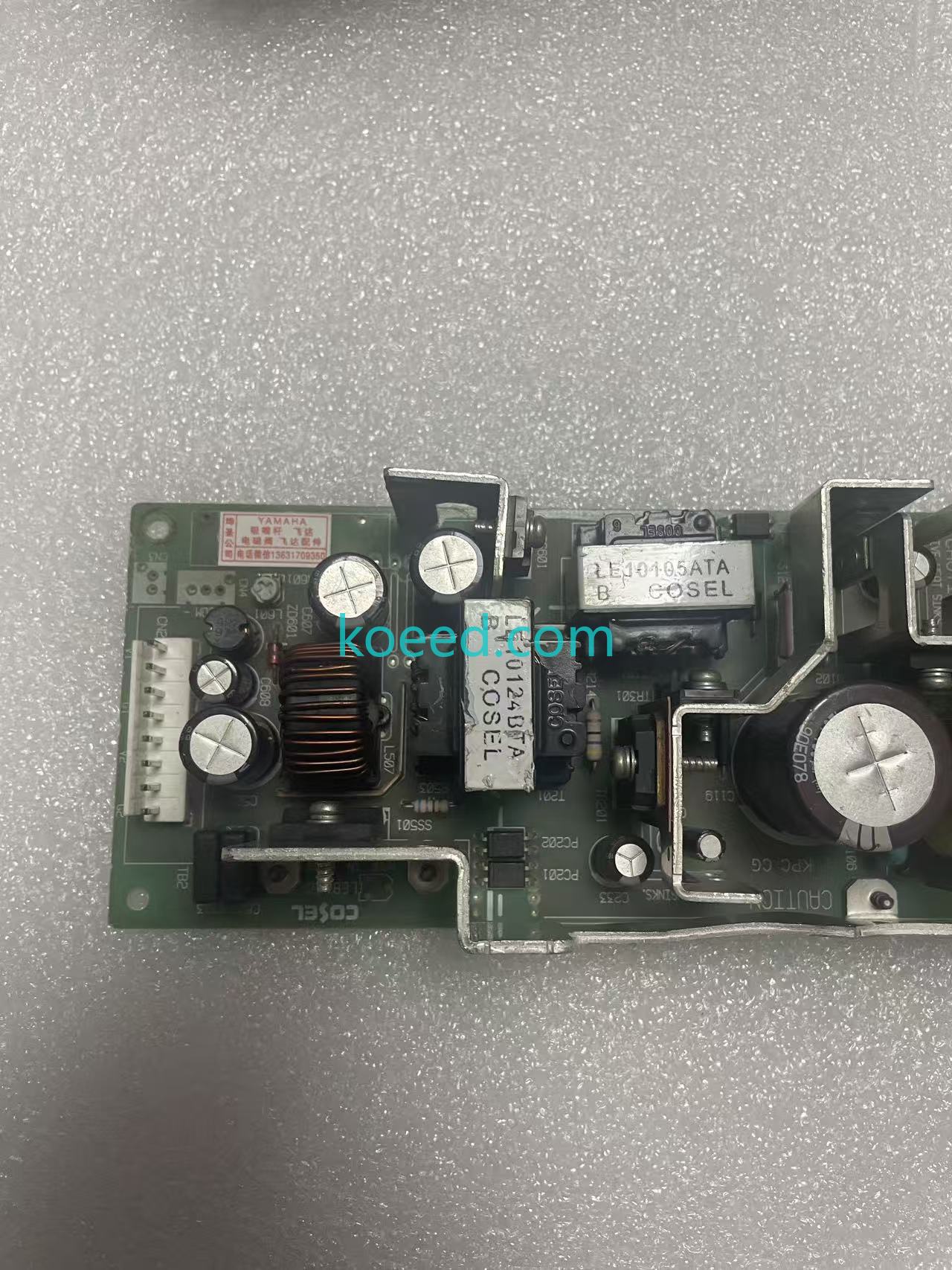
3. Visual Inspection Gallery: Cosel LEB100F-0524
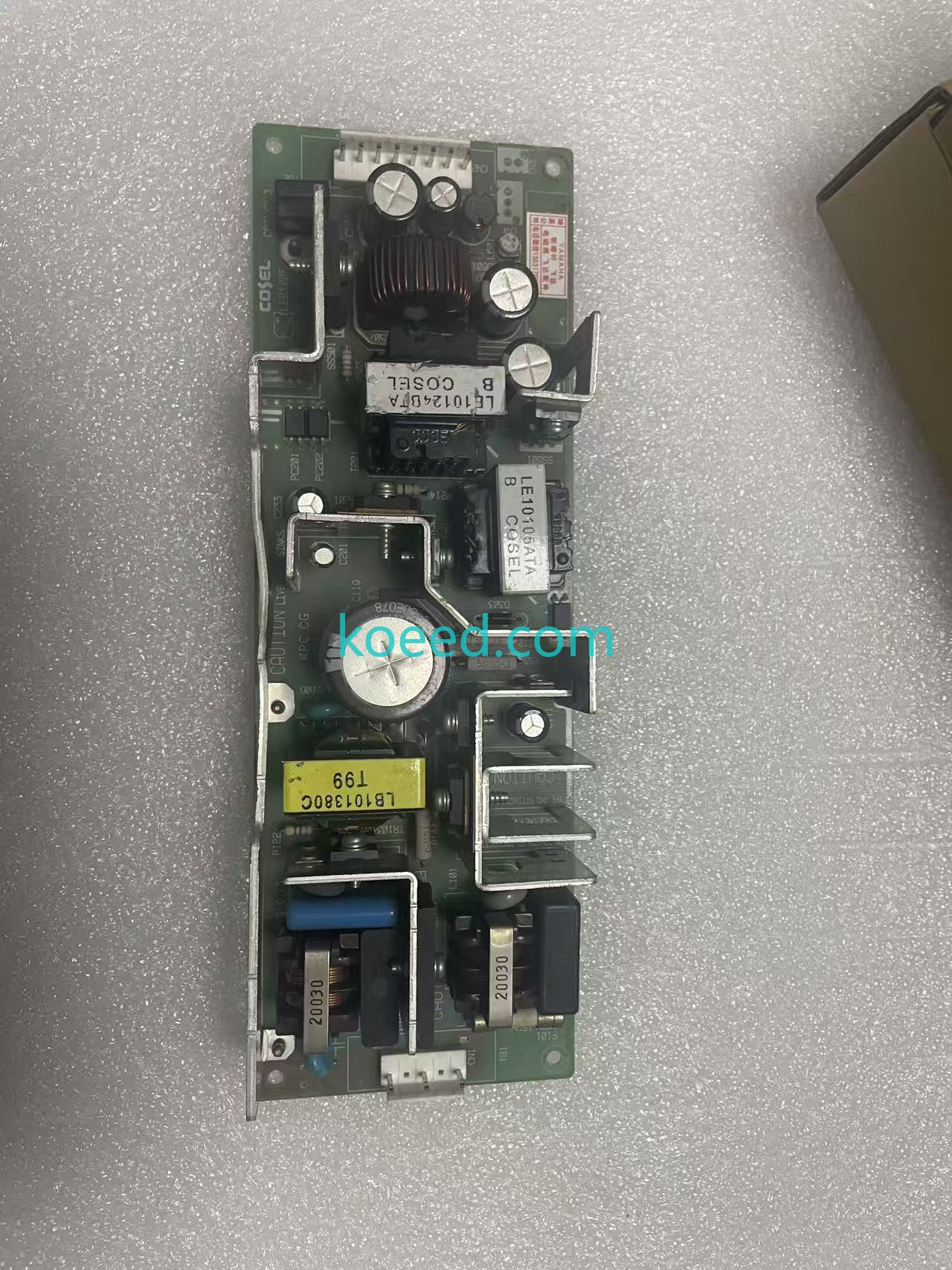
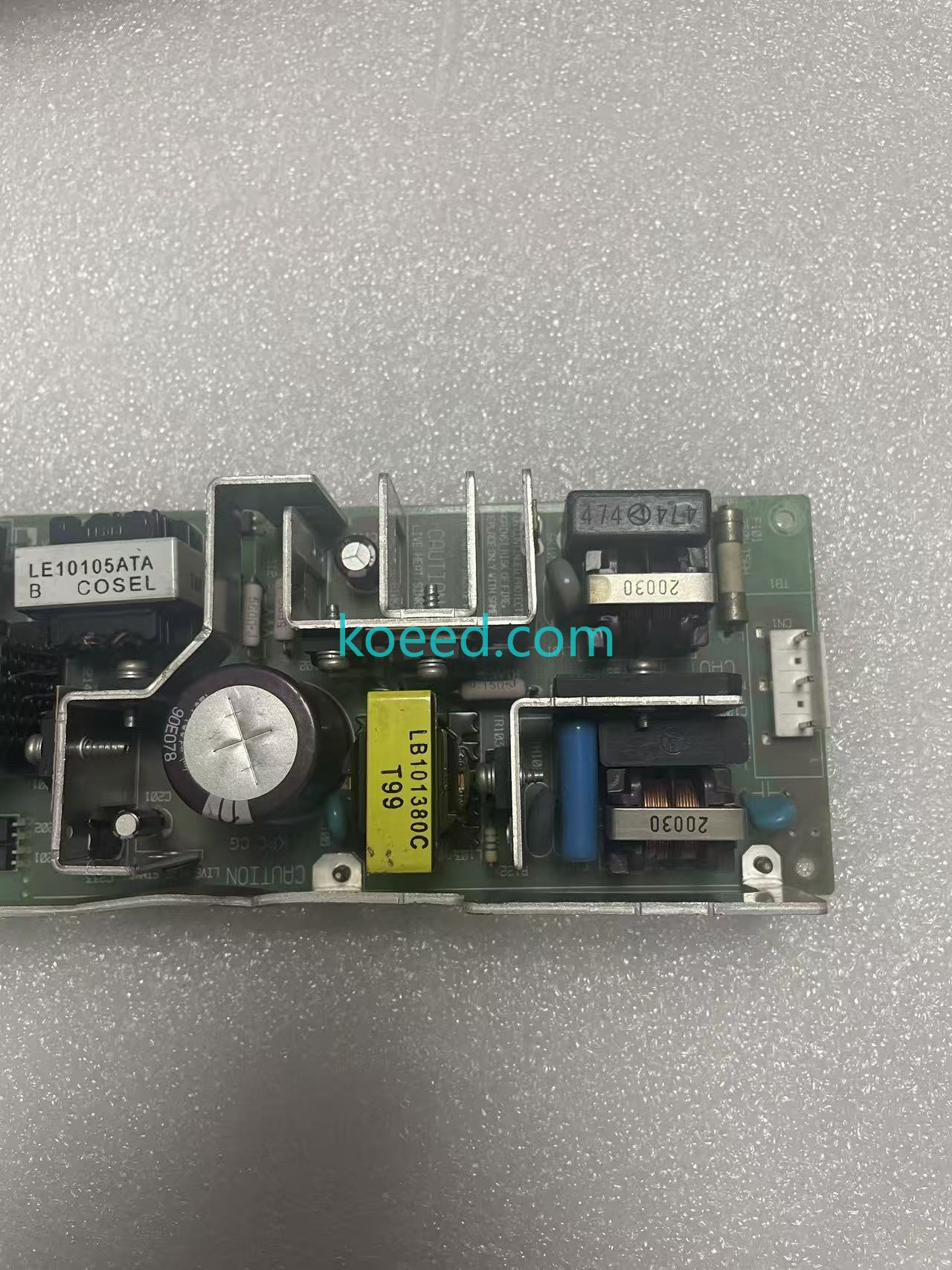
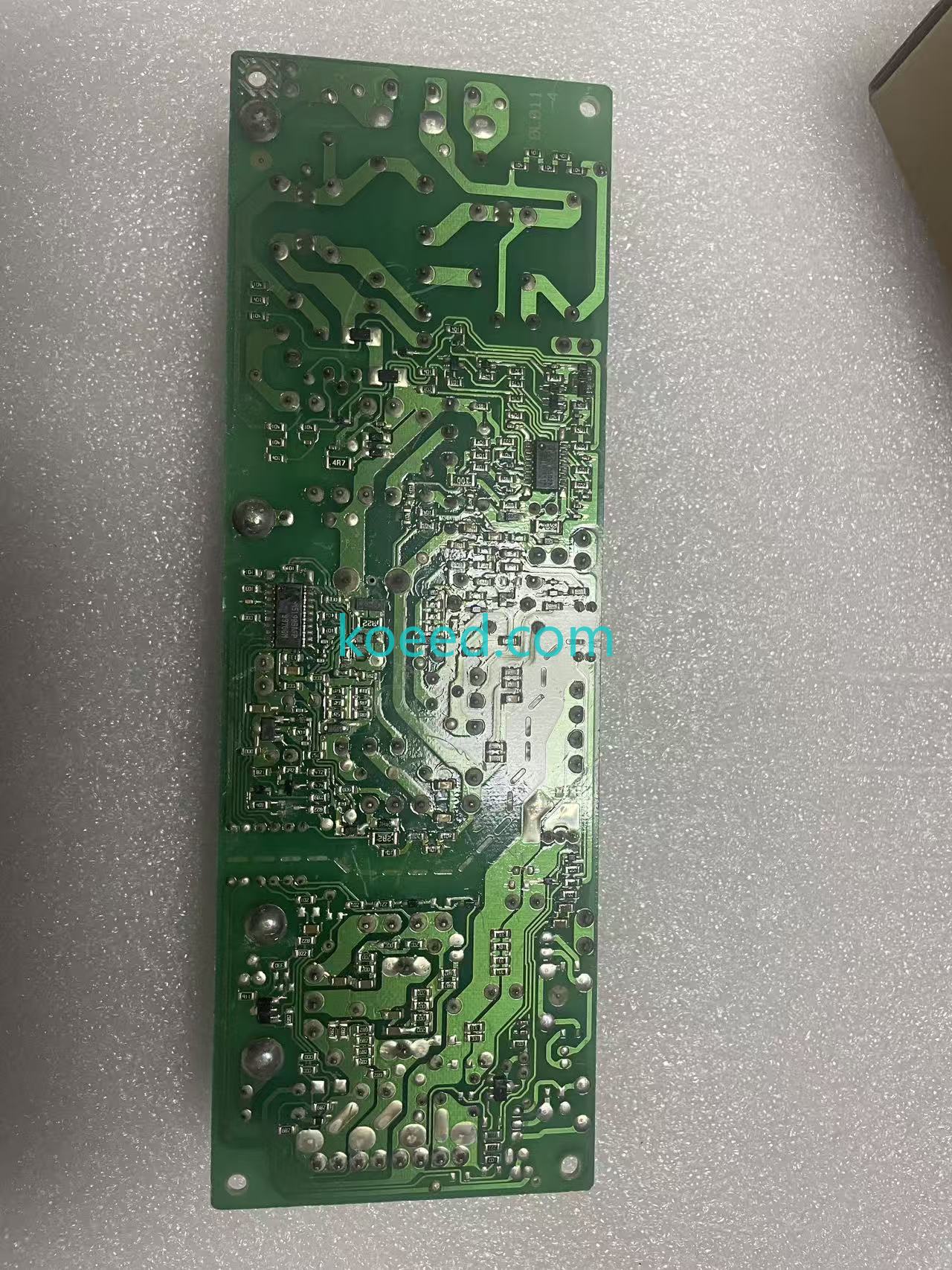
Below is a comprehensive visual reference of the Cosel LEB100F-0524 switching power supply board. Use these images for pre-installation inspection, dimensional verification, and PCB quality assessment before integration into your automation panel.
Product Video: LEB100F-0524 Operational Walkthrough
4. IT/OT Convergence: Integrating the LEB100F-0524 into Smart Factory Architectures
By 2026, the demarcation between operational technology (OT) and information technology (IT) has all but dissolved. Power supplies are no longer passive devices — they are data-generating assets within a converged architecture. While the LEB100F-0524 itself is an analog power stage, its deployment strategy within a smart panel determines the quality of data flowing to your MES, SCADA, or cloud ERP layer.
4.1 Clean Power = Clean Data
Industrial IoT sensors transmitting vibration, temperature, and current signatures to Azure IoT Hub or AWS IoT Greengrass require stable, low-ripple DC power. The LEB100F-0524's dual-output design ensures that 5V logic circuits (edge gateways, Raspberry Pi-based HMIs, Arduino Industrino controllers) and 24V field devices (4–20mA loop-powered sensors, IO-Link masters) receive dedicated, noise-isolated rails. This directly improves data fidelity — fewer ADC quantization errors, fewer spurious alerts flooding your predictive maintenance dashboard.
4.2 ERP-Connected Inventory & Lifecycle Management
Forward-thinking maintenance teams now register each Cosel LEB100F-0524 unit in their digital asset registry (SAP PM, IBM Maximo, or open-source Snipe-IT). By logging the installation date, panel location, and expected MTBF, organizations can trigger automated replenishment workflows 60–90 days before predicted end-of-life — eliminating unplanned downtime without overstocking spares.
5. Predictive Maintenance & Troubleshooting: Maximizing LEB100F-0524 Service Life
Even the most robust switching power supply benefits from a structured maintenance philosophy. In 2026, the paradigm has shifted from reactive replacement to condition-based servicing. Below are field-tested strategies for the LEB100F-0524.
5.1 Predictive Health Indicators
While the LEB100F-0524 does not natively output digital telemetry, smart maintenance teams monitor the following proxy signals via adjacent current transducers and thermal cameras:
- Input Current Drift: A gradual increase in AC input current at constant load suggests capacitor degradation in the primary-side rectification stage. Schedule replacement when drift exceeds 12% of baseline.
- Output Ripple Spectroscopy: Using a portable oscilloscope, measure peak-to-peak ripple on the 5V and 24V rails quarterly. Values exceeding 150mV (5V rail) or 240mV (24V rail) indicate electrolytic capacitor aging.
- Thermal Imaging: Under full load, the hottest component (typically the main switching transistor or output Schottky diode) should not exceed 85°C ambient-corrected. A 10°C rise over a 6-month period warrants investigation.
- Audible Signature: Coil whine or intermittent clicking often precedes transformer core saturation or feedback loop instability — early warning signs of imminent failure.
5.2 Common Fault Resolution Matrix
| Symptom | Probable Cause | Recommended Action |
|---|---|---|
| No output on both rails | Blown input fuse / Open thermistor | Check AC input; verify inrush limiter integrity; replace fuse with exact same rating |
| 5V rail OK, 24V rail dead | Shorted 24V load or open output diode | Disconnect load; test with dummy resistor; if still dead, inspect secondary rectifier |
| Intermittent shutdown under load | Thermal protection cycling | Verify convection clearance ≥25mm around unit; check for dust-clogged vents; add forced-air cooling if ambient >50°C |
| Output voltage sagging | Aging output capacitors / overload | Measure load current; if within spec, replace secondary electrolytics with low-ESR 105°C-rated equivalents |
| Audible high-frequency whine | Sub-harmonic oscillation / unstable feedback | Check for ground loop between 5V and 24V commons; ensure loads are not back-feeding |
6. ROI Analysis & Sustainability: The 2026 Business Case
6.1 Total Cost of Ownership (TCO) Over 10 Years
When procurement teams evaluate the Cosel LEB100F-0524 purely on unit price, they miss the bigger picture. A proper TCO model — standard practice in 2026 capital equipment justification — reveals the following:
| TCO Factor | LEB100F-0524 | Budget Alternative | 10-Year Delta |
|---|---|---|---|
| Unit Acquisition Cost | Moderate (Cosel quality tier) | Low | +$35–$60 upfront |
| Expected Service Life | 10–15 years (with proper thermal management) | 3–5 years | 2–3x longer |
| Replacement Labor (per event) | 0–1 replacements in 10 years | 2–3 replacements | ~$400–$900 saved (labor + downtime) |
| Energy Efficiency | ≥82% typical | 75–78% | ~$85–$140 saved over 10 years (at $0.12/kWh) |
| Unplanned Downtime Cost | Minimal (predictable failure curve) | Higher (infant mortality risk) | $2,000–$15,000+ per incident (industry-dependent) |
| Estimated 10-Year TCO Advantage | LEB100F-0524 saves $500–$3,500+ per unit vs. budget alternatives | ||
6.2 Sustainability & ESG Compliance
In 2026, corporate ESG (Environmental, Social, and Governance) reporting directly impacts access to capital and government contracts. The LEB100F-0524 contributes to sustainability metrics in measurable ways:
- Extended Lifespan = Reduced E-Waste: A 10–15 year service life means fewer units landfilled compared to budget alternatives replaced every 3–5 years. This directly supports Scope 3 downstream waste reduction targets.
- Higher Efficiency = Lower Carbon Footprint: At ≥82% efficiency, the LEB100F-0524 wastes ~18W as heat at full load versus ~25W for a 75%-efficient unit. Over a 10-year continuous operation, that 7W delta translates to approximately 613 kWh saved — roughly 430 kg CO₂ equivalent (grid-dependent).
- RoHS & REACH Compliance: Cosel's LEB series adheres to international hazardous substance regulations, simplifying your compliance documentation for ISO 14001 audits.
7. Frequently Asked Questions
Q1: What is the difference between LEB100F-0524, LEB100F-0524-SN, and LEB100F-0524-Y variants?
The LEB100F-0524 is the standard model with screw terminal connections. The -SN suffix typically indicates a chassis/ enclosure variant with a different mounting configuration. The -Y suffix often denotes a specific compliance certification or connector type. Always verify the exact variant on the Koeed product page.
Q2: Can the LEB100F-0524 be used in a 48V DC input system?
No. The input voltage range is 85–264 VAC or 120–370 VDC. For 48 VDC nominal systems, a DC-DC converter or a different AC-DC model with a suitable DC input range is required.
Q3: What is the recommended mounting orientation for optimal cooling?
Mount the unit with the ventilation slots vertical to promote natural convection. Maintain at least 25 mm clearance on all sides. If multiple units are stacked, ensure adequate spacing to prevent thermal recirculation.
Q4: How do I identify a counterfeit LEB100F-0524?
Genuine Cosel units have laser-etched serial numbers, consistent component quality (Japanese capacitors, specified magnetics), and a holographic label. Purchase only from authorized distributors. The product page provides traceability verification.
Ready to Deploy the LEB100F-0524 in Your 2026 Automation Panel?
Contact our engineering team for bulk pricing, compatibility assessments, or next-day delivery options.


