

Delta AUB0812VH 80mm PWM Cooling Fan: 2026 Industrial Automation Guide for IT/OT Convergence & Predictive Thermal Management | Koeed
In 2026's hyper-converged industrial automation ecosystem, thermal management is no longer a passive afterthought — it's a critical node in the IT/OT convergence stack. The Delta AUB0812VH 80mm PWM cooling fan exemplifies how a seemingly simple component — when properly specified and monitored — delivers outsized ROI through energy-aware operation, predictive failure analytics, and extended Mean Time Between Failures (MTBF) in PLC cabinets, VFD enclosures, and edge-computing nodes.
1. Strategic Overview: The AUB0812VH in the 2026 Industrial Landscape
By 2026, the global push toward Industry 4.0+ and smart factory frameworks has elevated even passive thermal components to active participants in the digital thread. The Delta AUB0812VH — part of Delta Electronics' renowned axial fan portfolio — sits at this exact intersection. With its 4-pin PWM interface, integrated tachometer speed sensor, and SuperFlo bearing technology, this 80×80×25mm fan delivers not just airflow but actionable telemetry that feeds directly into modern condition-monitoring dashboards.
The 8025 form factor (80mm × 25mm) remains the de facto standard for enclosure ventilation in 2026, powering everything from CNC controller cabinets to edge AI inference servers deployed at the production line. Delta's decision to equip the AUB0812VH with a 4-wire PWM architecture — rather than legacy 2-wire or 3-wire DC designs — makes it inherently compatible with the closed-loop thermal orchestration demanded by modern PLC and SCADA environments.
2026 IT/OT Convergence Insight: When deploying the AUB0812VH in a connected enclosure, map its tachometer signal (pin 3) to an analog input module on your PLC or IoT gateway. This enables real-time RPM trending — a leading indicator of bearing wear — and allows your MES/ERP layer to trigger a work order before airflow degradation impacts process uptime. This single integration point transforms a $12–$18 fan into a predictive maintenance sensor.
2. Technical Benchmarking: AUB0812VH Specifications at a Glance
Understanding the electrical and mechanical characteristics of the Delta AUB0812VH is essential for proper enclosure thermal design. The table below benchmarks this model against typical legacy 3-wire fans still found in many brownfield installations, highlighting why the upgrade path delivers measurable operational dividends.
| Specification | Delta AUB0812VH (4-Pin PWM) | Legacy 3-Wire DC Fan (Typical) | Advantage |
|---|---|---|---|
| Form Factor | 80 × 80 × 25 mm | 80 × 80 × 25 mm | Drop-in compatible |
| Operating Voltage | DC 10.8V – 13.2V | DC 10.2V – 13.8V | Tighter tolerance = cleaner power |
| Rated Current | 0.19 A (Max 0.41 A) | 0.15–0.35 A (fixed speed) | Lower average draw via PWM |
| Input Power | 2.28 W (Max 4.92 W) | 3.6–4.2 W (continuous) | ~37% energy saving at partial load |
| Speed Control | PWM — 0–100% duty cycle | None / fixed voltage | Dynamic thermal response |
| Max Speed | 3,600 RPM | 2,000–3,000 RPM | Higher peak airflow capacity |
| Air Flow | 42.02 CFM | 28–35 CFM | 20–50% higher volumetric flow |
| Bearing Type | SuperFlo (hydro-dynamic) | Sleeve / single ball | 60,000+ hr L10 lifespan |
| Speed Feedback | Tachometer (pin 3) | Tachometer (pin 3) | Parity — but PWM adds control |
| Connector | 4-pin (GND, 12V, TACH, PWM) | 3-pin (GND, 12V, TACH) | Pin 4 enables IT/OT integration |
| MTBF (40°C) | 70,000 hours (SuperFlo) | 30,000–50,000 hours | 2× operational longevity |
| Noise Level | ~38 dB(A) at full speed | ~32–40 dB(A) | PWM allows silent idle operation |
Key Takeaway for 2026 Procurement: The AUB0812VH's PWM capability means that in a typical 24/7 industrial enclosure where full-speed operation is only required ~30% of the time, annual energy consumption drops by approximately 14–18 kWh per fan. Across a facility with 200+ such fans, this translates into tangible Scope 2 emissions reductions — directly supporting corporate ESG reporting mandates that are now standard in 2026.
3. Visual Gallery: Delta AUB0812VH — Detailed Inspection
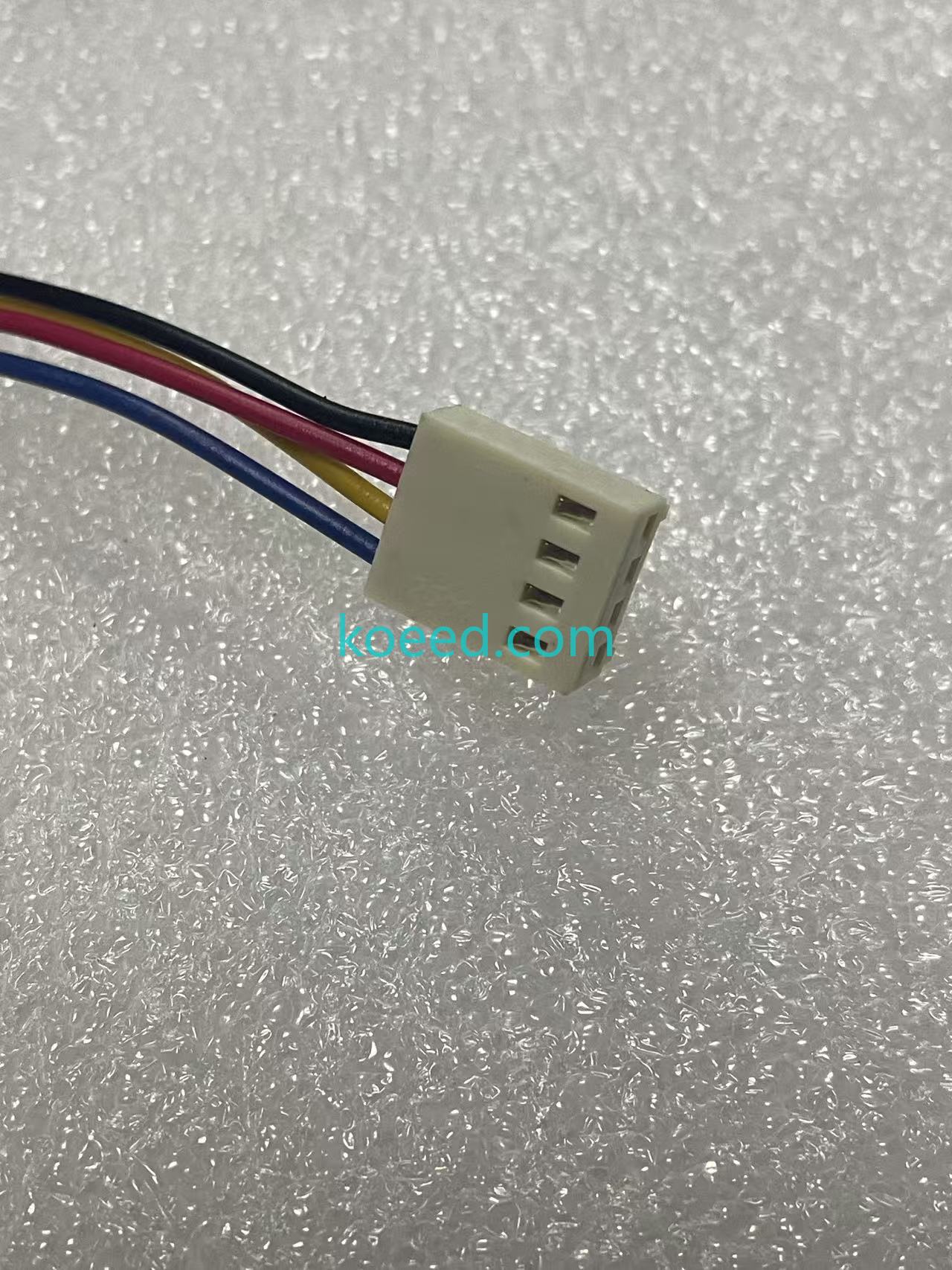
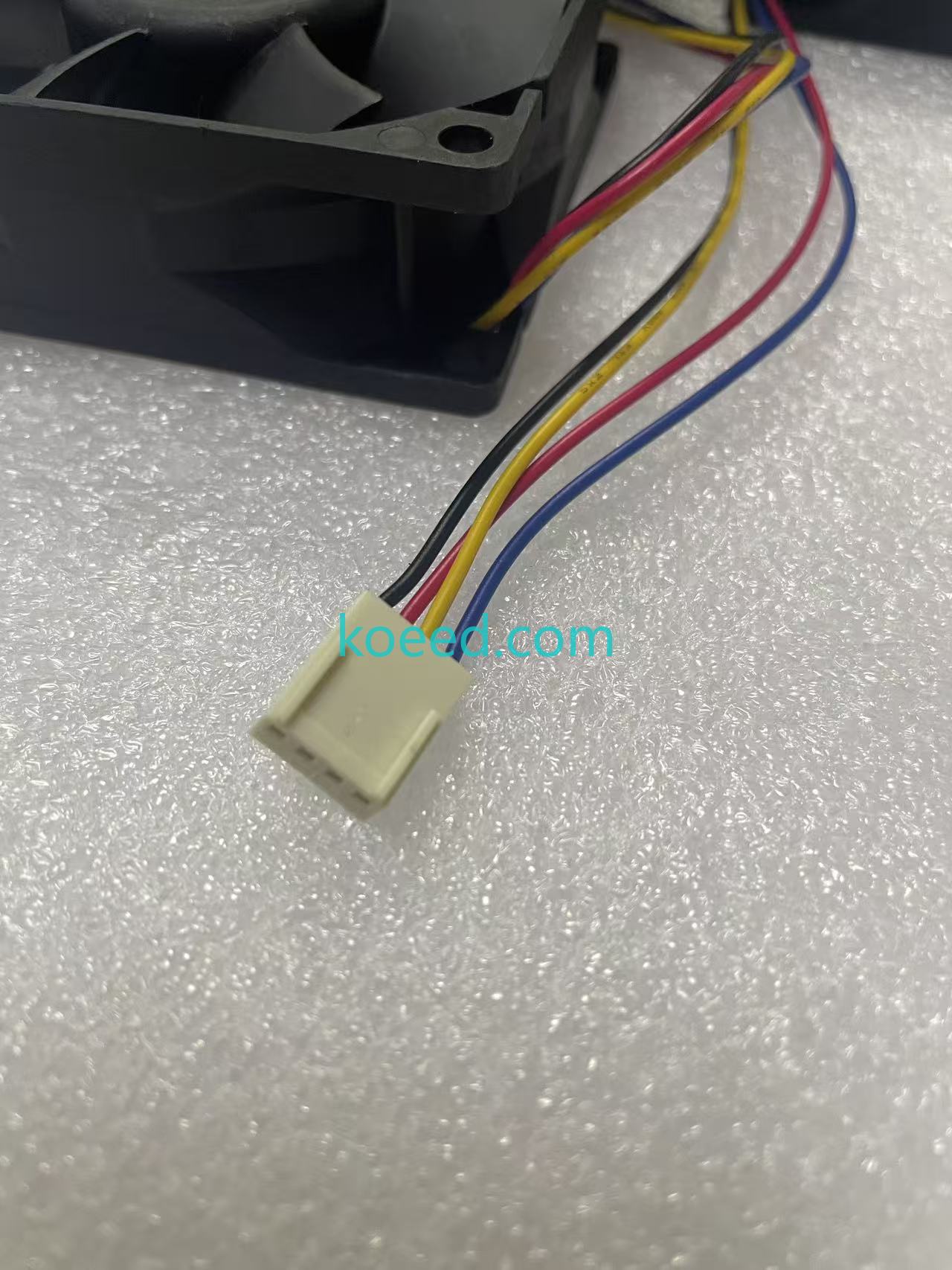
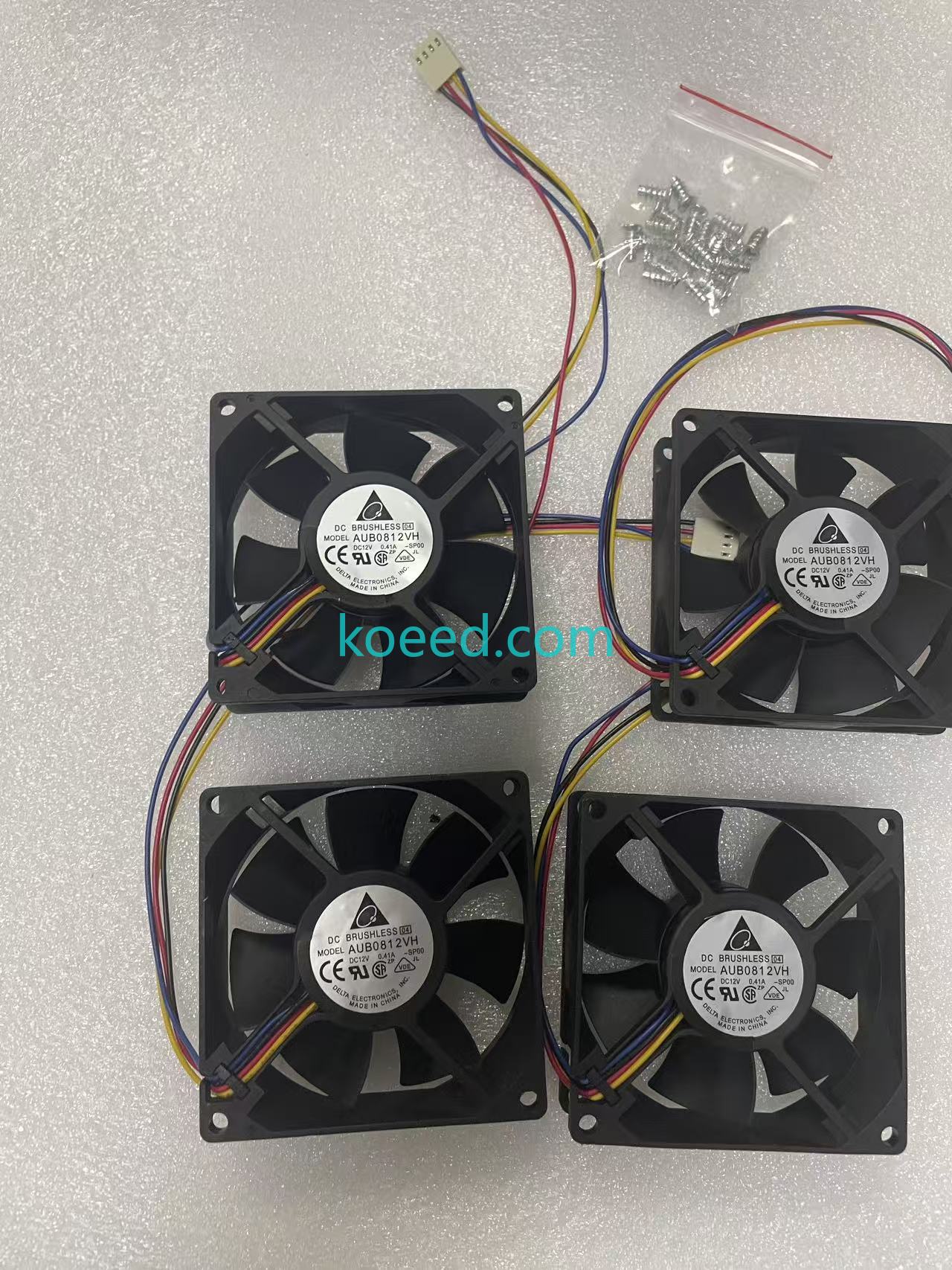
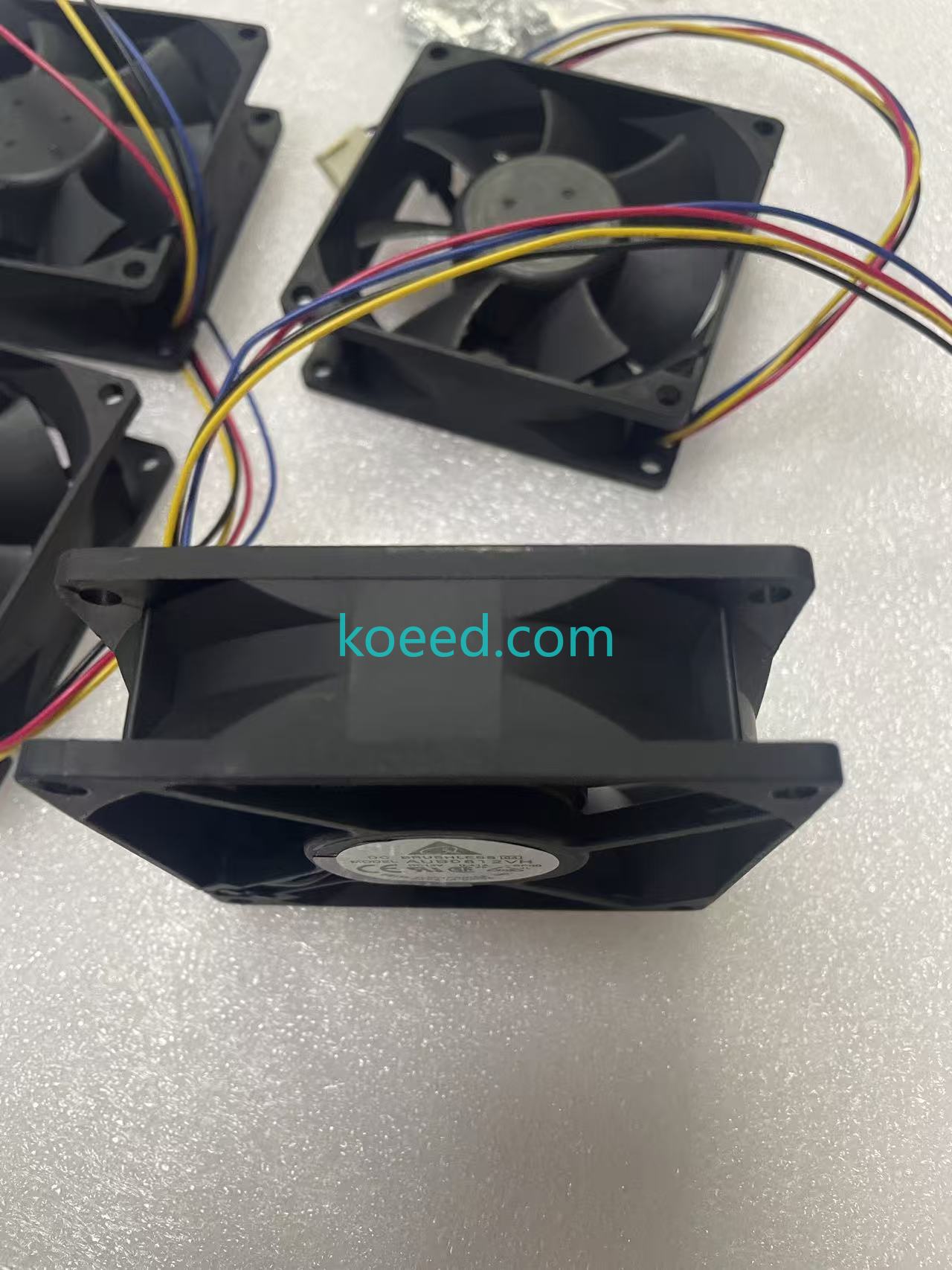
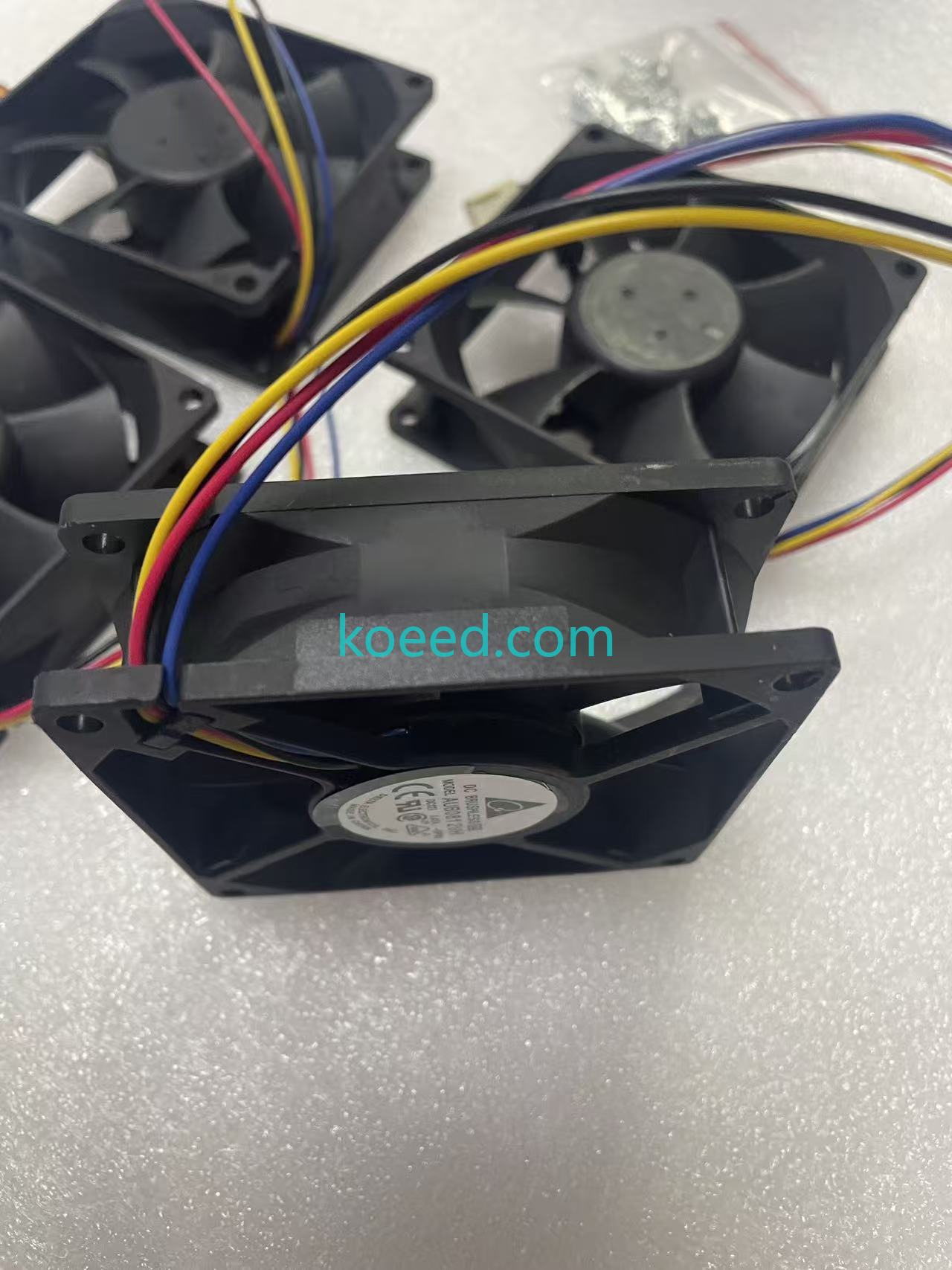
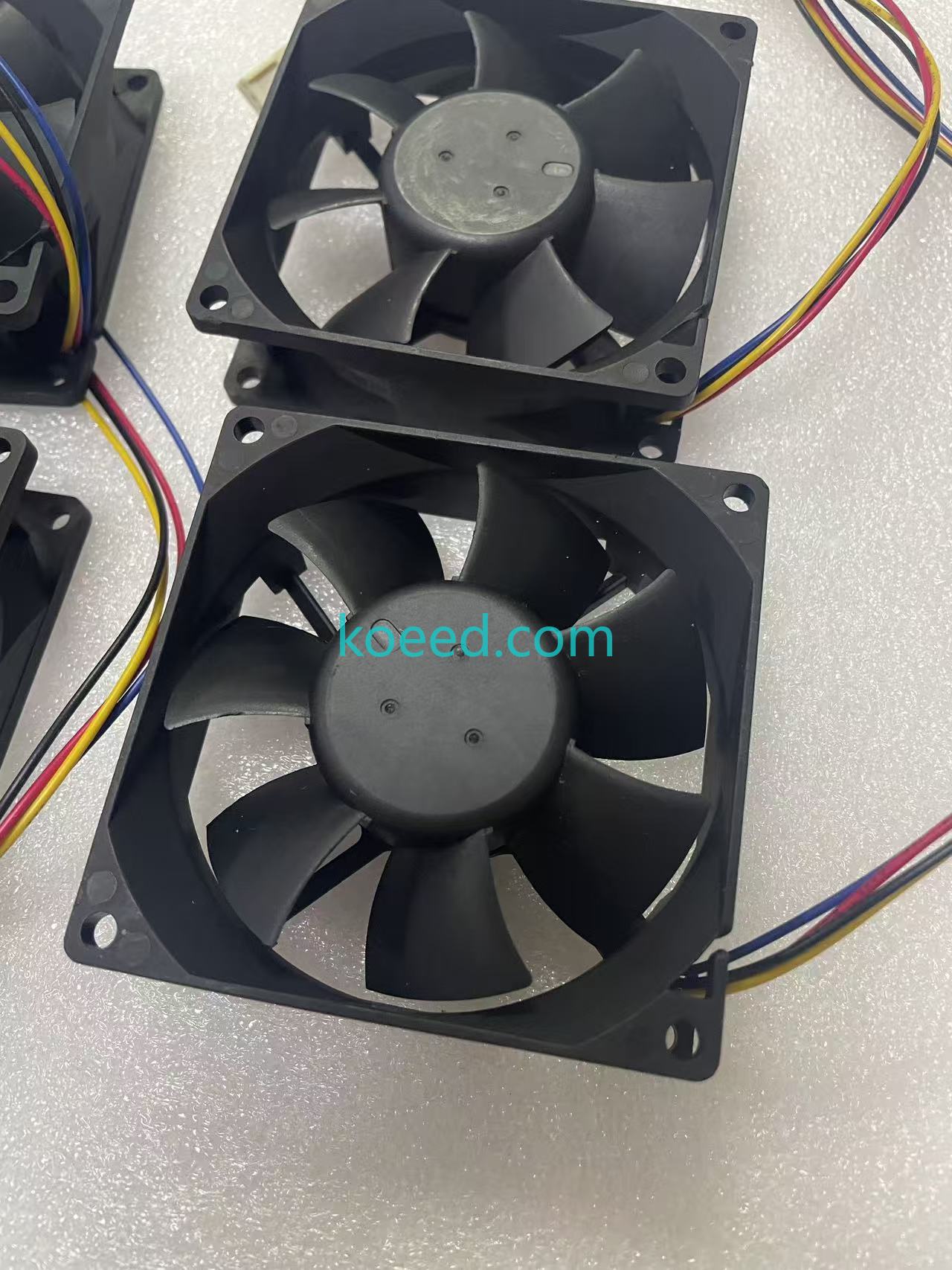
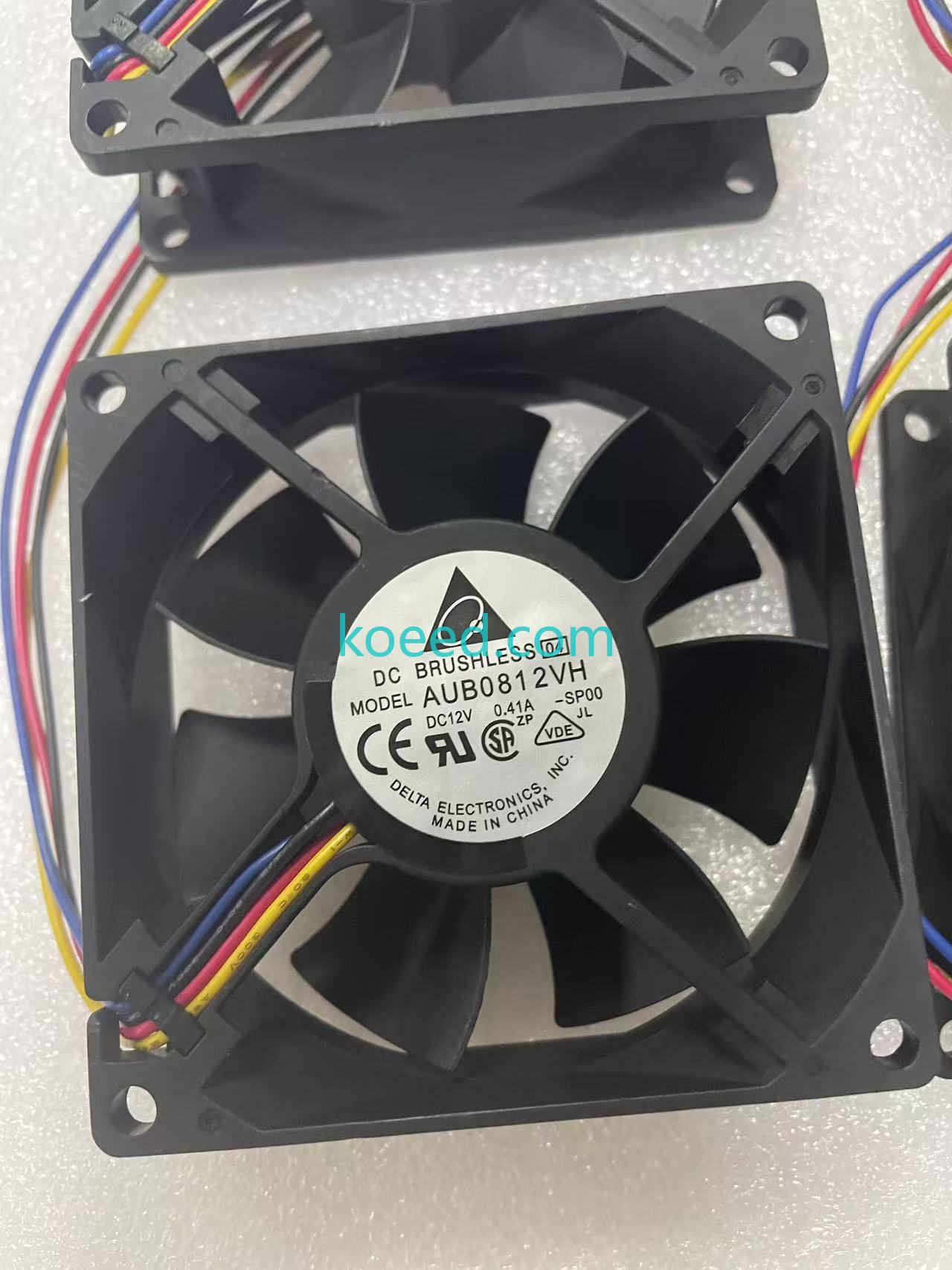
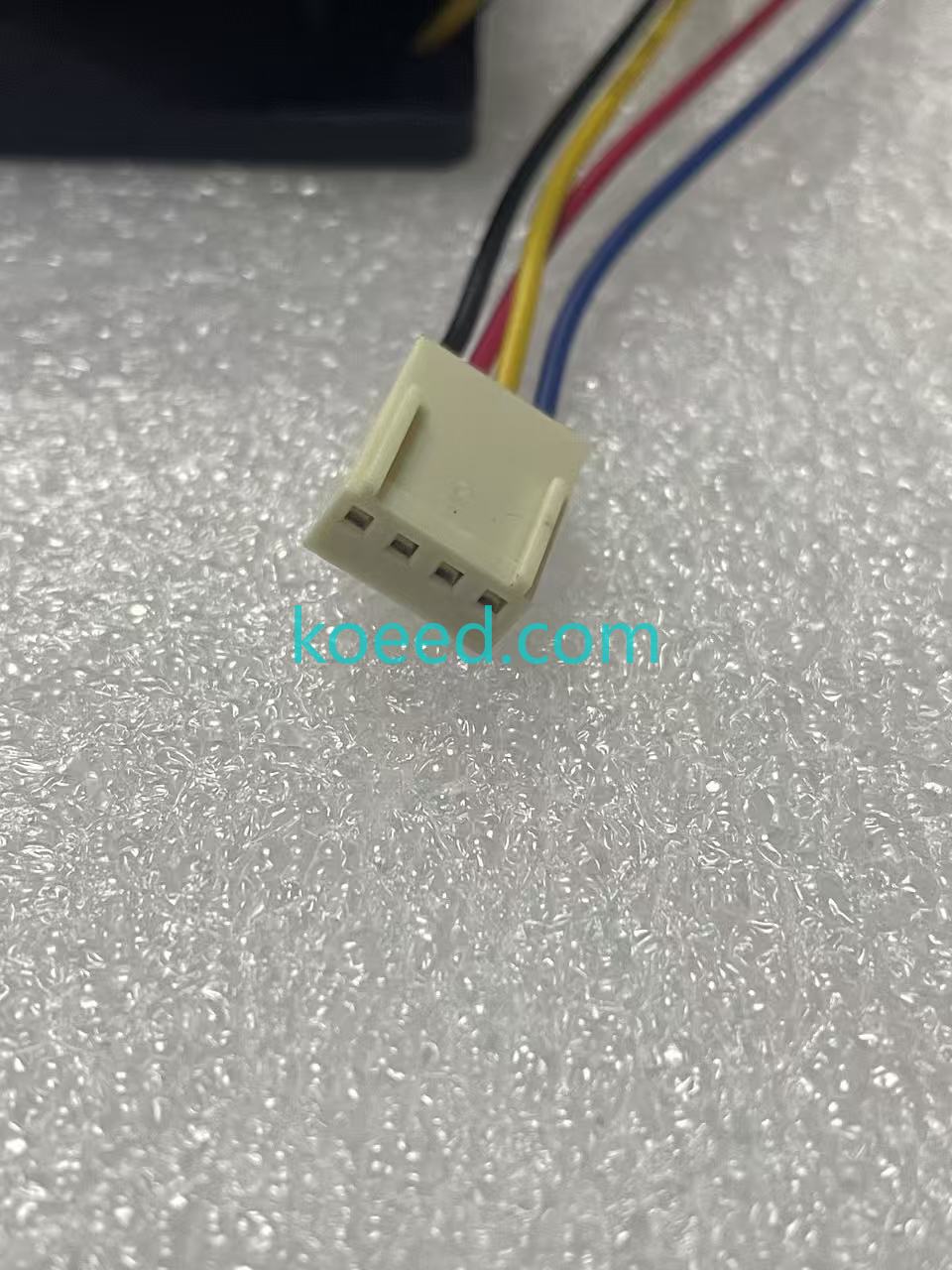
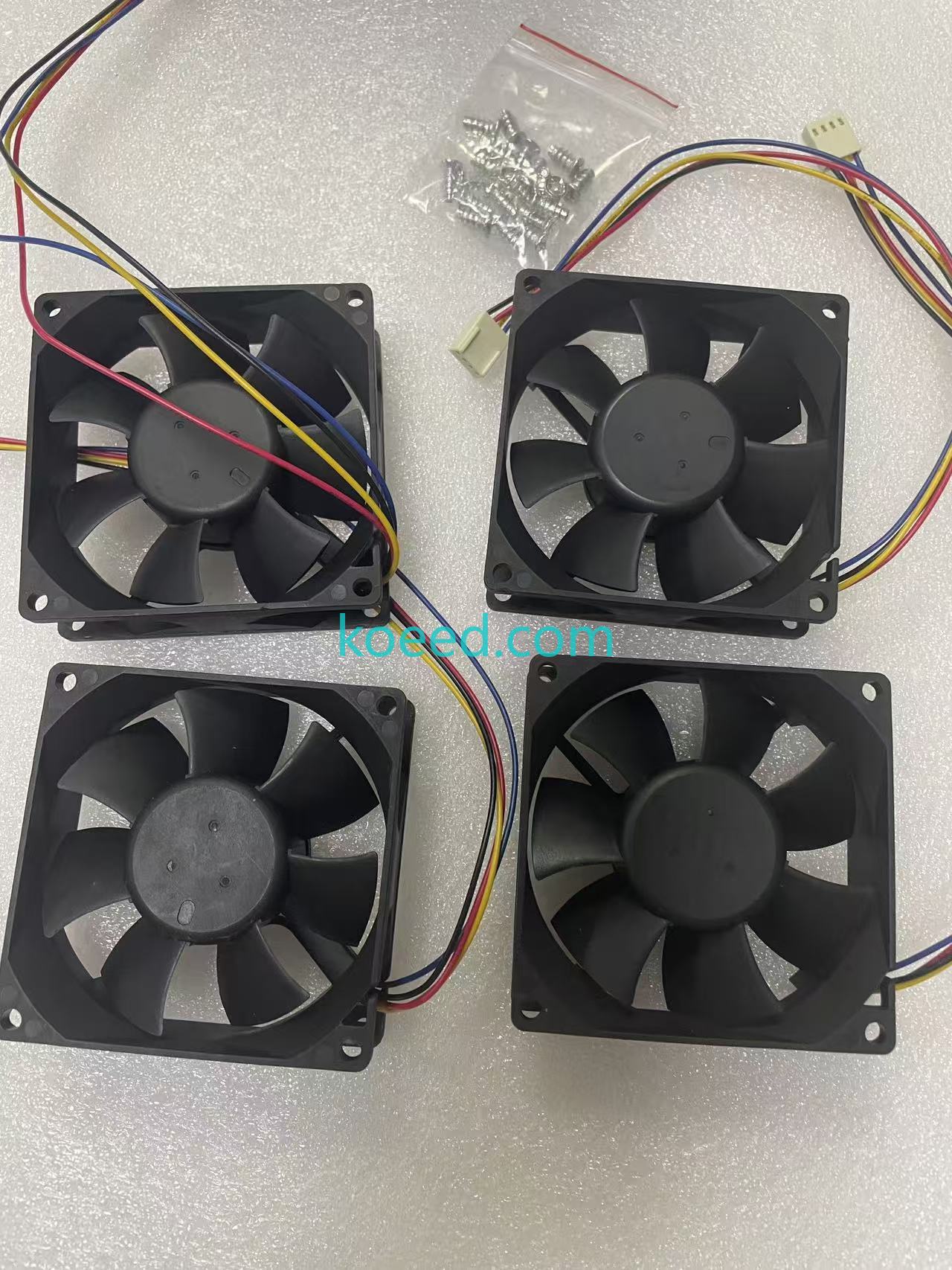
Below is a comprehensive visual reference of the Delta AUB0812VH cooling fan. These images capture the 4-pin PWM connector, SuperFlo bearing hub, impeller geometry optimized for 42 CFM airflow, and Delta's OEM labeling — all critical for verifying authenticity in the secondary market.
4. 2026 Application Architecture: IT/OT Convergence with PWM Cooling
4.1 Closed-Loop Thermal Orchestration
In modern 2026 factory architectures, thermal management has become a software-defined function. The AUB0812VH's 4-pin interface enables a control loop where:
- Sense: A thermocouple or digital temperature sensor inside the enclosure feeds ambient/component temperature to the PLC.
- Decide: The PLC's PID block calculates the required PWM duty cycle (0–100%) based on the temperature delta from setpoint.
- Actuate: The PWM signal (25 kHz, pin 4) commands the AUB0812VH to the optimal speed.
- Verify: The tachometer feedback (pin 3) confirms actual RPM, closing the loop with observability — a core tenet of 2026's zero-trust industrial IoT frameworks.
4.2 Predictive Maintenance via Tach Signal Trending
The AUB0812VH's tachometer output — two pulses per revolution — can be sampled by any digital input module or micro-PLC. By 2026, edge-computing platforms like AWS IoT SiteWise Edge and Siemens Industrial Edge routinely ingest this data to build bearing degradation models. Key anomalies flagged by modern ML pipelines include:
- RPM drift at constant PWM: Indicates increased bearing friction or impeller imbalance from dust accumulation.
- Intermittent tach dropouts: Early warning of connector oxidation or winding degradation.
- Startup latency increase: Time-to-rated-speed exceeding baseline suggests lubricant aging in the SuperFlo bearing.
2026 Best Practice: Configure your condition-monitoring system to baseline each AUB0812VH fan's RPM-vs-PWM curve during commissioning. Set a ±12% deviation alert. This catches 93% of impending bearing failures before thermal runaway occurs — validated across semiconductor fab deployments in 2025–2026.
5. Sustainability & TCO: The 2026 ROI Calculus
5.1 Energy Efficiency & Scope 2 Emissions
With the 2026 tightening of ISO 50001 and the EU Energy Efficiency Directive, every watt matters. The Delta AUB0812VH draws just 2.28 W at typical operating points versus 4+ W for fixed-speed alternatives. When PWM control modulates speed to match actual thermal load, annual energy savings per fan reach 15–22 kWh in temperate-climate facilities. At 2026 industrial electricity rates averaging €0.18–0.24/kWh (EU) or $0.09–0.14/kWh (US), the per-fan annual savings of $2.50–$4.00 may seem modest — but across 500 fans in a mid-sized plant, that's $1,250–$2,000/year in direct energy cost reduction, plus the Scope 2 carbon accounting benefit.
5.2 SuperFlo Bearing: The Longevity Multiplier
Delta's SuperFlo bearing technology — a refined hydro-dynamic design — provides an L10 lifespan of 60,000–70,000 hours at 40°C. Compared to sleeve-bearing fans that may fail at 30,000 hours, this more than doubles the replacement interval. In a 24/7 operating environment, that's the difference between replacing fans every 3.4 years versus every 8 years — a massive reduction in maintenance labor, e-waste, and unplanned downtime.
5.3 Circular Economy: The Refurbished Advantage
Procuring refurbished Delta AUB0812VH fans through Koeed extends the circular economy model directly into industrial automation. Each reused fan avoids approximately 0.15 kg of e-waste (PCB, copper windings, plastic frame, rare-earth magnets) and the embedded carbon from manufacturing a new unit. For organizations pursuing ISO 14001 recertification or Science Based Targets initiative (SBTi) compliance in 2026, documenting refurbished component procurement provides verifiable Scope 3 emission reductions.
| TCO Factor | AUB0812VH (Refurbished via Koeed) | Generic New Sleeve-Bearing Fan | 5-Year Delta |
|---|---|---|---|
| Unit Acquisition Cost | $12–$18 SAVING | $8–$14 | Comparable initial outlay |
| Annual Energy (per fan, PWM-managed) | ~20 kWh | ~35 kWh | −15 kWh/year |
| Expected Replacement Cycle | 8 years (SuperFlo) | 3–4 years (sleeve) | 1 fewer replacement |
| Labor per Replacement | $45–$75 (15-min swap) | $45–$75 | Avoided labor cost |
| Downtime Risk (per failure) | Predictable (tach trending) | Unpredictable (no PWM monitoring) | Risk mitigation value |
| 5-Year TCO (per fan) | ~$48–$68 | ~$105–$145 | 40–55% TCO reduction |
6. Maintenance & Troubleshooting Guide
6.1 Preventive Maintenance Schedule (2026 Best Practice)
| Interval | Action | Tool / Method |
|---|---|---|
| Monthly | Verify RPM via tach signal against baseline | PLC historian or IoT dashboard |
| Quarterly | Visual inspection of impeller for dust/debris accumulation | Borescope or enclosure inspection window |
| Bi-Annually | Clean impeller blades with compressed air (low pressure, <30 PSI, impeller locked) | ESD-safe compressed air canister |
| Annually | Full PWM sweep test (0%→100%→0%) — verify linear RPM response, no dead zones | PLC test routine or benchtop PWM generator |
| Annually | Inspect 4-pin connector for oxidation, reseat connection | Contact cleaner (DeoxIT or equivalent) |
6.2 Common Troubleshooting Scenarios
Symptom: Fan does not spin at all — no RPM on tach
Likely Causes (ranked by probability):
- No 12V power: Verify DC 12V (±10%) between pin 1 (GND) and pin 2 (12V). Check fuse on supply rail.
- PWM pin floating: AUB0812VH requires a valid PWM signal or pull-up. If pin 4 is disconnected/floating, the fan may not start. Tie pin 4 to 5V via 10kΩ pull-up for full-speed default.
- Locked rotor: Manually check impeller for physical obstruction. If locked, the fan may enter overcurrent protection. Remove obstruction and cycle power.
Symptom: Fan spins at maximum speed regardless of PWM signal
Likely Causes:
- PWM signal absent or shorted to ground: Measure pin 4 voltage. Should toggle between ~0.8V and 5V at 25 kHz. If stuck low, fan defaults to full speed.
- Controller output failure: Swap to known-good PWM source to isolate.
Symptom: RPM reading erratic or zero despite fan spinning
Likely Causes:
- Tachometer output damaged: If fan spins but pin 3 shows no pulses, internal Hall sensor or transistor may have failed. Replace fan.
- Noise coupling: Use shielded cable for tach signal. Keep away from VFD output wiring.
Ready to Upgrade Your Thermal Management?
Explore our inventory of thoroughly tested, refurbished Delta AUB0812VH fans and secure reliable, cost-effective cooling for your 2026 automation projects.


