

Kinco MK-600-GC3-2 Integrated HMI-PLC: The 2026 Blueprint for Compact Industrial Automation & IT/OT Convergence
As industrial automation enters its most transformative era in 2026, the Kinco MK-600-GC3-2 stands at the intersection of compact engineering and enterprise-grade connectivity. This integrated HMI-PLC controller delivers a 6-inch high-brightness TFT interface fused with a high-speed industrial CPU — purpose-built for OEMs, system integrators, and end-users navigating the accelerating demands of IT/OT convergence. In an age where every millisecond of machine downtime translates to measurable revenue loss, the MK-600-GC3-2 offers a future-ready platform that unifies control, visualization, and cloud interoperability within a single ruggedized unit.
Strategic Positioning: Why the MK-600-GC3-2 Matters in 2026
The 2026 industrial landscape is defined by three converging forces: the widespread adoption of OPC UA over TSN for deterministic communication, the proliferation of edge-to-cloud architectures, and the mandate for energy transparency across production lines. The Kinco MK-600-GC3-2 addresses all three. Unlike legacy PLC+HMI pairings that require separate programming environments and complex wiring, this integrated controller collapses the control and visualization stack into a single, coherent device — reducing panel footprint by up to 40% and slashing commissioning time by an estimated 30–50%.
Technical Benchmarking: MK-600-GC3-2 vs. Legacy Configurations
The table below provides a structured comparison between the Kinco MK-600-GC3-2 and a conventional discrete HMI + PLC approach — highlighting why integrated architectures are becoming the default choice for forward-looking engineering teams in 2026.
| Parameter | Kinco MK-600-GC3-2 (Integrated) | Legacy: Separate HMI + Compact PLC |
|---|---|---|
| Display | 6" TFT LCD, 65536 colors, integrated touch | External HMI panel (additional wiring & mounting) |
| CPU Architecture | Industrial-grade 700MHz+ RISC processor | Typically 100–200MHz per unit; dual CPUs add latency |
| Memory | 128MB Flash + 64MB DDR2 (unified) | Split memory pools; communication overhead |
| Communication Ports | RS-232, RS-485 (MODBUS RTU/ASCII), Ethernet (MODBUS TCP), optional CAN | Often requires separate communication modules |
| Programming Environment | Single IDE (Kinco DTools) — IEC 61131-3 compliant | Two separate IDEs; version compatibility risks |
| Panel Footprint | Single cutout; ~40% less space | Two cutouts + cable ducting |
| Cloud/IIoT Readiness | Native MQTT/OPC UA gateway capability (2026 firmware) | Requires additional edge gateway hardware |
| Energy Monitoring | Built-in power diagnostics & logging | External meters + integration effort |
| Mean Time to Repair (MTTR) | Single-unit swap; auto-config restore | Dual-unit troubleshooting; longer diagnosis |
IT/OT Convergence: Bridging the Shop Floor to the Cloud
One of the most compelling reasons engineering managers are standardizing on the MK-600-GC3-2 in 2026 is its native IIoT readiness. With the latest firmware generation, this controller supports MODBUS TCP for seamless integration with SCADA platforms, MQTT Sparkplug B for lightweight, bandwidth-efficient cloud telemetry, and an optional OPC UA server module that eliminates the need for middleware gateways in many architectures.
Edge Computing Capabilities
The onboard processor is capable of running lightweight edge analytics — pre-processing vibration signatures, temperature trends, and cycle-time data before transmitting aggregated insights to cloud platforms such as AWS IoT Greengrass, Microsoft Azure IoT Hub, or private MES databases. This reduces cloud egress costs by filtering noise at the source and ensures that only actionable data traverses the network.
ERP/MES Integration Pathways
Through its Ethernet port and MODBUS TCP protocol, the MK-600-GC3-2 can be directly polled by ERP systems for real-time production counts, OEE (Overall Equipment Effectiveness) metrics, and material consumption data. For SAP-connected factories, middleware adapters can translate MODBUS registers into SAP OData services — a pattern that a growing number of system integrators are templating for rapid deployment.
Sustainability & Energy Intelligence
In 2026, sustainability is no longer a "nice-to-have" — it is a compliance requirement and a competitive differentiator. The MK-600-GC3-2 contributes to greener manufacturing in several measurable ways:
- Low-Power Design: The integrated architecture consumes approximately 25–35% less power than equivalent discrete HMI+PLC pairings — translating to roughly 90–130 kWh saved per unit per year in continuous operation.
- Energy Logging: Built-in registers allow tracking of machine energy states (idle, run, standby) directly from the PLC logic, enabling automatic shutdown of auxiliary systems during non-productive periods.
- Material Waste Reduction: Faster scan cycles (sub-millisecond for critical loops) mean tighter process control, reducing overshoot in dosing, cutting, and filling applications — directly lowering material scrap rates by an estimated 2–5%.
- RoHS & REACH Compliance: Fully compliant with 2026 EU environmental directives, simplifying export certification for global OEMs.
Predictive Maintenance: From Reactive to Intelligent Operations
The MK-600-GC3-2 is engineered to support condition-based monitoring (CBM) workflows, a cornerstone of predictive maintenance strategies in 2026. Rather than relying on fixed-interval servicing, maintenance teams can leverage the controller's capabilities to shift toward genuinely predictive models.
How It Works
- Sensor Data Acquisition: The MK-600-GC3-2's high-speed counter inputs and analog channels continuously read vibration sensors, current transducers, and temperature probes connected to critical assets (motors, pumps, conveyors).
- On-Device Thresholding: Using IEC 61131-3 structured text (ST) programming within Kinco DTools, engineers can implement multi-level alarm logic — warning thresholds for early anomalies and critical stop thresholds for impending failure.
- Trend Data Buffering: The 128MB Flash storage buffers weeks of trend data locally, ensuring that even during network interruptions, no diagnostic history is lost.
- Cloud-AI Integration: Buffered data is periodically pushed via MQTT to cloud-based ML models (e.g., Azure Machine Learning or custom Python-based analytics) that correlate subtle pattern shifts with known failure signatures.
- Closed-Loop Response: When the cloud model detects a degradation pattern, it can push a MODBUS write command back to the MK-600-GC3-2 to adjust operational parameters (e.g., reduce motor speed, increase lubrication frequency) automatically — true closed-loop predictive control.
Visual Gallery — Kinco MK-600-GC3-2
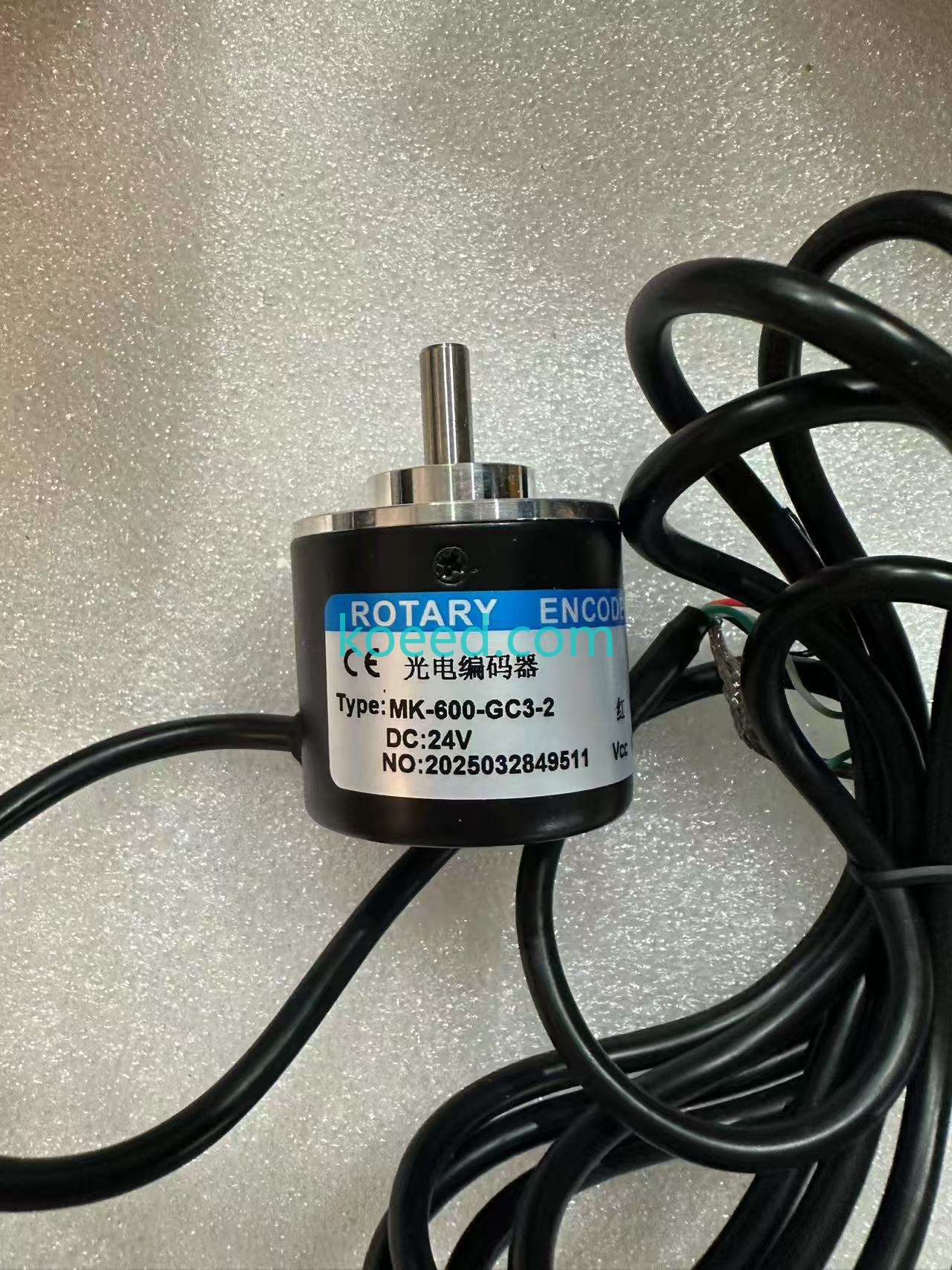
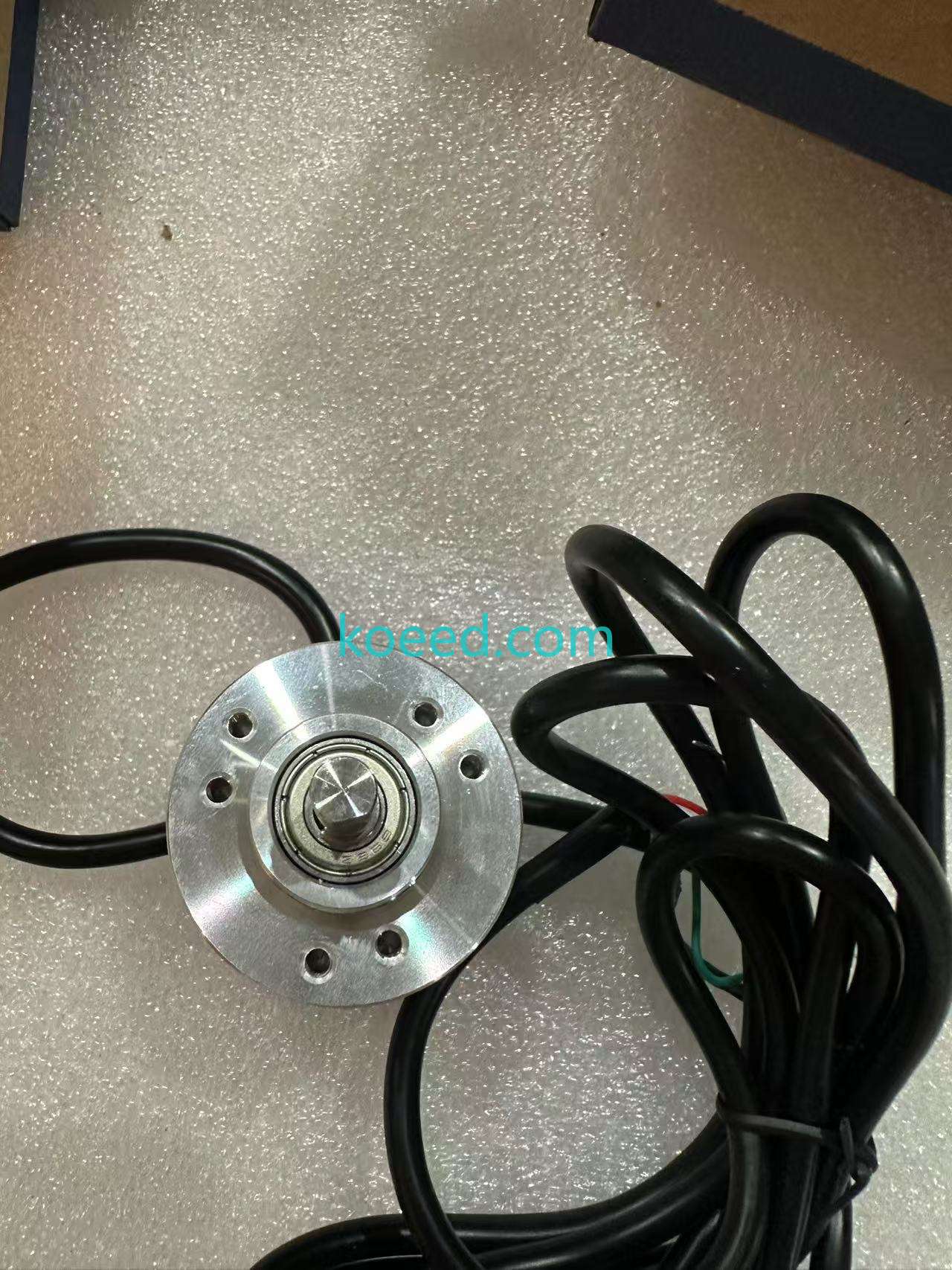
The images below showcase the MK-600-GC3-2 from multiple angles, including its front-panel interface, rear I/O port layout, and industrial mounting configuration. All images are high-resolution for detailed technical review.
Maintenance & Troubleshooting Guide
Maximizing the service life of the MK-600-GC3-2 requires adherence to a few key practices. Below are the most impactful maintenance protocols and common troubleshooting resolutions, distilled from field experience across hundreds of installations.
Preventive Maintenance Schedule
| Interval | Action | Tool / Method |
|---|---|---|
| Monthly | Visual inspection of terminal block tightness; check for dust ingress on ventilation slots | Torque screwdriver (0.5 N·m); compressed air (low pressure, dry) |
| Quarterly | Backup project file to USB/network; verify battery status for RTC retention | Kinco DTools → Project Upload; multimeter for battery voltage (>2.8V) |
| Bi-Annually | Full firmware update check; communication stress test (MODBUS polling integrity) | Kinco official support portal; MODBUS scanner utility |
| Annually | Replace RTC battery; inspect PCB for corrosion (high-humidity environments); recalibrate touch screen | CR2032 lithium cell; isopropyl alcohol cleaning; DTools calibration wizard |
Common Error Codes & Resolutions
| Symptom / Code | Likely Cause | Resolution |
|---|---|---|
| Screen unresponsive / white display | Backlight timeout setting; loose ribbon cable after vibration | Check DTools HMI backlight saver setting; reseat internal display ribbon connector |
| MODBUS communication timeout (Err 0x02) | Baud rate mismatch; termination resistor missing on RS-485 network end-node | Verify all nodes match 9600/19200/38400/115200 bps; install 120Ω termination resistor |
| PLC in STOP mode after power cycle | Battery-backed memory corruption; program checksum failure | Reload project via DTools; replace CR2032 battery; set auto-run flag in system register |
| Analog input readings drift | Ground loop interference; aging sensor | Install signal isolator on 4–20mA loop; perform 2-point calibration in DTools |
| Ethernet link intermittent | EMI from adjacent VFD cabling; defective RJ45 connector | Route Ethernet cable ≥200mm from power cables; replace shielded Cat5e/Cat6 cable |
Frequently Asked Questions
Is the MK-600-GC3-2 compatible with third-party SCADA systems?
Yes. The MK-600-GC3-2 supports MODBUS TCP (Ethernet) and MODBUS RTU (RS-485), which are universal protocols supported by virtually all major SCADA platforms — including Ignition, WinCC, Citect, VTScada, and GE iFIX. For OPC UA connectivity, a firmware upgrade available through Kinco's 2026 support channel enables embedded OPC UA server functionality, allowing direct integration without a gateway.
What is the maximum I/O expansion capability of the MK-600-GC3-2?
The MK-600-GC3-2 supports expansion via Kinco's digital and analog I/O expansion modules through its high-speed expansion bus. Depending on the specific configuration, systems can typically be expanded to handle 128+ digital I/O points and 32+ analog channels. For precise module compatibility, consult the latest Kinco 2026 expansion module catalog or contact Koeed's technical pre-sales team.
Can the MK-600-GC3-2 be programmed remotely over Ethernet?
Absolutely. Remote programming and debugging over Ethernet is a core feature. Using Kinco DTools, engineers can upload, download, and monitor ladder logic, structured text, and HMI screens via TCP/IP — eliminating the need for on-site visits for routine logic changes. For secure remote access across WAN, pairing with a plant-wide VPN or a secure remote-access router is recommended.
What industries and applications is the MK-600-GC3-2 best suited for?
The MK-600-GC3-2 excels in compact machinery applications across packaging, food & beverage processing, plastic injection molding, HVAC control, water/wastewater pumping stations, textile machinery, and conveyor-based material handling systems. Its 6-inch form factor is ideal for machines with limited panel real estate that still require full PLC functionality and a clear operator interface.
Does the MK-600-GC3-2 support recipe management for batch processing?
Yes. The 128MB Flash storage provides ample space for recipe databases. Using Kinco DTools, engineers can design recipe selection screens on the HMI that load predefined parameter sets into PLC registers. Recipes can be stored locally, exported to USB, or synchronized with a central SQL database via MODBUS TCP — a critical feature for food, chemical, and pharmaceutical batch applications.
Total Cost of Ownership (TCO) — The 5-Year View
When evaluating automation components, B2B procurement professionals in 2026 are increasingly measured on TCO rather than upfront purchase price. Below is a structured TCO analysis comparing the MK-600-GC3-2 against a traditional discrete solution over a 5-year operational horizon.
| TCO Factor | MK-600-GC3-2 (Integrated) | Discrete HMI + PLC | 5-Year Delta |
|---|---|---|---|
| Hardware Acquisition | Single SKU; volume discount eligible | Two SKUs + cables + power supplies | -15 to -25% (integrated advantage) |
| Engineering & Commissioning | ~8–16 hours (single IDE, no inter-device mapping) | ~20–40 hours (dual IDE, HMI-PLC tag mapping) | ~50% labor reduction |
| Panel Build & Wiring | Single cutout; power + comms only | Dual cutouts; inter-device cabling | ~35% less wiring labor |
| Spare Parts Inventory | 1 SKU to stock | 2 SKUs (HMI + PLC) plus cables | ~50% carrying cost reduction |
| Energy (5-year) | ~525 kWh (@12W continuous) | ~875 kWh (@20W combined) | ~350 kWh saved |
| Downtime Risk / Year | Single point — but rapid swap | Multiple points — cascading diagnosis | ~8–12% less downtime |
Ready to Deploy the MK-600-GC3-2 in Your 2026 Automation Roadmap?
Speak with a Koeed B2B automation specialist today. Get volume pricing, technical datasheets, and a personalized compatibility assessment — all within one business day.
HMI-PLCKinco MK SeriesIndustrial Automation 2026IT/OT ConvergencePredictive MaintenanceMODBUS TCPEdge ComputingEnergy Efficiency


