

ABB 1SDA059597R1 MOS T1-T3 Operating Device: 2026 Guide to Remote Breaker Control & Smart MCC Integration
ABB 1SDA059597R1 — MOS T1-T3 Superimposed Solenoid Operator
110–250V AC/DC | Remote Breaker Control for Tmax T1-T3 | 2026 Edition
1. Strategic Overview: The 2026 Imperative for Remote Breaker Operation
In the rapidly maturing landscape of Industry 4.0, remote actuation of low-voltage circuit breakers is no longer a luxury — it is an architectural necessity. The ABB 1SDA059597R1 MOS T1-T3 operating device (MOS = Motor Operating Solenoid) serves as the critical electromechanical interface between your ABB Tmax T1-T3 moulded-case circuit breakers and the broader plant control ecosystem. As facilities accelerate their IT/OT convergence roadmaps through 2026, this superimposed solenoid operator enables unattended substation switching, load-shedding automation, and pre-emptive isolation triggered by SCADA, DCS, or cloud-based energy management platforms.
For procurement and engineering teams seeking the ABB 1SDA059597R1, the value proposition extends beyond mere remote ON/OFF capability: this device eliminates the need for manual intervention in hazardous or hard-to-reach electrical rooms, reduces mean-time-to-restore (MTTR) after a trip event, and forms the backbone of a predictive maintenance strategy that 2026 plant managers increasingly rely upon.
2. Technical Specifications & Compatibility Matrix
Before integrating the MOS T1-T3 1SDA059597R1 into your electrical distribution architecture, a thorough understanding of its electrical characteristics and mechanical compatibility is essential.
2.1 Electrical Ratings
| Parameter | Specification |
|---|---|
| ABB Part Number | 1SDA059597R1 |
| Product Designation | MOS T1,.T3 SUPERIM. 110..250Vac/dc |
| Operating Voltage Range | 110 – 250 V AC/DC (wide-range universal) |
| Compatible Breaker Family | ABB Tmax T1, T2, T3 (moulded-case) |
| Mounting Type | Superimposed (direct-fit, tool-free clamping) |
| Included Accessories | Pre-wired connection cables (free cables) |
| EAN / GTIN | 8015644620042 |
| Operating Mode | Solenoid-driven, momentary excitation |
| Typical Response Time | < 80 ms (energize-to-close / energize-to-open) |
2.2 Legacy vs. Modern: Why Upgrade?
| Feature | Manual Operation (Legacy) | MOS T1-T3 1SDA059597R1 |
|---|---|---|
| Remote Switching | ❌ Not possible | ✅ Full remote ON/OFF via I/O |
| SCADA / PLC Integration | ❌ None | ✅ Dry-contact or 24V DC logic-ready |
| Personnel Safety | ⚠️ Requires on-site operator | ✅ No arc-flash exposure risk |
| Load-Shedding Automation | ❌ Manual only | ✅ Sub-second command execution |
| Predictive Maintenance Data | ❌ None | ✅ Cycle counting & health monitoring via PLC |
| Energy Management (ISO 50001) | ❌ Minimal | ✅ Seamless EMS integration |
| Typical MTTR Improvement | — | Up to 70% reduction |
3. Visual Gallery — MOS T1-T3 1SDA059597R1
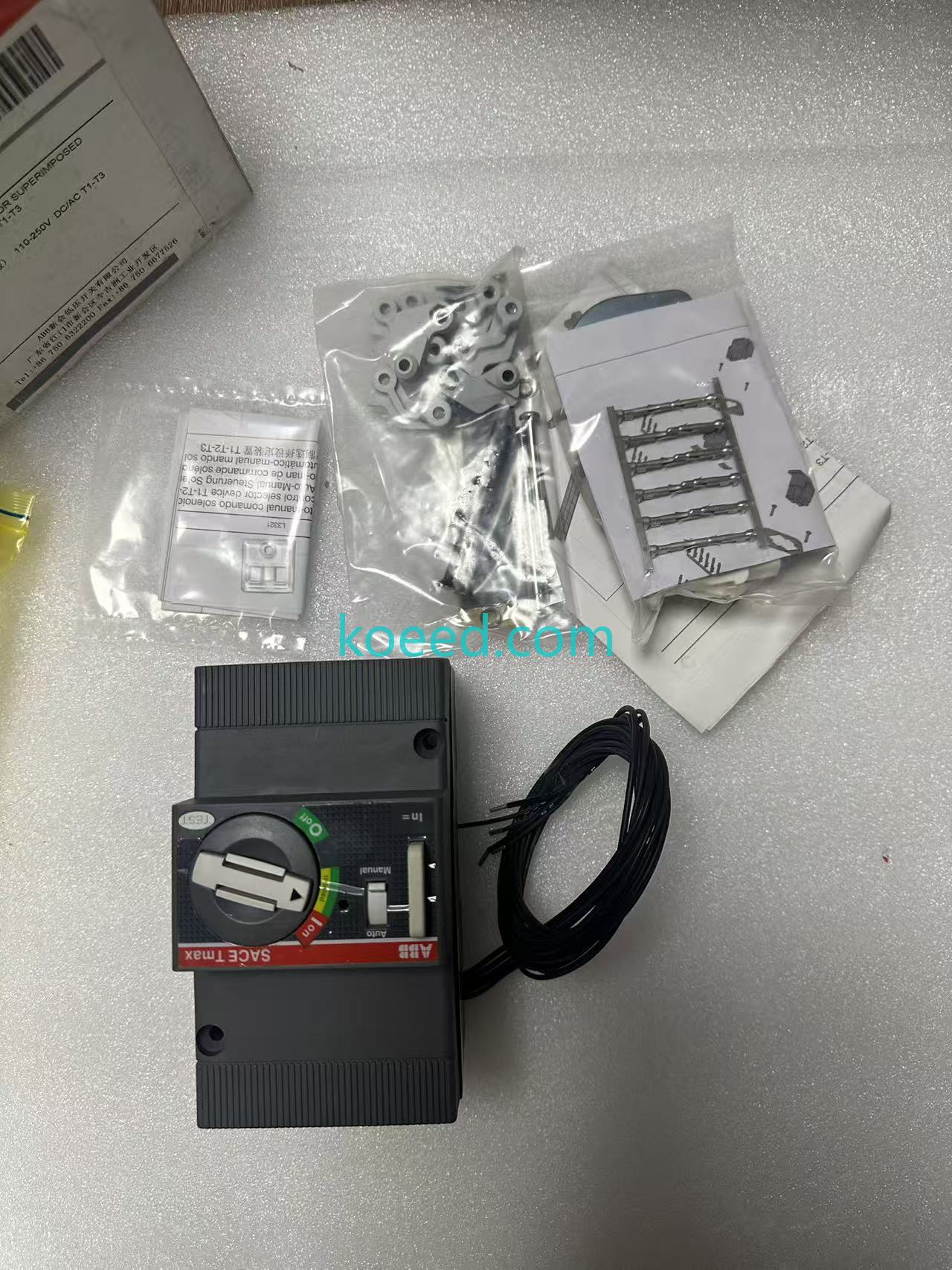
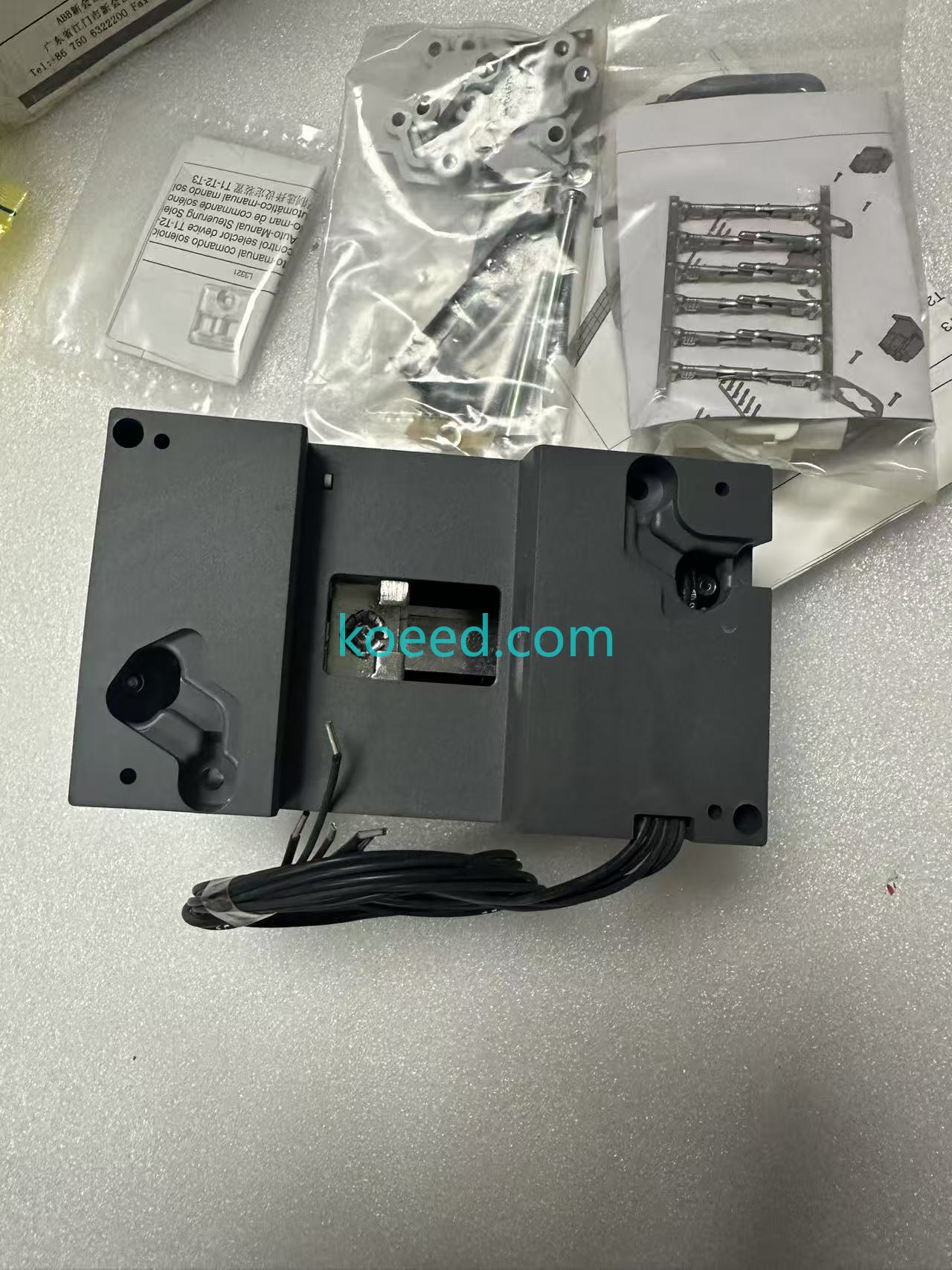
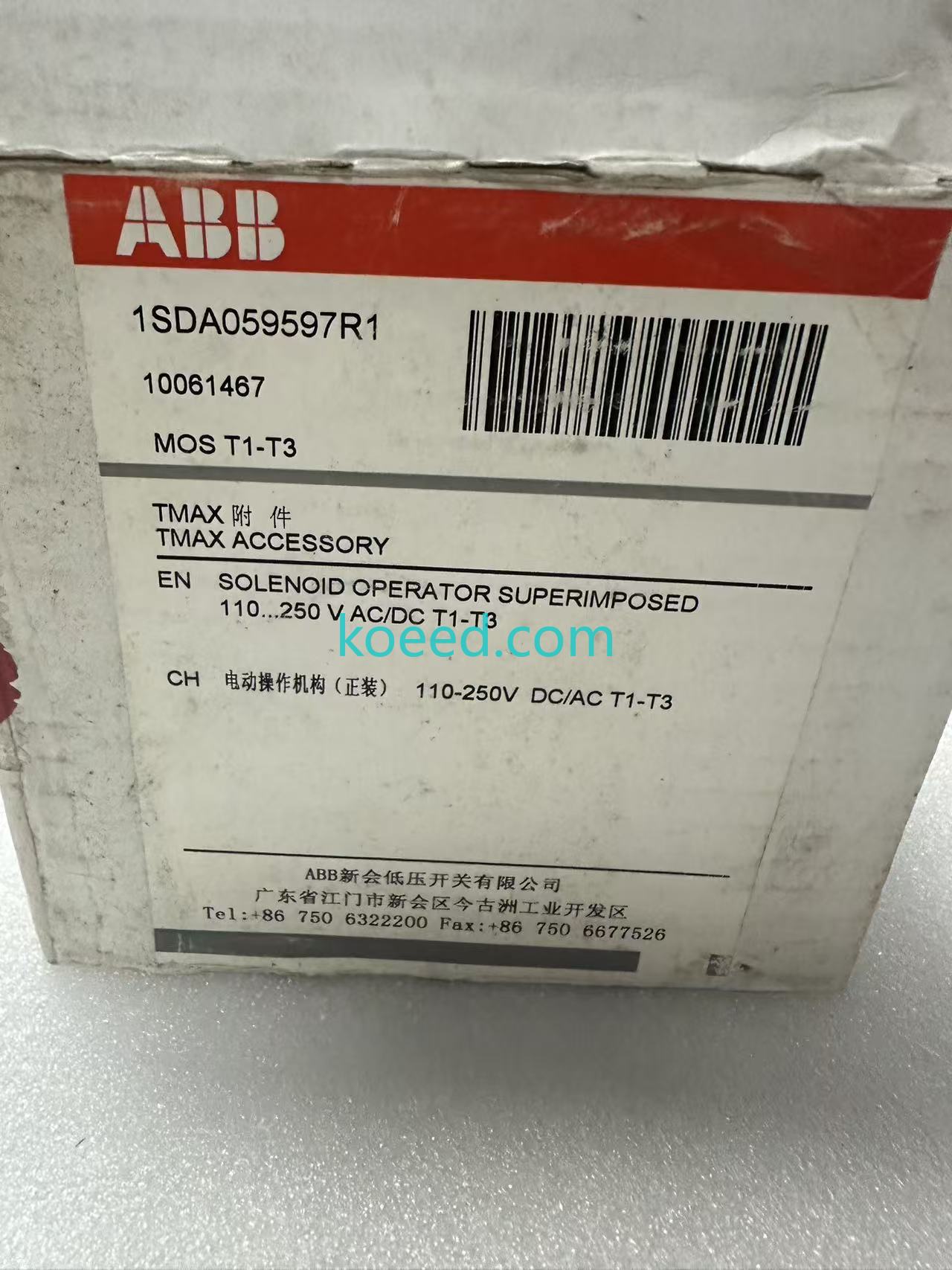
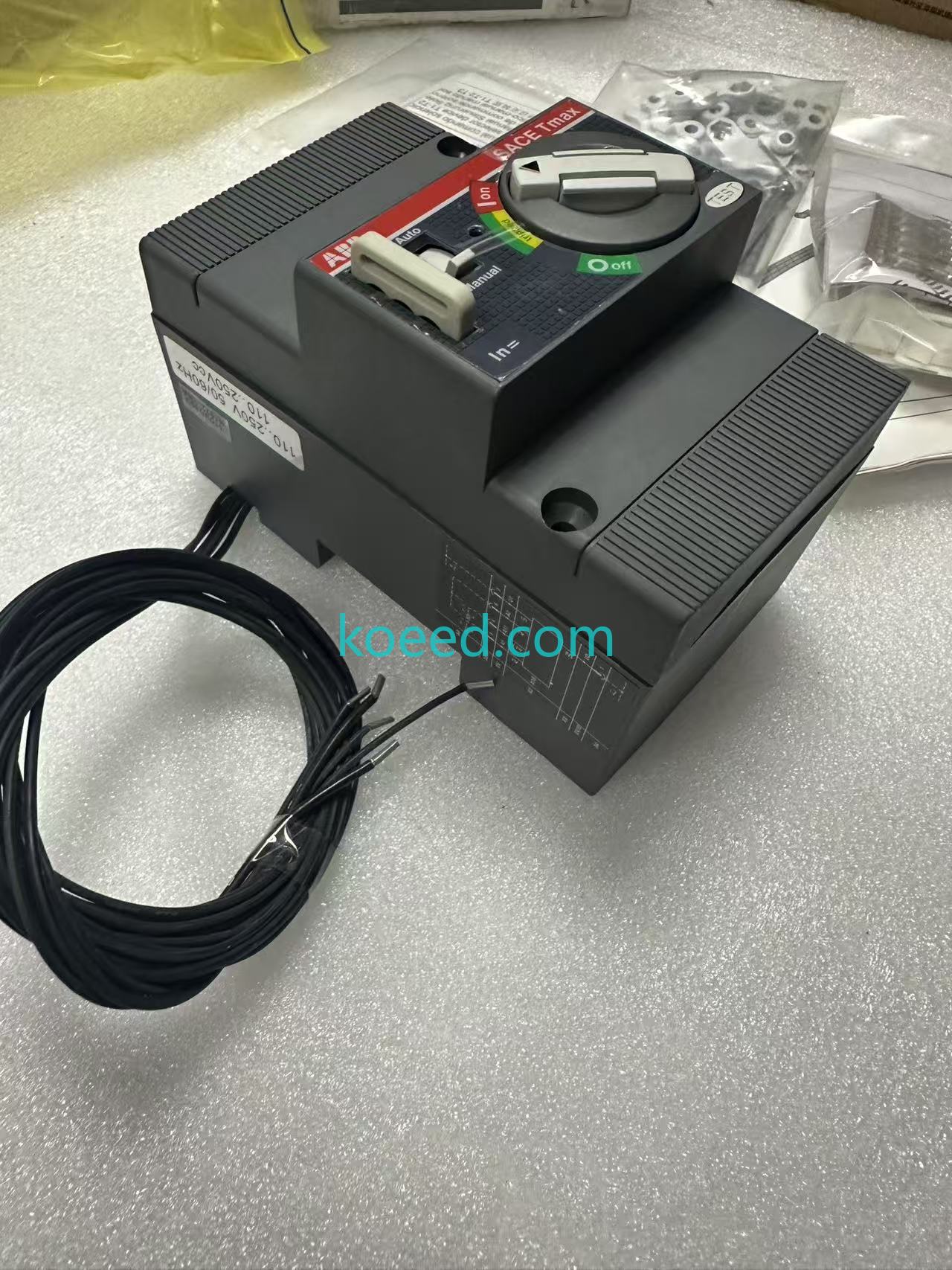
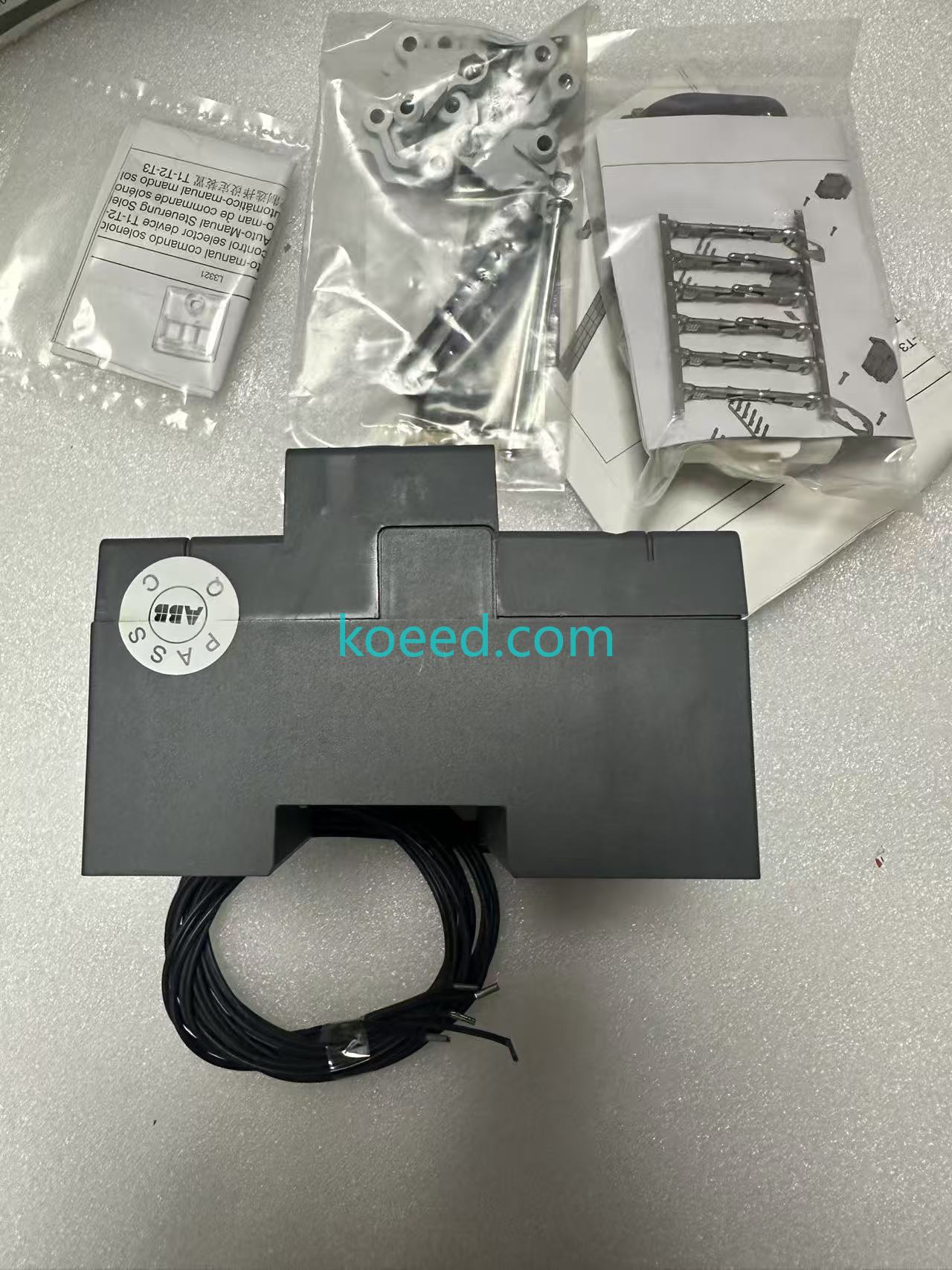
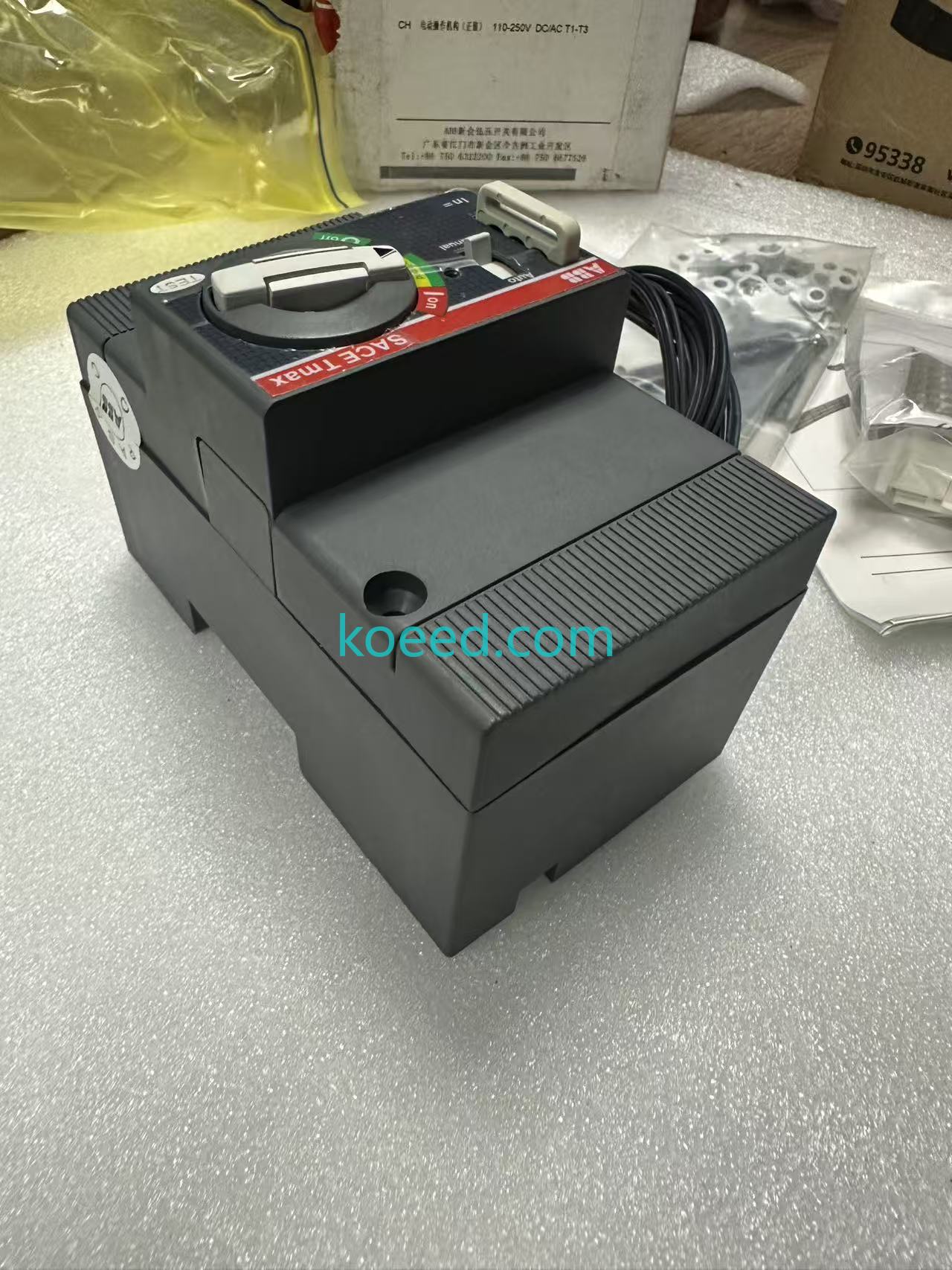
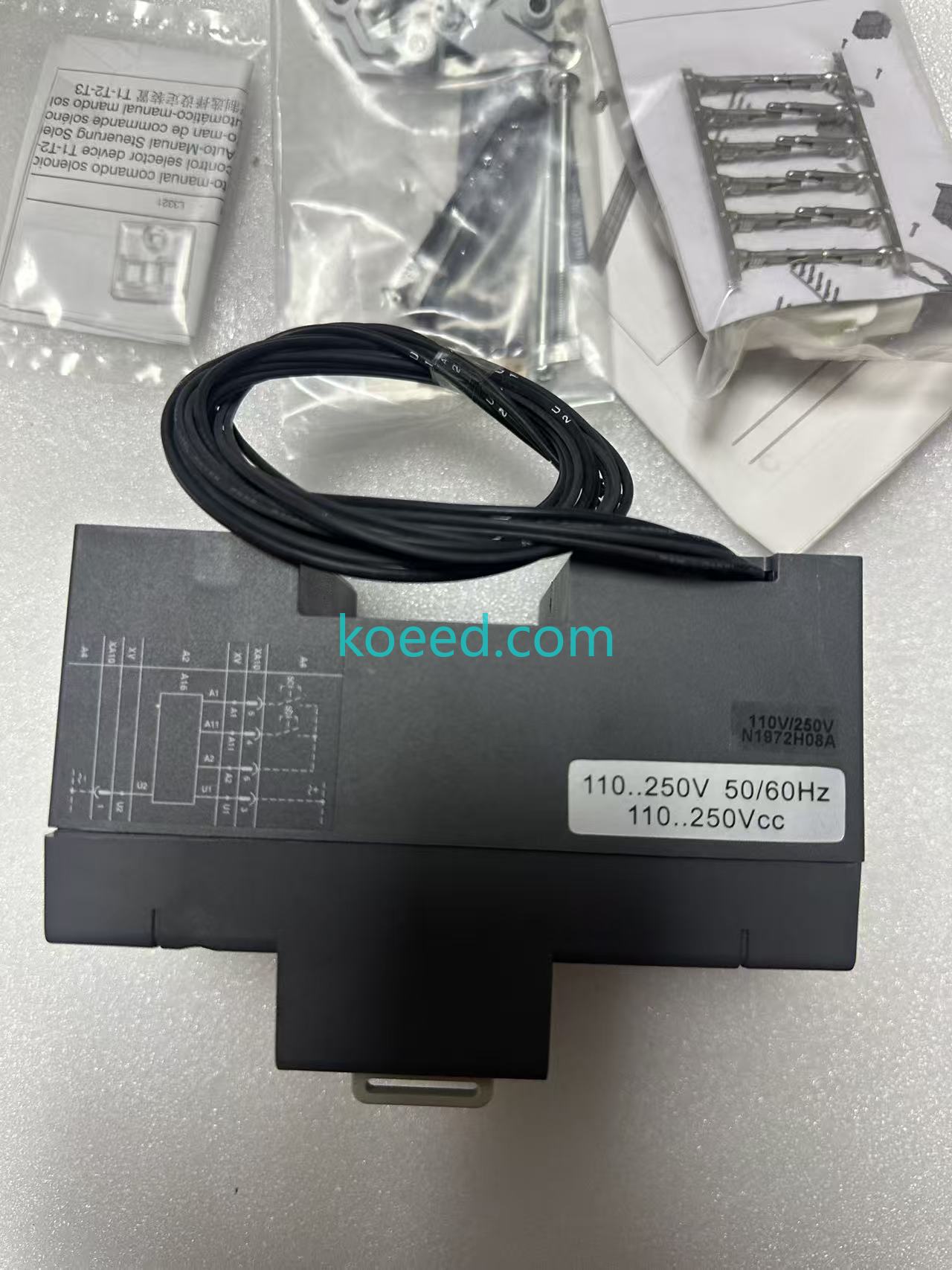
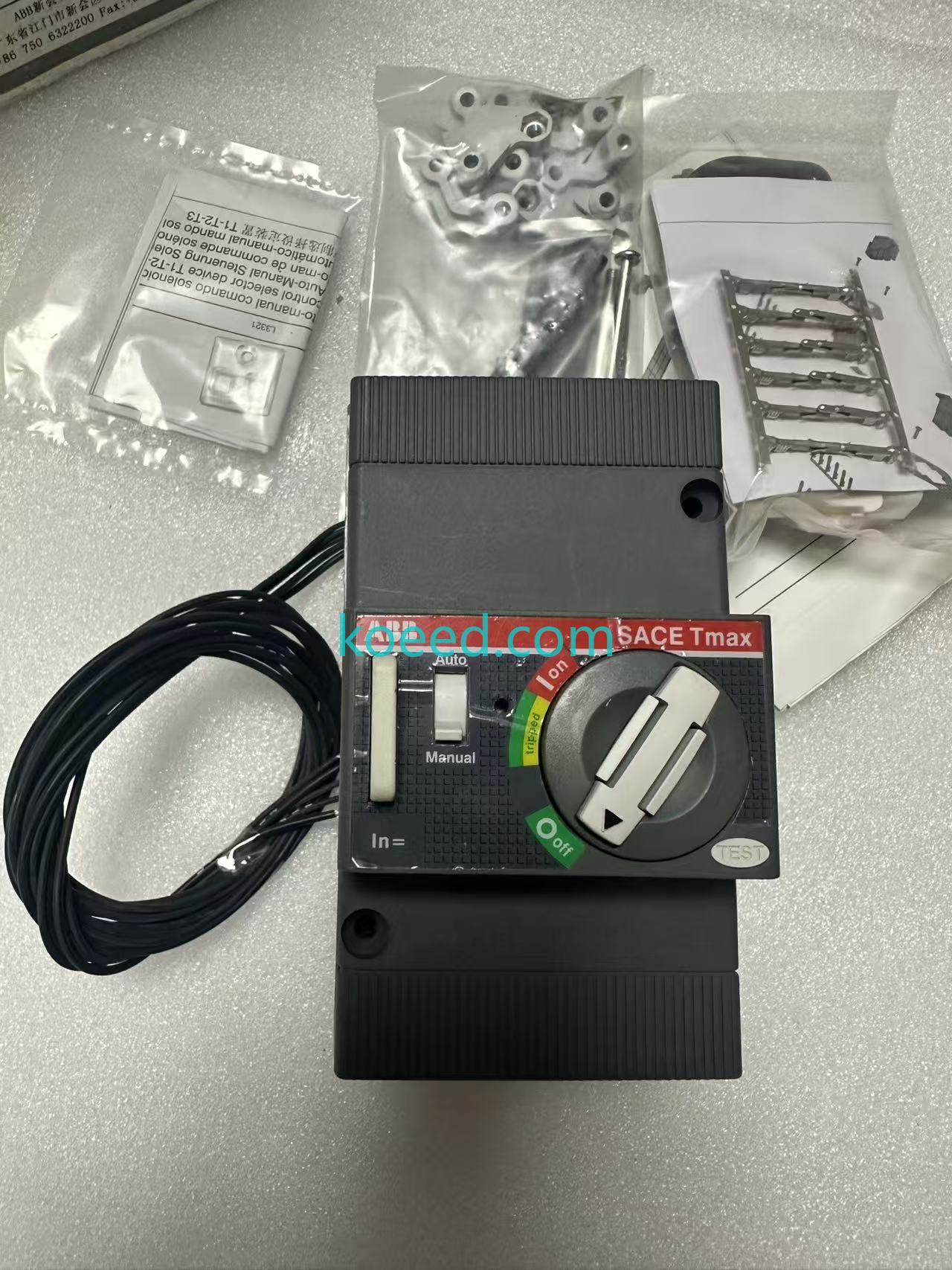
Below is a comprehensive visual inspection set of the ABB 1SDA059597R1 MOS operating device. These images confirm the build quality, connector layout, mounting interface, and cabling detail that engineers evaluate before procurement.
4. Installation & Commissioning — 2026 Best Practices
4.1 Pre-Installation Checklist
Before mounting the MOS T1-T3 1SDA059597R1, ensure the host Tmax breaker is in the OFF (O) position and fully isolated. The superimposed design means no drilling or modification of the breaker frame is required — the solenoid operator clamps directly onto the front face of T1, T2, or T3 MCCBs.
4.2 Integration with PLC / SCADA Systems
The free cables included with every ABB 1SDA059597R1 terminate in clearly labeled leads. For 2026 control architectures, the recommended integration pathway is:
- PLC Digital Output Module (relay-type): Wire the solenoid command leads through interposing relays rated for the solenoid inrush current.
- Auxiliary Contact Feedback: Utilize the breaker's built-in auxiliary contacts (or add-on AUX contacts) wired back to PLC digital inputs to confirm true breaker status (OPEN / CLOSED / TRIPPED).
- Edge Gateway / IIoT: For brownfield sites, deploy an edge I/O gateway (e.g., ABB Ability™ or third-party MQTT nodes) to publish breaker state changes to the plant's unified namespace.
5. Maintenance, Troubleshooting & Predictive Health Monitoring
5.1 Routine Maintenance Intervals
The MOS T1-T3 solenoid operator is designed for maintenance-free operation over its rated mechanical life. However, ABB recommends the following periodic checks as part of a 2026 predictive maintenance framework:
| Interval | Check Item | Acceptance Criteria |
|---|---|---|
| Every 6 months | Solenoid actuation time | < 80 ms; deviation < 15% from baseline |
| Annually | Connection terminal torque | Per ABB torque specification; no discoloration |
| Annually | Visual inspection of cables | No cracking, no heat damage, insulation intact |
| Every 2,000 cycles | Mechanical linkage play | No excessive free movement; positive engagement |
| Continuous (via PLC) | Cycle counter & response time trend | No upward drift in actuation latency |
5.2 Common Fault Scenarios & Resolutions
| Symptom | Probable Cause | Resolution |
|---|---|---|
| Solenoid does not energize | Open circuit in command wiring or blown control fuse | Verify continuity; check PLC output module status LED |
| Breaker closes then instantly trips | Downstream fault or incorrect breaker rating | Isolate load; verify short-circuit coordination settings |
| Intermittent operation | Loose terminal connection or corroded contact | Re-torque all terminals; apply contact cleaner |
| Solenoid overheats | Continuous energization (should be momentary) | Verify PLC pulse duration ≤ 2 seconds; check for stuck relay |
| Mechanical buzzing | Low voltage or debris in solenoid gap | Clean solenoid face; verify supply ≥ rated minimum |
6. ROI & Total Cost of Ownership (TCO) Analysis
When evaluating the ABB 1SDA059597R1 MOS T1-T3 against alternative remote-operation solutions, the TCO advantage is compelling. Unlike motorized operating mechanisms that require separate geared motors and complex linkages, the solenoid-based superimposed design of the 1SDA059597R1 offers:
- Lower upfront cost: No need to replace the existing breaker — the solenoid clamps onto any T1-T3 MCCB already in service.
- Reduced installation labor: Typical retrofit install takes less than 15 minutes per breaker by a qualified electrician.
- Energy efficiency: Momentary-excitation solenoid design consumes power only during the brief actuation pulse, not continuously — aligning with 2026 sustainability mandates and ISO 50001 energy management standards.
- Extended breaker service life: Remote operation eliminates repeated manual toggling that can fatigue mechanical components over thousands of cycles.
7. Frequently Asked Questions
Is the ABB 1SDA059597R1 compatible with all Tmax T1, T2, and T3 breakers?
Yes. The MOS T1-T3 1SDA059597R1 is mechanically compatible with the entire ABB Tmax T1, T2, and T3 moulded-case circuit breaker range. The superimposed clamping mechanism is universally designed to fit across all frame sizes within this family. Please verify that your breaker's front-face geometry is unmodified and that no third-party accessories obstruct the mounting interface.
What is the difference between the MOS (solenoid operator) and a motor operator (MO)?
The MOS T1-T3 uses a solenoid — a fast-acting electromagnetic plunger that delivers a single, high-force stroke to toggle the breaker mechanism. This is inherently faster (sub-80ms) and more energy-efficient than a motor operator (MO), which uses a small geared DC motor to wind a spring mechanism. Solenoid operators are ideal for applications requiring rapid remote ON/OFF; motor operators are typically preferred where slower, controlled charging is needed for larger frame breakers (T4 and above).
Can the 1SDA059597R1 be used for automatic reclosing (auto-reclose)?
Technically yes — the solenoid can be pulsed to reclose the breaker after a trip. However, for critical auto-reclose applications (e.g., utility feeders), ABB recommends using a dedicated protection relay with integrated reclosing logic that verifies line conditions before issuing the close command. The solenoid operator itself does not include any protection intelligence; it simply executes the command it receives.
What is the mechanical service life of the MOS T1-T3?
ABB rates the mechanical endurance of the MOS T1-T3 solenoid operator in line with the Tmax T1-T3 breakers themselves. Under normal operating conditions with proper voltage supply and pulse duration control, the solenoid mechanism is rated for thousands of operations. Implementing a PLC-based cycle counter and response-time trend monitor (as described in Section 5.1) is the 2026 best practice for maximizing service life and planning proactive replacement.
Does Koeed provide technical support for integration?
Absolutely. Koeed's industrial automation team offers pre-sales compatibility verification, wiring diagram review, and post-installation commissioning support for all ABB products including the 1SDA059597R1 MOS T1-T3 operating device. Reach out via the channels below.
8. Procurement & Next Steps
The ABB MOS T1-T3 1SDA059597R1 is in stock at Koeed and ready for immediate dispatch. Whether you are retrofitting a single MCCB for remote monitoring or deploying a plant-wide smart breaker infrastructure, our team is prepared to support your 2026 automation roadmap.
Ready to Automate Your Breaker Control?
Get a tailored quote or speak directly with an automation specialist today.
Or visit the product page: ABB 1SDA059597R1 MOS T1-T3 at Koeed.com


