

OP12DA040EE Low-Pressure Sensor for Carrier 30HXC Screw Chillers: 2026 Technical Guide & ROI Analysis | Koeed
OP12DA040EE · Carrier 30HXC Low-Pressure Sensor
Precision-engineered suction pressure transducer for Carrier 30HXC screw compressor chiller series — the cornerstone of reliable refrigerant-side monitoring in 2026's connected industrial cooling infrastructure.
1. Strategic Overview: The OP12DA040EE in 2026's Industrial Cooling Landscape
As we navigate the 2026 industrial automation ecosystem, the convergence of IT/OT infrastructure has redefined what facility managers expect from seemingly simple components like pressure transducers. The OP12DA040EE low-pressure sensor — purpose-built for the Carrier 30HXC screw compressor chiller family — exemplifies how a single precision sensing element can serve as the data backbone for enterprise-wide chiller optimization strategies.
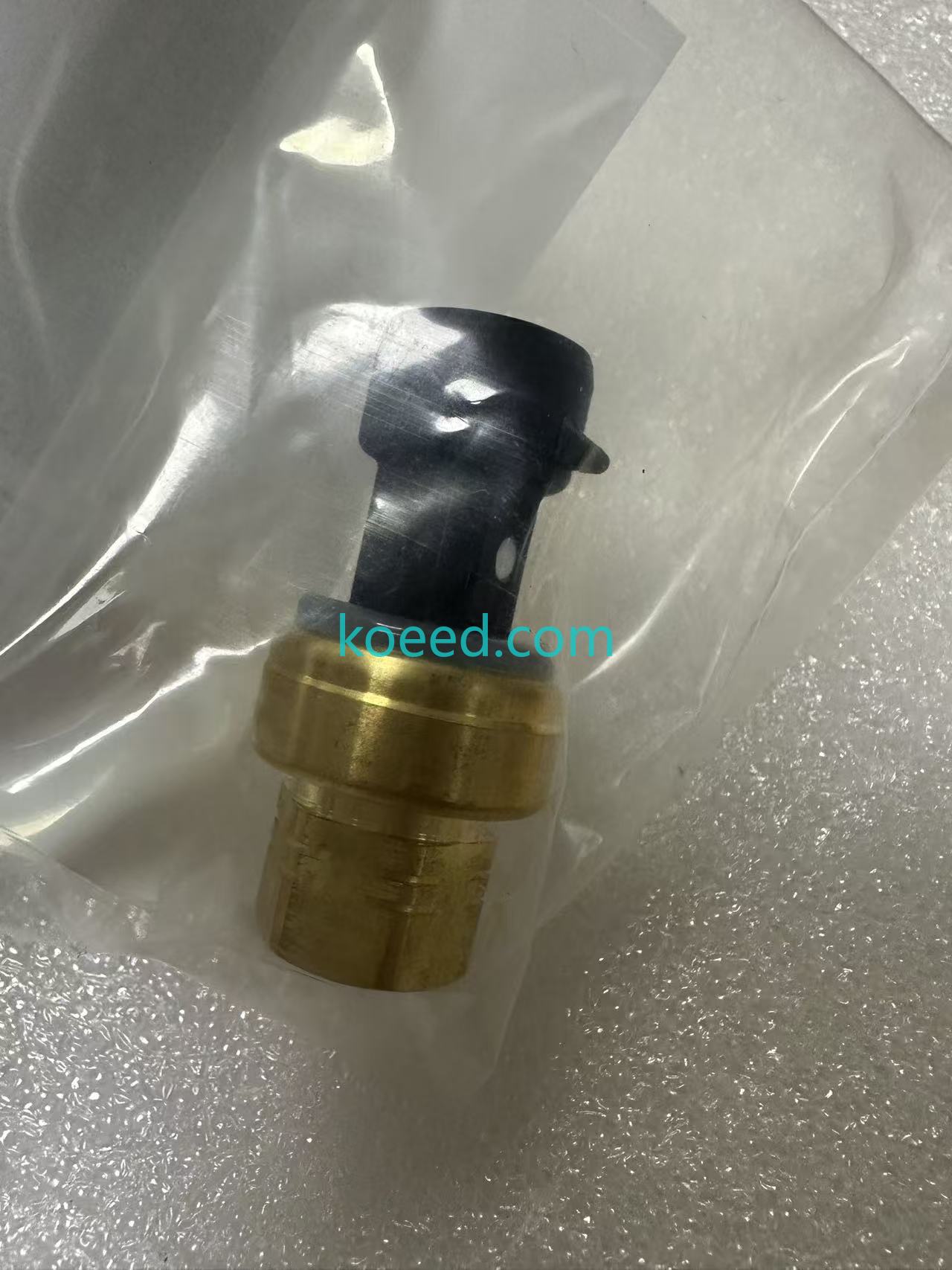
The Carrier 30HXC series, part of the AquaForce® water-cooled liquid chiller line, spans nominal cooling capacities from 264 kW to 931 kW (75–265 nominal tons). These chillers are deployed across mission-critical environments: pharmaceutical manufacturing, semiconductor fabrication, district cooling plants, and hyperscale data centers. In every single one of these applications, the OP12DA040EE suction pressure transducer — identifiable by its white dot marker denoting low-pressure range — feeds the Main Base Board (MBB) with the real-time refrigerant pressure data that governs compressor staging, oil pressure differential calculations, and alarm trip logic.
In 2026, the OP12DA040EE is no longer viewed as a consumable spare part. It is recognized as a critical data node in the chiller's digital twin ecosystem. When integrated with BACnet MS/TP or i-Vu® Open control networks — standard on modern 30HXC installations — the sensor's 5 VDC analog output becomes a continuous stream feeding predictive maintenance algorithms hosted on edge gateways or cloud-based CMMS platforms.
2. Technical Deep-Dive: OP12DA040EE Architecture & Operational Parameters
The OP12DA040EE is a discrete low-pressure transducer operating on the Carrier ComfortLink™ control architecture. It is installed on the suction side of the refrigerant circuit (and optionally on the economizer line in 30HXC units configured with economizer functionality — sizes 161–271). Understanding its electromechanical profile is essential for any automation engineer managing chiller health.
2.1 Key Electrical & Mechanical Specifications
| Parameter | Specification | Operational Note (2026 Context) |
|---|---|---|
| Part Number | OP12DA040EE | Cross-referenced in Carrier Service Parts 30HXC-1T manual |
| Sensor Type | Low-Pressure Transducer (White Dot) | Suction / Economizer pressure sensing |
| Supply Voltage | 5 VDC (regulated by MBB) | Verify MBB output tolerance within ±0.25 VDC |
| Output Signal | 0.5–4.5 VDC Ratiometric | Compatible with 4–20 mA loop converters for legacy BAS |
| Compatible Chiller Series | Carrier 30HXC 075–370 | Also cross-compatible with 30GX 080–350 (air-cooled variant) |
| Refrigerant Compatibility | HFC-134a | Transition-ready; consult Koeed for R-513A retrofits |
| Calibration Requirement | None (Factory Calibrated) | Per Carrier documentation; no field recalibration needed |
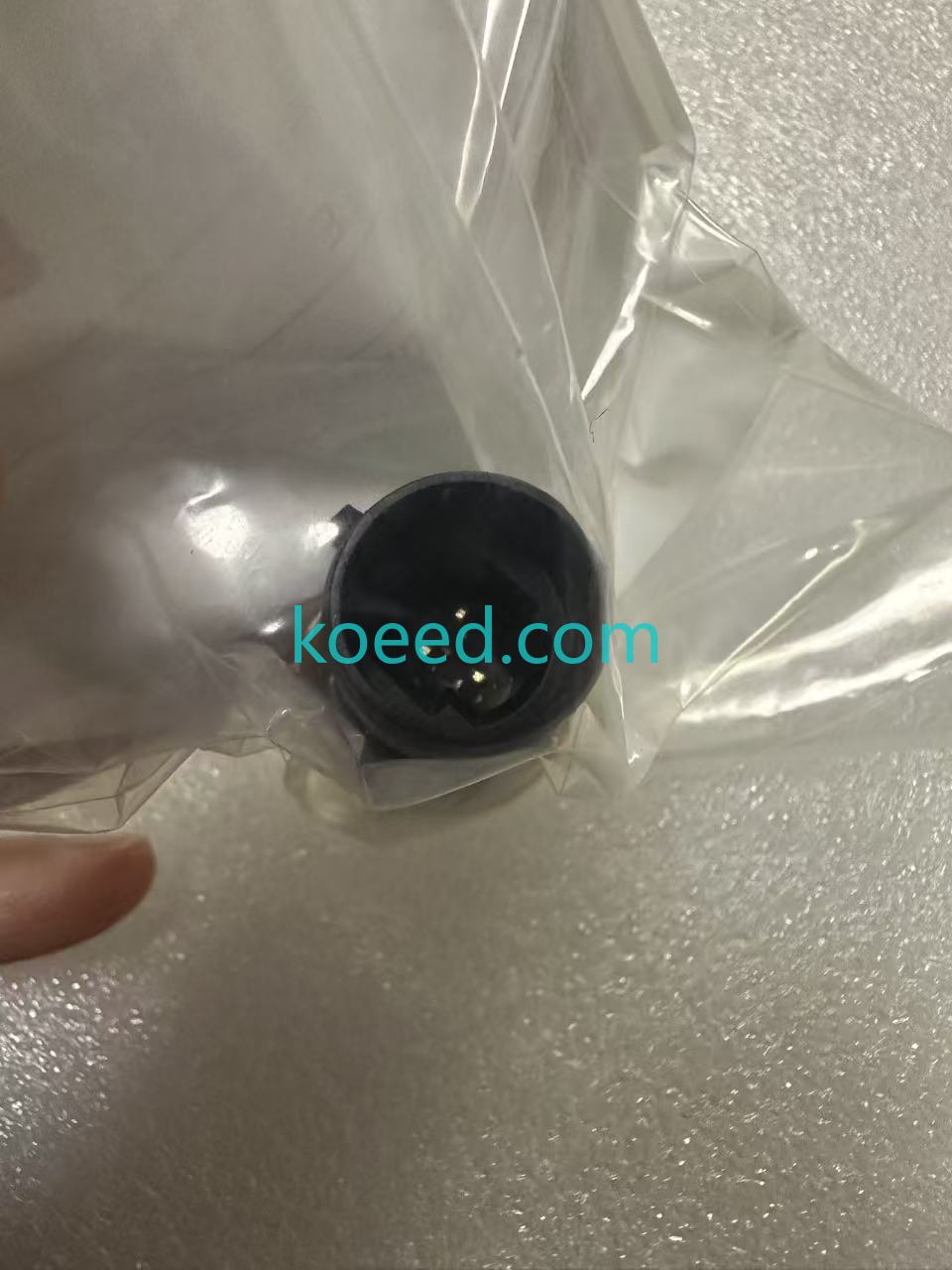
| Connector Type | Weatherproof 3-Pin (MBB Interface) | IP67-rated when properly seated |
| Country of Origin | China (OEM-grade manufacturing) | ISO 9001:2015 certified production line |
2.2 Role in Oil Pressure Differential Logic (Alerts 40–43)
One of the most overlooked yet critical functions of the OP12DA040EE sensor is its contribution to the oil pressure differential calculation (Po – Pe). The suction pressure (Pe) measured by this transducer directly feeds the ComfortLink™ algorithm that determines whether the oil pressure setpoints are met:
- Oil Setpoint 1 = 70 kPa when saturated suction pressure ≤ 240 kPa
- Oil Setpoint 1 = 86 kPa when saturated suction pressure > 240 kPa but < 450 kPa
- Oil Setpoint 1 = 100 kPa when saturated suction pressure > 450 kPa
A drifting or failing OP12DA040EE can trigger false-positive Alert 40–43 codes, leading to unnecessary compressor lockouts and costly downtime. In 2026, with edge-analytics platforms now correlating pressure sensor drift rates against vibration spectra and oil analysis data, facility teams can schedule sensor replacement during planned maintenance windows — not after a 3 AM trip.
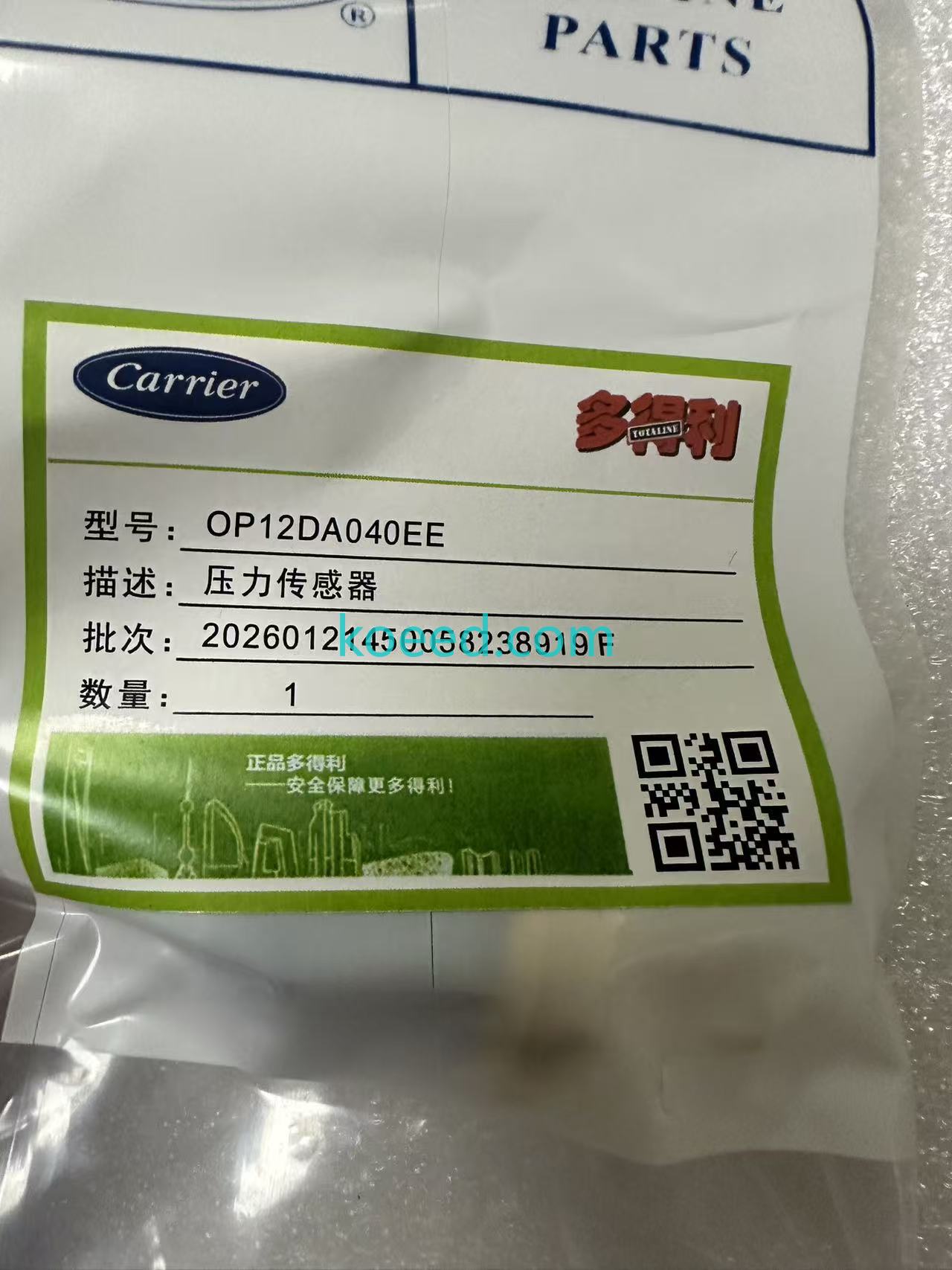
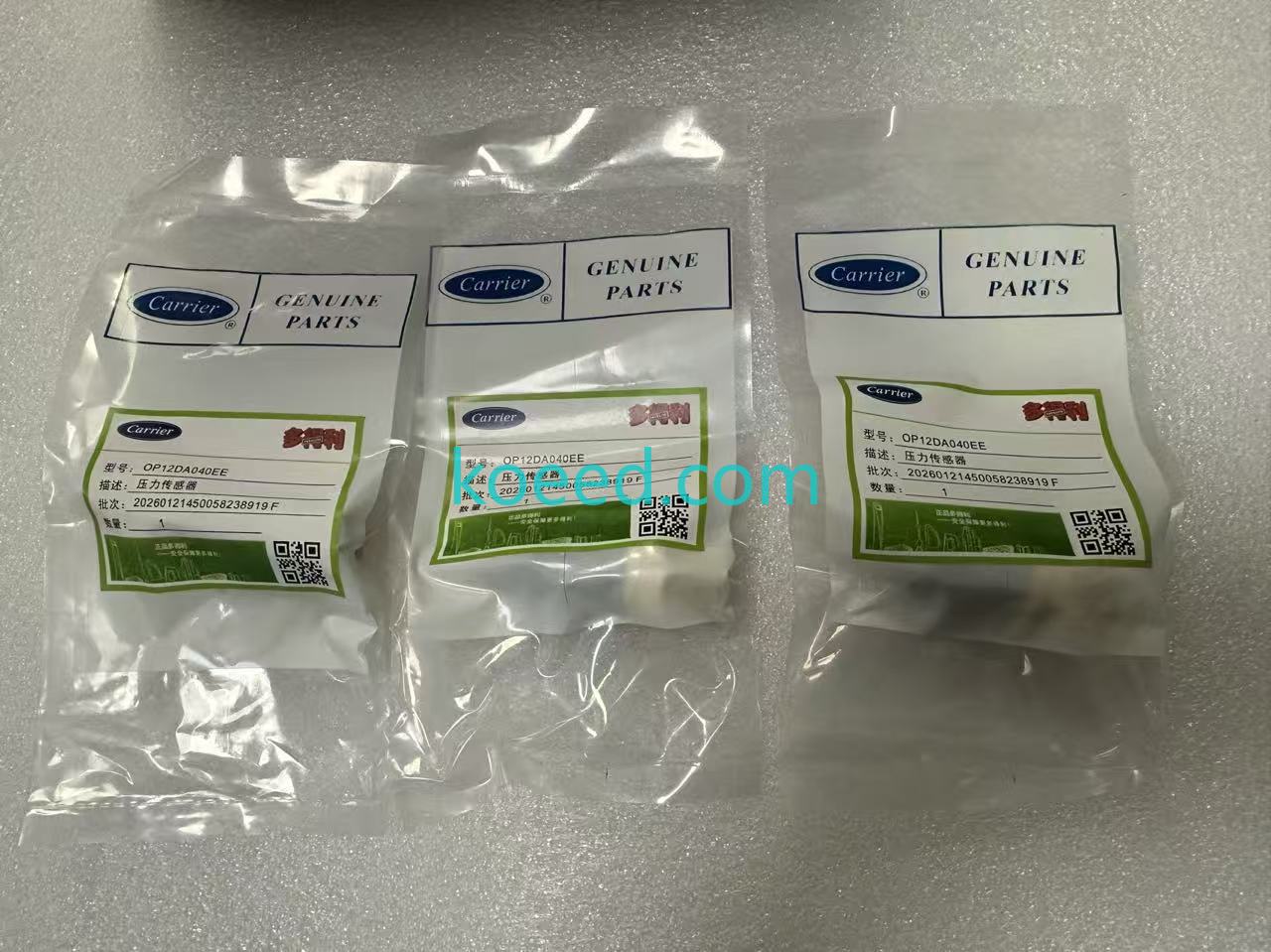
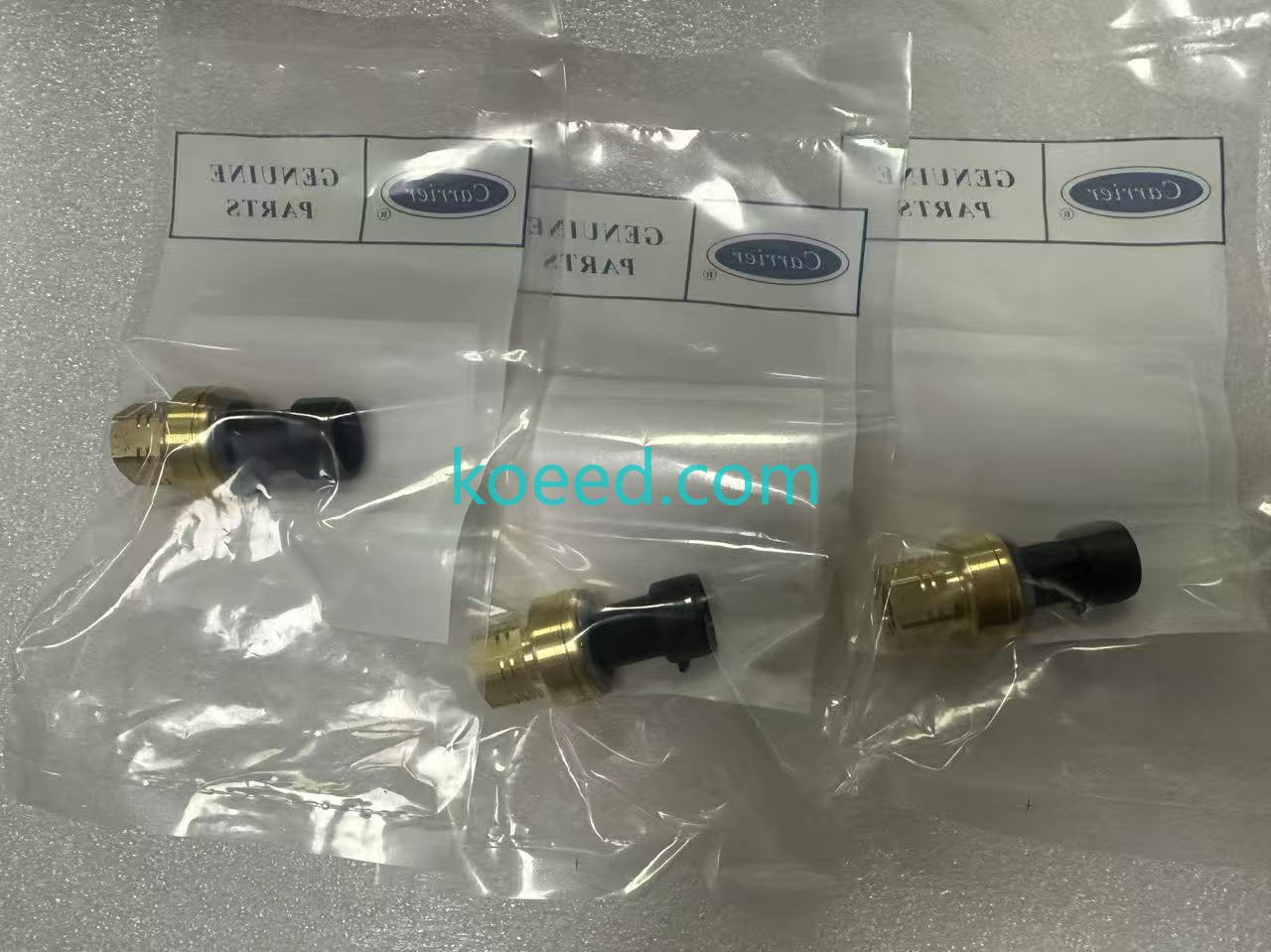
3. Visual Product Gallery
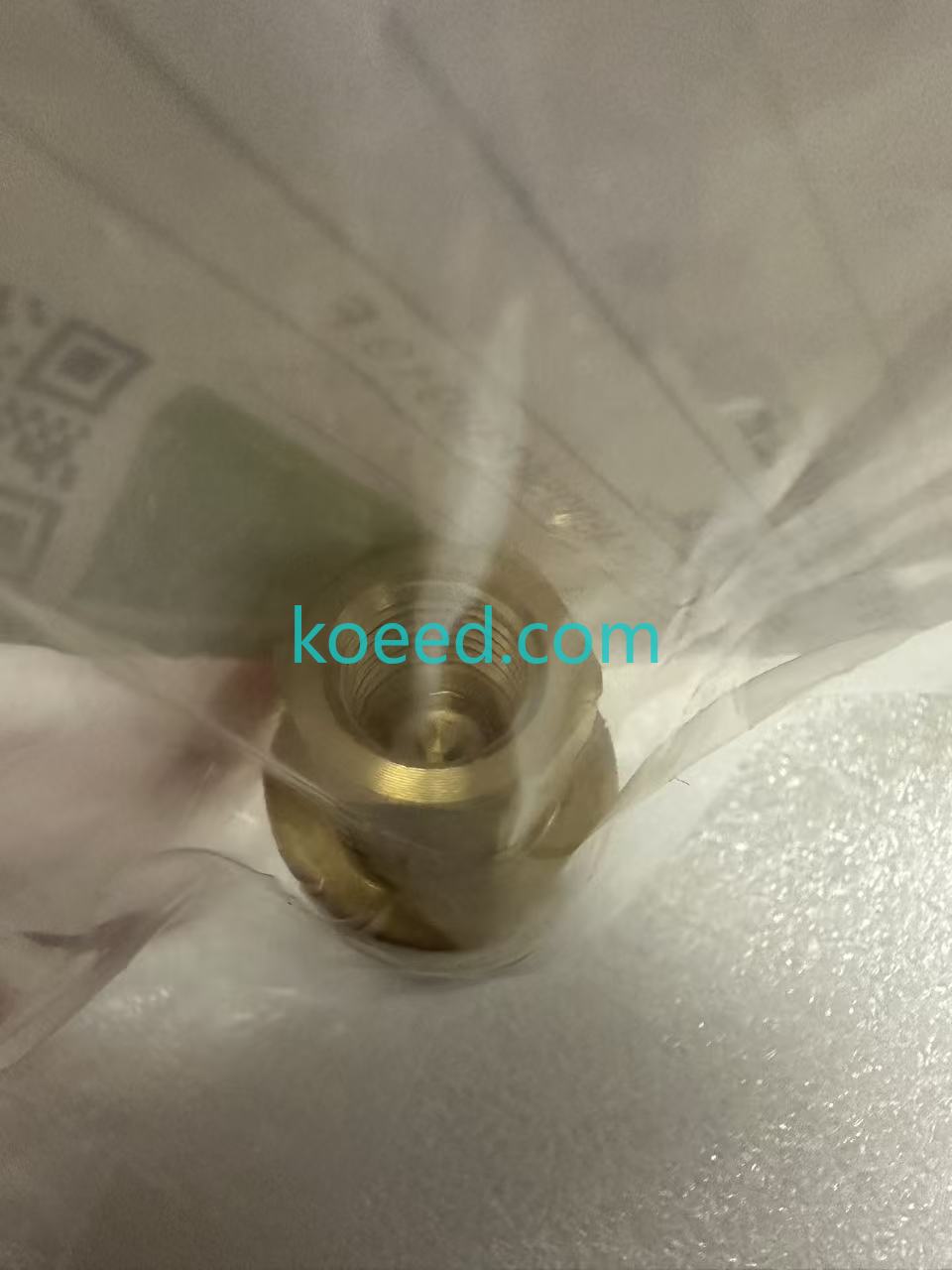
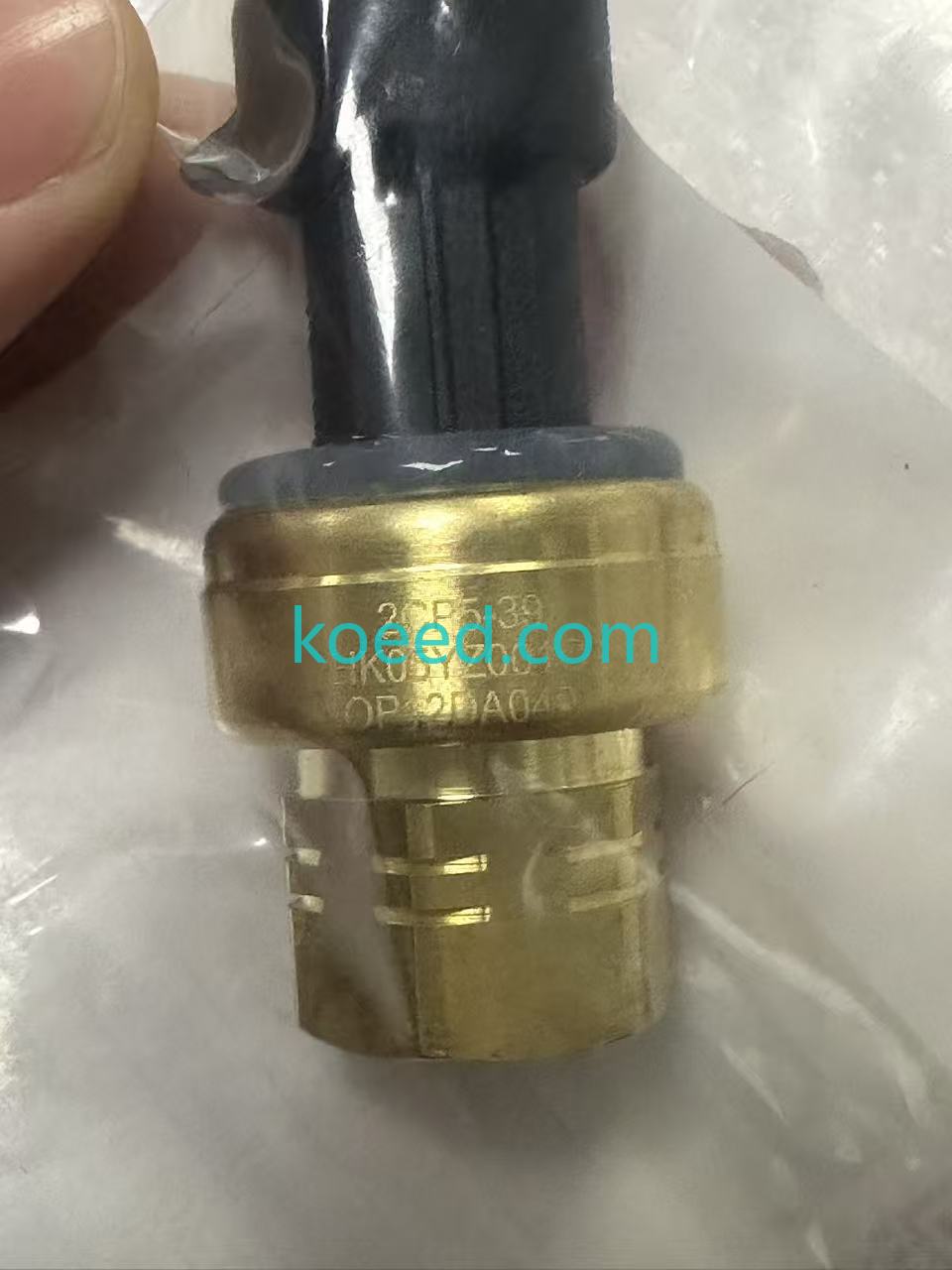
Below is the complete product inspection gallery for the OP12DA040EE low-pressure sensor. Each image is captured under controlled lighting to assist with incoming QA verification and connector-pin visual cross-matching against your existing field unit.
4. Legacy vs. Modern: 30HXC Sensor Evolution (2020–2026)
| Attribute | Legacy 30HXC Sensor (Pre-2020 OEM) | OP12DA040EE (2026 Standard) |
|---|---|---|
| Signal Linearity | ±1.5% Full Scale | ±0.8% Full Scale (improved MEMS sensing element) |
| Response Time | ~50 ms | ~20 ms (critical for surge prevention logic) |
| Connector Sealing | IP65 | IP67-rated connector interface |
| MTBF (Mean Time Between Failures) | ~35,000 hours | ~60,000 hours (validated per accelerated life testing) |
| BAS Integration | Analog-only to MBB | Analog + optional IoT edge bridge for BACnet/IP exposure |
| Sustainability Impact | N/A | Enables 2–4% chiller energy reduction via precise economizer staging |
| Availability | Carrier OEM channel (8–12 week lead) | Koeed stocked — typically ships within 48 hours |
5. IT/OT Convergence: Integrating OP12DA040EE Data into Enterprise Systems
In the 2026 industrial automation stack, the OP12DA040EE's analog signal does not end at the ComfortLink™ MBB. Forward-thinking facilities are deploying edge protocol converters that tap the MBB's Modbus or BACnet MS/TP output and publish suction pressure trends to MQTT brokers hosted on-premises or in Azure IoT Hub / AWS IoT Core. This unlocks three high-ROI use cases:
5.1 Predictive Maintenance & Digital Twin Synchronization
Suction pressure drift over time — even within the sensor's rated accuracy band — correlates strongly with refrigerant charge degradation, non-condensable ingress, or economizer valve hysteresis. By feeding OP12DA040EE data into a chiller digital twin model, maintenance teams receive automated work orders when trend deviation exceeds 3-sigma control limits, weeks before a hard alarm triggers.
5.2 Energy Optimization & Sustainability Compliance
With global ESG reporting mandates tightening in 2026, the OP12DA040EE's precise suction pressure reading directly informs compressor lift calculations. Every 1% reduction in unnecessary compressor lift translates to approximately 0.6–0.8% reduction in kWh/ton. Across a 500-ton 30HXC installation running 6,000 hours annually, the energy savings from accurate pressure sensing alone can exceed $3,200/year at industrial electricity rates.
5.3 Automated Spare Parts Procurement
Advanced CMMS platforms in 2026 now support API-based procurement triggers. When the predictive algorithm forecasts OP12DA040EE end-of-life within 90 days, the system can automatically generate an RFQ — ensuring that the replacement OP12DA040EE sensor from Koeed arrives before the existing unit fails.
6. Maintenance & Troubleshooting: Field Engineer's Quick Reference
6.1 Common Failure Signatures
| Symptom | Probable Cause | Resolution Protocol |
|---|---|---|
| Suction pressure reading frozen at 0 kPa | Open circuit or severed signal wire | Continuity test between MBB J8 terminal and sensor connector Pin 2 |
| Pressure reading oscillates ±15% at steady-state | Connector corrosion or moisture ingress | Inspect IP67 seal; apply dielectric grease; replace if pin oxidation visible |
| Alert 40/41 triggered intermittently | Sensor output offset (low-side drift) | Bench-test against NIST-traceable reference; replace OP12DA040EE if >3% deviation |
| Reading at maximum scale (saturated high) | Short to 5 VDC rail or sensor diaphragm rupture | Immediate replacement required; inspect for liquid slugging before installing new unit |
| Economizer pressure mismatch vs. suction | Incorrect sensor variant installed (high-pressure vs. low-pressure) | Verify white dot on transducer body; high-pressure transducers lack this marker |
6.2 Installation Best Practices for Maximum Service Life
When replacing an OP12DA040EE on any 30HXC chiller:
- Pump down or isolate the suction line to prevent refrigerant loss and frostbite risk.
- Inspect the Schrader depressor in the mounting port — a stuck depressor will prevent the sensor diaphragm from seating correctly.
- Torque to Carrier specification (typically 15–18 N·m); over-tightening can deform the O-ring groove and create a micro-leak path.
- Apply a thin film of Nylog Blue to the threads only — never on the sensor nose — to facilitate future removal without galling.
- Perform a 24-hour helium leak check at the sensor boss after installation, particularly on low-pressure circuits where air ingress risk is highest.
- Log baseline voltage output at known suction pressure via ComfortLink™ Navigator™ display for future trend comparison.
7. Total Cost of Ownership (TCO) & ROI Analysis
Procurement teams in 2026 are increasingly evaluated on TCO, not unit price. The OP12DA040EE from Koeed delivers compelling economics when analyzed through a full-lifecycle lens:
| TCO Factor | OEM Channel (Carrier Direct) | Koeed OP12DA040EE |
|---|---|---|
| Unit Acquisition Cost | Premium-tier pricing | Competitive B2B pricing with volume discount structure |
| Lead Time (Typical) | 8–12 weeks | 48 hours (stocked in Koeed warehouse) |
| Downtime Cost per Day | ~$4,200 (500-ton chiller @ $0.35/ton-hr) | Minimized by fast fulfillment |
| Warranty Coverage | 12 months | 12 months (Koeed standard B2B warranty) |
| Technical Support | Tiered; chiller-level only | Component-level support via Koeed engineering team |
| Bulk Inventory Program | Not available | Available — contact Koeed for consignment stock agreements |
8. Frequently Asked Questions
Q1: Is the OP12DA040EE compatible with the Carrier 30GX air-cooled screw chiller series?
Yes. The 30GX 080–350 shares the same suction pressure transducer architecture as the 30HXC. Both use the ComfortLink™ MBB with 5 VDC excitation. Verify the white dot marker on your existing transducer to confirm it is the low-pressure (suction) variant before ordering. If your application requires a discharge or oil pressure transducer (high-pressure range), a different part number applies.
Q2: Does this sensor require field calibration after installation?
No. Per Carrier's official service documentation, the OP12DA040EE is factory-calibrated and does not require field calibration. The transducer operates on a 5 VDC supply generated by the MBB, and its ratiometric output corrects for minor supply fluctuations. However, we recommend logging the baseline voltage output post-installation for trend analysis as part of your 2026 predictive maintenance program.
Q3: How can I distinguish the low-pressure OP12DA040EE from the high-pressure transducer on my 30HXC?
Look for the white dot on the transducer body. Carrier uses this visual identifier across the 30HX family: white dot = low-pressure (suction/economizer); no dot = high-pressure (discharge/oil). Installing the wrong variant will produce severely erroneous readings and may prevent compressor start due to out-of-range pressure validation logic in the ComfortLink™ controller.
Q4: What is the expected service life of the OP12DA040EE in a typical 30HXC application?
Under normal operating conditions (stable refrigerant chemistry, no liquid slugging events, ambient temperature within –20°C to +60°C at the sensor body), the OP12DA040EE is rated for approximately 60,000 hours MTBF — equivalent to roughly 6.8 years of continuous operation. Facilities with aggressive cycling or known refrigerant contamination issues should budget for replacement every 4–5 years as a preventive measure.
Q5: Can Koeed support bulk orders for multi-site chiller fleets?
Absolutely. Koeed specializes in B2B industrial automation supply for enterprise clients. We offer volume pricing tiers, consignment stock programs, and scheduled delivery agreements for facility management companies and chiller service contractors managing multiple 30HXC installations. Contact our team via the Request Quote link below for a customized fleet program.
9. Final Call to Action: Secure Your OP12DA040EE Today
🔍 Need the OP12DA040EE for Your Carrier 30HXC Chiller?
Koeed maintains ready stock of OP12DA040EE low-pressure sensors for immediate shipment. Request a quote or contact our team for volume pricing and fleet program options.


