

MOLYKOTE DOW CORNING HVG High Vacuum Grease: 2026 Engineering Guide for Industrial Automation & High-Vacuum Sealing
2026 Perspective: As industrial automation pushes deeper into ultra-high-vacuum (UHV) environments, the demand for contamination-free, low-outgassing lubrication has never been more critical. MOLYKOTE DOW CORNING HVG High Vacuum Grease continues to set the benchmark for vacuum sealing integrity. With IT/OT convergence enabling real-time lubricant condition monitoring, this silica-thickened silicone grease delivers the chemical inertness and thermal resilience that next-generation automated vacuum systems require.
Strategic Overview: HVG Grease in the 2026 Industrial Landscape
Unplanned downtime in semiconductor fabs can cost over $150,000 per hour, making vacuum grease a strategic asset. The MOLYKOTE DOW CORNING HVG High Vacuum Grease (150g) is engineered for vacuum levels down to 1 × 10⁻⁶ mm Hg, indispensable across semiconductor manufacturing, pharmaceutical freeze-drying, and analytical instrumentation.
What distinguishes HVG in 2026 is its integration with predictive maintenance ecosystems. Coupling this grease with IoT-enabled vacuum gauge telemetry allows engineers to correlate lubricant degradation with real-time pressure data, moving from calendar-based re-greasing to condition-based intervention. This extends mean-time-between-maintenance (MTBM) and reduces total cost of ownership (TCO).
Key Value Proposition: The MOLYKOTE HVG formulation uses a silica thickener—not lithium soap—eliminating metallic contamination risk in sensitive vacuum chambers. Combined with NSF H2 registration, it is also suitable for food-processing vacuum applications where incidental product contact may occur.
Technical Benchmarking: MOLYKOTE HVG vs. Competitive Greases
| Parameter | MOLYKOTE HVG (150g) | Generic Hydrocarbon Grease | Standard PTFE Grease |
|---|---|---|---|
| Base Chemistry | Silicone / Silica Thickener | Mineral Oil / Lithium Soap | PFPE / PTFE Thickener |
| Vacuum Rating | 1 × 10⁻⁶ mm Hg | 1 × 10⁻³ mm Hg (limited) | 1 × 10⁻⁶ ~ 10⁻⁸ mm Hg |
| Temperature Range | -40 °C to +204 °C | -20 °C to +120 °C | -50 °C to +250 °C |
| NLGI Grade | 3–4 (Stiff, Non-Melting) | 2 (Medium) | 2–3 |
| Outgassing Risk | Extremely Low | Moderate–High | Very Low |
| Chemical Resistance | Excellent (inert) | Moderate | Outstanding |
| Food-Grade (NSF H2) | ✅ Yes | ❌ Typically No | ⚠️ Varies by brand |
| Cost per Application | $$ (Economical) | $ (Low, but risky) | $$$$ (Premium) |
| IT/OT Predictive Maintenance Ready | ✅ Degradation signature mappable | ❌ Unpredictable breakdown | ⚠️ Requires specialty sensors |
🟡 Pro Tip: While PFPE-based greases offer marginally better vacuum performance, their cost is typically 6× to 10× higher per application. For 95% of industrial vacuum use cases—including rotary evaporators, vacuum ovens, and glovebox seals—the MOLYKOTE HVG 150g tube delivers the optimal price-to-performance ratio.
ROI & Total Cost of Ownership (TCO) Analysis
Sustainability Angle: The extended service life directly reduces grease consumption and packaging waste. A mid-sized pharmaceutical plant operating 40 vacuum systems can eliminate approximately 18 kg of waste grease per annum versus conventional alternatives—aligning with 2026 ISO 14001 circular-economy targets.
Application-Specific Engineering Notes
Semiconductor & Electronics Manufacturing
In wafer transfer systems and PVD/CVD load-lock chambers, even trace outgassing causes yield-killing contamination. The MOLYKOTE HVG grease, with its silica thickener containing zero metallic soap residues, is the preferred choice for O-ring lubrication on ISO-KF and ISO-CF flange connections in Class 100 cleanrooms. Its non-melting stiffness stays in place under thermal cycling from -40 °C to +204 °C.
Pharmaceutical Freeze-Drying (Lyophilization)
Lyophilizer door seals and shelf-compression mechanisms demand a grease that withstands repeated sterilization cycles while maintaining vacuum integrity. HVG's NSF H2 registration provides critical compliance documentation for FDA-audited facilities. Integrating grease condition into the lyophilizer's SCADA system—via correlated vacuum decay rate trending—enables predictive maintenance windows that avoid batch loss.
Analytical Instrumentation
For mass spectrometers operating at 10⁻⁶ Torr, the vapor pressure of the sealing lubricant is the limiting factor for ultimate vacuum. HVG's low vapor pressure ensures negligible background signal—critical as detection limits push into parts-per-trillion in 2026 environmental monitoring applications.
🟡 Pro Tip—Preconditioning Protocol: Before applying MOLYKOTE HVG to seals destined for UHV, spread a thin film on a clean glass plate and let it sit under rough vacuum (~10⁻² Torr) for 2 hours. This pre-degassing step strips residual dissolved volatiles and can improve ultimate vacuum by up to half an order of magnitude.
Visual Product Gallery
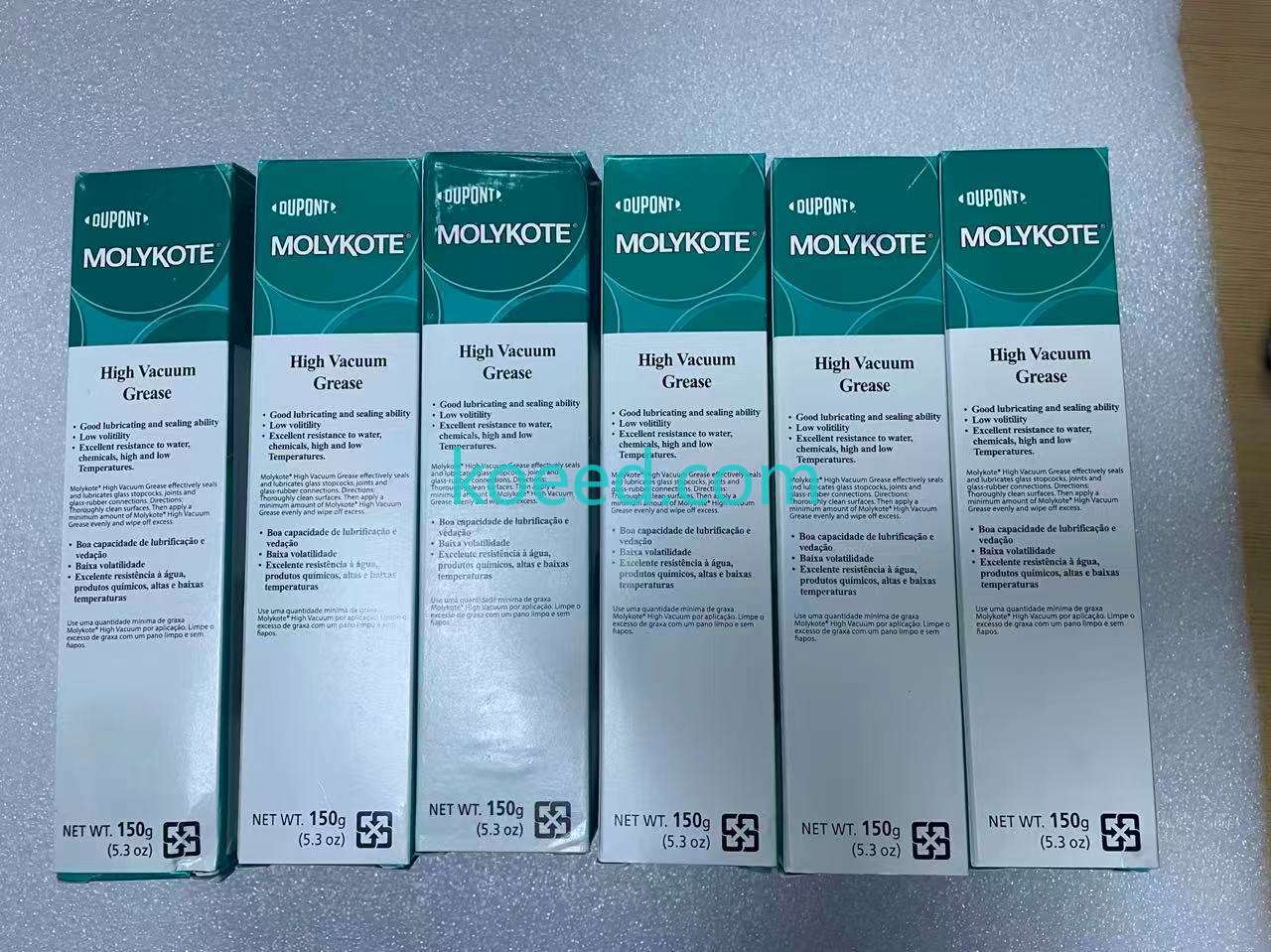
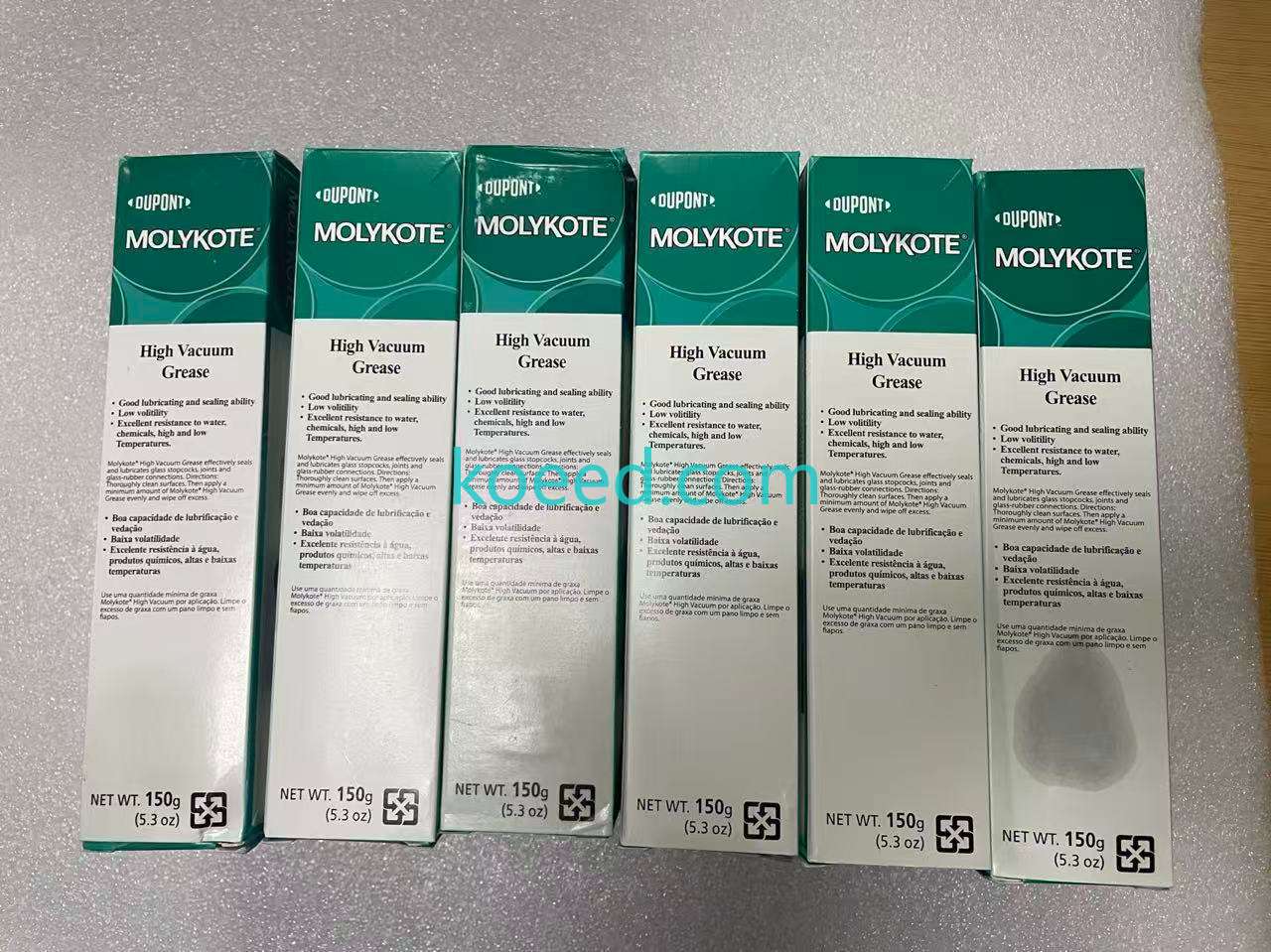
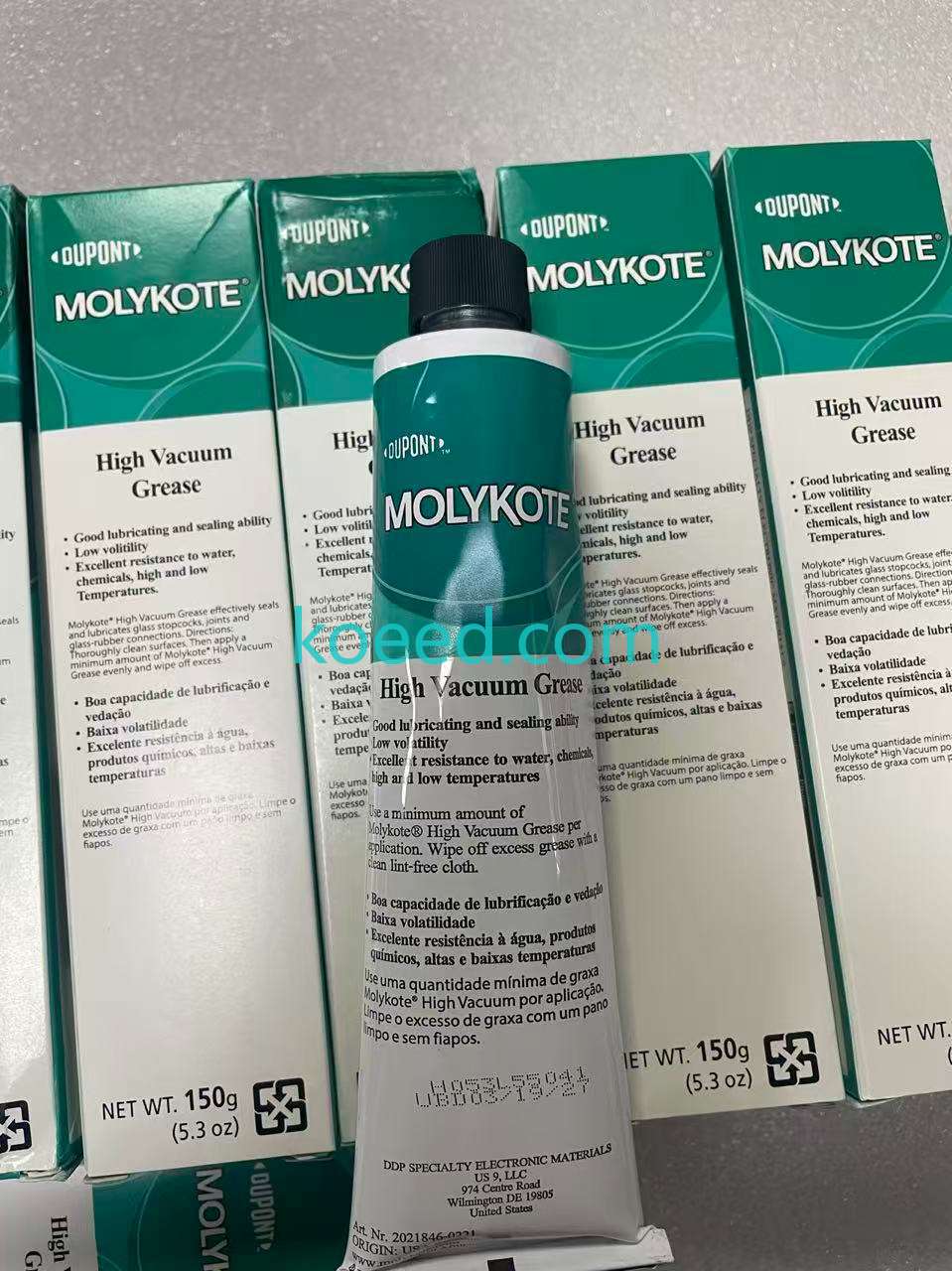
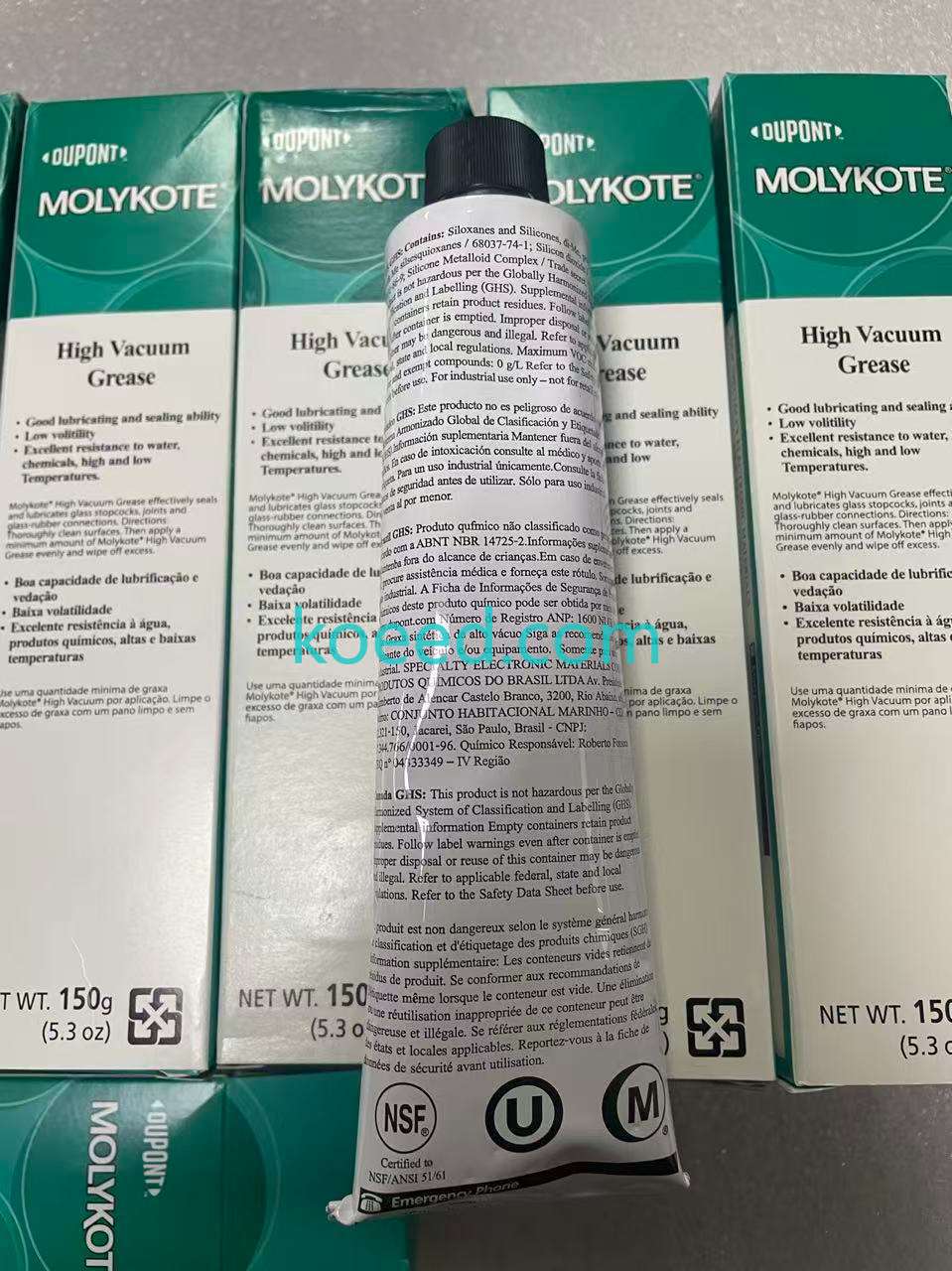
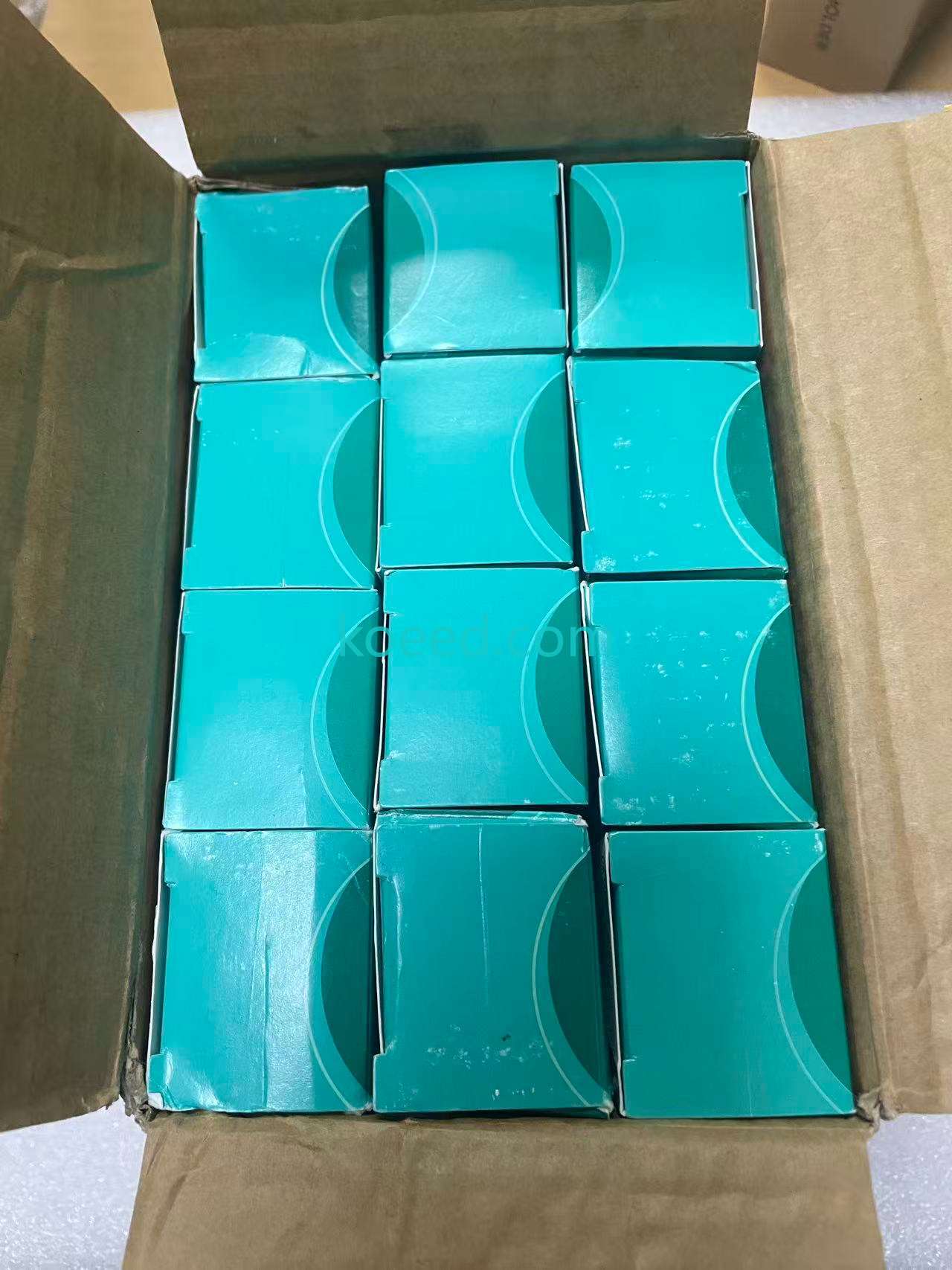
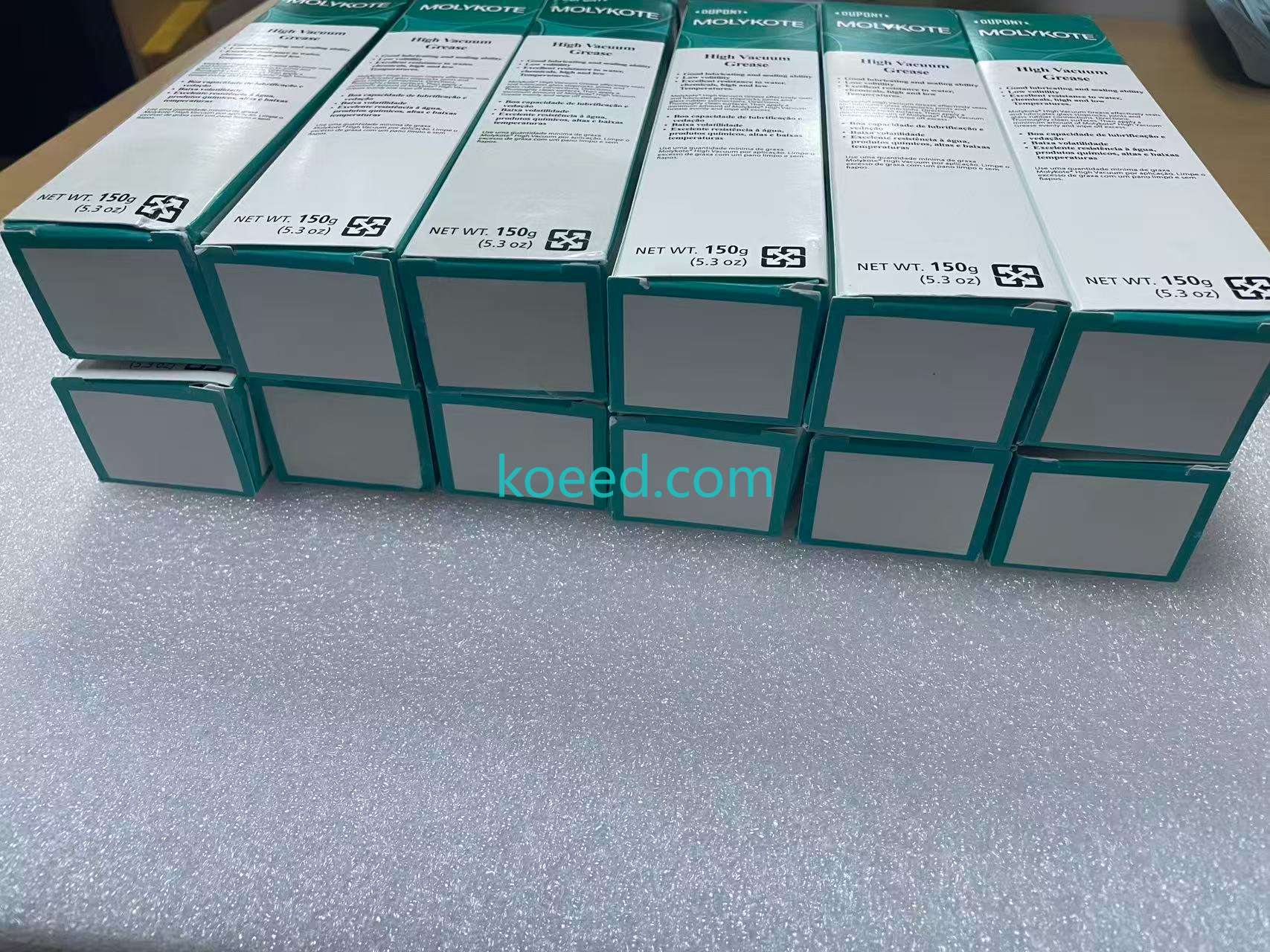
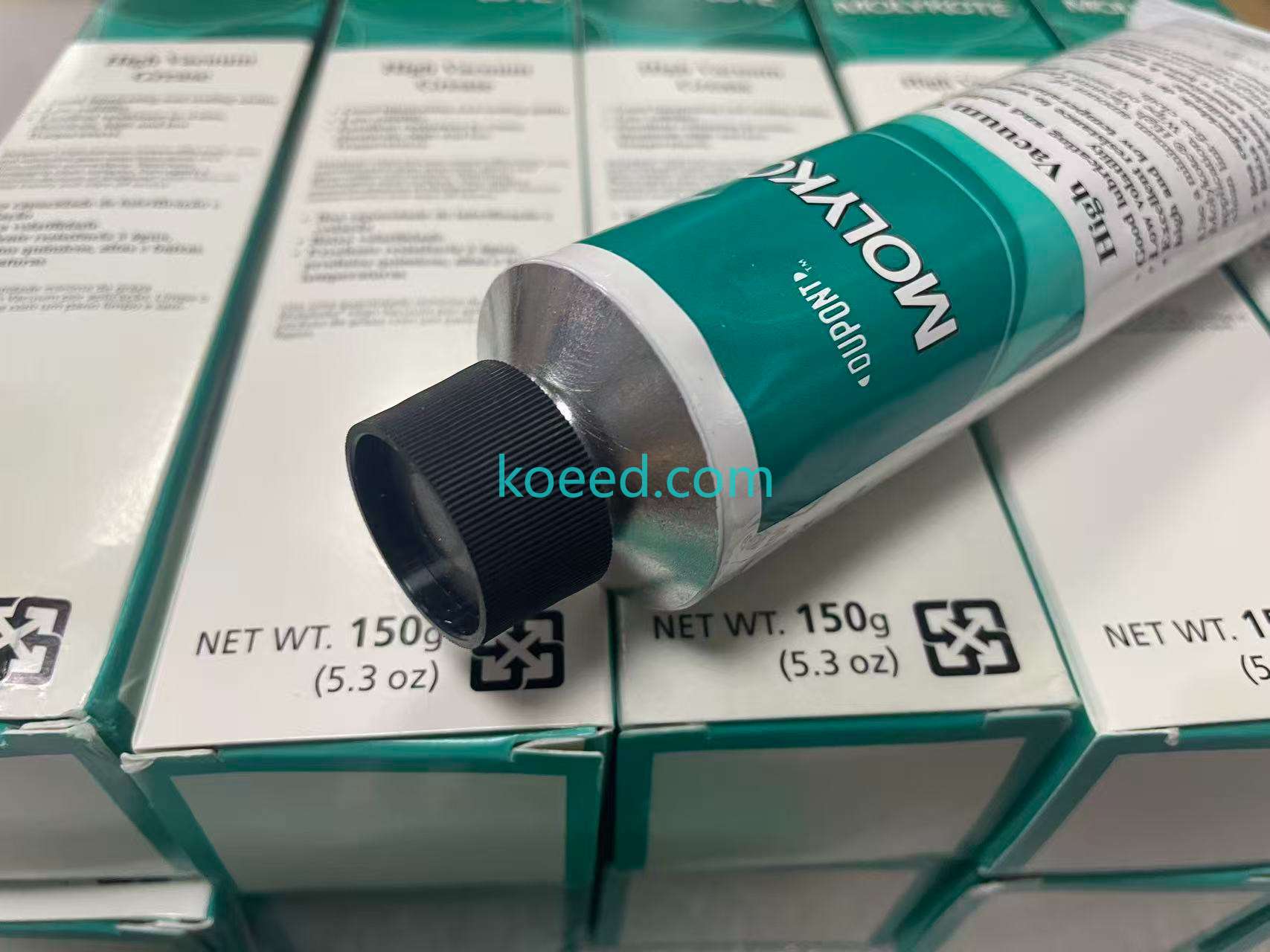
Below is the complete visual reference for the MOLYKOTE DOW CORNING HVG High Vacuum Grease 150g tube:
Maintenance & Troubleshooting: Extending Service Life
Best Practices for 2026 Smart Maintenance Programs
The convergence of OT and IT means vacuum grease is no longer maintained in isolation. Recommended protocols for HVG in a connected factory:
1. Digital Twin Integration
For critical vacuum systems, maintain a digital twin that logs every grease application event—date, quantity, batch number, technician ID. Integrated with your CMMS, this data enables AI-driven trend analysis to predict seal degradation before vacuum decay rates exceed process thresholds.
2. Visual Inspection Triggers
Inspect O-ring grease condition during every pump-down cycle review. Signs indicating re-application of MOLYKOTE HVG is needed:
- Translucent grease turning opaque or yellowed (oxidation indicator)
- Hardened or cracked grease film on flange surfaces
- Increased pump-down time exceeding baseline by >15%
- Visible particulate ingress at the grease-seal interface
3. Common Vacuum Leak Diagnostics
| Symptom | Probable Grease-Related Cause | Corrective Action |
|---|---|---|
| RGA shows hydrocarbon peak (m/z 43–57) | Incorrect hydrocarbon grease used; outgassing | Clean thoroughly; reapply HVG silicone grease only |
| Base pressure drifts upward over days | Grease film breakdown; micro-leak paths forming | Solvent-clean flange; apply fresh HVG bead |
| Pump-down curve shows plateau at 10⁻² Torr | Water vapor absorbed in degraded grease | Bake-out at 80 °C for 4 hrs; re-grease if needed |
| Audible hiss near flange joints | Gross leak—grease displaced or insufficient | Immediate re-application; verify flange bolt torque |
Storage, Handling & Shelf-Life Optimization
To preserve the integrity of MOLYKOTE HVG in inventory:
- Temperature: Store between +5 °C and +35 °C; avoid freeze-thaw cycles that can cause silica thickener separation.
- Humidity: Keep cap tightly sealed; silica thickener can absorb atmospheric moisture.
- Shelf Life: 36 months from date of manufacture when stored per guidelines. Koeed's just-in-time supply chain ensures batch freshness for every 150g tube shipped.
- Inventory Tracking: Use QR-coded batch labels for ERP-integrated FIFO consumption management.
Frequently Asked Questions
Can MOLYKOTE HVG be used with oxygen-enriched systems?
No. Like most silicone-based greases, MOLYKOTE HVG is not recommended for use with pure oxygen or strong oxidizing agents due to potential combustion hazards. For oxygen service, consult Koeed's technical team for PFPE-based alternatives.
How does the NLGI 3–4 stiffness affect application?
The stiff, non-melting consistency prevents grease migration in vertical or inverted vacuum flange orientations. For easier application, warm the 150g tube to approximately 30–35 °C before dispensing. Use a clean, lint-free applicator.
Is HVG compatible with FKM (Viton) and EPDM O-rings?
Yes. MOLYKOTE HVG is chemically inert and fully compatible with FKM (Viton®), EPDM, nitrile (NBR), and silicone elastomers. It will not cause swelling, shrinkage, or embrittlement within its rated temperature range.
What is the recommended cleaning solvent before re-application?
Use isopropyl alcohol (IPA, ≥99%) or acetone for residue-free cleaning of flange surfaces. Ensure complete solvent evaporation before greasing—residual solvent trapped under the grease film will outgas. For UHV applications below 10⁻⁷ Torr, a follow-up wipe with semiconductor-grade methanol is recommended.
How does the 2026 DuPont rebrand affect the product?
The DOW CORNING branding has transitioned fully to the DuPont™ MOLYKOTE® portfolio. The formulation remains identical. The product stocked by Koeed may carry either branding during the transition period; performance is guaranteed equivalent.
IT/OT Convergence: Smart Lubrication Management for 2026
The future of industrial automation lubrication lies in data-driven asset management. Koeed supports integration-ready procurement where each MOLYKOTE HVG 150g tube is traceable via batch-level digital product passports. Integrate this data with your ERP (SAP/Oracle/Microsoft Dynamics) and CMMS platforms to automate reorder points, track consumption trends across multi-site operations, and generate audit-ready compliance reports for ISO 9001 and FDA 21 CFR Part 11 environments.
Did You Know? Koeed's B2B procurement portal supports API-based punch-out catalogs—enabling your procurement team to order MOLYKOTE HVG directly from within their e-procurement platform, reducing maverick spend and ensuring contract compliance.
Secure Your 2026 Vacuum Reliability
Equip your automated vacuum systems with the proven performance of MOLYKOTE DOW CORNING HVG High Vacuum Grease. With free shipping and technical support, Koeed is your trusted partner for industrial lubrication.


