

MQ-W20C-DC12-24VEM Panasonic Triple Beam Photoelectric Sensor: 2026 Sourcing, Integration & Predictive Maintenance Guide
In the rapidly evolving landscape of industrial automation, the Panasonic MQ-W20C-DC12-24VEM triple beam adjustable range reflective photoelectric sensor remains a cornerstone component for precision object detection — even as we navigate the 2026 paradigm of IT/OT convergence. While officially discontinued by Panasonic, this sensor's exceptional reliability, IP67-rated zinc die-cast construction, and unique triple beam architecture continue to make it a sought-after component for legacy system maintenance, retrofit projects, and cost-conscious automation upgrades. This guide provides a comprehensive technical evaluation, alternative sourcing strategies, and integration insights for engineering teams seeking to maximize system longevity and ROI.
Strategic Overview: The MQ-W20C-DC12-24VEM in the 2026 Industrial Ecosystem
As manufacturing facilities worldwide accelerate their Industry 4.0/5.0 transitions, the role of photoelectric sensors has evolved from simple presence detection to critical data-acquisition nodes within larger IIoT (Industrial Internet of Things) architectures. The MQ-W20C-DC12-24VEM, despite its discontinued status, exemplifies the kind of robust, field-proven hardware that underpins reliable automation — and understanding how to source, integrate, and maintain these components is a strategic imperative for engineering and procurement teams alike.
Why the MQ-W20C-DC12-24VEM Still Matters
Panasonic's MQ-W series introduced a game-changing triple beam adjustable range technology that significantly improved detection reliability across varying target colors and surface reflectivity. Unlike conventional single-beam reflective sensors, the triple beam architecture compensates for target surface irregularities — meaning a white object and a black object can be detected at the same distance without recalibration. This capability remains highly relevant in 2026 for:
🎯 Key Application Domains (2026 Relevance)
- Packaging & Logistics: Reliable detection of mixed-material packages (cardboard, glossy plastic, matte labels) on high-speed conveyors
- Automotive Assembly: Part-presence verification where component colors vary across production batches
- CNC & Machining: Tool positioning and workpiece presence in coolant-heavy, IP67-required environments
- Food & Beverage: Washdown-adjacent zones where zinc die-cast durability outperforms plastic-body alternatives
- Retrofit & Legacy Systems: Drop-in replacement for aging MQ-W20C units in production lines where full system redesign is cost-prohibitive
Technical Specifications & Benchmarking
Below is a detailed technical benchmarking table comparing the MQ-W20C-DC12-24VEM against the modern successor series and industry alternatives available in 2026. This comparison is essential for engineers evaluating whether to source the original model or migrate to a next-generation equivalent.
| Specification | MQ-W20C-DC12-24VEM (Original) | 2026 Successor Equivalent | Industry Standard (Class-Leading) |
|---|---|---|---|
| Sensor Type | Triple Beam Adjustable Range Reflective | Laser + LED Hybrid Reflective | CMOS Laser Displacement |
| Sensing Range | 0 – 200 mm | 0 – 300 mm | 0 – 500 mm |
| Supply Voltage | DC 12 – 24V | DC 10 – 30V (wide-range) | DC 10 – 30V |
| Output Type | PNP (Sourcing) | PNP / NPN (software-selectable) | PNP / NPN / IO-Link |
| Operation Modes | Dark-ON / Light-ON | Dark-ON / Light-ON (digitally configurable) | Multi-mode (Teach-in, Window, Hysteresis) |
| Max. Operating Current | 100 mA | 50 – 100 mA | ≤ 50 mA (energy-optimized) |
| Ingress Protection | IP67 | IP67 / IP69K | IP69K |
| Body Material | Zinc Die-Cast | Stainless Steel (316L) | Stainless Steel / Vectra® LCP |
| Connection Method | Integral Cable (2m) | M8 / M12 Connector + Cable | IO-Link + M12 |
| Operating Temperature | -25°C to +55°C | -30°C to +65°C | -40°C to +70°C |
| Adjustment Type | Manual (Potentiometer) | Push-Button / Remote Teach | Remote Teach + IO-Link Parameterization |
| IT/OT Integration | Discrete I/O only | IO-Link v1.1.3 | IO-Link + MQTT Gateway Ready |
| Lifecycle Status | Discontinued | Active / Recommended | Active |
For brownfield sites with dozens of MQ-W20C units already deployed, the ROI of sourcing NOS (New Old Stock) or certified refurbished MQ-W20C-DC12-24VEM sensors often outperforms a full migration to IO-Link successors by 3:1 over a 24-month horizon, once you factor in PLC I/O reconfiguration, rewiring labor, and production downtime. Contact Koeed's sourcing specialists for a tailored TCO analysis.
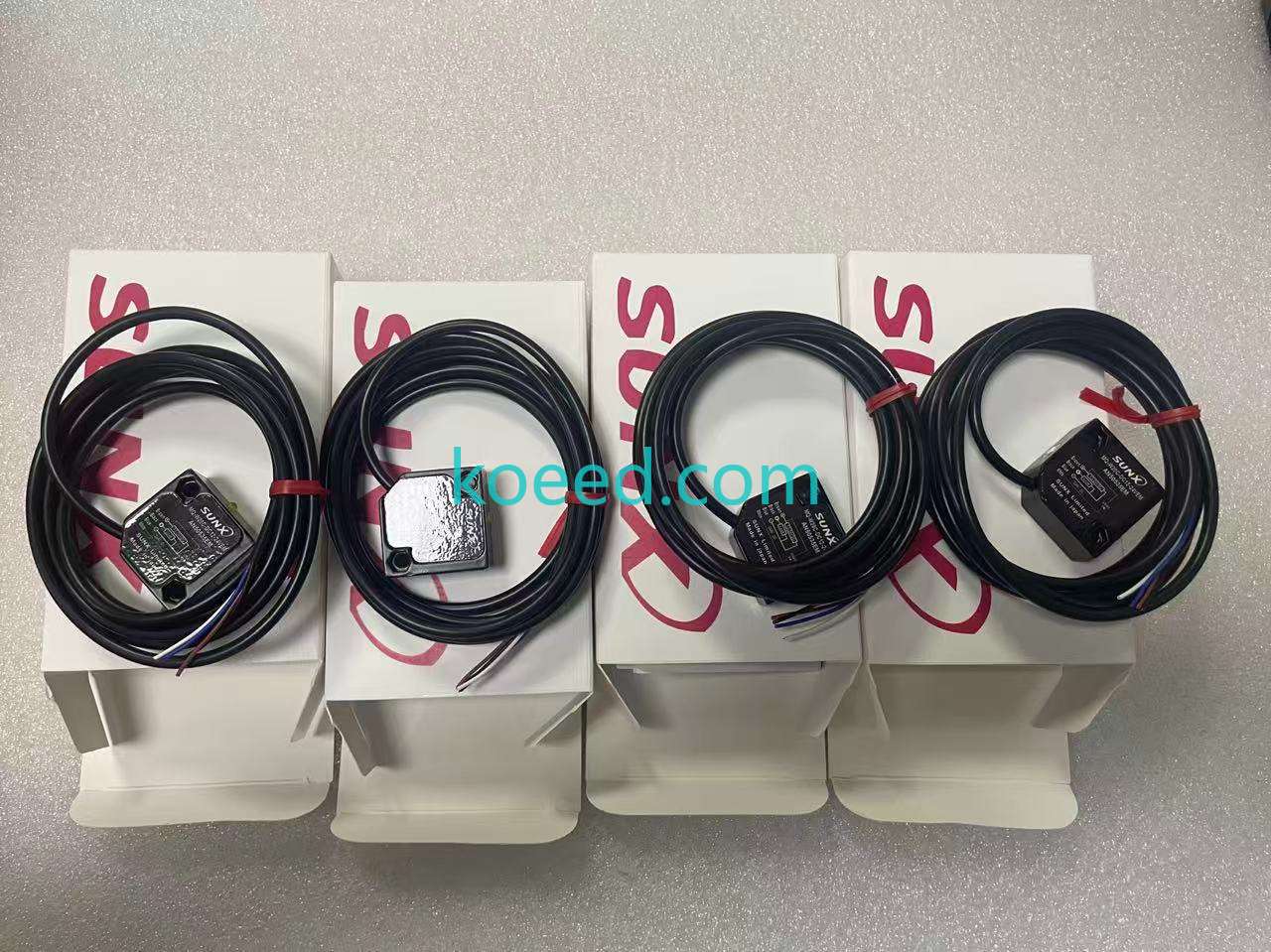
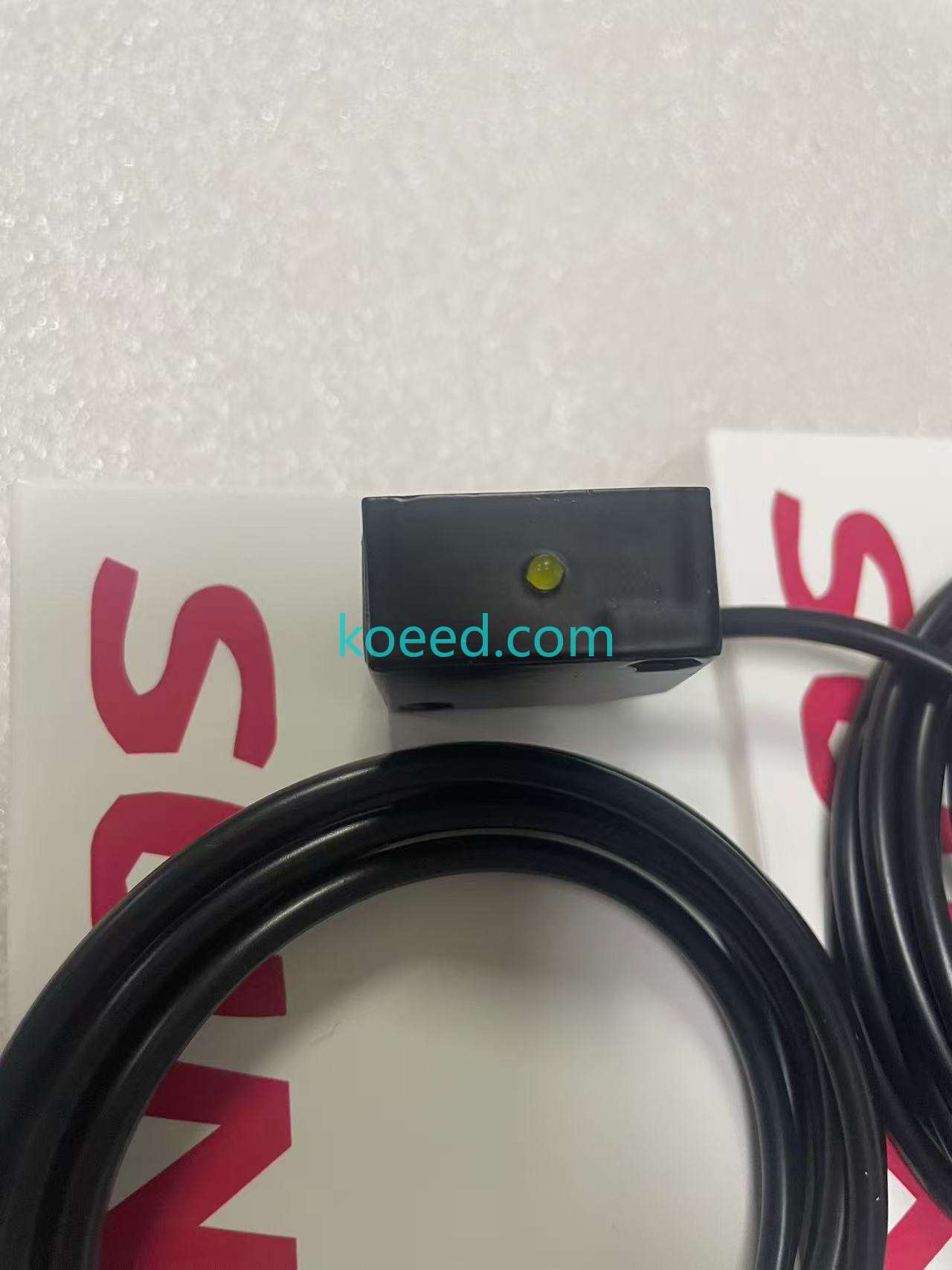
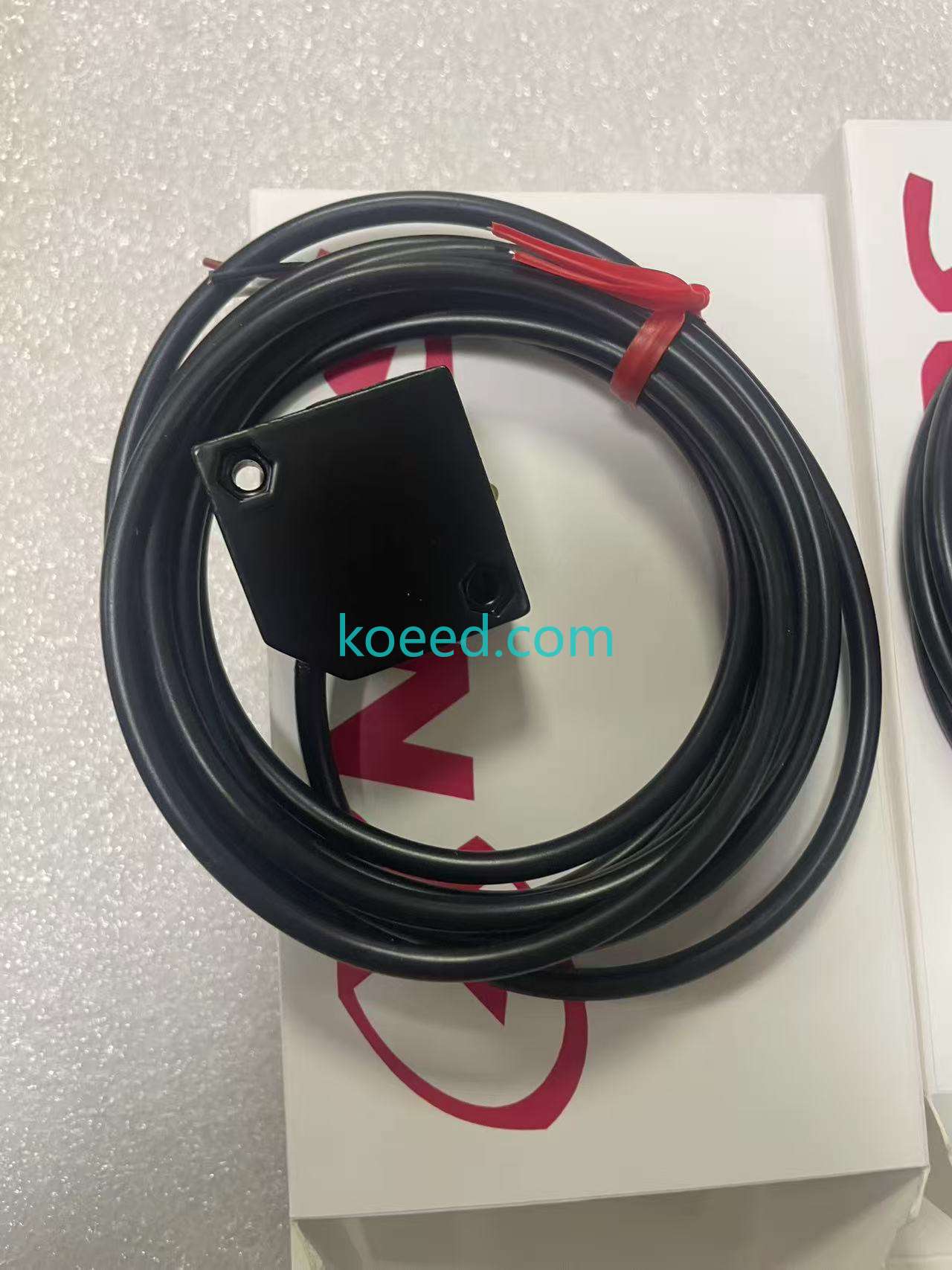
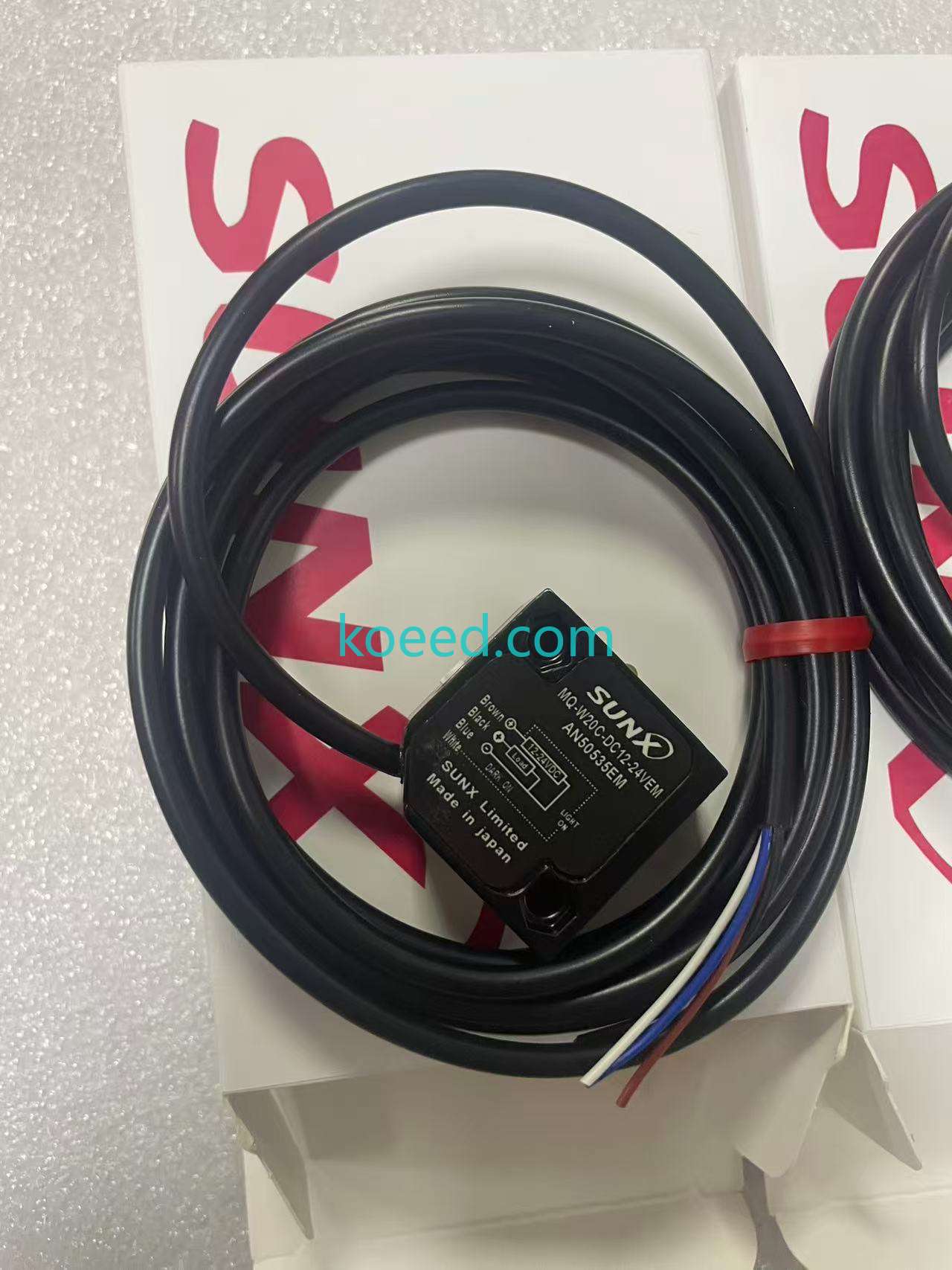
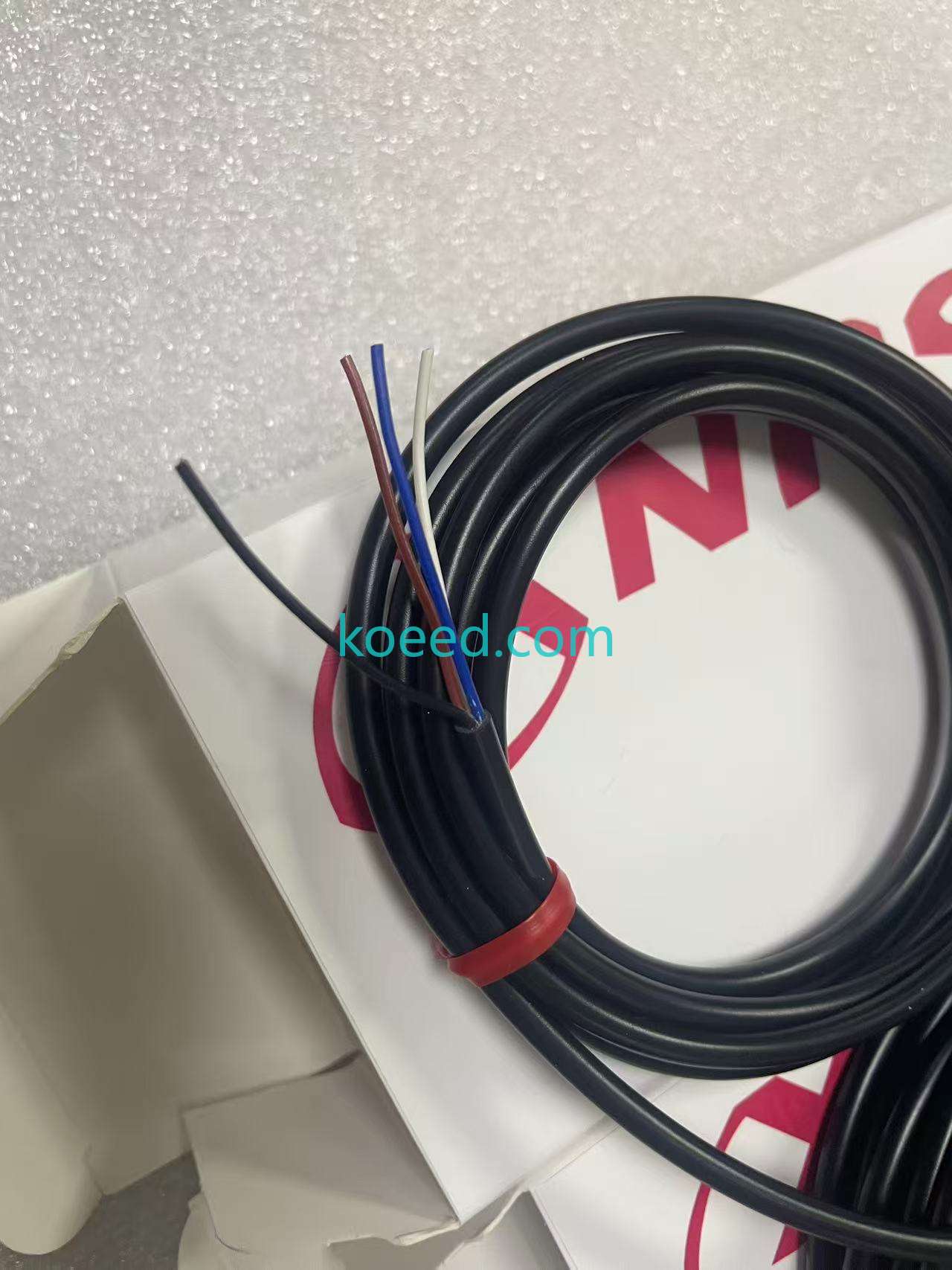
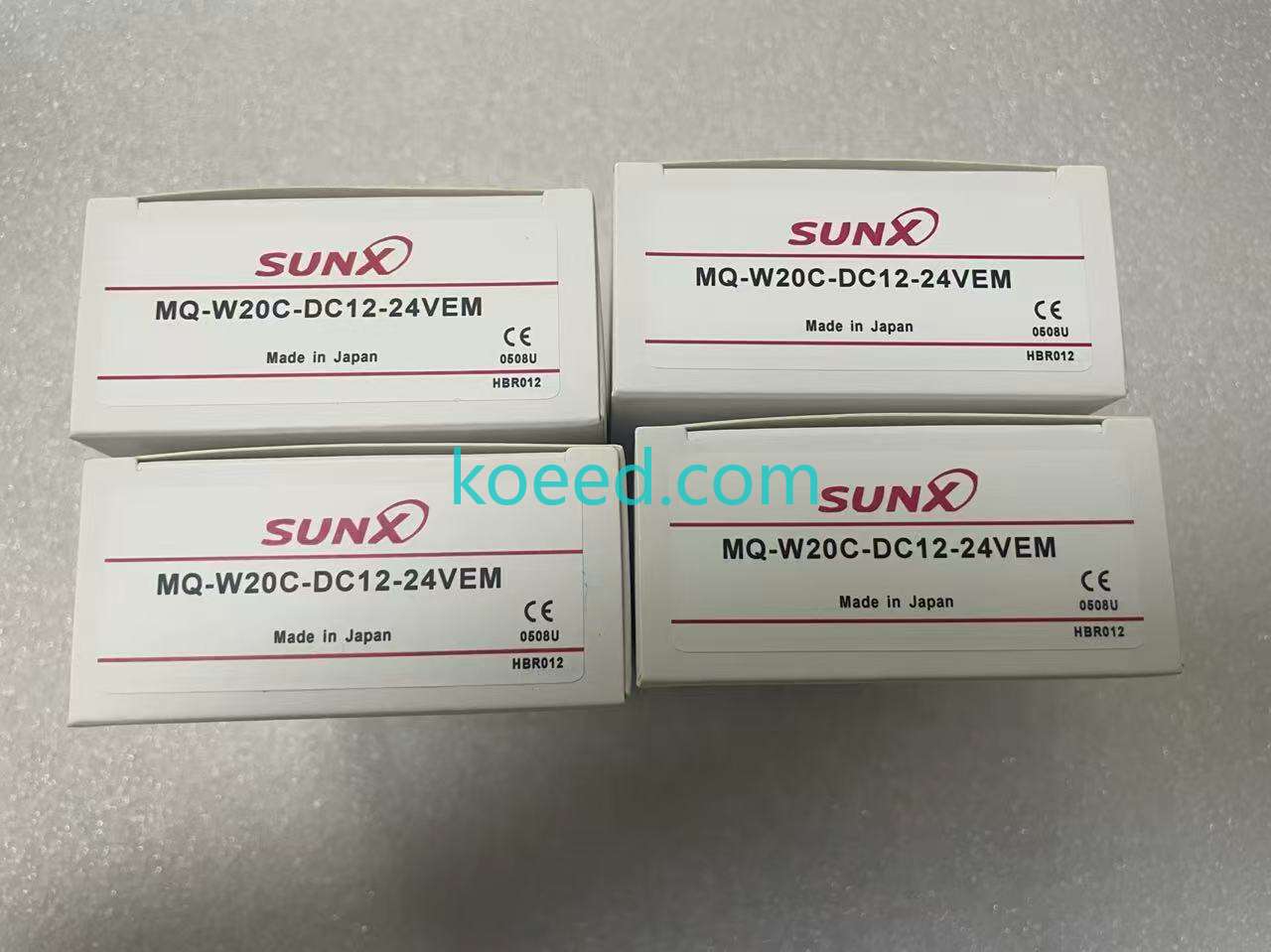
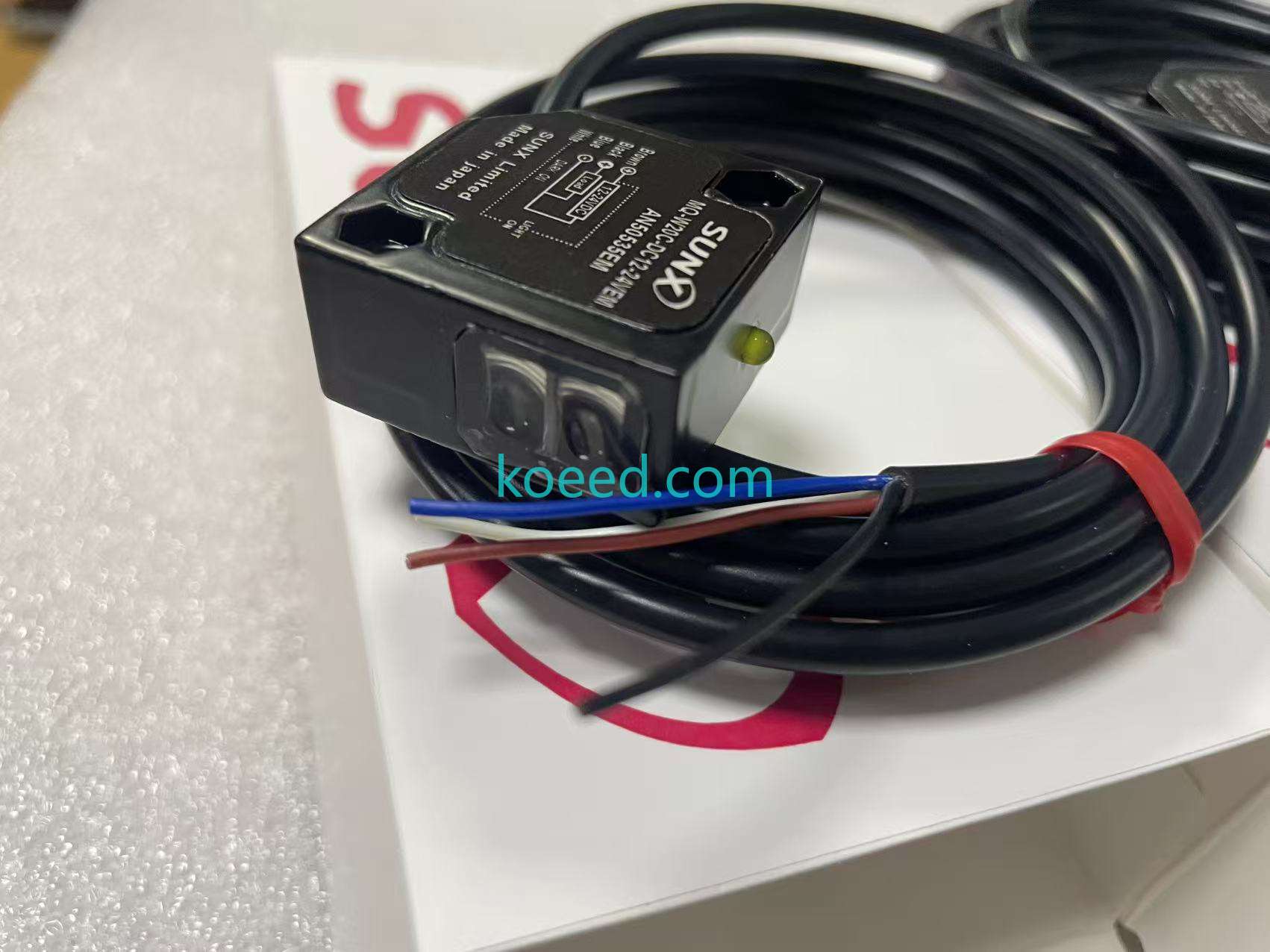
Visual Gallery: MQ-W20C-DC12-24VEM Product Images
Below is a comprehensive visual reference of the Panasonic MQ-W20C-DC12-24VEM, including housing details, labeling, connector/cable views, and dimensional perspectives — essential for integration planning and physical compatibility verification.
Product Demonstration Video
IT/OT Convergence: Integrating the MQ-W20C-DC12-24VEM into 2026 Smart Factories
While the MQ-W20C-DC12-24VEM is a discrete I/O device without native IO-Link or Ethernet connectivity, it remains fully viable within 2026 smart factory architectures through edge-gateway integration strategies. Below we outline two proven approaches for bridging this legacy sensor into modern data pipelines.
Approach 1: PLC-Mediated Edge Integration
The MQ-W20C-DC12-24VEM's PNP output connects directly to standard 24V DC sinking PLC inputs. Modern PLCs — such as the Siemens S7-1500, Mitsubishi iQ-R, or Allen-Bradley CompactLogix 5480 — can publish sensor state changes to MQTT brokers, OPC UA servers, or cloud platforms (AWS IoT Greengrass, Azure IoT Hub) with minimal configuration. This approach enables:
- Real-time state monitoring of each sensor in the production line
- Cycle-count analytics for predictive maintenance scheduling
- Event-driven alerts when detection patterns deviate from baseline (e.g., increased missed detections indicating lens contamination or alignment drift)
Approach 2: Remote I/O with IIoT Capability
For distributed installations, pairing the MQ-W20C-DC12-24VEM with an IO-Link-capable remote I/O hub (e.g., Balluff BNI, Turck TBEN, or IFM AL11xx series) creates a bridge. The sensor's PNP output connects to a standard digital input on the hub, which then exposes status data via IO-Link, PROFINET, or EtherNet/IP to the supervisory network.
When retrofitting MQ-W20C-DC12-24VEM sensors into IIoT architectures, add a simple edge-computing rule at the PLC level: track the time between successive rising edges (object detection events). A gradual increase in detection latency often signals lens contamination or emitter degradation — actionable intelligence without replacing the sensor itself.
Predictive Maintenance & Lifecycle Optimization
In 2026, predictive maintenance is no longer a luxury — it is a baseline expectation for competitive manufacturing. Even for a discrete photoelectric sensor like the MQ-W20C-DC12-24VEM, a structured maintenance protocol significantly extends service life and prevents unplanned downtime.
Common Failure Modes & Mitigation
| Symptom | Probable Cause | 2026 Diagnostic Approach | Corrective Action |
|---|---|---|---|
| Intermittent detection / flickering output | Lens contamination or moisture ingress | PLC-side frequency anomaly detection; compare ON/OFF duty cycle against baseline | Clean lens with isopropyl alcohol; inspect IP67 seal integrity; replace O-ring if hardened |
| No output (constant OFF) | Emitter LED degradation or power supply fault | Verify DC 12-24V supply at cable termination; use smartphone IR camera to confirm emitter activity (visible as faint glow) | Check power supply; if emitter is dead, replace sensor unit |
| Reduced sensing range | Potentiometer drift or internal contamination | Bench-test with reference target at 200mm; compare with factory spec | Re-adjust sensitivity potentiometer; if range cannot be restored, replace |
| False triggers in high-vibration environment | Mounting bracket loosening; internal component fatigue | Vibration spectral analysis via edge accelerometer; correlate false triggers with vibration peaks | Torque mounting bolts to spec; add vibration-dampening washers |
| Output stuck ON (light received when no target present) | Background reflection / crosstalk from adjacent sensor | AI-based signal pattern recognition at PLC level to distinguish legitimate vs. spurious triggers | Adjust sensor angle; install optical barrier between adjacent sensors; reduce sensitivity |
Sustainability & Energy Impact
At a maximum operating current of just 100 mA at 24V DC, the MQ-W20C-DC12-24VEM consumes approximately 2.4W — remarkably efficient even by 2026 standards. Across a facility with 500 sensors running 24/7, the annual energy cost is approximately $1,051 USD (at $0.10/kWh), making it a negligible contributor to overall plant energy consumption. The real sustainability value lies in its zinc die-cast construction: the housing is fully recyclable at end-of-life, and the sensor's durability reduces replacement frequency compared to plastic-body alternatives, lowering embedded carbon over the system lifecycle.
Sourcing Strategy: Navigating the Discontinuation
The Panasonic MQ-W20C-DC12-24VEM has been officially discontinued by the manufacturer. Authorized distribution channels no longer carry new stock. Any "new" inventory in the market should be verified for authenticity — counterfeit industrial sensors are a growing concern in 2026. Koeed maintains a rigorously vetted supply chain for NOS (New Old Stock) and certified pre-owned MQ-W20C-DC12-24VEM units, each undergoing full functional bench testing before shipment.
Recommended 2026 Successor Models
For greenfield projects or complete line upgrades where exact form-factor compatibility is not required, Koeed recommends evaluating these modern alternatives that offer the triple beam detection reliability with added IIoT capabilities:
🔄 Panasonic MQ-W20C-DC12-24VEM — 2026 Migration Path
| Option | Model Series | Key Advantage | Best For |
|---|---|---|---|
| Option A | Panasonic CX-400 Series | IO-Link ready; similar form factor | Gradual migration; mixed old/new fleet |
| Option B | SICK WTB4-3 Series | Industry-leading background suppression | High-accuracy applications |
| Option C | Koeed Sourced NOS MQ-W20C | Exact drop-in replacement; zero re-engineering | Legacy system maintenance |
Interactive FAQ: MQ-W20C-DC12-24VEM
Is the MQ-W20C-DC12-24VEM still available for purchase in 2026?
Panasonic has officially discontinued this model. However, Koeed maintains access to verified NOS (New Old Stock) and certified pre-owned inventory through our global sourcing network. Every unit is bench-tested for full functionality, and comes with a 12-month warranty. Contact Koeed to check current availability.
What is the advantage of the triple beam design?
The triple beam architecture uses three separate light beams to compensate for variations in target color, texture, and reflectivity. This enables the sensor to reliably detect both light and dark objects at the same distance without manual recalibration — a significant advantage in mixed-product lines.
Secure Your MQ-W20C-DC12-24VEM Inventory Today
Partner with Koeed for trusted sourcing, rigorous testing, and fast global delivery of this critical industrial sensor.


