

QD77MS4 Q: The 2026 Engineer's Guide to Mitsubishi's 4-Axis SSCNET III/H Simple Motion Module
QD77MS4 Q — Mitsubishi 4-Axis Simple Motion Module (SSCNET III/H)
Model: QD77MS4 · MELSEC-Q Series · 0.888 ms servo cycle · Cam, synchronous & speed-torque control · 600 positioning points/axis
The Mitsubishi QD77MS4 is a 4-axis Simple Motion Module for the MELSEC-Q PLC platform, engineered for high-speed synchronized servo control over SSCNET III/H fiber-optic networking. For 2026 automation teams, it remains the cost-optimized bridge between basic pulse positioning and full CNC-class motion control.
1. Strategic Overview: Positioning the QD77MS4 in the 2026 Industrial Landscape
As factories accelerate toward IT/OT convergence, the QD77MS4 Q Series module plays a decisive role: it converts motion commands from the Q Series PLC CPU into deterministic, sub-millisecond servo trajectories. Where legacy pulse-train modules demanded complex wiring and struggled with diagnostics, the QD77MS4 delivers a single fiber-optic backbone to MR-J4/MR-J5 series servo amplifiers — radically simplifying panel design while improving noise immunity.
From a procurement and Total Cost of Ownership (TCO) perspective, the module consolidates positioning, synchronous control and cam functions into one slot, reducing hardware count, engineering hours and spare-part inventory. Its deterministic 0.888 ms cycle time also supports the predictive-maintenance data layer: engineers can trend following error, torque command and load factor via the PLC and upstream SCADA/ERP systems, shifting maintenance from reactive to condition-based.
- IT/OT Convergence: Native integration with Mitsubishi iQ Works / GX Works2-3 and direct mapping into CC-Link IE / Ethernet networks for cloud visibility.
- ROI & TCO: One module replaces four discrete axes of pulse control plus external wiring, lowering commissioning cost and fault-finding time.
- Sustainability: SSCNET III/H fiber networking reduces copper usage, and optimized motion profiles cut servo energy consumption on high-cycle lines.
- Predictive Maintenance: Real-time servo error and load telemetry enables early detection of mechanical wear before unplanned downtime.
⚙️ Pro Tip — Know Your Motion Tier
- QD75P/N (pulse output) — legacy, open-loop-style command wiring, highest engineering effort.
- QD77MS4 (Simple Motion) — SSCNET III/H network command, interpolation, sync & cam control. Best price/performance for most packaging, assembly and material-handling axes.
- QD75MH (Advanced Motion) — adds higher-axis interpolation and advanced path control for demanding multi-axis coordination.
2. Technical Benchmarking: QD77MS4 vs. Legacy Pulse Positioning
The migration from discrete pulse modules to the QD77MS4 is one of the fastest payback upgrades available on the Q Series. The table below benchmarks the modern module against the previous-generation QD75P4 pulse-train approach.
| Parameter | QD75P4 (Legacy Pulse) | QD77MS4 (Simple Motion) |
|---|---|---|
| Control Axes | 4 axes (pulse train output) | 4 axes (SSCNET III/H network) |
| Command Interface | Open-collector / differential pulse | Fiber-optic SSCNET III/H |
| Servo Cycle | Limited by pulse frequency | 0.888 ms deterministic |
| Interpolation | Linear (2-axis typical) | Linear up to 4 axes + circular 2-axis |
| Synchronous / Cam | Not supported | Supported (cam, clutch, speed-torque) |
| Positioning Data | ~600 points/axis | 600 points/axis + 600 programs |
| Absolute Position | Optional (battery-backed) | Supported via absolute encoder |
| Diagnostics / Telemetry | Minimal | Rich servo status, error & load data |
| Wiring Complexity | High (many pulse/feedback pairs) | Low (single fiber daisy-chain) |
| Best-Fit Application | Simple point-to-point | Synchronized multi-axis, cam, flying shear |
3. Architecture Deep Dive: SSCNET III/H & IT/OT Convergence
3.1 Deterministic Fiber-Optic Command Layer
The QD77MS4 communicates with servo amplifiers through SSCNET III/H, a dedicated real-time motion network. Unlike Ethernet-based fieldbuses that can experience jitter under load, SSCNET III/H guarantees a fixed 0.888 ms communication cycle — critical for cam synchronization, registration mark correction and flying-shear applications where timing drift directly translates into product defects.
3.2 Integration with Q Series CPU & Upstream Systems
The module sits on the Q Series backplane and is programmed through GX Works2/3 using Simple Motion modules. Positioning data, cam tables and synchronous parameters are configured in dedicated setup tools, then triggered from ladder logic. Upstream, the PLC CPU can expose motion status to MES/SCADA via Ethernet, enabling the digital twin and OEE dashboards that define 2026 smart manufacturing.
3.3 Key Technical Specifications
| Specification | Value |
|---|---|
| Control Axes | 4 |
| Command Interface | SSCNET III/H (fiber optic) |
| Servo Cycle Time | 0.888 ms |
| Positioning Data Capacity | 600 points per axis |
| Program Capacity | 600 programs |
| Control Units | Pulse, mm, inch, degree |
| Interpolation | Linear (up to 4 axes), Circular (2 axes) |
| Synchronous Control | Cam, clutch, speed-torque control |
| Absolute Position Detection | Supported (absolute encoder) |
| Compatible PLC Base | MELSEC-Q Series (Q02U and later) |
| Compatible Servo Amplifiers | MR-J4/MR-J5 series (SSCNET III/H) |
4. Visual Gallery: Unit Inspection & Installation Reference
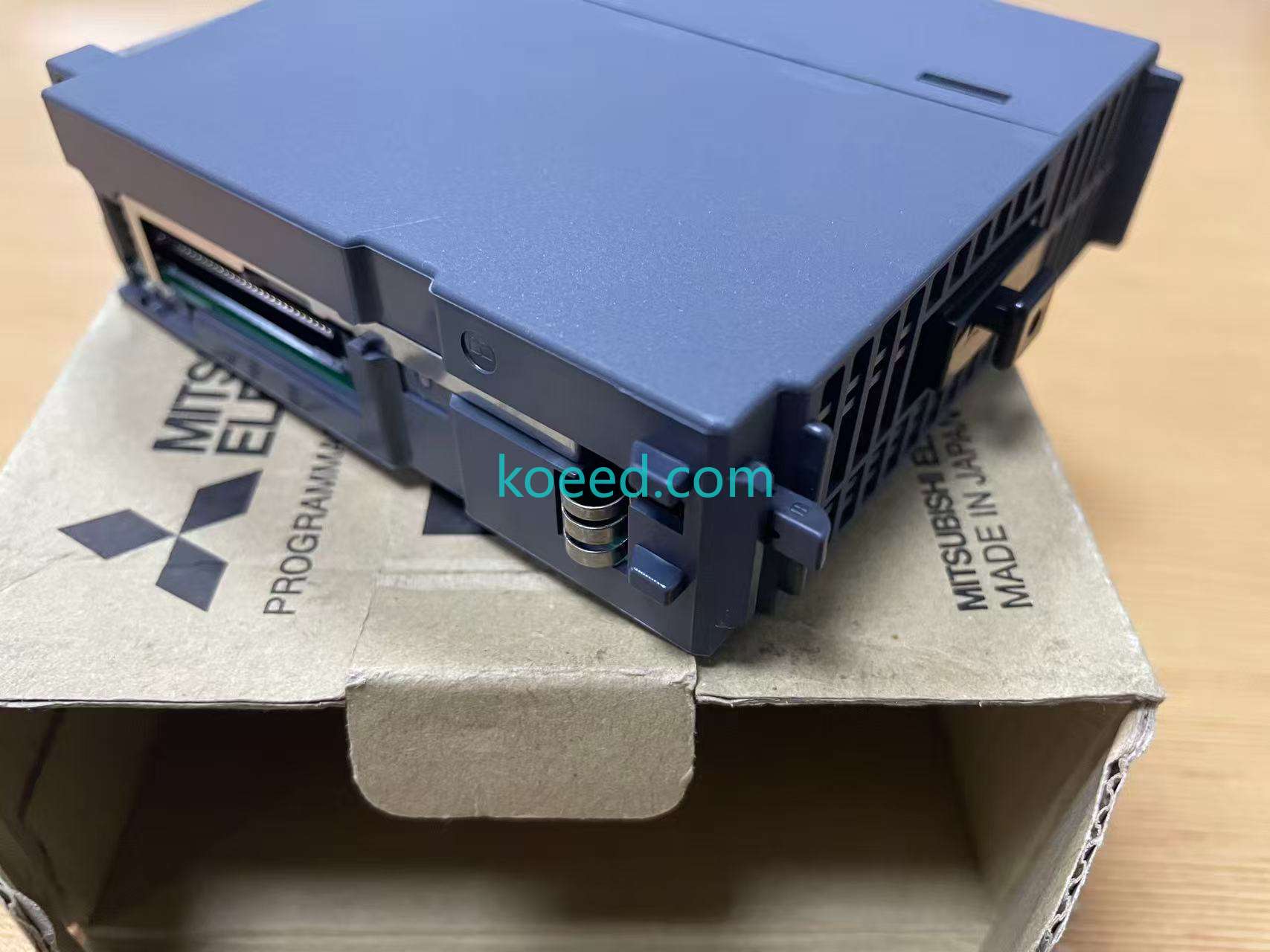
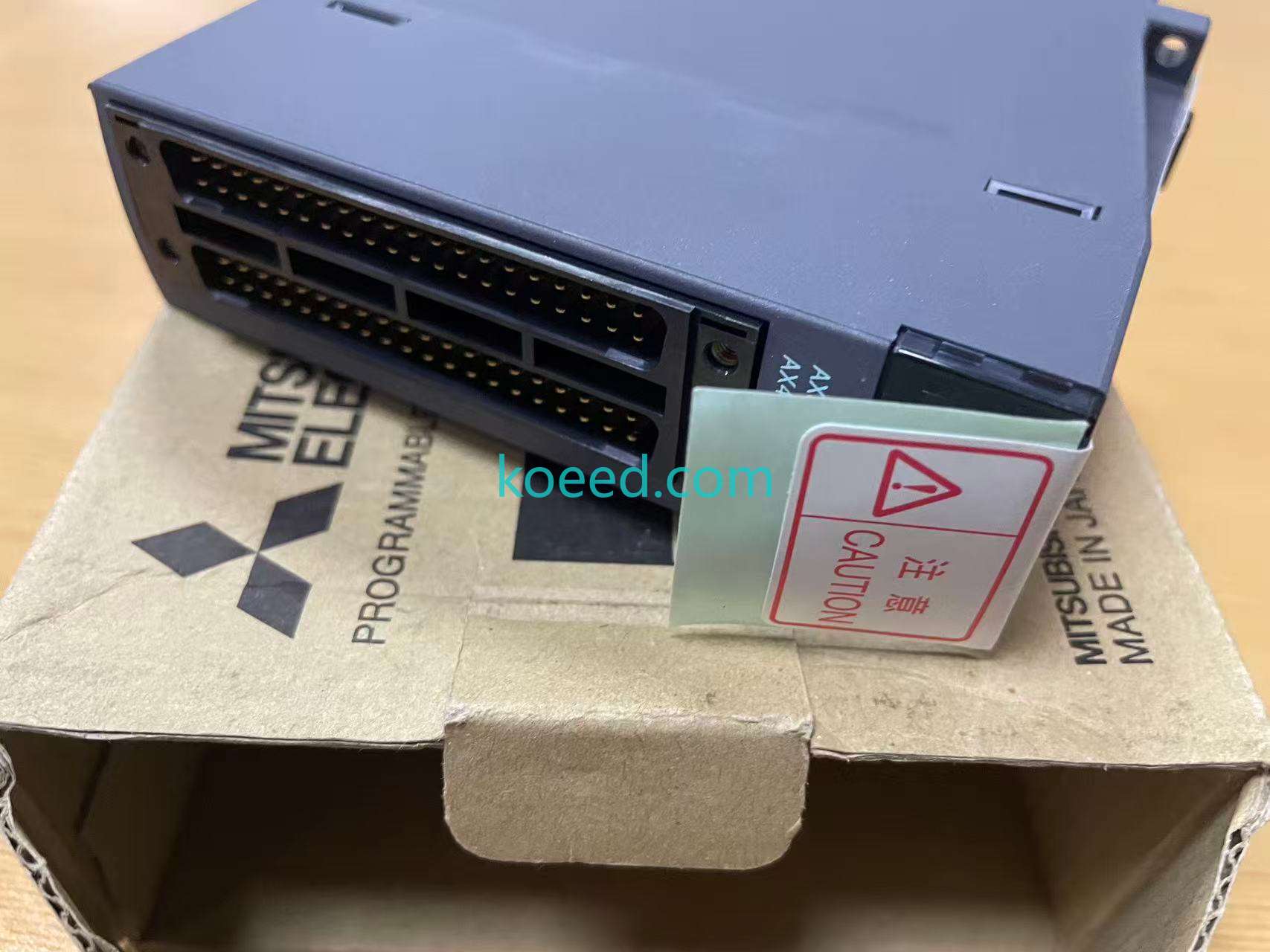
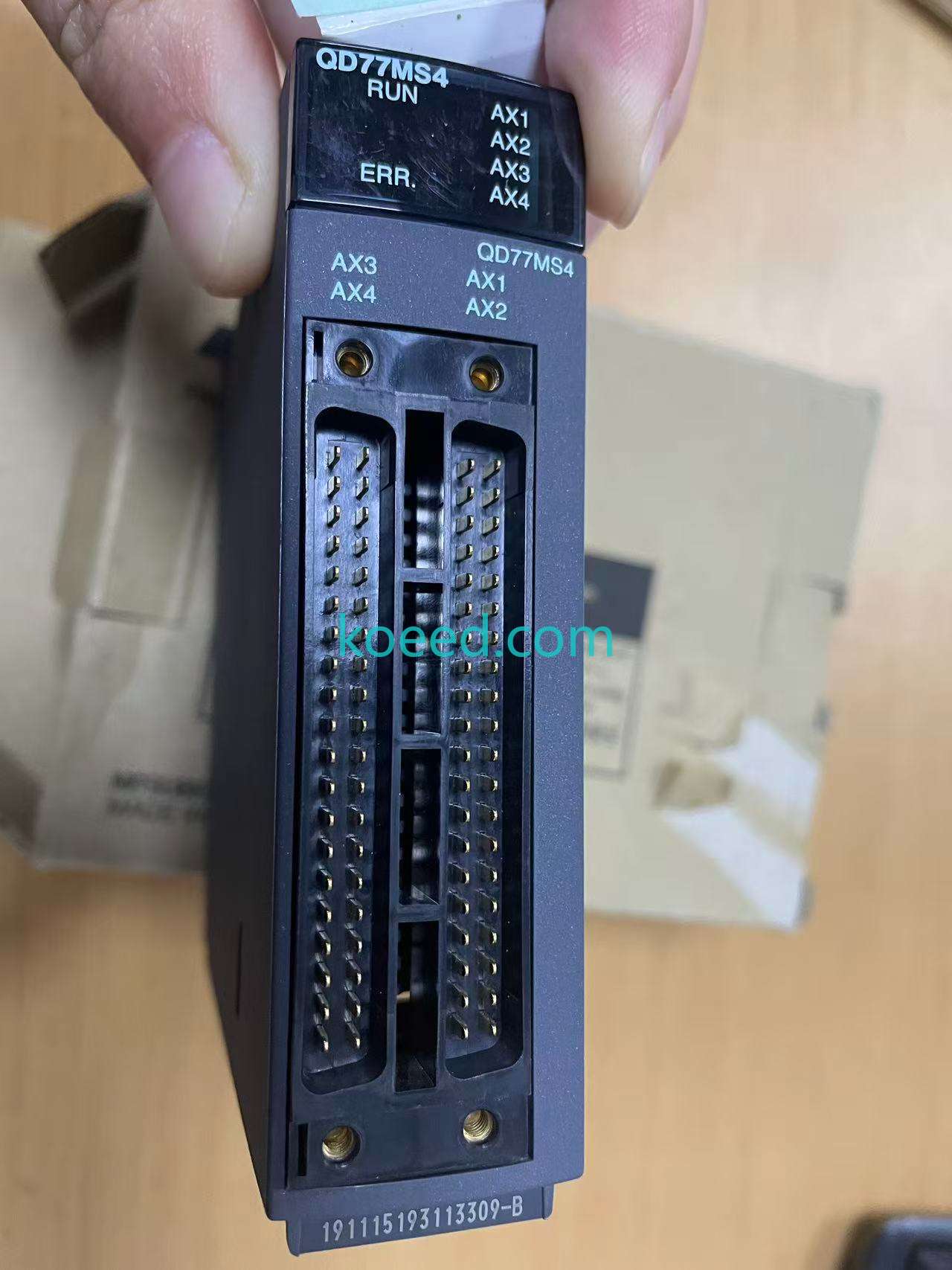
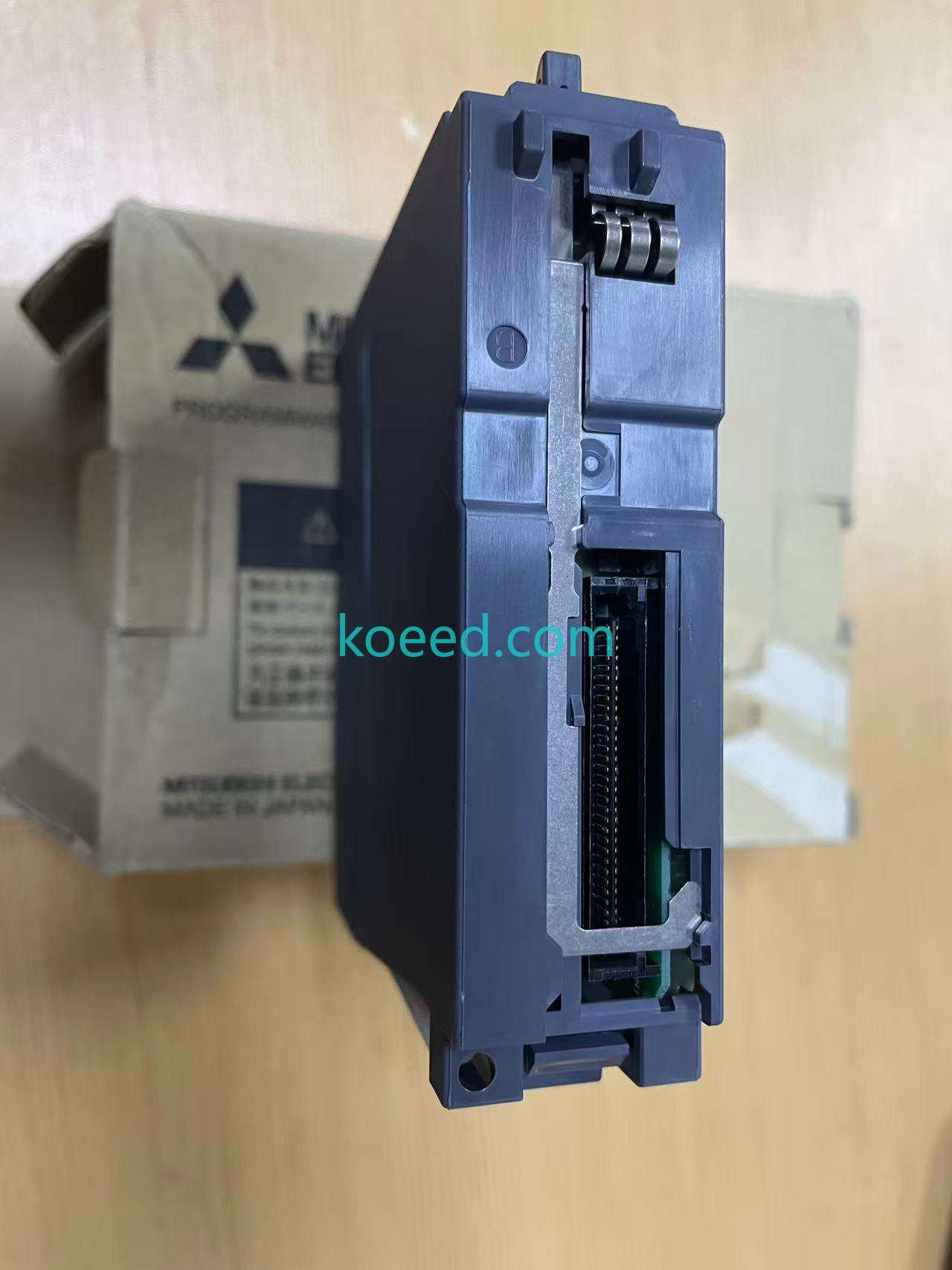
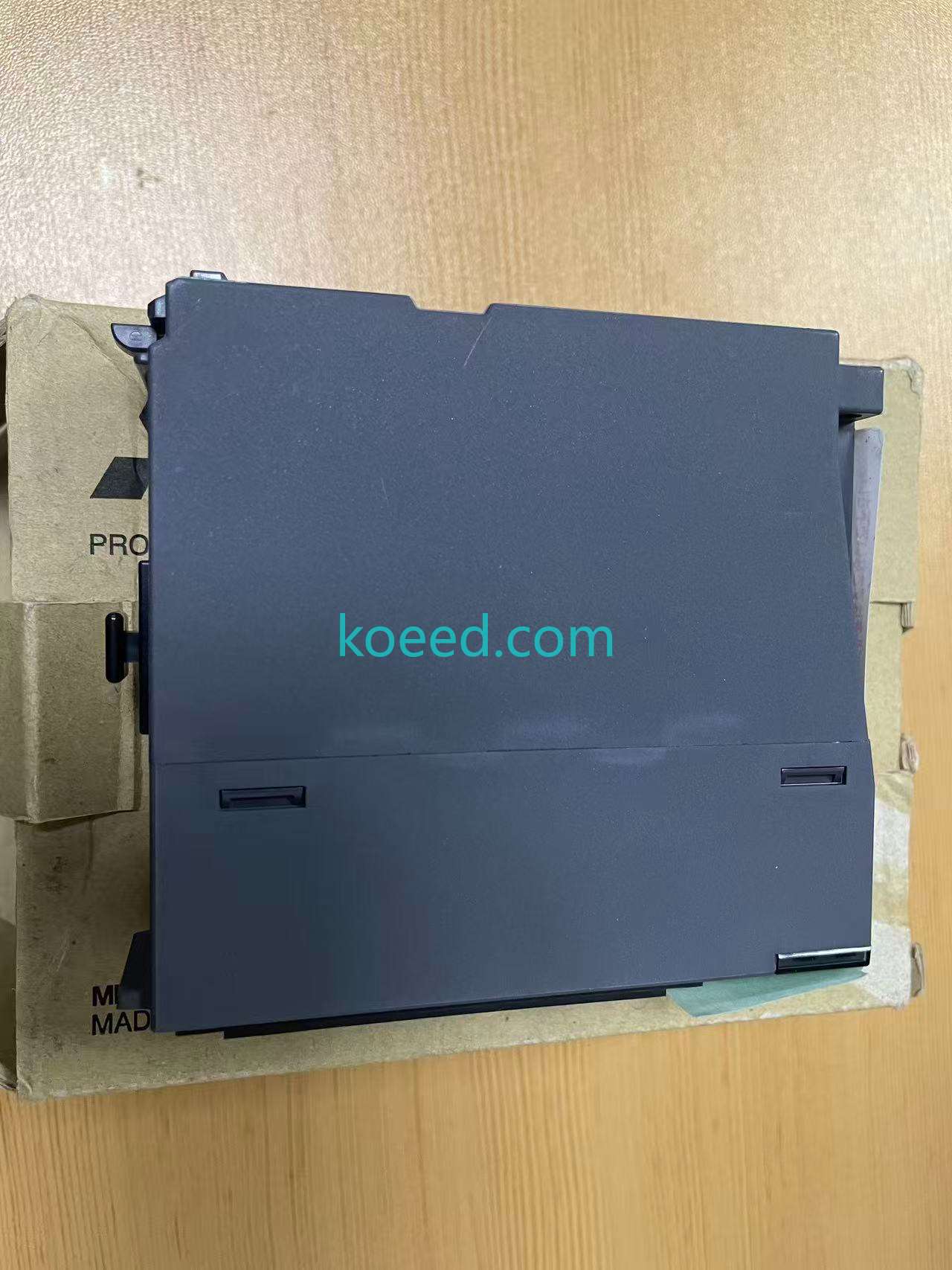
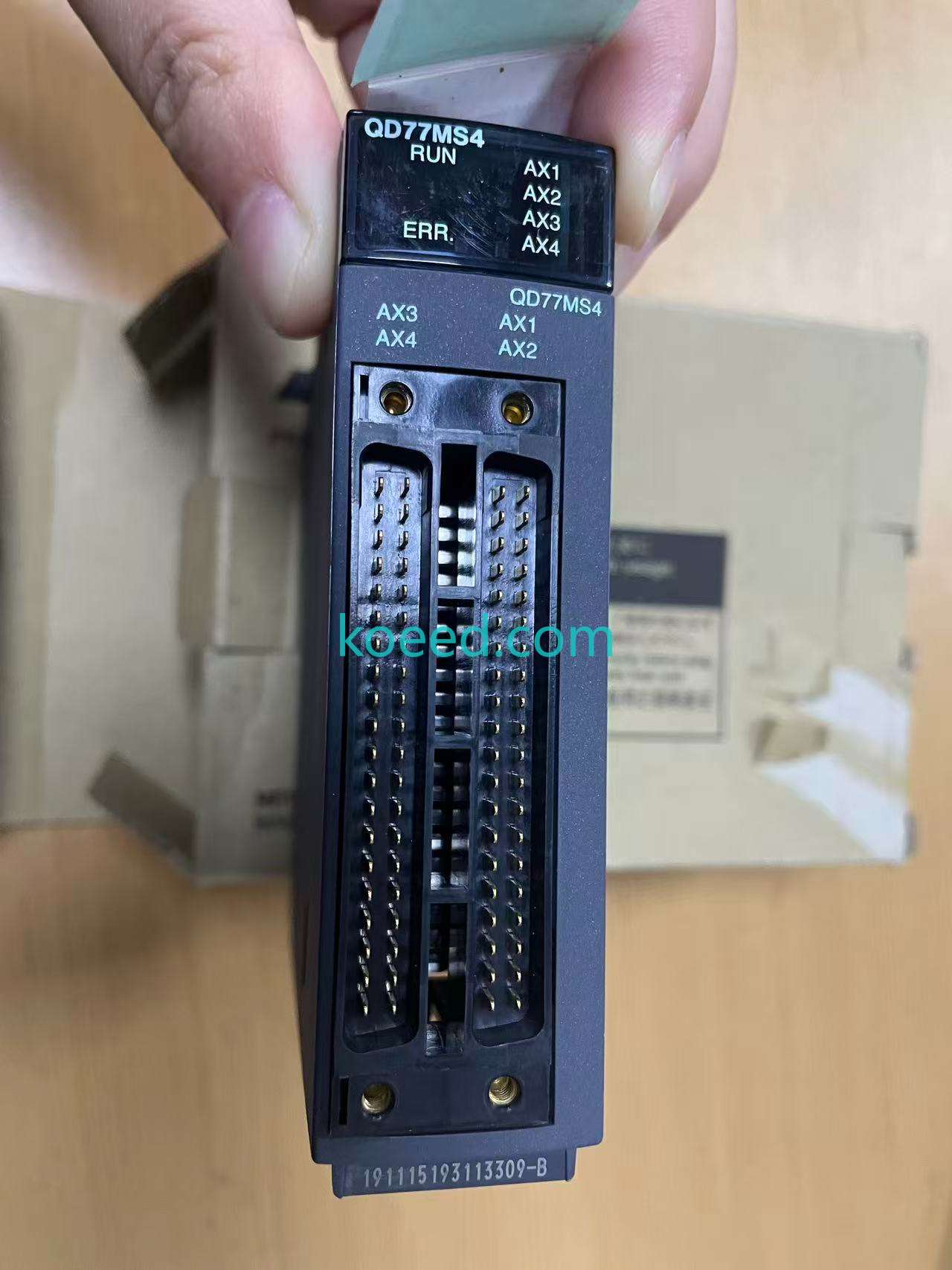
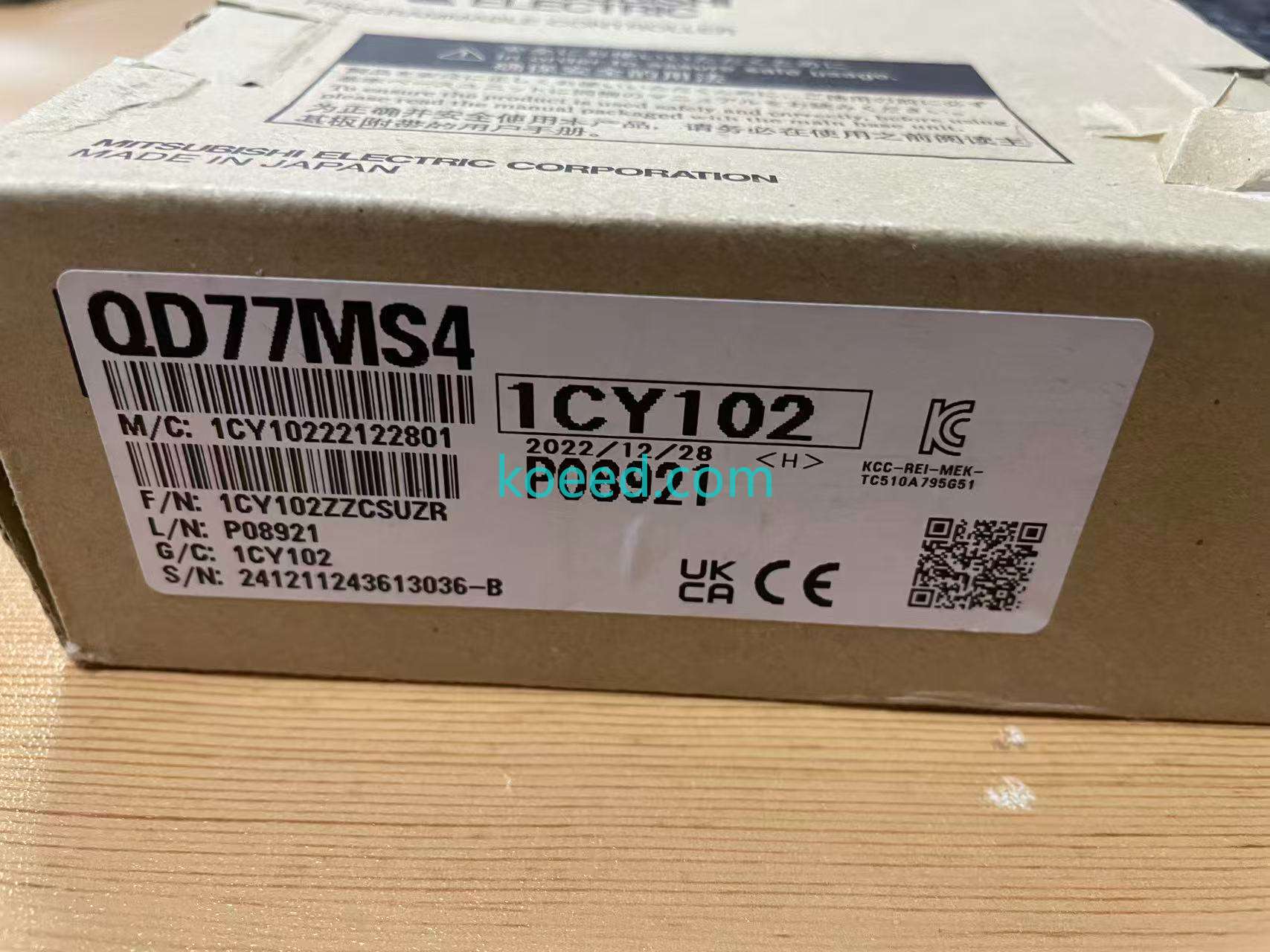
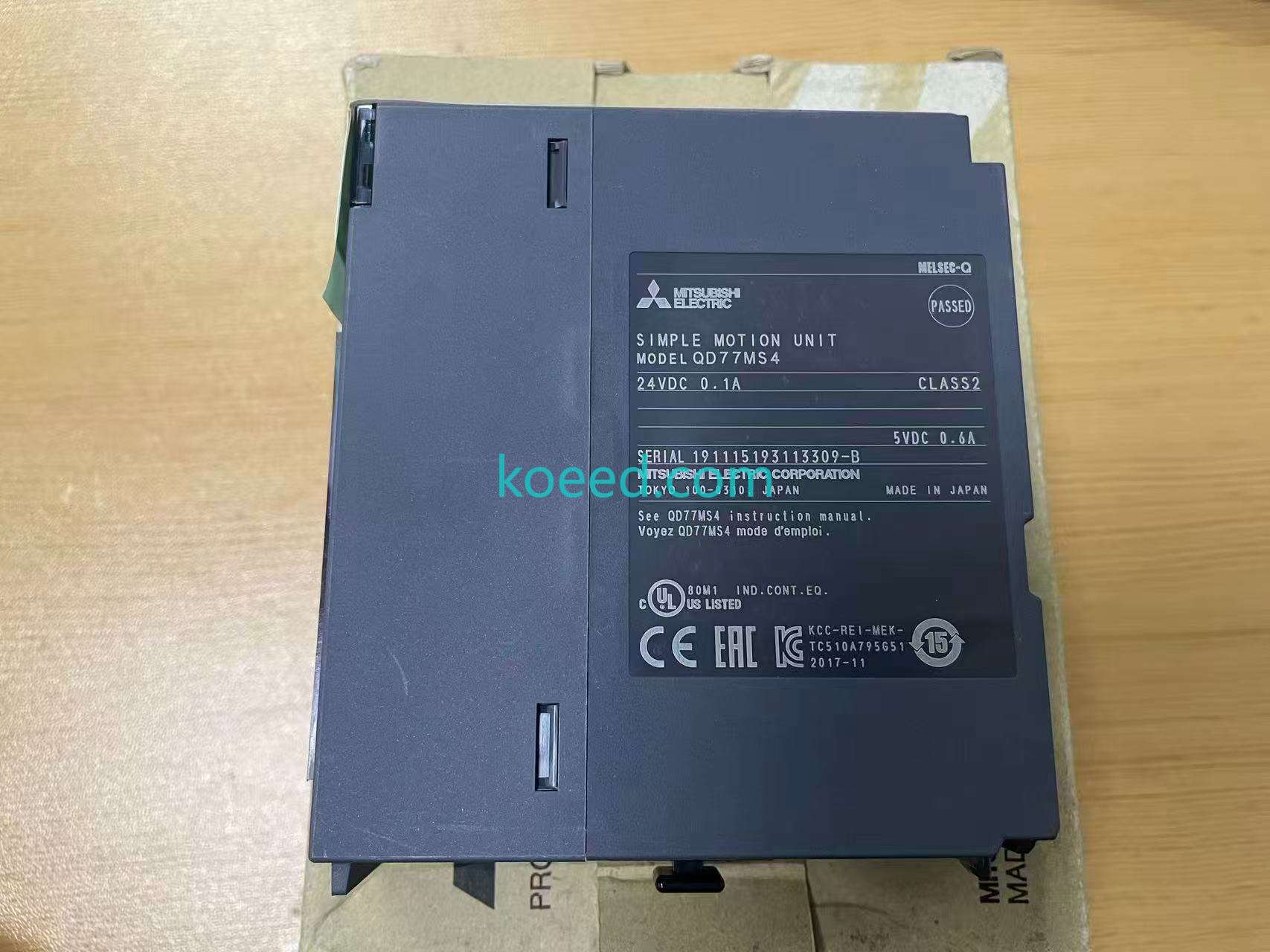
Reference imagery for physical inspection, terminal layout and rack installation of the QD77MS4 module. Confirm the SSCNET III/H fiber connector integrity and module designation before commissioning.
4.1 Commissioning Walkthrough Video
5. Maintenance, Troubleshooting & Predictive Health
5.1 Longevity Best Practices
- Keep fiber-optic connectors capped and clean — SSCNET III/H signal loss from dust is a leading commissioning fault.
- Verify battery-backed absolute-encoder retention voltage on the Q Series CPU; loss of battery causes home-position re-reference.
- Maintain panel ventilation around the QD77MS4 — sustained over-temperature degrades opto-electronic components.
- Back up positioning data, cam tables and parameters after every change using GX Works2/3 project archive.
⚠️ Common Error Codes & Resolutions
- Servo amplifier communication error (SSCNET III/H): Inspect fiber for kinks or contamination; reseat connectors and confirm amplifier station numbering.
- Absolute position lost: Re-execute homing sequence and confirm battery voltage; then re-establish the absolute position origin.
- Following error trip under load: Trend torque command via the PLC; investigate mechanical binding or load inertia change — an early sign of bearing/gear wear.
- Cam data out of range: Re-verify cam table end points and the synchronization axis scaling in the Simple Motion setting tool.
5.2 Predictive Maintenance Strategy
By mapping servo load factor, following error and regenerative load into your PLC and upstream analytics, the QD77MS4 becomes a condition-monitoring asset. In 2026, leading plants use this telemetry to schedule lubrication, belt tensioning and gearbox inspection precisely when data indicates degradation — avoiding both premature servicing and catastrophic failure.
6. ROI & TCO Analysis
Deploying the QD77MS4 typically delivers measurable gains: reduced panel wiring (single fiber vs. dozens of pulse/feedback pairs), faster commissioning via configurable cam and synchronous functions, and lower downtime from built-in diagnostics. For a 4-axis machine, engineering teams commonly report 30–50% lower motion-system integration time versus pulse-based architectures, while the deterministic 0.888 ms cycle improves throughput on synchronized lines.
7. Frequently Asked Questions
Which servo amplifiers are compatible with the QD77MS4?
The QD77MS4 commands any Mitsubishi servo amplifier supporting SSCNET III/H, most commonly the MR-J4-B, MR-J4W-B and the current MR-J5 series. Always match the amplifier firmware to the module's supported revision.
Can the QD77MS4 perform synchronous and cam control?
Yes. Unlike basic positioning modules, the QD77MS4 supports synchronous control (electronic cam, clutch, speed-torque) alongside linear (up to 4-axis) and circular (2-axis) interpolation — ideal for flying shear, rotary knife and registration-corrected feeding.
What PLC CPU is required for the QD77MS4?
The module installs on a MELSEC-Q Series base unit and requires a compatible Q Series CPU (Q02U and later universal-model CPUs are typical). Verify CPU firmware and available slots before ordering.
How is the QD77MS4 programmed?
Configuration is performed in GX Works2/3 using the Simple Motion module tooling, where positioning data, cam tables and synchronous parameters are set. Motion is triggered from the ladder program via dedicated device/word assignments.
Is this a genuine Mitsubishi module with warranty?
Koeed supplies genuine automation components with full traceability and warranty support. For current availability, pricing and lead time, visit the QD77MS4 product page or request a quote.
Source Your QD77MS4 Q with Koeed
Get genuine Mitsubishi Simple Motion Modules with verified stock, competitive pricing and global shipping. Speak directly with our automation specialists for technical selection and lead-time confirmation.
Explore full specifications: https://koeed.com/products/qd77ms4
© 2026 Koeed B2B Industrial Automation · QD77MS4 Q Series Simple Motion Module Technical Guide


