

M27C322-100F1: The 2026 Engineer's Guide to STM 32Mbit UV EPROM Reliability & Legacy System Sustainment
1. Strategic Overview: The 2026 Legacy-Sustainment Imperative
In the 2026 industrial automation landscape, the conversation has shifted decisively toward IT/OT convergence, cloud-edge architectures, and sustainability-driven lifecycle management. Yet at the physical layer of thousands of CNC controllers, PLC backplanes, robotic drive systems, and aerospace flight computers, a quiet workhorse persists: the STMicroelectronics M27C322-100F1 — a 32 Mbit (4M x 8 / 2M x 16) UV-erasable EPROM in a 42-pin ceramic DIP package.
The M27C322-100F1 is not merely a "legacy component." In 2026, it represents a strategic sustainment asset. With global semiconductor supply chains still recalibrating from the disruptions of the mid-2020s, and with many industrial OEMs extending equipment lifecycles past the 20-year mark, the ability to source, program, and maintain UV EPROM-based systems is a competitive differentiator for automation engineers.
The "-100" suffix denotes a 100 ns access time — fast enough for real-time deterministic control loops in legacy motion controllers and process automation systems that have not migrated to NAND flash architectures. The "F1" designation confirms the ceramic DIP package with a quartz UV window, enabling full erasure and reprogramming cycles under controlled UV-C exposure (253.7 nm).
2026 Key Insight: The global market for legacy EPROMs has seen a 12% YoY price increase since 2024 as authentic NOS (New Old Stock) inventories dwindle. Counterfeit devices have surged by an estimated 18% across gray-market channels. Sourcing the M27C322-100F1 through traceable, authorized channels is now a critical supply-chain integrity requirement for ISO 9001:2026 and IEC 62443-4-1 compliance in industrial environments.
2. Technical Benchmarking: M27C322-100F1 vs. Modern Alternatives
In 2026, engineers evaluating the M27C322-100F1 must weigh its enduring advantages against modern memory technologies. The following benchmark table provides a structured comparison across key operational parameters relevant to industrial automation.
| Parameter | M27C322-100F1 (UV EPROM) | Modern Parallel NOR Flash (2026) | Serial NAND Flash (2026) |
|---|---|---|---|
| Density | 32 Mbit (4 MB) | 64–256 Mbit | 1–8 Gbit |
| Access Time | 100 ns | 70–90 ns | 25–50 μs (initial) |
| Interface | Parallel (42-pin) | Parallel (48-pin TSOP) | SPI/QSPI (8-pin) |
| Erase Method | UV-C (253.7 nm, ~20 min) | Electrical Sector Erase | Electrical Block Erase |
| Programming Voltage | 12V VPP | On-chip charge pump | On-chip charge pump |
| Retention (rated) | 10+ years (practical: 25+) | 20 years | 10 years |
| Radiation Tolerance | Excellent (inherent) | Moderate | Poor (charge-loss) |
| Pin-Compatible Drop-In | ✅ Native | ❌ Requires adapter | ❌ Requires bridge IC |
| 2026 Approx. Unit Cost | $12–$35 (NOS, volatile) | $3–$8 | $1–$4 |
| Counterfeit Risk | ⚠️ HIGH (verify source) | Low (in-production) | Low (in-production) |
3. M27C322-100F1 — Detailed Technical Specifications
| Specification | Value |
|---|---|
| Manufacturer | STMicroelectronics |
| Part Number | M27C322-100F1 |
| Memory Type | UV EPROM (One-Time Programmable / UV-Erasable) |
| Density | 32 Mbit (4,194,304 x 8 or 2,097,152 x 16) |
| Access Time (tACC) | 100 ns |
| Supply Voltage (VCC) | 5V ±10% |
| Programming Voltage (VPP) | 12V ±0.5V |
| Operating Current (Active) | 70 mA (typical) |
| Standby Current | 100 μA (max, CMOS level) |
| Package | 42-pin Ceramic DIP (CDIP-42), Windowed |
| UV Erasure Wavelength | 253.7 nm (UV-C) |
| Erasure Time | ~20–30 minutes at 15 W·s/cm² |
| Operating Temperature | 0°C to +70°C (Commercial) / −40°C to +85°C (variants) |
| Programming Algorithm | Quick-Pulse Programming™ (STMicroelectronics) |
| Data Retention | 10+ years (rated); typically 25+ years in controlled environments |
| RoHS Status | Contains lead (Pb) — Exemption 7(a) for legacy equipment |
4. Visual Inspection Gallery — M27C322-100F1
Authentic M27C322-100F1 devices exhibit distinct visual markers: a cleanly printed STMicroelectronics logo, consistent ceramic package color, a clearly visible die through the quartz window, and intact gold-plated pins. Use the gallery below as a reference for counterfeit detection — one of the most critical skills for 2026 industrial procurement teams.
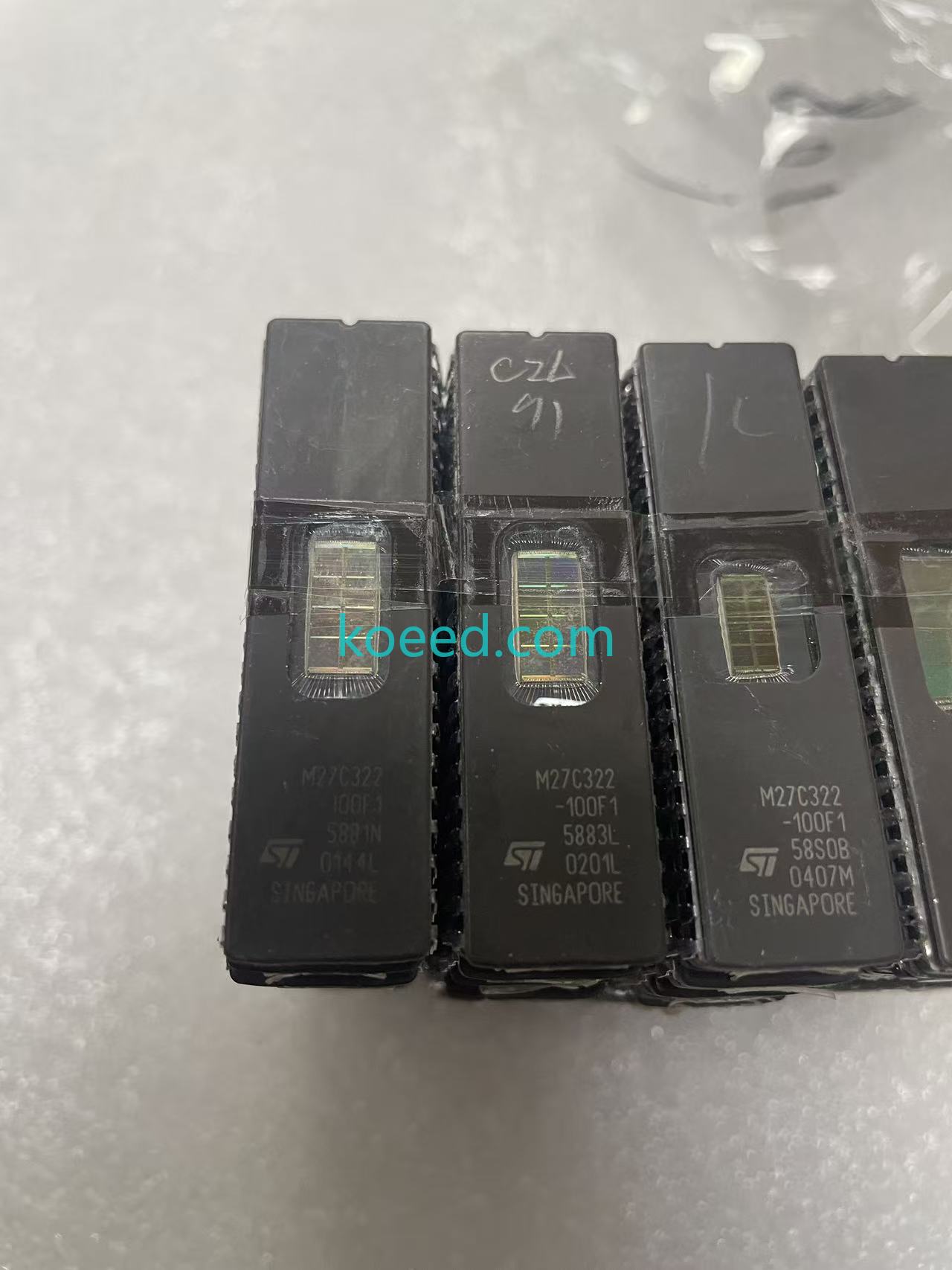
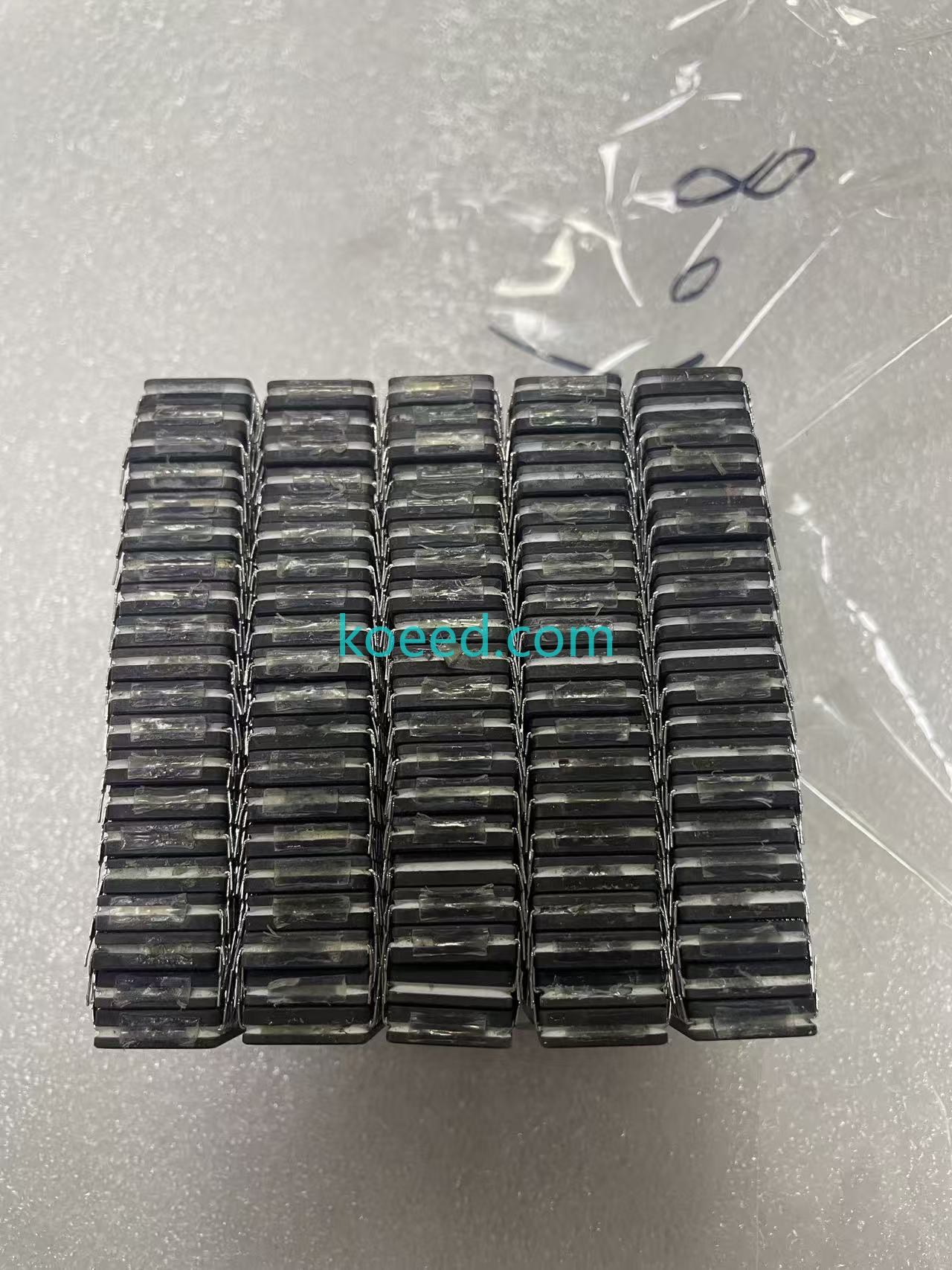
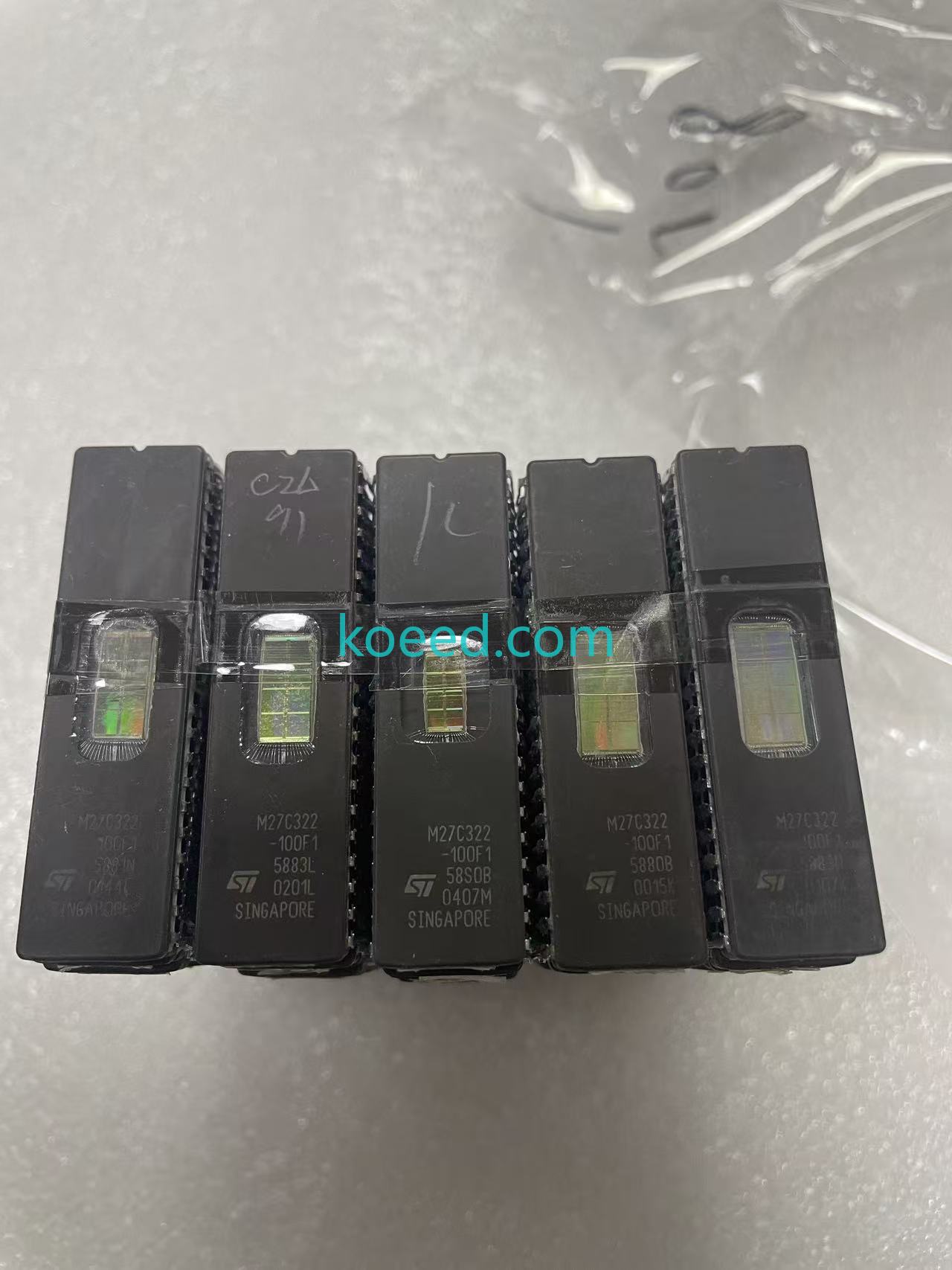
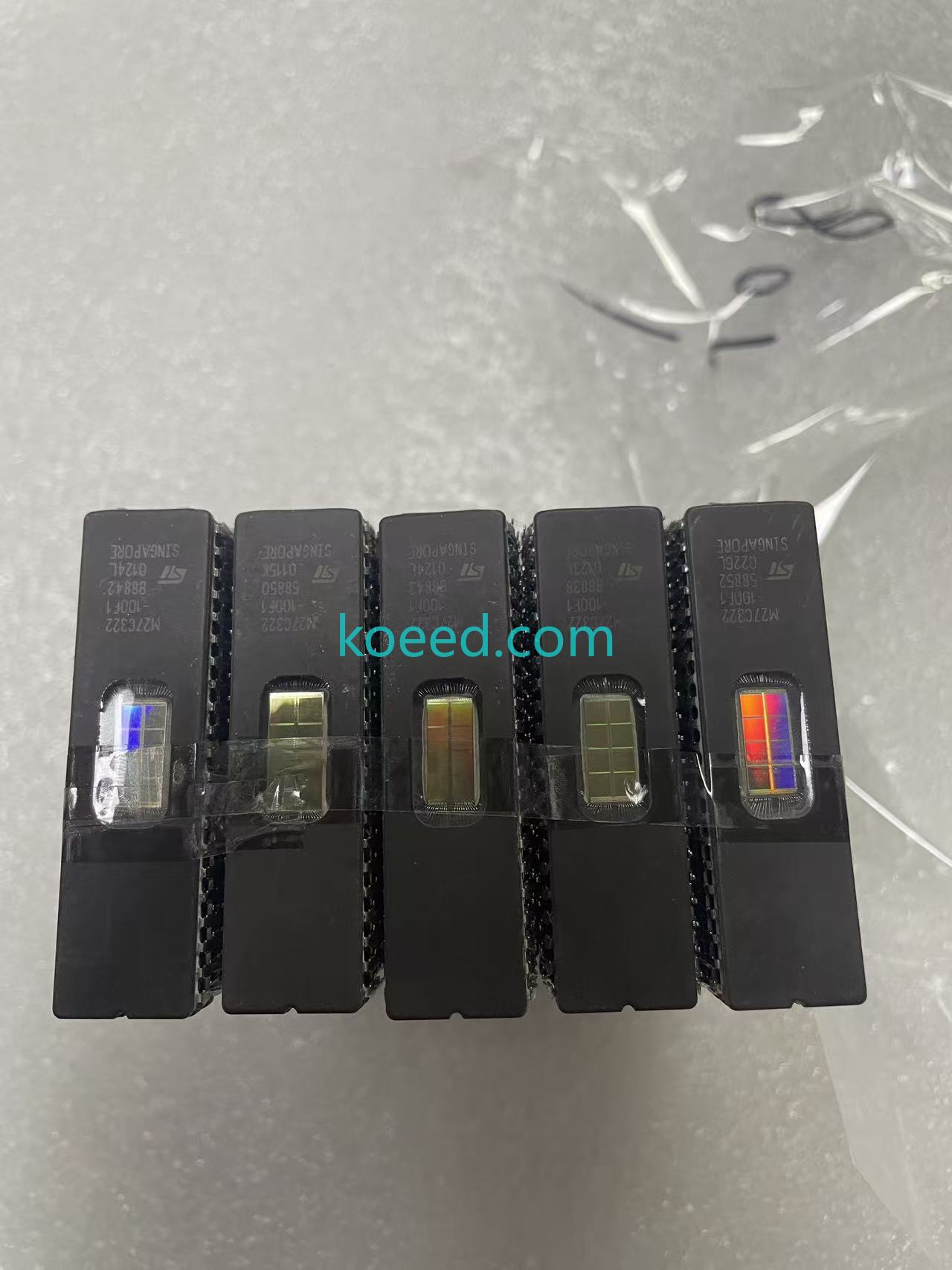
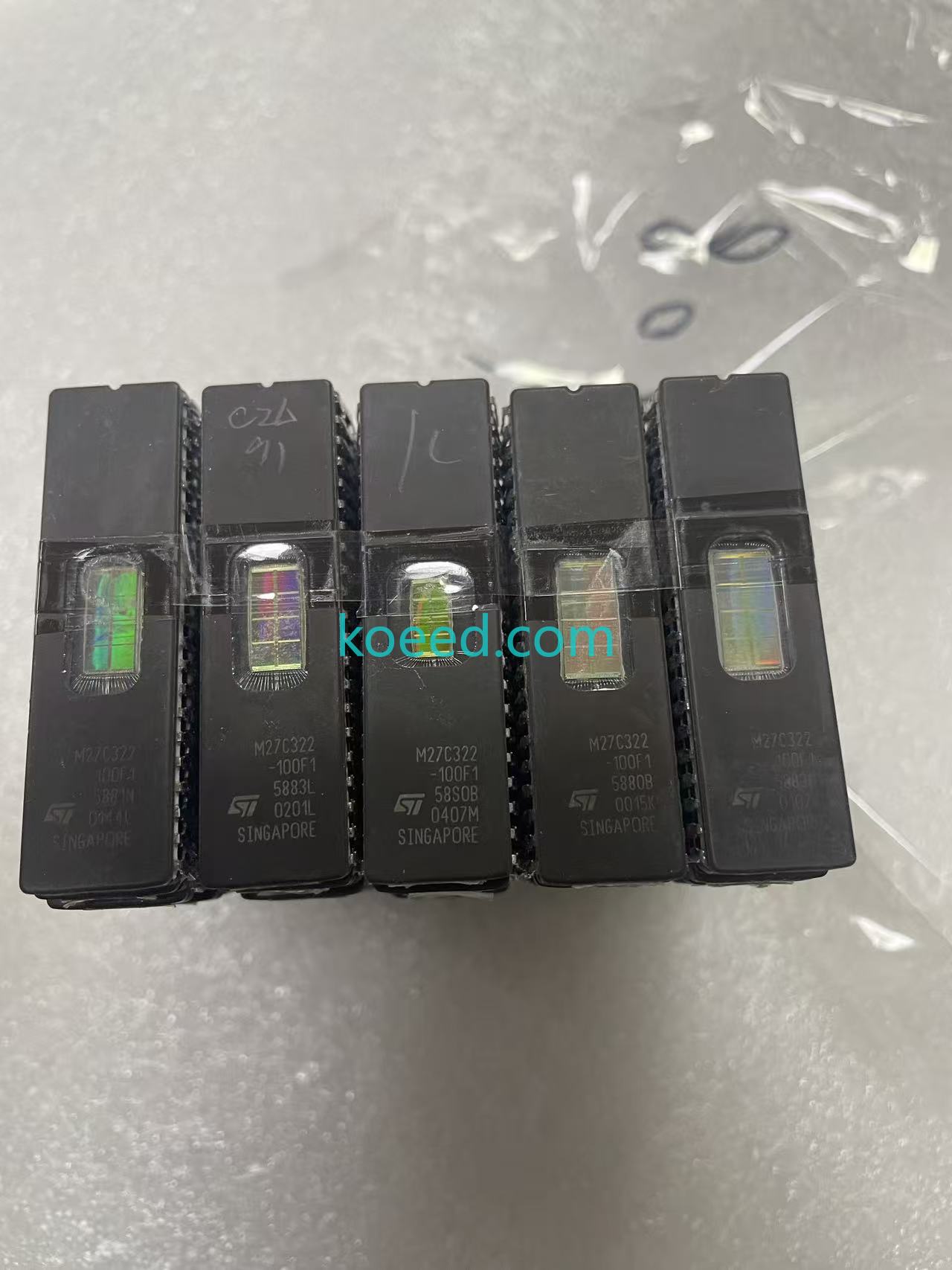
360° Product Inspection — M27C322-100F1
5. IT/OT Convergence: Bridging Legacy EPROM Systems to the 2026 Cloud
One of the defining challenges of the 2026 industrial ecosystem is integrating equipment designed in the EPROM era with modern IIoT (Industrial Internet of Things) platforms. The M27C322-100F1 typically resides in systems that predate Ethernet/IP and OPC UA — yet the operational data these systems generate is invaluable for predictive maintenance.
5.1 Edge Gateway Strategy for EPROM-Based Controllers
Rather than replacing the controller (and its M27C322-100F1 firmware store), 2026 best practice deploys a non-intrusive edge gateway that reads I/O states, cycle times, and error flags from the PLC backplane without modifying the EPROM image. This approach:
- Preserves the validated, deterministic behavior of the EPROM-based firmware
- Enables real-time dashboards via MQTT/Sparkplug B to AWS IoT SiteWise or Siemens MindSphere
- Supports anomaly detection models that flag deviations before mechanical failure occurs
- Maintains air-gap security — the gateway reads only; the EPROM system is never exposed to the network
5.2 Predictive Maintenance Specific to EPROM Memory
UV EPROMs have a finite but predictable degradation curve. In 2026, advanced maintenance protocols include:
| Monitoring Parameter | Method | Warning Threshold | Action |
|---|---|---|---|
| Bit-Error Rate (BER) | Periodic checksum verification vs. golden image | ≥1 correctable bit-flip | Re-flash or replace EPROM within 90 days |
| VCC Rail Noise | Oscilloscope on VCC pin during read cycles | Ripple >50 mV p-p | Inspect PSU capacitors; replace if aging |
| Pin Contact Resistance | Milliohm meter (system powered down) | >100 mΩ per pin | Clean socket contacts with DeoxIT; reseat device |
| UV Window Integrity | Visual inspection + UV leak test | Any visible scratches or haze | Apply opaque label; schedule replacement |
6. Maintenance & Troubleshooting Guide
6.1 Common Failure Modes and Resolutions
System Boot Failure — Blank or Corrupted EPROM
Symptoms: PLC/controller fails POST; no activity on address/data bus; blank display.
Root Cause (2026 Analysis): Most commonly caused by accidental UV exposure (quartz window label removed or degraded) or bit-rot after 15+ years of service. In industrial environments with arc-welding equipment nearby, UV-C leakage can partially erase exposed EPROMs.
Resolution: Verify with a ROM programmer that the device is blank (all cells read 0xFF). If blank, reprogram from the verified golden firmware image. If partially corrupted, perform a full UV erase (25 minutes at 253.7 nm, 15 W·s/cm²) and reprogram. Always apply a new UV-blocking label after programming.
Intermittent Read Errors — Address or Data Line Fault
Symptoms: System operates normally for hours then crashes with memory fault; faults correlate with temperature changes.
Root Cause: Thermal expansion/contraction in aging DIP sockets causes micro-fractures in solder joints or intermittent contact. Ceramic DIP packages have a different CTE (Coefficient of Thermal Expansion) than FR-4 PCB material, stressing socket contacts over decades of thermal cycling.
Resolution: Remove the M27C322-100F1, inspect socket pins under magnification, clean with isopropyl alcohol (99%) and a fiberglass brush. If socket is the issue, replace with a new machined-pin 42-DIP socket (Mill-Max or equivalent). Consider using a ZIF socket for frequently reprogrammed devices.
Programming Failure — VPP or Timing Issues
Symptoms: Programmer reports verify errors; some cells fail to program; programming takes abnormally long.
Root Cause: The M27C322-100F1 requires a stable 12V ±0.5V VPP. Many modern USB-powered programmers struggle to deliver clean 12V at the required current. Also, the Quick-Pulse Programming algorithm is timing-sensitive.
Resolution: Use a programmer with an external power supply capable of delivering 12V at ≥100 mA (e.g., Wellon VP-598, Xeltek SuperPro 6100, or a legacy Data I/O 29B with UniSite). Verify VPP at the device pin under load with a multimeter. If using an adapter, check that all 42 pins make solid contact.
Data Retention Degradation — Silent Corruption
Symptoms: No immediate failure, but checksums do not match the golden image; machine behavior drifts subtly.
Root Cause: Charge leakage from the floating gate over 20+ years. Accelerated by elevated operating temperatures (every 10°C above 25°C roughly halves retention life).
Resolution: Implement a quarterly checksum verification routine as part of your 2026 predictive maintenance protocol. If the device is approaching end-of-retention-life, proactively UV-erase and reprogram, or rotate in a fresh device from your strategic spares inventory.
7. Sustainability & Energy Impact: The Green Case for EPROM Sustainment
In 2026, ESG (Environmental, Social, and Governance) metrics directly influence industrial procurement decisions. The M27C322-100F1 plays a counterintuitive but powerful role in sustainability:
🌱 Sustainability by Extension: Every M27C322-100F1 that keeps a 1990s or 2000s-era CNC machine, injection molder, or packaging line operational prevents approximately 2.5 to 8 metric tons of e-waste — the mass of the machinery that would otherwise be scrapped. The embedded carbon in that machinery (steel, copper, rare-earth motors) dwarfs the environmental cost of sourcing and shipping a single 42-pin ceramic IC.
The active power consumption of the M27C322-100F1 is approximately 350 mW (70 mA × 5V) — negligible in the context of an industrial control cabinet where a single contactor coil may draw 50 VA. There is no meaningful energy-efficiency argument for replacing the EPROM itself; the sustainability win lies entirely in the extended service life of the parent equipment.
8. Frequently Asked Questions (FAQ)
Is the M27C322-100F1 still manufactured in 2026?
No. STMicroelectronics discontinued the M27C322 series several years ago. All devices available on the market are New Old Stock (NOS) or recycled pulls. Sourcing from reputable, traceable suppliers is essential to avoid counterfeits.
What programmer should I use for the M27C322-100F1?
Recommended programmers include the Xeltek SuperPro 6100, Wellon VP-598, and Data I/O 29B with the appropriate adapter. Ensure the programmer supports 12V VPP and the Quick-Pulse Programming algorithm. Avoid USB-only programmers that derive VPP from a boost converter unless they are specifically rated for the M27C322.
Can I replace the M27C322-100F1 with a pin-compatible flash memory?
There is no direct, drop-in flash replacement. The 42-pin parallel EPROM interface and 12V VPP requirement are unique. Any replacement would require a custom adapter board with voltage translation and a CPLD to emulate the EPROM timing, essentially a PCB redesign.
How do I safely dispose of or recycle a UV EPROM?
Ceramic DIP packages containing lead are classified as electronic waste. Dispose of through certified e-waste recyclers that handle RoHS-exempt legacy components. Never incinerate, as the quartz window can shatter and release hazardous particles.
Ensure Your Operations Never Stop
Secure genuine, tested M27C322-100F1 devices for your critical systems. Get a quote from our 2026 trusted supply chain today.


