

Danfoss MBS3000 060G1125 Pressure Transmitter: The 2026 Benchmark for Precision Sensing & Smart Factory Integration
Strategic Overview: The MBS3000 060G1125 in the 2026 Industrial Ecosystem
As manufacturing enters the Industry 5.0 era in 2026, the line between operational technology (OT) and information technology (IT) has all but vanished. Pressure transmitters are no longer passive analog peripherals — they are frontline data generators feeding into cloud-based SCADA, digital twins, and AI-driven process optimization engines. The Danfoss MBS3000 060G1125 exemplifies this paradigm shift.
Designed for gauge (relative) pressure measurement from 0 to 10 bar, this compact transmitter delivers a rock-solid 4–20 mA analog output — the lingua franca of industrial control — while its pulse-damped sensor and EMC-hardened electronics ensure signal integrity even in the noisiest VFD-driven environments. For plant engineers evaluating the MBS3000 060G1125 in 2026, the value proposition is clear: field-proven Danish engineering with a migration path to full IIoT connectivity via external edge gateways.
Technical Specifications & Competitive Benchmarking
The table below benchmarks the MBS3000 060G1125 against legacy alternatives and a typical entry-level transmitter. In 2026, the MBS3000 series remains the reference architecture for hydraulic, pneumatic, and process-water applications where vibration tolerance and long-term zero-point stability are non-negotiable.
| Parameter | Danfoss MBS3000 060G1125 | Legacy Mechanical Gauge | Entry-Level Transmitter (Typ.) |
|---|---|---|---|
| Pressure Range | 0 – 10 bar (gauge) | 0 – 10 bar (visual only) | 0 – 10 bar |
| Output Signal | 4 – 20 mA (2-wire) | None (manual read) | 4 – 20 mA |
| Supply Voltage | 10 – 30 VDC | N/A | 12 – 36 VDC |
| Accuracy (NL&BFSL) | ±0.5% FS (typ.) | ±1.6% – ±2.5% FS | ±0.5% – ±1.0% FS |
| Media Temp. Range | -40 to +85°C | -20 to +60°C | -20 to +80°C |
| Pressure Connection | G ¼ (EN 837) | G ¼ / ⅛ NPT | G ¼ / ⅛ NPT |
| Enclosure Rating | IP65 | None / IP40 | IP65 – IP67 |
| EMC Protection | EN 61326-1 compliant | N/A | Partial / untested |
| Pulse / Vibration Damping | Integrated (oil-filled sensor) | None | Limited |
| Net Weight | ~153 g | ~250 g | ~180 g |
| 2026 IIoT Readiness | Edge-gateway compatible | None | Varies |
What stands out in 2026 is the MBS3000's extreme temperature resilience. With a media temperature floor of -40°C, it outperforms most entry-level competitors by 20°C — a critical margin in cold-climate facilities, refrigeration skids, and outdoor hydraulic power units. Source your unit directly at Koeed's MBS3000 060G1125 product page.
Visual Inspection Gallery
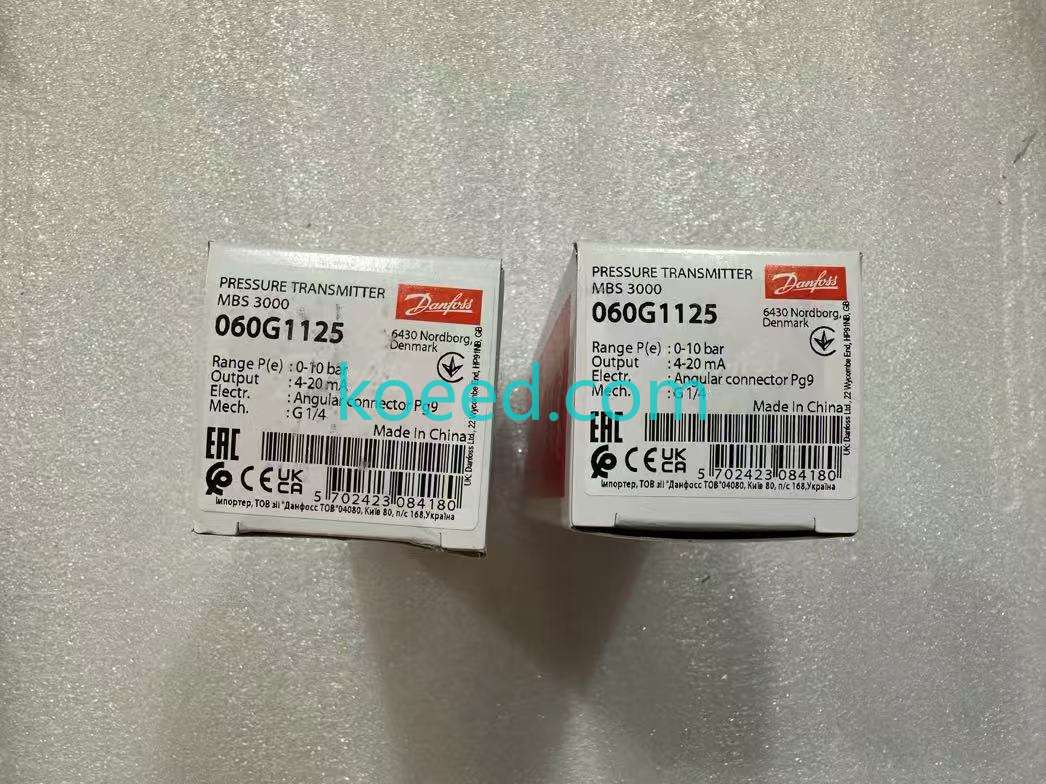
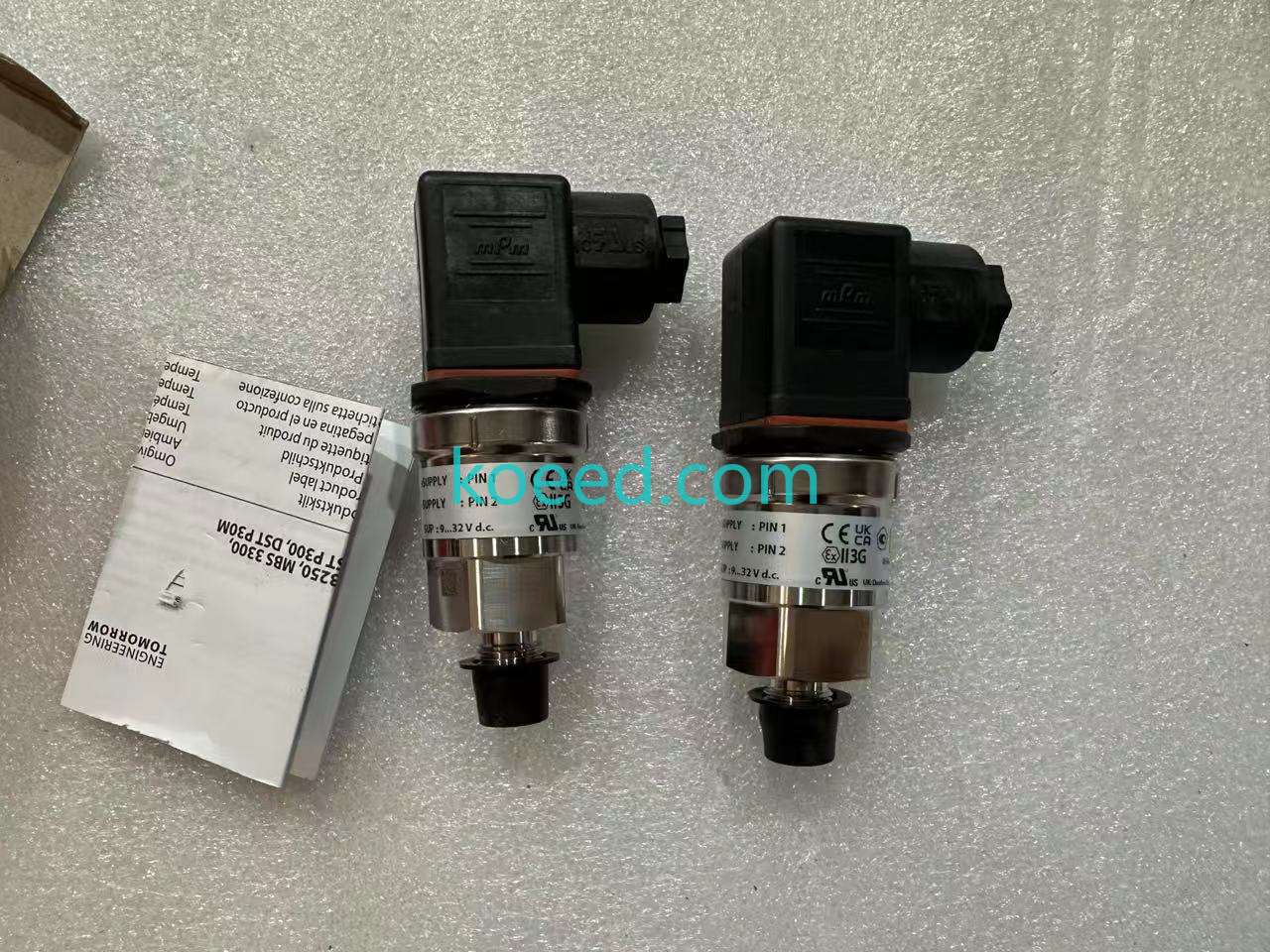
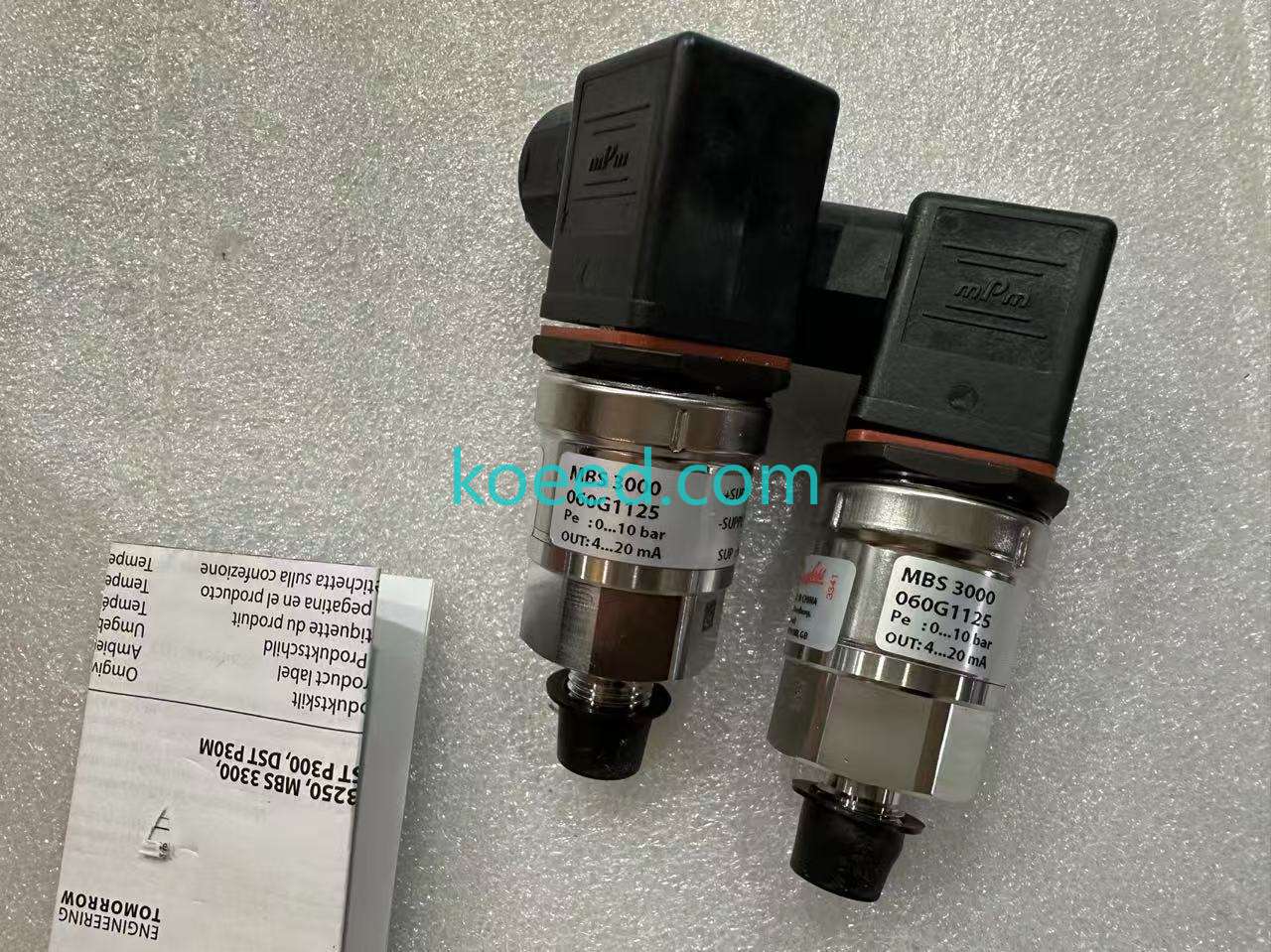
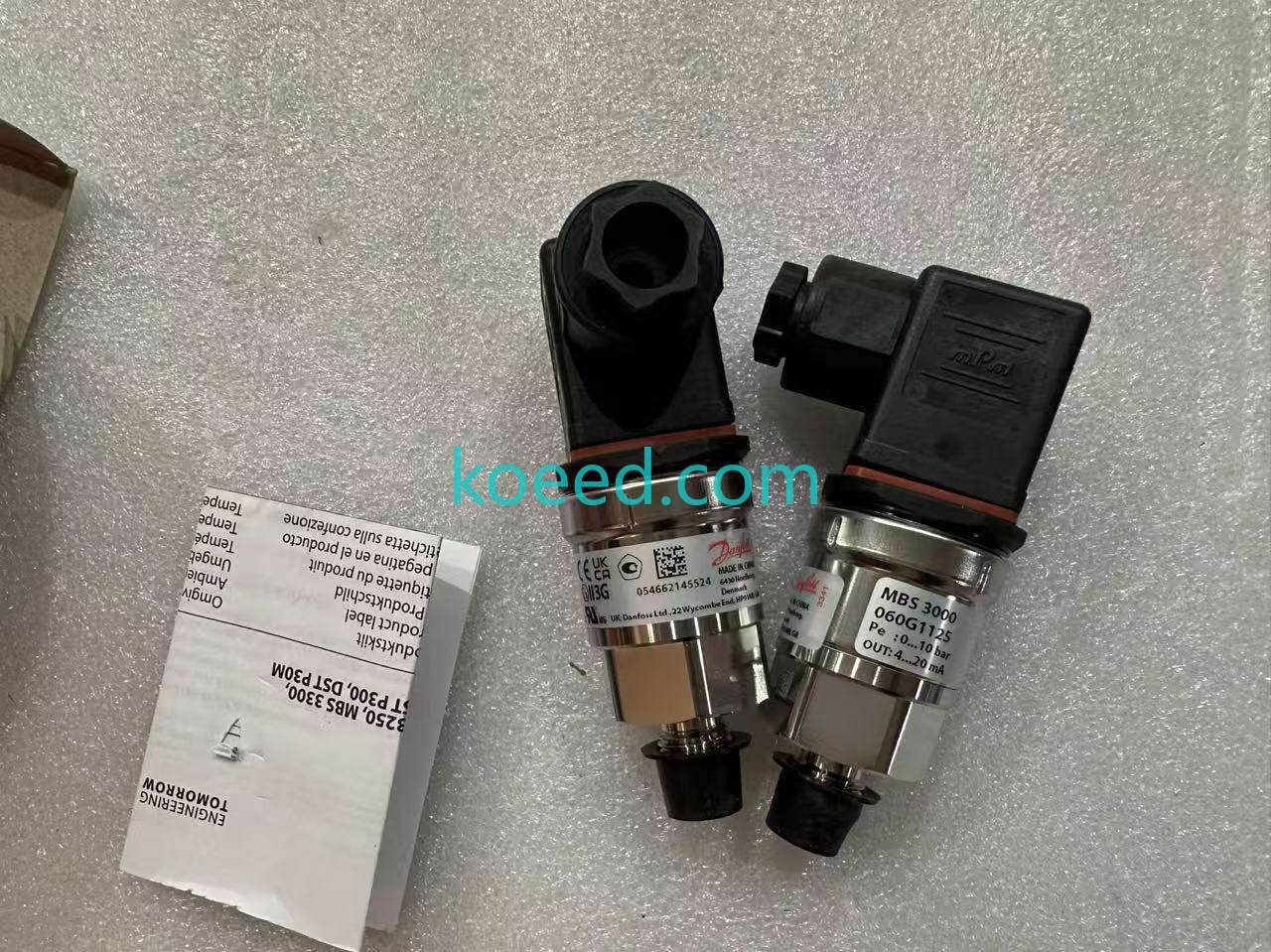
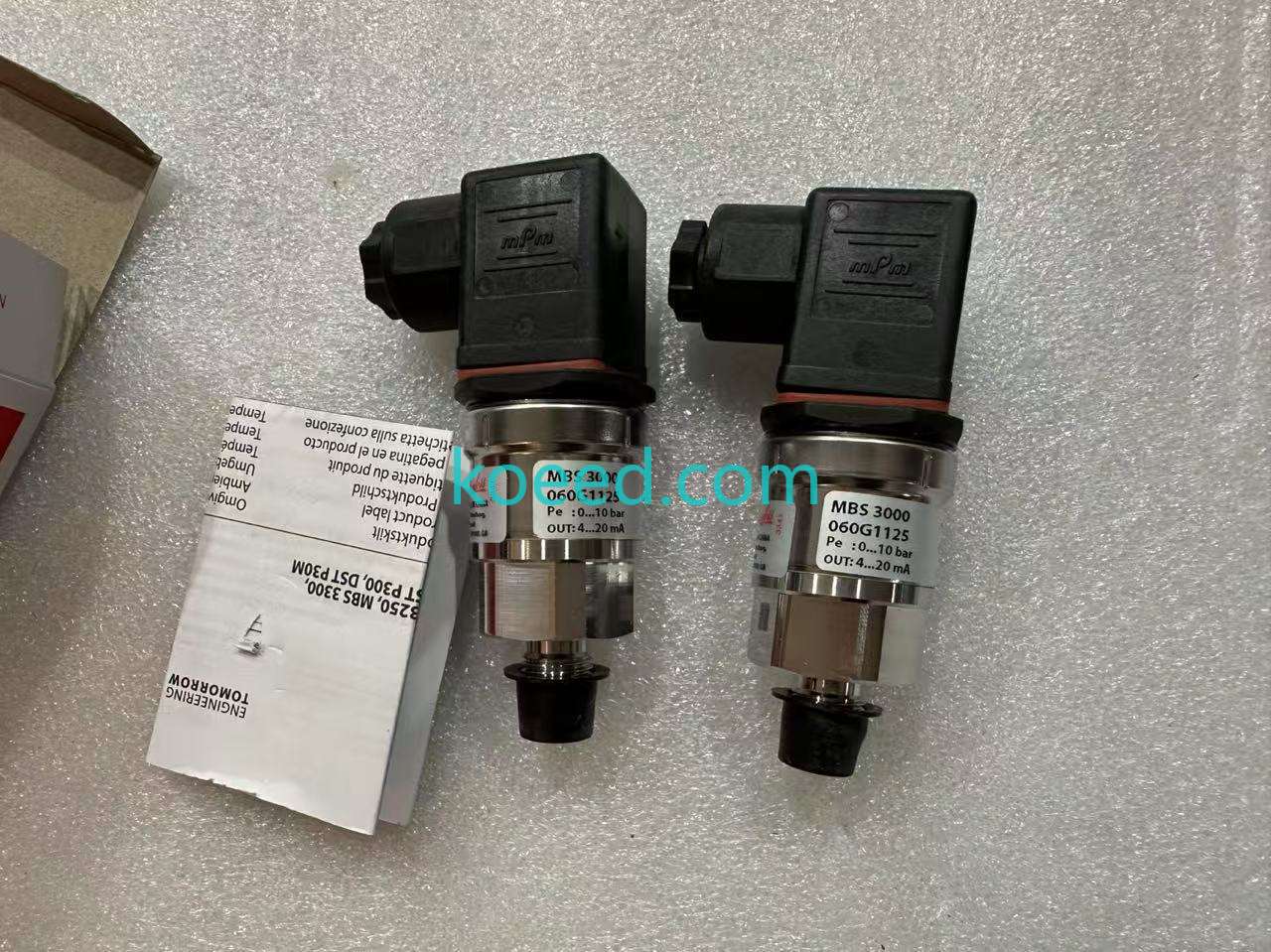
High-resolution product photography of the Danfoss MBS3000 060G1125 — examine the G ¼ process connection, compact stainless-steel housing, and electrical connector interface before procurement.
IT/OT Convergence: Bridging Analog Reliability with Digital Intelligence
In 2026, the prevailing automation architecture embraces a "brownfield IIoT" strategy: retain proven field devices like the MBS3000 060G1125 and layer digital intelligence at the edge. The transmitter's 4–20 mA loop is inherently immune to packet loss, cyber intrusion, and protocol obsolescence — qualities that Ethernet-based sensors cannot yet match for mission-critical pressure loops.
Integration Pathways for the Smart Factory
The MBS3000 060G1125 integrates into modern stacks through three proven topologies:
① Direct PLC/DCS Analog Input
Wire the 2-wire loop into any standard AI card (Siemens SM 331, Allen-Bradley 1756-IF8, Mitsubishi FX3U-4AD, etc.). Configure 4 mA = 0 bar, 20 mA = 10 bar. No middleware required — latency under 10 ms.
② IIoT Edge Gateway (OPC-UA / MQTT)
Connect the transmitter to a 4–20 mA input module on an edge gateway. The gateway publishes pressure values via MQTT Sparkplug B to AWS IoT Core, Azure IoT Hub, or a local Ignition SCADA broker. This unlocks cloud-based trending, anomaly detection, and CMMS auto-ticketing without touching the control loop.
③ Hybrid — Parallel Monitoring
Using a loop-powered signal splitter (e.g., PR Electronics 3109), feed the MBS3000 signal simultaneously to the PLC (for real-time control) and to an IoT data logger (for analytics). This is the 2026 best practice for pharmaceutical and food & beverage lines requiring both deterministic control and FDA 21 CFR Part 11 data integrity.
Predictive Maintenance & Condition Monitoring
Pressure transmitters are the pulse of hydraulic and pneumatic systems. In 2026, the MBS3000 060G1125 plays a starring role in predictive maintenance strategies by enabling:
- Pump Health Scoring: Gradual pressure decay at constant speed indicates impeller wear or internal leakage — detectable weeks before catastrophic failure.
- Filter Clogging Detection: Rising differential pressure across filters triggers automated CMMS work orders when the MBS3000 reading deviates beyond learned baselines.
- Compressed Air Leak Auditing: A network of MBS3000 transmitters on air distribution headers pinpoints pressure drops to specific branch lines, slashing energy waste.
- Seal Integrity Monitoring: In hydraulic press applications, pressure hold-test data from the MBS3000 feeds into a digital twin to predict seal replacement intervals with ±5% accuracy.
Installation, Maintenance & Troubleshooting Guide
Installation Best Practices (2026 Update)
- Torque Specification: Tighten the G ¼ connection to 25–30 Nm. Use a bonded sealing washer (DIN 7603 form A) — not PTFE tape, which can shed particles into hydraulic circuits.
- Mounting Orientation: The MBS3000 is orientation-insensitive, but for liquid media, mount with the pressure port facing downward to prevent sediment accumulation on the diaphragm.
- Electrical Connection: Use an EN 175301-803 Type A connector (DIN 43650). Ensure the cable gland provides strain relief and the IP65 seal is intact. In 2026, many plants are upgrading to M12 adapters for quick disconnect — fully compatible.
- Zero-Point Check: Before commissioning, vent the transmitter to atmosphere and verify the output reads 4.00 mA ± 0.08 mA. Adjust at the PLC if necessary — the MBS3000 has no onboard potentiometer, ensuring drift-free digital calibration integrity.
Troubleshooting Common Issues
No output signal (0 mA)
Check supply voltage: Must be 10–30 VDC across the transmitter terminals. Verify loop polarity — reverse wiring causes zero current. Also inspect for broken wires or blown PLC fuse.
Output stuck at 4 mA regardless of pressure
Possible clogged pressure port: Remove the transmitter and inspect the G ¼ orifice for debris. Clean gently with a soft pick — never insert sharp objects into the sensor diaphragm.
Erratic or noisy signal
Check for ground loops: Ensure the 4–20 mA loop is floating or grounded at exactly one point. Add an isolated barrier (e.g., Pepperl+Fuchs KFD2) if noise persists. Also verify that VFD cables are separated from signal wiring by at least 300 mm.
Output exceeds 20 mA (saturated)
Overpressure condition: The transmitter may have been exposed beyond its 30 bar overpressure limit. Even if it recovers, schedule a calibration check against a deadweight tester.
Sustainability & Total Cost of Ownership
The Danfoss MBS3000 060G1125 contributes to scope 1 and scope 2 emissions reduction in 2026 by enabling precision control that eliminates over-pressurization of hydraulic and pneumatic systems. A 1 bar reduction in system pressure can save €800–€1,200 annually in energy costs per pump circuit. With an MTBF exceeding 10 years, the MBS3000 also reduces e-waste compared to disposable sensors.
For OEMs and system integrators, the MBS3000 060G1125 remains in active production with global availability and no planned obsolescence. Secure your inventory today at Koeed's dedicated product page.
Ready to Upgrade Your Pressure Sensing?
Join thousands of plants worldwide that trust Danfoss MBS3000 series transmitters for their most demanding applications.


