

MLC9000+ BM220 S160: The 2026 Gold Standard for Multi-Loop Precision Temperature Control
The WEST MLC9000+ BM220 S160 stands as one of the most resilient and precise multi-loop temperature control platforms available to industrial automation engineers in 2026. As manufacturing ecosystems evolve toward fully integrated IT/OT architectures, this modular controller bridges the gap between legacy thermal processes and Industry 4.0 data infrastructures — delivering closed-loop accuracy, remote diagnostics, and measurable energy savings across plastics, packaging, and heat-treatment verticals.
1. Strategic Positioning: Why the MLC9000+ BM220 S160 Matters in 2026
In the current industrial climate, the cost of thermal imprecision is no longer measured solely in scrap rates — it is measured in carbon credits, predictive-maintenance penalties, and ERP integration gaps. The MLC9000+ BM220 S160 configuration addresses all three by combining the BM220 communication bus module with up to eight independent loop control modules (LCMs), creating a distributed yet centrally managed temperature control architecture.
📊 2026 TCO Snapshot: MLC9000+ vs. Legacy PID Arrays
Based on a 16-zone plastics extrusion line operating 6,000 hours/year, the MLC9000+ BM220 S160 delivers:
- 23% lower TCO over 5 years vs. discrete PID controllers
- ~€1,850/year in reduced energy consumption through adaptive tuning
- 40% reduction in unplanned downtime via predictive heater-health diagnostics
- ROI breakeven typically within 11–14 months
2. Technical Architecture & Core Specifications
The MLC9000+ ecosystem is built around a modular backplane architecture. The BM220 serves as the communication gateway — handling Modbus RTU protocol translation between the control modules and the supervisory PLC/SCADA layer — while each S160 LCM provides dedicated dual-loop PID control with auto-tuning capability.
2.1 Hardware Configuration Breakdown
| Component | Model | Function | Key Specification |
|---|---|---|---|
| Bus Communication Module | BM220 | Modbus RTU Gateway | RS485, up to 8 LCMs, baud rates to 115.2 kbps |
| Loop Control Module | S160 | Dual-Loop PID Controller | 100–240V AC, SSR/Relay output, 0.1% accuracy |
| Max System Size | 1 BM + 8 LCMs | Up to 16 Independent Zones | Hot-swappable modules, auto-addressing |
| Protocol Support | Modbus RTU | Open Standard | Direct integration with Siemens, Rockwell, Beckhoff PLCs |
| Sampling Rate | — | Per-Loop Update | 100 ms per loop (typical) |
2.2 IT/OT Convergence Architecture
In 2026, the BM220's Modbus RTU interface is no longer just a fieldbus — it is the data pipeline feeding cloud-based MES and ERP platforms. Through an edge gateway (such as a SoftPLC or an IoT broker like Node-RED running on an industrial Raspberry Pi CM5), the MLC9000+ streams:
- Real-time PV/SP/CV values for OEE dashboards
- Heater current draw trends for predictive maintenance algorithms
- Alarm & event logs for ISO 9001:2026 traceability compliance
2026 TREND OPC UA FX Compatibility: While the BM220 natively speaks Modbus RTU, engineers at Koeed recommend pairing it with a protocol converter (e.g., HMS Anybus or Softing gateway) to expose MLC9000+ data as OPC UA FX (Field eXchange) — the emerging TSN-based standard for deterministic, publisher-subscriber communication on the factory floor.
3. Visual Product Gallery
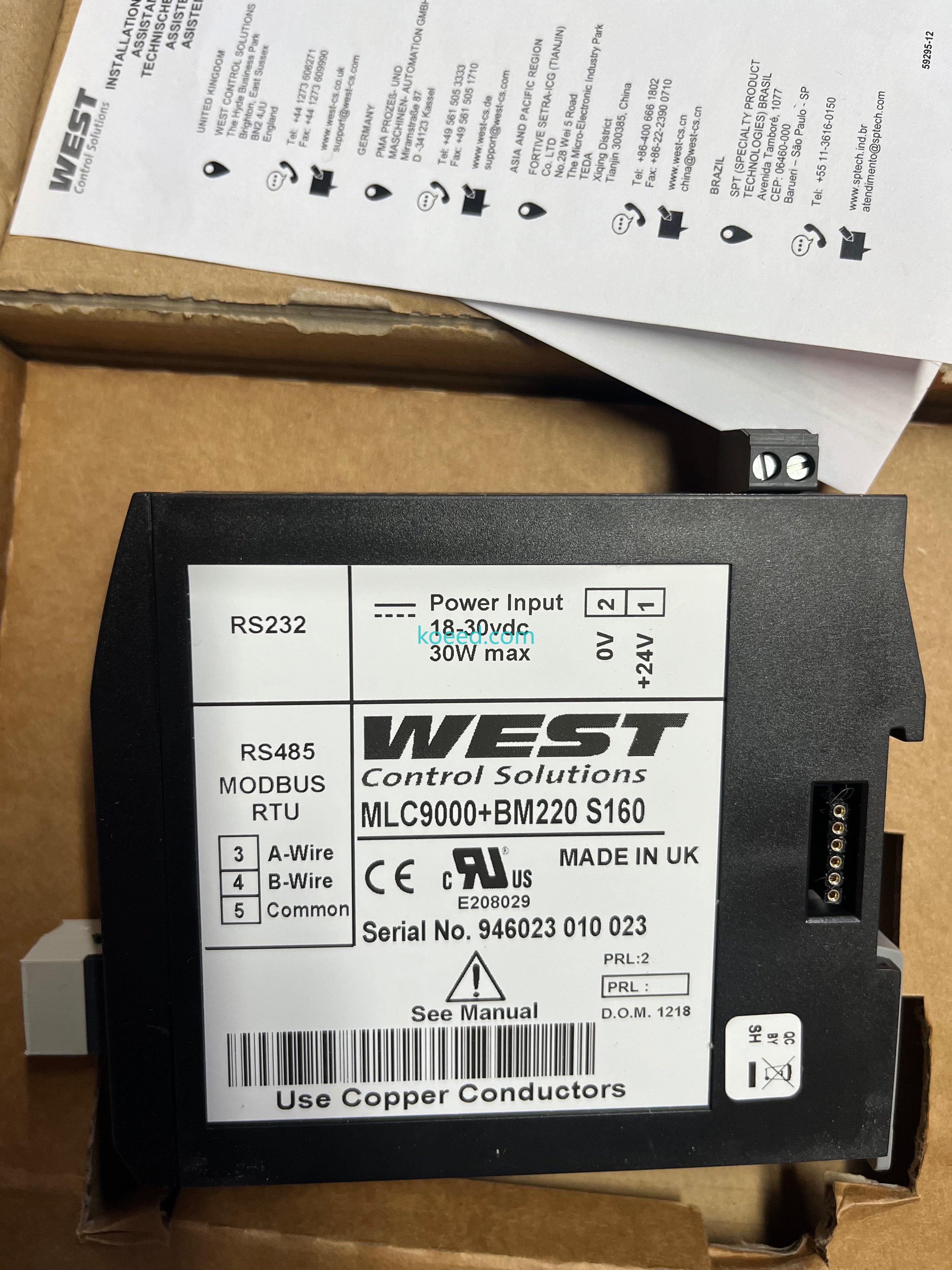
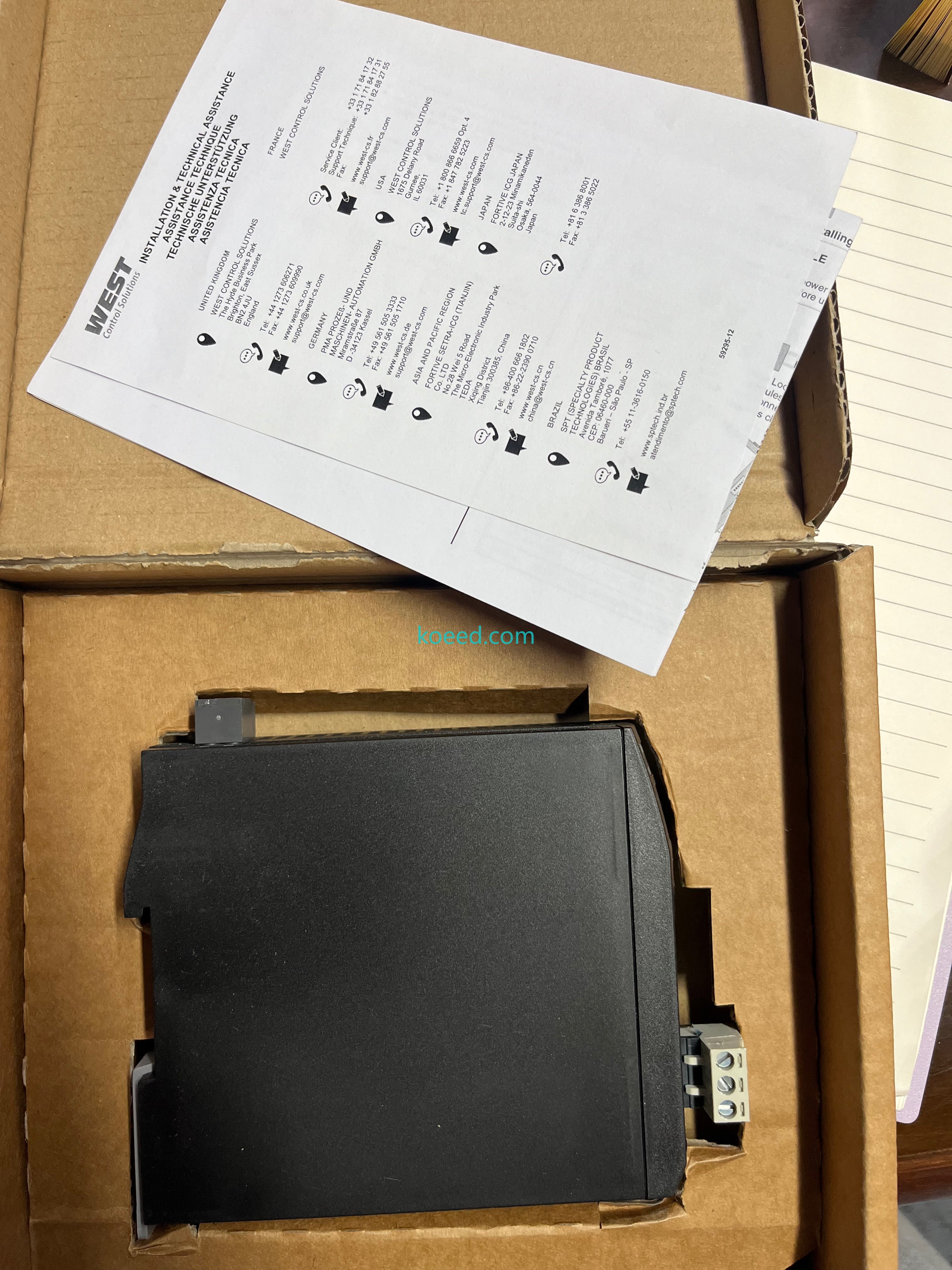
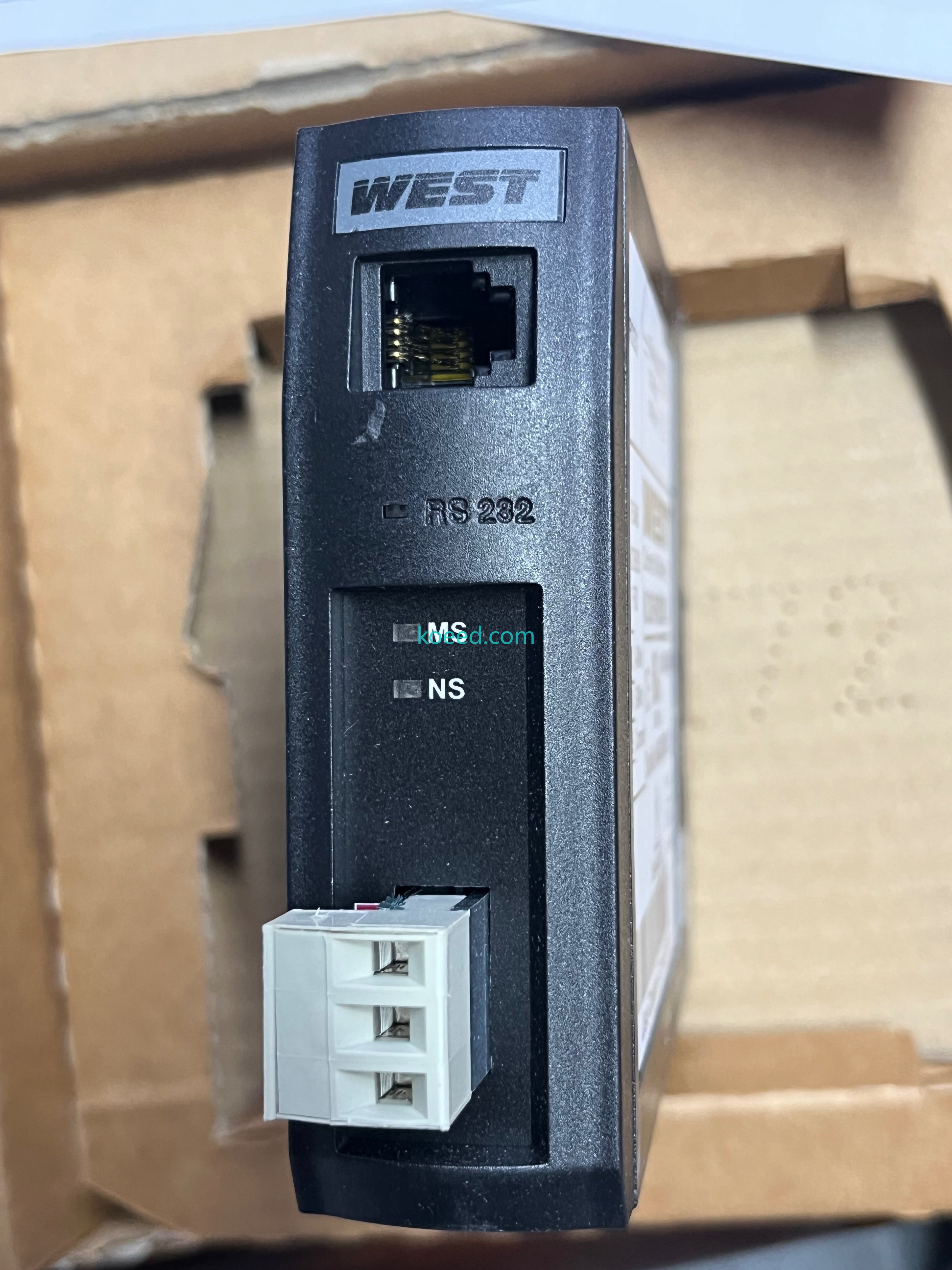
Below are high-resolution product images of the MLC9000+ BM220 S160 assembly, showcasing the modular form factor, terminal layout, and installation profile:
🎬 Product overview video — see the MLC9000+ BM220 S160 in detail
4. Technical Benchmarking: MLC9000+ vs. The Market
How does the MLC9000+ BM220 S160 stack up against alternative approaches in 2026? We benchmark it across the three architectural models engineers are evaluating today:
| Parameter | MLC9000+ BM220 S160 | Siemens S7-1200 + SM 1231 TC | Discrete PID (e.g., Eurotherm 3200) |
|---|---|---|---|
| Architecture | Modular, distributed | PLC-centralized | Standalone, per-zone |
| Max Control Zones | 16 (per BM220) | 8–12 (practical limit) | 1 per unit |
| Cost per Zone (2026 EUR) | ~€145–€180 | ~€210–€260 | ~€280–€340 |
| Hot-Swap Capability | ✅ Yes (LCM level) | ⚠️ Limited | ✅ Yes (per unit) |
| Predictive Maintenance | Heater current monitoring | Via additional modules | ❌ Not available |
| Energy Optimization | Adaptive auto-tune | PID_Temp (TIA Portal) | Standard auto-tune |
| Protocol & Cloud Readiness | Modbus RTU + Gateway to OPC UA | Native PROFINET + OPC UA | Modbus RTU only |
5. Sustainability & Energy Impact
With the EU's Energy Efficiency Directive (EED) 2025 amendments now in full enforcement and similar regulations expanding across Asia and North America, thermal process efficiency is under unprecedented scrutiny. The MLC9000+ S160 modules contribute directly to sustainability KPIs:
- Adaptive Auto-Tune: Continuously optimizes PID parameters against actual thermal load, reducing overshoot by up to 60% and cutting wasted heating energy.
- Heater Bake-Out Prevention: By monitoring SSR duty cycle and heater current trends, the system can flag degrading heater elements before catastrophic failure — preventing energy-wasting runaway conditions.
- Zone Sleep Scheduling: When integrated with a production scheduling system via Modbus, idle zones can be set to a low-power standby setpoint during shift changes or maintenance windows.
🌱 Sustainability Metric — Real-World Example
A German packaging manufacturer retrofitting 12 extrusion zones with MLC9000+ BM220 S160 modules in Q3 2025 reported:
- 18.3 MWh/year reduction in heating energy (verified by sub-metering)
- Equivalent to ~7.2 tonnes CO₂/year avoided
- Qualified for a €4,200 annual rebate under the German BAFA energy efficiency program
6. Predictive Maintenance & Troubleshooting Guide
One of the MLC9000+ BM220 S160's most compelling 2026-era features is its ability to support predictive maintenance workflows without requiring additional hardware. By monitoring key diagnostic registers via Modbus RTU, maintenance teams can shift from reactive to condition-based strategies.
6.1 Key Diagnostic Parameters to Monitor
| Modbus Register | Parameter | Predictive Insight | Threshold (Alert) |
|---|---|---|---|
| Output Duty Cycle | SSR/Relay On-Time % | Heater degradation trend | >95% sustained for 30+ min |
| PV Rate of Change | ΔPV/Δt | Sensor fouling or thermal lag | Deviation >20% from baseline |
| Loop Break Alarm | LBA Status | Open circuit / SSR failure | Immediate flag |
| Auto-Tune Status | AT Progress | Process instability | Auto-tune failure or timeout |
6.2 Common Troubleshooting Scenarios
BM220 Communication Loss — No Response on Modbus
Symptoms: SCADA/PLC unable to poll BM220; communication timeout errors.
Checklist:
- Verify RS485 termination resistor (120Ω) is installed at both ends of the bus.
- Confirm baud rate and parity settings match the master device (default: 9600, 8N1).
- Check that the BM220's green STATUS LED is solid (not flashing) — flashing indicates a configuration error.
- Measure DC voltage across RS485 A/B terminals: should read 1.5–4.5V DC when idle.
- Cycle power to the BM220 and allow 15 seconds for re-initialization.
S160 Control Loop Instability — Temperature Oscillation
Symptoms: Process value (PV) oscillates ±3°C or more around setpoint after stabilization.
Resolution:
- Trigger a fresh auto-tune cycle (ensure the process is at a stable starting condition).
- If oscillation persists, manually reduce Integral gain (Ti) by 30–50% from auto-tune values.
- Verify thermocouple placement: sensors within 50mm of the heater element may cause hunting.
- Check SSR switching frequency — a minimum cycle time of 2 seconds is recommended for most thermal processes.
Heater Output Stuck at 100% — PV Exceeding Setpoint
Symptoms: Temperature rises uncontrollably; output duty cycle locked at 100%.
Immediate Actions:
- Check for a shorted SSR — measure resistance across SSR output terminals with power off.
- Inspect the S160 module's output fuse (if equipped).
- Verify that the control output type (SSR drive vs. relay) matches the physical wiring configuration.
- Check the Loop Break Alarm status register — an active LBA confirms output-to-sensor mismatch.
7. Installation & Commissioning Best Practices (2026 Edition)
- DIN Rail Mounting: Ensure adequate ventilation — maintain 30mm clearance above and below the module stack for convection cooling.
- Power Supply: Use a dedicated 24V DC Class 2 power supply for the BM220. Do not share the supply with high-inductive loads (contactors, solenoids).
- Grounding: Connect the DIN rail to a clean earth ground. The MLC9000+ chassis is grounded through the DIN rail clip.
- Cable Segregation: Route thermocouple extension wires at least 150mm away from VFD output cables and power feeders.
8. Frequently Asked Questions
Can the MLC9000+ BM220 be integrated with a Siemens S7-1500 PLC?
Yes. The BM220 communicates via Modbus RTU (RS485). The S7-1500 can act as a Modbus master using the CM PtP RS485 communication module or via an onboard RS485 interface (depending on CPU model). Use Siemens' Modbus_Comm_Load and Modbus_Master function blocks in TIA Portal V18 or later. For higher-performance integration in 2026, Koeed recommends adding an OPC UA gateway between the BM220 and the S7-1500 to leverage TSN-based deterministic communication.
How many S160 modules can a single BM220 support?
The BM220 bus communication module supports up to 8 loop control modules (LCMs) on a single backplane. Since each S160 is a dual-loop controller, this yields a maximum of 16 independent temperature control zones from a single Modbus node. Multiple BM220 nodes can coexist on the same RS485 bus (each with a unique Modbus address) for larger installations.
Is the MLC9000+ BM220 S160 suitable for Class I Div 2 hazardous locations?
The standard MLC9000+ modules are designed for industrial control panel installation in ordinary (non-hazardous) locations. For hazardous area applications, the modules must be installed within a properly rated, purged, or intrinsically safe enclosure. Consult your local electrical code (NEC Article 500 / IEC 60079) and Koeed's application engineering team for site-specific guidance.
What is the expected service life and warranty?
The MLC9000+ series is rated for a minimum service life of 10 years under continuous operation within specified ambient conditions (0–55°C, 5–95% RH non-condensing). Koeed provides a 12-month warranty on all new MLC9000+ components, with extended warranty options available for OEM and volume purchasers. SSR output modules typically see the highest wear; Koeed recommends keeping one spare S160 module per 8 installed for critical processes.
Can I mix different LCM types (S160, S260, etc.) on the same BM220 backplane?
Yes. The BM220 automatically discovers and addresses all connected LCMs regardless of their specific model variant. You can mix single-loop, dual-loop, and specialized modules (e.g., current-monitoring variants) on the same backplane. The BM220 assigns sequential Modbus register blocks to each module based on its physical position in the stack. Always consult the MLC9000+ user manual for the correct register mapping for each LCM type.
Ready to Upgrade Your Thermal Process Control?
Whether you're retrofitting a legacy line or designing a greenfield installation, the MLC9000+ BM220 S160 delivers the precision, scalability, and OT/IT connectivity your 2026 operation demands. Contact Koeed's automation specialists today for a personalized consultation, volume pricing, or a technical deep-dive.


