

Schneider LC1F265M7 TeSys F Contactor: 2026 Engineering Guide for Heavy-Duty Motor Control & IT/OT Convergence
Strategic Overview: The LC1F265M7 in the 2026 Industrial Landscape
As industrial automation enters its most transformative decade yet, the Schneider LC1F265M7 TeSys F contactor occupies a unique and strategically critical position. While officially classified as a legacy component approaching end-of-life in Schneider Electric's product roadmap, the LC1F265M7 remains deeply embedded in thousands of heavy-duty motor control installations worldwide — from cement kilns and steel rolling mills to municipal water pumping stations and marine auxiliary systems.
In 2026, the conversation around this 265A workhorse has shifted. It is no longer simply about "replace or repair." Forward-thinking maintenance teams are layering Industry 4.0 capabilities onto their existing TeSys F infrastructure through intelligent monitoring retrofits, bridging the gap between legacy power switching and modern IT/OT convergence architectures. The LC1F265M7, with its robust electromagnetic design and proven 3-pole AC-3 rating up to 265A at ≤440V, continues to deliver where it matters most: uptime, safety, and deterministic motor control in mission-critical environments.
For procurement specialists and plant engineers, understanding the LC1F265M7's 2026 market position — including availability channels, migration pathways to the TeSys Giga series, and retrofit communication options — is essential to making informed TCO decisions. This guide provides a comprehensive, engineer-to-engineer analysis of the contactor's technical profile, maintenance best practices, and strategic role within modern industrial ecosystems.
Technical Specifications & Benchmarking
Before diving into application strategies, let's anchor our analysis with the definitive technical parameters of the LC1F265M7. The table below benchmarks the contactor against both its legacy TeSys F siblings and the next-generation TeSys Giga replacement series — giving engineers a clear reference point for upgrade planning.
| Parameter | LC1F265M7 (TeSys F) | LC1F185 (TeSys F — Smaller Frame) | TeSys Giga (Replacement Series) |
|---|---|---|---|
| Rated Operational Current (AC-3, ≤440V) | 265 A | 185 A | Up to 1000 A (modular) |
| Pole Configuration | 3P (3 NO) | 3P (3 NO) | 3P / 4P configurable |
| Coil Voltage (AC) | 220 V AC | Various (24–440V AC) | Wide-range electronic coil |
| Motor Power Rating (AC-3, 440V) | ~160 kW | ~110 kW | Up to 500 kW |
| Mechanical Durability | 5 million operations | 5 million operations | 10 million operations |
| Electrical Durability (AC-3) | ~0.8 million operations | ~0.8 million operations | ~1.2 million operations |
| Weight | 7.95 kg | ~5.5 kg | Modular (varies) |
| Operating Temperature | -5°C to +60°C | -5°C to +60°C | -25°C to +70°C |
| Standard Compliance | IEC 60947-4-1 | IEC 60947-4-1 | IEC 60947-4-1, IEC 61508 (SIL) |
| Native Communication | None (auxiliary contacts only) | None (auxiliary contacts only) | Embedded IoT / Modbus TCP |
| Obsolescence Status (2026) | Obsolete — Limited Stock | Obsolete — Limited Stock | Active Production |
Key Engineering Takeaways from the Benchmark
The LC1F265M7's 265A AC-3 rating positions it in the upper mid-range of the TeSys F family — powerful enough for 160 kW motor loads yet compact enough for standard panel integration. The primary gap versus the TeSys Giga series lies in three areas: embedded intelligence (no native IoT), temperature tolerance (10°C narrower range), and electrical endurance (roughly 33% lower). However, for facilities with standardized TeSys F spare parts inventories and established maintenance workflows, the LC1F265M7 remains a cost-effective bridge solution while phased migration plans are executed.
Visual Gallery: LC1F265M7 Product Inspection
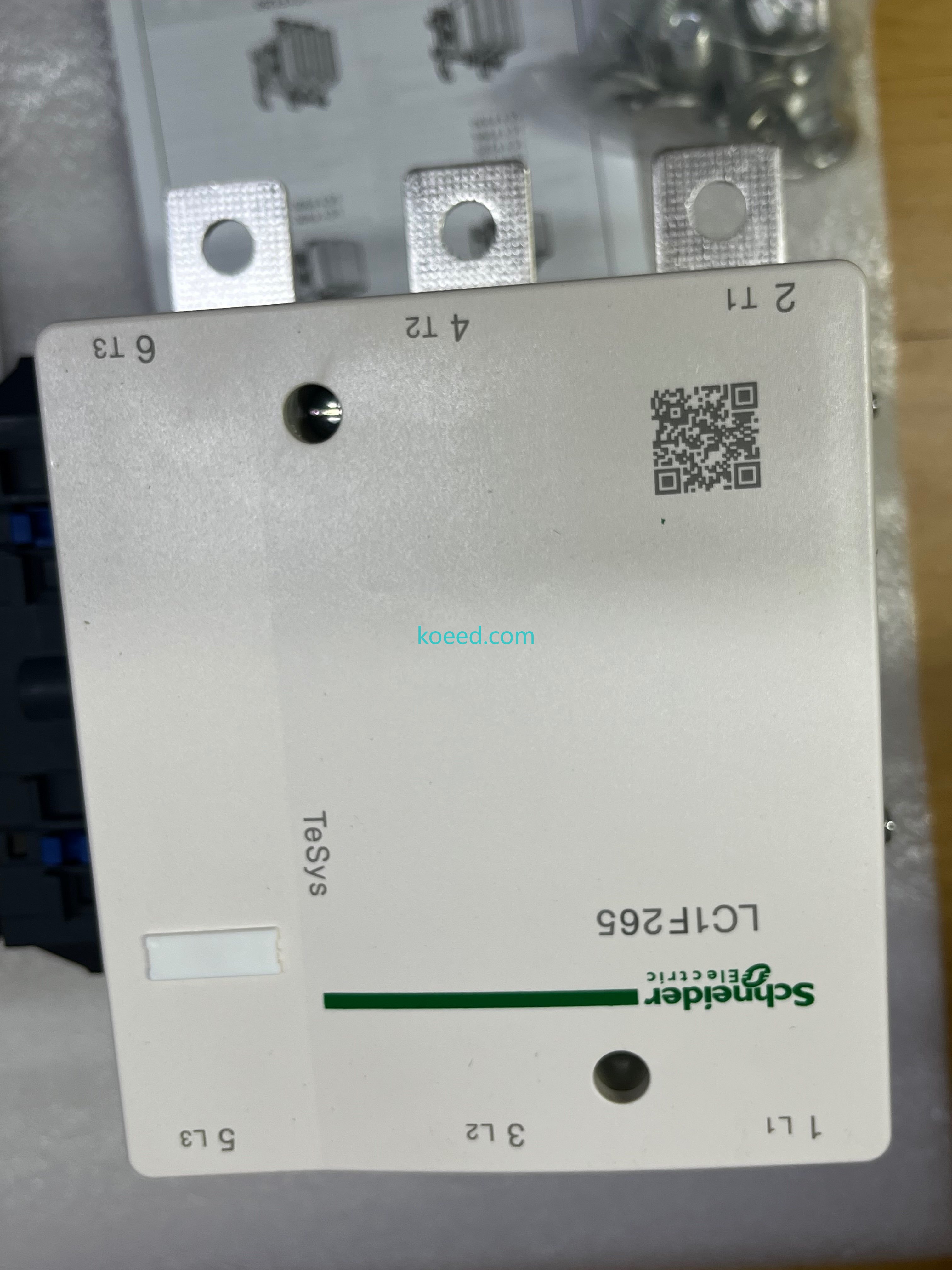
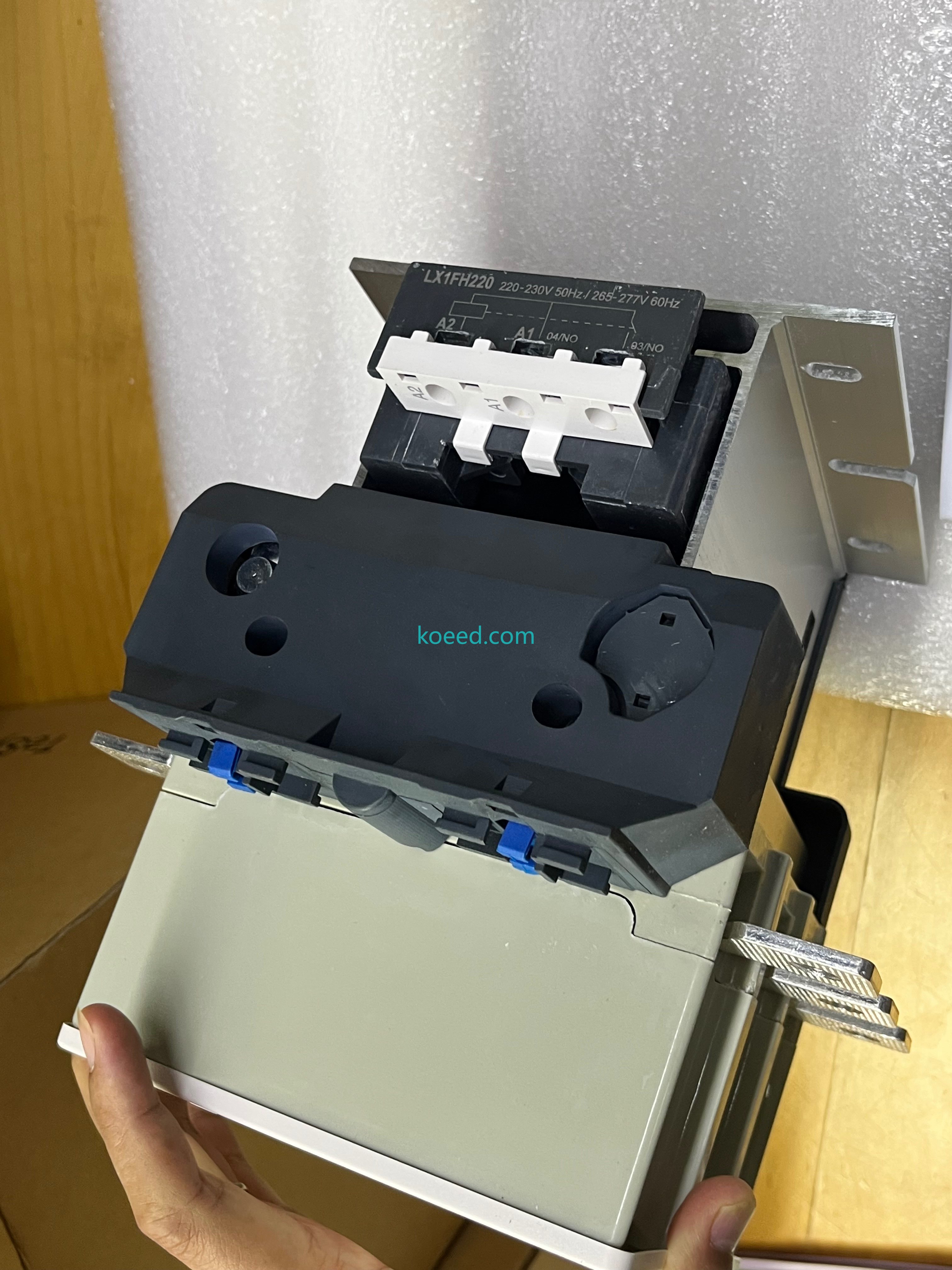
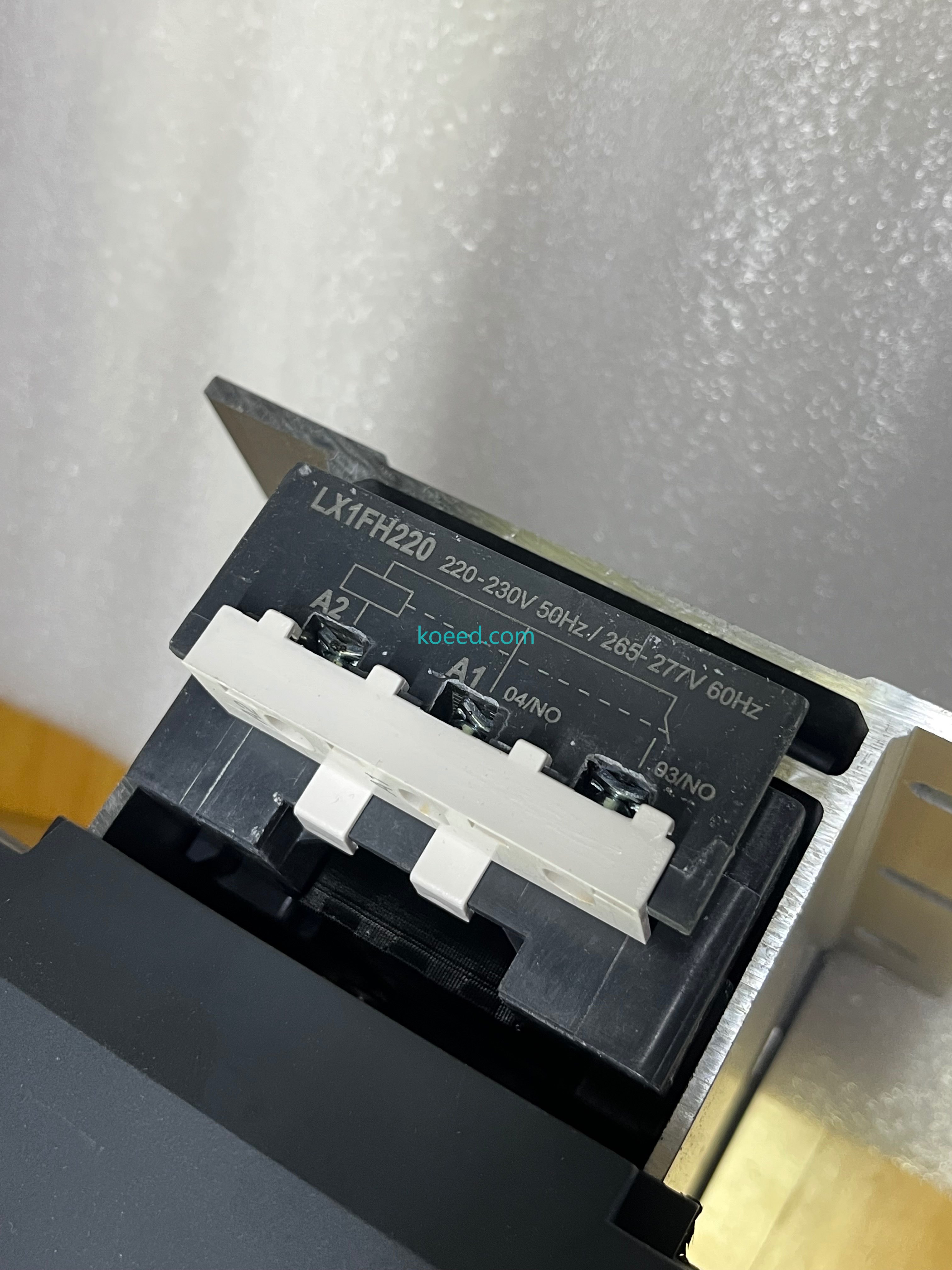
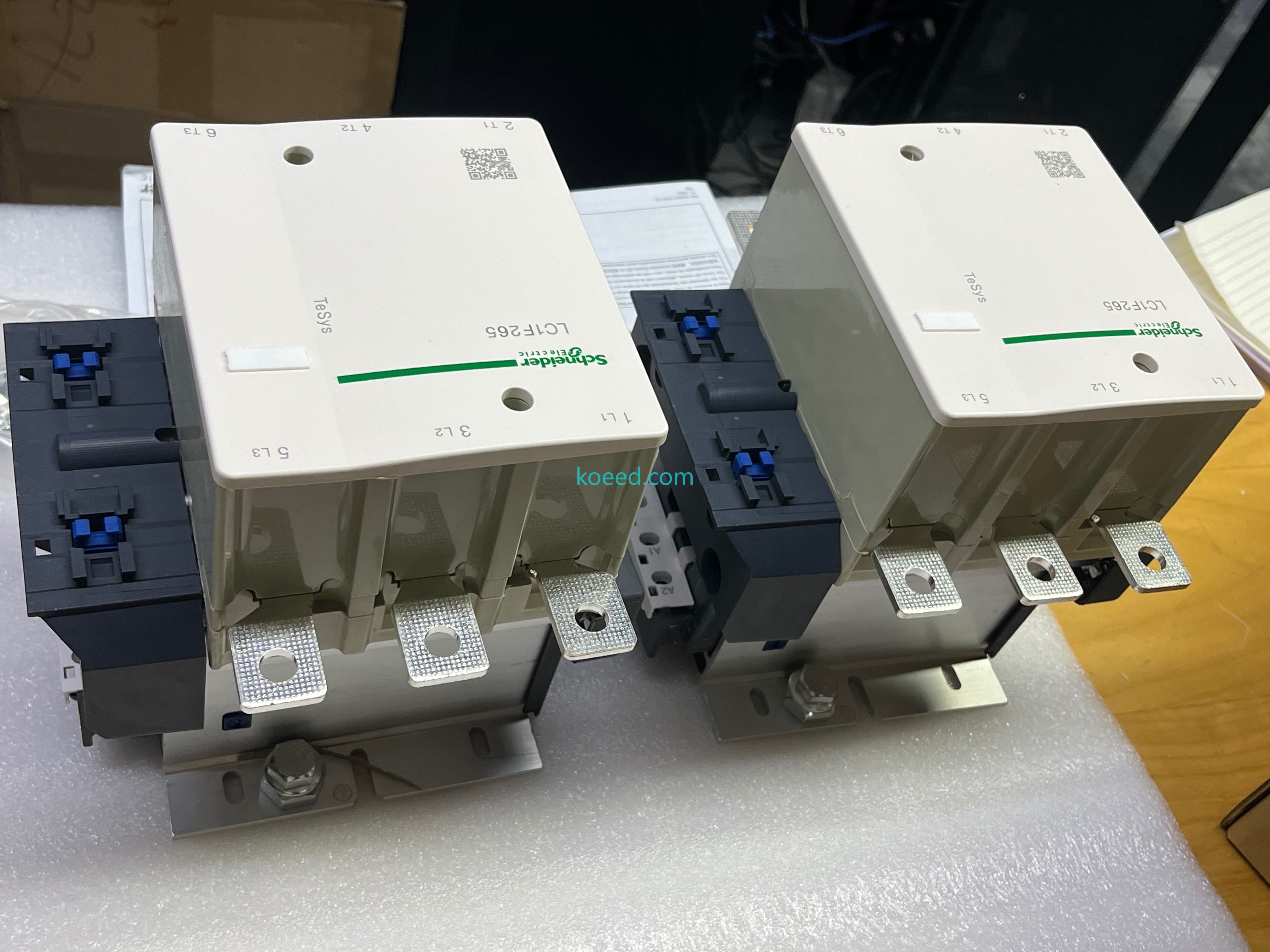
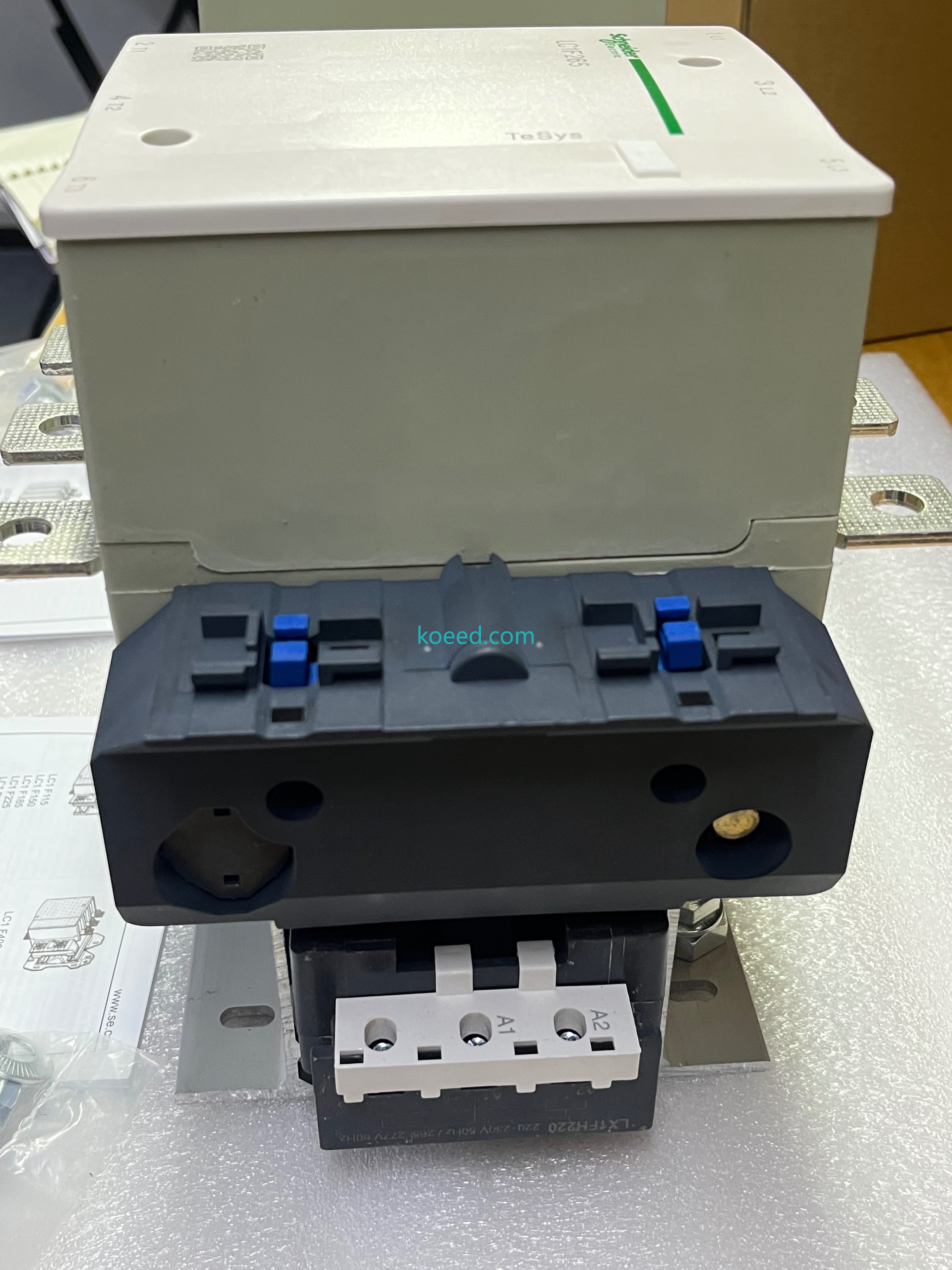
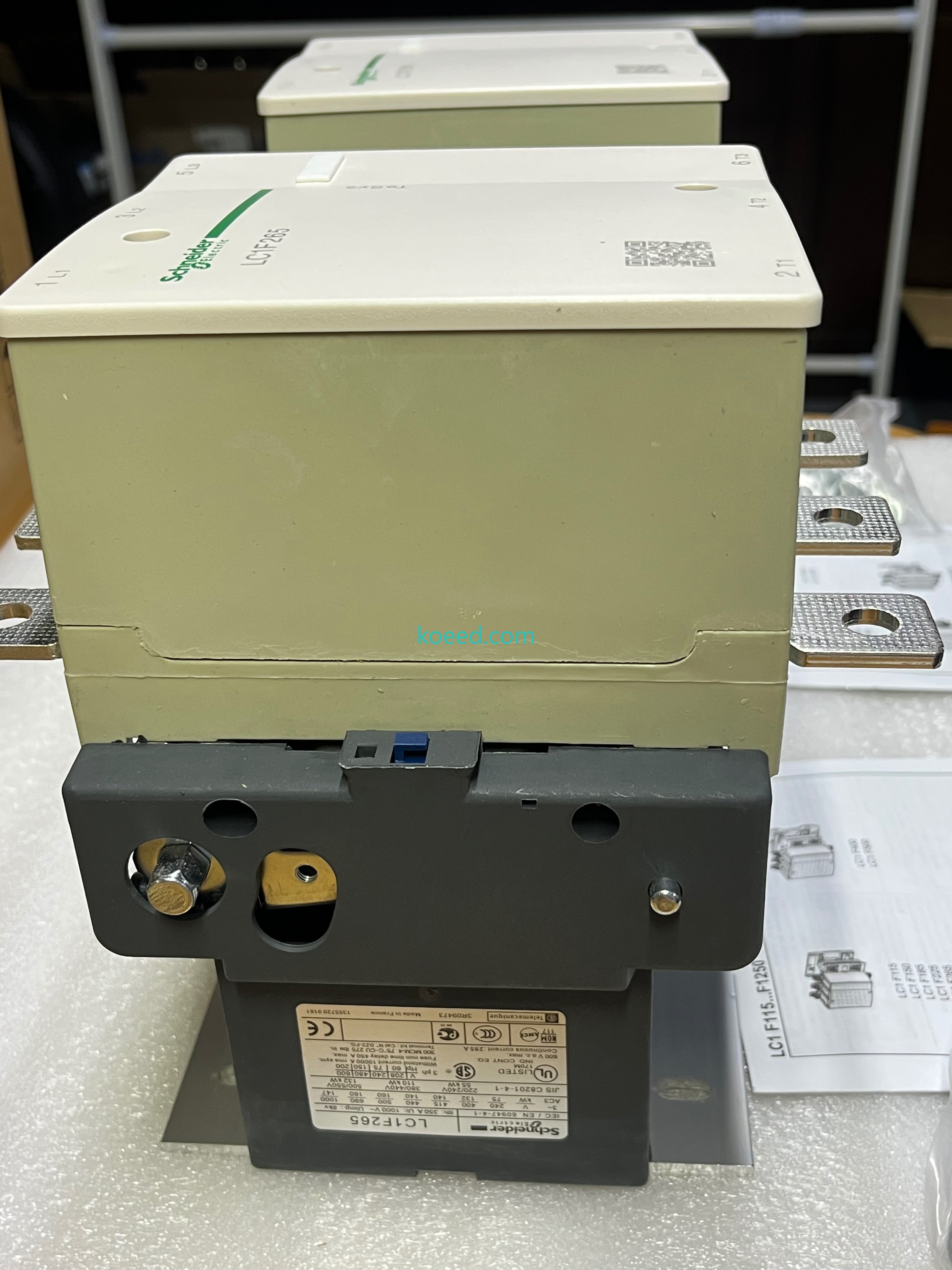
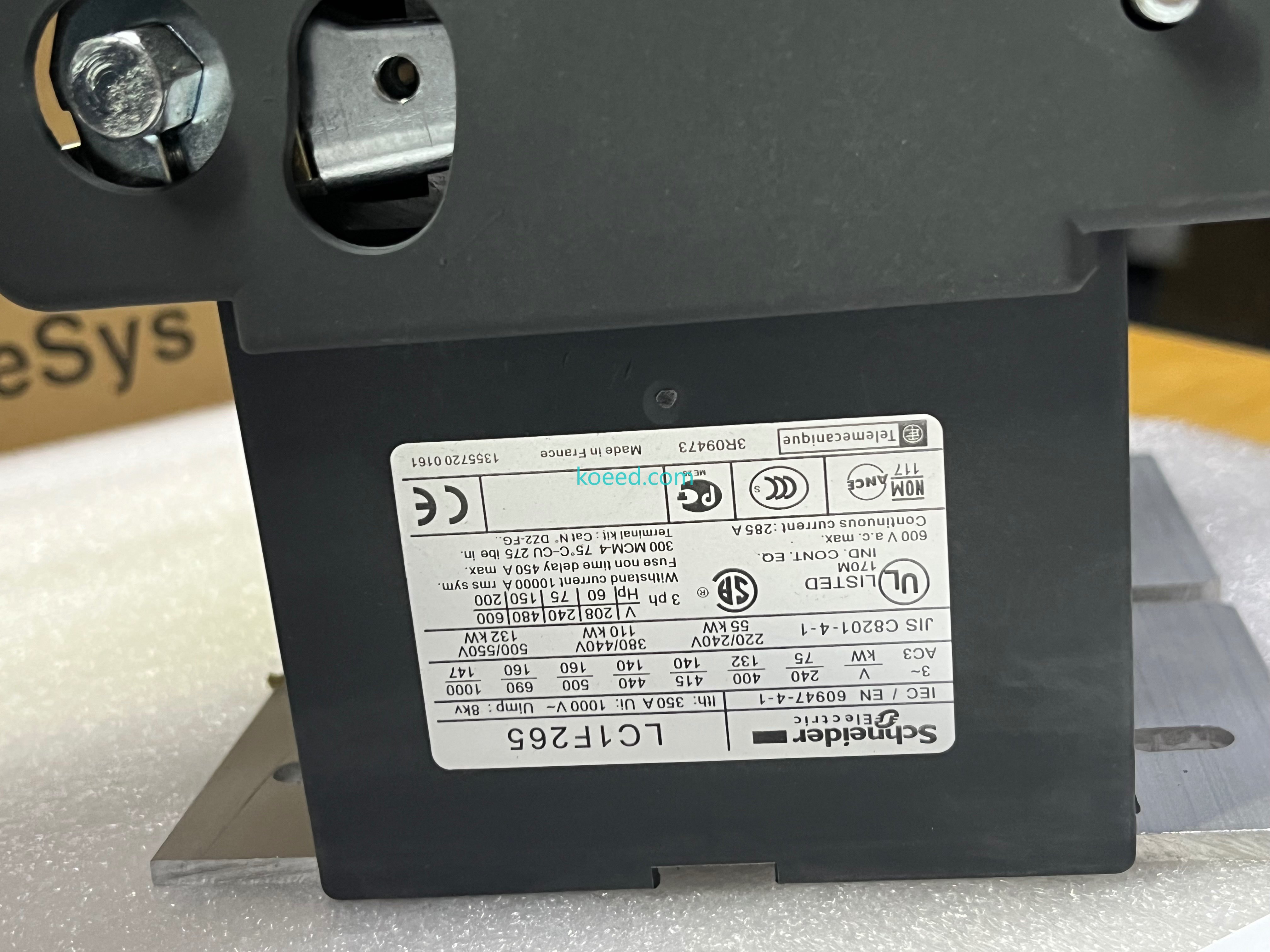
The following high-resolution images provide a detailed visual reference of the Schneider LC1F265M7 from multiple angles, including label verification, terminal inspection, coil assembly, and packaging condition. Use these for incoming quality control checks, panel layout planning, and authenticating genuine Schneider product markings.
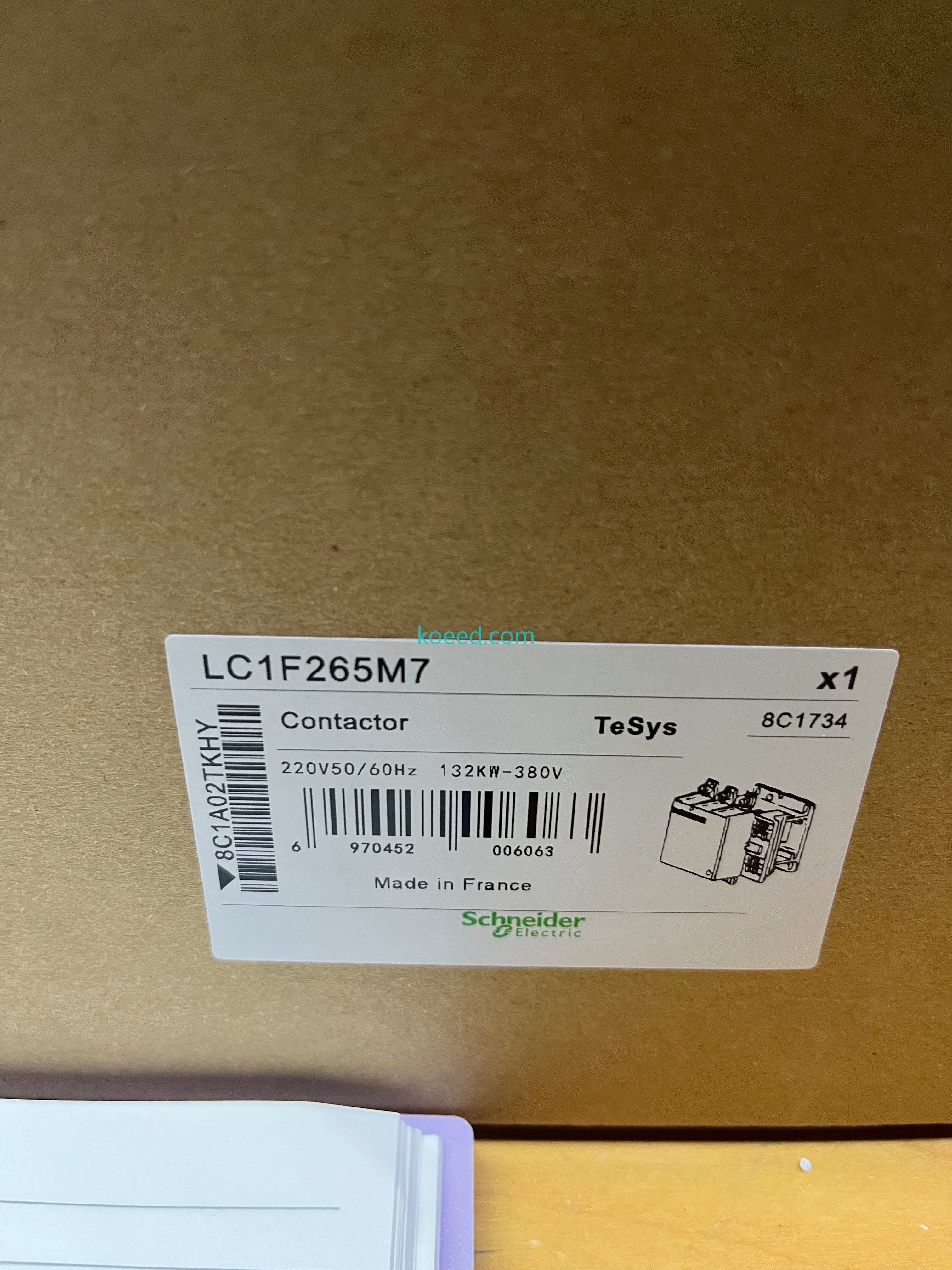
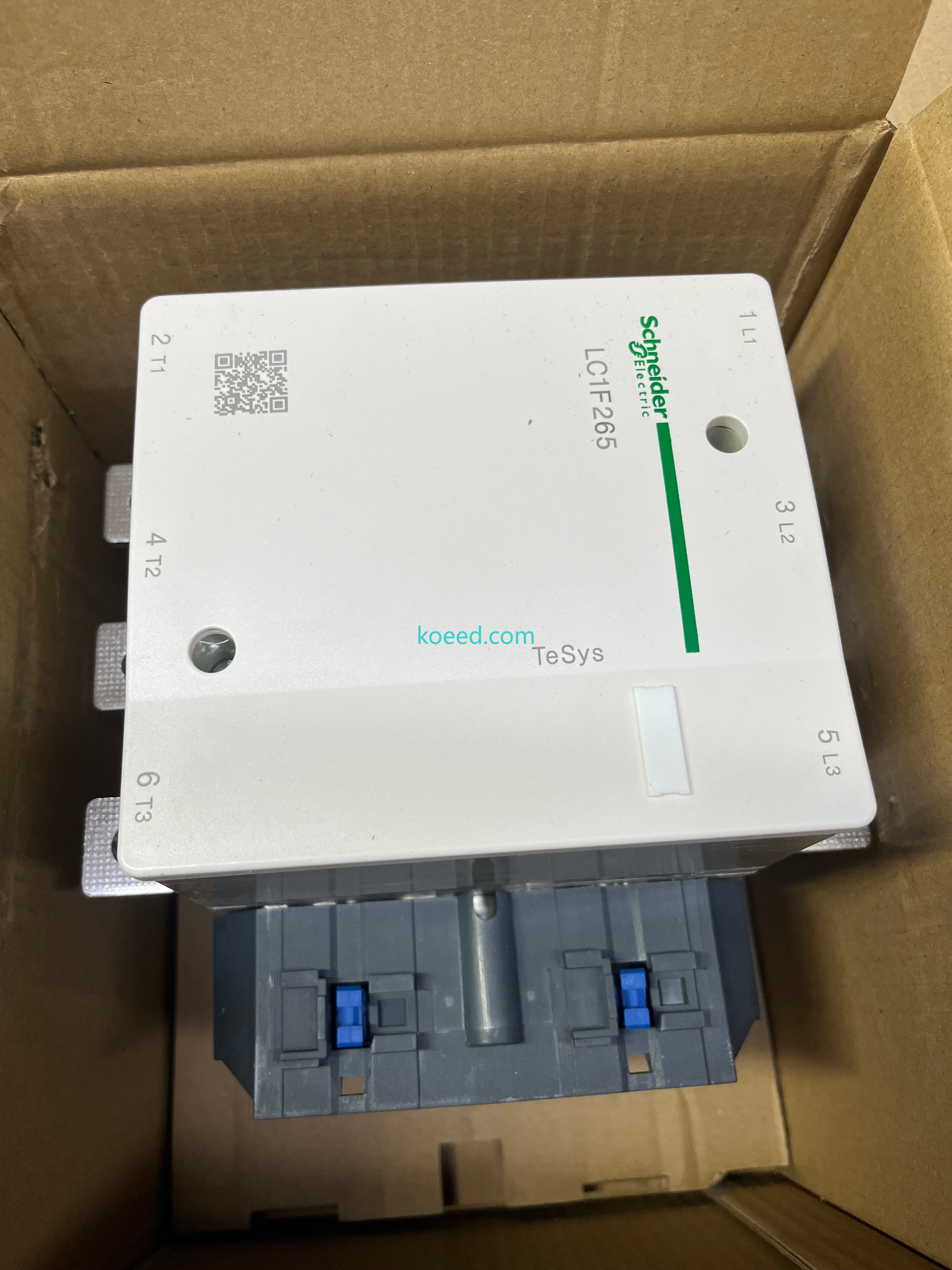
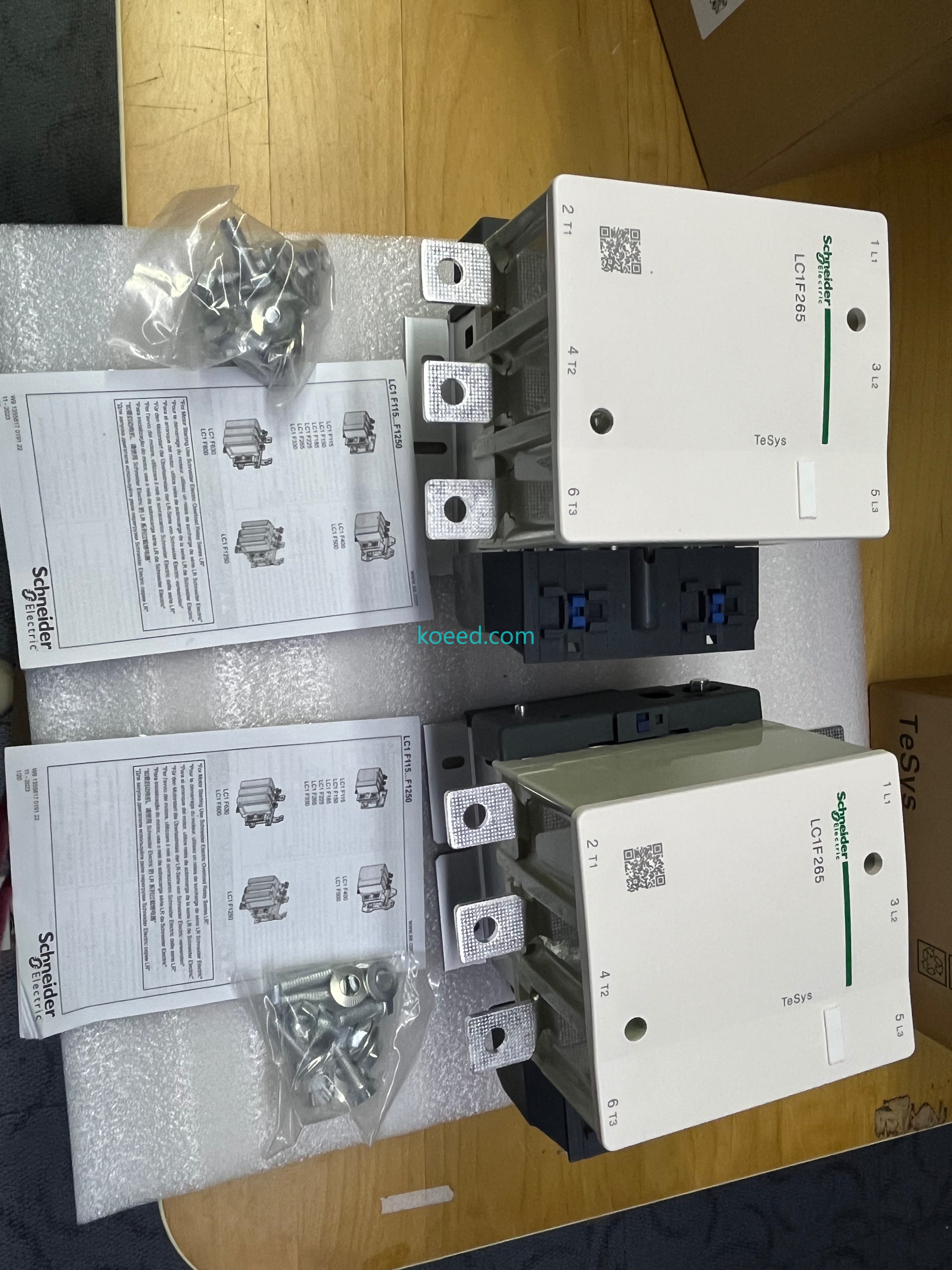
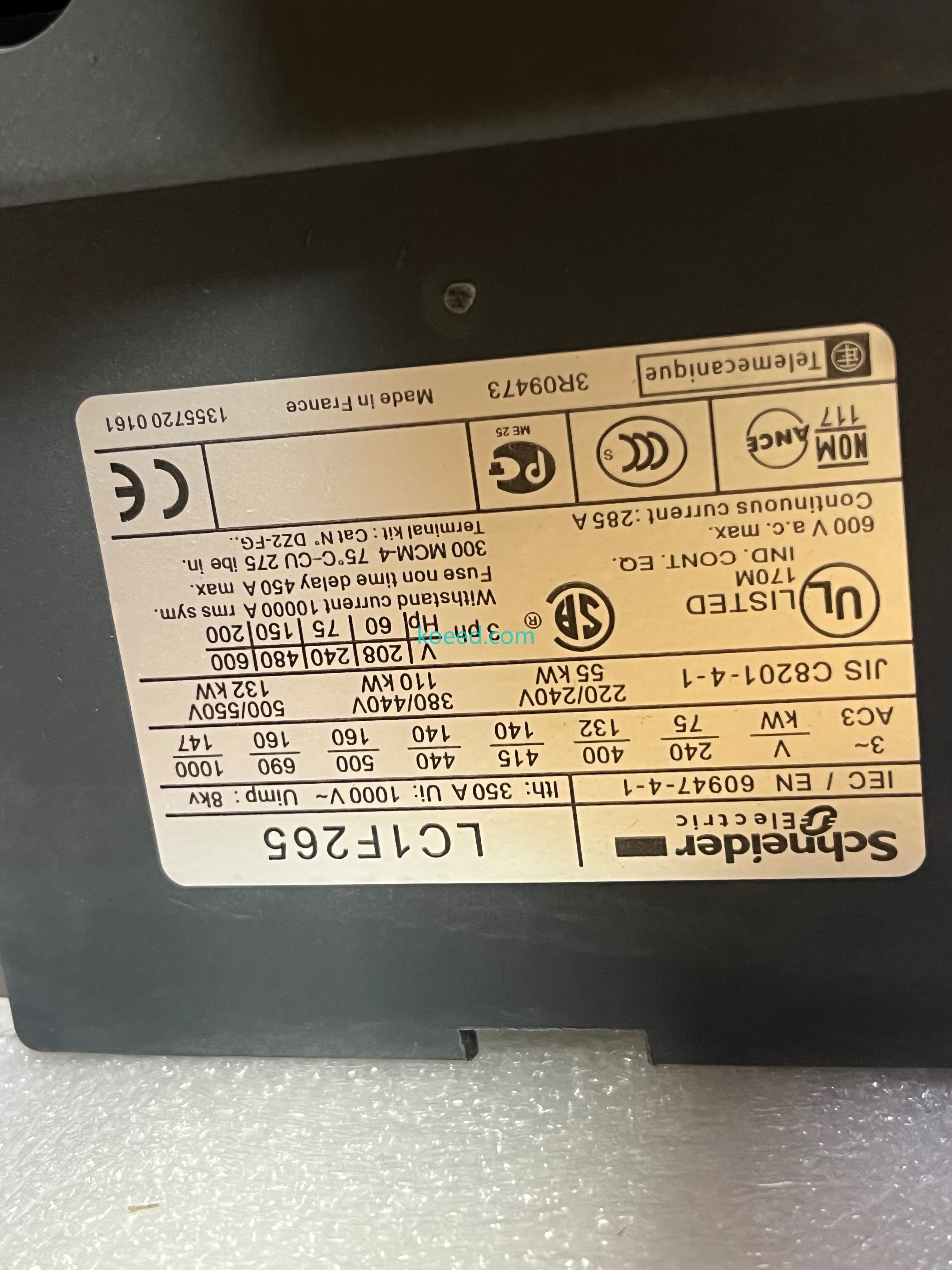
Maintenance & Troubleshooting: Extending Service Life to 2028 and Beyond
With the LC1F265M7 now in its sunset support phase, proactive maintenance becomes the single most powerful lever for maximizing ROI on existing installations. Drawing from field service data across heavy-industry sites, here is the 2026 predictive maintenance framework tailored specifically to this contactor.
Common Fault Modes & Diagnostic Codes
| Symptom | Probable Root Cause | 2026 Diagnostic Approach | Corrective Action |
|---|---|---|---|
| Coil fails to energize (no audible click) | Open coil winding or control circuit fault | Measure coil resistance (expected: 45–65 Ω at 20°C for 220V AC coil); thermal imaging of coil body | Replace coil assembly if open; verify control voltage at A1-A2 terminals |
| Contacts welding / sticking | Excessive inrush current, contact erosion beyond allowable limits | Measure contact resistance across each pole (should be <0.5 mΩ per pole); review motor start profile via power logger | Replace contactor; investigate upstream motor protection settings; consider soft starter integration |
| Excessive humming / buzzing (>65 dB) | Shading coil degradation, magnet face contamination, or low coil voltage | Sound level meter measurement; inspect magnet faces for debris or corrosion | Clean magnet faces with non-abrasive solvent; verify coil voltage within ±10% of nominal |
| Overheating (>60°C at terminals) | Loose terminal connections or overload condition | Infrared thermography scan at full load; torque verification on all terminations | Re-torque terminals to manufacturer spec (typically 18–22 N·m for main terminals); verify load within 265A AC-3 rating |
| Intermittent drop-out during operation | Voltage sag in control circuit or mechanical latch wear | Install power quality monitor on control circuit for 72-hour recording period | Add control transformer with voltage regulation if sags exceed -15%; inspect mechanical interlock mechanism |
Spare Parts & Interchangeability
The LC1F265M7 shares coil and auxiliary contact compatibility with several TeSys F frame sizes. However, with Schneider's formal obsolescence notice now active, we strongly recommend purchasing complete OEM units rather than attempting component-level repairs with aftermarket parts. Third-party coils and contacts have been observed to cause premature failure due to mismatched magnetic characteristics and contact materials. For verified genuine replacements, the LC1F265M7 stocked at Koeed includes full factory certification and batch traceability documentation.
IT/OT Convergence: Retrofitting Intelligence onto TeSys F Infrastructure
One of the defining trends of 2025–2026 industrial automation is the retrofitting of legacy power-switching devices with external monitoring layers — effectively bringing “dumb” contactors into the IIoT fold without replacing the core switching hardware. The LC1F265M7, despite its lack of native communication, can be instrumented for real-time condition monitoring through several proven retrofit architectures.
Architecture Option 1: External CT + Edge Gateway
Install split-core Rogowski coil current transformers (CTs) on each phase output of the LC1F265M7. These non-invasive sensors feed an edge computing gateway (such as Advantech's WISE series or Siemens' IOT2050) that streams data via MQTT or OPC UA to the plant's SCADA or cloud historian. Parameters monitored include per-phase current, phase imbalance, harmonic distortion, and contactor operation count.
Architecture Option 2: Smart Relay with Modbus RTU
Insert a smart motor protection relay (e.g., Schneider's EOCR series or a SEL unit) downstream of the LC1F265M7. The relay handles overload protection while simultaneously publishing operational data over Modbus RTU to the plant's PLC or DCS. This approach adds both protection intelligence and communication capability while preserving the contactor as the primary power-switching element.
Architecture Option 3: Vibration + Acoustic Monitoring
For critical applications where any unscheduled downtime is unacceptable, attach a wireless vibration/acoustic sensor (such as those from Banner Engineering or Petasense) directly to the contactor housing. Machine learning algorithms trained on contactor acoustic signatures can detect early-stage mechanical degradation — shading coil failure, spring fatigue, or magnet face pitting — typically 4–8 weeks before electrical symptoms manifest.
Sustainability & Total Cost of Ownership (TCO) Analysis
In the 2026 regulatory environment, sustainability metrics increasingly influence procurement decisions. The European Union's revised Energy Efficiency Directive (EED 2025) and similar frameworks in Asia-Pacific now require industrial facilities to document the energy impact of their motor control infrastructure. Here is how the LC1F265M7 stacks up in a comprehensive TCO model.
Five-Year TCO Comparison: Retain LC1F265M7 vs. Migrate to TeSys Giga
| TCO Factor | Retain LC1F265M7 (with External Monitoring) | Full Migration to TeSys Giga |
|---|---|---|
| Initial Hardware Cost (per contactor) | $700–$1,100 (OEM stock) | $1,800–$2,600 (new series) |
| IoT Enablement Cost | $300–$600 (external CT + gateway) | $0 (embedded) |
| Installation & Commissioning | $200–$400 (drop-in replacement) | $800–$1,500 (panel modification, engineering time) |
| Annual Energy Loss (Contact Resistance) | ~18–25 W (new), ~35–50 W (aged) | ~12–18 W (new), ~22–30 W (aged) |
| Spare Parts Holding Cost (5-year) | $150–$300 (coils, auxiliary blocks) | $80–$200 (modular components) |
| Downtime Risk Premium | Low (known failure modes, stocked spares) | Medium (learning curve, new failure patterns) |
| 5-Year Estimated TCO | $1,550–$2,700 | $3,000–$5,200 |
The numbers tell a clear story for 2026: for brownfield sites with established TeSys F infrastructure, retaining the LC1F265M7 with intelligent monitoring retrofits delivers a 40–48% lower 5-year TCO compared to a full TeSys Giga migration. The breakeven point typically shifts in favor of migration only when more than 60% of a facility's contactors require replacement — at which point the engineering cost of panel modification becomes amortized across multiple units.
Sustainability Impact
From a circular economy standpoint, extending the service life of existing contactors avoids the embedded carbon cost of manufacturing new units. A single LC1F265M7 at 7.95 kg represents approximately 42–55 kg of CO₂ equivalent in embodied manufacturing emissions. By contrast, a retrofit monitoring approach adds less than 2 kg of CO₂ equivalent. For a medium-sized plant with 20+ contactors, the difference exceeds 1 metric ton of avoided carbon — a meaningful contribution to corporate Scope 3 emission reduction targets increasingly mandated by supply chain partners in 2026.
Frequently Asked Questions
Is the Schneider LC1F265M7 still available to purchase in 2026?
Yes — but with a critical caveat. Schneider Electric has officially classified the LC1F265M7 as obsolete, meaning factory production has ceased. However, verified OEM stock remains available through specialized industrial automation distributors like Koeed. Our current inventory of the Schneider LC1F265M7 is sourced directly from authorized channels with full traceability. Given that global stock is finite, we recommend securing units now for both immediate needs and strategic spares inventory.
What is the direct replacement model for the LC1F265M7?
Schneider Electric's official replacement pathway is the TeSys Giga series, which offers modular 3P/4P configurations with current ratings up to 1000A. The closest functional equivalent to the LC1F265M7 would be a TeSys Giga contactor configured for 265A AC-3 duty. However, note that the TeSys Giga series has different physical dimensions, coil characteristics (wide-range electronic coil), and terminal layouts — meaning a direct “drop-in” replacement is not possible without panel modifications. This is precisely why many plants are opting to retain the LC1F265M7 while planning a phased migration.
Can the LC1F265M7 be integrated into a modern IoT / Industry 4.0 environment?
Absolutely. While the LC1F265M7 lacks native Ethernet or fieldbus communication, it can be retrofitted with external monitoring layers — Rogowski coil CTs, edge gateways, and smart protection relays — to stream operational data via MQTT, OPC UA, or Modbus TCP into your SCADA, MES, or cloud platform. This approach is detailed in the IT/OT Convergence section above. Many plants find this more cost-effective than replacing fully functional power-switching hardware.
What are the critical dimensions and mounting requirements?
The LC1F265M7 uses a standard TeSys F frame with approximate dimensions of 205mm (W) × 225mm (H) × 205mm (D). It mounts on a standard DIN rail or can be screw-mounted to a backplate. Minimum clearance of 60mm above and below is recommended for adequate convection cooling. The unit weighs 7.95 kg, so ensure your panel structure is rated accordingly. Refer to the visual gallery above for detailed dimensional reference.
What coil voltages are available for the LC1F265M7?
The LC1F265M7 specifically is configured with a 220V AC coil (the “M7” suffix denotes the 220V AC coil variant). Other TeSys F contactors in the same frame size were historically available with coil voltages ranging from 24V DC to 440V AC (suffix codes B7, D7, E7, F7, G7, etc.), but availability of alternate coil variants in 2026 is extremely limited due to obsolescence. For applications requiring different coil voltages, an interposing relay or control transformer may be the most practical solution.
Procurement & Technical Support: Your Next Steps
Whether you are replacing a failed LC1F265M7 under emergency downtime conditions or building a strategic spares inventory for 2027–2028, Koeed's industrial automation team is ready to support your requirements with factory-verified product, competitive pricing, and global logistics.


