

Allen-Bradley 802T-NPTP Oiltight Limit Switch — 2026 Specs, TCO & Engineering Guide | Koeed
Allen-Bradley 802T-NPTP Oiltight Limit Switch: The 2026 Engineering & ROI Reference
Machine builders in 2026 need two things at once: deterministic, hardware-level position feedback that cannot lie, and a total cost of ownership that survives a CFO review. The 802T-NPTP from the Allen-Bradley Bulletin 802T family answers both. It is a plug-in, lever-type, spring-return, neutral-position, 4-circuit oiltight limit switch built for wash-down packaging lines, metal-cutting cells and heavy material handling where inductive proximity sensors cannot take the abuse.
This guide benchmarks the 802T-NPTP against legacy hard-wired switches and modern smart-sensor alternatives, maps it into an IT/OT-converged control architecture, and gives maintenance teams the pro-tips that double service life. Verified stock with fast delivery is available at 1pc Allen-Bradley 802T-NPTP Oil Tight Limit Switch — Fast Delivery.
1. Strategic Overview: Why a Mechanical Kinematic Still Wins in 2026
The 802T platform is one of the longest-serving industrial switch architectures in existence, and it is still specified on new machines. That is not nostalgia; it is engineering economics. Contact-based limit switches deliver direct, non-ambiguous, load-bearing position confirmation. They do not drift with metal composition, they do not care about weld fields, and they tolerate chips, coolant mist and high-pressure wash-down that blinds optical and inductive devices.
The 802T-NPTP is the neutral-position variant: the lever rests at a centred neutral, and actuation in either direction, clockwise or counter-clockwise, trips the contact set. That makes it ideal for bi-directional applications such as a shuttle table that must confirm both end-of-travel states, a rotating indexer, or a gate that must report open and closed from a single mounting point.
The 2026 business case in three lines
- Uptime over sophistication. A plug-in limit switch swaps out in under two minutes without re-terminating field wiring, which is the single biggest lever on Mean Time To Repair (MTTR) in a bottleneck cell.
- Energy and sustainability. Mechanical contact sensing draws zero quiescent current. On a 200-station line, replacing always-on sensing arrays with mechanical confirmation points trims parasitic load and heat inside sealed enclosures.
- Digital-thread readiness. Wired into a modern digital-input module, the 802T-NPTP becomes an edge data point: cycle counts, actuation timing and chatter signatures feed predictive-maintenance models without adding a single dollar of sensor intelligence.
Where it fits best in 2026: packaging and filling lines, food and beverage wash-down zones, CNC and press guarding, automated storage and retrieval (AS/RS) end-of-travel, conveyor diverter gates, and rugged drop-in replacement where inventory lists still reference obsolete 802T variants.
2. Verified 802T-NPTP Specifications
Below is the reference specification set for the whole-switch, plug-in 802T-NPTP. Use it for drawing verification before committing a bill of materials, particularly the conduit thread and lever travel geometry, which are the two most common causes of retrofit rework.
| Parameter | 802T-NPTP Specification |
|---|---|
| Product family | Bulletin 802T Oiltight Limit Switch, plug-in whole switch |
| Enclosure rating | NEMA Type 4 and Type 13 — oiltight, dust-tight, coolant-resistant |
| Operating head | Lever type, spring return, neutral position with CW and CCW operation from centre |
| Contact configuration | 4-circuit — four independent contact sets in one housing |
| Conduit entry | 1/2 in. NPT |
| Operating torque | 0.28 N·m (2.5 lb·in) clockwise · 0.47 N·m (4.2 lb·in) counter-clockwise |
| Travel to operate | 13° |
| Travel to reset | 7° |
| Maximum travel | 75° |
| Lever and head options | Interchangeable 802T operating heads and lever assemblies; micrometer-adjustable lever arm available for repeatability tuning |
| Installation form | Plug-in base — body and head assembly lifts off a pre-wired receptacle without disturbing field wiring |
| Primary use case | Bi-directional end-of-travel and position confirmation on high-cycle machinery |
Legacy vs. modern: choosing the right sensing layer
Do not replace a mechanical switch with a smart sensor simply because the smart sensor exists. The correct 2026 architecture is usually hybrid: mechanical confirmation for safety-relevant, high-shock travel limits, and solid-state devices for fine position and analogue feedback.
| Decision factor | 802T-NPTP (mechanical, plug-in) | Legacy hard-wired switch | Smart position sensor |
|---|---|---|---|
| Field replacement time | Under 2 min via plug-in base | 15 to 40 min with re-termination | Under 5 min but requires re-teach |
| Wash-down and chip tolerance | Excellent (NEMA 4/13) | Good if sealed correctly | Variable; optical types fail first |
| Diagnostic depth | Cycle counting via PLC logic | None | Native health, temperature, IO-Link data |
| Cost per point, installed | Low | Low hardware, high labour | Medium to high |
| Best-fit role | End-of-travel, interlock, bi-directional limits | Retrofit-only inventory | Analogue stroke, fast tool change |
Pro-Tip: The Hybrid Stack
Specify the 802T-NPTP as the hard limit and safety interlock, then place a proximity or linear sensor 2 to 3 mm earlier on the stroke as a slow-down trigger. The mechanical switch then only actuates at creep speed, which can multiply contact life by an order of magnitude. This is the highest-ROI pattern we see across packaging and material-handling retrofits.
Genuine, verified units with full traceability are listed here: 1pc Allen-Bradley 802T-NPTP Oil Tight Limit Switch — Fast Delivery.
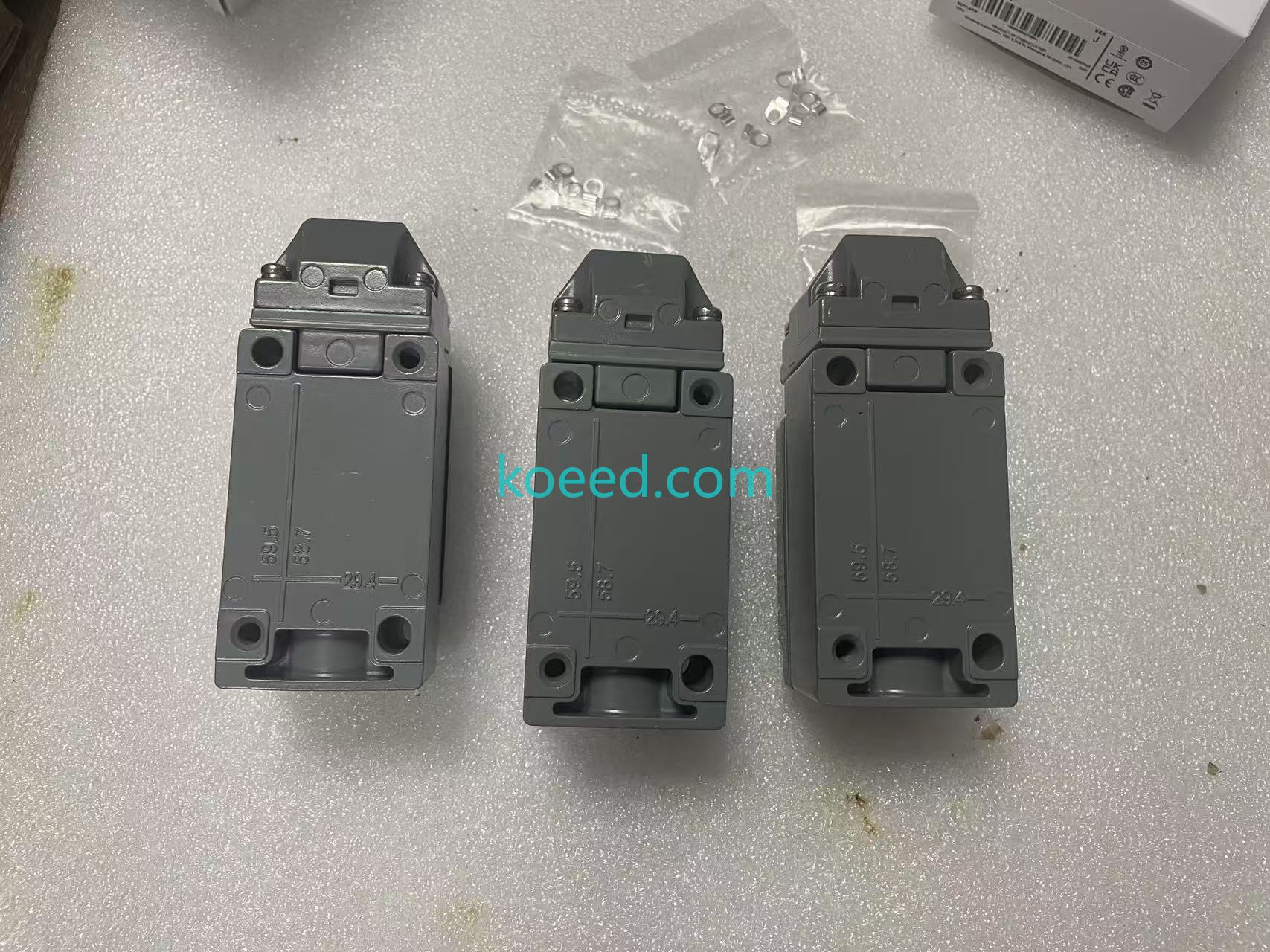
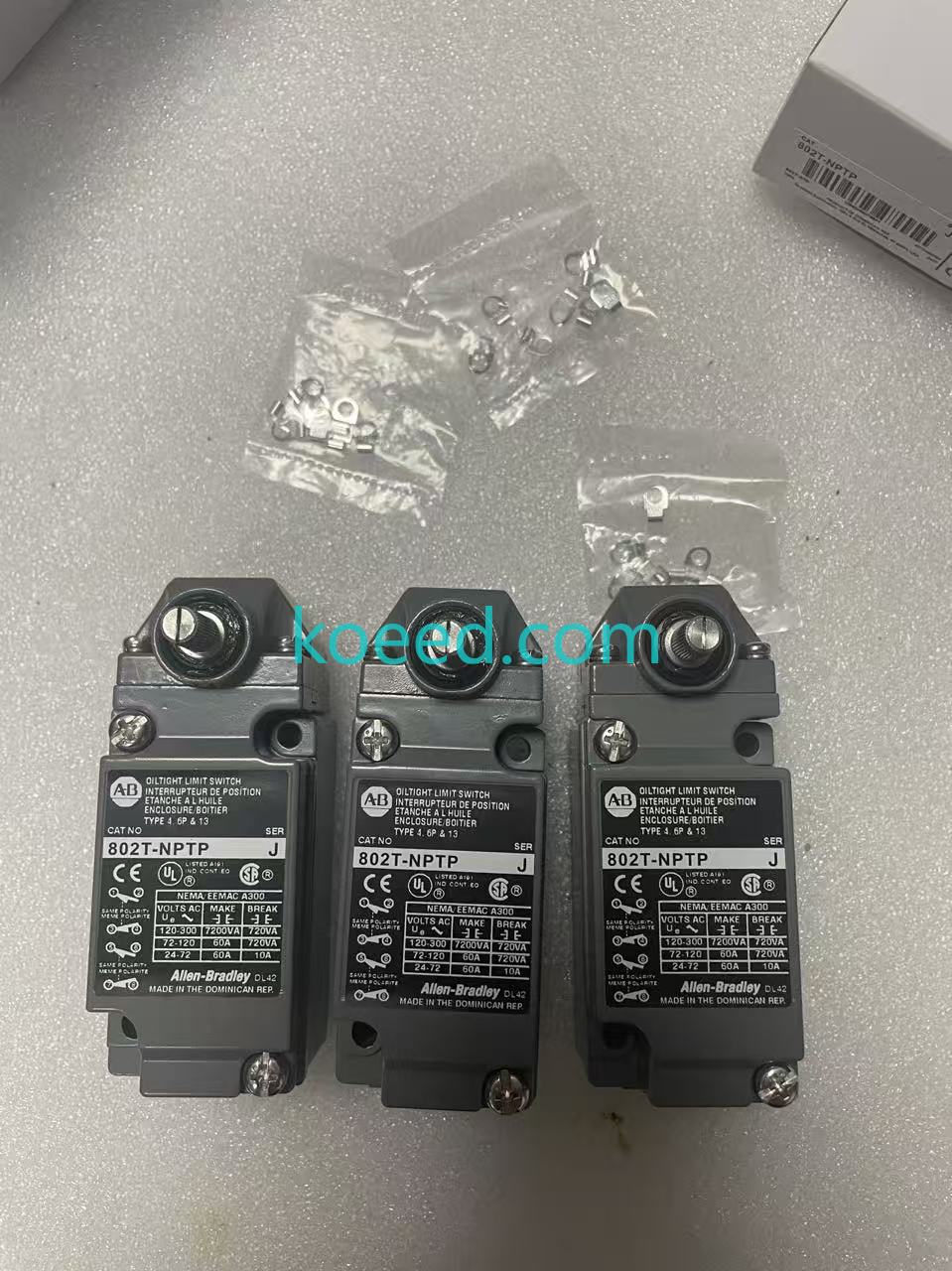
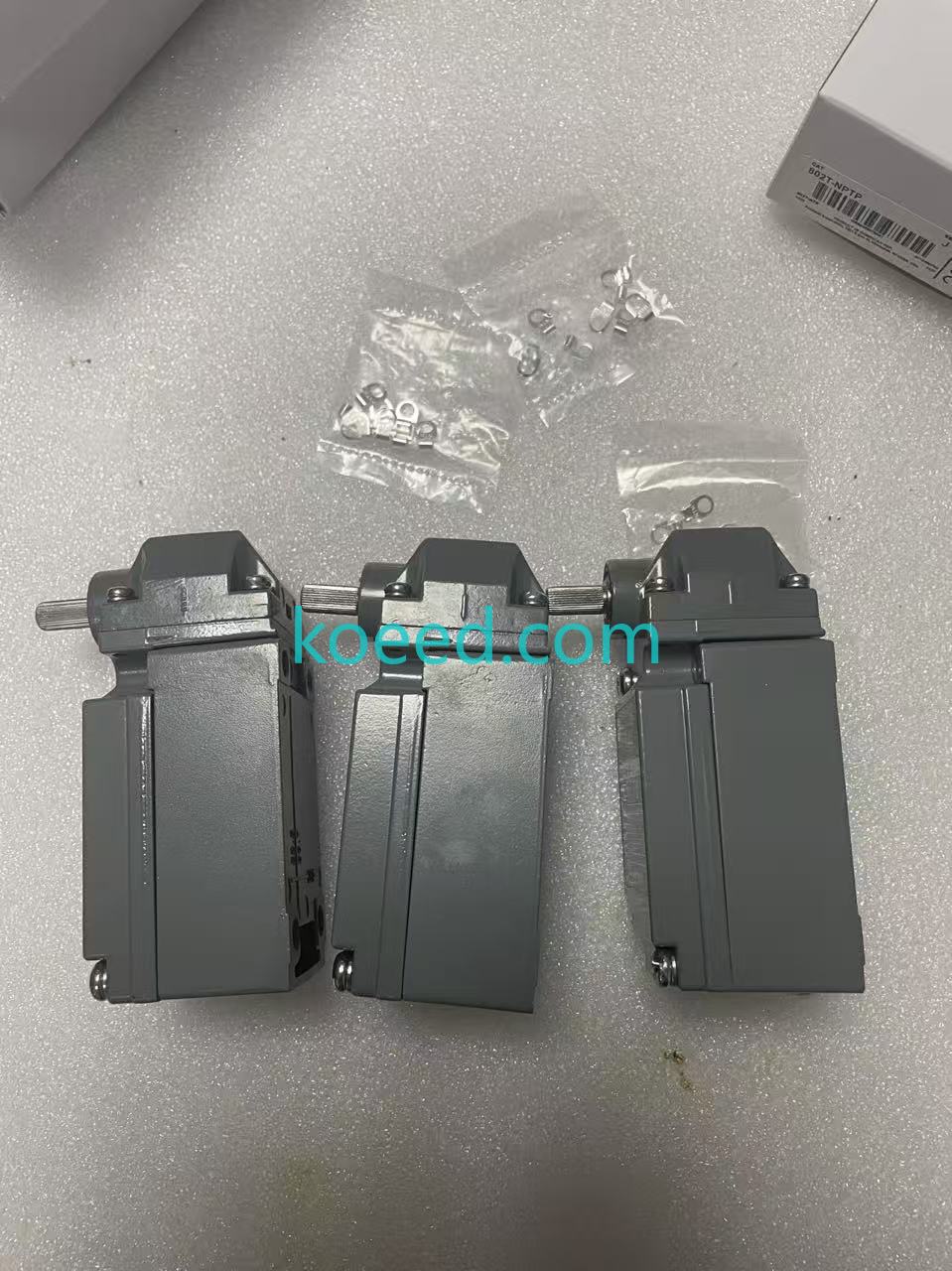
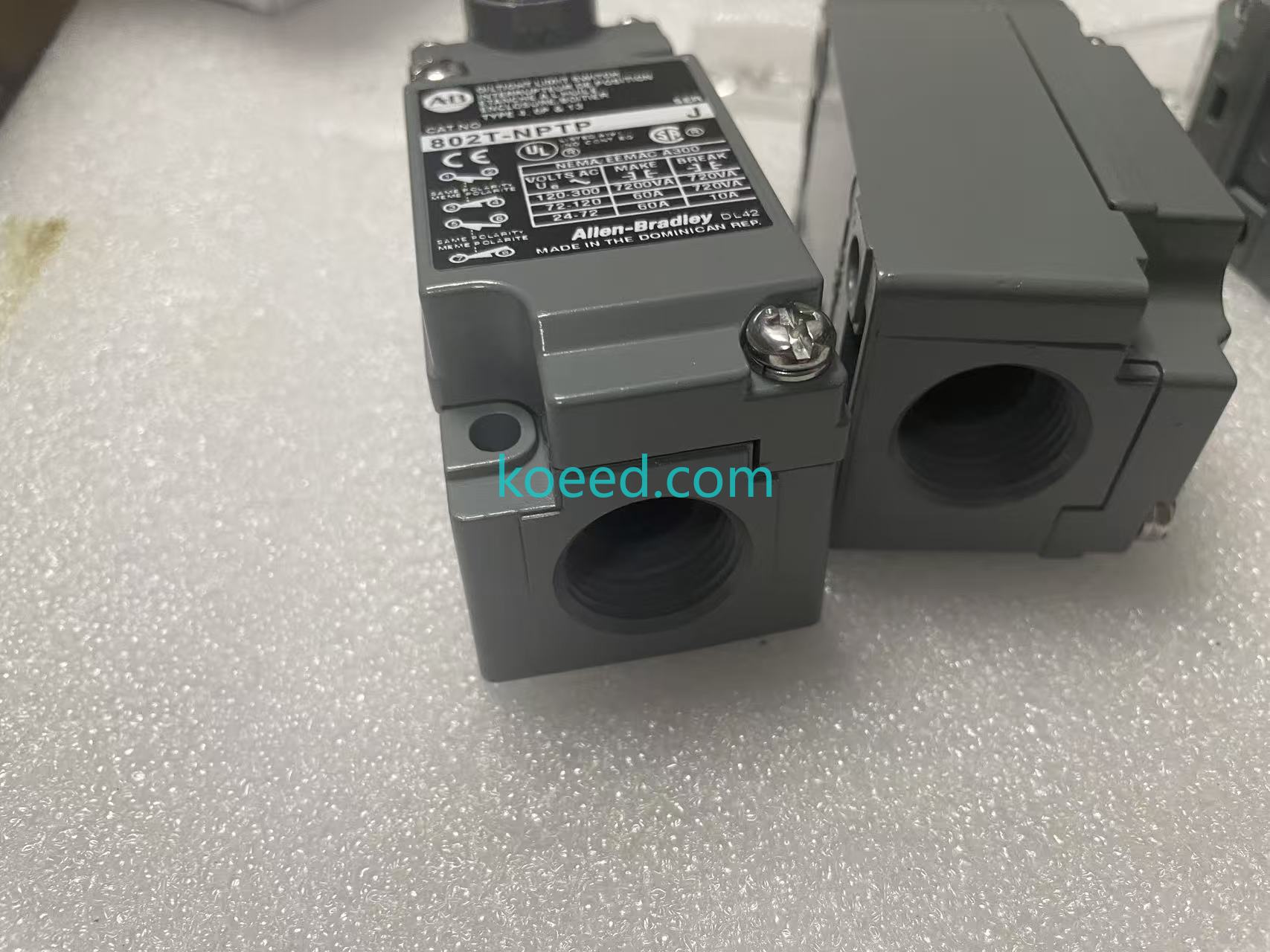
3. Visual Gallery and Physical Inspection Reference
Use this gallery for pre-installation inspection. Check the plug-in receptacle keying, confirm the lever hub rotates freely with no axial play, and verify the conduit thread is clean before mounting.

4. IT/OT Convergence: Wiring the 802T-NPTP Into a 2026 Data Architecture
A limit switch is not dumb in 2026. It is the cheapest reliable truth source on the machine. Wired into a modern digital-input module on a CompactLogix, ControlLogix or equivalent PAC, every actuation timestamp becomes usable OT data.
- Wire to the fastest input card you own. Route high-cycle limit signals to a hardware-interrupt-capable channel rather than a channel polled in the normal scan task. This preserves deterministic reaction time while the controller is busy with network traffic.
- Debounce in logic, not in hardware. Implement a short timer-based debounce, typically 3 to 10 ms for mechanical contact sets, in the PLC program. This eliminates false edge counts caused by machine vibration, a classic source of bogus OEE data.
- Timestamp every edge. Store rising-edge timestamps in a rolling buffer and push the delta to the MES or historian via MQTT or OPC UA. Actuation-time drift is an early indicator of a failing lever, loose mounting or a load that is over-travelling.
- Build the counter that matters. Track total actuations since installation, not just cycles per shift. That gives a real remaining-life estimate for planned replacement during a scheduled shutdown instead of a mid-run breakdown.
- Feed the ERP and CMMS. Because the plug-in design allows a two-minute swap, a cycle-count-driven work order can be generated automatically before the contact ever fails, closing the loop from OT signal to spare-parts procurement.
- Keep safety in the safety layer. For guarding applications, route the switch through a certified safety relay or safety I/O module rather than a standard input card, and document the dual-channel architecture in your risk assessment.
5. Total Cost of Ownership: A Five-Year Model
Mechanical switches win on installed cost and lose nothing on reliability when the mounting is correct. The table below is a representative five-year TCO comparison for a single bi-directional end-of-travel point running roughly 40 actuations per minute across two shifts and 300 days per year.
| Cost element | 802T-NPTP plug-in | Legacy hard-wired | Smart sensor with IO-Link |
|---|---|---|---|
| Hardware over 5 years | Baseline | Baseline, higher if base is replaced | 2 to 4x baseline |
| Planned replacement labour | Under 10 min per event | 30 to 45 min per event | 15 min plus re-teach and configuration |
| Unplanned downtime exposure | Low — swappable from local stock | High — rewiring under pressure | Medium — firmware and IO-Link dependency |
| Engineering and commissioning | Minimal — direct digital input | Minimal | High — configuration, diagnostics, training |
| Diagnostic value | Added via PLC counters and timestamps | None | Native and rich |
| Best when | High-shock, wash-down, high MTTR sensitivity | Only as an emergency retrofit | Analogue feedback and quick format change |
The plug-in architecture is where the TCO argument is won. Every avoided re-termination is a maintenance window that can be reallocated to preventive work instead of reactive repair.
6. Installation, Commissioning and Troubleshooting Pro-Tips
Installation
- Mount on a rigid surface. The neutral-position mechanism is sensitive to base flex. A bracket that deflects under load will produce phantom actuations and accelerate head wear.
- Set the lever contact point at roughly one-third of maximum travel. With 13° to operate and 75° maximum travel, contacting near 20° to 25° leaves generous over-travel margin for machine settling and thermal expansion.
- Align the actuating cam to the lever centreline. Angular misalignment loads the shaft radially and is the number one cause of premature seal failure in wash-down zones.
- Torque the conduit fitting and use a proper sealing method. NEMA 4/13 performance is only as good as the gland and the cover torque. Verify gasket seating after every head change.
- Record the as-installed lever angle. Photograph the setup and store it in the CMMS so the next technician can restore identical geometry without guesswork.
Commissioning checks
- Verify both clockwise and counter-clockwise actuation produce the expected contact state changes on all four circuits.
- Confirm the lever returns fully to neutral within the stated reset travel and that no residual force remains on the cam.
- Log the first 100 actuations and compare timings; a wide spread at commissioning indicates a mechanical setup problem, not a switch problem.
Troubleshooting quick reference
| Symptom | Likely cause | Corrective action |
|---|---|---|
| Intermittent input at high speed | Contact bounce plus fast scan polling | Add 3 to 10 ms debounce in logic, move to a faster or interrupt-driven input |
| Input never changes state | Lever not reaching operating travel, or cam missing the lever | Re-check cam geometry and lever centreline; verify the neutral mechanism is free |
| False actuations at rest | Vibration or a flexing mounting bracket | Stiffen the bracket, add a mechanical stop, re-torque mounting hardware |
| Water ingress in wash-down | Gland not sealed or cover not torqued | Replace the gasket, reseal the conduit, verify NEMA 4 rating after head changes |
| Short contact life | Actuation at full machine speed | Add an earlier slow-down sensor so the switch only trips at creep speed |
| Lever fails to return to neutral | Bent shaft, debris in the head, or over-travel beyond 75° | Replace the head assembly; add a hard stop to limit over-travel |
Pro-Tip: The Two-Minute Swap Drill
Keep one verified spare 802T-NPTP and one pre-wired receptacle base in every cell that depends on this switch. Practise the swap during a planned shutdown, then time it. Teams that rehearse this routinely cut MTTR by more than half because the technician is not troubleshooting wiring, only replacing the plug-in body.
7. Compatibility, Replacement and Sourcing Notes
The 802T-NPTP shares the Bulletin 802T plug-in receptacle interface, interchangeable operating heads and lever accessories. That means a machine originally built around a different 802T variant can often be upgraded to the neutral-position configuration by changing the plug-in body only, keeping the existing base, wiring and conduit run intact.
- Always match the receptacle keying. Bulletin 802T plug-in bases are keyed to prevent incorrect body insertion; confirm the keyway before ordering a replacement body.
- Confirm your contact arrangement against the drawing. Four-circuit construction gives flexibility, but the field wiring must match the intended normally-open and normally-closed assignment.
- Verify accessories separately. Lever arms, rollers and micrometer-adjustable arms are ordered as accessories. A whole-switch order may not include the specific lever geometry your machine needs.
- Document substitutions. When replacing an obsolete variant, record the original catalogue number, the new 802T-NPTP, and any lever change in the electrical drawings and the CMMS asset record.
8. Frequently Asked Questions
What does the NPTP suffix mean on an 802T switch?
It identifies the specific factory configuration: a plug-in, oiltight whole switch with a lever-type, spring-return operating head set up in the neutral position, meaning the lever sits centred and actuates in both clockwise and counter-clockwise directions, with a four-circuit contact arrangement.
Is the 802T-NPTP still relevant on new 2026 machines?
Yes. For high-shock, wash-down and safety-relevant end-of-travel confirmation, mechanical contact sensing remains the most cost-effective reliable option. The modern practice is to combine it with solid-state sensors for analogue and slow-down feedback, not to eliminate it.
How long does a plug-in limit switch swap take?
With a pre-wired receptacle already in place and a spare body on the shelf, a trained technician can complete a body swap in under two minutes with no field wiring re-termination and no drawing changes.
Can I use a standard digital input card?
Yes, the contact outputs interface directly with standard digital inputs. For safety functions, route the signal through a certified safety relay or safety I/O module rather than a general-purpose input card.
Why does my new switch show extra edges in the counter?
Mechanical contacts bounce briefly on make and break. Add a 3 to 10 ms debounce timer in the PLC logic and confirm the mounting bracket is rigid. Vibration and flexing brackets are the usual culprits behind inflated cycle counts.
How do I maximise contact life?
Actuate the switch at creep speed rather than full machine velocity, keep the lever contact point around one-third of maximum travel, maintain a rigid mounting, and never exceed the 75° maximum travel limit.
Where can I buy verified 802T-NPTP stock with fast delivery?
Factory-verified units with full traceability and fast shipping are listed at 1pc Allen-Bradley 802T-NPTP Oil Tight Limit Switch — Fast Delivery.
Get Your Verified 802T-NPTP Today
Reduce MTTR, keep your lines running and lock in a five-year TCO that your finance team will approve. Genuine Allen-Bradley 802T-NPTP oiltight limit switches are in stock now with fast, tracked delivery.


