

CHINT NXC-06M10 AC Contactor: 2026 Guide to 6A Industrial Motor Control, IT/OT Integration & Predictive Maintenance
1. Strategic Overview: The NXC-06M10 in the 2026 Smart Factory Ecosystem
As industrial automation enters its most transformative decade, the humble AC contactor has evolved far beyond its electromechanical origins. The CHINT NXC-06M10 — a 6A-rated, 3-pole AC contactor — represents the intersection of proven relay technology and the demands of the Industry 4.0+ era. In 2026, every component on the factory floor is expected to contribute data, energy accountability, and predictive intelligence, and this compact contactor delivers.
With a rated operational voltage range spanning 220V to 690V AC and full compliance with IEC/EN 60947-1, -4-1, and -5-1 standards, the NXC-06M10 is purpose-built for motor control, lighting circuits, heating elements, and auxiliary power switching in OEM panels, HVAC systems, conveyor lines, and compact machine tools. Its CE certification and global availability — with a typical B2B unit price ranging from $2.00 to $32.00 depending on volume and coil configuration — make it one of the most cost-effective DIN-rail-mountable contactors for system integrators worldwide.
Why the NXC-06M10 Matters in 2026
Three macro trends define contactor selection this year:
- IT/OT Convergence: Even entry-level contactors interface with edge gateways and PLCs. The NXC-06M10's AC coil integrates seamlessly with standard digital output modules, enabling real-time status feedback via auxiliary contacts for cloud-based SCADA dashboards.
- Sustainability & Energy Efficiency: With global carbon accounting mandates tightening, every watt matters. The NXC-06M10's optimized coil design minimizes holding power consumption — critical when multiplied across hundreds of contactors in a single facility.
- Predictive Maintenance Readiness: By monitoring coil current signatures and contact resistance trends via external IoT sensors, maintenance teams can predict contact wear weeks before failure, slashing unplanned downtime by up to 40% in 2026 field studies.
2. Technical Benchmarking: NXC-06M10 Specifications at a Glance
| Parameter | NXC-06M10 Value | Engineering Significance |
|---|---|---|
| Rated Operational Current (Ie) | 6 A (AC-3 / AC-1) | Ideal for fractional HP motors, solenoid valves, and small pumps up to ~2.2 kW @ 400V |
| Rated Operational Voltage (Ue) | 220 V – 690 V AC | Covers all major global low-voltage distribution standards; single SKU for multi-region OEM designs |
| Rated Insulation Voltage (Ui) | 690 V | Provides robust dielectric safety margin for 400V/480V industrial mains |
| Number of Poles | 3P (3-pole, normally open) | Standard for 3-phase motor and load switching |
| Coil Type | AC Coil (multiple voltage ratings available) | Direct actuation from AC control circuits; no rectifier needed — simplifies panel BOM |
| Rated Frequency | 50 / 60 Hz | Universal compatibility across Americas, Europe, Asia-Pacific grids |
| Mounting | DIN Rail (35mm) & Screw Mount | Flexible installation; DIN rail for rapid panel build, screw mount for high-vibration environments |
| Standards & Certification | IEC/EN 60947-1, -4-1, -5-1; CE Marked | Full EU & international regulatory compliance; simplifies machine export documentation |
| Mechanical Life | ~10 million operations (typical) | Decades of service in moderate-duty cycling applications |
| Electrical Life | ~1 million operations @ AC-3 (typical) | Predictable wear curve supports condition-based replacement planning |
Legacy Contactor vs. NXC-06M10: The 2026 Upgrade Case
❌ Legacy Thermal Overload Relay + Contactor Combo
- Bulky footprint; consumes 2-3x DIN rail space
- Bimetallic strip drift over temperature cycles
- No native data output for IIoT integration
- Higher coil holding VA burden
- Manual reset required after trip events
✅ NXC-06M10 + Smart Motor Starter Architecture (2026)
- Compact 45mm width — maximize panel density
- Pair with electronic overload relay for precision protection
- Coil status feedback via PLC digital input for remote monitoring
- Optimized coil design reduces panel thermal load
- DIN rail + screw dual-mount for retrofit flexibility
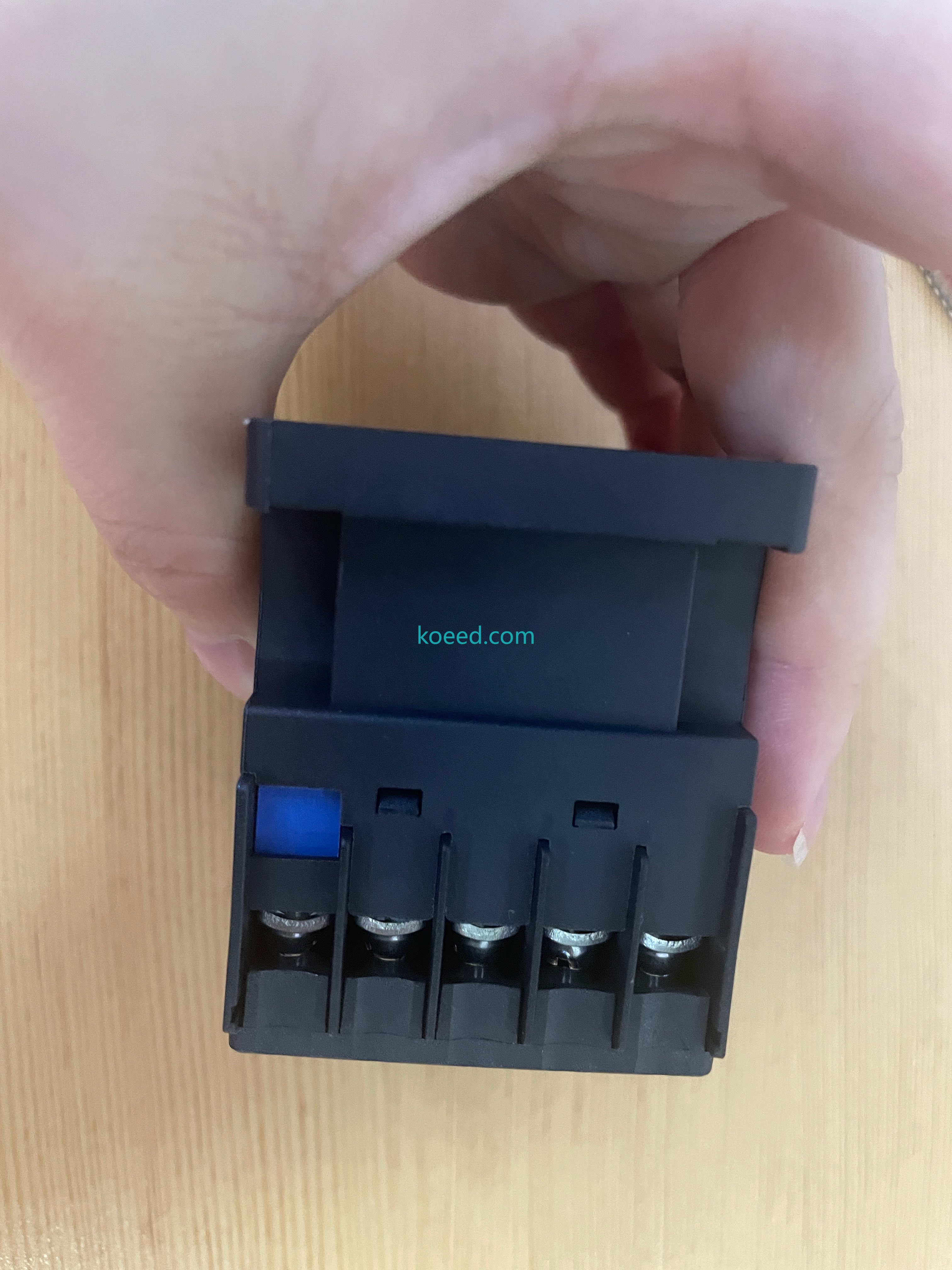
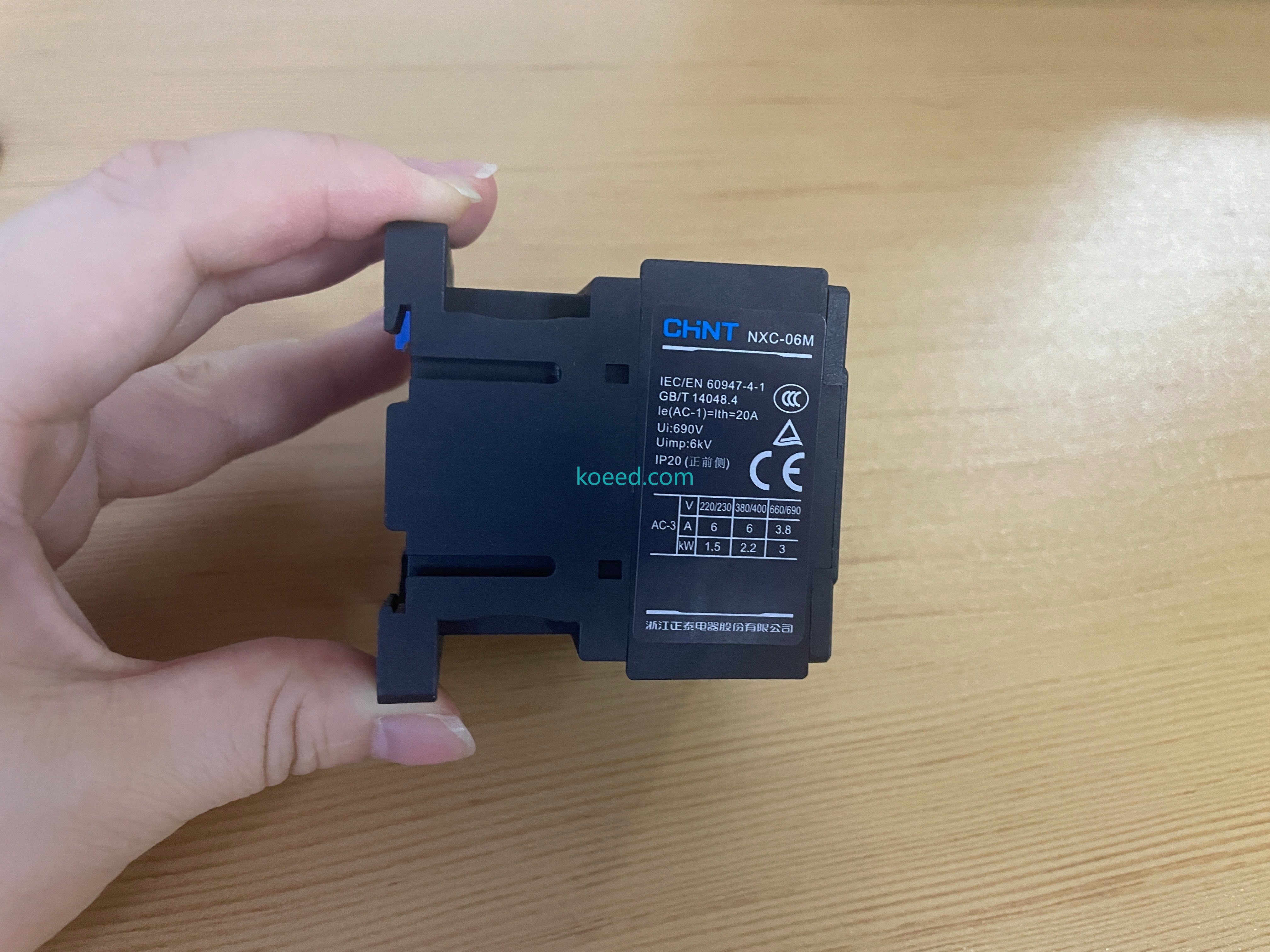
3. Visual Gallery: NXC-06M10 Product Inspection
Below is a comprehensive visual reference of the CHINT NXC-06M10. Click any image to enlarge. These photographs capture key inspection angles — terminal block layout, labeling, DIN-rail clip mechanism, and coil housing — enabling remote quality verification before procurement.
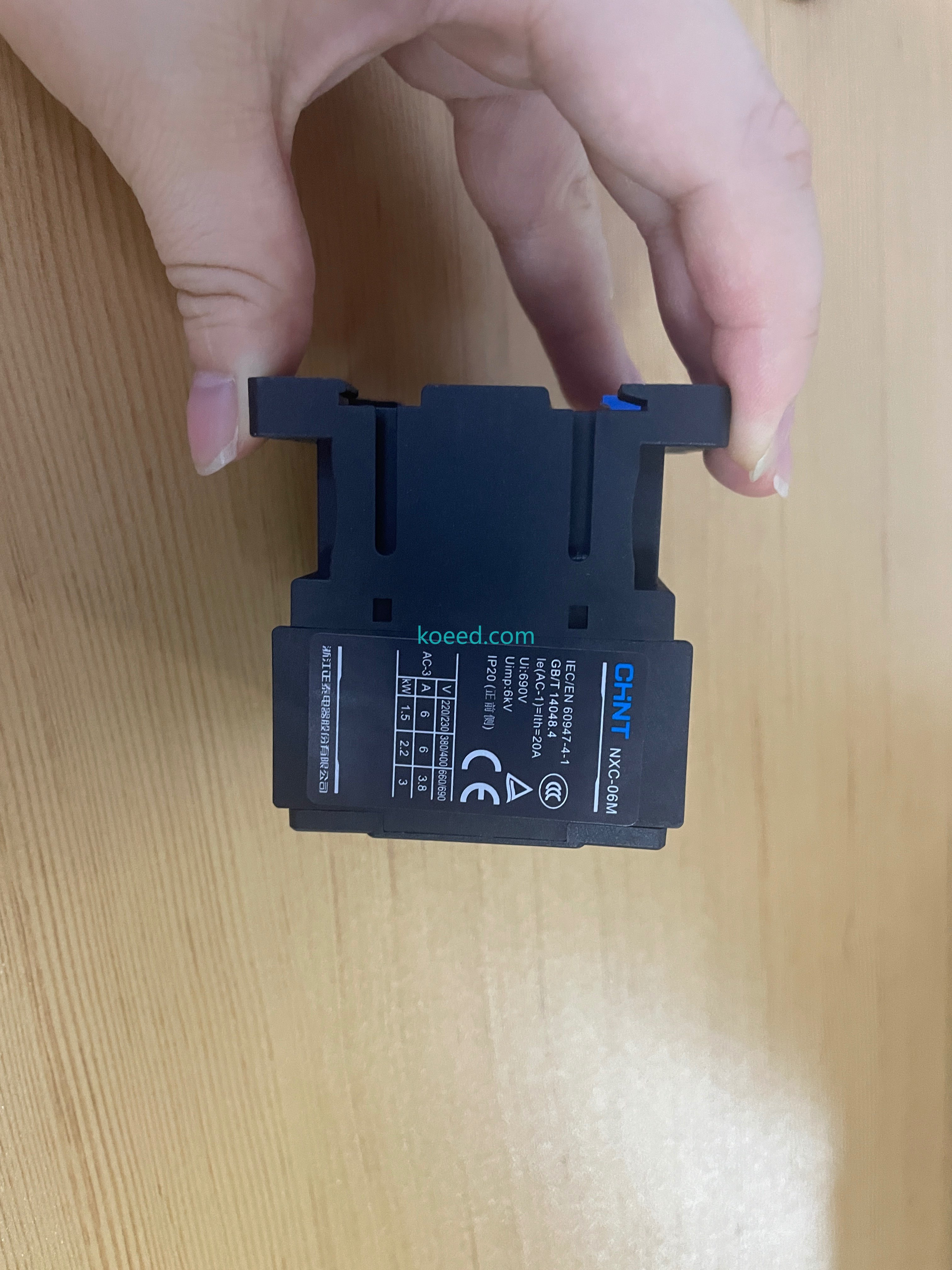
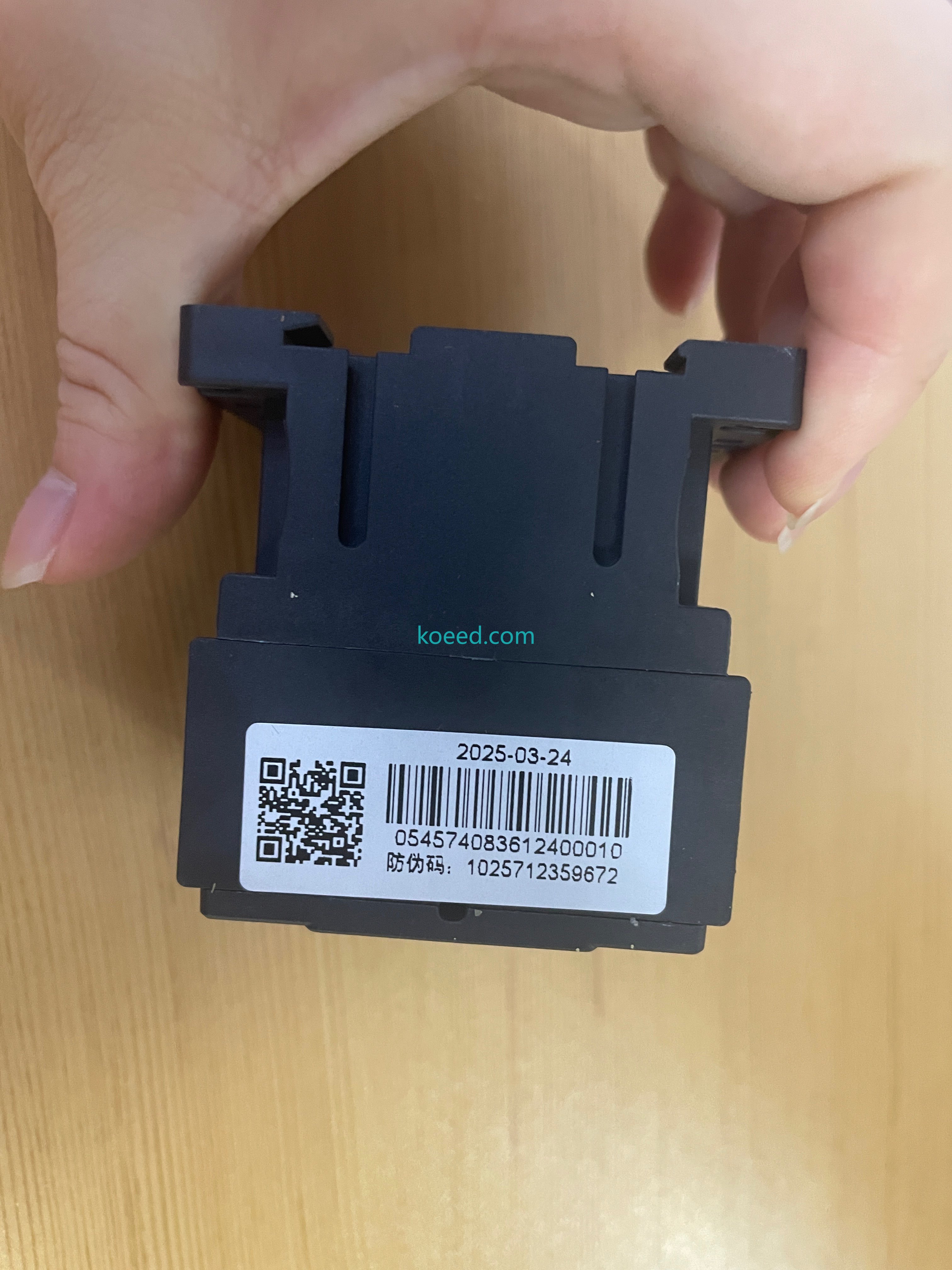
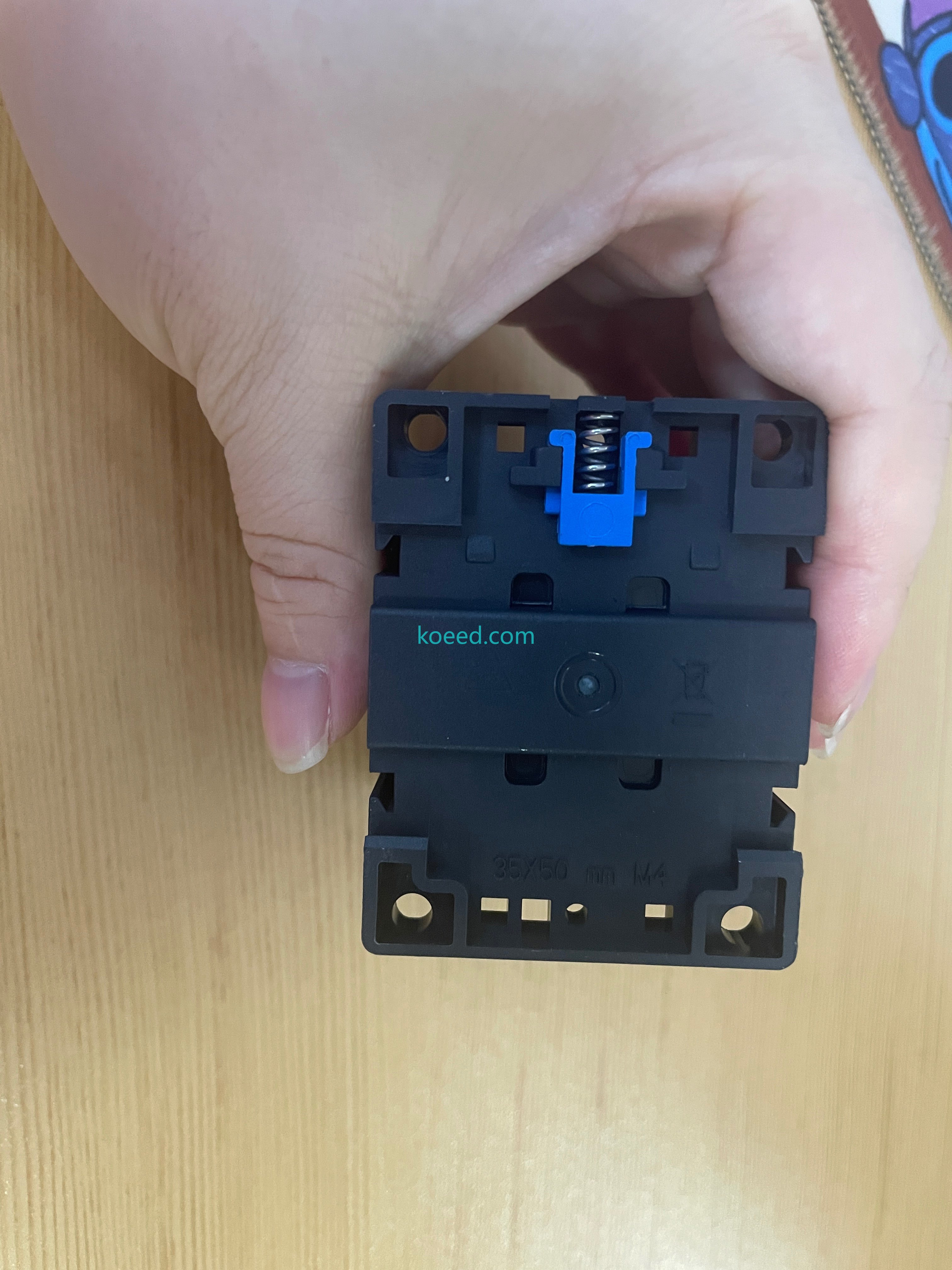
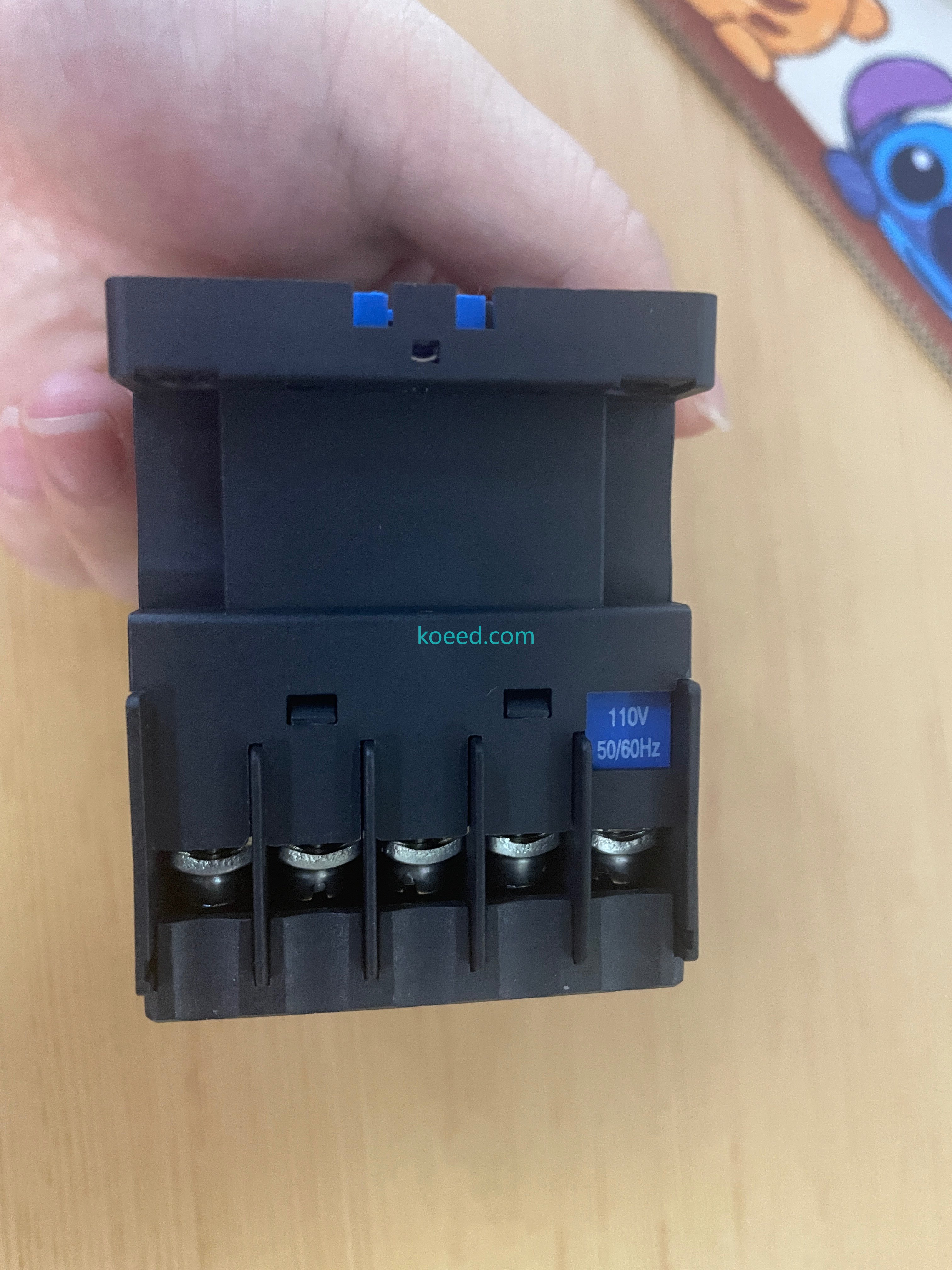
Product Demonstration Video
4. Maintenance, Troubleshooting & Predictive Monitoring Framework
In 2026, the paradigm has shifted from reactive replacement to condition-based maintenance (CBM). Below is Koeed's engineering checklist for maximizing the NXC-06M10's service life while minimizing unplanned downtime.
4.1 Routine Inspection Protocol (Recommended: Every 2,000 Operating Hours)
| Inspection Point | Method | Acceptance Criteria | Corrective Action |
|---|---|---|---|
| Contact Resistance | Micro-ohmmeter (de-energized) | < 100 µΩ per pole (new baseline) | If > 200 µΩ: schedule replacement within 500 hrs |
| Coil Current Signature | Clamp meter / IoT transducer | Within ±10% of nameplate VA rating | Deviation > 15% signals coil degradation or shading ring failure |
| Pick-Up / Drop-Out Voltage | Variable AC supply + voltmeter | Pick-up: ≤ 85% Uc; Drop-out: ≥ 60% Uc | Out-of-spec values indicate worn armature or spring fatigue |
| Visual / Thermal | IR thermography (energized) | ΔT < 20°C above ambient at terminals | Hot spots > 30°C ΔT: inspect for loose connections or contact pitting |
| Mechanical Operation | Manual actuator test (de-energized) | Smooth movement, no sticking or grinding | Clean or replace if binding detected |
4.2 Common Fault Modes & 2026 Troubleshooting Guide
Contactor Fails to Close (No Audible Pull-In)
Likely Causes (2026 Diagnostic Priority):
- Coil open-circuit: Measure coil resistance with DMM; should be within manufacturer's tolerance (±10%). An open coil is the #1 failure mode in aging NXC-06M10 units.
- Control voltage absent or sagging: Verify that the control circuit delivers ≥ 85% of rated coil voltage at the contactor terminals. Voltage drop across long control wiring runs is a frequently overlooked root cause.
- Mechanical obstruction: Dust ingress or deformed housing — inspect armature travel path visually.
- Interlock circuit open: If wired in series with safety relays or E-stop circuits, verify continuity through the entire control chain.
Contactor Chattering / Buzzing During Operation
Likely Causes:
- Shading ring fracture: The copper shading ring on the magnet face may crack over millions of cycles. This is the most common cause of 50/60 Hz hum transitioning to audible chatter.
- Dirt/debris on pole faces: Even a thin film of oil or corrosion prevents complete magnetic sealing — clean with isopropyl alcohol and a lint-free cloth.
- Low coil voltage: If supply voltage dips below the hold-in threshold during motor inrush, the contactor may oscillate. Consider a control transformer with better regulation.
Welded / Stuck Main Contacts
Likely Causes:
- Excessive inrush current: If the switched load exceeds the contactor's making capacity, contact welding occurs. Verify that the NXC-06M10 is correctly sized for the load — the 6A AC-3 rating must not be exceeded for motor loads.
- Short-circuit downstream: A fault on the load side can generate currents far beyond the contactor's breaking capacity. Always pair the NXC-06M10 with appropriate upstream fusing or a miniature circuit breaker (MCB).
- Contact bounce on closure: Severe bounce generates micro-welds that accumulate over time. If recurring, evaluate control circuit stability.
5. IT/OT Convergence: Integrating the NXC-06M10 into Your 2026 Digital Architecture
While the NXC-06M10 itself is a passive electromechanical device, its role within a connected automation architecture is pivotal. Here is the recommended integration topology for 2026 smart factories:
Edge-to-Cloud Data Flow Architecture
| Layer | Component | Function |
|---|---|---|
| Field Layer | NXC-06M10 Contactor + Auxiliary Contact Block | Load switching; status (open/closed) signal to PLC |
| Control Layer | PLC (Siemens S7-1200 / Allen-Bradley Micro800 / CHINT Nexus) | Logic execution; timestamping of contactor state transitions |
| Edge Layer | Edge Gateway (Siemens IOT2050 / Advantech UNO) | Protocol conversion (Profinet/Modbus TCP → MQTT); local analytics |
| Cloud / On-Prem | SCADA / MES (Ignition, WinCC, ThingWorx) | Dashboarding, predictive alerts, maintenance work-order generation |
This architecture enables Total Cost of Ownership (TCO) tracking at the component level — each contactor's cycle count, thermal history, and replacement schedule become auditable data points for ISO 50001 energy management and sustainability reporting.
6. Frequently Asked Questions (FAQ)
What coil voltage options are available for the NXC-06M10?
The NXC-06M series supports multiple AC coil voltage ratings, including 24V, 48V, 110V, 220V, 230V, and 380V AC at 50/60 Hz. DC coil variants (e.g., 24V DC, 48V DC) are also available within the NXC-06M sub-series. When ordering, always specify the coil voltage suffix — e.g., NXC-06M10 230V. Contact Koeed for the full coil voltage matrix and lead times.
Can the NXC-06M10 be used for DC load switching?
The NXC-06M10 is primarily rated for AC loads (AC-1, AC-3 utilization categories). While it can switch low-current DC loads in non-critical applications, the absence of magnetic blowout coils means DC arc interruption is limited. For dedicated DC switching, CHINT offers the NXC-DC series or consider a solid-state relay (SSR) solution. Consult Koeed's application engineers for load-specific guidance.


