

LDV-5202 Multi-Plunger Limit Switch: 2026 Guide to Legacy Yamatake/Honeywell Integration, ROI & Predictive Maintenance
⚙️ 2026 Strategic Insight: The Yamatake/Honeywell LDV-5202 multi-plunger limit switch exemplifies why smart factories are shifting from "rip-and-replace" to intelligent legacy integration. With IT/OT convergence maturing in 2026, this battle-tested position sensor — when paired with edge gateways and IIoT condition-monitoring modules — delivers up to 60% TCO savings versus a full automation stack retrofit, while contributing to Scope 3 carbon reduction targets through equipment lifespan extension.
1. Strategic Product Overview: LDV-5202 in the 2026 Industrial Ecosystem
The Yamatake LDV-5202 (also branded under Honeywell Microswitch) is a multi-plunger electromechanical limit switch designed for high-cycle position sensing in automated machinery, conveyor systems, robotic work cells, and PLC-controlled process lines. Despite its original manufacturer discontinuation, the LDV-5202 remains one of the most sought-after aftermarket components in 2026 — and for good reason.
In an era where IT/OT convergence has moved from buzzword to boardroom mandate, plant engineers face a critical decision: replace entire legacy subsystems at enormous capital cost, or strategically source and integrate proven components like the LDV-5202 through modern connectivity layers. The latter approach — championed by Koeed's global sourcing network — aligns with the 2026 ISA-95/IEC 62264 framework updates that emphasize brownfield interoperability over greenfield exclusivity.
Why the LDV-5202 Endures
- Multi-Plunger Design: Unlike single-actuator limit switches, the LDV-5202's multi-plunger configuration enables redundant position verification in safety-critical applications — a feature that modern solid-state sensors often require multiple discrete units to replicate.
- Rugged Mechanical Architecture: Built with industrial-grade die-cast housing, the LDV-5202 withstands harsh manufacturing environments including dust, oil mist, vibration, and temperature fluctuations where capacitive or optical sensors frequently fail.
- PLC/PAC Universal Compatibility: As a dry-contact switching device, the LDV-5202 interfaces natively with virtually every PLC platform — from legacy Allen-Bradley PLC-5 and Siemens S5 systems to modern Beckhoff TwinCAT 3 and Siemens TIA Portal V19 (2026 refresh) architectures.
- Edge Gateway Readiness: When wired through 2026-standard IIoT edge nodes (e.g., Moxa ioLogik E4200, Advantech ADAM-6300 series), the LDV-5202's contact state can be streamed via MQTT Sparkplug B to AWS IoT SiteWise, Azure Digital Twins, or on-premise SCADA historians.
2. Technical Benchmarking: LDV-5202 vs. Modern Alternatives
To make informed procurement decisions, engineers must weigh the Total Cost of Ownership (TCO) of each approach. The table below benchmarks the LDV-5202 against both a generic modern inductive proximity sensor and a full solid-state limit switch replacement across key 2026 evaluation criteria.
| Parameter | Yamatake LDV-5202 | Generic Inductive Proxy (2026) | Solid-State Limit Switch (2026) |
|---|---|---|---|
| Switching Type | Electromechanical (Dry Contact) | Solid-State (PNP/NPN) | Solid-State (IO-Link) |
| Actuation Method | Multi-Plunger Mechanical | Non-Contact Inductive | Non-Contact / Magnetic |
| Contact Configuration | 1NO + 1NC (SPDT typical) | Single PNP NO | IO-Link Programmable |
| Operating Voltage | Up to 250V AC / 30V DC | 10–30V DC Only | 18–30V DC (IO-Link) |
| Max Switching Current | 5A @ 250V AC (Resistive) | ≤200mA | ≤100mA (Logic-Level) |
| Environmental Rating | IP67 (Sealed Housing) | IP67–IP69K | IP67–IP69K |
| Mechanical Life | 10M+ Operations | Unlimited (Solid-State) | Unlimited (Solid-State) |
| Predictive Maintenance Ready | ✅ Via External Edge Gateway (Contact Bounce Monitoring) | ⚠️ Limited (Binary Output) | ✅ Native (IO-Link Diagnostics) |
| Unit Cost (2026 Index) | $48–$300 (Aftermarket NIB) | $35–$120 | $180–$450 |
| Integration Complexity | Low (2–4 Wire, No Configuration) | Low | Medium–High (IODD + Gateway Setup) |
| 5-Year TCO Estimate | $120–$380 (Minimal Maintenance) | $80–$250 | $600–$1,200 (Gateway + License Costs) |
3. Visual Product Gallery
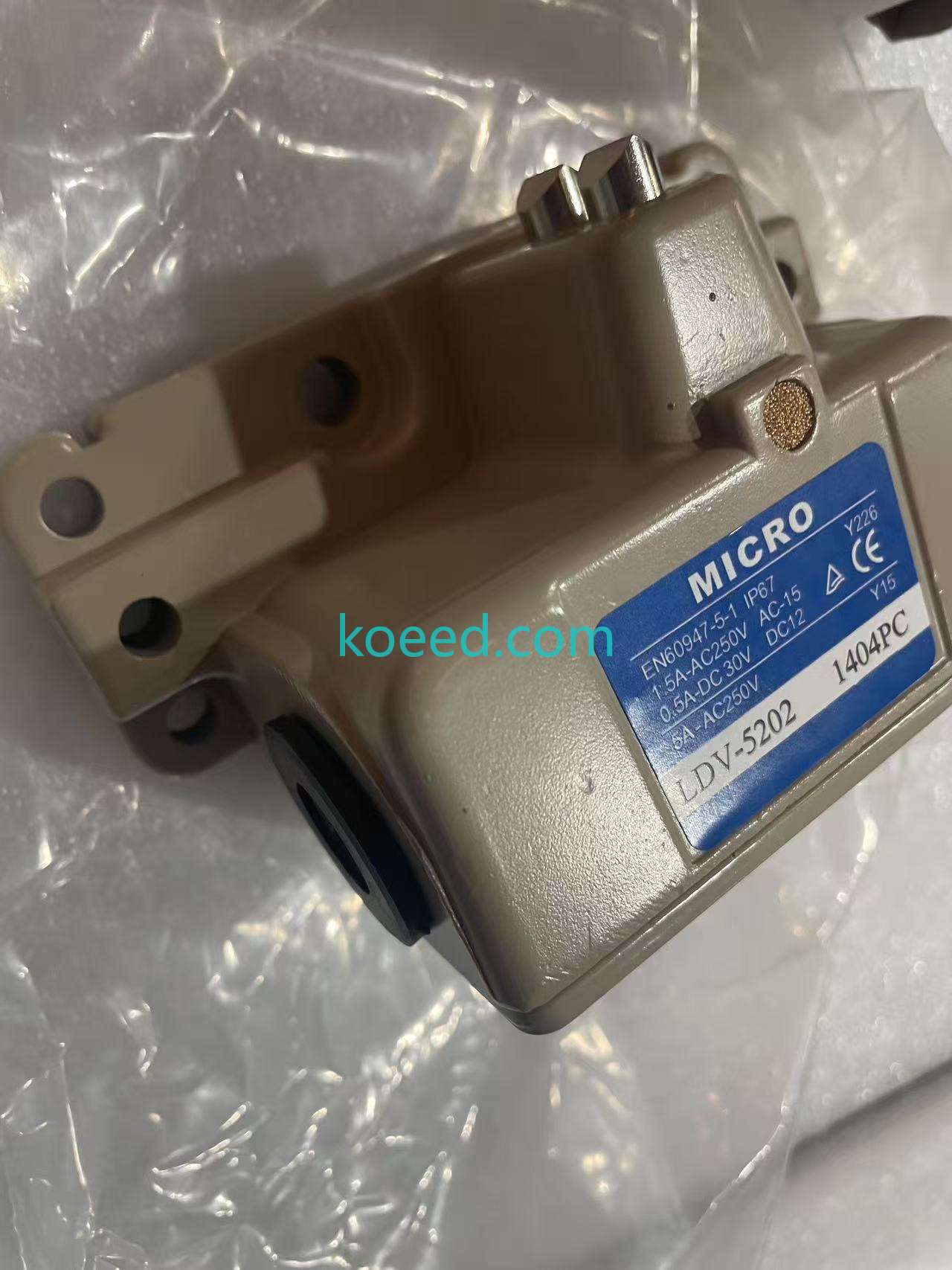
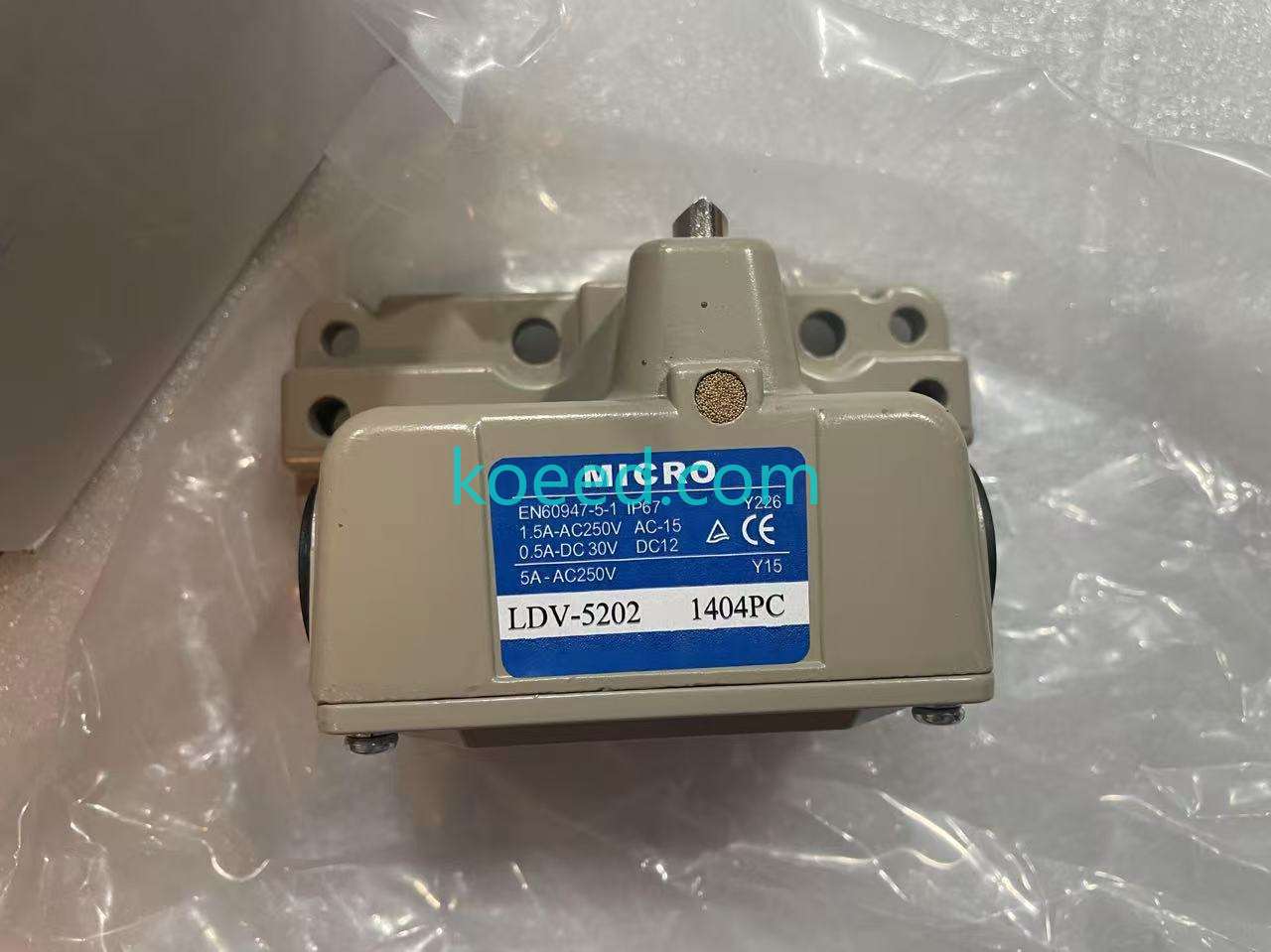
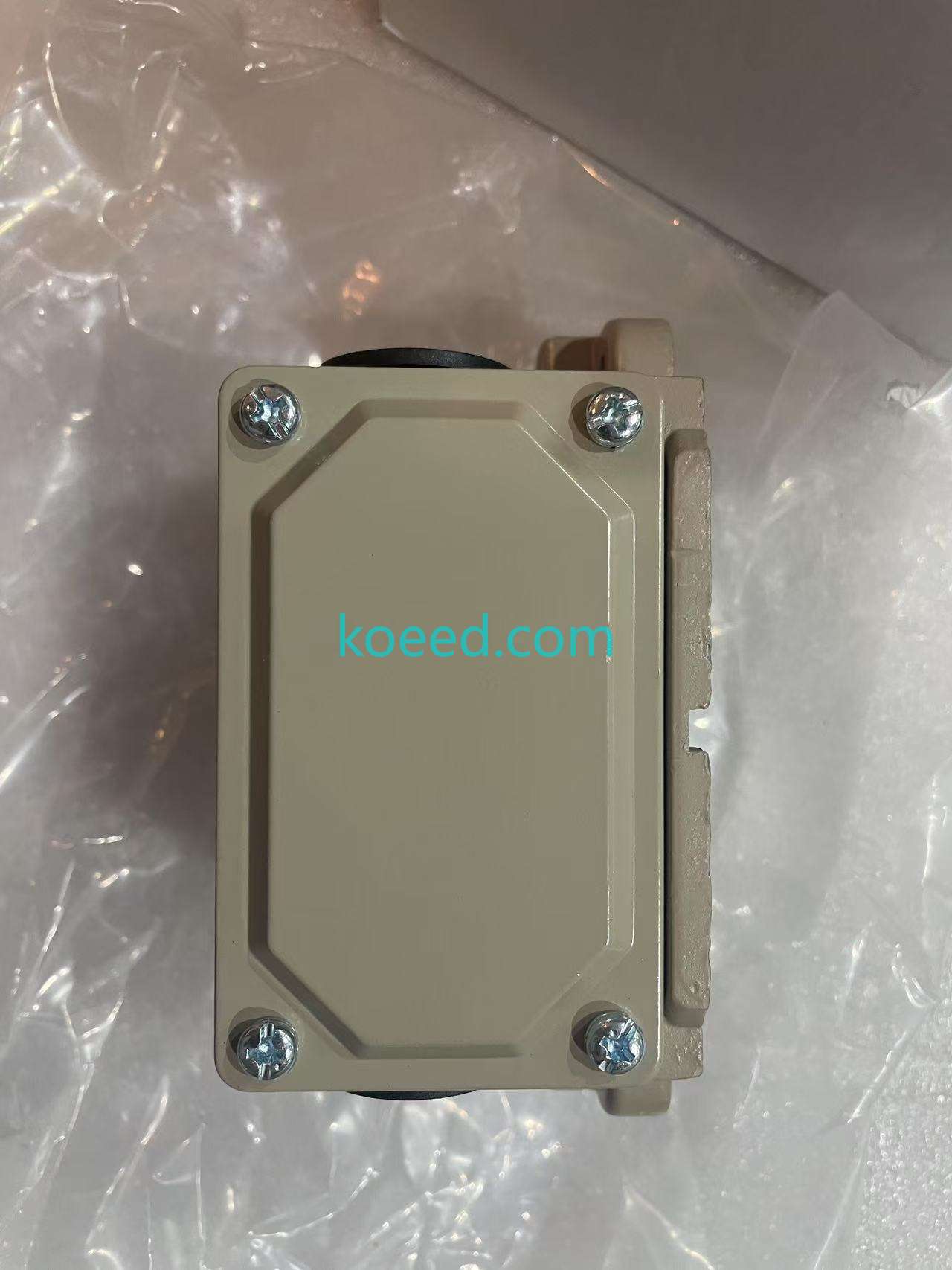
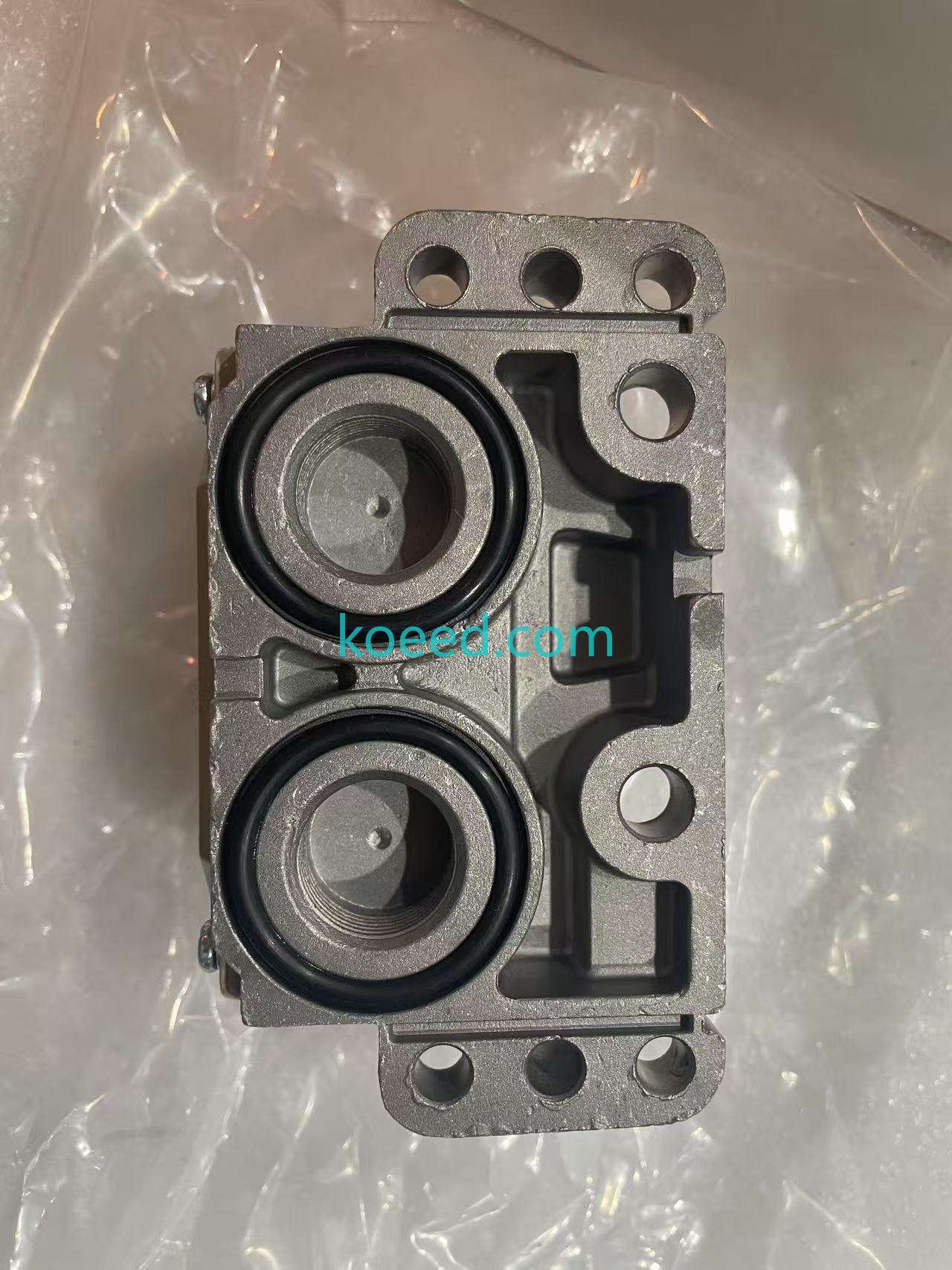
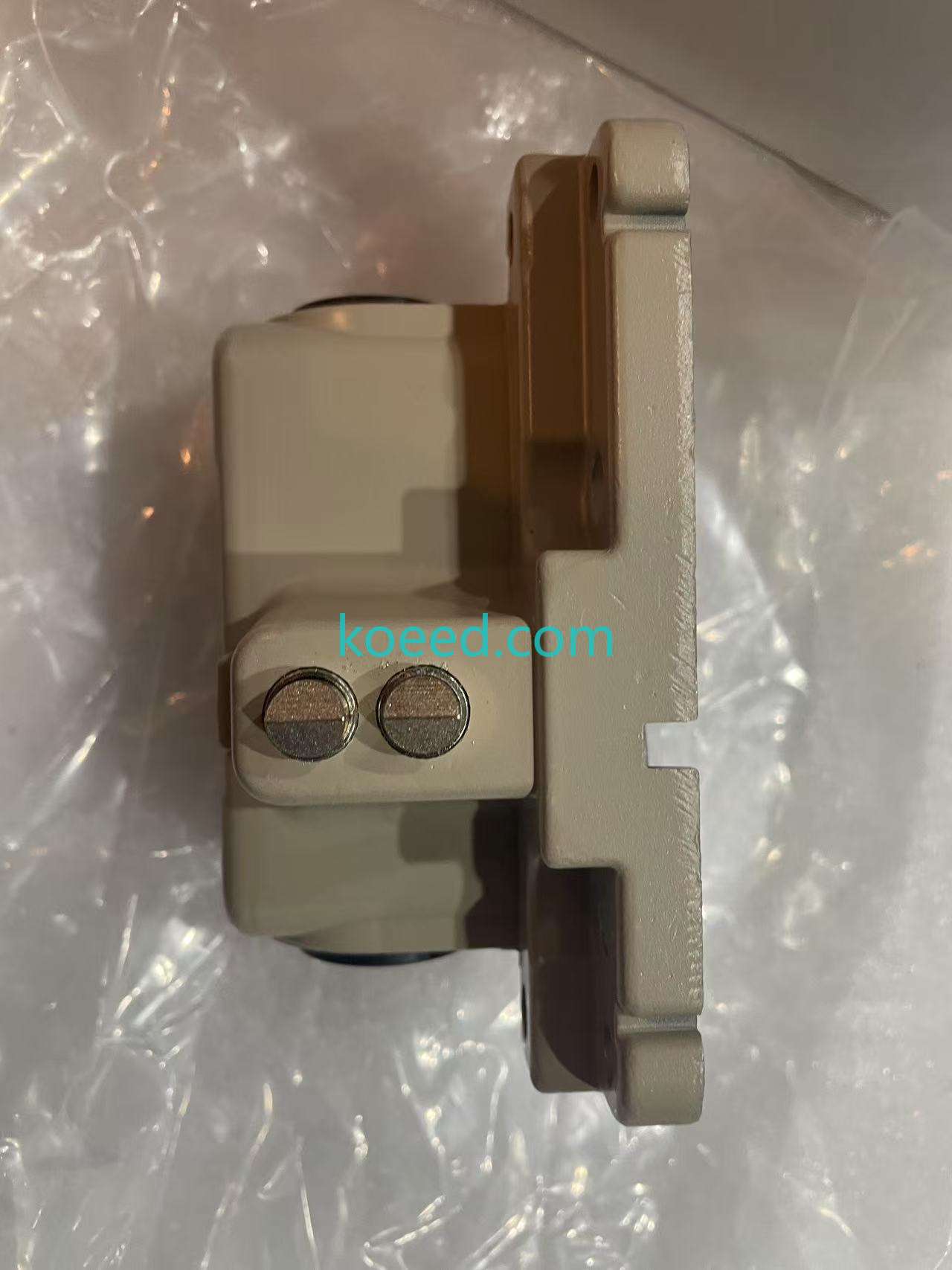
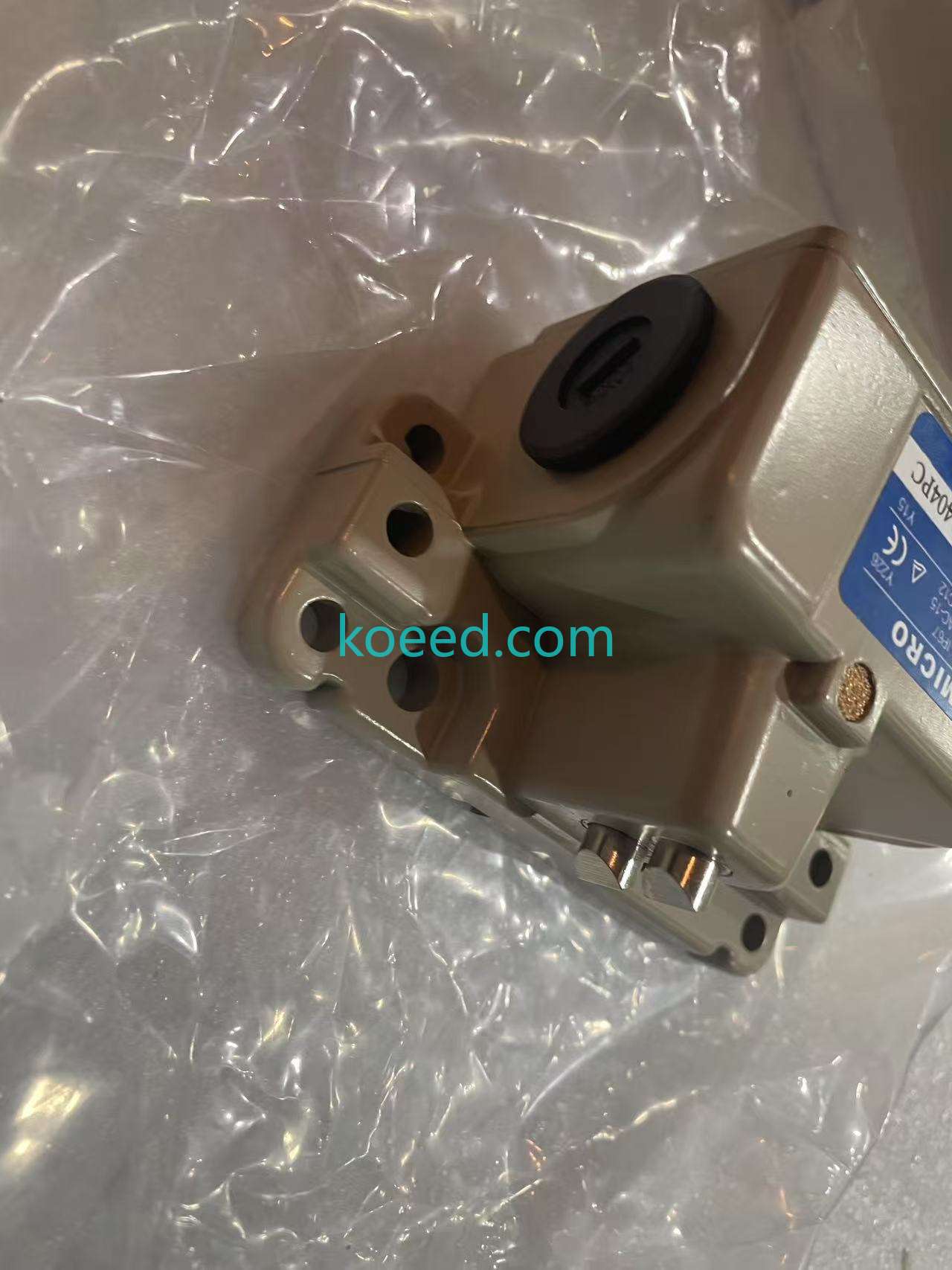
Below is a comprehensive visual inspection reference of the LDV-5202 multi-plunger limit switch. All images are sourced from Koeed's verified inventory. Click any image to expand for detailed inspection.
Product Demonstration Video
4. IT/OT Convergence: Integrating LDV-5202 into 2026 Smart Factory Architectures
The 2026 industrial landscape demands that every field device — even electromechanical limit switches — contributes data to the unified namespace (UNS). Here is the reference architecture for bridging the LDV-5202 into a modern IIoT stack:
4.1 Edge Connectivity Layer
The LDV-5202's dry contacts connect to a digital input module on an edge I/O gateway. In 2026, recommended platforms include:
- Moxa ioLogik E1214 — 6 DI channels with MQTT Sparkplug B native support, -40°C to 75°C operating range.
- Advantech ADAM-6310 — Ethernet/IP to MQTT bridge with built-in contact bounce analytics.
- WAGO 750-363 — MODBUS TCP coupler with CODESYS V3.5 runtime for local edge logic.
4.2 Predictive Maintenance via Contact Bounce Analysis
While the LDV-5202 lacks native diagnostics, a powerful 2026 technique is contact bounce signature analysis. By timestamping rising/falling edges at microsecond resolution at the edge gateway, machine learning models can detect:
- Progressive contact wear (increasing bounce duration over time).
- Intermittent faults indicating mechanical fatigue before hard failure.
- Actuation speed degradation in the connected cam/lever mechanism.
These insights feed directly into CMMS platforms like SAP EAM, IBM Maximo, or Fiix — triggering work orders before unplanned downtime occurs. This transforms the LDV-5202 from a simple switch into a predictive maintenance sensor node at near-zero incremental hardware cost.
5. Maintenance & Troubleshooting Guide
5.1 Routine Inspection Checklist (2026 Best Practice)
- Every 500K Cycles: Visual inspection of plunger seals for cracking or oil ingress. Clean plunger shaft with isopropyl alcohol — never use petroleum-based lubricants on the plunger mechanism.
- Every 2M Cycles: Measure contact resistance across NO and NC terminals. Acceptable range: ≤50mΩ. Values exceeding 100mΩ indicate contact pitting requiring replacement.
- Every 5M Cycles: Verify mounting bolt torque (typically 4–6 N·m for M4 bolts). Vibration-induced loosening is the #1 cause of LDV-5202 misalignment in conveyor applications.
- Annually: Perform dielectric strength test at 1500V AC for 1 minute between terminals and housing to confirm insulation integrity.
5.2 Common Fault Symptoms & Resolution
Symptom 1: Intermittent Signal Dropout (PLC Missing Transitions)
Root Cause (2026 Analysis): Contact oxidation or mechanical wear causing high-resistance states. This is especially prevalent in high-humidity environments without conformal coating.
Resolution:
- Disconnect power and measure static contact resistance with a milliohmmeter.
- If >100mΩ, replace the LDV-5202 unit. Contact oxidation is irreversible once beyond the gold-flash wear layer.
- Mitigate recurrence by installing the replacement in an IP67-rated auxiliary enclosure if ambient humidity exceeds 85% RH.
Symptom 2: Plunger Sticking or Slow Return
Root Cause: Contaminant ingress (metal fines, oil varnish) along the plunger shaft, or internal return spring fatigue after extended high-cycle operation.
Resolution:
- Clean the exposed plunger shaft using a lint-free cloth and electrical contact cleaner.
- Manually cycle the plunger 20–30 times. If sticking persists, internal spring damage is likely — replace the unit.
- Do not apply WD-40 or penetrating oils — these attract particulate and accelerate wear.
Symptom 3: Welded Contacts (Permanent ON State)
Root Cause: Inductive load switching without proper snubber protection. When the LDV-5202 interrupts a relay coil or solenoid, the back-EMF arc can weld contacts.
Resolution:
- Replace the LDV-5202 immediately — welded contacts are non-recoverable.
- Install an RC snubber (e.g., 100Ω + 0.1μF) or flyback diode across the inductive load to suppress arc formation.
6. Sustainability & Energy Impact
In 2026, Scope 3 emissions accountability has become a contractual requirement for Tier-1 industrial suppliers. Sourcing the LDV-5202 through Koeed's certified aftermarket channel contributes to sustainability KPIs in three measurable ways:
- Embodied Carbon Avoidance: Reusing an existing LDV-5202 form factor avoids the ~4.2 kg CO₂e associated with manufacturing a new solid-state equivalent (per 2026 EPD databases). At scale across a 200-switch facility, this represents an 840 kg CO₂e avoidance per refresh cycle.
- Waste Stream Reduction: Each LDV-5202 diverted from landfill saves approximately 0.38 kg of mixed industrial waste (die-cast zinc alloy, copper contacts, thermoset plastic).
- Energy-Neutral Operation: Unlike IO-Link sensors requiring continuous 30mA quiescent current, the LDV-5202 consumes zero standby power — a significant advantage in energy-audited facilities targeting ISO 50001 certification.
7. Frequently Asked Questions
Q: Is the LDV-5202 still manufactured in 2026?
No. The Yamatake/Honeywell LDV-5202 has been discontinued by the original manufacturer. However, Koeed maintains a vetted global supply network of New-In-Box (NIB) and certified pre-owned LDV-5202 units — each inspected for contact integrity, plunger action, and dielectric strength before shipment. This is the most reliable channel for sourcing authentic LDV-5202 switches in 2026.
Q: What is the exact contact configuration of the LDV-5202?
The standard LDV-5202 configuration is 1NO + 1NC (SPDT — Single Pole Double Throw). However, some OEM-custom variants feature 2NC configurations. Always verify your specific unit's terminal markings: terminals labeled "COM-NO-NC" indicate SPDT. If the terminal block has only two terminals, confirm with Koeed's technical team whether it is a special NC-only variant before installation.
Q: Can the LDV-5202 be used in safety-rated (SIL) circuits?
The LDV-5202 is a general-purpose limit switch and is not SIL-certified as a standalone component. For safety applications up to SIL 2 / PL d under ISO 13849-1, two LDV-5202 units can be deployed in a diverse redundancy configuration with a safety relay (e.g., Pilz PNOZ X, Allen-Bradley Guardmaster) providing the safety logic. Consult a certified functional safety engineer for your specific application architecture.
Q: What is the typical lead time for LDV-5202 through Koeed?
Koeed's 2026 global logistics network typically delivers LDV-5202 units within 5–12 business days depending on destination region. Expedited shipping options are available for critical downtime scenarios. Use the WhatsApp CTA below for real-time inventory verification and precise delivery estimates.
🔒 Secure Your LDV-5202 Procurement — 2026 Inventory Available Now
Request an immediate quote or reach our engineers via WhatsApp for a tailored integration plan that maximizes your legacy asset ROI while future-proofing your plant floor.


