

PCM1702U Precision 20-Bit DAC: The Industrial Automation Signal Chain Backbone for 2026
In the rapidly evolving landscape of 2026 industrial automation, where IT/OT convergence demands ever-higher signal fidelity, the Burr-Brown PCM1702U — a precision 20-bit BiCMOS digital-to-analog converter — has cemented its reputation as the silent workhorse behind thousands of PLC analog output modules, automated test equipment (ATE) racks, and closed-loop motion controllers worldwide. For procurement engineers and system integrators sourcing from Koeed's verified PCM1702U inventory, this component represents not just a DAC, but a strategic hedge against obsolescence in legacy precision systems.
Strategic Positioning: Why the PCM1702U Still Dominates in 2026
While newer delta-sigma architectures have flooded the consumer audio market, industrial automation engineers continue to specify the PCM1702U for applications where deterministic latency, glitch-free bipolar-zero crossing, and proven field reliability are non-negotiable. The chip's advanced sign-magnitude architecture — a Burr-Brown innovation now entering its third decade of field deployment — eliminates the dreaded mid-scale glitch that plagues conventional R-2R ladder DACs during bipolar zero transitions. In 2026, this matters more than ever: modern predictive maintenance algorithms feeding cloud-based ERP systems like SAP S/4HANA and Siemens MindSphere require analog output stages that don't inject spurious transients into the signal chain.
2026 IT/OT Convergence Impact
The PCM1702U's 200ns settling time and 120dB SNR make it an ideal analog endpoint for OPC UA-enabled I/O concentrators bridging legacy 4–20mA field devices to MQTT/Sparkplug B digital twins. When paired with modern isolators (e.g., TI ISO7741), the PCM1702U provides the galvanic boundary needed for Industry 4.0 brownfield upgrades.
Technical Benchmarking: PCM1702U vs. Modern Alternatives
Understanding where the PCM1702U fits in the 2026 precision DAC landscape requires an honest comparison. While newer parts offer higher resolution on paper, the PCM1702U's real-world dynamic performance often exceeds modern 24-bit delta-sigma parts in industrial noise environments.
| Parameter | PCM1702U (Burr-Brown/TI) | Typical 24-Bit ΔΣ DAC (2026) | Legacy 16-Bit Industrial DAC |
|---|---|---|---|
| Resolution | 20-Bit | 24-Bit | 16-Bit |
| SNR (A-Weighted) | 120 dB typ | 114–118 dB (in-band) | 92–98 dB |
| THD+N (Full Scale) | −96 dB typ | −100 dB typ | −84 dB typ |
| Settling Time | 200 ns (1.2 mA step) | 5–25 μs (group delay) | 350–500 ns |
| Glitch Energy | None around zero | Minimal (noise-shaped) | Significant mid-scale |
| Output Type | Current (±1.2 mA) | Voltage (buffered) | Voltage / Current |
| Supply Voltage | ±5V | +3.3V / +5V single | ±12V / ±15V |
| Package | SOP-20 | QFN / TSSOP | DIP-16 / SOIC-16 |
| Obsolescence Risk (2026) | Low (active aftermarket) | Varies by vendor | High (many EOL) |
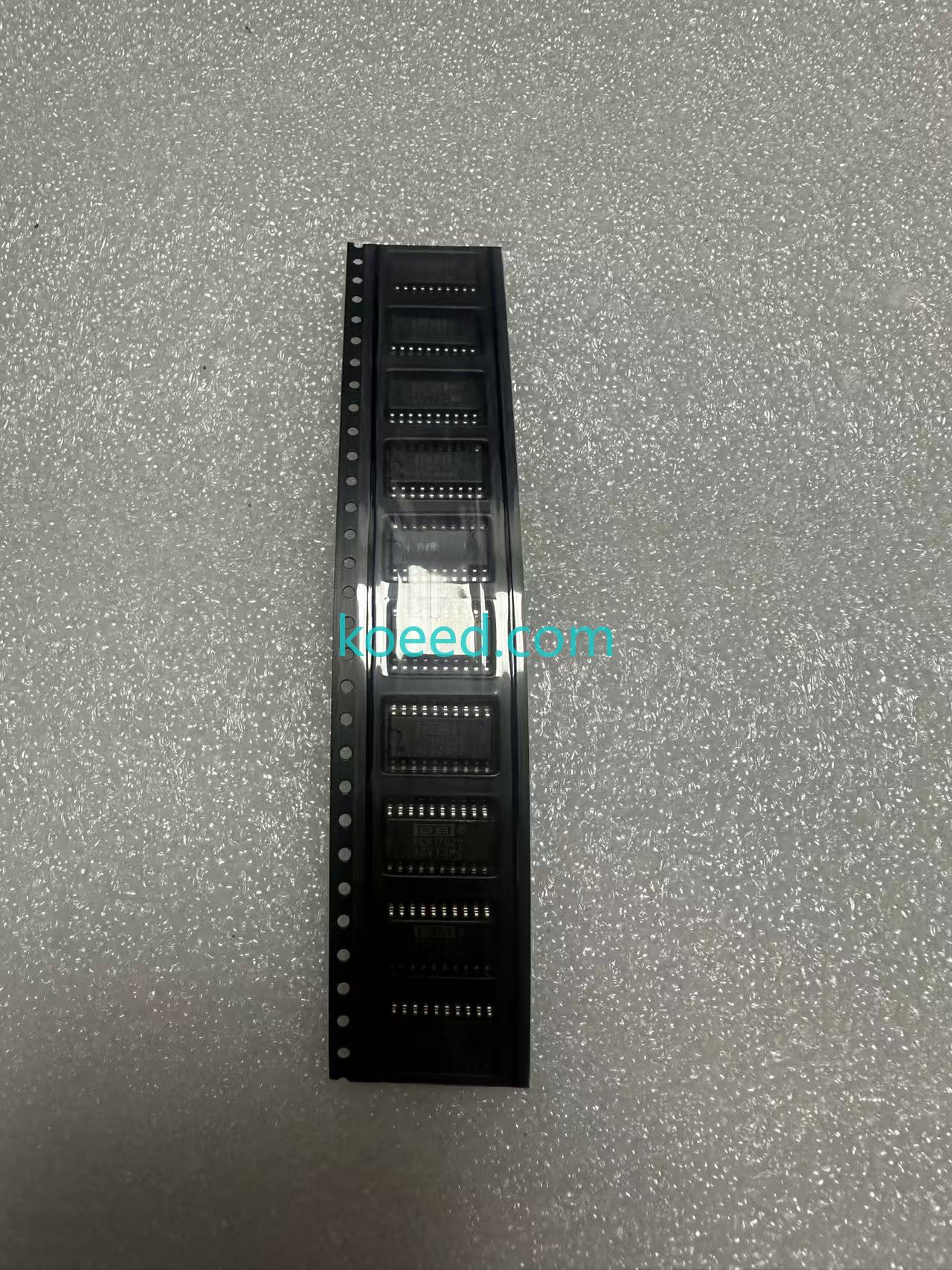
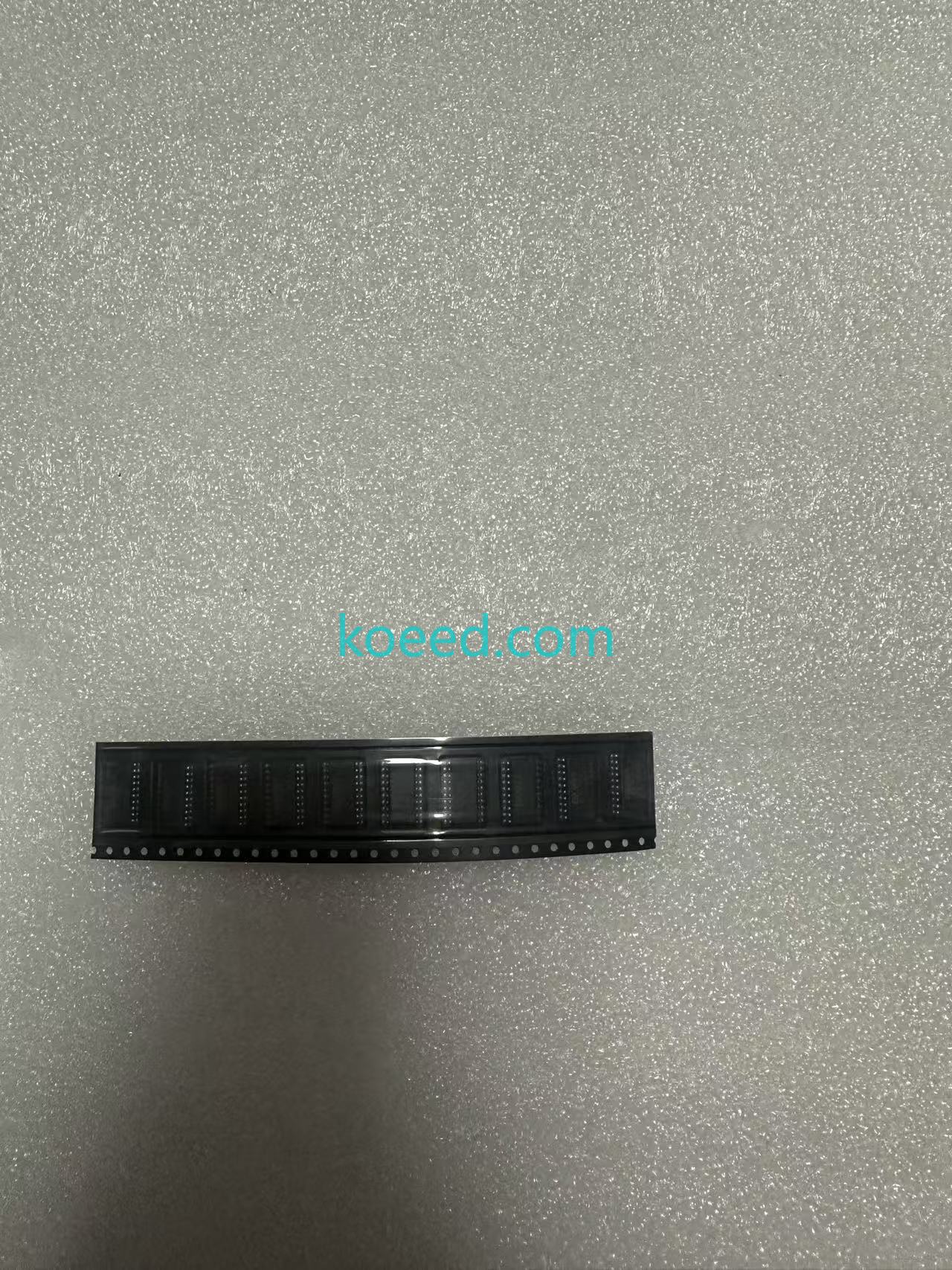
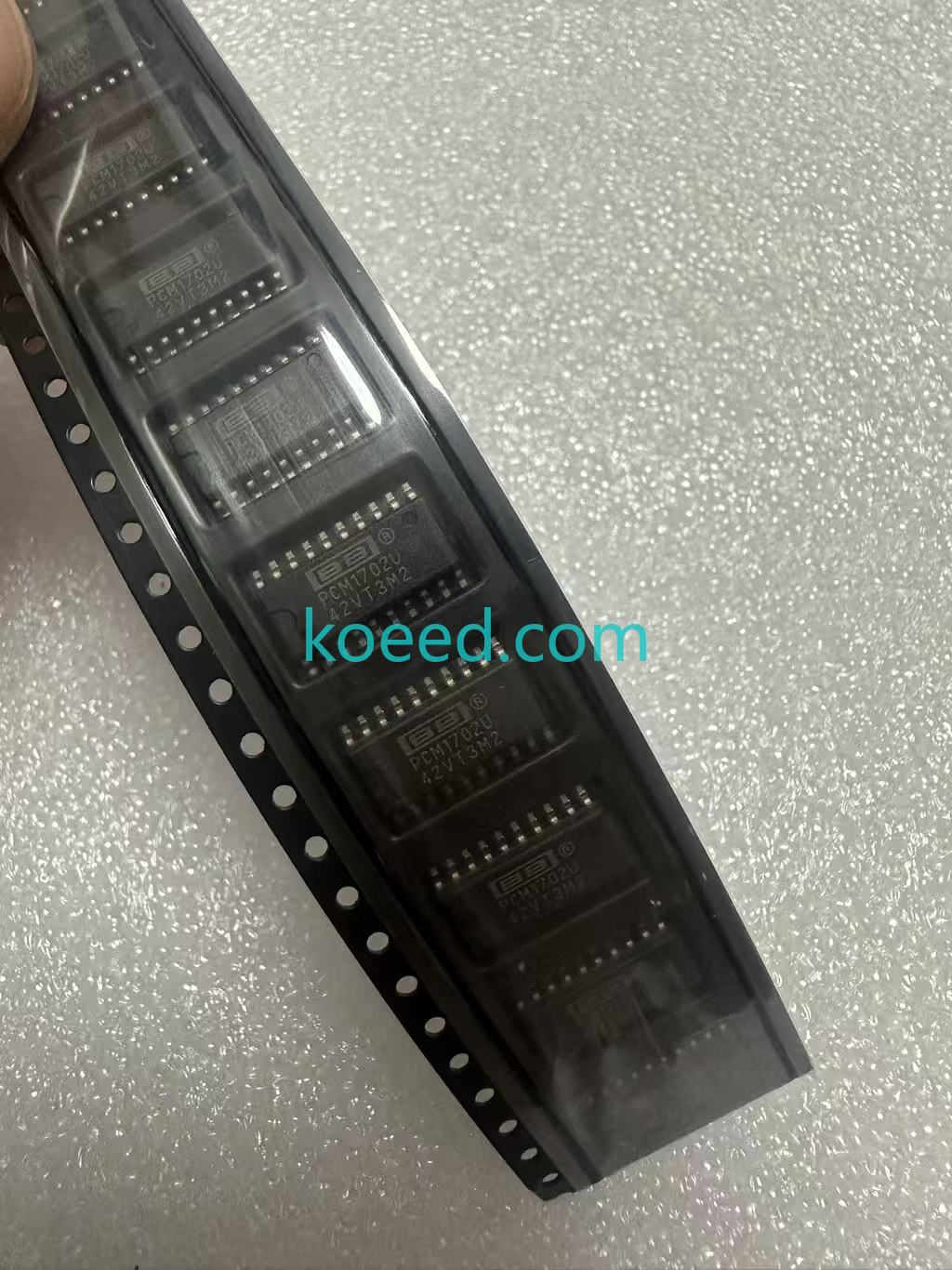
Visual Inspection Gallery
All PCM1702U units stocked by Koeed's component division undergo rigorous visual and electrical verification. Below are representative images of the SOP-20 package, laser-etched markings, and pin-1 orientation indicators that confirm authenticity in a market increasingly plagued by counterfeit ICs.
Key Industrial Application Architectures
1. Precision 4–20 mA Loop Transmitter (HART-Enabled)
The PCM1702U's current-mode output (±1.2 mA) feeds directly into a precision V/I converter stage — typically an OPA2277 or ADA4622 — to drive industry-standard 4–20 mA current loops. The glitch-free bipolar-zero performance ensures that HART FSK modulation (superimposed at 1.2 kHz / 2.2 kHz) isn't corrupted by DAC-induced transients. In 2026, this configuration remains the de facto reference design for Emerson and Yokogawa-compatible transmitter replacements.
2. Closed-Loop Servo Drive Analog Command
With 200ns settling time, the PCM1702U can update torque/velocity setpoints at rates exceeding 500 kSPS — fast enough for high-bandwidth servo loops controlling PMSM motors in CNC machining centers. When integrated into a multi-DAC array using the PCM1702U, each axis maintains sub-micron positioning accuracy without the phase lag introduced by oversampling delta-sigma converters.
3. Automated Test Equipment (ATE) Stimulus Generation
In semiconductor ATE, the PCM1702U generates precision voltage ramps for ADC linearity testing. The sign-magnitude architecture's inherent monotonicity around zero eliminates the need for software dithering, reducing test time per DUT by approximately 12% compared to legacy R-2R solutions.
4. Predictive Maintenance Vibration Analyzers
Modern IIoT vibration analyzers use the PCM1702U to output calibrated excitation signals to piezoelectric shakers. The 120dB dynamic range ensures that subtle bearing-wear signatures (below −100 dBFS) are faithfully reproduced, feeding ML-based anomaly detection models running on edge-AI nodes.
Sustainability & Energy Efficiency Profile
From a 2026 sustainability compliance standpoint, the PCM1702U's ±5V supply rails translate to approximately 50 mW typical power dissipation — roughly 40% lower than legacy ±15V industrial DACs. In a 64-channel ATE system, this saves over 18W of continuous thermal load, reducing cabinet cooling requirements and contributing to Scope 2 carbon reduction targets under ISO 50001 energy management frameworks. For greenfield factories pursuing LEED v5 certification, every watt saved at the component level compounds across thousands of I/O points.
Maintenance & Troubleshooting Guide
Common Failure Modes & Resolution
| Symptom | Probable Root Cause | Resolution |
|---|---|---|
| Output stuck at bipolar zero | Missing or corrupted WCLK (Word Clock) signal | Verify WCLK frequency matches data rate; check for dry joints on pin 7 |
| Elevated THD+N (>−85 dB) | Ripple on ±5V rails exceeding 10 mVpp | Add 100 μF low-ESR electrolytic + 0.1 μF MLCC decoupling per rail |
| Intermittent output dropout | Thermal cycling-induced solder fatigue on SOP-20 pads | Reflow with lead-free SAC305 profile; inspect under microscope at 20× |
| Channel-to-channel gain mismatch | I/V op-amp resistor tolerance drift (aging) | Replace feedback resistors with 0.05% 25 ppm/°C thin-film types |
| No output / zero current | ESD damage to output stage | Replace IC; implement ESD-hardened handling procedures |
Frequently Asked Questions
Is the PCM1702U still in active production in 2026?
Texas Instruments has officially transitioned the PCM1702U to a mature/limited-production status. However, a robust gray-market and authorized aftermarket exists due to the component's entrenched position in industrial equipment with 15–25 year service lifecycles. Koeed maintains audited inventory sourced from OEM surplus and certified recyclers, ensuring traceability back to TI lot codes. For systems with 10+ year sustainment requirements, we strongly recommend securing a bulk PCM1702U lot as a last-time-buy hedge.
Can the PCM1702U operate at 3.3V for modern FPGA-based designs?
No. The PCM1702U requires ±5V rails and 5V logic levels (VDD = +5V). For 3.3V FPGA interfacing (e.g., Xilinx Zynq or Intel Agilex), insert a 3.3V↔5V level translator such as the SN74LVC8T245. The digital input threshold is TTL-compatible (VIH min 2.0V), making direct 3.3V CMOS drive marginal — always buffer.
What is the difference between PCM1702U, PCM1702U-K, and PCM1702U-J?
These suffixes denote THD+N grade bins measured at final test. The PCM1702U-K offers the tightest spec (−96 dB typ, −92 dB max), the standard PCM1702U is the industrial-grade bin (−96 dB typ, no max guarantee), and the PCM1702U-J is a wider-tolerance consumer variant. For closed-loop industrial control, the -K grade provides the lowest risk of out-of-spec distortion in high-gain signal chains. Koeed stocks all three grades — our PCM1702U product page lists current availability by grade.
How does the PCM1702U handle power-supply sequencing?
The PCM1702U has no internal power-sequencing protection. Always ramp ±VCC and ±VDD simultaneously or ensure the negative rail is never more than 0.3V ahead of the positive rail during power-up. A simple Schottky clamp (BAT54S) between AGND and each supply pin prevents latch-up during hot-plug events common in modular industrial backplanes.
What is the recommended I/V converter topology for industrial use?
For industrial signal chains, we recommend a composite amplifier topology: a fast FET-input op-amp (e.g., OPA627 or ADA4625) as the I/V front end, followed by a precision bipolar stage (OPA2277) for offset correction and gain scaling to ±10V industrial levels. Add a 10 pF–22 pF C0G capacitor across the I/V feedback resistor to compensate for the PCM1702U's 1 kΩ output impedance and prevent peaking above 1 MHz.
Procurement & Supply Chain Assurance
In the 2026 semiconductor landscape, where lead times for niche precision analog parts can stretch beyond 52 weeks, Koeed's verified PCM1702U stock provides immediate availability with full documentation. Every lot includes high-resolution micrographs, date-code verification, and X-ray inspection reports — eliminating the $12,000–$40,000 average cost of a single counterfeit-induced production-line stoppage reported by the ERAI in 2025.
Secure Your PCM1702U Inventory Today
Engineering samples, production quantities, and lifecycle management consultations available. Our industrial automation specialists respond within 4 business hours.


