

NX5-D700A Photoelectric Sensor: 2026 Guide to Multi-Voltage Detection, Predictive Maintenance & Smart Factory ROI
1. Strategic Positioning: Why the NX5-D700A Matters in 2026
The NX5-D700A is not simply a photoelectric sensor—it is a protocol-agnostic detection node engineered for the hybrid factory floor. In 2026, where brownfield retrofits dominate capital expenditure, this Panasonic multi-voltage sensor eliminates the need for auxiliary step-down transformers or dedicated 24V DC power rails. Its wide 12–240V input range means one SKU covers virtually every industrial voltage standard worldwide.
From automotive assembly lines in Stuttgart to food packaging facilities in São Paulo, the NX5-D700A's 700 mm diffuse reflective sensing envelope and 50 Hz maximum response frequency deliver repeatable, high-speed object detection without the complexity of through-beam alignment or retro-reflector mounting. The result: lower total installed cost, faster commissioning, and simplified spare-parts inventory.
Key 2026 Value Drivers
🌍 Universal Voltage 12–240V⚡ 10 ms ON Response📏 700 mm Sensing Range🔄 50 Hz Max Frequency🛡️ IP67 Rated🌡️ -25°C to +55°C
2. Technical Benchmarking: NX5-D700A vs. Legacy & Competing Solutions
To truly appreciate the NX5-D700A's engineering pedigree, we benchmark it against both legacy-generation Panasonic sensors and typical competing diffuse photoelectric sensors in the 2026 market. The data speaks volumes about why this model remains the preferred choice for system integrators and maintenance engineers alike.
| Parameter | NX5-D700A (Current) | Legacy NX5 Series | Generic Competitor (2026) |
|---|---|---|---|
| Sensing Method | Diffuse Reflective | Diffuse Reflective | Diffuse Reflective |
| Sensing Range | 700 mm | 100–500 mm | 300–600 mm |
| Supply Voltage | 12–240V AC/DC | 12–24V DC Only | 10–30V DC |
| Response Time (ON) | 10 ms | 20 ms | 15–25 ms |
| Max Response Frequency | 50 Hz | 25 Hz | 30–40 Hz |
| Output Type | Relay / Solid-State | NPN/PNP Only | NPN/PNP |
| Housing Rating | IP67 | IP65 | IP67 |
| Operating Temperature | -25°C to +55°C | -10°C to +50°C | -20°C to +55°C |
| IT/OT Edge Readiness | Relay output—PLC/SCADA ready | Limited | Varies |
3. IT/OT Convergence: Integrating the NX5-D700A into Smart Factory Ecosystems
In 2026, no sensor is an island. The NX5-D700A's robust relay output makes it exceptionally straightforward to integrate with industrial IoT gateways, edge PLCs, and cloud-based manufacturing execution systems (MES). Here's how forward-thinking engineering teams are leveraging this sensor within converged architectures:
3.1 Edge-to-Cloud Data Pipeline
Connect the NX5-D700A's solid-state or relay output to a digital input module on any major PLC platform—Siemens SIMATIC S7, Allen-Bradley ControlLogix, Mitsubishi MELSEC, or Beckhoff TwinCAT. From there, OPC UA or MQTT brokers push detection events into your cloud data lake (AWS IoT SiteWise, Microsoft Azure IoT Hub) for real-time OEE dashboards and predictive analytics.
3.2 Predictive Maintenance via Pulse Counting
By monitoring the NX5-D700A's switching frequency over time at the PLC level, maintenance teams can detect anomalies: a gradual decline in detection reliability may indicate lens contamination, while erratic switching points to alignment drift. This transforms a simple photoelectric sensor into a predictive maintenance data source—triggering automated work orders in your CMMS before a line stoppage occurs.
3.3 Sustainability Impact
The NX5-D700A's ultra-wide voltage tolerance directly supports sustainability KPIs. By eliminating dedicated 24V DC power infrastructure, facilities reduce copper consumption, panel space, and associated cooling loads. Over a 10-year lifecycle, the cumulative energy and material savings align with ISO 50001 energy management targets and corporate ESG reporting frameworks.
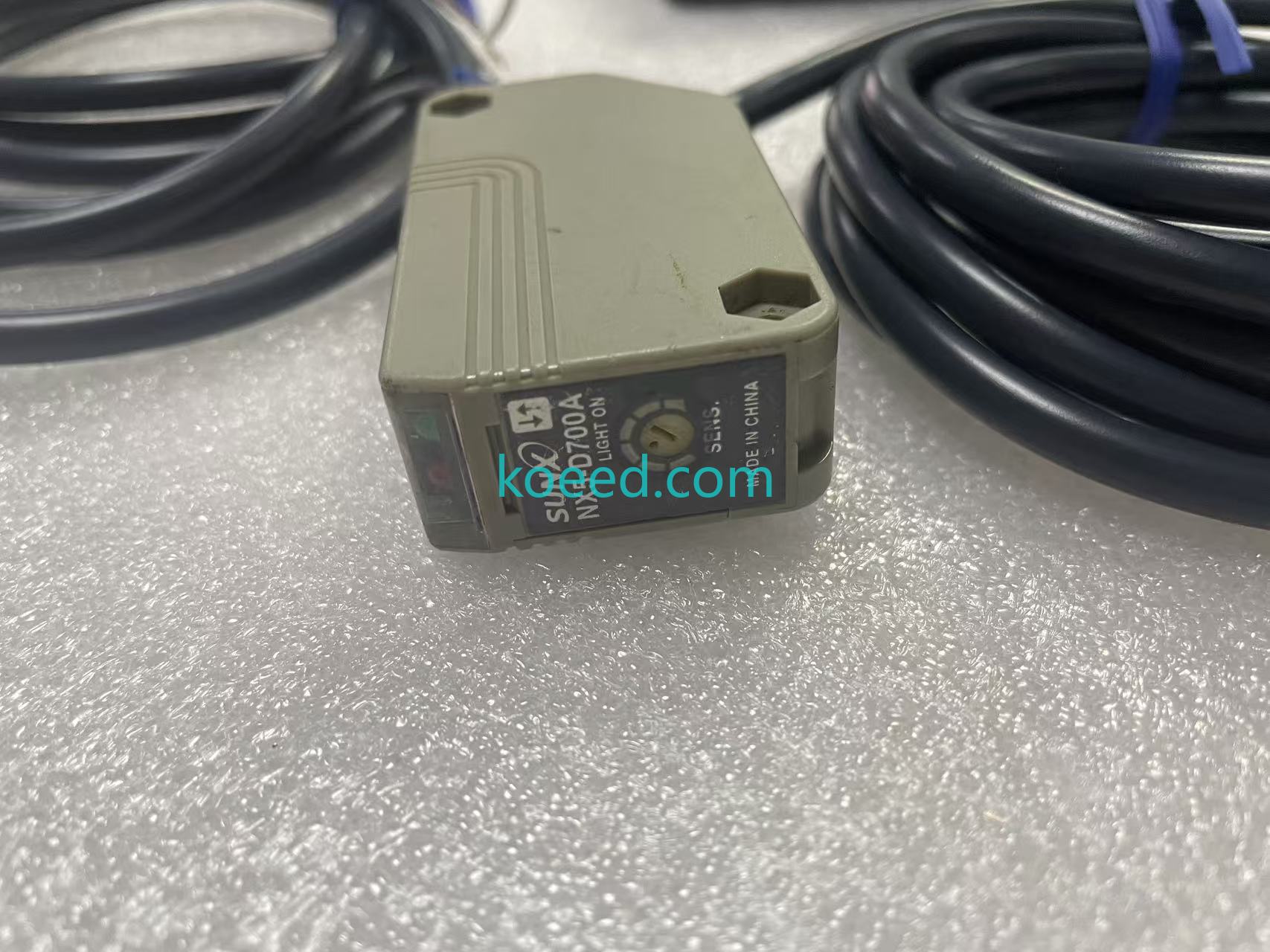
4. Visual Gallery — NX5-D700A Product Imagery
Explore every angle of the NX5-D700A photoelectric sensor. Click any image for a detailed view. All imagery is sourced directly from the Koeed product catalog.
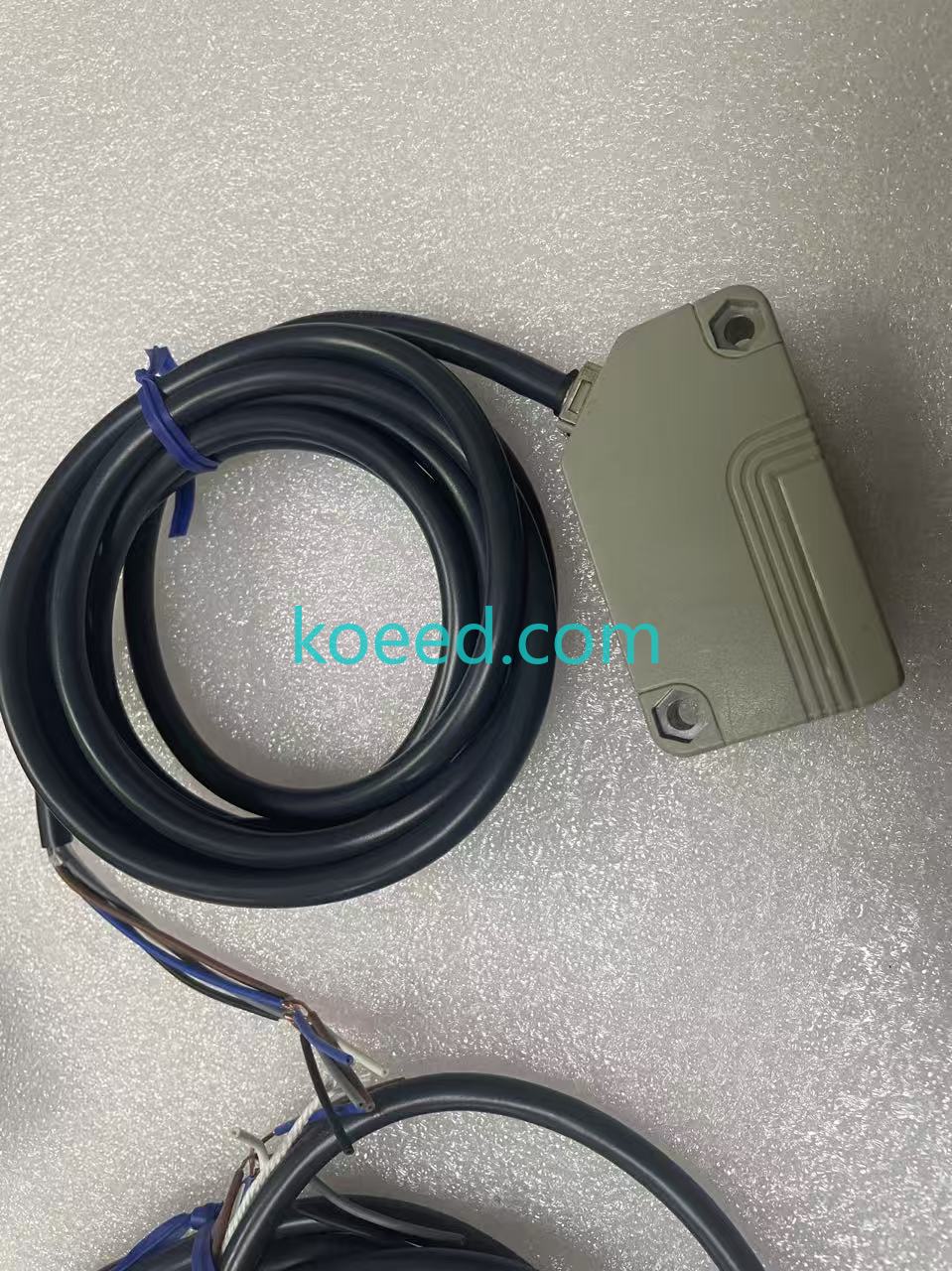
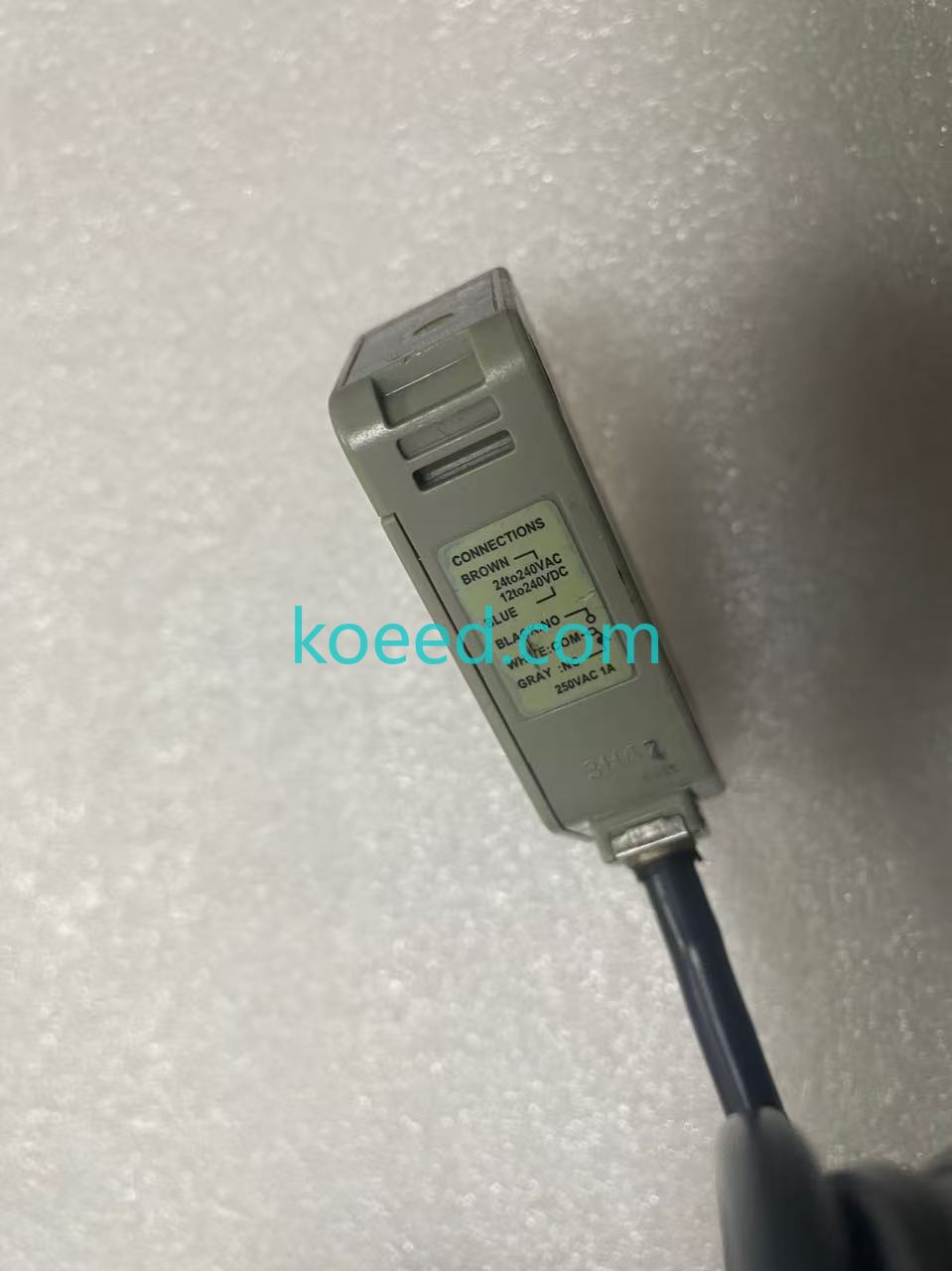
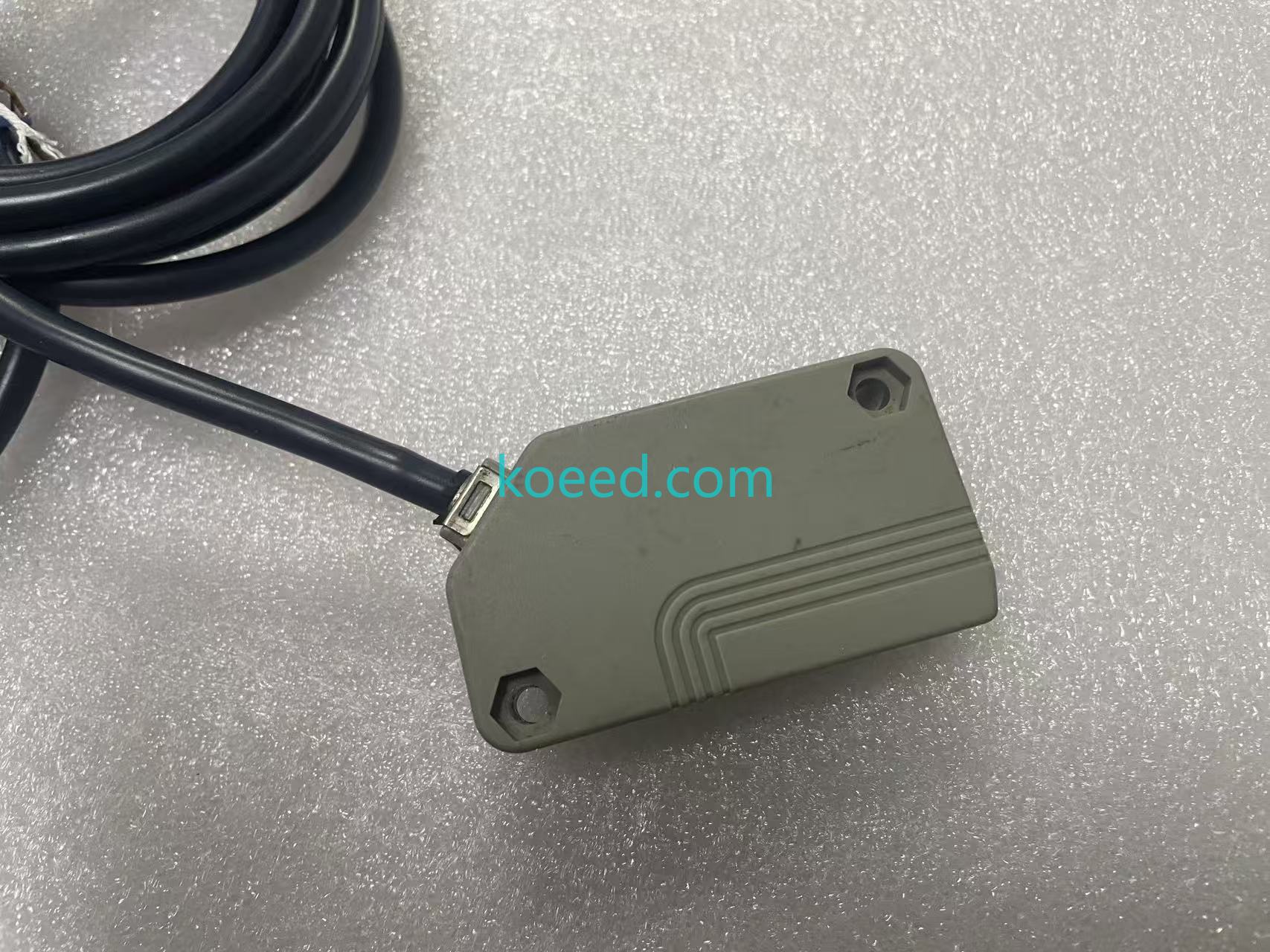
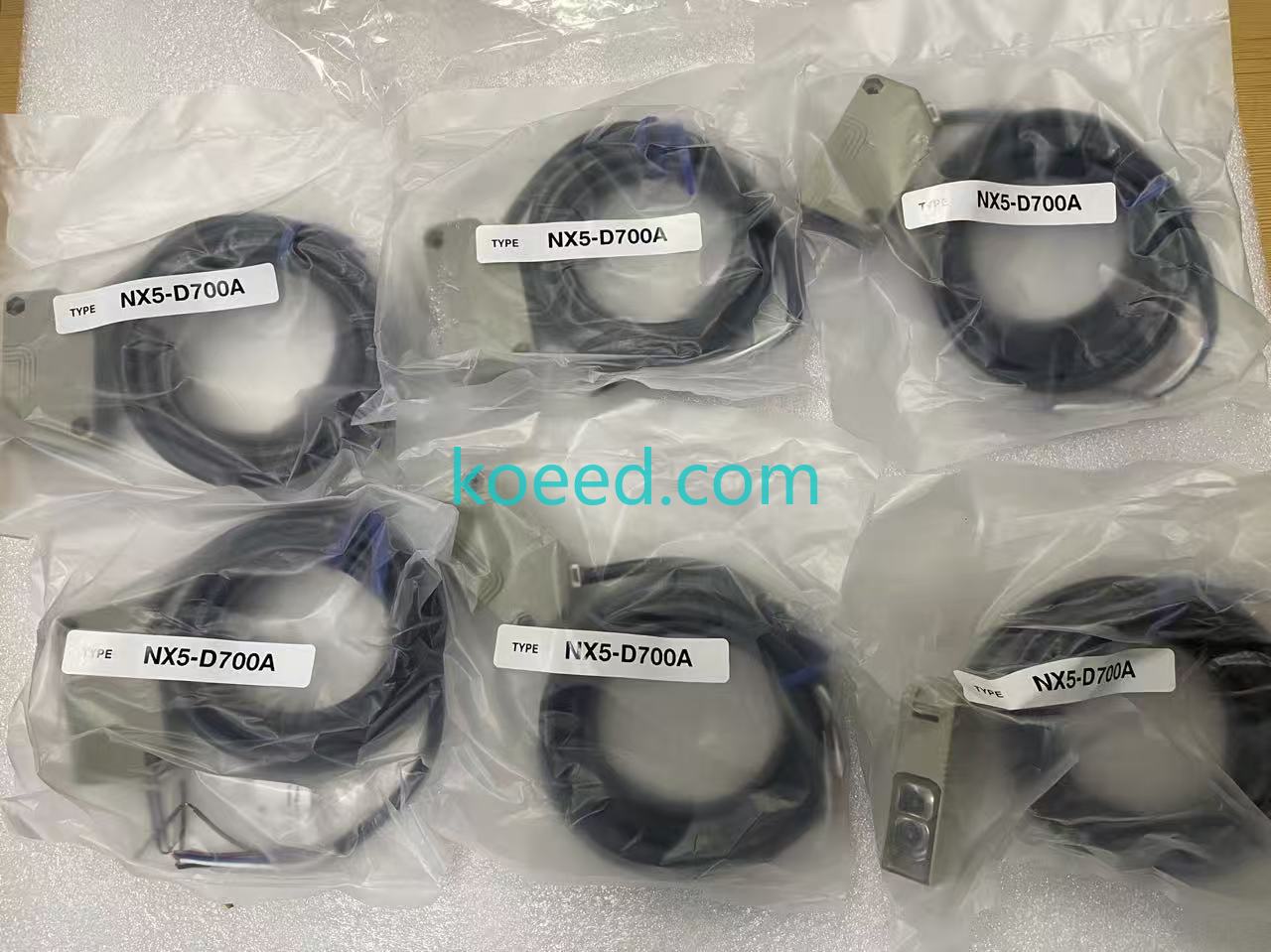
Product Demonstration Video
5. Installation, Maintenance & Troubleshooting Guide
Maximizing the service life and detection reliability of the NX5-D700A requires adherence to a few field-proven best practices. Below, our senior automation engineers share their 2026 commissioning and maintenance playbook.
5.1 Mounting Best Practices
Mount the NX5-D700A on a rigid, vibration-damped bracket. The sensor's 700 mm diffuse sensing range depends on target surface reflectivity—for dark or matte targets below 18% reflectivity, derate the sensing distance by approximately 30–40% and consider repositioning. Always ensure the lens axis is perpendicular to the target surface to maximize return signal strength.
5.2 Wiring & Electrical
One of the NX5-D700A's standout features is its multi-voltage input. When wiring, observe the following:
- AC Operation (100–240V): Use the brown (L) and blue (N) conductors. No polarity sensitivity.
- DC Operation (12–240V): Brown to positive, blue to negative. Reverse-polarity protection is built in.
- Output: The relay output (black/white conductors) is a dry contact rated for both AC and DC loads—verify your load current does not exceed the contact rating.
5.3 Common Troubleshooting Scenarios
Sensor not detecting target — LED indicator off
Checklist:
- Verify supply voltage at the terminal block with a multimeter—confirm it falls within the 12–240V AC/DC range.
- Inspect the cable for cuts, crush damage, or connector corrosion. Replace if insulation resistance drops below 1 MΩ.
- If voltage is present but the LED remains off, test with a known-good NX5-D700A unit to isolate whether the issue is sensor-side or wiring-side.
Intermittent detection / chattering output
Likely Causes & Fixes:
- Lens contamination: Clean the optical window with a lint-free microfiber cloth and isopropyl alcohol (70%+). In dusty environments, schedule weekly lens inspections.
- Target reflectivity variation: If targets vary in color or surface finish, adjust the sensitivity potentiometer (located under the rear cover) clockwise for higher gain.
- EMI interference: Install a ferrite clamp and reroute cables away from VFD/motor circuits as noted above.
- Ambient light interference: In areas with strong overhead LED lighting or sunlight ingress, add a simple polycarbonate shield above the sensor lens.
Output relay stuck ON or OFF
Diagnosis:
- Disconnect the load and measure continuity across the output contacts with a DMM while cycling the sensing condition.
- If the relay fails to switch, the internal relay may have welded due to an inductive load surge. Install a flyback diode (DC) or RC snubber (AC) across the load to prevent recurrence.
- For solid-state output variants, check the load current does not exceed the rated maximum—excessive inrush can latch the output.
6. Frequently Asked Questions
Q: Is the NX5-D700A suitable for high-speed packaging lines in 2026?
Absolutely. With a 10 ms ON response time and 50 Hz maximum response frequency, the NX5-D700A reliably detects objects on conveyors running at speeds up to approximately 180 packs per minute (assuming 700 mm sensing and standard package spacing). For ultra-high-speed applications exceeding this threshold, consider pairing with a high-speed counter module on your PLC for precise edge-triggered counting.
Q: How does the NX5-D700A compare to laser-based sensors for precision positioning?
Laser sensors offer superior precision for sub-millimeter positioning, but the NX5-D700A's diffuse photoelectric technology excels where cost-efficiency, robustness, and wide voltage compatibility are the primary concerns. At roughly 30–50% of the cost of an equivalent industrial laser sensor, and with no need for cleanroom-grade lens protection, the NX5-D700A is the pragmatic choice for general object presence/absence detection, edge guiding, and fill-level monitoring across 90% of factory-floor applications.
Q: Can the NX5-D700A integrate with cloud-based predictive maintenance platforms?
Yes. While the sensor itself outputs a simple relay signal, the integration path is straightforward: wire the output to any IIoT-enabled PLC digital input, then map the detection count and timing data via OPC UA, MQTT, or Modbus TCP to platforms like AWS IoT SiteWise, Siemens MindSphere, or PTC ThingWorx. Our Koeed automation specialists can provide integration wiring diagrams and sample PLC function blocks—reach out via the CTA below.
Q: What is the expected service life of the NX5-D700A?
Under normal industrial conditions (within rated temperature, free from chemical attack, with periodic lens cleaning), the NX5-D700A's infrared LED emitter is rated for 100,000+ hours of continuous operation—equivalent to over 11 years of 24/7 service. The relay contacts are rated for a minimum of 10 million mechanical operations. For mission-critical applications, we recommend keeping a spare unit on hand; Koeed offers competitive bulk pricing on the NX5-D700A for spares inventory programs.
7. 2026 Procurement & Supply Chain Considerations
As global semiconductor and component supply chains continue to stabilize through 2026, the NX5-D700A maintains strong availability through Koeed's authorized distribution network. Unlike some legacy Panasonic sensor models that have faced discontinuation pressures, the NX5-D700A benefits from sustained demand across APAC, EMEA, and Americas markets—ensuring ongoing production support and competitive lead times.
For system integrators and OEMs specifying this sensor in new machine builds, Koeed offers:
- Volume pricing tiers for quantities of 50, 100, and 500+ units.
- Blanket order scheduling with staggered quarterly releases to align with your production calendar.
- Technical pre-sales support including application feasibility reviews and on-site proof-of-concept testing.
Ready to Deploy the NX5-D700A in Your 2026 Smart Factory?
Unlock the full potential of multi-voltage photoelectric sensing with Koeed's expert support and seamless supply chain. Let's build a more resilient, data-driven floor.


