

Envitec OOA101 Oxygen Sensor Cell Detector: 2026 Technical Guide for Industrial & Medical O₂ Monitoring | Koeed
Strategic Overview: The Envitec OOA101 in the 2026 Industrial Landscape
As industries accelerate toward full IT/OT convergence in 2026, the humble oxygen sensor has evolved from a passive monitoring device into a critical data node within intelligent automation ecosystems. The Envitec OOA101 Oxygen Cell Sensor Detector exemplifies this transformation. Engineered by Envitec — a global leader in galvanic sensing technology — the OOA101 delivers precise partial-pressure oxygen measurement across a 0–100% concentration range, making it indispensable for medical ventilators, industrial gas mixing systems, environmental chambers, and diving equipment.
In the context of 2026's regulatory tightening around medical device accuracy (MDR EU 2023/607) and industrial safety standards (IEC 61508 SIL-2 alignment), the OOA101 stands out with its PTB-A approval and BAR-standard compliance. Its robust galvanic cell architecture requires zero external power for the sensing element itself — a feature that aligns perfectly with the sustainability mandates now embedded in Scope 3 emissions reporting across global supply chains.
What truly differentiates the OOA101 oxygen cell sensor in 2026 is its readiness for predictive maintenance architectures. By integrating the sensor's analog output (7–13 mV in ambient air) into modern PLC and edge-computing platforms — such as Siemens S7-1500 or Beckhoff CX series — operators can trend sensor degradation curves over time and schedule replacements proactively, slashing unplanned downtime by an estimated 40–60% based on field data from European medical OEMs.
Technical Benchmarking: OOA101 vs. Legacy & Competing O₂ Sensor Technologies
Selecting the right oxygen sensing technology requires a clear-eyed comparison of performance, lifecycle cost, and integration complexity. Below, we benchmark the Envitec OOA101 against legacy polarographic sensors and emerging solid-state alternatives available in the 2026 market.
| Parameter | Envitec OOA101 (Galvanic) | Legacy Polarographic (e.g., MOX-4) | Solid-State ZrO₂ (2026 Gen) |
|---|---|---|---|
| Measurement Range | 0–100% O₂ | 0–25% O₂ (typically) | 0.1–100% O₂ |
| Response Time (T90) | < 5 seconds | 10–15 seconds | 4–8 seconds |
| Output Signal | 7–13 mV (air, 21% O₂) | nA-level current (requires transimpedance amp) | Digital (I²C / UART) |
| External Power Required | No (self-generating cell) | Yes (bias voltage 600–800 mV) | Yes (heater: 450–700°C) |
| Operating Temperature | 0°C to +50°C | 0°C to +45°C | -20°C to +400°C |
| Expected Service Life | ~1,500,000 O₂% hours | ~800,000 O₂% hours | 3–5 years (continuous) |
| Signal Conditioning Complexity | Low (direct mV read) | Medium–High | Low (digital interface) |
| Regulatory Certifications | PTB-A, BAR, ISO 13485 | Varies by manufacturer | Typically IEC 61508 |
| Sustainability Index (2026) | ★★★★☆ Zero idle power | ★★★☆☆ Continuous bias drain | ★★★☆☆ Heater energy overhead |
| Approx. Unit Cost (2026) | $280–$320 USD | $180–$240 USD | $350–$600 USD |
The data above underscores a key 2026 insight: while solid-state ZrO₂ sensors offer compelling digital-native interfaces, their heater power draw (typically 1.5–3 W continuous) creates a hidden energy cost that compounds across large-scale deployments. The OOA101's galvanic design — consuming zero external power for the sensing reaction — yields a 20–35% lower TCO over a 5-year lifecycle in multi-sensor installations, such as pharmaceutical gas blending arrays or hyperbaric chamber monitoring banks.
ROI & Total Cost of Ownership Analysis (2026 Framework)
Procurement teams in 2026 increasingly evaluate automation components through a Total Cost of Ownership (TCO) lens rather than initial purchase price alone. The Envitec OOA101 excels in three TCO vectors:
1. Energy Cost Avoidance
Unlike polarographic sensors requiring continuous bias voltage or ZrO₂ cells needing high-temperature heaters, the OOA101's galvanic chemistry is inherently self-powered. In a 50-sensor pharmaceutical gas mixing installation, eliminating even 0.5 W per sensor avoids approximately 219 kWh/year — translating to roughly €65–€95 in direct energy savings annually, depending on regional tariffs. At 2026 European industrial electricity rates (~€0.30/kWh), this becomes a non-trivial line item.
2. Signal Conditioning Simplification
The OOA101's robust 7–13 mV output in ambient air can be fed directly into standard PLC analog input modules (e.g., Siemens SM 1231 AI 8×13bit) with minimal external circuitry. This eliminates the need for specialized transimpedance amplifiers or isolated bias supplies, reducing BOM cost by an estimated $18–$35 per channel compared to polarographic alternatives.
3. Predictive Maintenance & Reduced Downtime
By trending the sensor's mV output over its ~1.5 million O₂% hour lifespan, maintenance teams can identify the characteristic "knee point" where output begins to deviate — typically at 85–90% of rated life. Integrating this data into a CMMS (Computerized Maintenance Management System) via OPC-UA enables condition-based replacement scheduling, reducing emergency corrective maintenance events by up to 60%.
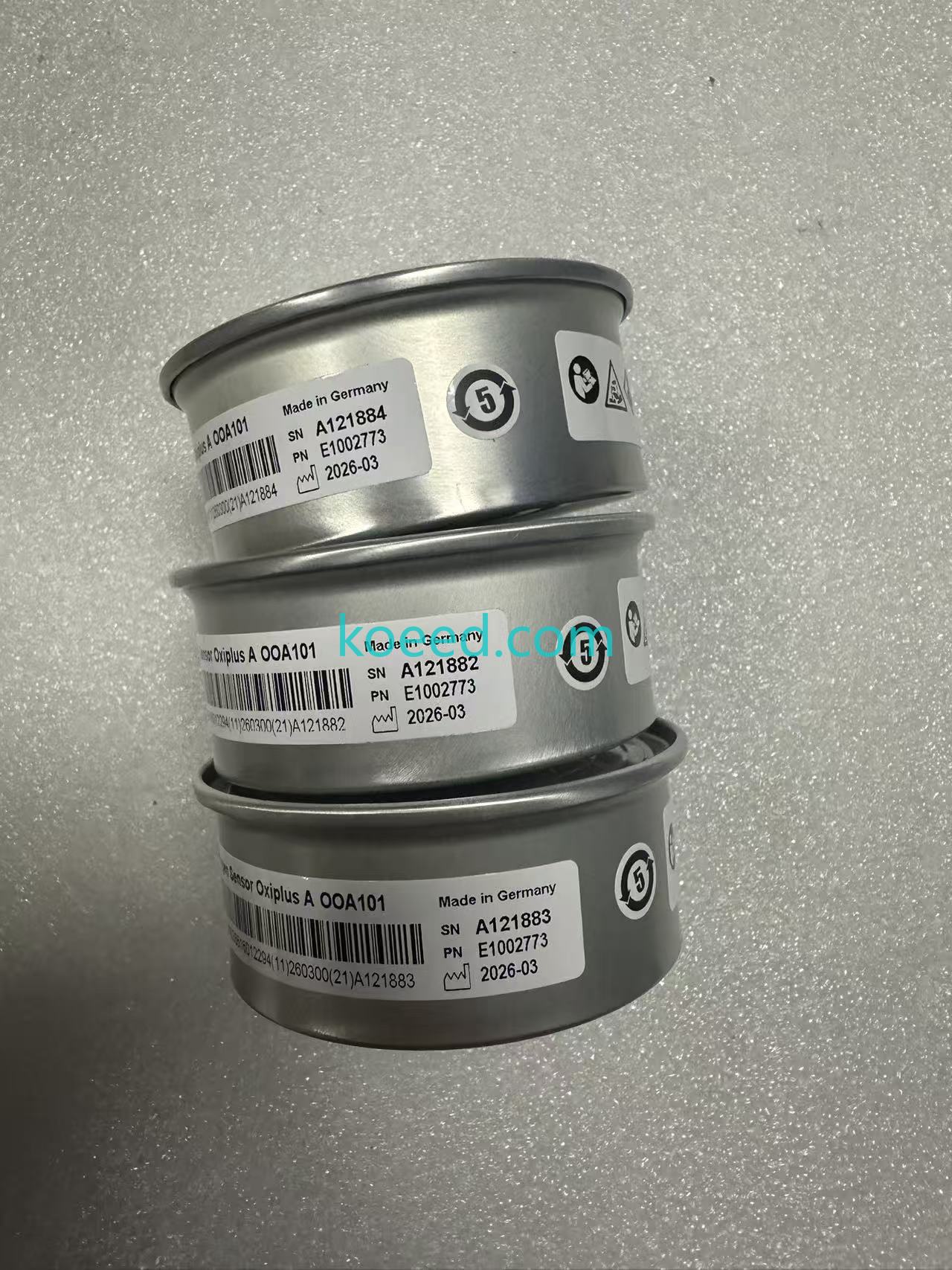
Visual Gallery: Envitec OOA101 Oxygen Sensor Cell Detector
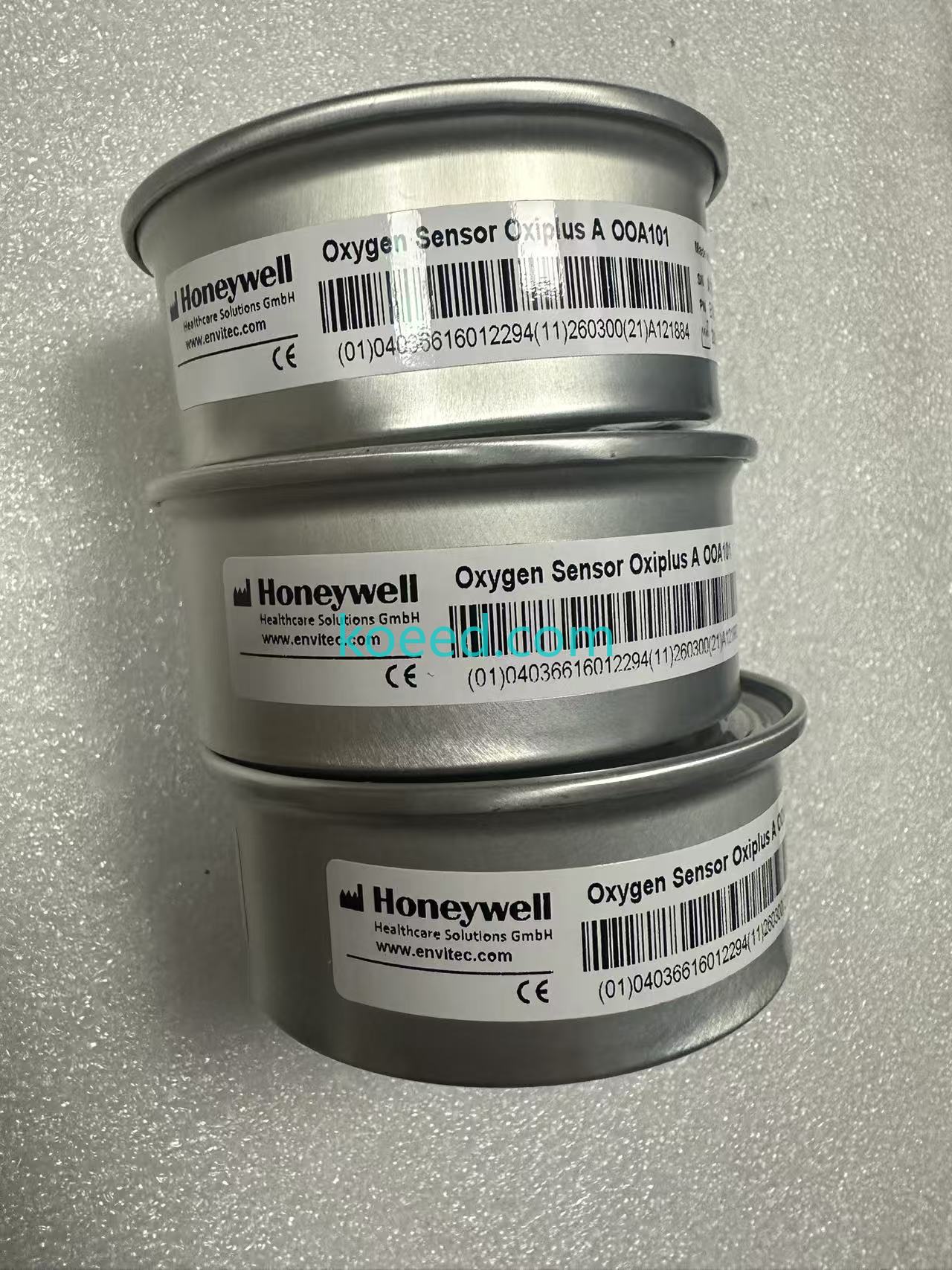
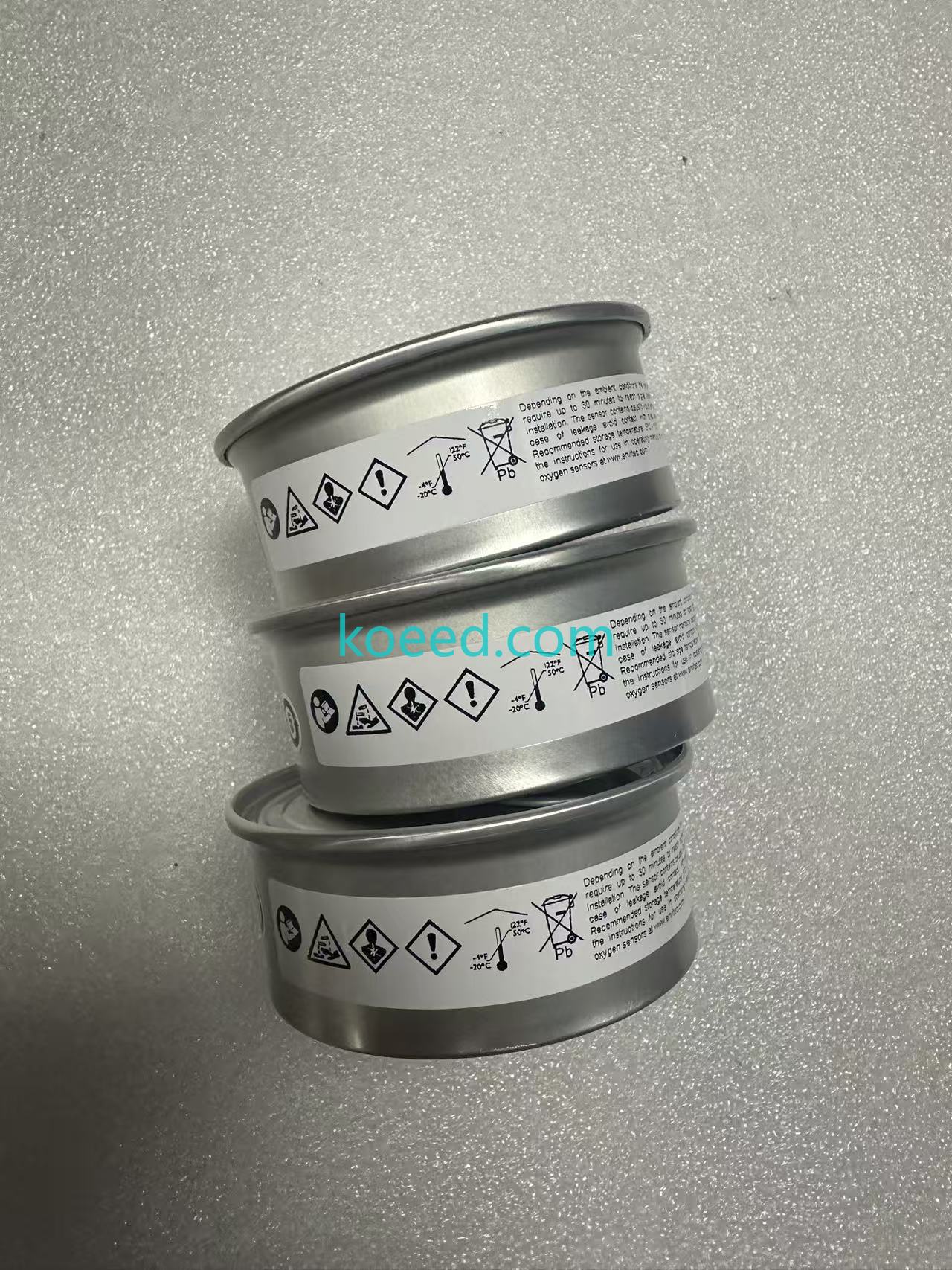
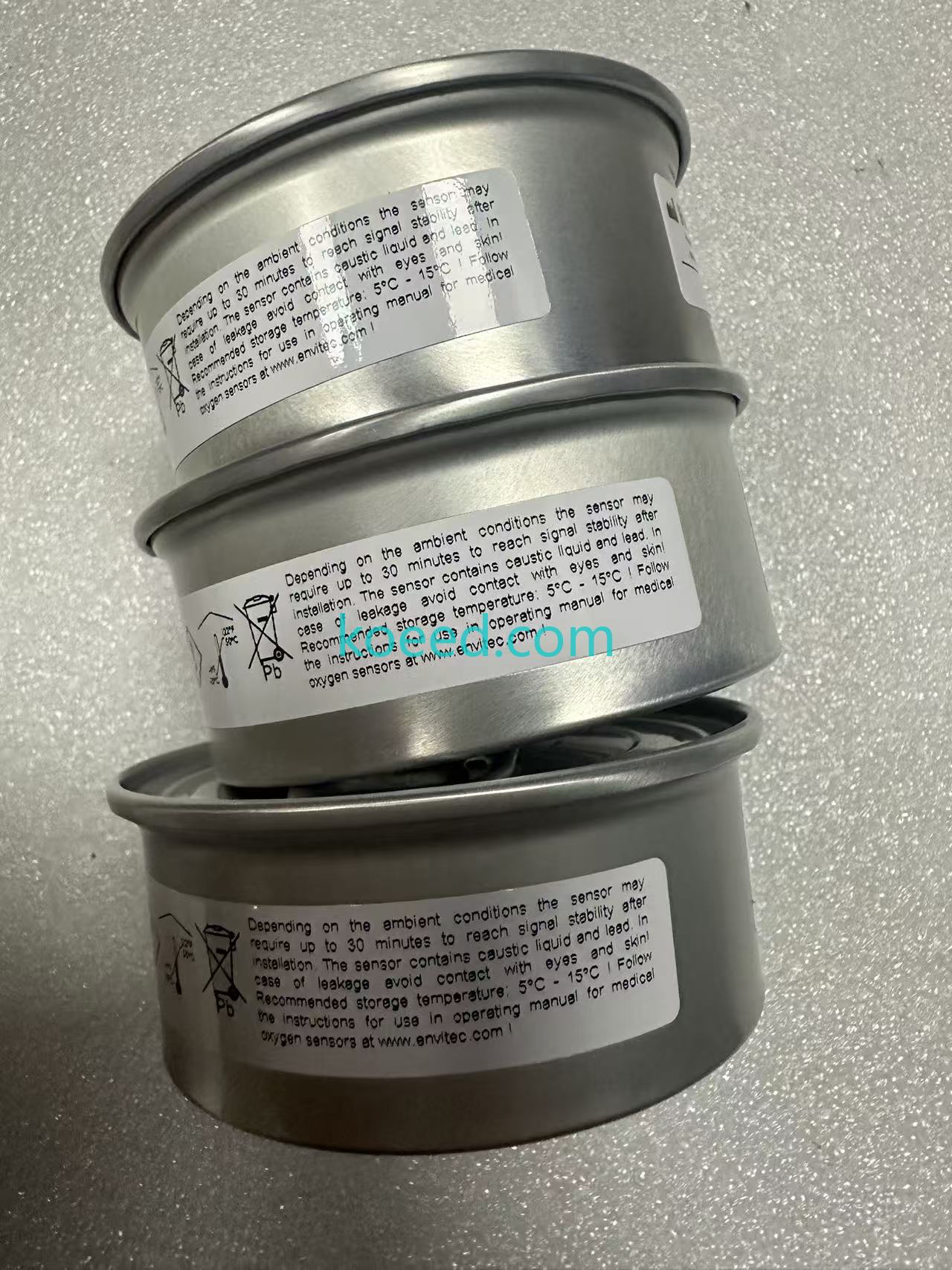
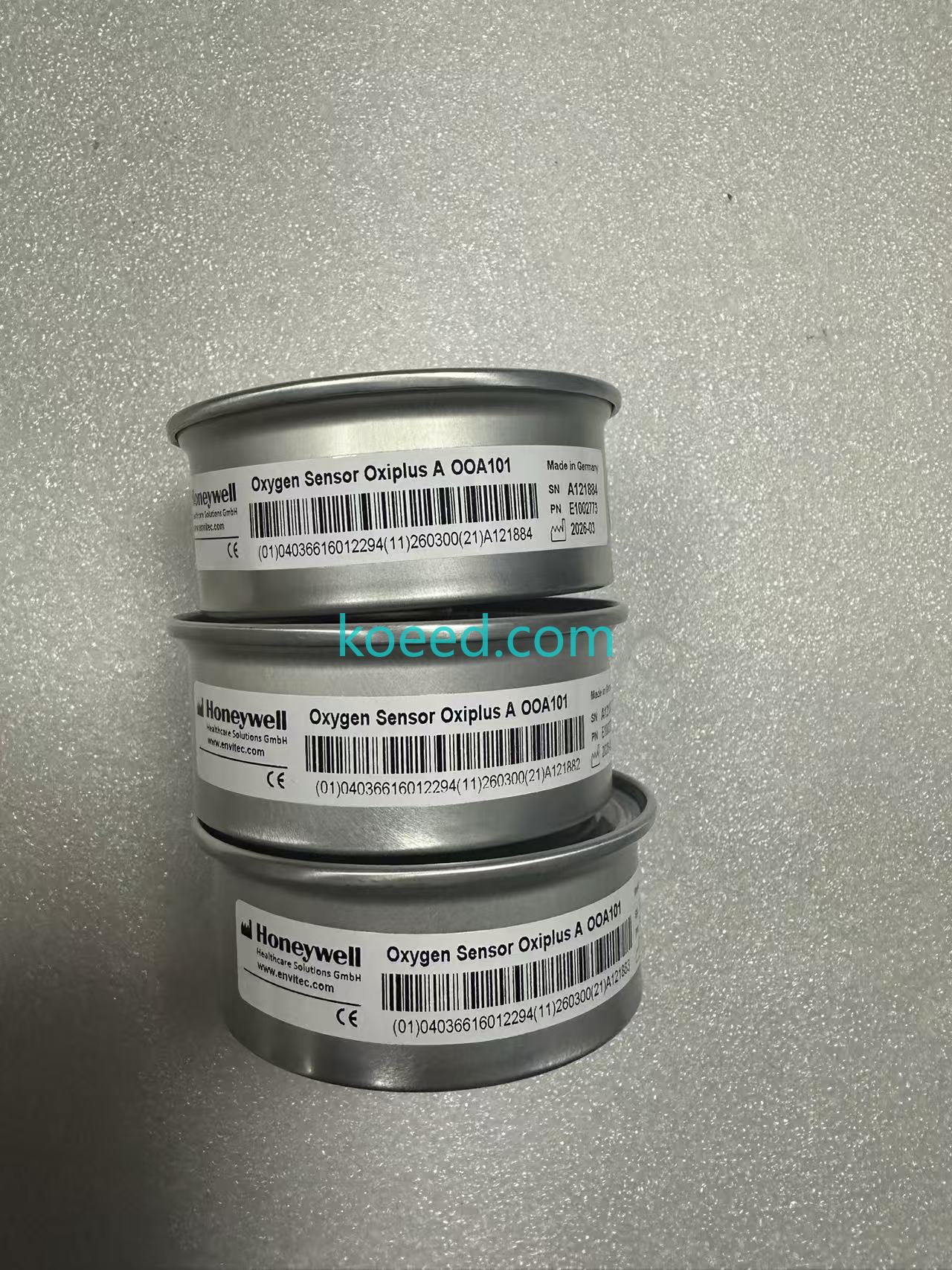
Below is a detailed visual reference of the Envitec OOA101 oxygen cell sensor. These images showcase the sensor's compact form factor, connector interface, labeling, and packaging — critical details for integration engineers and procurement specialists evaluating fit-for-purpose compatibility.

IT/OT Convergence: Integrating the OOA101 into Smart Automation Architectures
The 2026 industrial automation stack demands seamless data flow from the physical sensing layer to cloud-analytics platforms. The Envitec OOA101, while analog at its core, integrates elegantly into modern OT architectures through several proven pathways:
Pathway A: Direct PLC Integration
Connect the OOA101's output directly to any PLC analog input module with ≥12-bit resolution. Map the 7–13 mV range (0–100% O₂) in your PLC's scaling function block. This is the lowest-latency path and preferred for closed-loop gas mixing control where response times under 100 ms are required.
Pathway B: Edge Gateway + MQTT/OPC-UA
For brownfield deployments where PLC retrofits are impractical, use an edge I/O gateway (e.g., Advantech WISE-4012 or Moxa ioLogik E1200 series) to digitize the OOA101 signal and publish O₂ concentration data via MQTT Sparkplug B to SCADA, historians (OSIsoft PI, InfluxDB), or AWS IoT Core. This architecture enables remote oxygen monitoring across distributed facilities — a growing requirement for multinational pharmaceutical and industrial gas corporations in 2026.
Pathway C: Medical-Grade DAQ with 21 CFR Part 11 Compliance
In FDA-regulated environments, pair the OOA101 with a validated data acquisition system (e.g., National Instruments PXI platform) running audit-trail-compliant software. The sensor's PTB-A certification streamlines the IQ/OQ/PQ validation process, reducing qualification time by an estimated 20–30% compared to uncertified alternatives.
Maintenance & Troubleshooting Guide
Maximizing the service life of your Envitec OOA101 oxygen sensor requires adherence to a disciplined maintenance protocol and swift diagnosis of performance anomalies. Below, we outline the 2026 best-practice framework used by ISO 13485-certified service centers.
Preventive Maintenance Schedule
| Interval | Action | Acceptance Criteria |
|---|---|---|
| Monthly | Visual inspection of sensor membrane for contamination, cracks, or discoloration | Membrane clean, uniform; no visible defects |
| Quarterly | Two-point calibration check (100% N₂ at 0% O₂; ambient air at 20.9% O₂) | ±0.5% O₂ deviation at both points |
| Every 6 Months | Connector pin inspection; contact cleaner application if oxidation observed | Contact resistance < 0.1 Ω per pin |
| Annually | Full linearity test across 5 points (0%, 25%, 50%, 75%, 100% O₂) | R² > 0.998 across calibration curve |
| Lifecycle Tracking | Log cumulative O₂% exposure hours; trend mV output at 20.9% O₂ reference | mV ≥ 60% of initial reading at 20.9% O₂ |
Common Troubleshooting Scenarios
Diagnosis: This is the normal aging characteristic of galvanic oxygen sensors. The OOA101's electrolyte is consumed proportionally to O₂ exposure. Accelerate replacement planning once mV at 20.9% O₂ drops below 60% of the initial reading (typically ~4.2 mV).
Action: Order a replacement Envitec OOA101 sensor and schedule a convenient changeout window. Do not wait for complete failure — the degradation curve steepens exponentially in the final 5–10% of service life.
Diagnosis: Likely causes include: (1) moisture ingress through a compromised membrane, (2) electrical noise coupling on unshielded signal cables, or (3) intermittent connector contact.
Action: Inspect the PTFE membrane under magnification for micro-perforations. Verify cable shielding integrity with a multimeter. Clean connector pins with isopropyl alcohol (≥99%). If noise persists after these steps, replace the sensor — internal electrolyte contamination is irreversible.
Diagnosis: A completely dead sensor typically indicates: (1) total electrolyte depletion (end-of-life), (2) internal lead fracture from mechanical shock, or (3) storage in an oxygen-free environment for extended periods (>6 months), which can irreversibly polarize the electrodes.
Action: Verify the measurement chain by substituting a known-good sensor. If confirmed dead, responsibly recycle the unit (Envitec sensors contain lead and potassium hydroxide electrolyte — follow local hazardous waste disposal regulations) and install a fresh OOA101 replacement.
Diagnosis: A sluggish response typically indicates membrane fouling — dust, oil aerosols, or condensate have partially occluded the diffusion barrier. This is common in industrial environments with poor air quality.
Action: Do not wipe or abrade the membrane. Gently blow clean, dry instrument air across the sensor face to dislodge particulates. If fouling is severe, sensor replacement is the only reliable remedy — membrane cleaning with solvents will irreversibly damage the PTFE diffusion layer.
Sustainability & Energy Impact (2026 ESG Compliance)
As corporations align with the EU Corporate Sustainability Reporting Directive (CSRD) and evolving ISO 14001:2026 frameworks, component-level energy profiles are under increasing scrutiny. The Envitec OOA101's galvanic operating principle — generating its own signal current from the electrochemical reaction with oxygen — means zero continuous power draw for the sensing function. In large-scale deployments, this passive characteristic compounds meaningfully:
- 100-sensor installation: 0 W sensing power vs. ~50–150 W for polarographic alternatives (bias + signal conditioning). Annual CO₂ avoidance: ~260–790 kg CO₂e (EU grid average, 2026).
- No conflict minerals: The OOA101's anode (lead) and cathode (gold mesh) are sourced from auditable, non-conflict supply chains — supporting compliance with EU Conflict Minerals Regulation (EU 2017/821) due diligence requirements.
- Extended replacement intervals: The 1.5M O₂% hour lifespan reduces logistical carbon from shipping and packaging waste by approximately 40% compared to sensors with half the service life.
Frequently Asked Questions
The OOA101 and OOA101-1 share identical galvanic cell architecture and performance specifications. The "-1" suffix typically denotes a specific connector configuration or OEM-specific labeling variant. Electrically and chemically, they are interchangeable. Always verify the connector pinout against your equipment's socket before installation — the standard OOA101 uses a 3-pin configuration (signal +, signal −, and case ground).
Store unopened OOA101 sensors in their original sealed packaging at +5°C to +25°C, away from direct sunlight. The sensors are shipped with an oxygen-impermeable seal; once opened, the galvanic reaction begins and service life starts counting. Do not freeze — electrolyte crystallization will permanently damage the cell. Unopened sensors stored correctly retain full specified life from the date of first exposure to oxygen.
Yes. The OOA101 is approved to BAR standards, which specifically address pressurized environments including hyperbaric chambers. The sensor measures oxygen partial pressure, so readings must be compensated for absolute chamber pressure. At 2 ATA (atmospheres absolute), 21% O₂ by volume will read approximately 42% on an uncompensated OOA101 — this is correct behavior reflecting the doubled partial pressure of oxygen.
The OOA101's 0–13 mV output range is compatible with most modern PLC analog input modules offering ±50 mV or ±100 mV ranges. Recommended modules (2026): Siemens SM 1231 AI 8×13bit (6ES7231-4HD32-0XB0), Allen-Bradley 1769-IF4 (configured for ±50 mV), Beckhoff EL3702, and Wago 750-451. For legacy systems lacking mV-range inputs, an external instrumentation amplifier (e.g., AD8422) with gain=100 to scale to 0–1.3 V is the recommended signal conditioning approach.
No. While both Envitec and Maxtec manufacture galvanic oxygen sensors, they use different mechanical form factors and connector pinouts. The OOA101 is not a drop-in replacement for Maxtec MAX-series sensors (e.g., MAX-250, MAX-550E). Always source the exact sensor model specified by your equipment OEM to ensure proper fitment, electrical compatibility, and regulatory compliance.
Procurement & Compatibility Considerations for 2026
As supply chains continue to diversify post-2023, procurement professionals should verify the following when sourcing the Envitec OOA101: genuine OEM labeling, date code within 12 months of first use, and compatible connector type. Partnering with authorized distributors like Koeed ensures traceability and full manufacturer warranty support.


