

Festo SE-3/8-B (9687) Quick Exhaust Valve: 2026 Pneumatics Performance & ROI Guide
Strategic Overview: Why the SE-3/8-B Still Sets the Cycle-Time Benchmark in 2026
In the 2026 industrial landscape, throughput is no longer bought with bigger actuators — it is extracted from smarter air management. The Festo SE-3/8-B quick exhaust valve (Part No. 9687) remains one of the most cost-effective levers a plant engineer can pull: by venting the cylinder's return chamber directly to atmosphere at the valve body instead of forcing air back through long, restrictive tubing and a directional control valve, it can cut cylinder retraction time dramatically without touching the PLC program.
That matters more than ever as manufacturers converge shop-floor pneumatics with IT-layer analytics. A 2026-style smart factory measures every millisecond of station cycle time and every normal-litre of compressed air consumed. The SE-3/8-B is the classic mechanical answer to a digital question: how do I get more output from the same compressor, the same valve manifold, and the same floor footprint?
You can review the exact unit and its current fast-ship availability here: Festo Quick Exhaust Valve SE-3/8-B (9687) – Fast Ship Listing.
The Engineering Principle in 60 Seconds
A quick exhaust valve is a pressure-actuated shuttle with a soft seal. Supply pressure seats the disc against the exhaust port, sealing the atmosphere out. When the control valve exhausts the line, the pressure on the supply side collapses, the disc snaps across, and the cylinder chamber is dumped directly through the valve's oversized exhaust port. The result: near-zero back-pressure on the piston and a full-speed stroke.
2026 Relevance: With compressed air typically accounting for 10–20% of a plant's electricity bill, eliminating back-pressure losses is a direct sustainability win — logged, verifiable, and reportable under modern ESG energy-intensity KPIs.
Technical Benchmarking: SE-3/8-B (9687) Specifications at a Glance
The table below consolidates the verified performance envelope of the 9687 quick exhaust valve. Use it as your sizing and interchange reference.
| Parameter | SE-3/8-B (P/N 9687) | Engineering Significance |
|---|---|---|
| Product family | Quick exhaust valve, Series B | Proven Festo Series B mechanical platform |
| Part number | 9687 | Stable legacy part number — easy MRO cross-reference |
| Pneumatic connection | G3/8 (3/8") | Matches common ISO 228-G cylinder and valve ports |
| Nominal width | 11 mm | High flow passage for mid-size bore cylinders |
| Exhaust flow rate | 2,760 l/min | Fast dump = shortest possible piston retract time |
| Operating pressure | 0.2 – 10 bar | Covers standard shop-air ranges up to 145 psi |
| Ambient / media temperature | -20 °C to +75 °C | Suitable for unheated cells and moderate process heat |
| Body material | Die-cast aluminium | Lightweight, high rigidity, good heat dissipation |
| Sealing material | NBR | Reliable oil-compatible seal, standard in industrial air |
| Compliance | RoHS-compliant | Meets modern procurement and export restrictions |
| Mounting | In-line, close-coupled to cylinder port | Minimises dead volume; direct-vent architecture |
| Alternative sizes | SE-1/8-B (9685), SE-1/4-B (9686), SE-1/2-B (9688) | Scale the same design up or down per bore size |
Performance Positioning vs. Neighbouring Sizes
| Model | Part No. | Port Size | Best Fit |
|---|---|---|---|
| SE-1/8-B | 9685 | G1/8 | Compact cylinders, small grippers, miniature actuators |
| SE-1/4-B | 9686 | G1/4 | ISO 6432 cylinders, light pick-and-place |
| SE-3/8-B | 9687 | G3/8 | ISO 15552 Ø32–Ø63 mm cylinders, handling & packaging |
| SE-1/2-B | 9688 | G1/2 | Large bore cylinders, heavy indexing and clamping |
Legacy Pneumatics vs. 2026 Networked Motion: A Migration Matrix
Many plants running the 9687 are doing so inside architectures that have been progressively digitised around the pneumatics rather than replaced by them. This matrix clarifies what changes and what stays stable when you modernise the surrounding control layer.
| Dimension | Legacy (Pre-2020) Practice | 2026 Converged Practice | Impact on SE-3/8-B |
|---|---|---|---|
| Control layer | Hard-wired 24 V DC solenoids | Ethernet-based valve manifolds (EtherCAT, PROFINET, EtherNet/IP) | None — valve is purely pneumatic, fully compatible |
| Speed tuning | Manual flow control on one-way restrictors | Recipe-driven stroke tuning with digital twins | Faster exhaust enables higher-quality dynamic response |
| Air consumption monitoring | Plant-wide kWh estimate | Per-branch flow sensors feeding dashboards | Measurable reduction in normal-litres per cycle |
| Maintenance | Fixed PM calendar | Condition-based, triggered by cycle counters and leak detection | Seal inspection scheduled by duty, not by month |
| Documentation | Paper binders per machine | Digital asset registry with ePLM/BOM linkage | Part number 9687 maps cleanly into BOM automation |
| Spare strategy | Bin stock, hoarding | Consignment + fast-ship logistics for critical spares | Available through Koeed fast-ship supply |
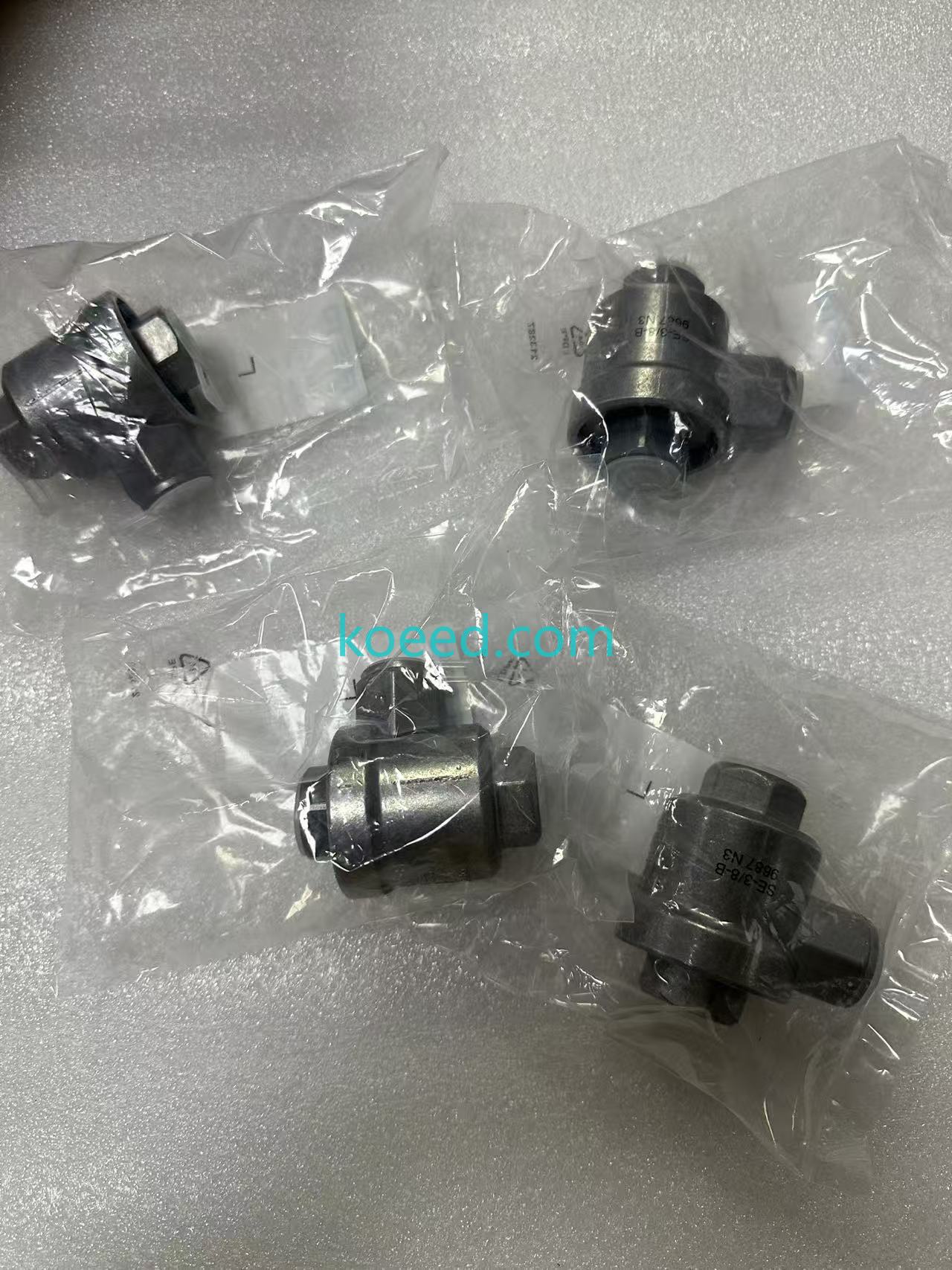
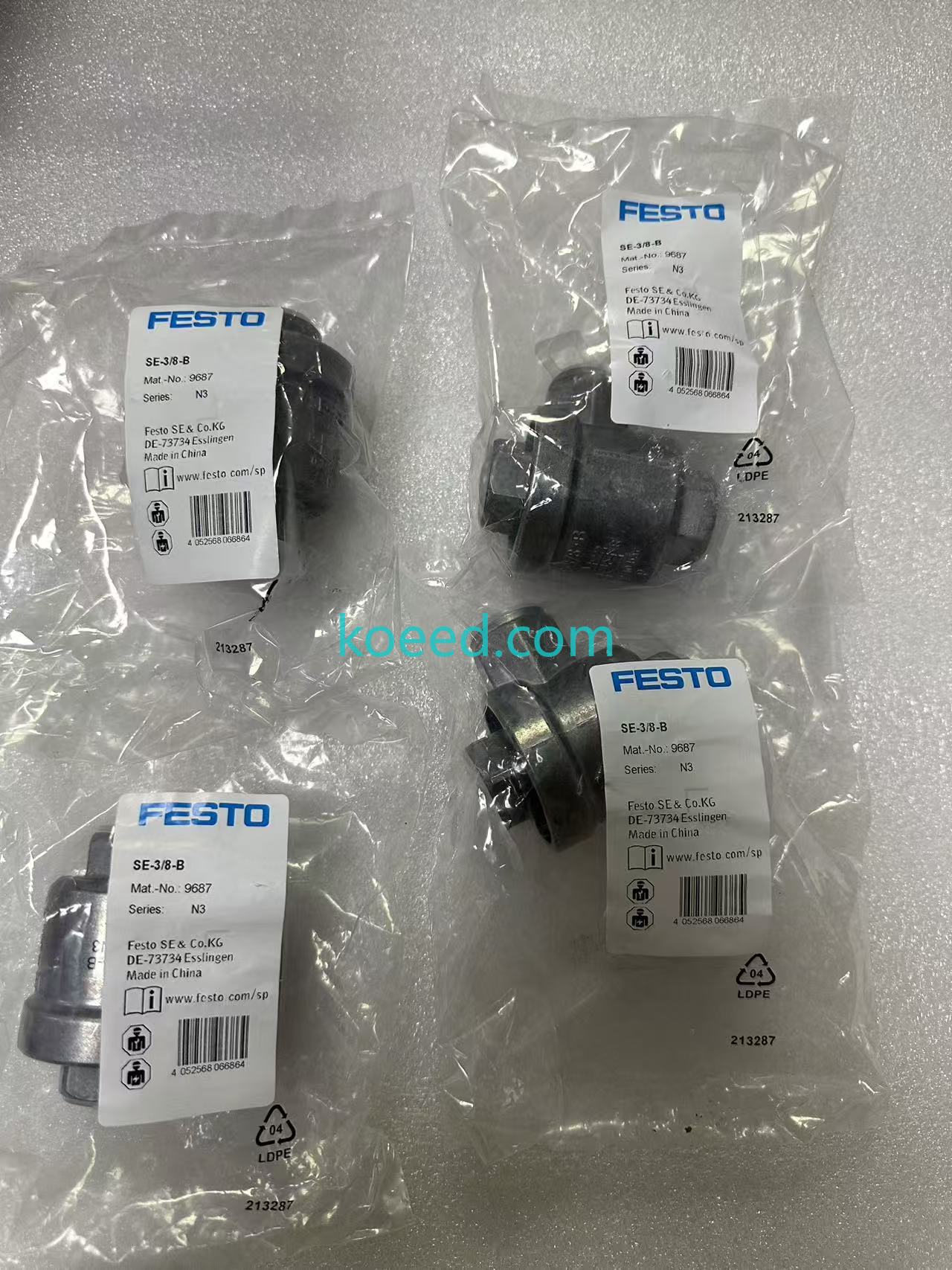
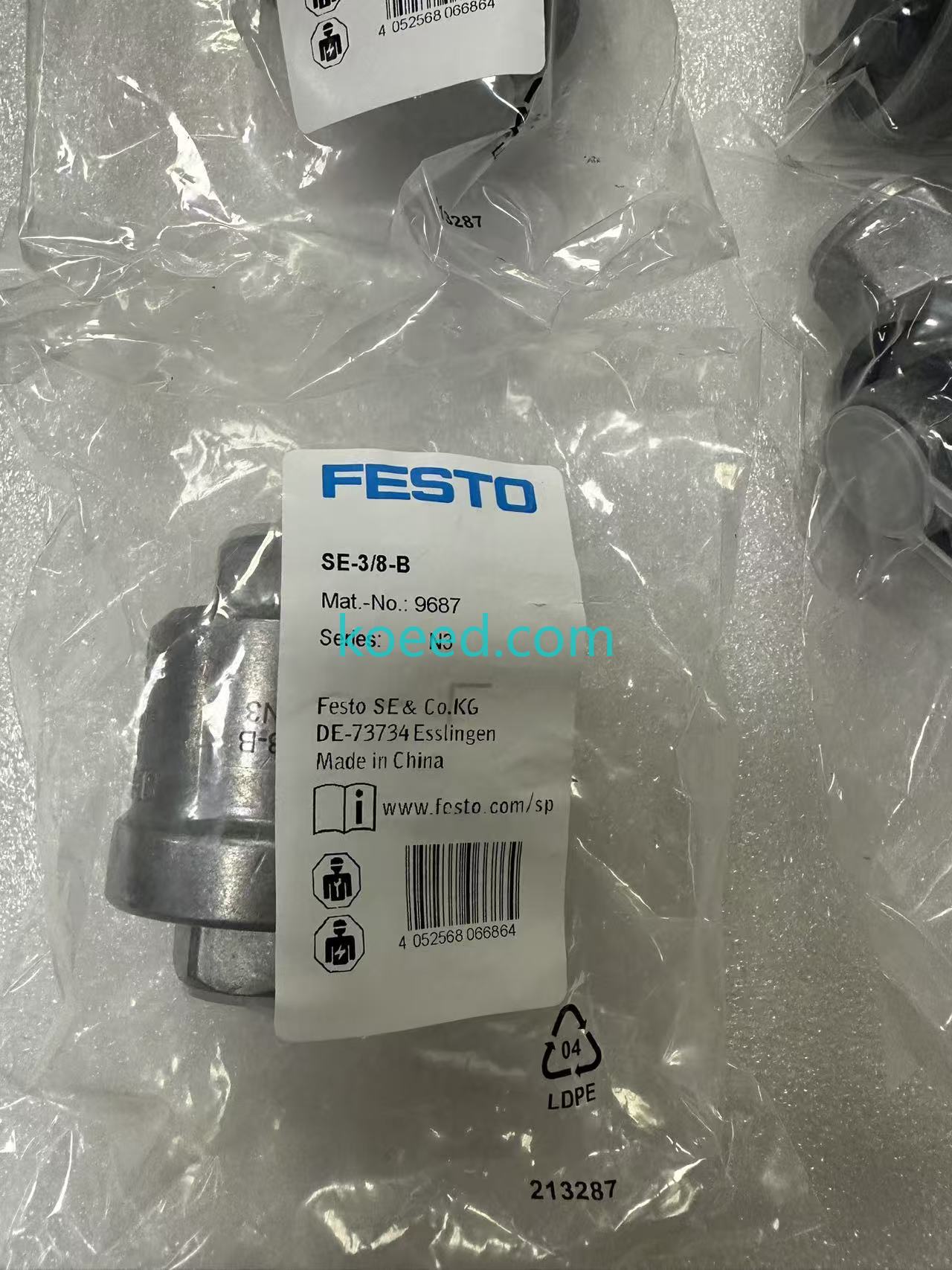
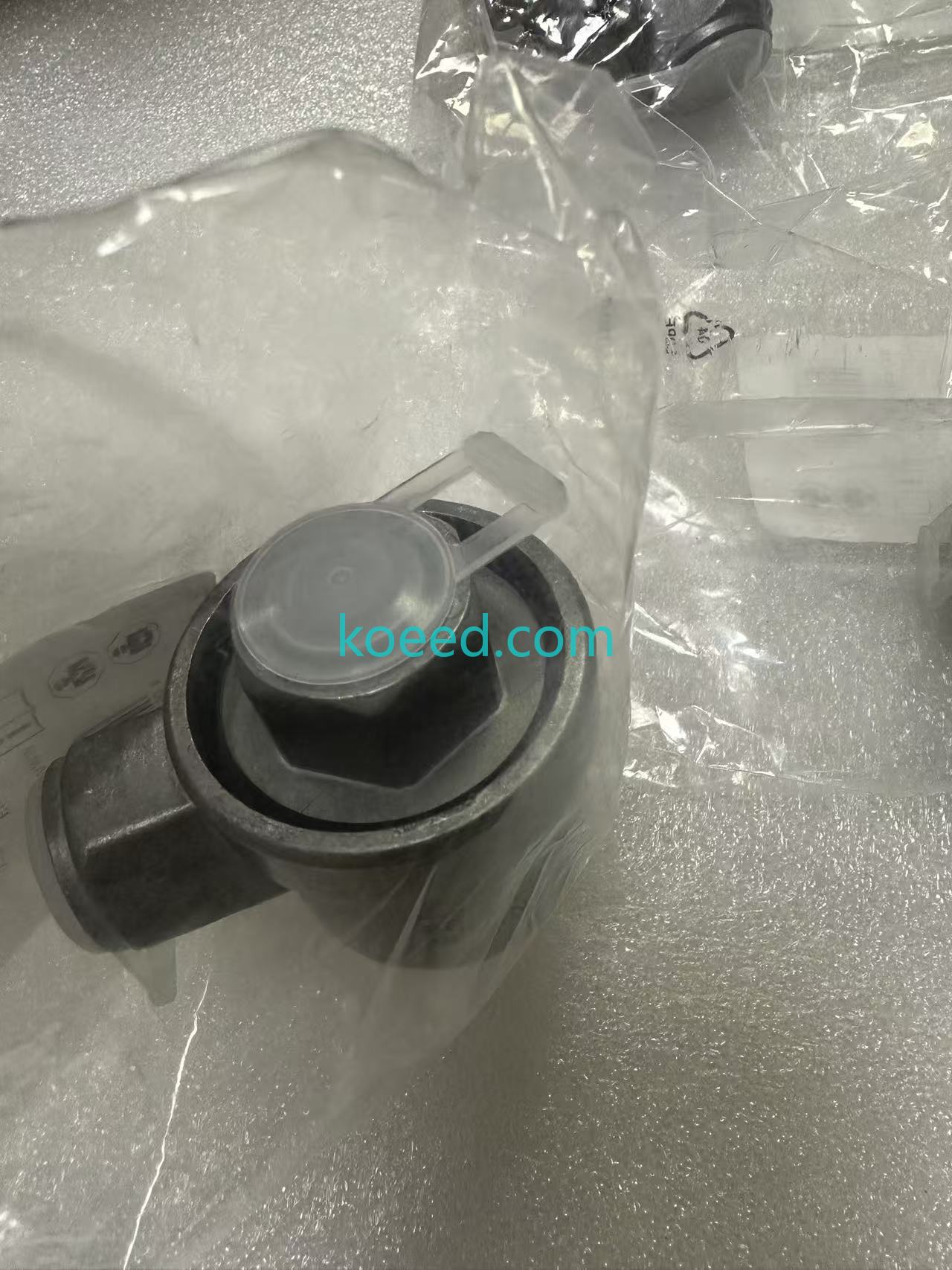
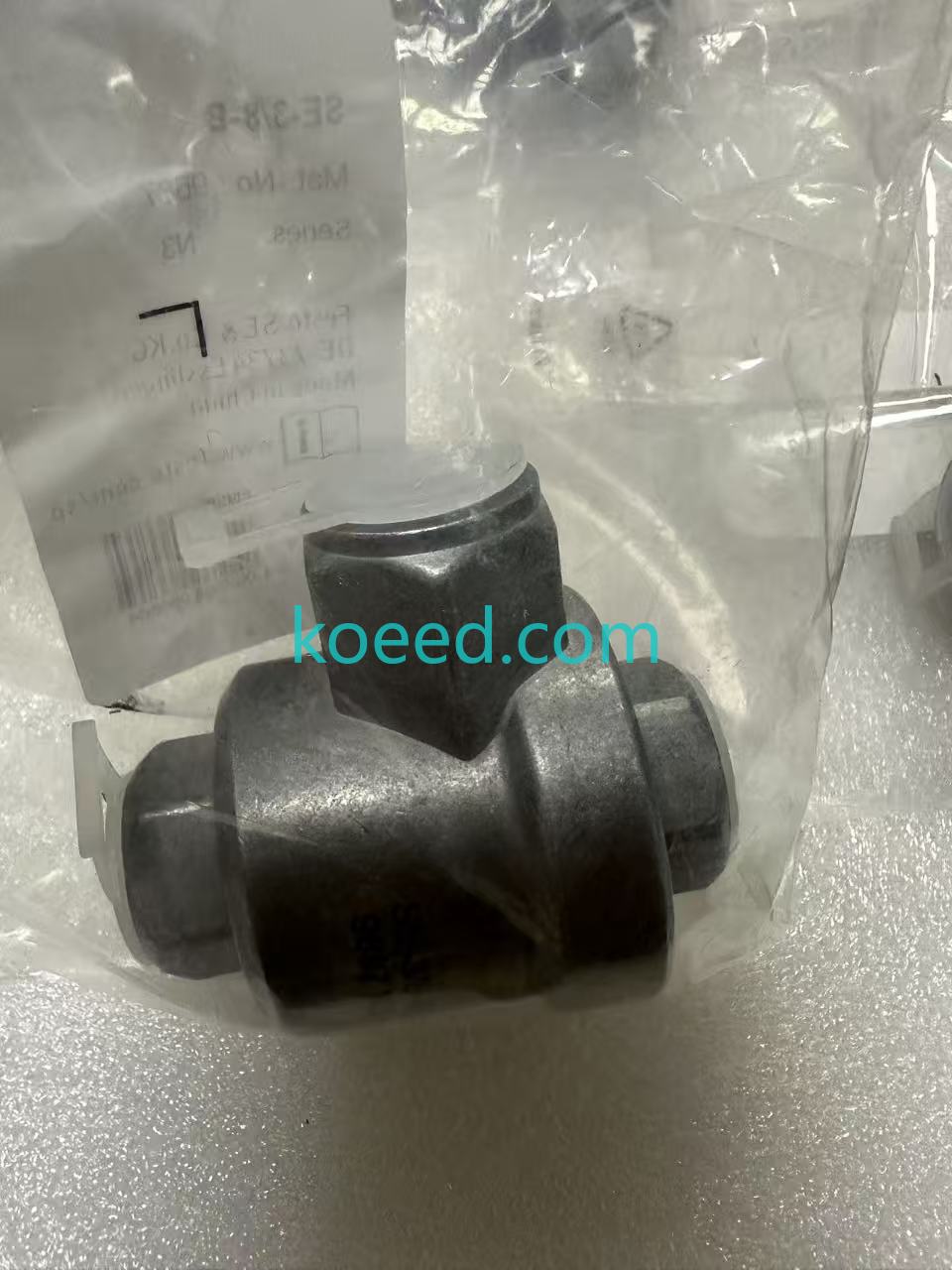
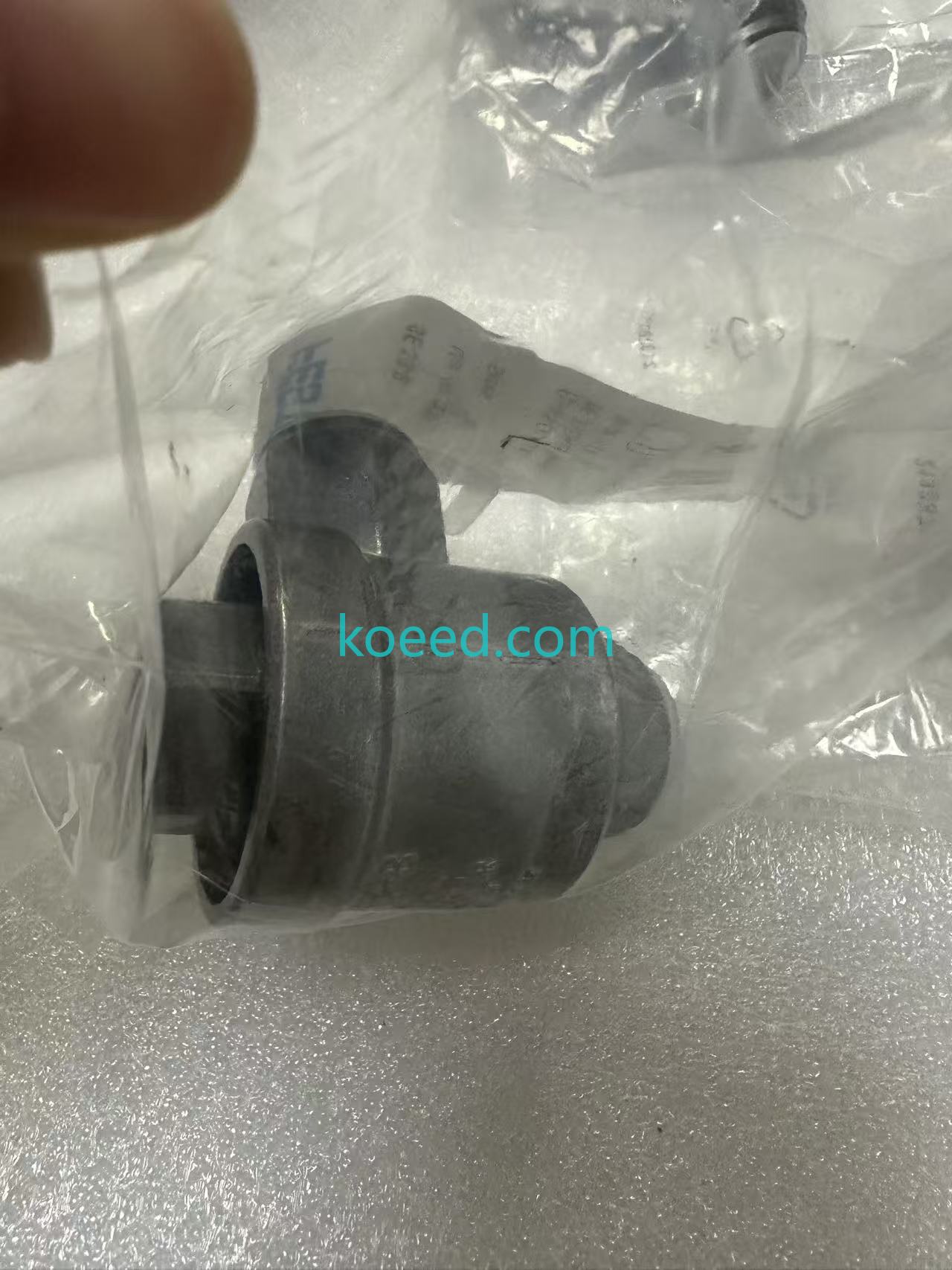
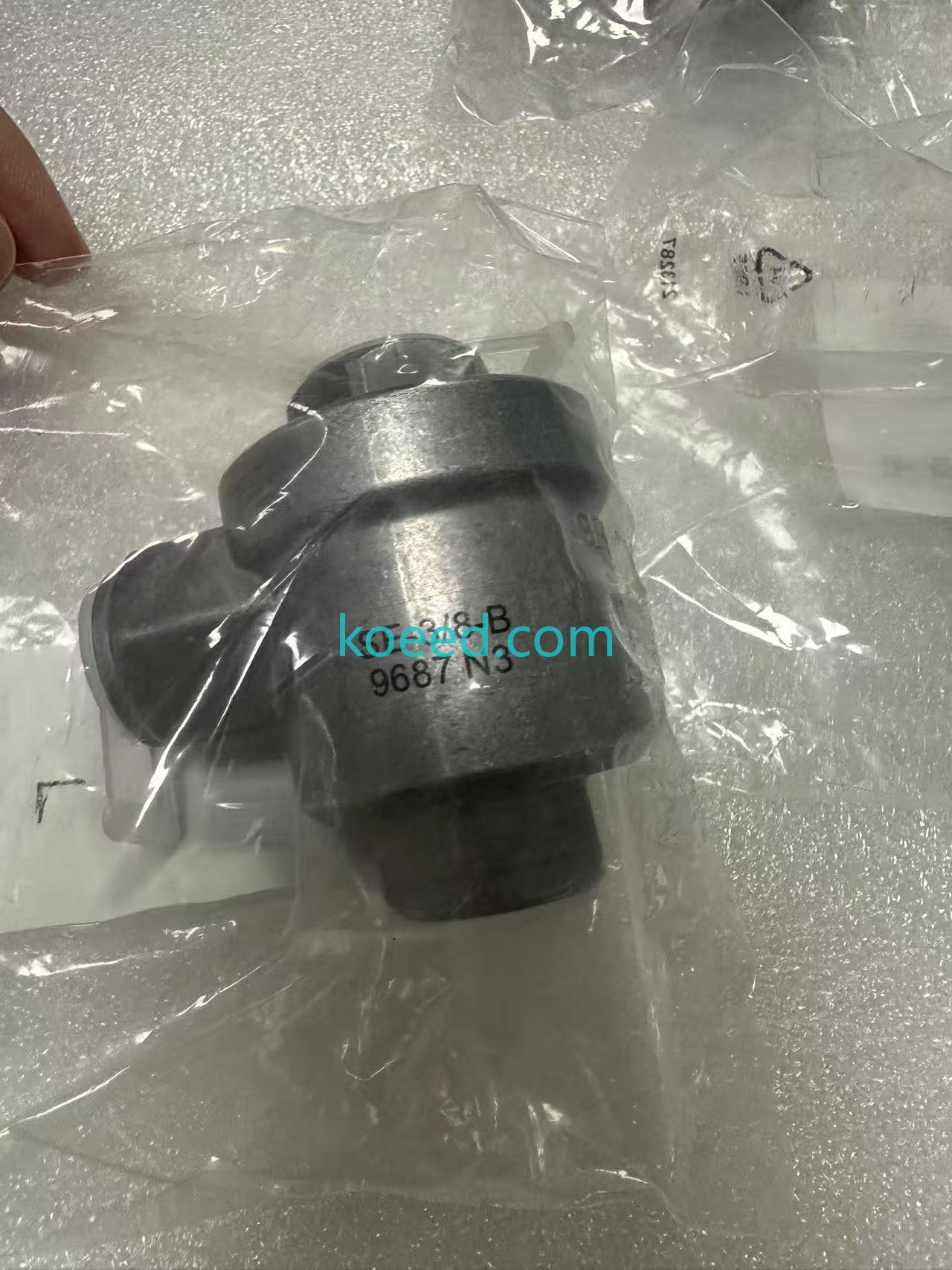
Visual Gallery: Inspection Reference for the 9687 Quick Exhaust Valve
Use these reference images during goods-in inspection, seal replacement, and dimensional verification. Compare thread condition, body casting, and seal seating before installing any replacement unit.
ROI, TCO & Sustainability: The 2026 Business Case
A quick exhaust valve is a low-cost component with an outsized financial signature. The value does not come from the part — it comes from the seconds it removes from every stroke, multiplied by every station, on every shift, for years.
Cycle-Time Payback
On a Ø50 mm cylinder with 300 mm stroke, direct exhaust venting can reduce retract time appreciably versus a throttled return path. At 20 cycles/min, even a few hundred milliseconds compounds into meaningful capacity release — often recouped in output, not capital.
Energy & Air Efficiency
Lower back-pressure means the compressor works against a smaller differential. Multiply 2,760 l/min of unimpeded exhaust across a plant and the compressed-air energy intensity drops — a directly reportable sustainability metric.
Component Longevity
Reduced back-pressure also limits heat build-up and seal hammering in the cylinder, extending rod seal and piston seal life. Fewer rebuilds, less downtime, lower spare-parts consumption.
Procurement Simplicity
One stable part number (9687) with a widely recognised Festo footprint. Straightforward fast-ship availability removes the main TCO risk in MRO: waiting.
Installation Best Practices for Maximum Performance
- Mount close-coupled to the cylinder port. Every centimetre of tubing between the valve and the cylinder adds dead volume and re-introduces the back-pressure you are trying to eliminate. The SE-3/8-B should sit directly on, or immediately adjacent to, the actuator port.
- Use the port as a full-flow port. Never fit a flow control or silencer with an undersized passage on the exhaust side; you will throttle away the valve's 2,760 l/min advantage.
- Direction matters. Respect the flow arrow / port marking. Supply enters the inlet, the cylinder connects to the outlet, and the exhaust vents to atmosphere.
- Keep exhaust media clean. Use filtered supply air. Particulate ingress is the number-one cause of seal leakage in shuttle-type valves.
- Do not over-torque. Seal the thread with a suitable sealing method for G-threads and torque to sensible shop-air practice — die-cast aluminium does not tolerate brute force.
- Account for noise. Direct venting is loud. Fit a correctly sized silencer or central exhaust ducting that does not restrict flow, and stay within local noise regulations.
- Record the installation. Log the mounting date and cycle counter in your asset system so condition-based maintenance can be triggered by duty, not by guesswork.
Pro-Tip — The Two-Minute Leak Test: After installation, pressurise the system and spray a 5% soap solution on the exhaust port. A single slow-forming bubble means the shuttle disc is not fully seating — usually a contaminated seal or a supply pressure that is too low to bias the disc. Continuous bubbling into the exhaust is normal only while the cylinder is extending; bubbling at rest indicates leakage.
Maintenance & Troubleshooting: Fault-to-Fix Reference
Diagnosing a quick exhaust valve does not require a lab. It requires a pressure gauge, a stopwatch, and a logical sequence. Use the table below to isolate faults fast.
| Symptom | Probable Root Cause | Corrective Action |
|---|---|---|
| Cylinder retracts slowly despite valve fitted | Restriction downstream — undersized silencer, kinked tubing, or clogged exhaust port | Remove and inspect exhaust fittings; replace with full-bore silencer; verify tubing is not pinched |
| Continuous air leak from exhaust port at rest | Shuttle disc not seating — NBR seal worn, swollen, or contaminated | Isolate branch, depressurise, inspect seal; replace with Festo-rated seal kit or fit a new 9687 unit |
| Erratic cylinder speed or stalling mid-stroke | Insufficient supply pressure to bias the shuttle (below 0.2 bar minimum) | Check regulator setting and upstream valve flow; confirm system pressure stays within 0.2–10 bar envelope |
| Slow hesitation before the stroke starts | Supply line dead volume or upstream valve crossover | Move valve closer to the cylinder; verify directional valve is not restricted |
| Audible chatter or hammering | Pressure fluctuation at the supply side causing shuttle oscillation | Stabilise supply with a local regulator or small accumulator close to the circuit |
| Premature seal failure | Unfiltered air, oil carry-over, or ambient temperature beyond -20 °C to +75 °C | Service the filter unit; correct lubrication regime; relocate valve away from heat sources |
| Corrosion or pitting on body | Condensate in the air line, moist environment | Install a dryer/water separator upstream; replace affected valve with a new sealed unit |
Predictive Maintenance Signals to Watch in 2026
If your lines are instrumented, treat these three signals as early-warning indicators that the SE-3/8-B needs attention:
- Rising branch air consumption at constant cycle rate — almost always an exhaust-side seating leak.
- Drifting cylinder retract time — progressive restriction or seal degradation, detectable long before a line stop.
- Increasing compressor duty cycle without output change — a plant-wide leak signature that often traces back to worn quick exhaust valves and cylinder seals.
Interactive FAQ: Festo SE-3/8-B (9687)
Is the SE-3/8-B the same as a shut-off or throttle valve?
No. A shut-off valve simply stops flow. A throttle or flow-control valve deliberately restricts flow to slow motion. A quick exhaust valve is an automatic, pressure-actuated shuttle whose entire purpose is to dump the cylinder chamber directly to atmosphere as fast as possible. It adds speed rather than removing it.
Can I install the 9687 with a silencer without losing performance?
Yes — provided the silencer is correctly sized for the exhaust flow. The valve's advantage comes from its 2,760 l/min exhaust capacity and 11 mm nominal width. A silencer with an undersized passage or a clogged element will negate that benefit. Inspect and replace sintered silencer elements as part of scheduled maintenance.
Which cylinder sizes is the G3/8 version best suited to?
The 9687 typically pairs with ISO 15552 cylinders in the Ø32 mm to Ø63 mm band, and with similarly sized compact and short-stroke actuators. For very small actuators, step down to the SE-1/8-B (9685) or SE-1/4-B (9686); for large bores, step up to the SE-1/2-B (9688).
Does a pneumatic quick exhaust valve create issues with modern electronic valve manifolds?
No. The SE-3/8-B sits downstream of the control valve, in the pneumatic circuit. It is agnostic to whether the solenoid is hard-wired 24 V DC or commanded over EtherCAT, PROFINET, or EtherNet/IP. It simply reads supply pressure and responds mechanically.
What is the operating temperature limitation?
The valve is rated from -20 °C to +75 °C for both ambient and media. Below -20 °C, NBR seals harden and sealing integrity is compromised; above +75 °C, seal ageing accelerates rapidly. In high-temperature zones, relocate the valve or reconsider the seal material specification.
How do I verify a genuine replacement unit before fitting?
Confirm the part number marking (SE-3/8-B / 9687), the G3/8 thread form, the die-cast aluminium body quality, and the seating of the NBR seal. Reference photos and availability for the genuine fast-ship unit are listed on the Festo SE-3/8-B 9687 product page.
Specify the SE-3/8-B (9687) Into Your 2026 Maintenance Budget
Whether you are releasing capacity on an existing packaging line, standardising spares across multiple cells, or building a predictive-maintenance spare strategy around a stable Festo part number — the SE-3/8-B delivers measurable cycle-time and air-efficiency gains for a fraction of the cost of new motion hardware. Get pricing, quantity breaks, and technical confirmation from our automation team today.
Request a QuoteChat on WhatsApp
View the exact fast-ship unit: 1PCS Festo Quick Exhaust Valve SE-3/8-B 9687 – Fast Ship


