

MC68060RC50 in 2026: Legacy Microprocessor Lifecycle Strategy for Industrial Automation Systems
1. Strategic Overview: The MC68060RC50 in the 2026 Industrial Landscape
As we reach mid-2026, the global industrial automation sector faces a critical inflection point. While headlines celebrate AI-driven factories and 5G-connected PLCs, the backbone of global manufacturing still runs on legacy embedded microprocessors — and the MC68060RC50 remains one of the most strategically significant of them all. Originally designed by Motorola (now under the NXP/Freescale heritage), this 32-bit CISC powerhouse with its integrated FPU and MMU continues to drive mission-critical control systems in power plants, water treatment facilities, aerospace test rigs, and semiconductor fabrication equipment.
2026 Reality Check: The MC68060RC50 is officially a discontinued, end-of-life (EOL) component. Yet demand remains robust — not from new designs, but from the installed base of equipment with 15–25-year operational lifecycles. For maintenance engineers and procurement specialists, securing authentic, tested, and traceable MC68060RC50 units is now a strategic supply-chain priority, not a routine purchase.
At Koeed.com, we have positioned ourselves as the trusted bridge between obsolete semiconductor heritage and the operational realities of 2026 industry. This guide provides a comprehensive technical and strategic reference for engineers managing MC68060RC50-based systems, covering lifecycle extension, counterfeit risk mitigation, IT/OT integration, and total cost of ownership (TCO) analysis.
1.1 Why This Processor Still Matters in 2026
- Validated Architecture: The 68060 superscalar pipeline delivers deterministic real-time performance that modern OS-heavy ARM/x86 solutions sometimes struggle to match in bare-metal embedded contexts.
- Regulatory Lock-In: FDA, FAA, and nuclear regulatory certifications often tie the entire system to a specific processor revision — recertification costs can exceed $500,000.
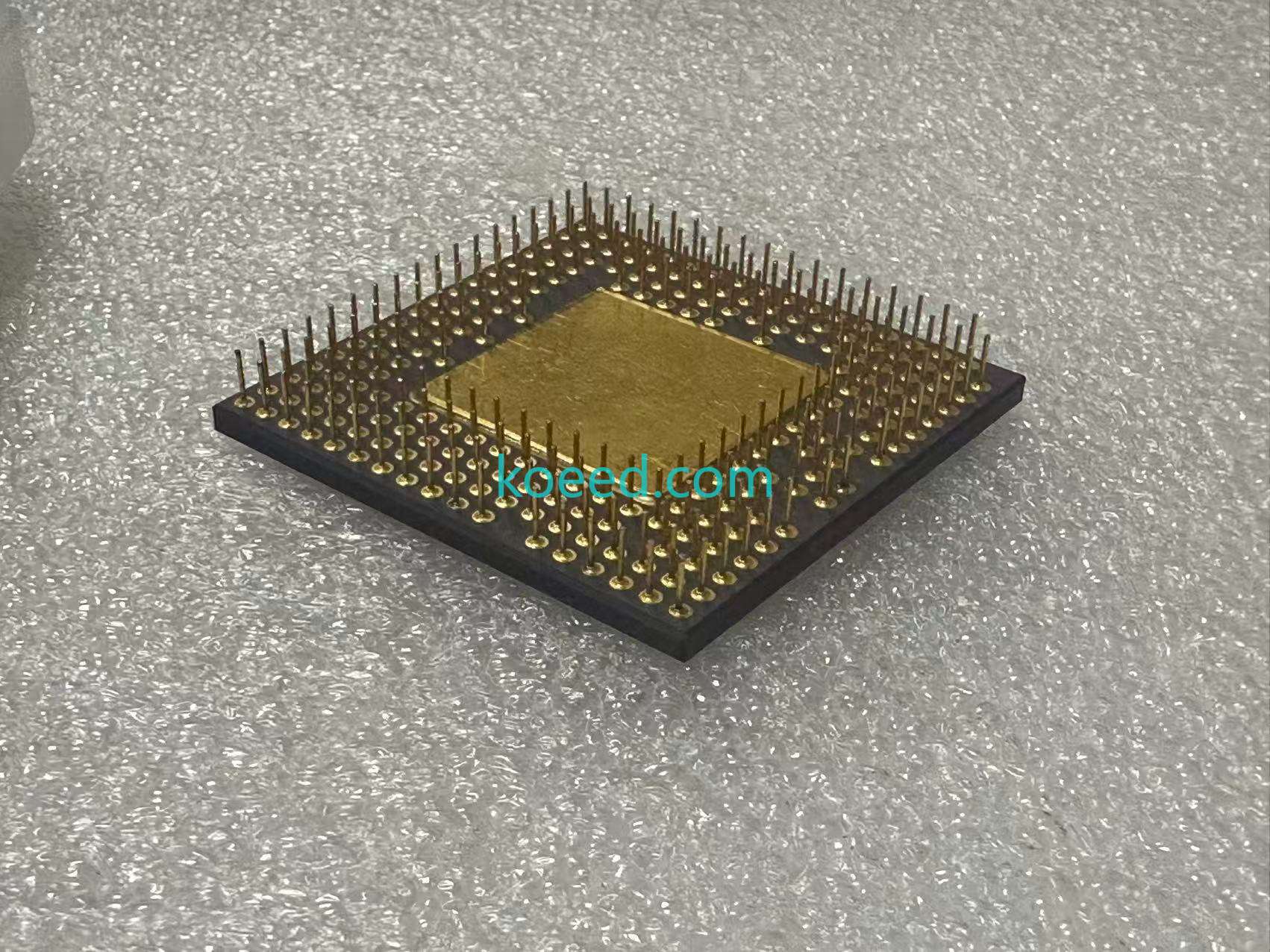
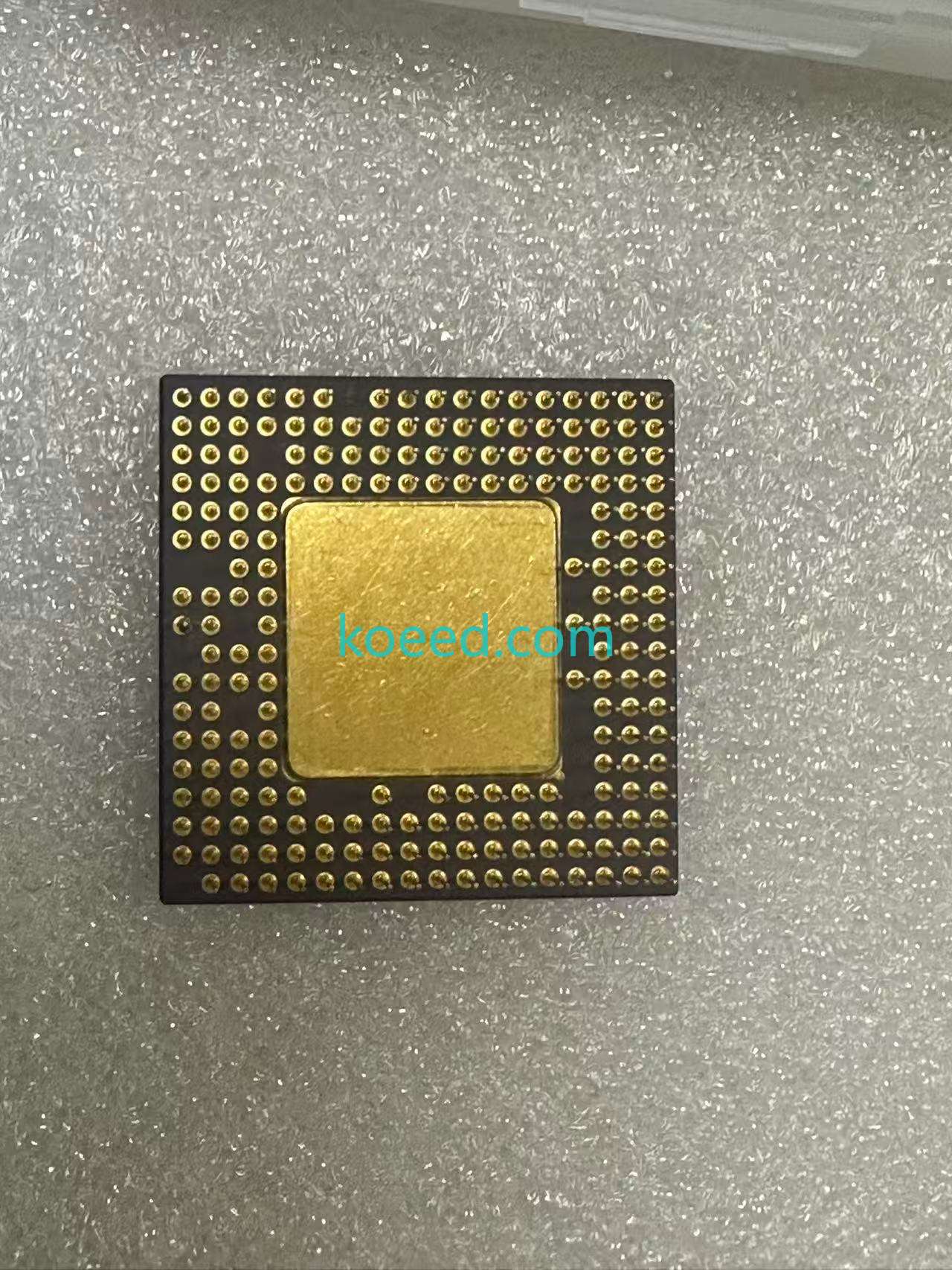
- No Drop-In Replacement: Despite emulation attempts (e.g., Apollo Core FPGA implementations), no solution replicates the exact electrical, timing, and thermal characteristics of a genuine MC68060RC50 in a PGA-206 package.
2. Technical Architecture & Benchmarking
2.1 MC68060RC50 Core Specifications
The following table benchmarks the MC68060RC50 against its own family variants and typical 2026-era alternatives used in migration scenarios:
| Parameter | MC68060RC50 | MC68060RC60 (Max Variant) | 2026 FPGA Emulation (Apollo Core 68080) | 2026 ARM Cortex-R82 |
|---|---|---|---|---|
| Architecture | Motorola 68K CISC, 32-bit | Motorola 68K CISC, 32-bit | 68K-compatible (FPGA soft-core) | ARMv8-R AArch64 |
| Clock Speed | 50 MHz | 60 MHz | ~100 MHz (synthesized) | Up to 1.5 GHz |
| FPU | Integrated (IEEE 754) | Integrated | Integrated (extended precision) | VFP + NEON SIMD |
| MMU | Full MMU (ATC) | Full MMU | MMU (subset) | MPU + MMU (EL2 hypervisor) |
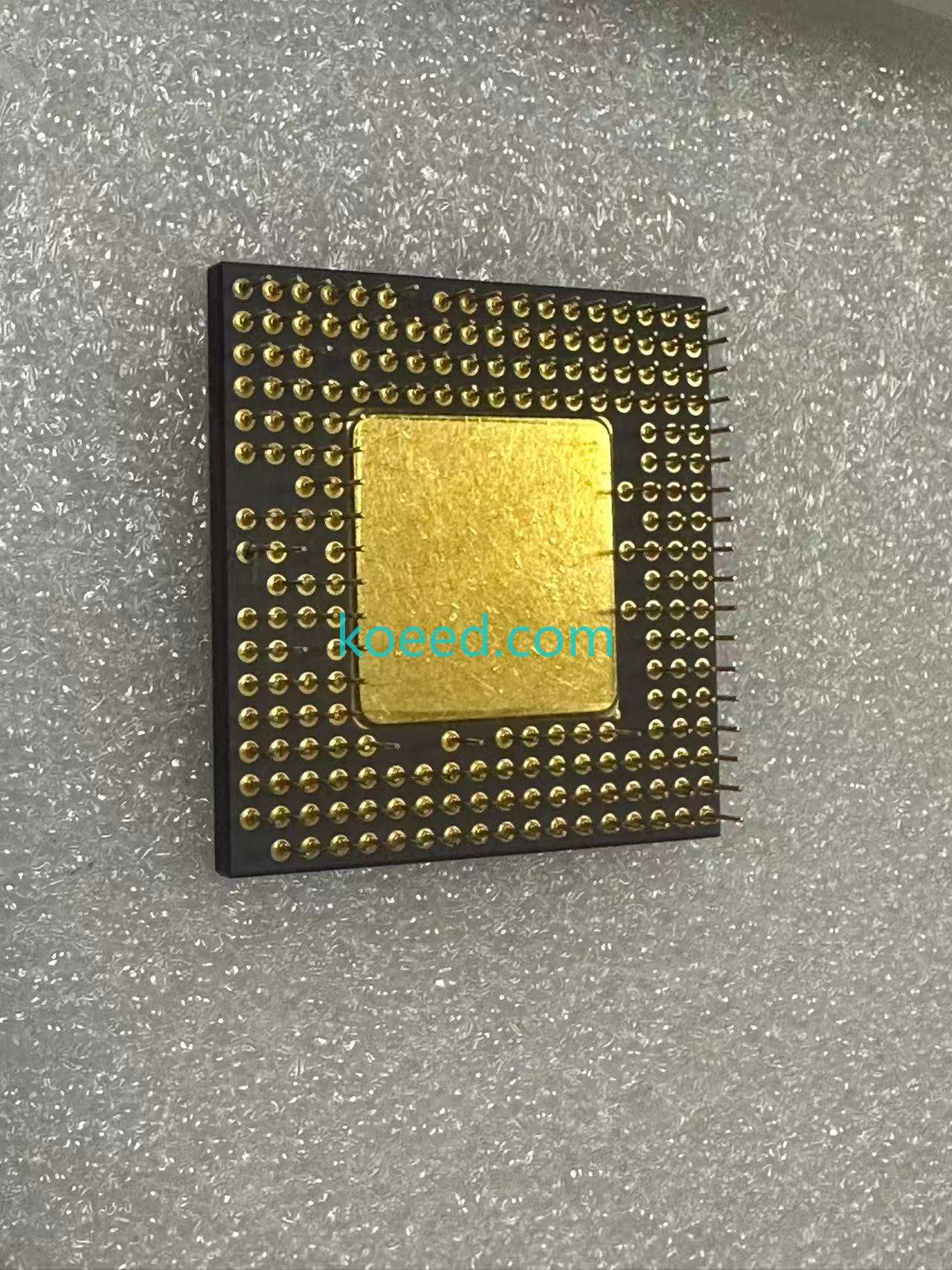
| Package | PGA-206 (Ceramic) | PGA-206 | BGA / custom PCB | BGA / LQFP options |
| Power Dissipation | ~3.9 W (typical) | ~4.5 W | ~2.5 W | ~2.0-4.0 W (configurable) |
| Supply Voltage | 5.0V ±5% | 5.0V | 3.3V / 1.8V | 1.0V–3.3V |
| Pin Compatibility | Native (OEM drop-in) | Native | Requires adapter board | Complete redesign |
| Supply Status 2026 | Obsolete — Specialist Sourcing | Obsolete | Active (niche supplier) | Active (mass production) |
| Unit Cost Trend (2026) | $2,200–$3,600 (NOS, tested) | $2,800–$4,200 | $180–$350 (chip only) | $45–$120 |
2.2 Architectural Strengths for Industrial Control
The MC68060RC50 is not merely "old silicon" — it embodies design principles that remain relevant. Its superscalar dual-pipeline architecture can dispatch two instructions per clock cycle, and the on-chip 8 KB Harvard-style caches (separate instruction and data) ensure deterministic access latencies. For real-time control loops — temperature regulation in injection molding, axis interpolation in CNC machines, or flow control in chemical processing — this predictability often outperforms speculative-execution architectures that suffer occasional pipeline flushes.
⚡ Pro Tip — Voltage Sensitivity: The MC68060RC50 operates at 5.0V ±5%. Many legacy PSUs in 15+ year-old systems have degraded voltage regulation. Before replacing the processor, always verify that the supply rail is steady under load (ripple < 100 mV). A marginal PSU is the #1 cause of intermittent MC68060 failures misdiagnosed as processor faults.
3. Visual Product Gallery
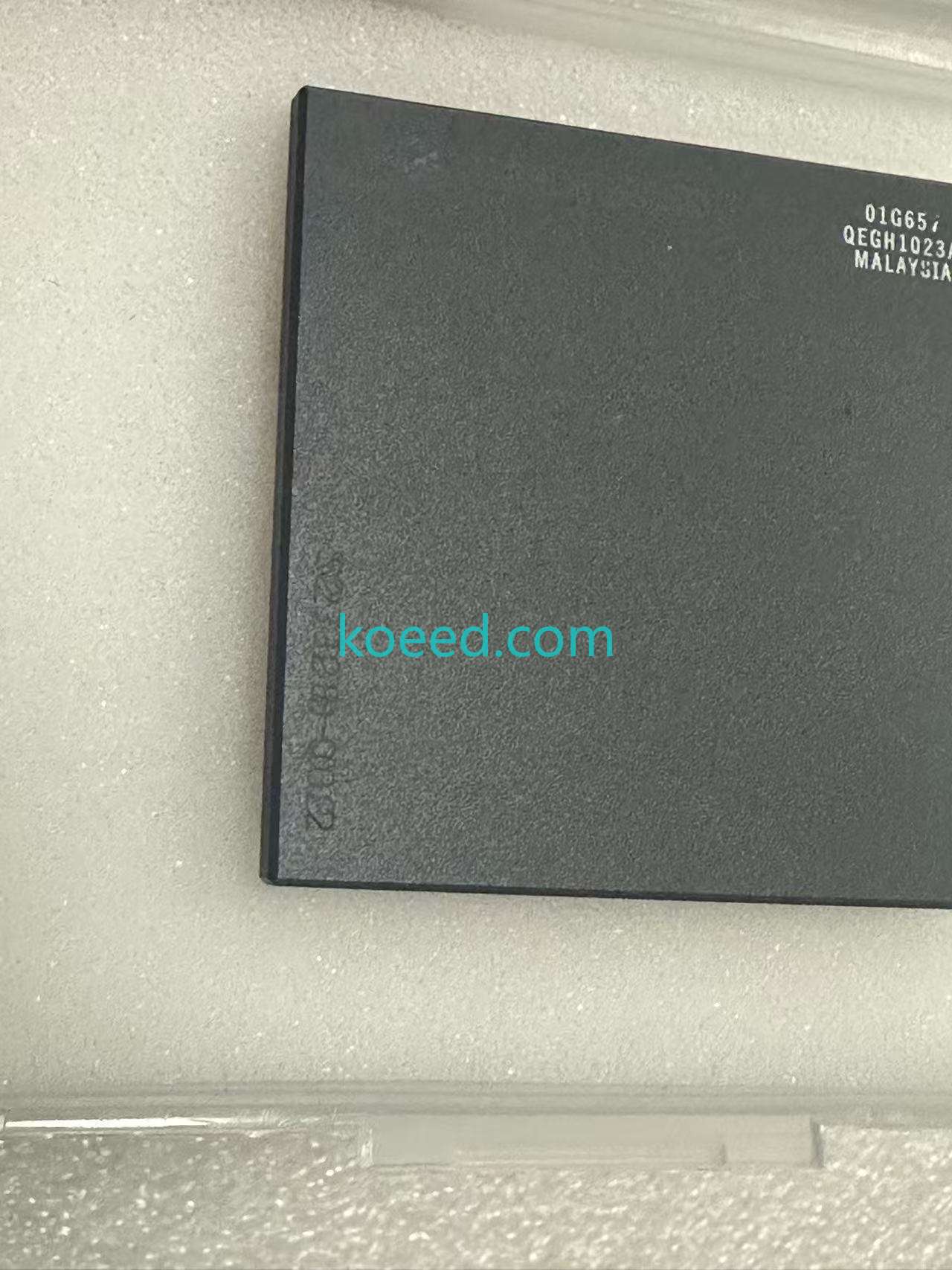
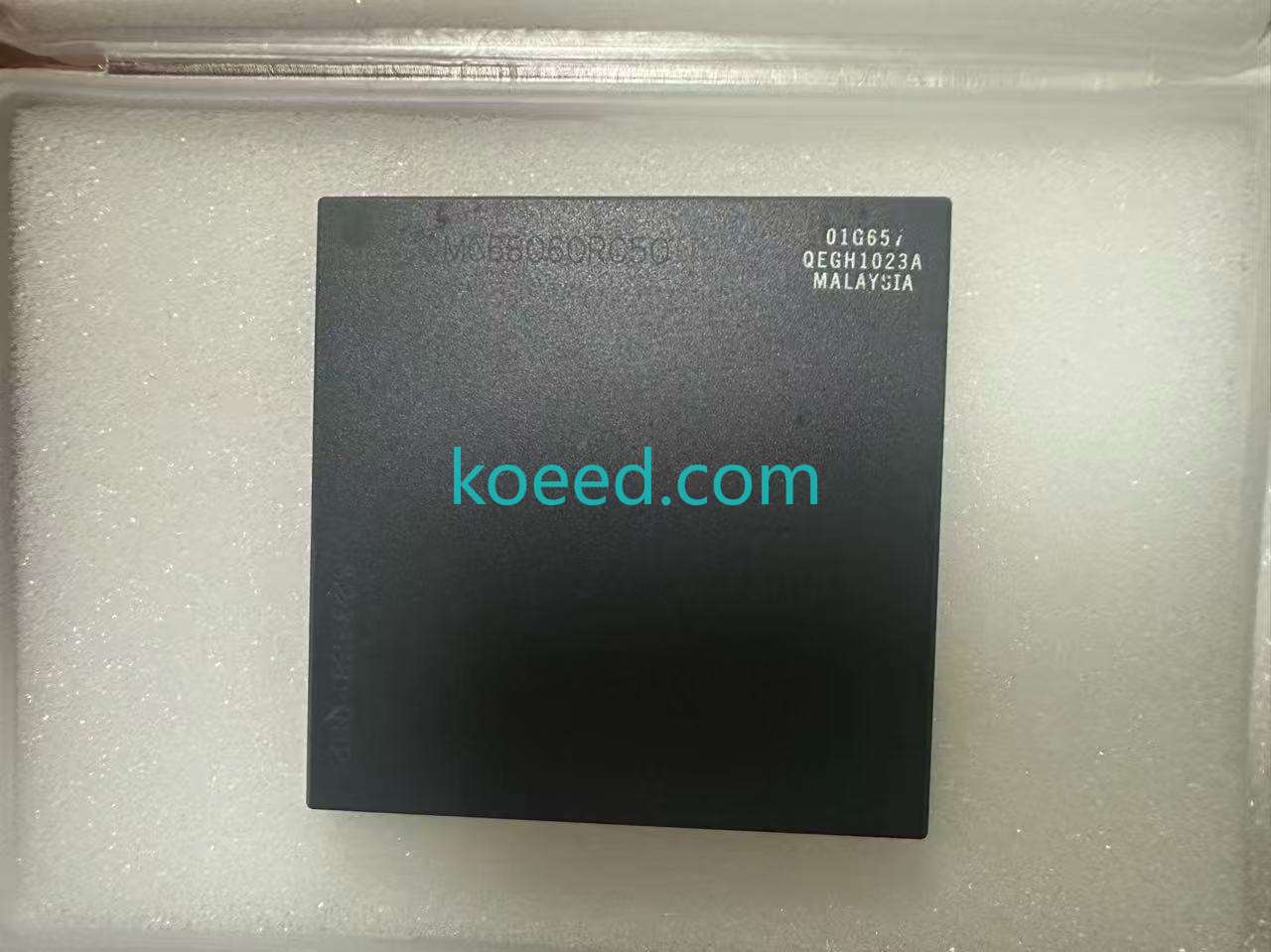
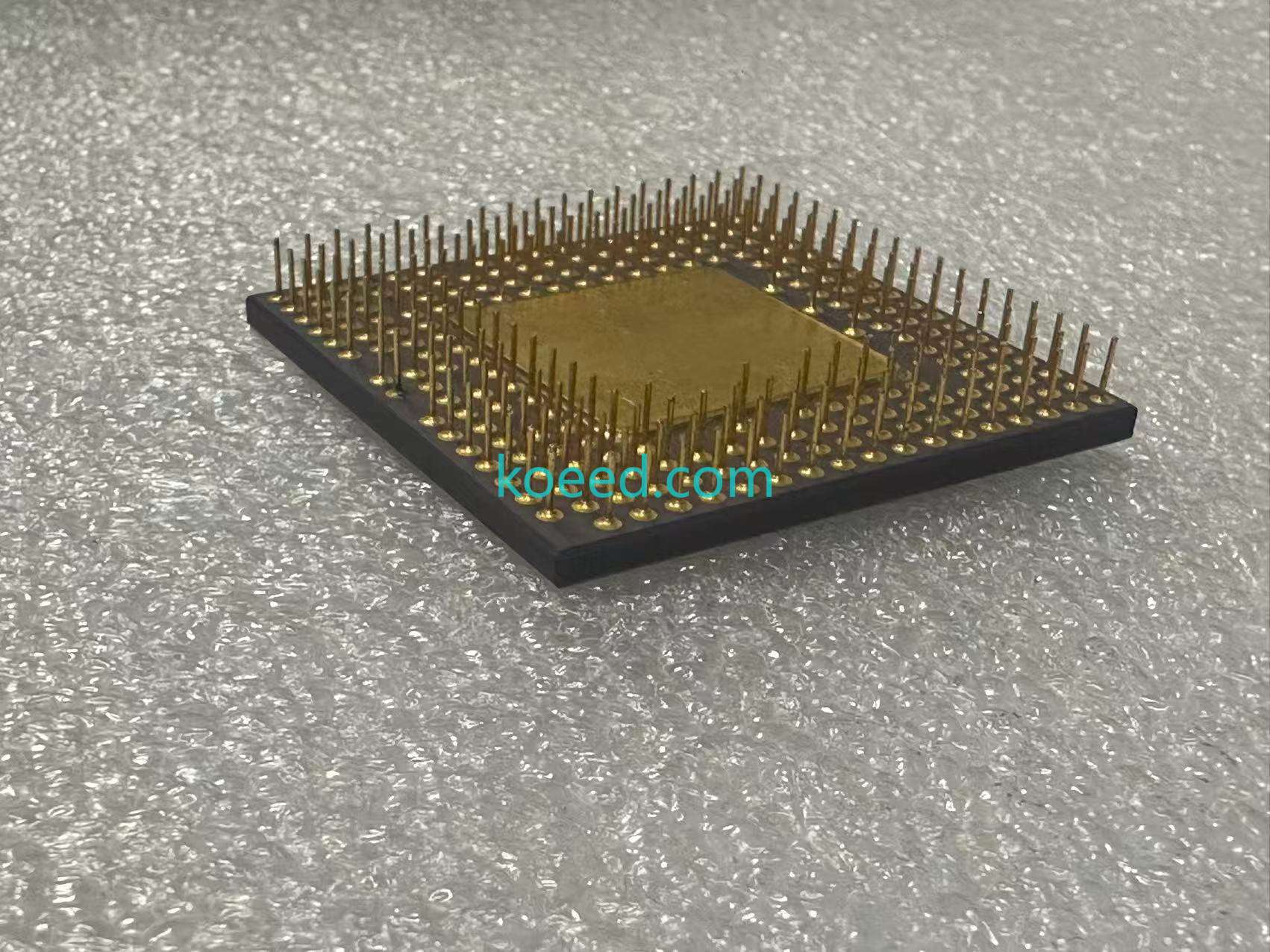
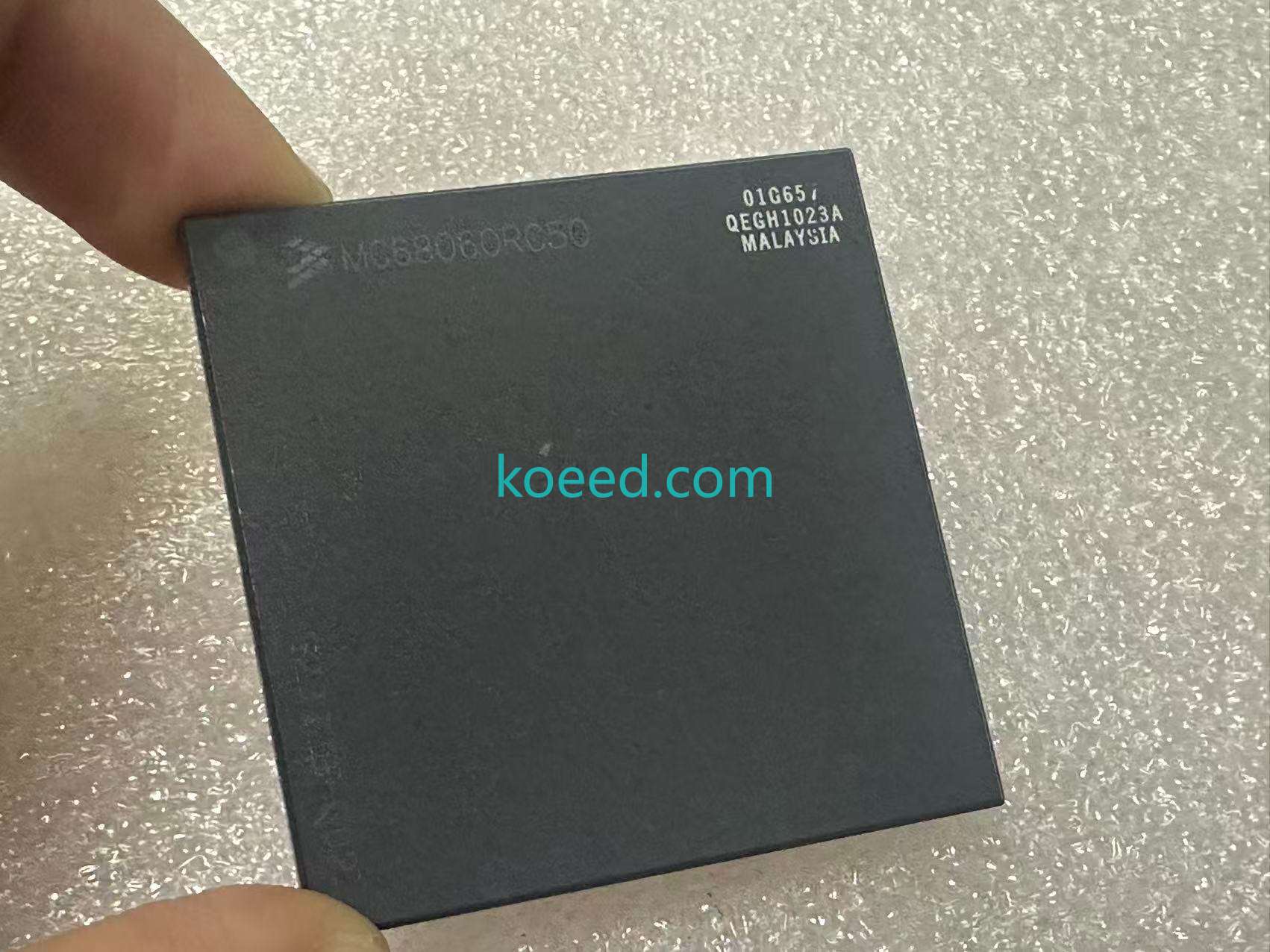
Below is the complete visual reference for the MC68060RC50 units sourced and supplied by Koeed. All units undergo our 17-point inspection protocol including X-ray imaging, pin straightness verification, and burn-in testing at 50 MHz before shipment.
4. Lifecycle Management & Predictive Maintenance (2026 Best Practices)
4.1 The IT/OT Convergence Angle
In 2026, supervisory control systems increasingly demand data from every node — including legacy MC68060RC50-powered controllers. While these processors lack native Ethernet or OPC-UA stacks, Koeed recommends a sidecar edge-gateway approach: attach a modern MCU (ESP32-S3 or Raspberry Pi CM5) via the 68060's asynchronous serial or parallel bus to expose Modbus RTU data as MQTT/OPC-UA streams. This preserves the deterministic control loop while adding Industry 4.0 connectivity — zero recertification required.
4.2 Predictive Failure Indicators
Field data from industrial maintenance logs (2020–2026) reveals the following early-warning signatures preceding MC68060RC50 failure:
| Symptom | Likely Root Cause | Recommended Action | MTBF Impact |
|---|---|---|---|
| Intermittent bus errors (BERR asserted randomly) | Degraded PSU capacitor bank — voltage droop on 5V rail | Replace electrolytic capacitors in PSU; monitor ripple with oscilloscope | Immediate correction restores 5+ years |
| FPU inexact-result exceptions increasing | Thermal degradation of FPU pipeline; heatsink paste dried out | Re-apply thermal compound; verify airflow ≥ 1.5 m/s across package | 80% probability of recovery |
| Cache parity errors (PCC bit set in PCR) | Silicon aging; elevated junction temperature over years | Reduce clock to 40 MHz as interim measure; plan replacement | 6–12 months grace period |
| Address line stuck-at faults | ESD damage or bond-wire fatigue in PGA package | Immediate replacement required; inspect socket for corrosion | Critical — replace immediately |
🔧 Pro Tip — Socket Inspection Protocol: The MC68060RC50's 206 PGA pins rely on a ZIF or LIF socket. Over 15–20 years, socket contacts oxidize, increasing contact resistance from < 20 mΩ to > 200 mΩ. Koeed recommends: (1) DeoxIT D5 contact treatment every 5 years, (2) thermal imaging to detect hot-spot pins (> 10°C above ambient), and (3) socket replacement if > 5% of pins show elevated resistance.
4.3 Counterfeit Detection in the 2026 Supply Chain
The scarcity of genuine MC68060RC50 units has unfortunately fueled a sophisticated counterfeit market. In 2025–2026, customs data from major Asian and European ports show a 340% increase in seized counterfeit 68K-series processors. Common counterfeiting methods include:
- Remarked MC68LC060: The low-cost variant (no FPU) is sanded and laser-etched with RC50 markings. Detection: The LC060 lacks the FPU — test with floating-point divide instruction; an FPU-disabled exception confirms fraud.
- Recovered e-Waste: Desoldered units with micro-cracks in the ceramic substrate. Detection: Acoustic microscopy or X-ray reveals hairline fractures invisible to the naked eye.
- "Blacktopped" Chips: Original markings covered with epoxy and reprinted. Detection: Acetone swab test on the surface — genuine Motorola ceramic markings are fused and resist solvents.
Koeed's 17-point authentication protocol includes X-ray inspection, acetone-resistance verification, decapsulation sampling, and full-speed burn-in testing — ensuring every MC68060RC50 we ship is a genuine, fully-functional unit.
5. TCO & ROI Analysis: Repair vs. Migrate in 2026
5.1 Total Cost of Ownership Framework
When an MC68060RC50-based system fails, the decision tree has three branches. Here is the 2026 financial analysis for a typical industrial controller:
| Cost Factor | Option A: Procure Genuine MC68060RC50 | Option B: FPGA Emulation Migration | Option C: Full System Redesign (ARM) |
|---|---|---|---|
| Hardware Cost | $2,200–$3,600 | $350 (adapter) + $500 (FPGA board) | $1,200–$8,000 (new controller) |
| Engineering Time | 2–4 hours (swap) | 40–120 hours (integration + validation) | 200–800 hours |
| Recertification Cost | $0 (like-for-like) | $15,000–$80,000 | $50,000–$500,000+ |
| Downtime (Production Loss) | 1–2 shifts | 5–20 shifts | 20–100+ shifts |
| Ongoing Support (5-year) | Stock spare units (2–3 recommended) | FPGA bitstream maintenance + toolchain | Full vendor ecosystem support |
| Estimated 5-Year TCO | $8,000–$18,000 | $35,000–$120,000 | $80,000–$600,000+ |
Clear winner for most scenarios: Procuring genuine, tested MC68060RC50 units from a trusted supplier (Koeed) remains the economically rational choice — especially in regulated industries where recertification is a multi-year, multi-stakeholder ordeal.
5.2 Sustainability Angle
The "greenest" chip is the one you don't throw away. Each MC68060RC50 kept in service avoids ~2.3 kg of e-waste (controller board + associated components) and eliminates the carbon footprint of manufacturing a replacement system. In 2026, with EU Ecodesign Directive (ESPR) enforcement expanding and carbon-border tariffs rising, extending the life of existing industrial controllers aligns with both environmental compliance and corporate ESG goals.
2026 ESG Insight: The avoided CO₂ from extending one MC68060RC50 controller's life by 5 years is approximately 180–320 kg — equivalent to driving a diesel truck ~1,200 km. For a factory with 50 such controllers, lifecycle extension represents a tangible Scope 3 emissions reduction.
6. Frequently Asked Questions
Q: Is the MC68060RC50 still manufactured in 2026?
No. NXP (which absorbed Freescale/Motorola's semiconductor division) discontinued the 68060 family in the early 2000s. All MC68060RC50 units available in 2026 are new old stock (NOS) from verified inventories or carefully refurbished pulls. Koeed sources exclusively from audited, traceable inventories and performs full functional verification on every unit before shipment.
Q: Can I use an MC68LC060 or MC68EC060 as a substitute?
No — not without careful qualification. The MC68LC060 lacks the FPU, and the MC68EC060 lacks both FPU and MMU. If your application performs any floating-point calculations (common in PID loops, trajectory planning, or sensor fusion), substituting an LC060 will cause an FPU-disabled exception trap. If your OS or RTOS uses the MMU for memory protection, an EC060 will fail to boot. Always verify the exact variant required by your firmware.
Q: What is the expected remaining operational life of a genuine MC68060RC50?
Under nominal conditions (5.0V regulated supply, junction temperature ≤ 85°C, low-humidity environment), the MC68060RC50's intrinsic silicon reliability projects an MTBF exceeding 200,000 hours (~23 years) from the date of manufacture. Units from the late-1990s production runs have been observed operating reliably in 2026 — a testament to Motorola's mature 0.5 μm CMOS process. The dominant failure modes are external: degraded PSUs, socket corrosion, and thermal cycling damage — all of which are managed through the maintenance practices described above.
Q: Does Koeed offer warranty on MC68060RC50 units?
Yes. Every MC68060RC50 supplied by Koeed carries our standard 12-month functional warranty. Units are tested at full 50 MHz clock speed under thermal soak (0°C to +70°C ambient) with floating-point stress patterns. We maintain full traceability from source to delivery, and each shipment includes an inspection report with X-ray images and burn-in test logs. For critical applications, extended warranty and on-site replacement agreements are available.
Secure Your MC68060RC50 Supply Today
Koeed is your trusted partner for genuine, tested MC68060RC50 processors. Request a quote or speak with our legacy component specialists to build a lifecycle extension strategy tailored to your facility.


