

Chint NXC-32 AC Contactor (2026 Edition): The Definitive B2B Guide to 32A Motor Control, Predictive Maintenance & IT/OT Convergence
1. Strategic Overview: Why the NXC-32 Defines 32A Contactor Excellence in 2026
As industrial facilities accelerate their digital transformation journeys through 2026, the humble AC contactor has evolved from a simple electromechanical switch into a critical node in the IT/OT convergence architecture. The Chint NXC-32 32A AC contactor exemplifies this evolution—delivering the rugged reliability that motor control centers demand while integrating seamlessly with modern smart-factory ecosystems.
Designed to IEC/EN 60947-4-1 standards and rated for 32A with AC-3 duty at 400V, the NXC-32 sits in the sweet spot for medium-scale motor control applications. Whether you are equipping an HVAC compressor bank, retrofitting a packaging line, or building out a warehouse automation system, the NXC-32 offers the compact footprint, wide coil voltage range, and extended mechanical lifespan that 2026's lean manufacturing operations demand.
2026 Market Insight: With global warehouse automation spending projected to exceed $36 billion this year (LogisticsIQ, Q2 2026), the NXC-32's role in conveyor motor starters, palletizer controls, and automated storage/retrieval systems has never been more critical. Its IP20 finger-safe enclosure and modular auxiliary contact configuration make it the go-to choice for panel builders facing compressed delivery schedules.
2. Technical Benchmarking: NXC-32 Specifications vs. Legacy Alternatives
When evaluating the Chint NXC-32 against previous-generation 32A contactors or competing models, the data tells a compelling story. Below is a structured comparison that procurement and engineering teams can use for vendor-agnostic benchmarking in 2026.
2.1 Core Electrical & Mechanical Specifications
| Parameter | NXC-32 (2026 Standard) | Legacy 32A Contactor (Typical) |
|---|---|---|
| Rated Operational Current (Ie, AC-3, 400V) | 32 A | 32 A |
| Rated Operational Voltage (Ue) | Up to 690 V AC | Typically 500 V AC |
| Motor Power Rating (AC-3, 400V) | 15 kW | 11–15 kW (model-dependent) |
| Main Pole Configuration | 3NO (3-Pole) | 3NO |
| Auxiliary Contacts (N Version) | 1NO + 1NC (built-in) | Side-mount add-on required |
| Coil Voltage Options | 24V, 110V, 127V, 220V, 380V, 415V (50/60Hz) | Limited range, often 220V/380V only |
| Mechanical Endurance | ≥ 5,000,000 operations | ~3,000,000 operations |
| Electrical Endurance (AC-3) | ≥ 800,000 operations | ~600,000 operations |
| Operating Temperature Range | -35°C to +70°C | -25°C to +55°C |
| Altitude (without derating) | ≤ 2,000 m | ≤ 1,500 m |
| Protection Degree | IP20 (finger-safe) | IP00–IP10 |
| Compliance Standard | IEC/EN 60947-4-1 | IEC 60947-4-1 (older edition) |
| Pollution Degree | 3 | 2–3 |
2.2 NXC-32 vs. NXC-32/N: Decoding the Variant
One of the most common questions from panel builders in 2026 concerns the difference between the standard NXC-32 and the NXC-32/N variant. The answer lies in the auxiliary contact configuration:
- NXC-32 (Standard): 3NO main poles only—ideal when all auxiliary signaling is handled externally or when space inside the panel is at an absolute premium.
- NXC-32/N (with Auxiliary): 3NO main poles + 1NO + 1NC built-in auxiliary contacts—recommended for 2026 installations where local status feedback to PLC/DCS or interlocking logic is required without adding side-mount auxiliary blocks.
3. IT/OT Convergence: Integrating the NXC-32 into the Smart Factory Stack
In 2026, the line between operational technology (OT) and information technology (IT) has blurred significantly. The NXC-32, while an electromechanical device at its core, plays a pivotal role in this convergence when deployed within a properly architected control system.
3.1 Coil Control via Smart Relay & Edge I/O
With coil voltage options spanning 24V DC through 415V AC, the Chint NXC-32 is compatible with virtually every PLC, DCS, and edge-I/O platform on the market. For 2026 greenfield projects, we recommend pairing the NXC-32/N (24V DC coil variant) with IoT-enabled smart relays that push contactor status data—including coil energization count, inrush current signature, and ambient temperature—directly to cloud-based asset management platforms via MQTT or OPC-UA.
3.2 Predictive Maintenance: Beyond Runtime Hours
Traditional maintenance schedules replaced contactors based on crude runtime-hour counters. In 2026, the NXC-32's generous mechanical endurance (5 million+ operations) becomes a data point in a broader predictive model. By monitoring:
- Coil current signature analysis: Detect armature wear or contamination before mechanical failure occurs.
- Contact bounce duration trending: An increase in bounce time signals impending contact degradation.
- Thermal imaging integration: Periodic IR scans of the NXC-32 under load can identify loose terminations or abnormal contact resistance.
This data-driven approach can extend service intervals by up to 40% compared to calendar-based replacement—translating directly into reduced downtime and lower total cost of ownership.
2026 Sustainability Angle: The NXC-32's conformally coated coil and RoHS-compliant materials reduce hazardous waste at end-of-life. Combined with its extended service life, a single NXC-32 unit deployed today may eliminate the need for 2–3 replacement contactors over a 15-year facility lifecycle—a material contribution to Scope 3 emissions reduction targets.
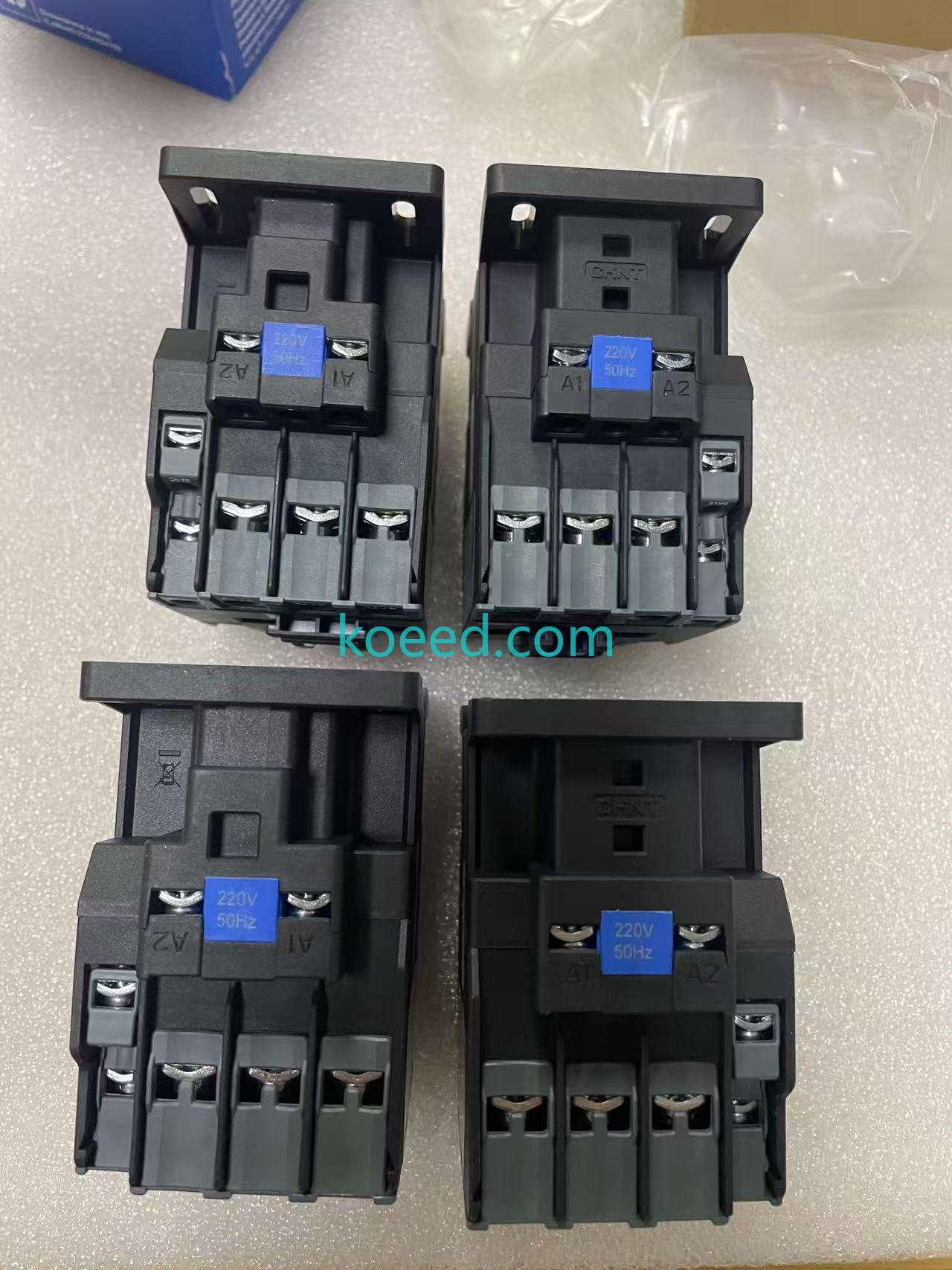
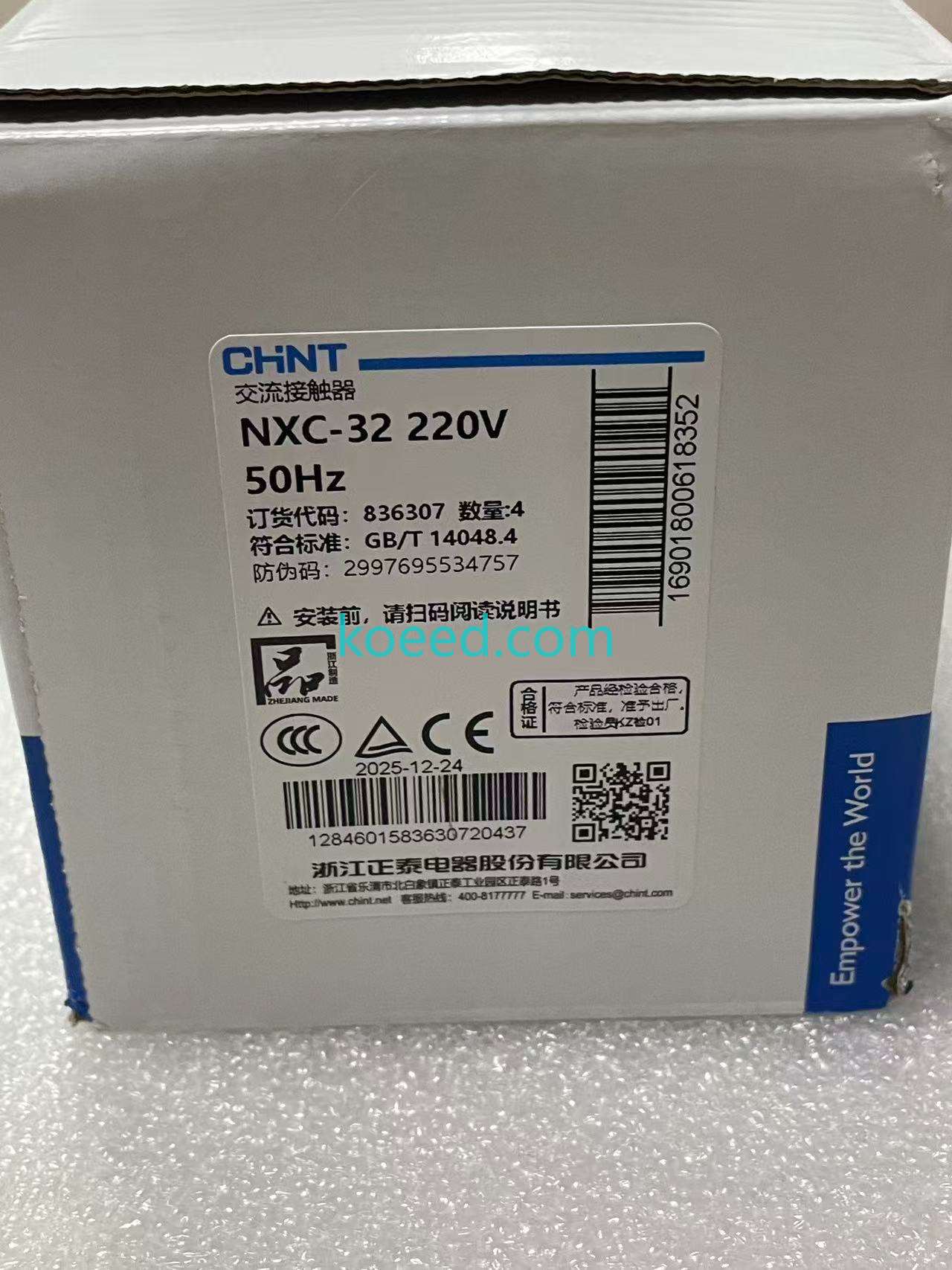
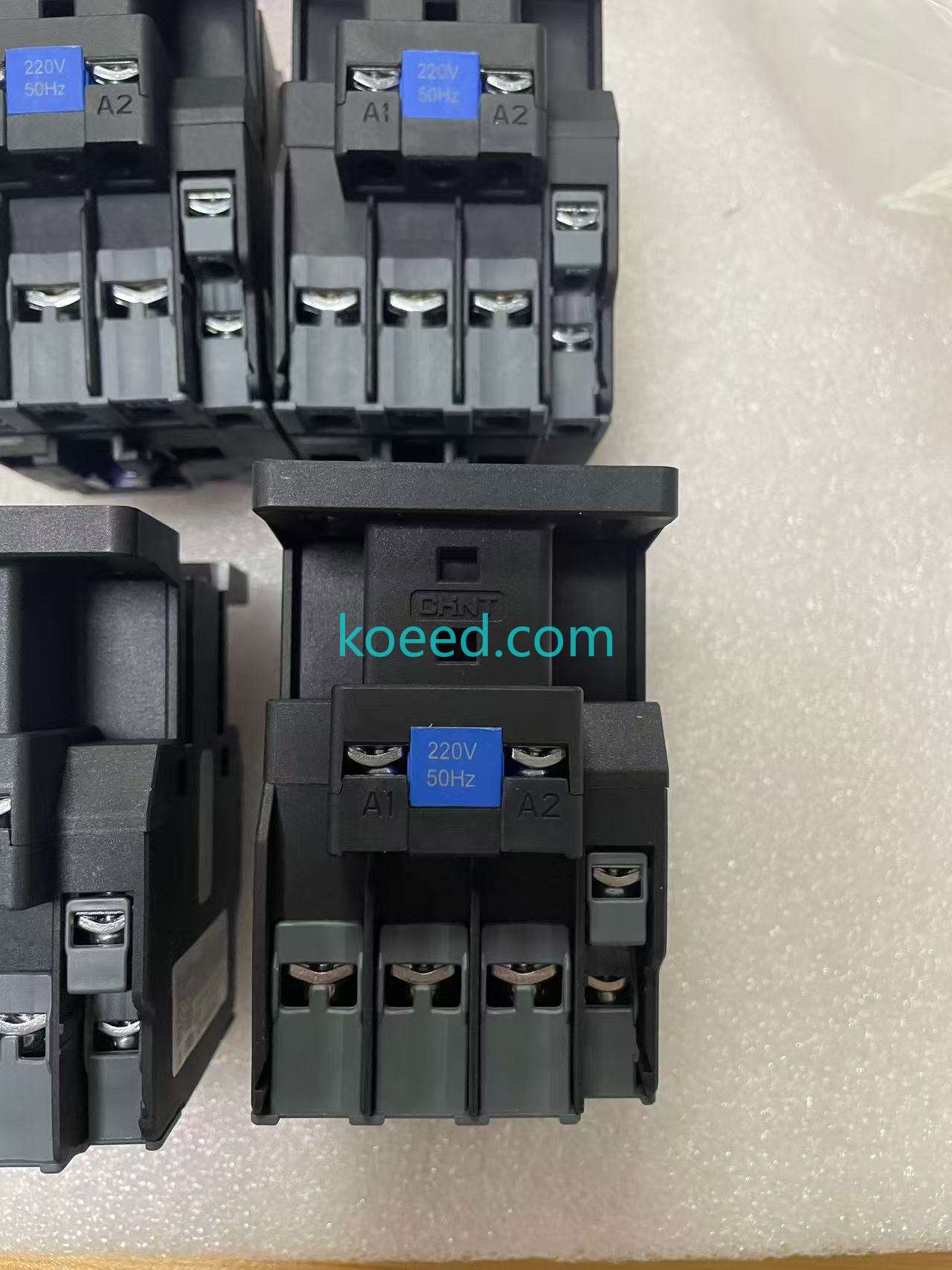
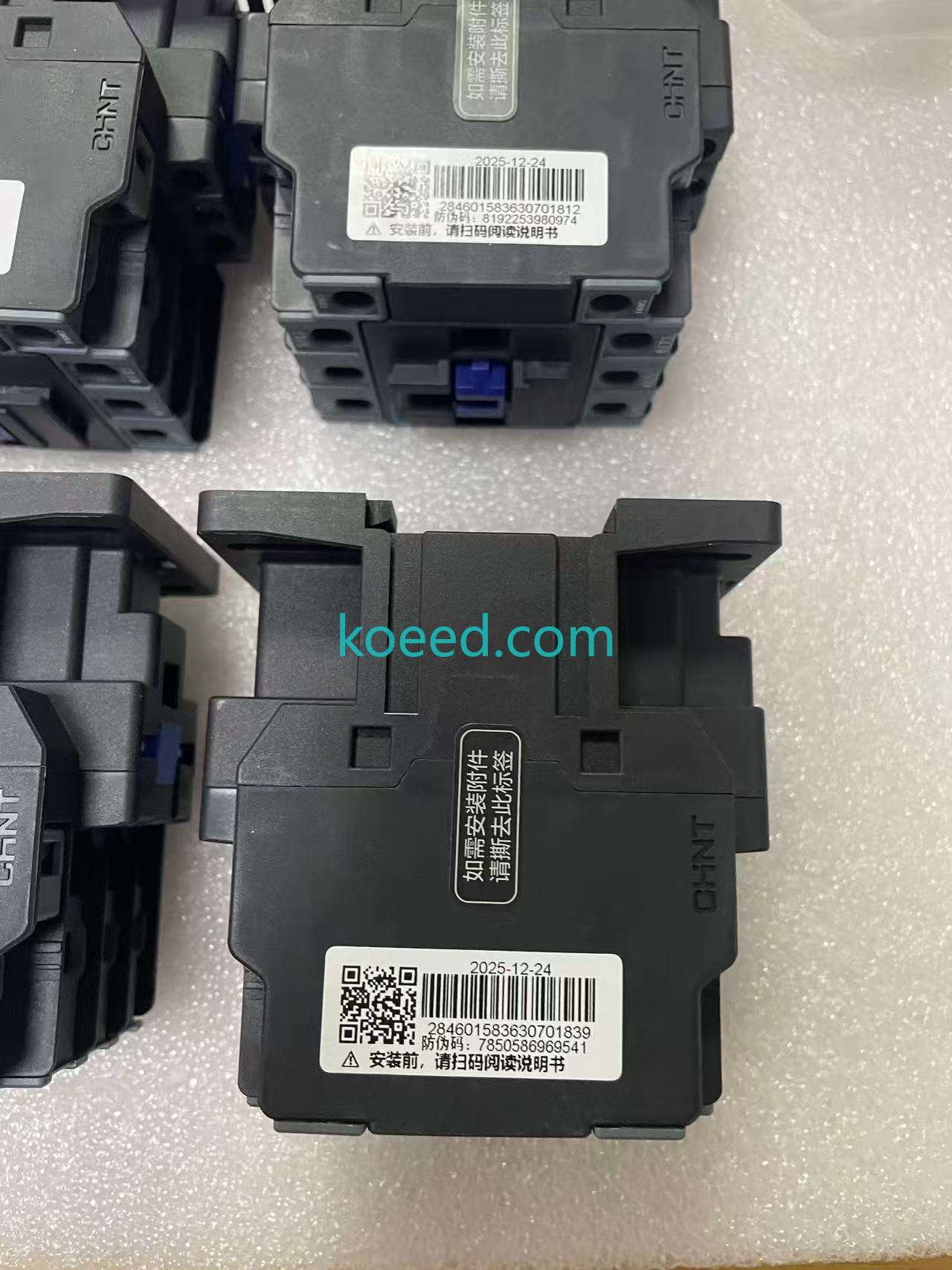
4. Visual Gallery: Chint NXC-32 Product Imagery
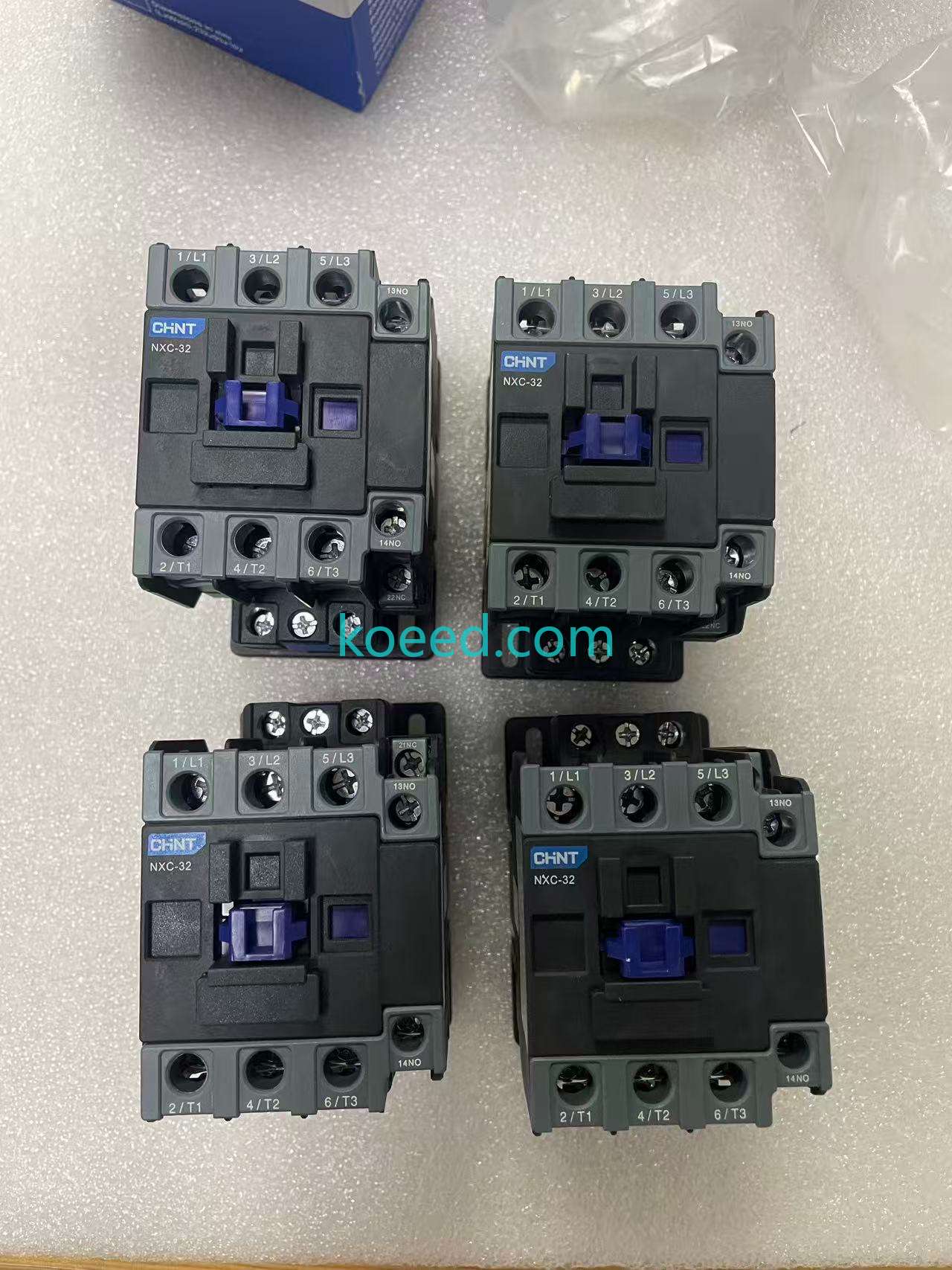
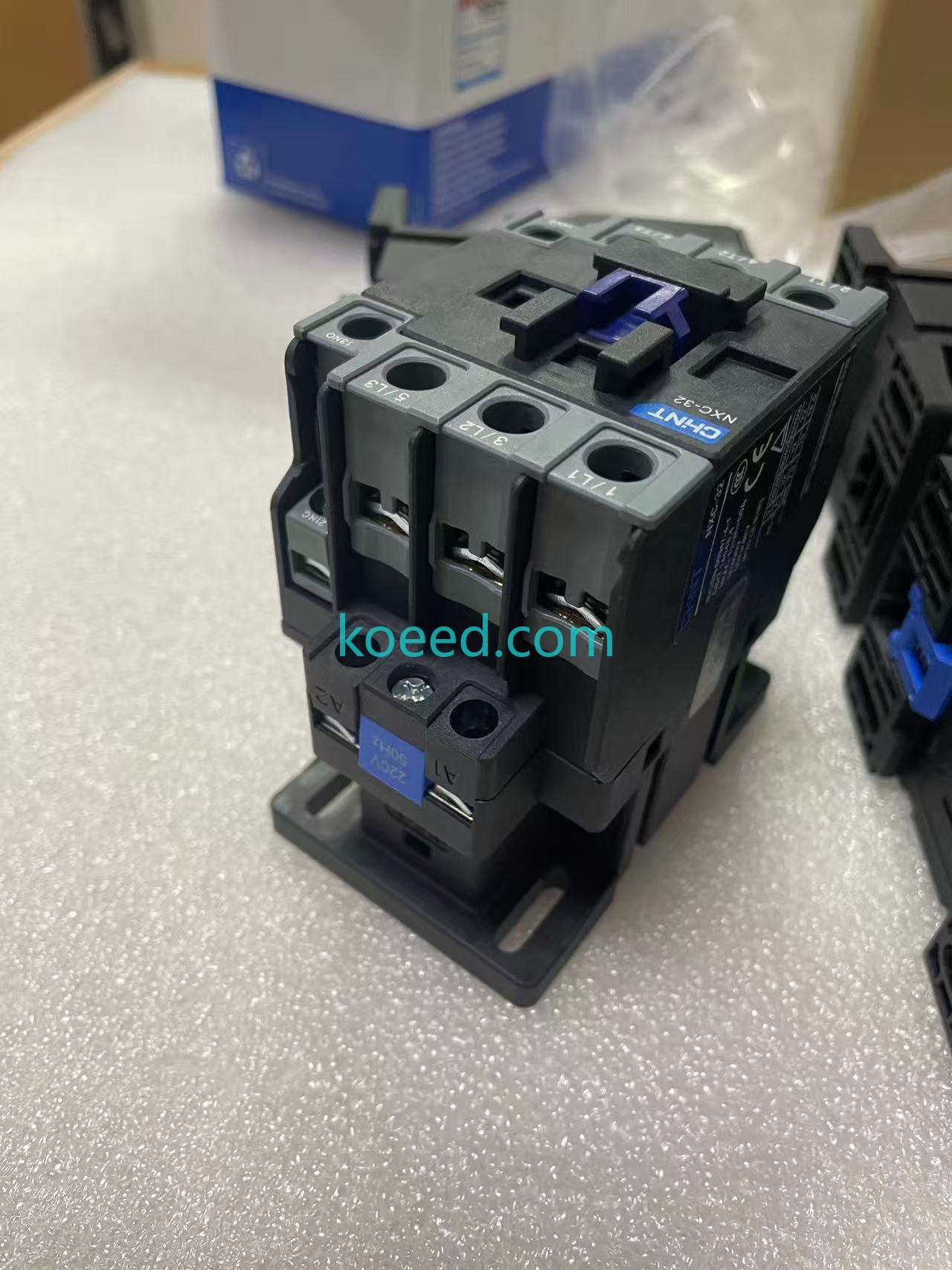
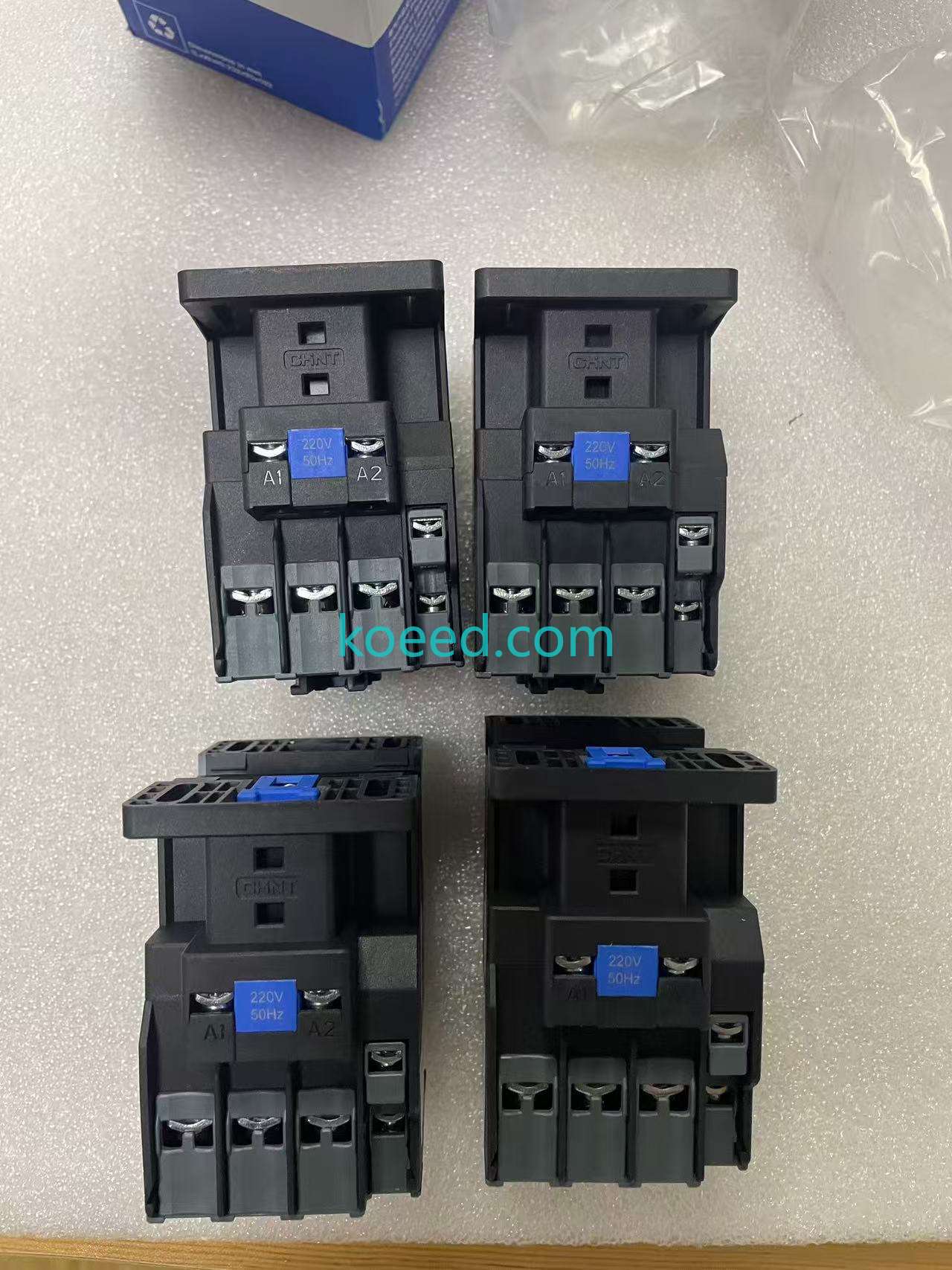
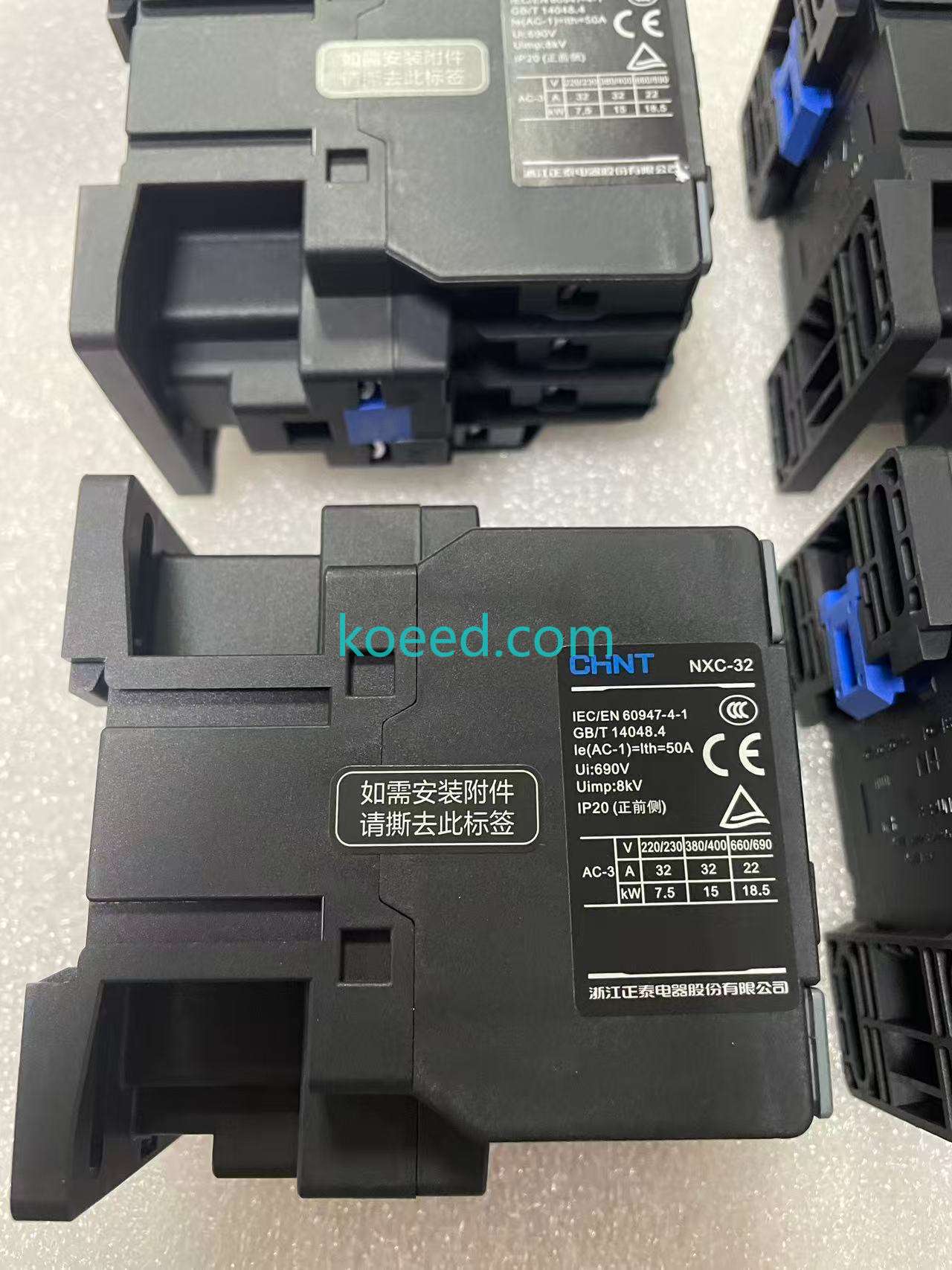
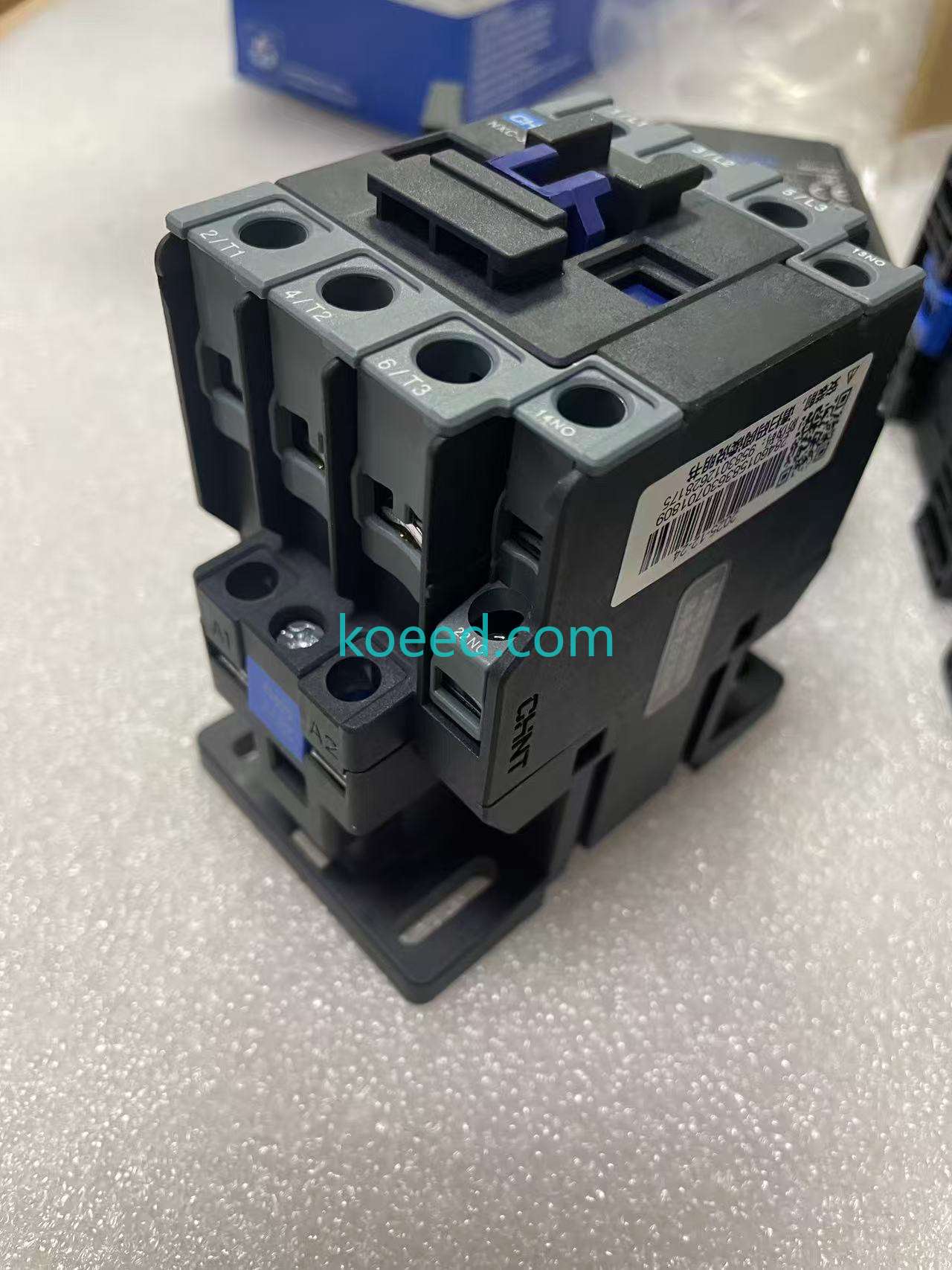
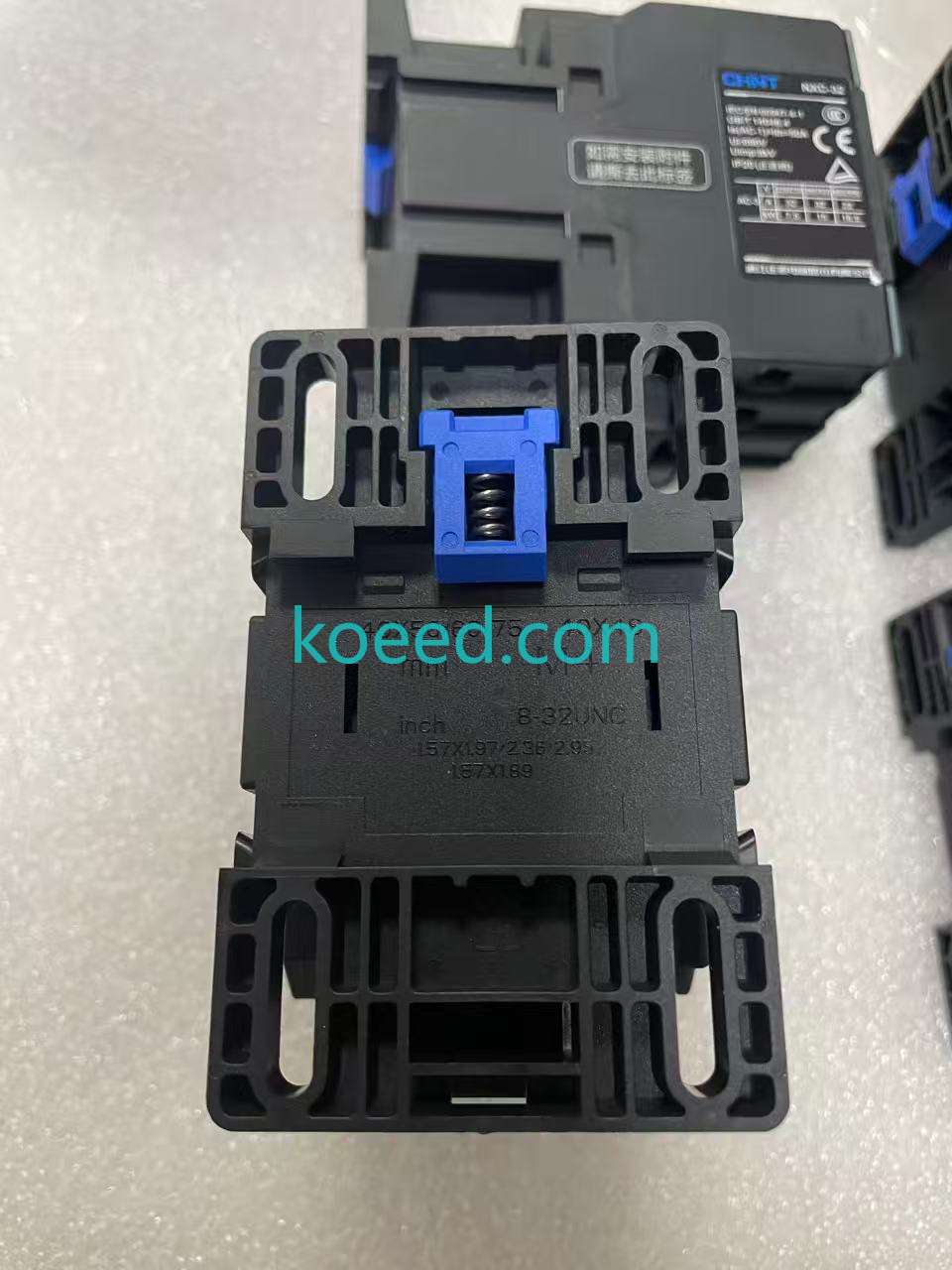
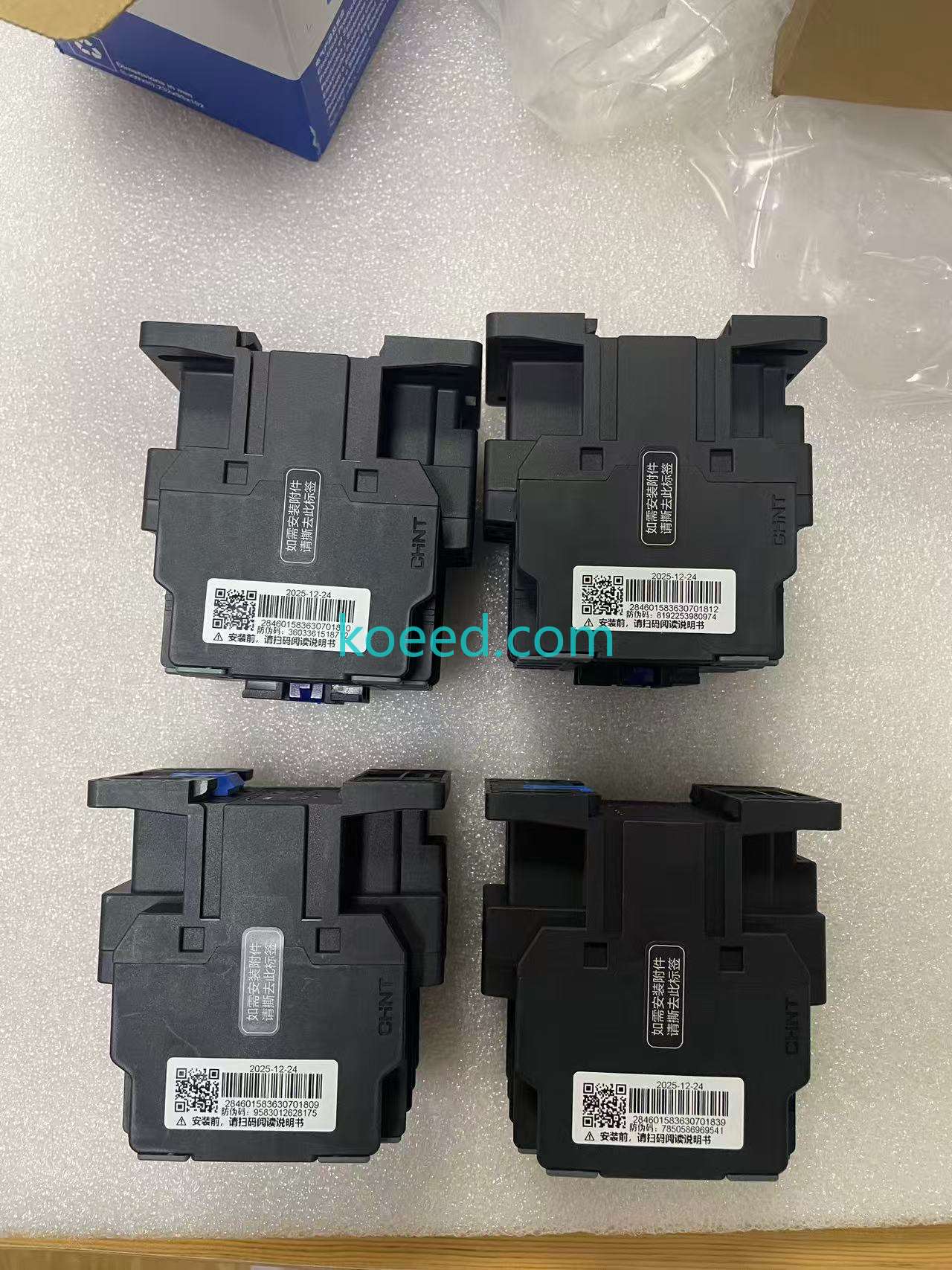
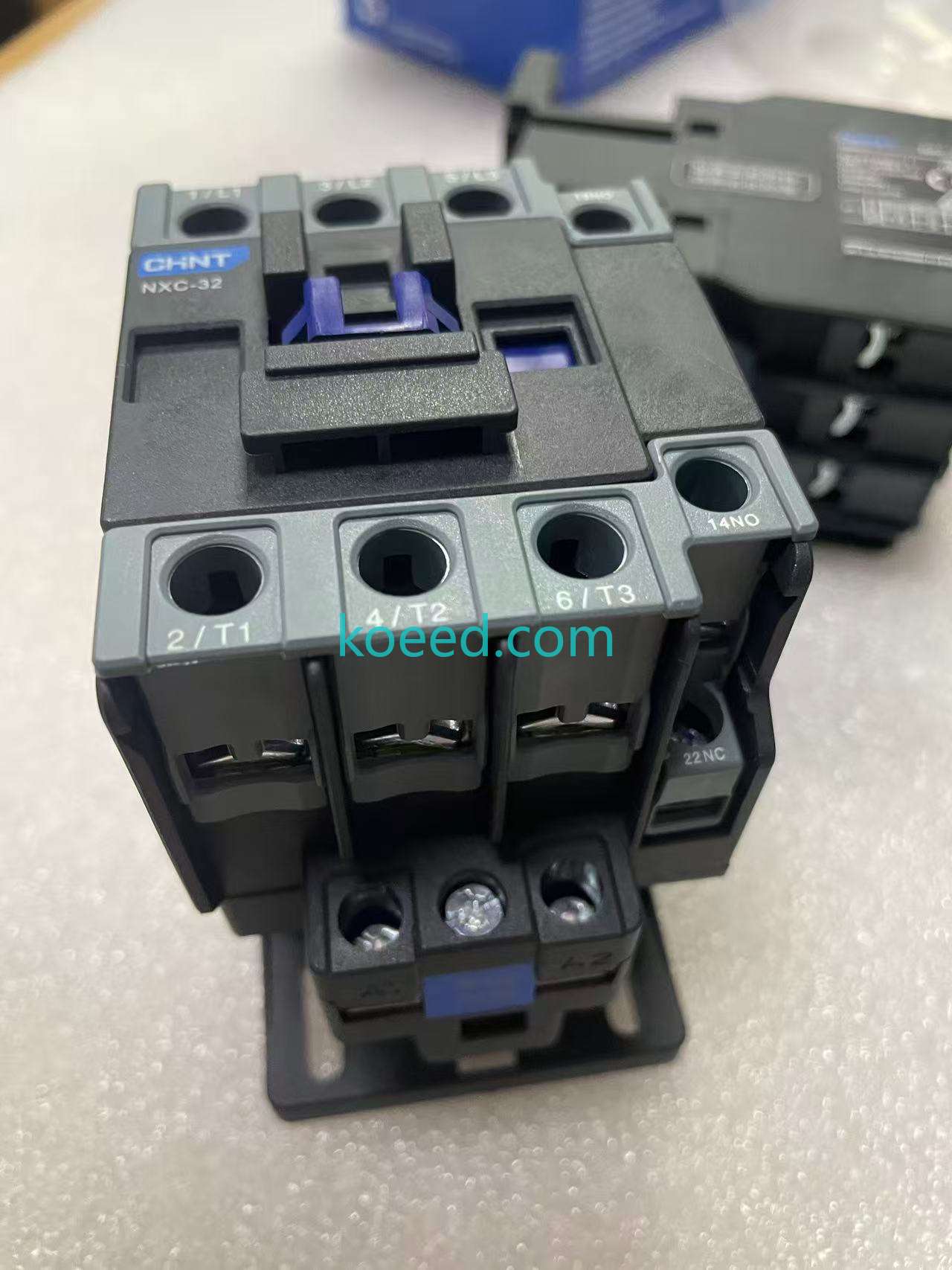
Below is a comprehensive visual reference of the Chint NXC-32 AC contactor, showcasing its compact form factor, terminal layout, labeling, and multi-angle views for engineering and procurement evaluation.
4.1 Product Demonstration Video
5. Installation, Maintenance & Troubleshooting Guide
5.1 Installation Best Practices (2026 Edition)
Proper installation of the NXC-32 directly impacts its 5-million-operation mechanical endurance rating. Follow these updated 2026 guidelines:
- Mounting Orientation: Mount on a vertical plane ±5° tolerance. Horizontal mounting degrades the armature's gravity-assisted return, reducing mechanical life by up to 30%.
- Terminal Torque: Main terminals: 2.5 N·m. Auxiliary terminals: 1.2 N·m. Use a calibrated torque screwdriver—under-torquing leads to thermal runaway; over-torquing strips the brass inserts.
- Coil Surge Suppression: For DC coils paired with PLC transistor outputs, always install a flyback diode or varistor across the coil. This protects the PLC output from inductive kickback voltages exceeding 1 kV.
- Spacing for Thermal Management: Maintain a minimum 15mm air gap between adjacent NXC-32 units when installed in enclosures without forced ventilation.
5.2 Common Troubleshooting Scenarios
| Symptom | Probable Cause | Resolution (2026 Protocol) |
|---|---|---|
| Contactor chatters / buzzes loudly | Low coil voltage (>10% below nominal); shading ring damage; armature face contamination | Measure coil voltage under load with a True-RMS multimeter. Inspect and clean pole faces with isopropyl alcohol. Replace if shading ring is cracked. |
| Contactor fails to close | Open coil circuit; control wiring fault; mechanical obstruction | Check coil resistance (should read between 30–300 Ω depending on voltage rating). Verify PLC output status via SCADA. Manually depress armature to rule out mechanical binding. |
| Overheating / thermal imaging hotspot | Loose terminations; contact erosion beyond allowable limits; ambient temperature exceeding +70°C | Torque terminals to specification (2.5 N·m main, 1.2 N·m auxiliary). Measure contact resistance with micro-ohmmeter (≤100 μΩ). Verify enclosure ventilation and ambient temperature. Replace contactor if contacts are severely eroded. |
| Contactor stays closed after coil de-energized | Welded contacts (overload or short-circuit); mechanical latch (if present) stuck; residual magnetism | Immediately isolate power. Check upstream protection coordination. Test for welded contacts by measuring continuity across open poles. Replace contactor and investigate root cause of overcurrent event. |
6. Frequently Asked Questions (FAQ)
Can I use the NXC-32 for DC motor loads?
The NXC-32 is designed for AC loads per IEC/EN 60947-4-1. For DC motor switching, consider CHINT's dedicated DC contactors or the NXC-D series. Using an AC-rated contactor on a DC load can lead to extended arcing times and premature contact welding. Always verify the utilisation category (DC-3, DC-5) before selection.
What is the recommended maintenance interval in a 24/7 operation?
With the NXC-32's 5 million mechanical operations endurance, calendar-based maintenance is no longer optimal. Instead, adopt condition-based monitoring: check coil current signature every 6 months via the edge gateway, perform thermal imaging annually, and visually inspect contacts if the operation counter exceeds 800,000 (electrical endurance limit). In a typical 24/7 conveyor application, this may translate to physical inspection every 3–5 years.
Are there any UL/CSA certifications for the NXC-32?
The standard NXC-32 carries CE marking and complies with IEC/EN 60947-4-1. For North American projects requiring UL/CSA listing, CHINT offers the NXC-32UL variant with identical ratings but fully UL 60947-4-1 certified. Contact Koeed for availability and lead times in your region.
Can I retrofit the NXC-32 into an existing panel designed for legacy contactors?
Yes, the NXC-32 follows standard DIN rail and panel-mount footprints common to most 32A IEC contactors. Its compact dimensions (approx. 45mm width) often free up panel space compared to older models. Always verify the coil voltage matches the existing control transformer, and ensure the short-circuit coordination with the upstream circuit breaker is re-evaluated per IEC 60947-4-1 Annex A.
7. Next Steps: Secure Your NXC-32 Supply for 2026 Projects
Ready to Upgrade Your Motor Control Chain?
Partner with Koeed for volume pricing, just-in-time delivery, and technical support on the complete Chint NXC series. Our 2026 inventory includes the NXC-32/N with 24V DC coils for seamless IT/OT integration.


