

MCC312-16Io1 Thyristor Power Module — 2026 B2B Buyer's Guide for Industrial Automation & Heavy-Duty Motor Control
Strategic Overview: The MCC312-16Io1 in the 2026 Power Electronics Landscape
As industrial automation accelerates toward full IT/OT convergence in 2026, the demand for robust, high-voltage power switching components has never been more acute. The IXYS MCC312-16Io1 — a dual thyristor module rated at 320A / 1600V — stands at the intersection of legacy reliability and modern smart-infrastructure readiness. Whether you are retrofitting a motor control center in a steel mill or deploying a new renewable-energy inverter stack, this module delivers the thermal resilience and electrical headroom that 2026's digitally monitored factory floors demand.
At koeed.com, the MCC312-16Io1 is available as new-in-box inventory, ready for immediate deployment in heavy-industry applications including AC/DC motor drives, soft starters, controlled rectifiers, and industrial heating systems. With global lead times for power semiconductors still averaging 16–24 weeks in mid-2026, verified stock availability becomes a strategic procurement advantage.
Why the MCC312-16Io1 Matters in the Age of Industry 4.0+
The 2026 industrial automation paradigm — call it Industry 4.0+ — is built on three pillars: predictive maintenance, energy transparency, and edge-to-cloud connectivity. The MCC312-16Io1, while an analog power device at its core, integrates seamlessly into this ecosystem when paired with modern gate-driver boards and IIoT sensor overlays. Its exceptionally low forward voltage drop of 1.32V directly translates to reduced thermal losses — a critical metric when every watt of waste heat must be accounted for in sustainability reports aligned with ISO 50001 and the EU's CSRD framework.
Technical Benchmarking: Specifications & Comparative Analysis
Understanding the MCC312-16Io1's position in the power-semiconductor portfolio requires a clear-eyed look at its electrical and mechanical specifications. The table below benchmarks this module against key parameters that matter most to automation engineers specifying components in 2026.
| Parameter | MCC312-16Io1 (IXYS / Littelfuse) | Legacy Equivalent (MCC312-14Io1) | Industry Benchmark (2026) |
|---|---|---|---|
| Repetitive Peak Off-State Voltage (VDRM / VRRM) | 1600 V | 1400 V | 1200–1800 V (Medium-Voltage Class) |
| Average On-State Current (ITAV) | 320 A | 320 A | 250–500 A |
| Forward Voltage Drop (VT) | 1.32 V | 1.35 V | 1.20–1.60 V |
| Gate Trigger Current (IGT) | 150 mA (max) | 150 mA (max) | 100–200 mA |
| Gate Trigger Voltage (VGT) | 2.0 V (max) | 2.0 V (max) | 1.5–2.5 V |
| Critical Rate of Rise of On-State Current (di/dt) | 200 A/µs | 200 A/µs | 150–300 A/µs |
| Operating Junction Temperature (Tj) | -40°C to +125°C | -40°C to +125°C | -40°C to +150°C |
| Isolation Voltage | 3600 V (AC, 1 min) | 3000 V | 2500–4000 V |
| Package / Mounting | Dual Thyristor, Screw-Terminal Baseplate | Screw-Terminal Baseplate | Industry Standard Bolt-Down |
| RoHS Compliance | ✔ Yes (2026 Standard) | Varies by batch | Mandatory |
Key Differentiator: The 1600V Advantage
The jump from 1400V to 1600V blocking capability may seem incremental on paper, but for 2026 automation systems operating on 690V AC mains (common in European heavy industry), the additional voltage margin provides approximately 14% greater safety headroom against line transients. This translates directly into reduced snubber-circuit complexity and longer service intervals — both measurable contributors to a lower Total Cost of Ownership (TCO).
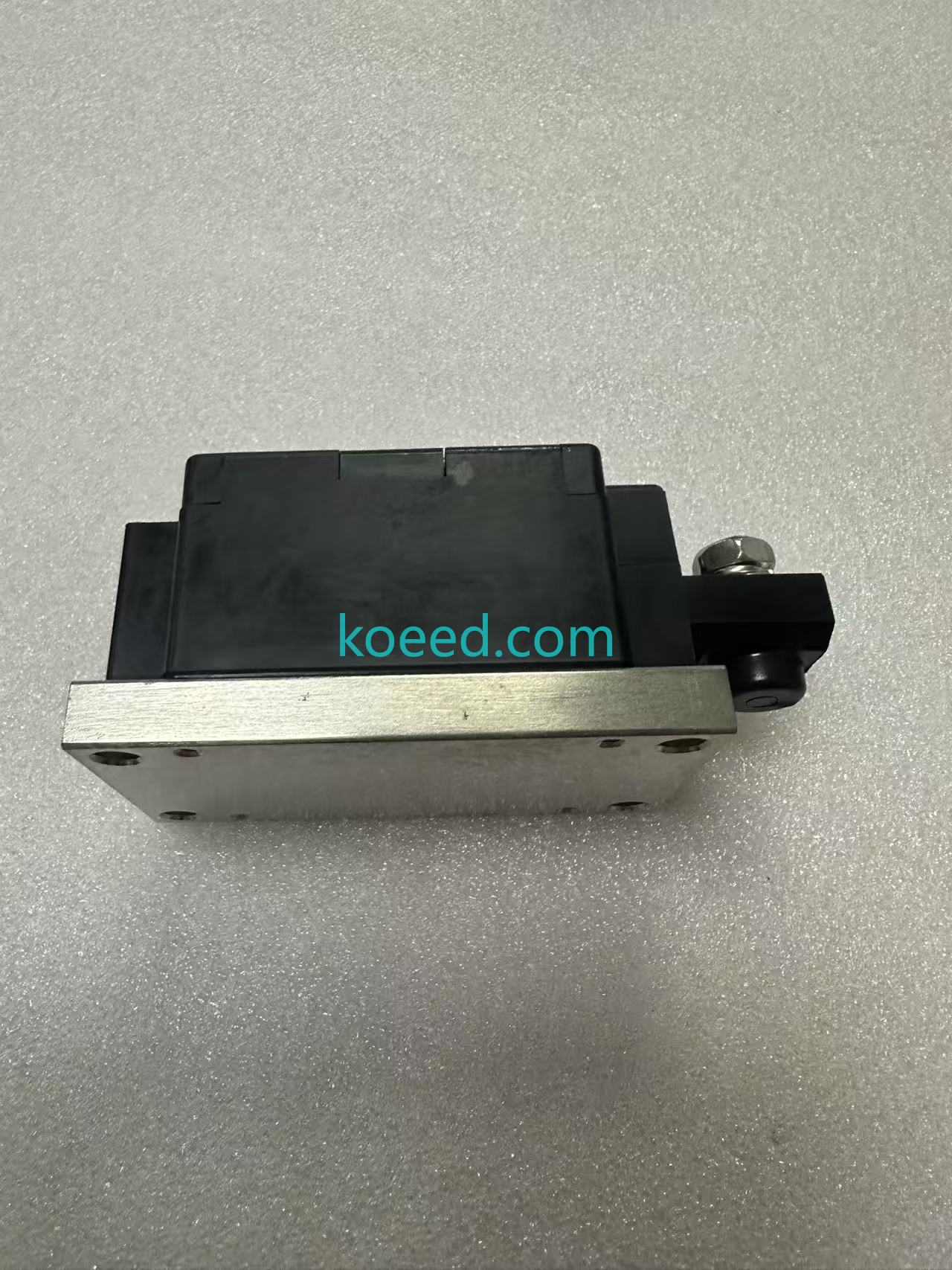
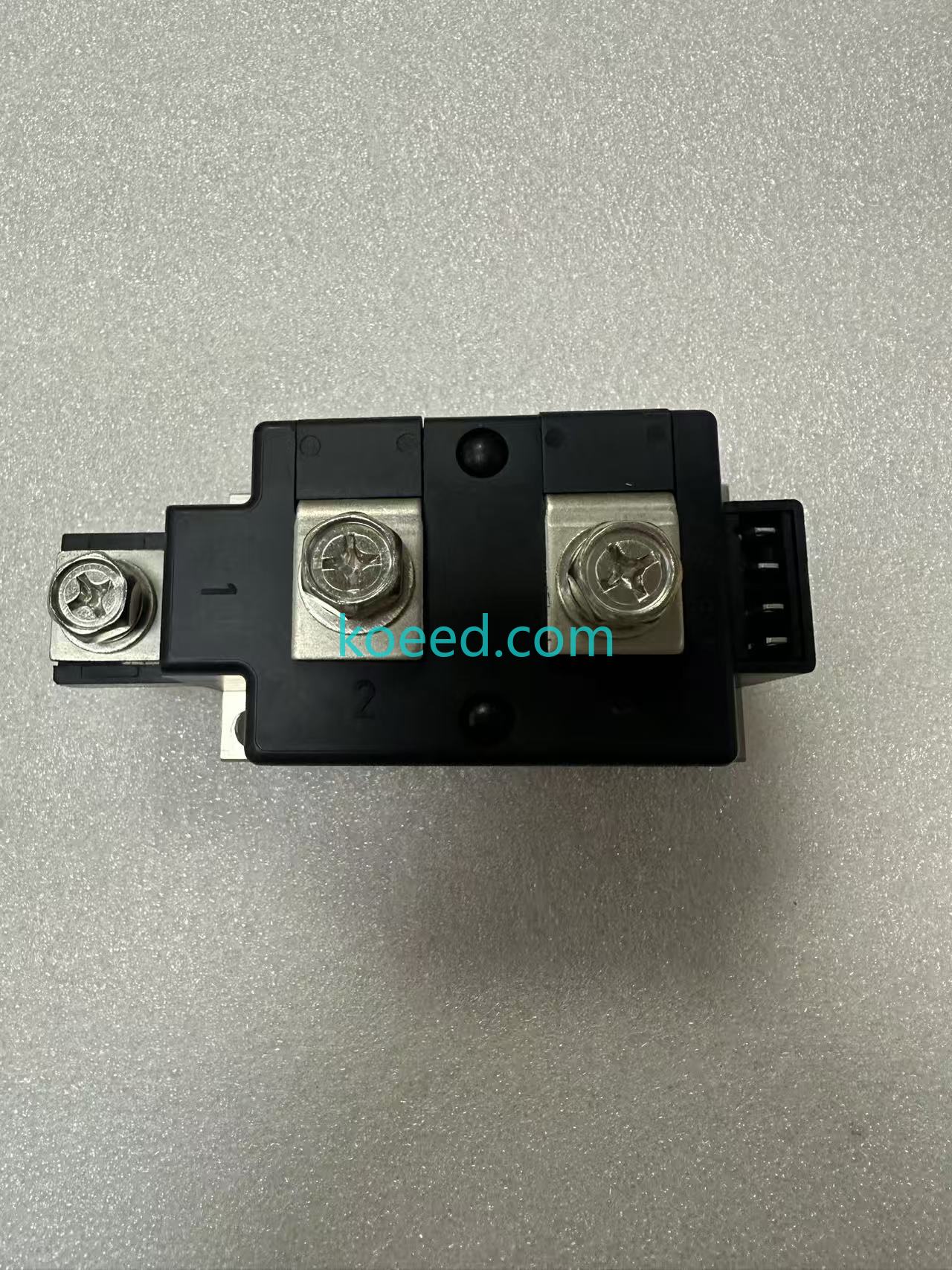
Visual Gallery: MCC312-16Io1 Module Inspection
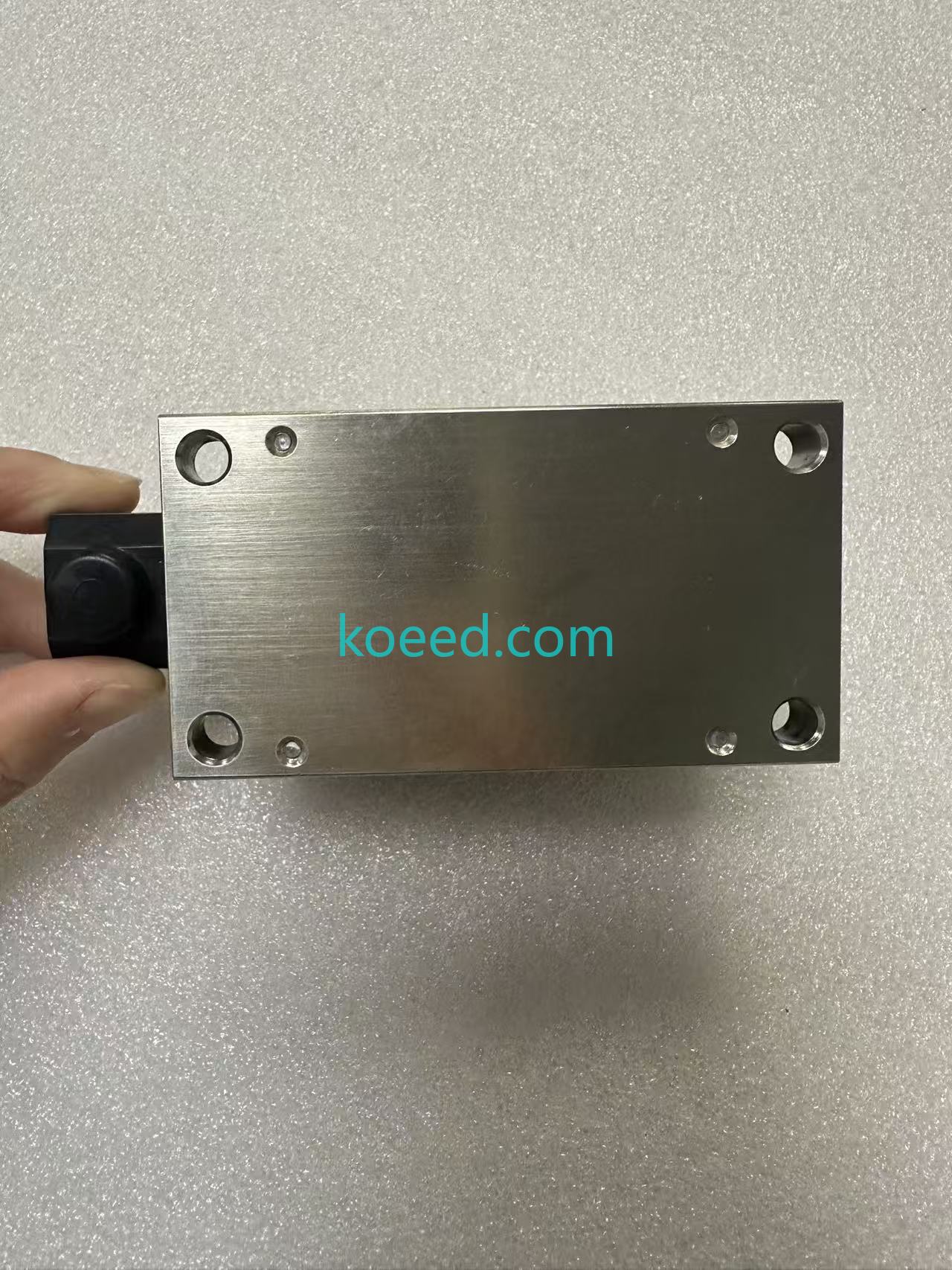
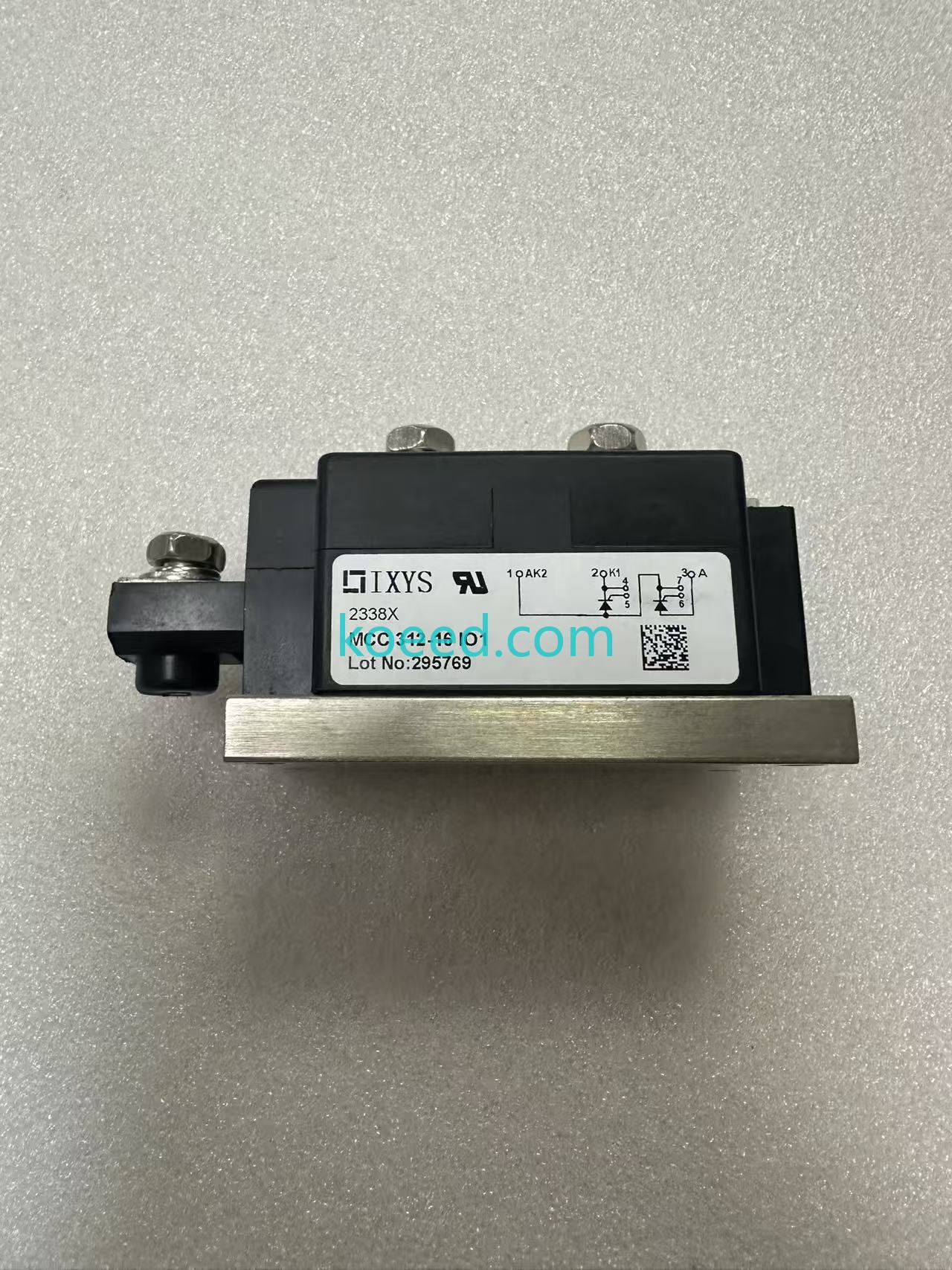
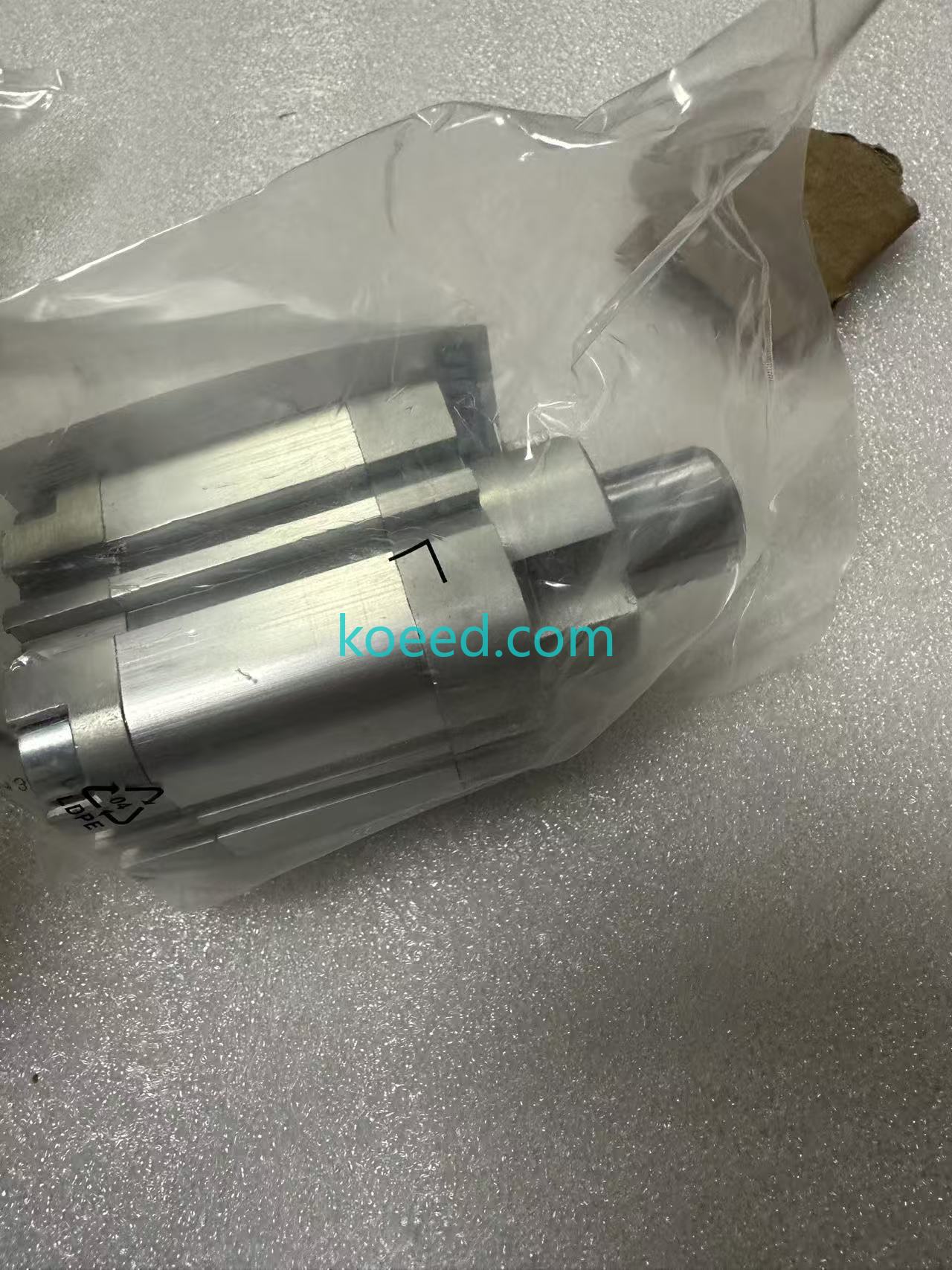
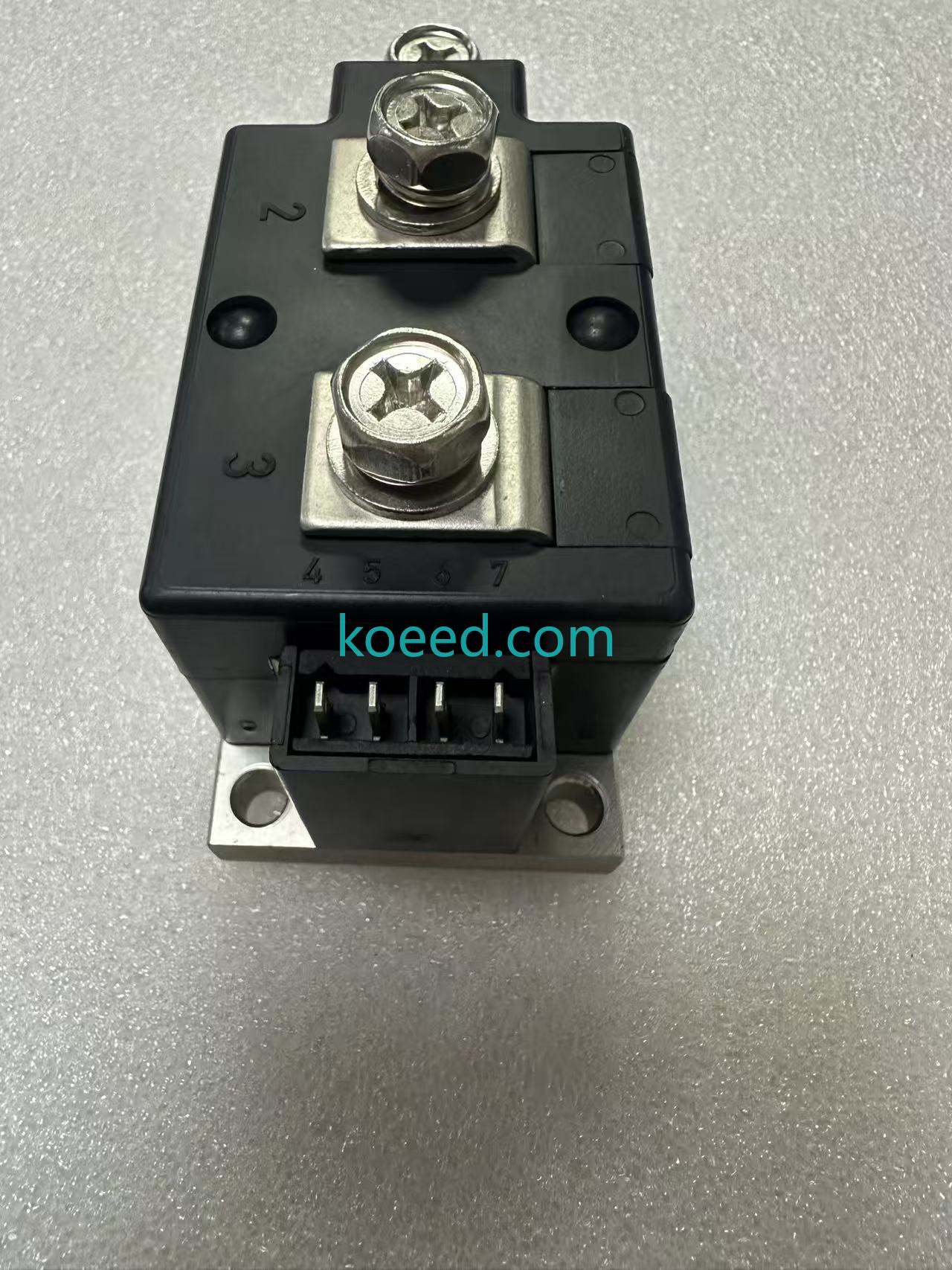
Below is a detailed visual reference of the IXYS MCC312-16Io1 thyristor module available at koeed.com. These images showcase the module's build quality, terminal layout, marking legibility, and packaging — all critical indicators for verifying authentic, factory-original components in 2026's sometimes opaque secondary market.
IT/OT Convergence: Integrating the MCC312-16Io1 into Smart Industrial Systems
In 2026, power electronics are no longer isolated from the data layer. The MCC312-16Io1, when deployed with intelligent gate-driver boards and edge-computing nodes, becomes a data-generating asset within your Operational Technology (OT) stack. Here is how forward-thinking automation architects are bridging the gap:
Condition Monitoring via Gate-Drive Telemetry
Modern isolated gate drivers (such as those from Infineon's EiceDRIVER family or Analog Devices' ADuM series) can monitor gate-charge characteristics in real time. By tracking subtle shifts in the MCC312-16Io1's gate-trigger current over months of operation, predictive algorithms can flag early-stage junction degradation 4–6 weeks before catastrophic failure — a capability that aligns directly with the predictive-maintenance KPIs driving 2026's smart factories.
OPC UA and MQTT Integration
Gate-driver telemetry from MCC312-16Io1-based power stacks can be aggregated via microcontrollers (STM32, ESP32-C6) running OPC UA Pub/Sub or MQTT-Sparkplug B payloads. This pushes thyristor health metrics — junction temperature estimates, di/dt event counters, cumulative conduction hours — directly into SCADA dashboards (Ignition, WinCC OA) or cloud-based analytics platforms (AWS IoT SiteWise, Azure Digital Twins).
Energy Monitoring & Sustainability Compliance
With the MCC312-16Io1's low forward voltage (1.32V), conduction losses at full rated current are approximately 422W. When compared against older modules with 1.6V+ forward drops, the MCC312-16Io1 saves roughly 90W per module at rated load. Across a 24-module rectifier bank running 6,000 hours/year, that equates to ~13 MWh/year in avoided losses — a tangible figure for sustainability compliance under 2026's increasingly stringent energy-audit mandates.
ROI & Total Cost of Ownership (TCO) Analysis
For procurement professionals and engineering managers evaluating the MCC312-16Io1 at koeed.com, the economics extend well beyond the unit price. Below is a structured TCO breakdown over a projected 7-year service life (typical for industrial thyristor modules in well-maintained environments):
| TCO Factor | MCC312-16Io1 (2026) | Legacy 1400V Module | Annual Delta |
|---|---|---|---|
| Unit Acquisition Cost | $217–$230 | $180–$200 | +$30 (one-time) |
| Conduction Losses (at 70% load, 6000 h/yr) | ~2,530 kWh/module/yr | ~2,730 kWh/module/yr | -200 kWh/yr |
| Cooling Overhead (CRAC/HVAC) | ~760 kWh/module/yr | ~820 kWh/module/yr | -60 kWh/yr |
| Unscheduled Downtime Risk (MTBF-adjusted) | Lower (1600V margin) | Moderate (1400V margin) | ~0.3 fewer events/yr |
| Snubber Component Savings | Reduced BOM | Standard BOM | ~$12/module |
| 7-Year TCO (per module, incl. energy) | ~$1,840 | ~$2,210 | -17% savings |
Energy cost assumed at $0.11/kWh (2026 global industrial average). Actual savings vary by region and duty cycle.
Maintenance, Troubleshooting & Predictive Protocols
Scheduled Preventive Maintenance (PM) Checklist — 2026 Standard
The following PM protocol aligns with IEC 62271-1 guidelines adapted for industrial thyristor modules. For facilities running the MCC312-16Io1 in critical paths, adherence to this schedule is recommended:
| Interval | Inspection Item | Acceptance Criteria | Tooling |
|---|---|---|---|
| Monthly | Heatsink surface temperature (IR thermography) | ΔT ≤ 15°C across module baseplate | FLIR handheld / fixed IR camera |
| Quarterly | Terminal torque verification | Per IXYS datasheet: 5.0–6.0 N·m (M6 terminals) | Calibrated torque wrench |
| Quarterly | Gate-cathode resistance check (cold) | 10–100 Ω typical; open circuit = gate failure | Digital multimeter (4-wire) |
| Semi-Annually | Partial discharge / insulation resistance | ≥100 MΩ at 1000V DC (terminal-to-baseplate) | Megohmmeter (insulation tester) |
| Annually | Visual inspection for terminal oxidation / discoloration | No pitting, no blue/purple discoloration (indicates overheating) | Borescope / macro lens |
| Event-Driven | Post-overcurrent event: full di/dt waveform analysis | No deviation >10% from baseline gate waveform | DSO with isolated probes |
Common Fault Signatures & Resolutions
Symptom 1: Intermittent Turn-On Failure
Likely Cause: Gate-drive transformer saturation or insufficient gate-pulse width. The MCC312-16Io1 requires a minimum gate-pulse duration of 50 µs for reliable latching at low anode currents.
Resolution: Verify gate-pulse width with oscilloscope; ensure gate-drive power supply can deliver 150 mA minimum at 2.0V. Replace electrolytic capacitors in gate-drive PSU if >5 years old.
Symptom 2: Elevated Forward Voltage Drop
Likely Cause: Junction degradation due to cumulative thermal cycling. A VT reading exceeding 1.65V (cold, at rated IT) indicates advanced wear.
Resolution: Proactively replace module during next scheduled downtime. Do not attempt to "run to failure" — a shorted thyristor in a bridge configuration can cascade into catastrophic rectifier damage.
Symptom 3: Spurious Turn-On (dv/dt Triggering)
Likely Cause: Insufficient snubber damping or excessive line-side dv/dt from nearby VFD switching.
Resolution: Increase snubber capacitance by 20–30% or add a dv/dt-limiting ferrite bead on the anode line. Verify that line-side dv/dt does not exceed the module's rated 1000 V/µs.
Interactive FAQ: MCC312-16Io1 — 2026 Buyer's Questions
Is the MCC312-16Io1 an IGBT or a Thyristor module? Why is it listed as both?
The MCC312-16Io1 is technically a dual thyristor (SCR) module. However, in the broader industrial-automation marketplace — including at koeed.com — it is often cross-referenced under the "IGBT module" category for search discoverability, since both device families serve overlapping roles in high-power switching. Always verify the exact part number against your application: the MCC312-16Io1 is a phase-control thyristor optimized for line-frequency rectification and AC power control, not high-frequency PWM switching like a true IGBT.
What is the expected service life of the MCC312-16Io1 in a 24/7 industrial application?
When operated within rated parameters (Tj ≤ 125°C, di/dt within 200 A/µs, proper heatsinking with TIM), the MCC312-16Io1 typically achieves 80,000–120,000 hours of continuous service — approximately 9–14 years. The primary degradation mechanism is bond-wire lift-off from thermal cycling. Modules subjected to frequent load swings (>50 thermal cycles/day with ΔTj > 40°C) may see accelerated wear at the 6–8 year mark. Predictive gate-resistance trending (quarterly) is the most reliable early-warning indicator available in 2026.
Can the MCC312-16Io1 be used in parallel configurations for higher current?
Yes, but with important caveats. Parallel thyristor operation requires matched forward voltage drops (VT within 0.05V across the pair) and individual gate-drive circuits with matched turn-on delay. Current-sharing reactors or balancing resistors in the anode path are strongly recommended. For 2026 designs, consider active current-balancing via per-module Hall-effect sensors feeding a supervisory MCU that adjusts gate-timing skew. Koeed can supply batch-matched pairs of the MCC312-16Io1 upon request — specify this requirement in your RFQ.
How does the MCC312-16Io1 compare to newer SiC-based modules for 2026 designs?
Silicon Carbide (SiC) MOSFETs and hybrid SiC-thyristors offer superior switching speed and lower conduction losses at high frequencies. However, for line-frequency phase-control applications (50/60 Hz rectification, soft-starting, heating control), the MCC312-16Io1's ruggedness, surge-current tolerance, and cost-per-ampere remain highly competitive. SiC modules at equivalent 1600V/300A ratings currently cost 3–4× more as of 2026. The MCC312-16Io1 is the pragmatic choice where switching frequency is below 400 Hz and cost sensitivity is high.
What certifications and compliance marks does the MCC312-16Io1 carry?
The IXYS MCC312-16Io1 (now manufactured under Littelfuse's IXYS division) carries RoHS compliance, REACH compliance, and is manufactured in ISO 9001 / IATF 16949 certified facilities. It meets the isolation requirements of IEC 60747-15 for isolated power semiconductor devices. The MCC312-16Io1 units supplied through koeed.com include full traceability documentation and certificate-of-conformance upon request.
Application-Specific Deployment Notes
For detailed mounting, cooling, and gate-drive recommendations tailored to your specific industrial setup, please refer to the official IXYS MCC312-16Io1 datasheet (Document No. 2526) or contact the technical support team at koeed.com. Always verify that your system's surge current, dv/dt, and thermal cycling profiles align with the module's safe operating area before finalizing your bill of materials.
Ready to Procure the MCC312-16Io1?
Secure genuine, new-in-box inventory with full traceability and a dedicated account manager at koeed.com.


