

PILZ 773400 PNOZ mi1p Safety Relay: 2026 Legacy System Integration & Sourcing Guide
Strategic Overview: The PNOZ mi1p in the 2026 Industrial Landscape
As manufacturing enters the deep phase of Industry 4.0 maturation in 2026, the tension between legacy safety infrastructure and modern IT/OT convergence has never been more pronounced. The PILZ 773400 PNOZ mi1p — an 8-channel safety digital input expansion module — exemplifies this challenge. Originally designed to extend the input capacity of PILZ PNOZ safety relay systems, the mi1p has since transitioned into OEM-discontinued status. Yet thousands of production lines across automotive, packaging, and heavy machinery sectors continue to depend on it daily.
For maintenance engineers and automation architects, the 773400 represents both a critical reliability node and a sourcing vulnerability. This module — available through trusted channels like Koeed's PILZ 773400 inventory — remains indispensable for facilities that cannot justify full safety-loop retrofits. In this guide, we examine how the PNOZ mi1p fits into the 2026 paradigm of predictive maintenance, energy-conscious automation, and hybrid OT architectures.
Technical Benchmarking: PNOZ mi1p vs. Modern Alternatives
Before evaluating a migration path, it's essential to understand exactly what the 773400 delivers. The table below benchmarks its core specifications against both its predecessor logic and 2026-era modular safety controllers.
| Parameter | PILZ 773400 (PNOZ mi1p) | Legacy PNOZ X-Series Input Expansion | 2026 Modular Safety (e.g., myPNOZ) |
|---|---|---|---|
| Function | 8-channel safety input expansion | 4–6 channel, fixed logic | Modular, configurable I/O |
| Supply Voltage | 24 VDC | 24 VDC / 230 VAC variants | 24 VDC (PoE-capable options) |
| Safety Inputs | 8 (digital) | 4–6 (digital) | Up to 16 (configurable) |
| Mounting | DIN rail (TS35), horizontal | DIN rail (TS35) | DIN rail, cloud-backplane ready |
| Enclosure Requirement | IP54 cabinet minimum | IP54 cabinet minimum | IP20–IP67 options |
| IT/OT Integration | Relay-level only (no native comms) | Relay-level only | OPC UA, MQTT, REST APIs |
| Lifecycle Status | Discontinued — NOS only | Mostly discontinued | Active production |
| Typical TCO (5-Year) | $380–$650 (including sourcing premium) | $200–$400 (used market) | $1,200–$2,800 (new, licensed) |
The data highlights a pragmatic truth: for brownfield facilities with stable safety architectures, the PILZ 773400 delivers the lowest TCO over a 5-year horizon — provided you can secure genuine, warranted units. The myPNOZ migration, while future-proof, carries a 3–5× upfront cost and typically demands a full safety recertification cycle.
2026 Integration Strategy: Bridging Legacy Safety with IIoT
A common misconception in 2026 is that relay-based safety modules like the PNOZ mi1p cannot participate in smart-factory ecosystems. In practice, external monitoring layers can overlay predictive intelligence without compromising the safety loop:
Architecture Pattern: Parallel Monitoring
Deploy a non-intrusive current/voltage monitoring module (e.g., via 4–20 mA transducers or Modbus TCP energy meters) across the 773400's supply and output circuits. This data streams to your SCADA or cloud historian (AWS IoT SiteWise, Siemens MindSphere) for:
- Contact wear analytics: Gradual increase in contact resistance triggers pre-failure alerts.
- Cycle counting: Track safety relay actuations to predict remaining mechanical life.
- Environmental drift detection: Correlate cabinet temperature/humidity with relay performance anomalies.
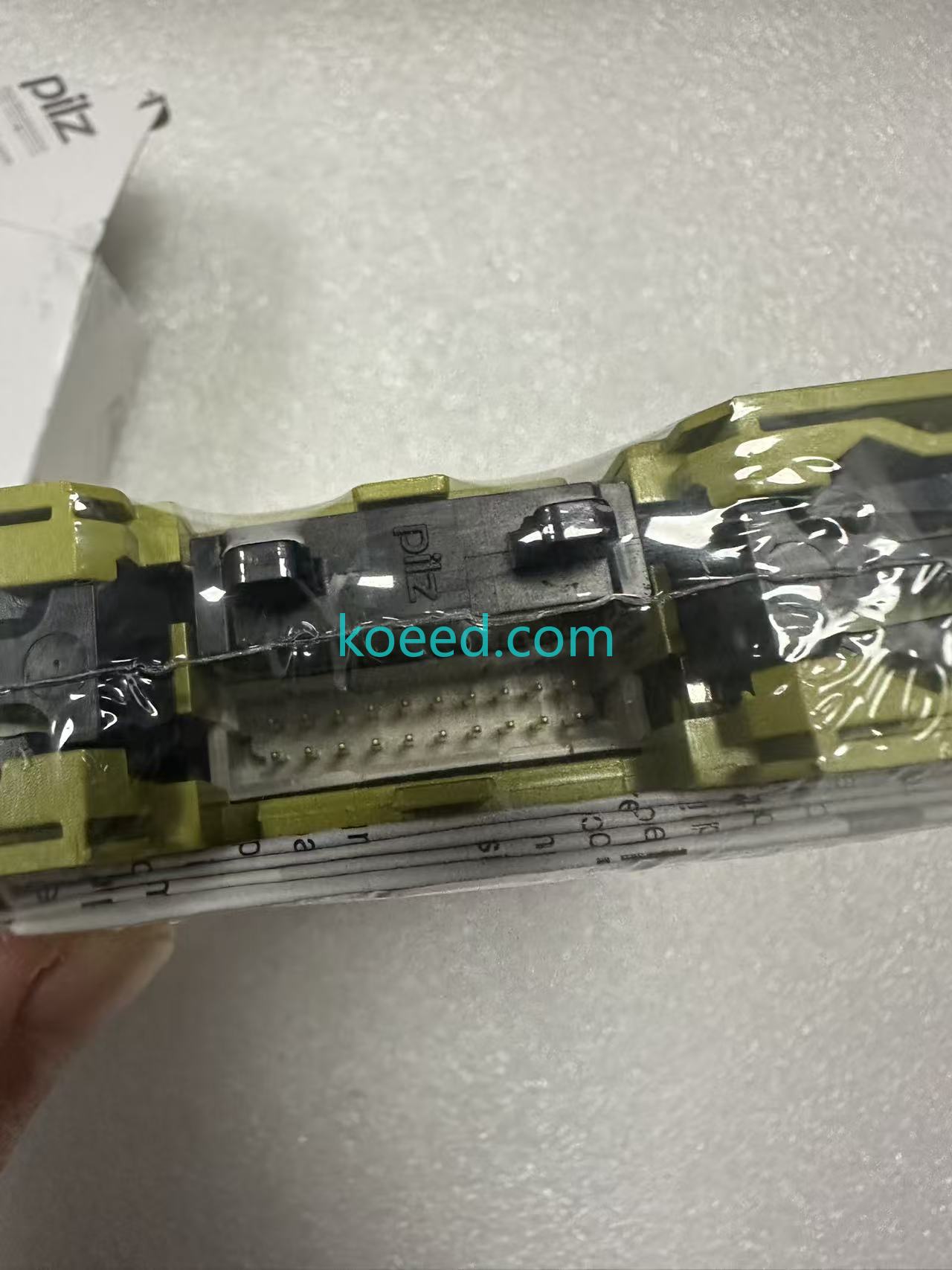
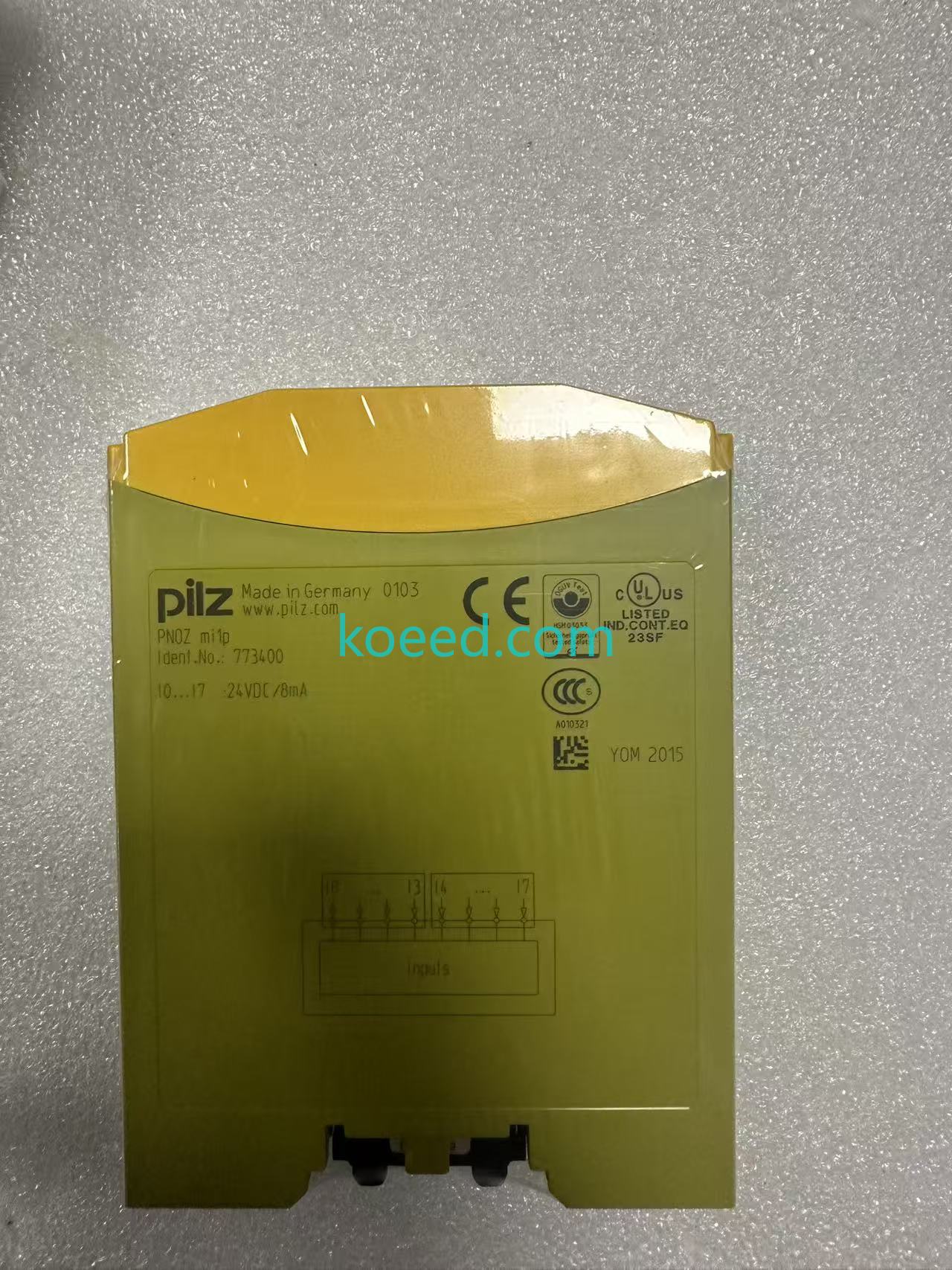
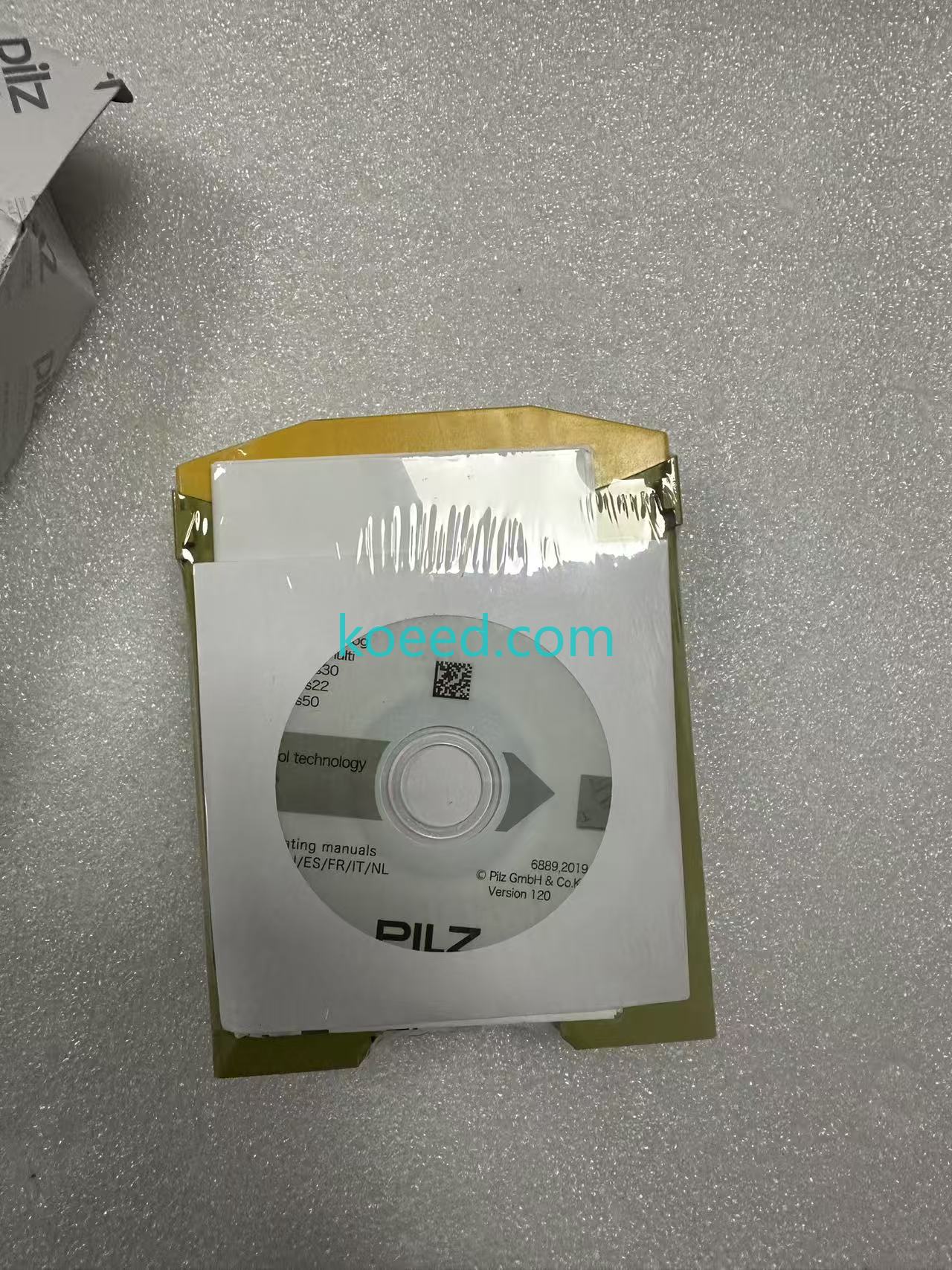
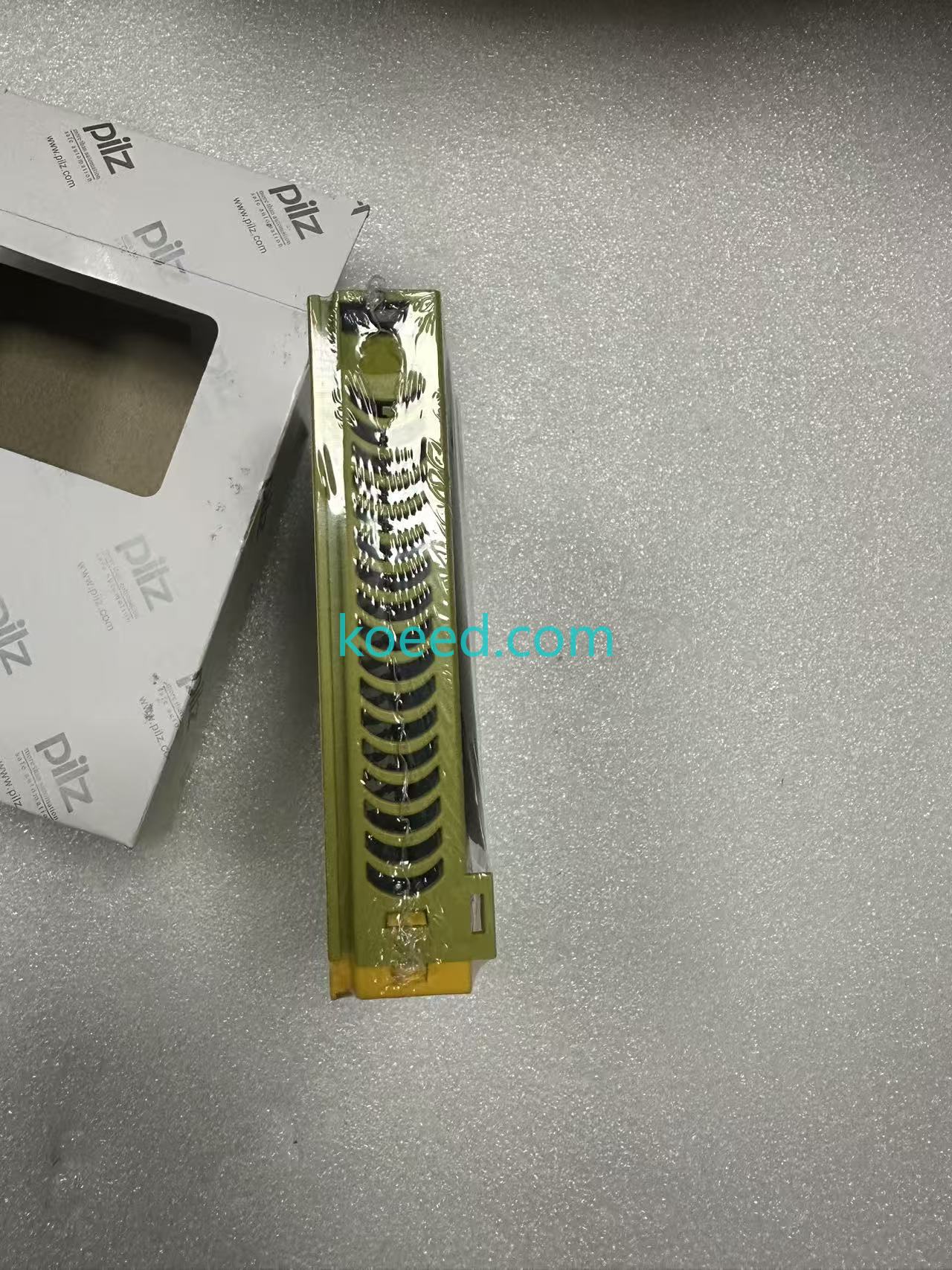
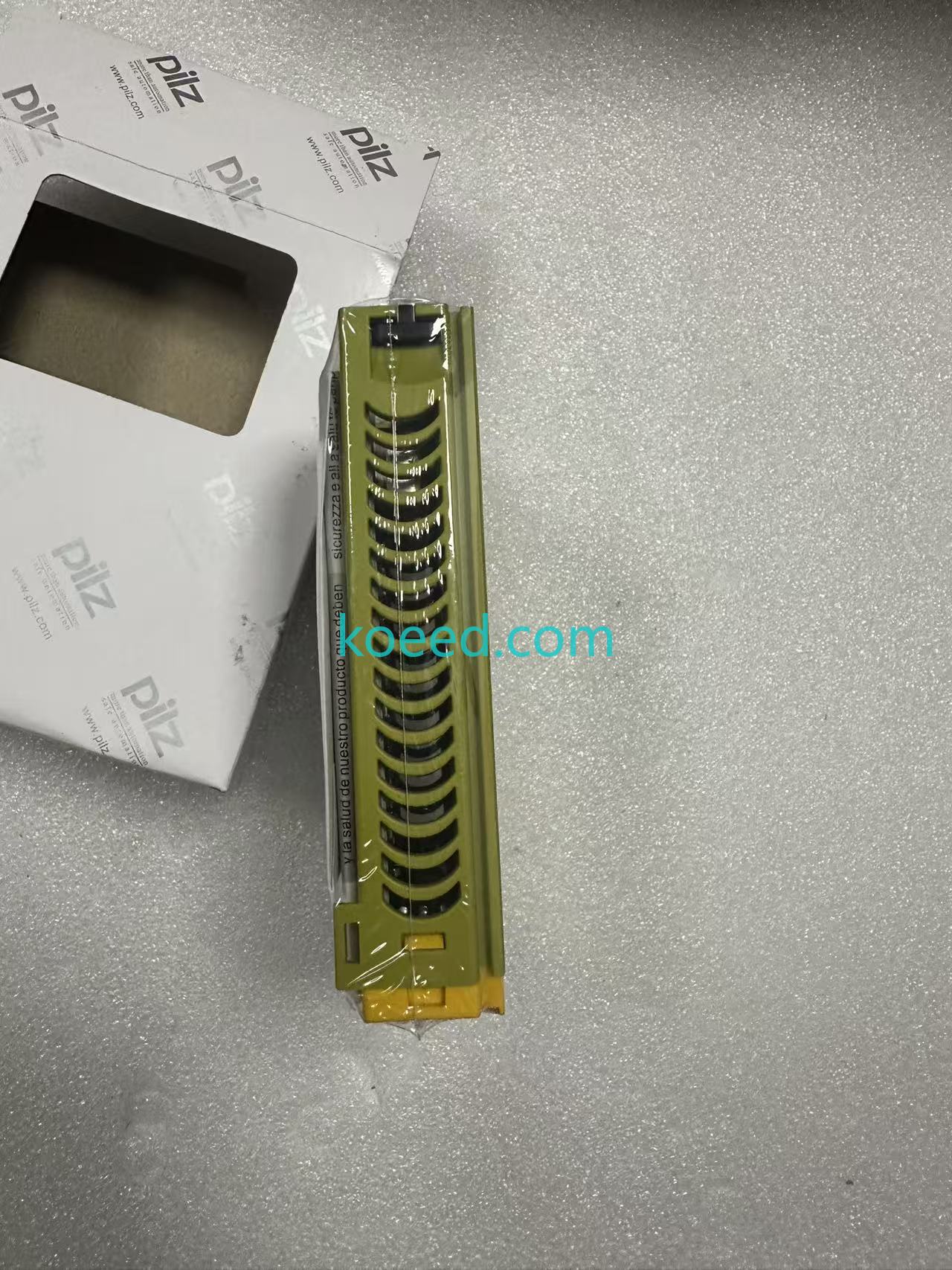
Visual Gallery: PILZ 773400 PNOZ mi1p — Detailed Inspection
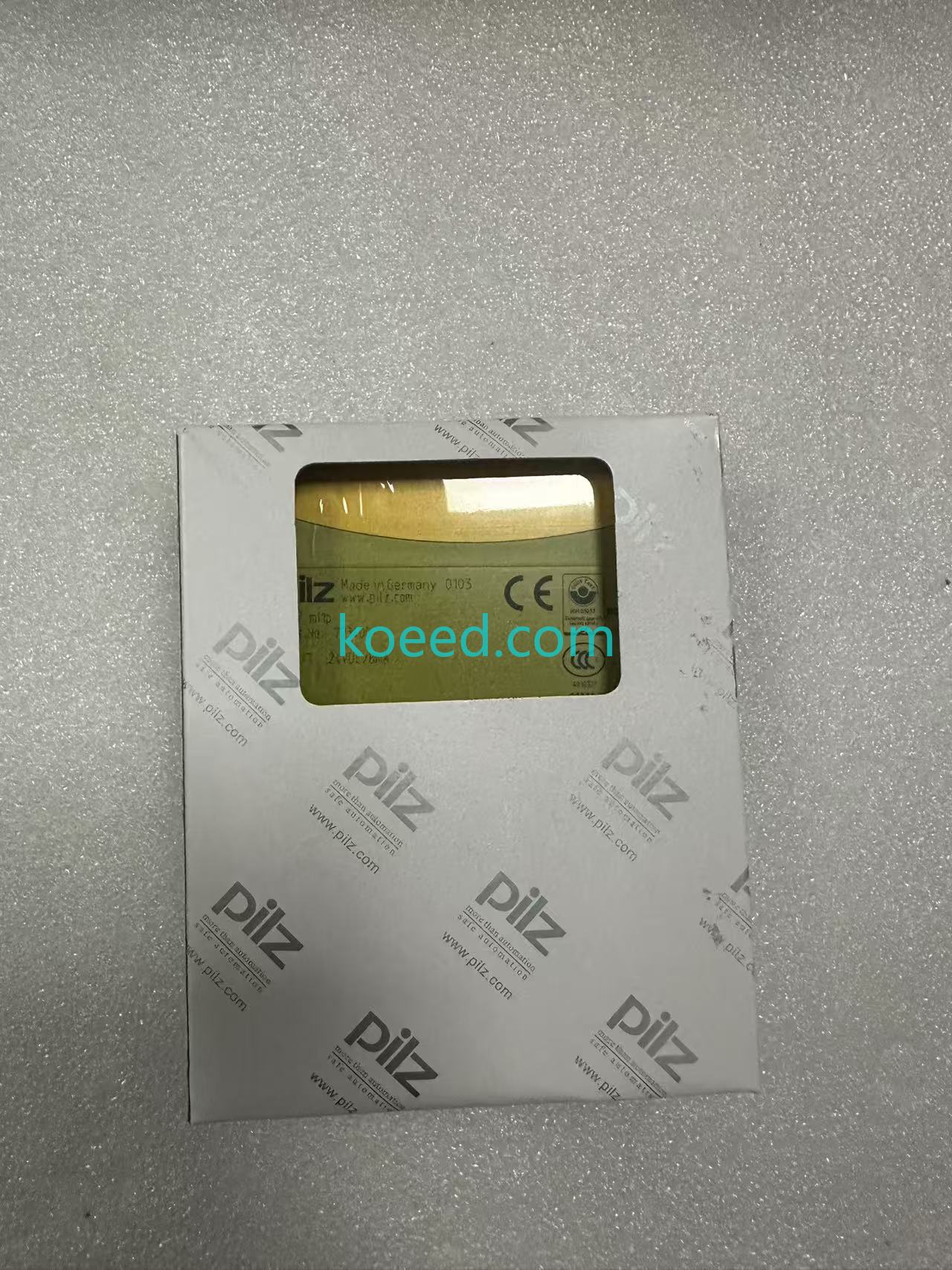
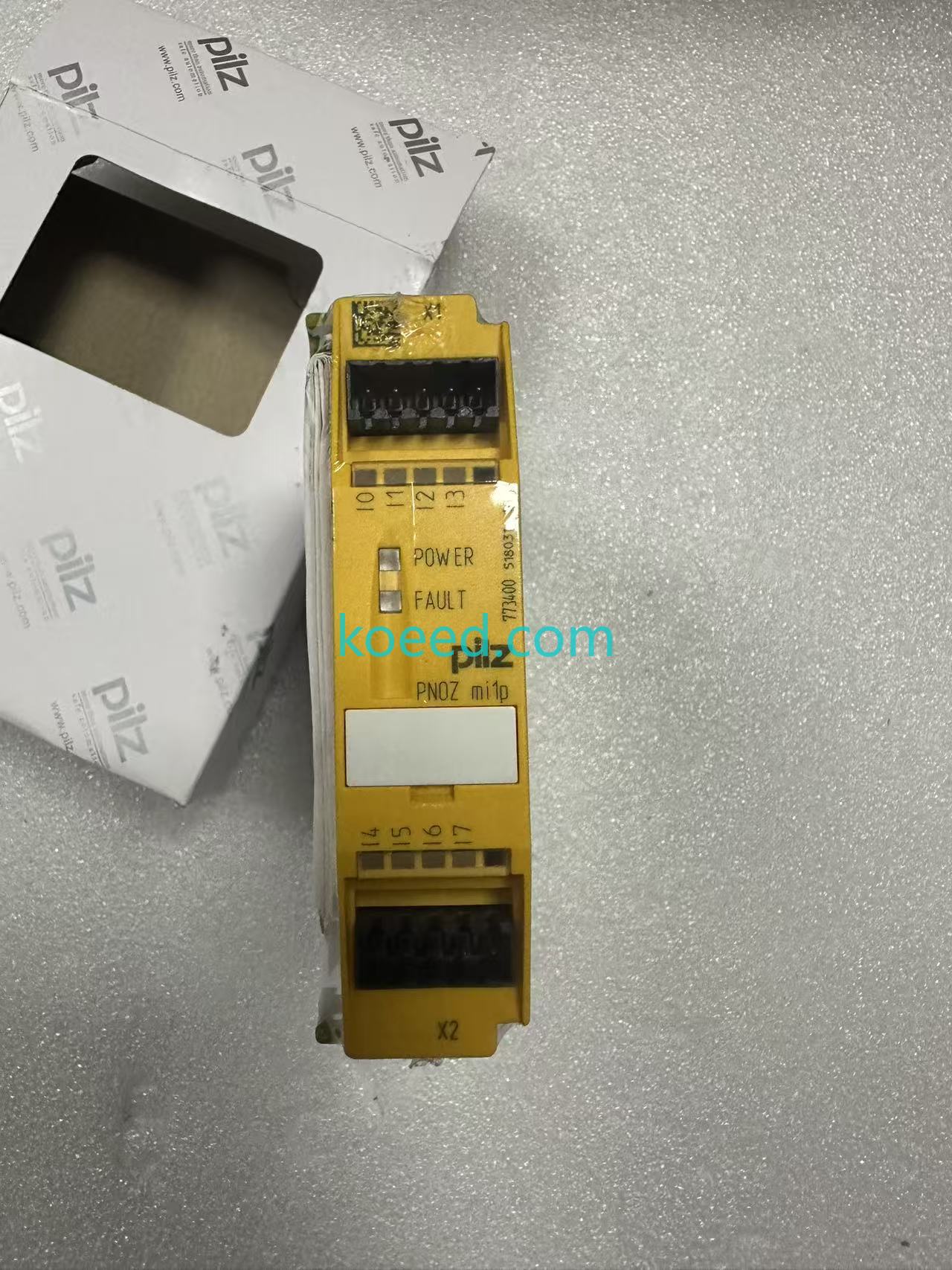
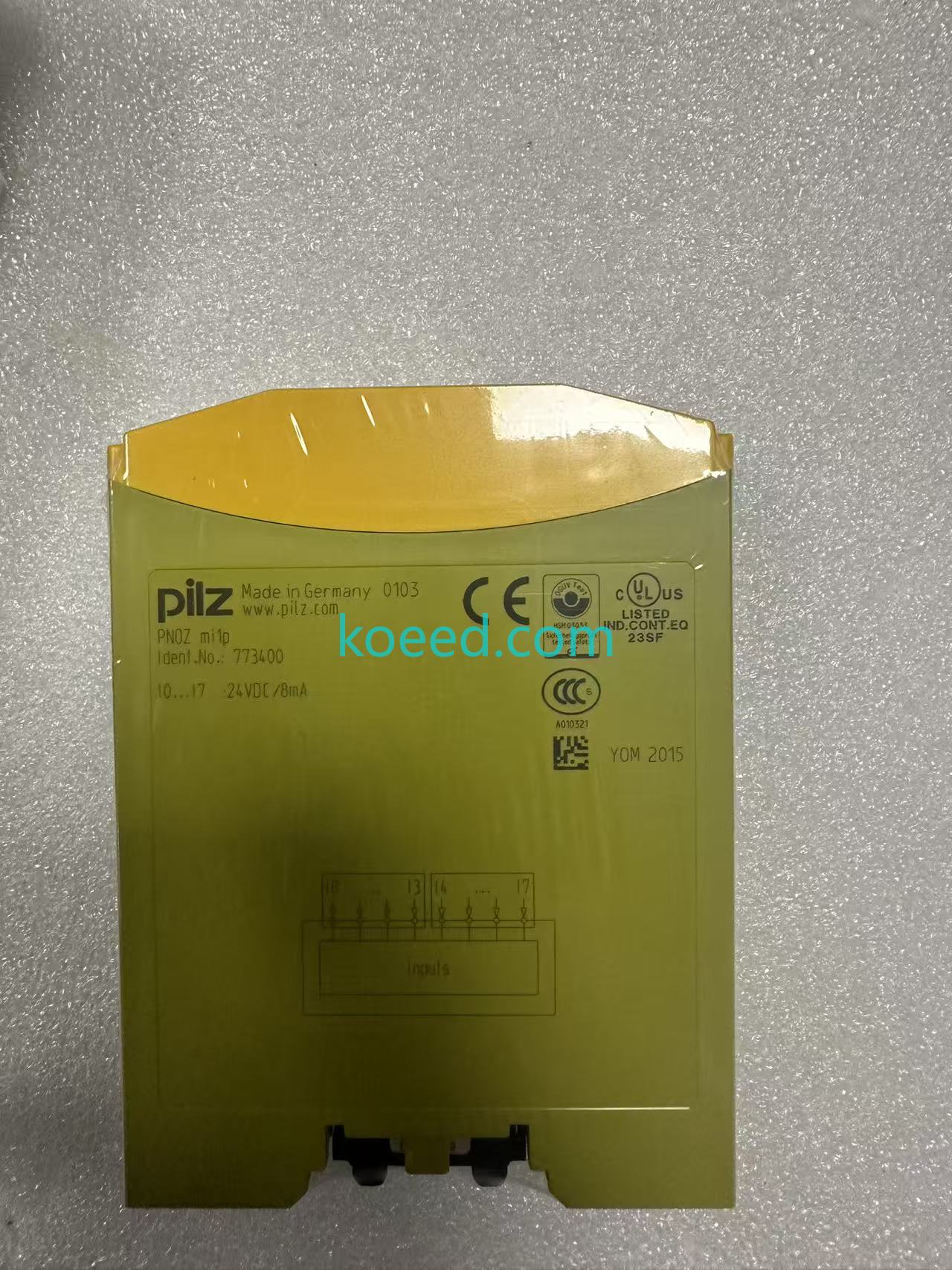
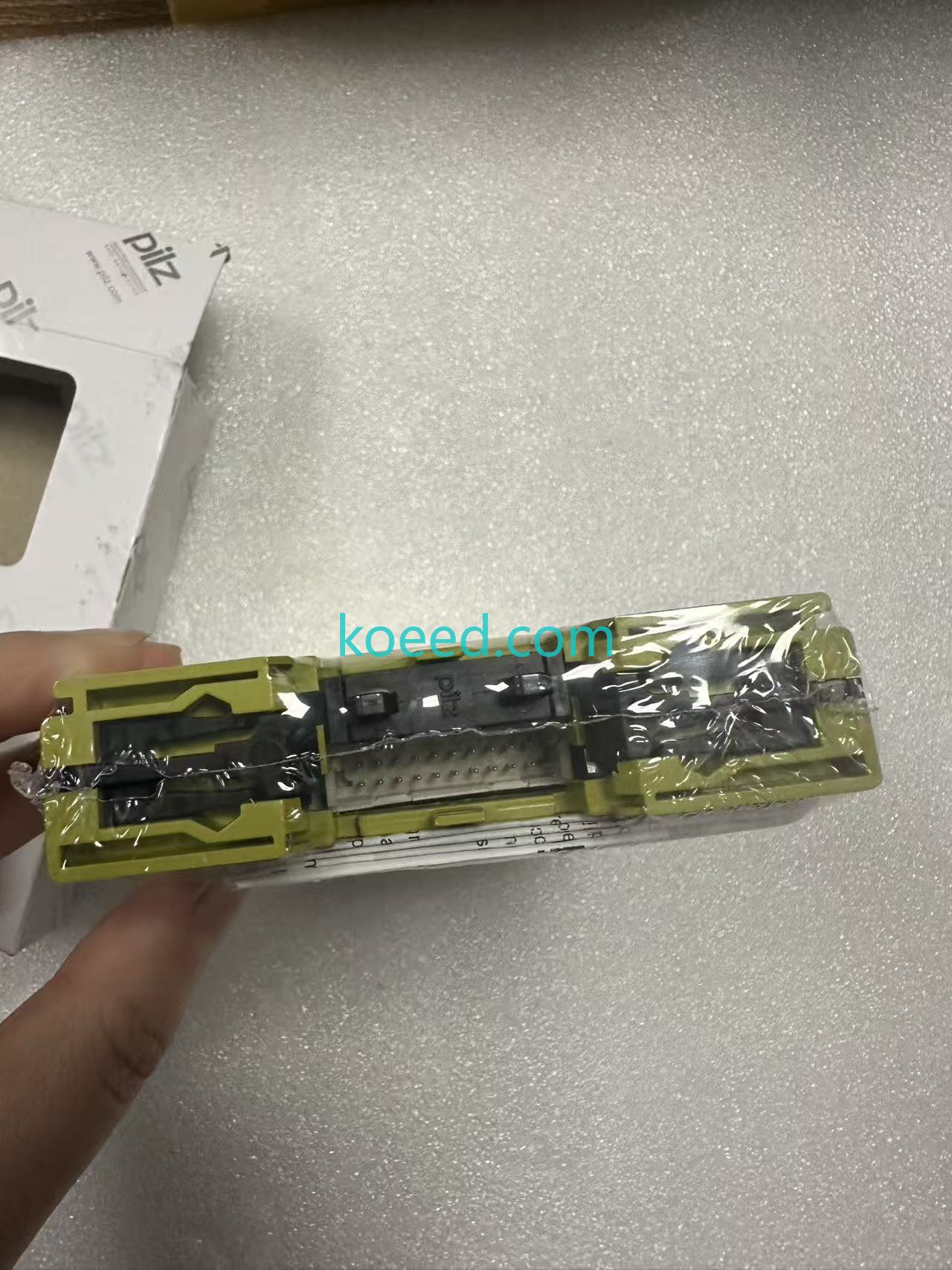
All units supplied by Koeed undergo multi-point visual and electrical verification before dispatch. Browse the gallery below for a detailed view of the PILZ 773400 safety relay.
Maintenance & Troubleshooting: Maximizing PNOZ mi1p Service Life
Given the 773400's discontinued status, extending the operational life of every unit is both an economic and operational imperative. The following protocols are based on PILZ service recommendations refined through 2026 field data.
Preventive Maintenance Schedule
| Interval | Action | Tool / Method |
|---|---|---|
| Monthly | Visual inspection: check for discoloration, dust accumulation on venting slots | Thermal camera (FLIR) for hotspot detection |
| Quarterly | Verify terminal torque (0.5–0.6 Nm); re-tighten if loose | Calibrated torque screwdriver |
| Bi-Annually | Full functional test: simulate safety input activation; measure response time | Oscilloscope + test button simulation |
| Annually | Contact resistance measurement across all channels | Milliohm meter (<100 mΩ expected) |
Common Failure Modes & Diagnostic Codes
In 2026, field data from thousands of deployed PNOZ mi1p units has identified these recurring patterns:
▸ Symptom: LED indicators not illuminating
Root Cause (80% probability): Supply voltage sag below 20.4 VDC threshold. Verify the 24 VDC rail under load. Fix: Check PSU; replace if ripple exceeds 5%. Confirm that the unit's venting slots are not obstructed — thermal shutdown may occur above 55°C ambient.
▸ Symptom: Intermittent safety input registration
Root Cause: Oxidized terminals or loose wiring. The 773400's screw-cage terminals are robust but susceptible to micro-fretting under vibration. Fix: Remove, clean with isopropyl alcohol (99%), re-seat, and torque to specification.
▸ Symptom: Unit fails self-test on power-up
Root Cause: Internal relay contact welding — often from a downstream short circuit. Fix: Unit replacement required. Order from a verified source like Koeed's PILZ 773400 stock to ensure genuine, tested NOS.
Procurement Strategy: Why Sourcing the 773400 Demands Diligence in 2026
The grey market for discontinued industrial safety components has expanded significantly through 2025–2026. Counterfeit and refurbished units sold as "new" present a genuine safety risk. When procuring the PILZ 773400 PNOZ mi1p, insist on:
- Batch traceability: Original PILZ holographic labeling with date-code verification.
- Pre-shipment testing: Full functional validation — not just continuity checks.
- Warranty coverage: Minimum 12-month replacement warranty on NOS safety components.
- ESD-safe packaging: The 773400's internal PCB is sensitive to electrostatic discharge; vacuum-sealed antistatic packaging is non-negotiable.
Koeed's PILZ 773400 rapid-delivery program addresses all four criteria, making it a preferred channel for maintenance teams across APAC, EMEA, and the Americas.
Frequently Asked Questions
Is the PILZ 773400 PNOZ mi1p still manufactured in 2026?
Can the PNOZ mi1p be used as a standalone safety relay?
What is the expected mechanical life of the PNOZ mi1p?
How does Koeed verify the authenticity of its PILZ 773400 units?
What are the shipping times for the PILZ 773400?
Secure Your PILZ 773400 PNOZ mi1p Today
Genuine, tested NOS units — rapid global delivery with full warranty.
Minimize downtime. Maximize safety integrity. Source with confidence.


