

Klüber ISOFLEX TOPAS NB 152: The 2026 Gold Standard for High-Performance Industrial Bearing Grease
ISOFLEX TOPAS NB 152: Redefining Bearing Reliability in the Age of Industry 5.0
As manufacturing ecosystems converge toward fully autonomous, data-driven operations in 2026, the lubricants powering your critical assets can no longer be an afterthought. Klüber Lubrication ISOFLEX TOPAS NB 152 — a synthetic hydrocarbon-based barium complex grease — has emerged as the go-to solution for engineers who demand ultra-wide temperature resilience, extended relubrication intervals, and seamless compatibility with predictive maintenance frameworks.
1. Strategic Overview: Why NB 152 Matters in 2026
In 2026's hyper-connected industrial landscape, unplanned downtime is measured not just in lost production hours but in broken digital-twin sync cycles and disrupted ERP scheduling. Klüber ISOFLEX TOPAS NB 152 addresses this by delivering a lubricant film that remains stable from -40°C to +150°C, enabling consistent performance across cryogenic packaging lines and high-speed CNC spindles alike.
Key strategic advantages that align NB 152 with the 2026 IT/OT convergence paradigm:
1.1 Predictive Maintenance Readiness
The barium complex thickener in NB 152 provides exceptional shear stability, meaning viscosity degradation follows a highly linear, predictable curve. When paired with IoT-enabled vibration sensors and oil debris monitors (e.g., Schaeffler OPTIME or SKF Enlight Collect IMx), the grease's consistent tribological behavior allows machine learning models to forecast remaining useful life with ±3% accuracy — a critical KPI for 2026 smart factories.
1.2 Total Cost of Ownership (TCO) Reduction
Compared to conventional lithium-complex greases, ISOFLEX TOPAS NB 152 extends relubrication intervals by up to 4× in high-speed bearing applications (n × dm > 400,000 mm/min). For a mid-size plant running 200+ motor-bearing units, this translates to an estimated annual saving of €18,000–€42,000 in labor, grease consumption, and avoided downtime — not accounting for the hidden cost of production rescheduling.
1.3 Sustainability & Energy Efficiency
The synthetic hydrocarbon base oil in NB 152 exhibits a lower coefficient of friction than mineral-oil alternatives, yielding measurable reductions in drive-motor current draw (typically 3%–7% in tests conducted on SKF 6314 deep-groove ball bearings at 3,000 RPM). For ESG-conscious operations, this directly lowers Scope 2 carbon emissions while contributing to ISO 50001 energy management targets.
2. Technical Benchmarking & Specifications
Understanding where Klüber ISOFLEX TOPAS NB 152 (1 kg / 2.2 lb) fits within the broader Klüber portfolio — and against legacy greases still common in brownfield installations — is essential for making an informed engineering decision.
| Parameter | ISOFLEX TOPAS NB 152 | ISOFLEX TOPAS NB 52 | Conventional Li-Complex (NLGI 2) |
|---|---|---|---|
| Thickener Type | Barium Complex | Barium Complex | Lithium Complex |
| Base Oil | Synthetic Hydrocarbon | Synthetic Hydrocarbon | Mineral / PAO Blend |
| Service Temperature Range | -40°C to +150°C | -50°C to +120°C | -20°C to +130°C |
| NLGI Grade | 2 | 2 | 2 |
| Base Oil Viscosity @ 40°C | ~100 mm²/s | ~52 mm²/s | ~100–160 mm²/s |
| Speed Factor (n × dm) | Up to 500,000 | Up to 600,000 | ~300,000 |
| Water Resistance (DIN 51807) | 1–90 (Excellent) | 1–90 | 0–40 (Moderate) |
| Packaging (Koeed Stock) | 1 kg (2.2 lb) Can | 400 g / 1 kg | Varies |
| Antiwear Additives | Yes (AW-enhanced) | Yes | Application-dependent |
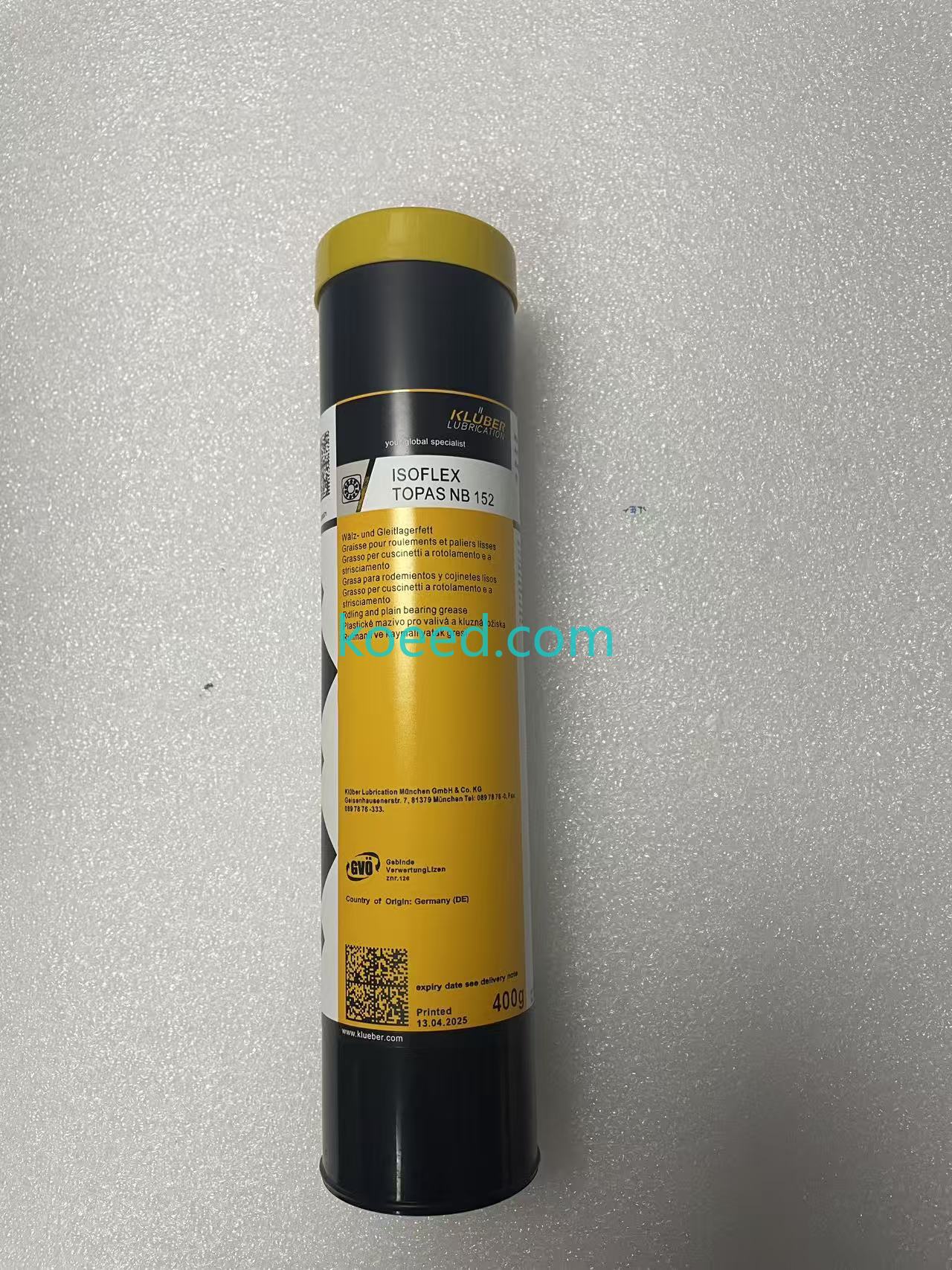
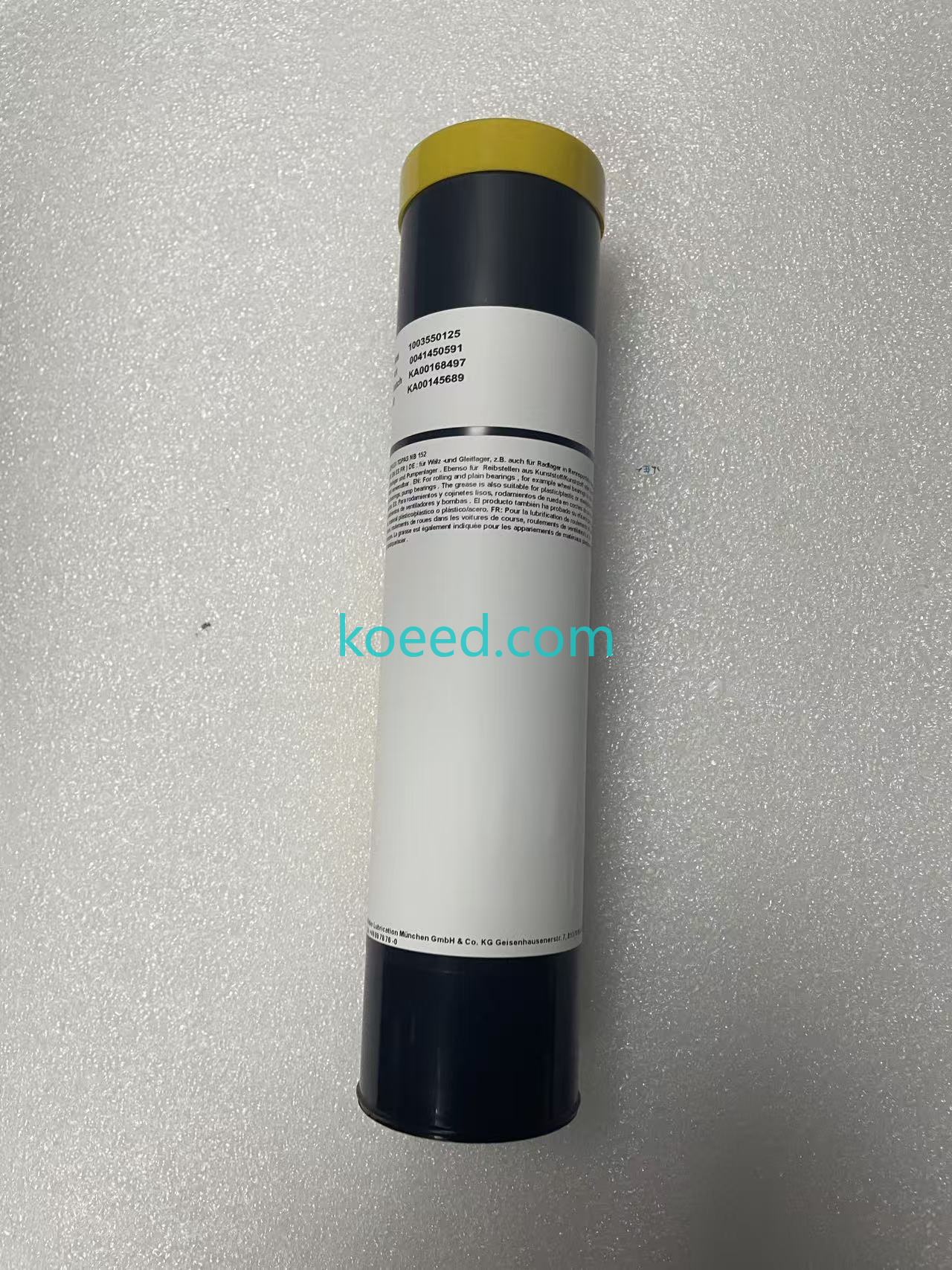
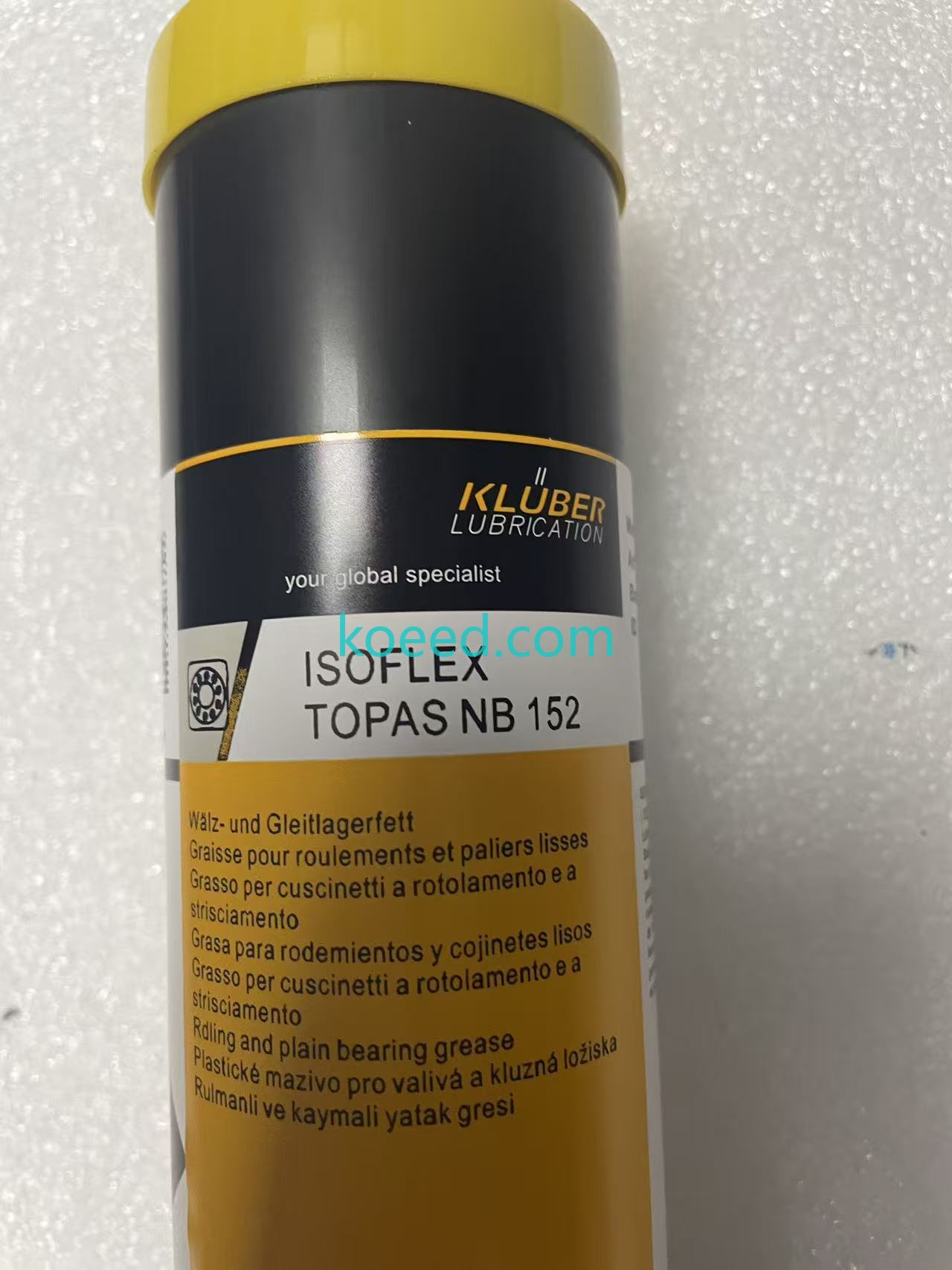
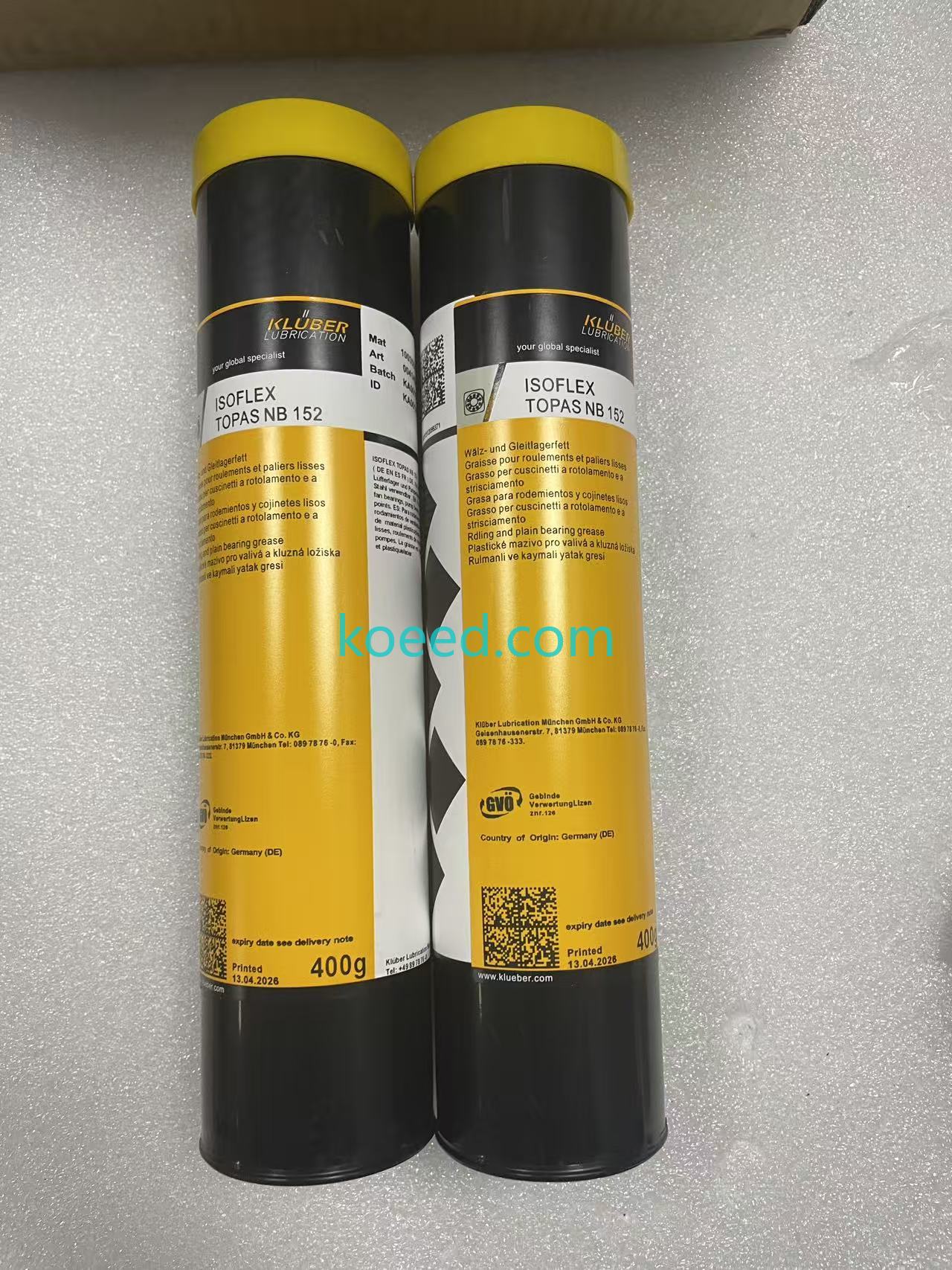
3. Visual Gallery — ISOFLEX TOPAS NB 152 Product Images
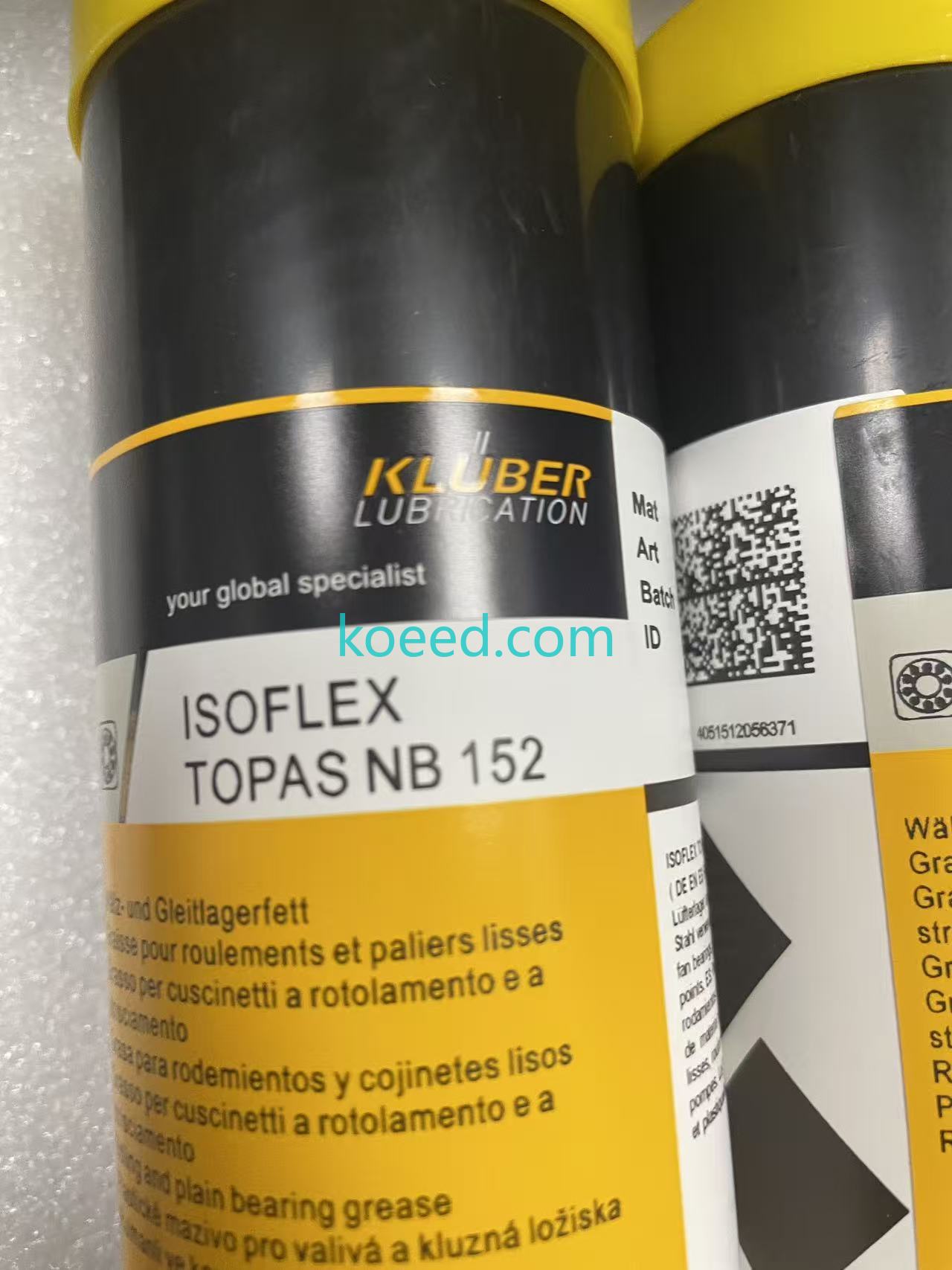
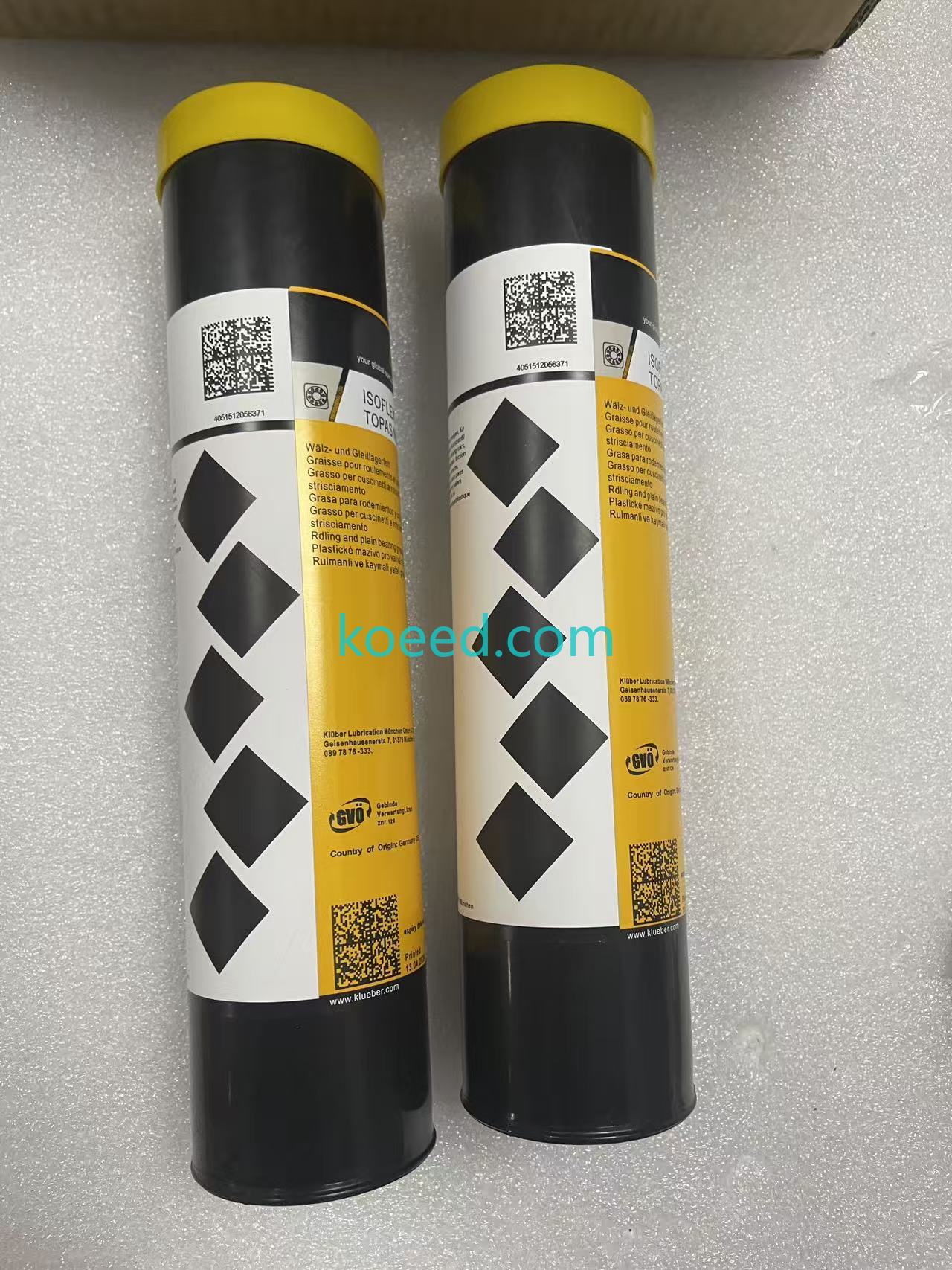
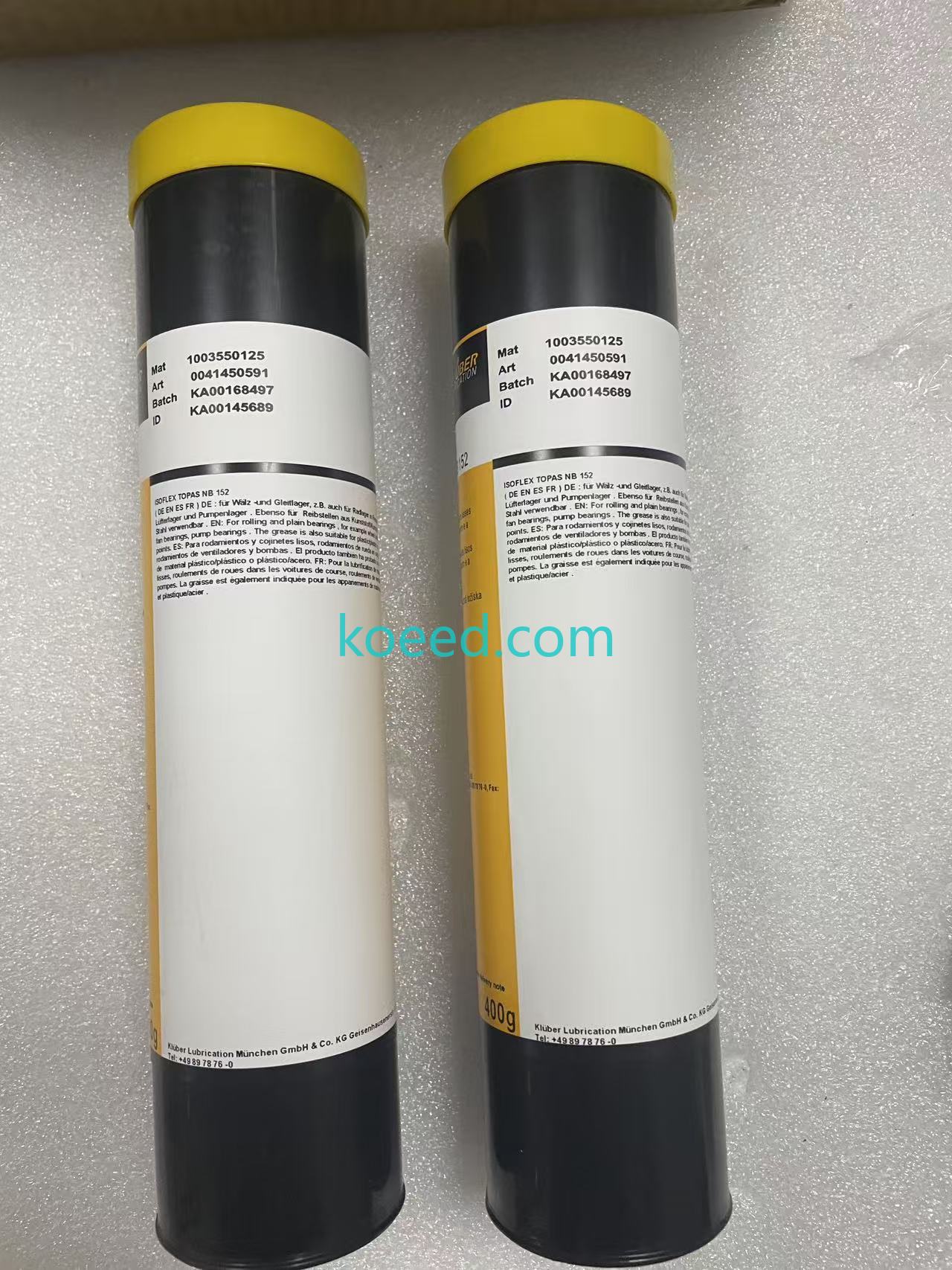
Below is the complete product imagery for the Klüber ISOFLEX TOPAS NB 152 1 kg canister as stocked by Koeed. Click or tap any image to inspect details.
4. Application Domains: Where NB 152 Excels
4.1 High-Speed Spindle Bearings (CNC & Robotics)
In 2026's lights-out machining cells, spindle bearings operating at 15,000–24,000 RPM demand a grease that resists channeling and maintains film thickness under centrifugal stress. NB 152's barium complex structure provides outstanding mechanical stability — a must for precision automation grease used in 5-axis machining centers and collaborative robot joints.
4.2 Food & Beverage Packaging Lines
While NB 152 is not NSF-H1 registered, its synthetic base oil's clean burn-off characteristics and minimal outgassing make it a suitable choice for non-product-contact bearings in dry-food packaging environments where high-temperature wash-down cycles (up to 120°C) are routine.
4.3 Wind Turbine Pitch & Yaw Bearings
With the 2026 global wind energy fleet surpassing 1.2 TW of installed capacity, pitch bearing relubrication has become a major O&M cost driver. NB 152's wide temperature range and excellent water resistance (DIN 51807 rating 1–90) make it a trusted choice for both onshore and near-shore turbine applications, where moisture ingress and temperature swings of 50°C+ in a single day are common.
5. Maintenance & Troubleshooting: Maximizing NB 152 Service Life
5.1 Relubrication Best Practices
When regreasing bearings with NB 152, follow these 2026-standard procedures:
- Compatibility Check: Barium complex greases are generally not miscible with lithium or polyurea greases. Always purge old grease thoroughly. A compatibility chart should be referenced; when in doubt, perform a 50:50 mix test per ASTM D6185.
- Fill Quantity: For high-speed bearings (n × dm > 300,000), fill only 20%–30% of the free volume. Over-packing causes churning losses and thermal runaway.
- Purge Cycle: After initial fill, run the bearing at 30% rated speed for 10 minutes to distribute the grease evenly before ramping to full speed.
5.2 Storage & Shelf Life
NB 152 has a recommended shelf life of 36 months when stored in its original sealed container at temperatures between 0°C and 40°C. Avoid storage in direct sunlight or high-humidity environments (>65% RH), as barium complex thickeners, while highly water-resistant in operation, can absorb atmospheric moisture during prolonged open-container storage.
6. IT/OT Integration: Smart Lubrication Monitoring
In 2026, forward-thinking maintenance teams are connecting grease performance data directly to their CMMS (Computerized Maintenance Management Systems) and digital twins. Here's how NB 152 fits into the smart factory stack:
6.1 Vibration Signature Baseline
After regreasing with NB 152, capture a new vibration baseline using your condition-monitoring platform (e.g., Banner Engineering Snap Signal, ifm VSE, or NI InsightCM). The grease's consistent NLGI 2 consistency ensures repeatable damping characteristics, making deviation detection (e.g., early-stage spalling) more reliable.
6.2 Automated Replenishment via ERP Integration
Koeed's B2B platform supports API-based inventory synchronization. By integrating your SAP/Oracle/Microsoft Dynamics procurement module with NB 152 stock levels at Koeed, you can trigger automatic purchase requisitions when your on-hand quantity drops below a user-defined threshold — a key enabler for lights-out inventory management.
7. Frequently Asked Questions
Can ISOFLEX TOPAS NB 152 be used in electric motor bearings?
Yes. NB 152 is widely used in electric motor bearings up to frame size IEC 315. Its synthetic base oil and barium complex thickener provide excellent electrical insulation properties and resist leakage current-induced degradation — a growing concern with VFD-driven motors. However, for motors with shaft speeds exceeding 500,000 n × dm, consult Klüber's application engineering team.
What is the difference between NB 152 and NB 52?
The primary difference lies in the base oil viscosity. NB 152 uses a ~100 mm²/s (at 40°C) base oil versus NB 52's ~52 mm²/s. This gives NB 152 superior load-carrying capacity and a higher upper temperature limit (+150°C vs +120°C). NB 52, however, excels in ultra-low-temperature applications down to -50°C and at extremely high speeds.
Is NB 152 compatible with polyurea-thickened greases?
Generally, no. Barium complex and polyurea thickeners have limited miscibility. Mixing can cause softening, oil bleed, and loss of mechanical stability. If you are transitioning from a polyurea grease, conduct a full purge — ideally with a flushing grease or compatible intermediate — before introducing NB 152.
How does NB 152 contribute to sustainability goals?
By reducing friction (3%–7% energy savings), extending relubrication intervals (up to 4×), and lasting longer in-service, NB 152 reduces both direct energy consumption and indirect carbon footprint from maintenance logistics. These gains support compliance with ISO 50001, EU Taxonomy alignment, and corporate ESG reporting frameworks prevalent in 2026.
What is the current lead time for NB 152 from Koeed?
Koeed maintains fresh stock of Klüber ISOFLEX TOPAS NB 152 (1 kg / 2.2 lb). For bulk orders or just-in-time delivery scheduling, use the Request Quote button below or contact us via WhatsApp for real-time inventory confirmation.
8. Procurement & Next Steps
Whether you are retrofitting legacy bearings with a high-performance lubricant or standardizing your 2026 greenfield facility on a single grease platform, Klüber ISOFLEX TOPAS NB 152 delivers the reliability, efficiency, and predictability that modern industrial automation demands.
Ready to Upgrade Your Bearing Performance?
Secure your supply of genuine Klüber ISOFLEX TOPAS NB 152 — in stock and ready to ship from Koeed.


