

Hitachi SJ100-040HFE Inverter (4.0 kW / 400 V): 2026 Retrofit, ROI & Maintenance Guide
Strategic Overview: Why the SJ100-040HFE Still Commands Attention in 2026
Three converging forces keep legacy Hitachi drives relevant for OEM builders, system integrators and MRO buyers:
- Installed base inertia. The SJ100 family was shipped in enormous volumes through the late 1990s and 2000s into packaging lines, extruders, conveyors, mixers, pumps and machine tools. Thousands of these machines are still in daily production, and their parameter sets, terminal wiring and PLC handshakes are validated and frozen. Swapping in an identical model is a 30-minute job; re-engineering a control architecture is a project.
- Retrofit fatigue and capital discipline. Plant managers are being asked to modernise controls while capital budgets stay tight. A like-for-like replacement restores capacity at a fraction of the cost of a full drive-plus-motor-plus-panel upgrade, and defers that capex to a planned window rather than an emergency one.
- Obsolescence and spare scarcity. As OEM support windows close, working pulls and tested used units become the primary supply channel. Condition-verified stock with documented inspection is now a legitimate, auditable procurement category rather than a last resort.
For a three-phase 400 V class machine rated in the 4.0 kW / 5 HP band, the SJ100-040HFE is the drop-in form factor: motor leads, EMC filter arrangement, keypad logic and Modbus-style communications options are all preserved when the original unit is replaced with the same model code.
Model Code Decoded
The naming convention is deterministic and worth knowing before you buy or quote:
| Code Segment | Meaning | Example |
|---|---|---|
| Series | Hitachi SYSDRIVE compact inverter family, sensorless-vector capable | SJ100 |
| 040 | Capacity index — 400 V class rating in kW x 10 (040 = 4.0 kW class, ~5 HP) | 040 → 4.0 kW |
| H | Voltage class — 400 V three-phase input (200 V class units carry an N) | H = 3-ph 400 V |
| F | Built-in EMC / harmonic filter fitted at the factory | F = filtered |
| E | European specification — CE-oriented build and documentation | E = Europe |
So SJ100-040HFE reads as: SJ100 series, 4.0 kW class, three-phase 400 V, integral filter, European specification. Compare with a 200 V class sibling such as SJ100-004NFE (0.4 kW, single-phase 200 V) — the middle letter is the load-bearing difference.
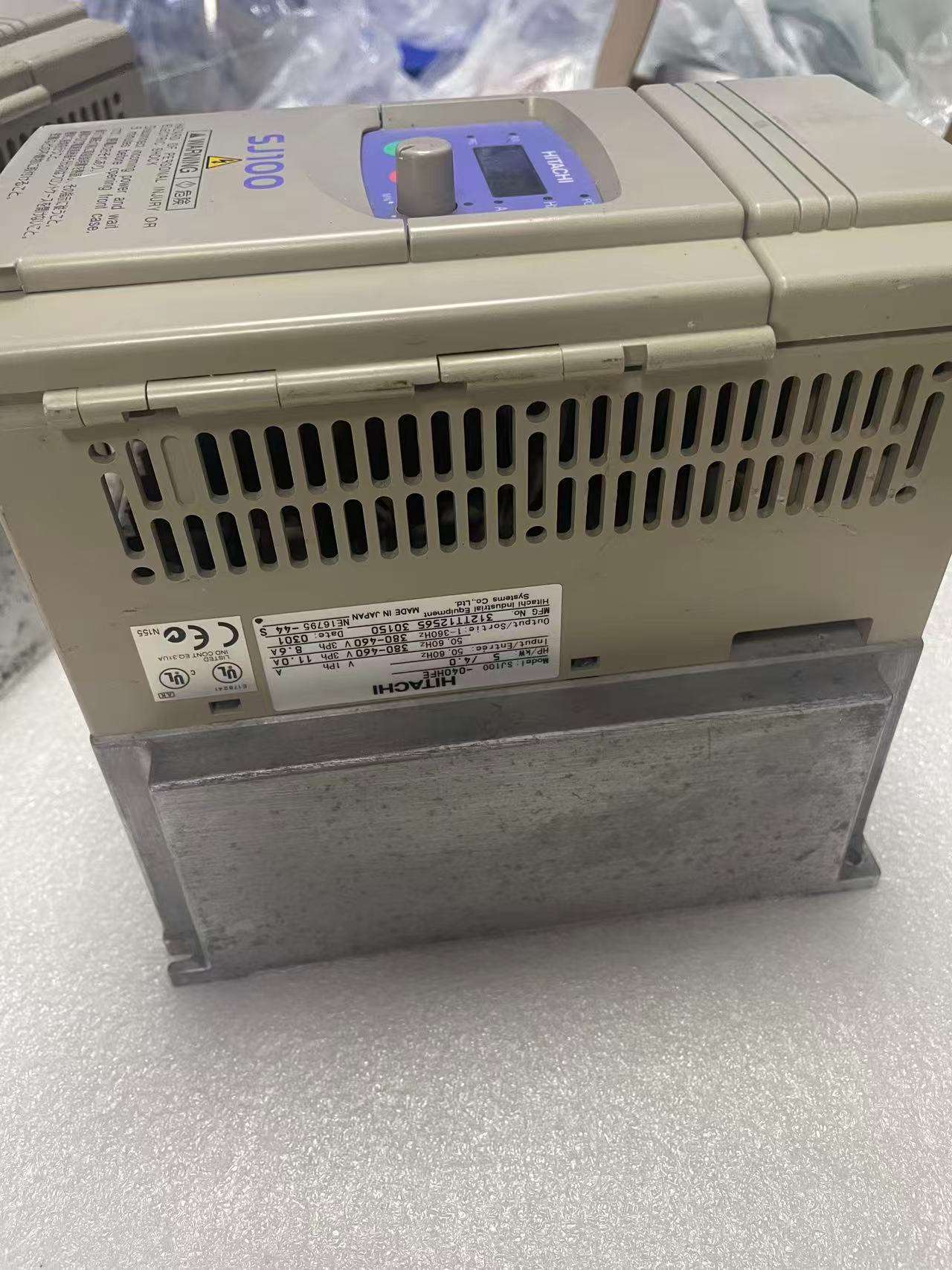
Legacy listings and repair logs frequently mix kW and HP labels, and 400 V class codes appear as both 037 and 040 depending on series and year. Before ordering, photograph the silver nameplate and confirm three things: the rated output current (A), the rated output capacity (kVA), and the input voltage/phases. Match on rated output current against the motor nameplate FLA — not on the kW or HP marketing label alone. Cross-verify against the listing at the KOEED product page for this exact unit.
Technical Benchmarking: SJ100-040HFE vs. Modern 4 kW / 400 V Class Drives
The table below frames the legacy unit against what a comparable modern replacement delivers. Use it to decide whether you are buying uptime, or buying upside.
| Parameter | Hitachi SJ100-040HFE (Legacy) | Modern 4 kW / 400 V Class Equivalent |
|---|---|---|
| Power class | 4.0 kW / ~5 HP, three-phase 400 V class | 4.0 kW / 5 HP, three-phase 380–480 V |
| Control method | V/f (constant torque and variable torque curves) with sensorless vector option | V/f, sensorless vector, and often closed-loop vector in the same frame |
| Output frequency range | Approx. 0.5–400 Hz, programmable upper/lower limits | Typically 0.1–400 Hz or wider, with multi-speed and skip-frequency tables |
| Frequency setting resolution | Digital operator / analog / multi-speed terminals | Same plus high-resolution analog, pulse train and fieldbus setpoints |
| Overload capability | ~150% for a short-time rating, electronic thermal protection | ~150–200% depending on duty rating (heavy/normal duty selectable) |
| EMC filtering | Integral filter (the trailing F in the part number) | Integral or option-card filter, category C2/C3 configurable |
| Communications | Optional RS-485 / Modbus-family interface | Built-in Modbus RTU plus options for EtherCAT, EtherNet/IP, PROFINET, BACnet |
| Safety | Conventional stop categories only | Often integrated STO (SIL 3 / PL e) on premium frames |
| Operator interface | Integral keypad with parameter groups (F/A/b/C/H families) | Keypad plus PC/tablet commissioning tools, parameter copy, SD backup |
| Diagnostics | Trip-code display with trip history | Trip codes plus time-stamped logs, DC bus and thermal trending, predictive alerts |
| Spares / support | Declining OEM support; tested used and refurbished stock is the practical channel | Full OEM support with published 10-year lifecycle statements |
| Best-fit use case | Restoring an existing machine with minimum engineering change | Greenfield builds, energy-efficiency retrofits, IIoT and safety upgrades |
Where the Legacy Unit Wins
- Zero re-engineering. Existing parameter files, wiring diagrams, PLC interlocks and panel cut-outs all remain valid. No new commissioning documents, no re-validated safety logic.
- Fastest mean time to repair. For an unplanned line-down event, same-model swap is typically hours, not days.
- Preserved machine documentation trail. In FDA-, IATF- or aerospace-regulated environments, keeping the validated configuration intact can avoid a change-control exercise entirely.
Where the Modern Unit Wins
- Energy efficiency. Modern sensorless-vector algorithms hold flux and torque more tightly at part load, which is precisely where fan, pump and conveyor duties spend most of their life.
- Connectivity. Native fieldbus and web-capable diagnostics feed condition monitoring without a bolt-on gateway.
- Safety integration. Integrated STO removes contactor-based hardware and shortens safe-stop response.
- Lifecycle certainty. Published availability windows make long-term spares planning far more reliable.
2026 Economics: TCO, Energy and Downtime Math
Drive purchasing decisions in 2026 are rarely about the sticker price. The dominant cost terms are energy, downtime and engineering labour. Here is the framework we use with integrators and plant engineers.
Total Cost of Ownership Model for a 4 kW Drive Position
- Acquisition. Drive unit, plus any braking resistor, reactor or filter accessory required by the existing panel design.
- Engineering labour. Parameter reload, I/O re-termination and functional test. Near-zero for a same-model swap; substantial for a cross-platform retrofit.
- Energy. The largest lifetime cost in continuous duty. A 4 kW motor running 6,000 hours per year at 75% average load consumes roughly 18,000 kWh annually before VFD optimisation.
- Maintenance and spares. DC bus capacitor ageing, cooling fan life and thermal cycling drive most failures. Legacy stock availability directly affects the risk premium here.
- Downtime exposure. Apply your own cost-per-hour to the difference between a same-day swap and a multi-day redesign. This single term usually dominates the business case.
- Deferred modernisation optionality. A functioning legacy position buys you the freedom to plan a full line upgrade on your schedule rather than reacting under pressure.
Legacy-drive pricing is set by condition, test documentation, warranty terms and stock depth — not by a public list price. Treat any figure you see as an indicative index band only, and request a dated quotation for the specific unit, quantity and Incoterms you need. Verified-good pulls with test records typically sit well below the cost of a new modern drive plus the engineering hours required to fit it.
IT/OT Convergence and Predictive Maintenance Blueprint
Legacy drives do not have to stay dark. A pragmatic layered approach lets you keep the SJ100-040HFE doing its job while adding the data layer that modern maintenance strategies expect.
Layer 1 — Keep the Drive Stable
- Record and archive the full parameter set as soon as the unit is commissioned. Export it, photograph the keypad screens, and keep a copy off-machine.
- Label every terminal, including the EMC filter and any braking resistor connection, before removal.
Layer 2 — Sensor the Load, Not Just the Drive
- Clamp-on current transducers on the motor leads give trendable load data without opening the drive.
- Infrared temperature patches on the heatsink and the motor frame surface create a low-cost thermal history.
- A vibration sensor on the driven equipment catches bearing degradation before it becomes an inverter trip.
Layer 3 — Feed the CMMS
- Log run-hours, trip events and ambient temperature against the asset record. Thermal cycling plus hours run is the best available proxy for DC bus capacitor end-of-life.
- Set a replacement threshold, not a failure threshold. The cheapest drive replacement is the one you schedule.
Where your panel allows a safe measurement, DC bus voltage ripple and heatsink temperature are the two most predictive signals on an ageing drive. Rising ripple or a creeping heatsink temperature at constant load points to capacitor degradation or restricted airflow. Catch that trend and you convert an unplanned failure into a planned, same-model swap. For details on the unit shown here, see the SJ100-040HFE listing.
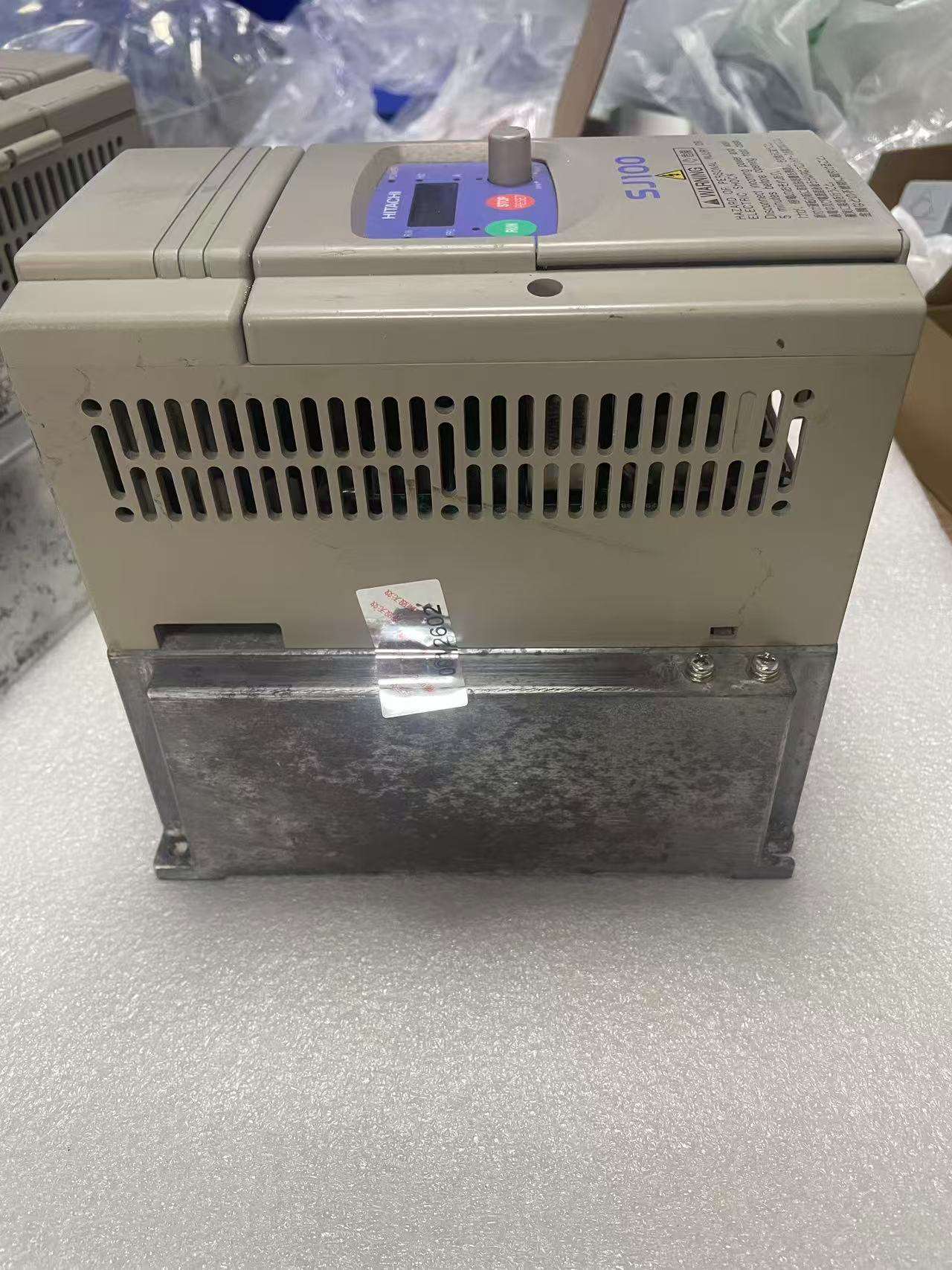
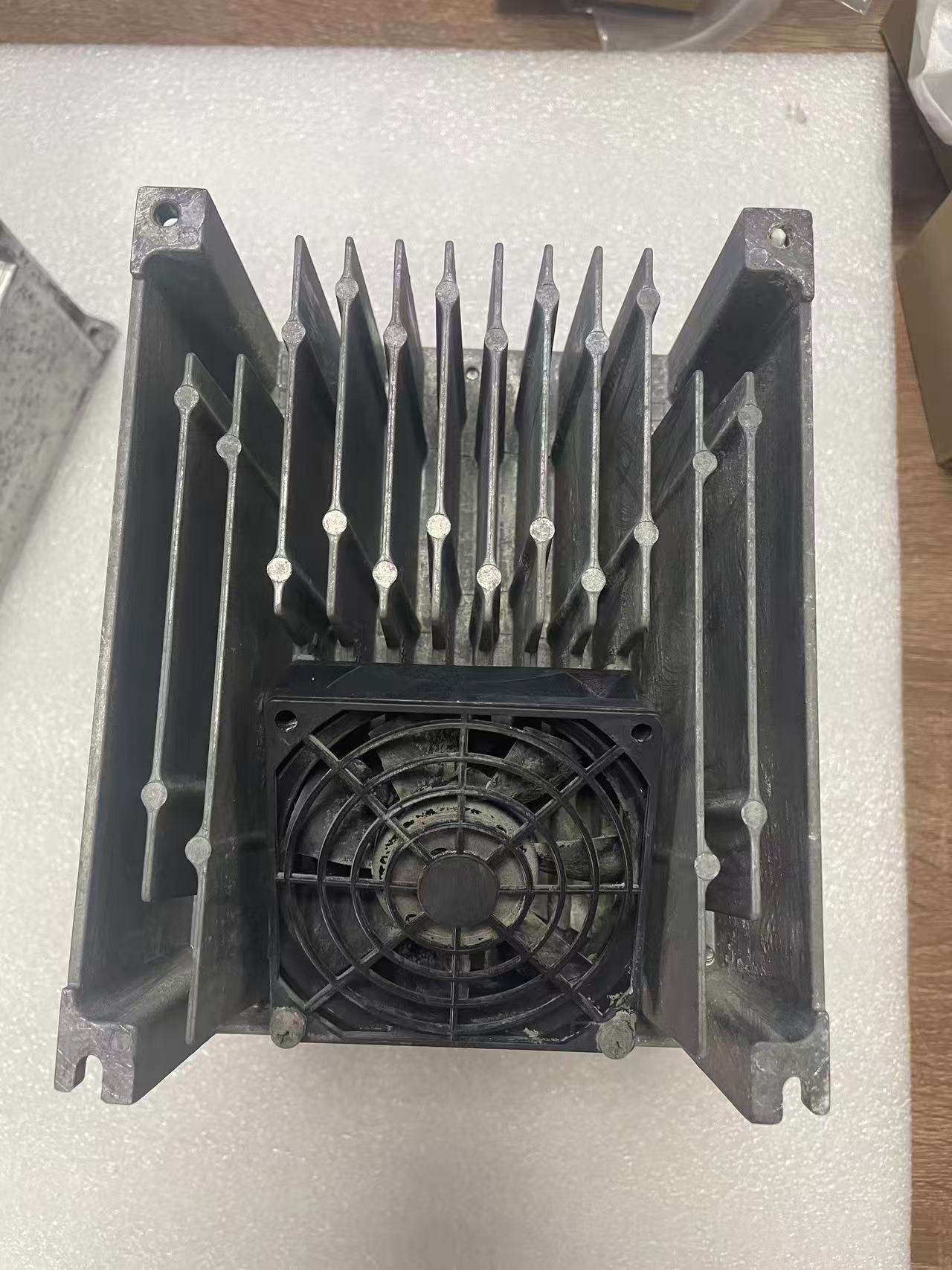
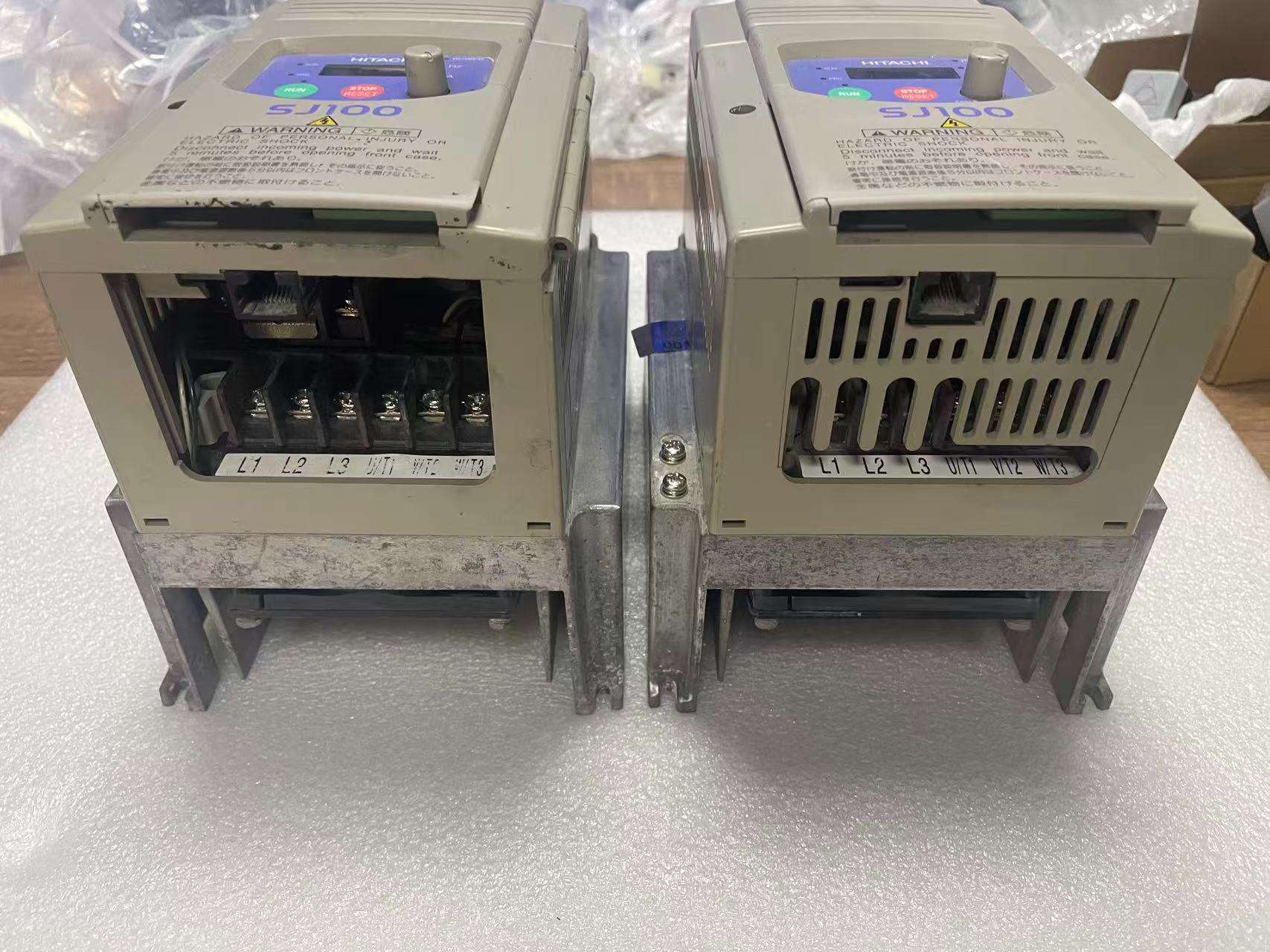
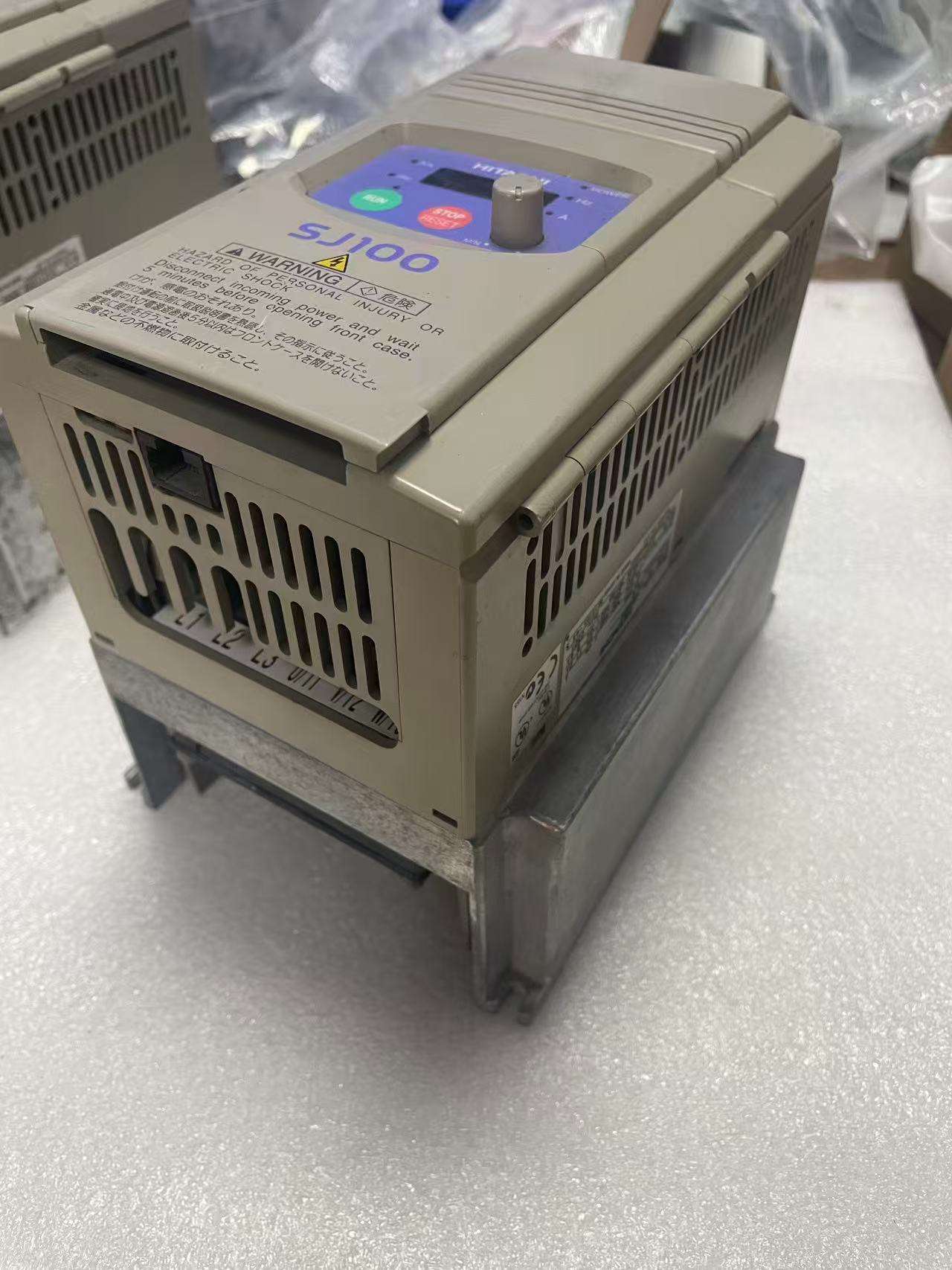
Visual Gallery: Documentation of the SJ100-040HFE Unit
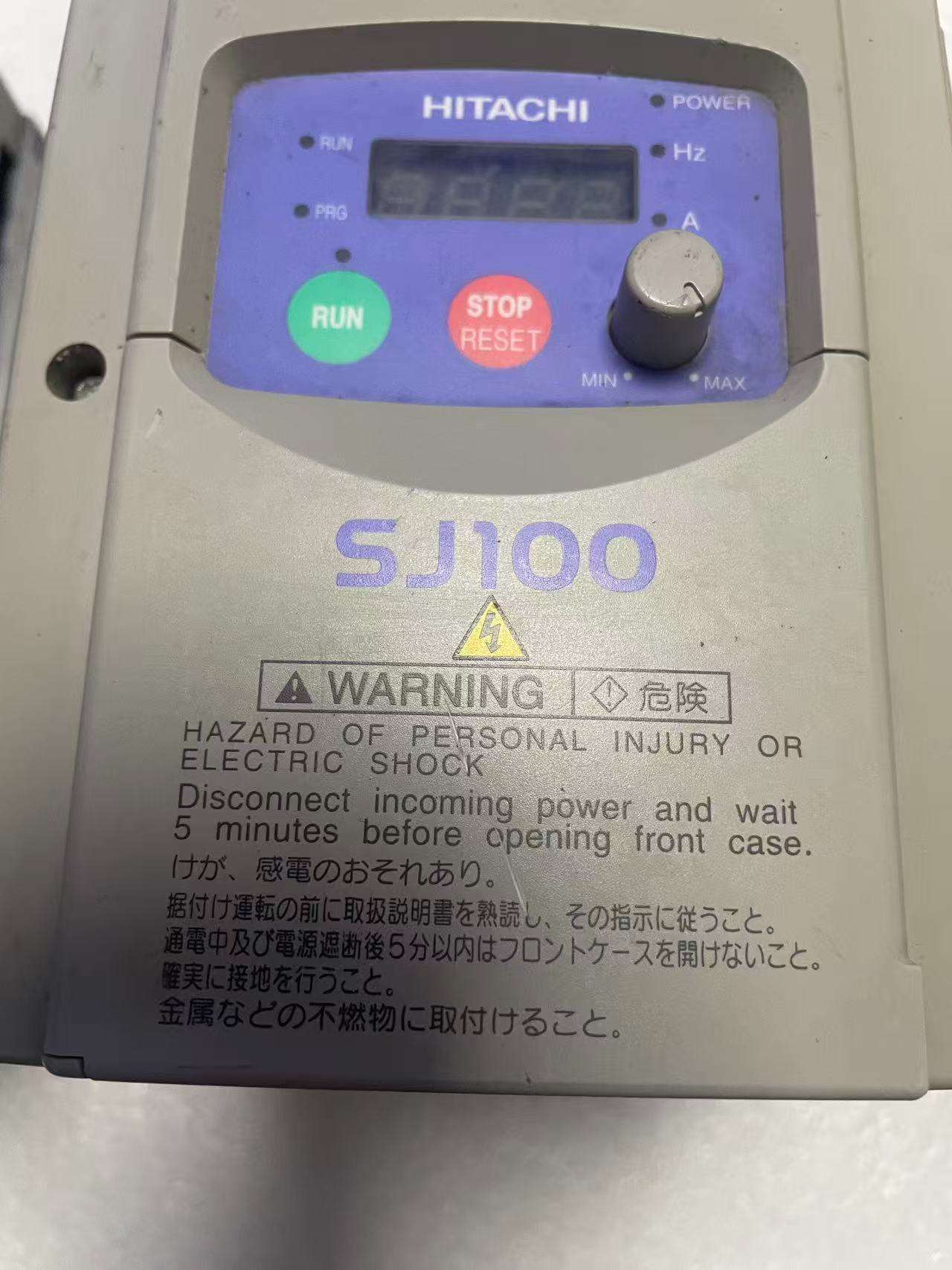
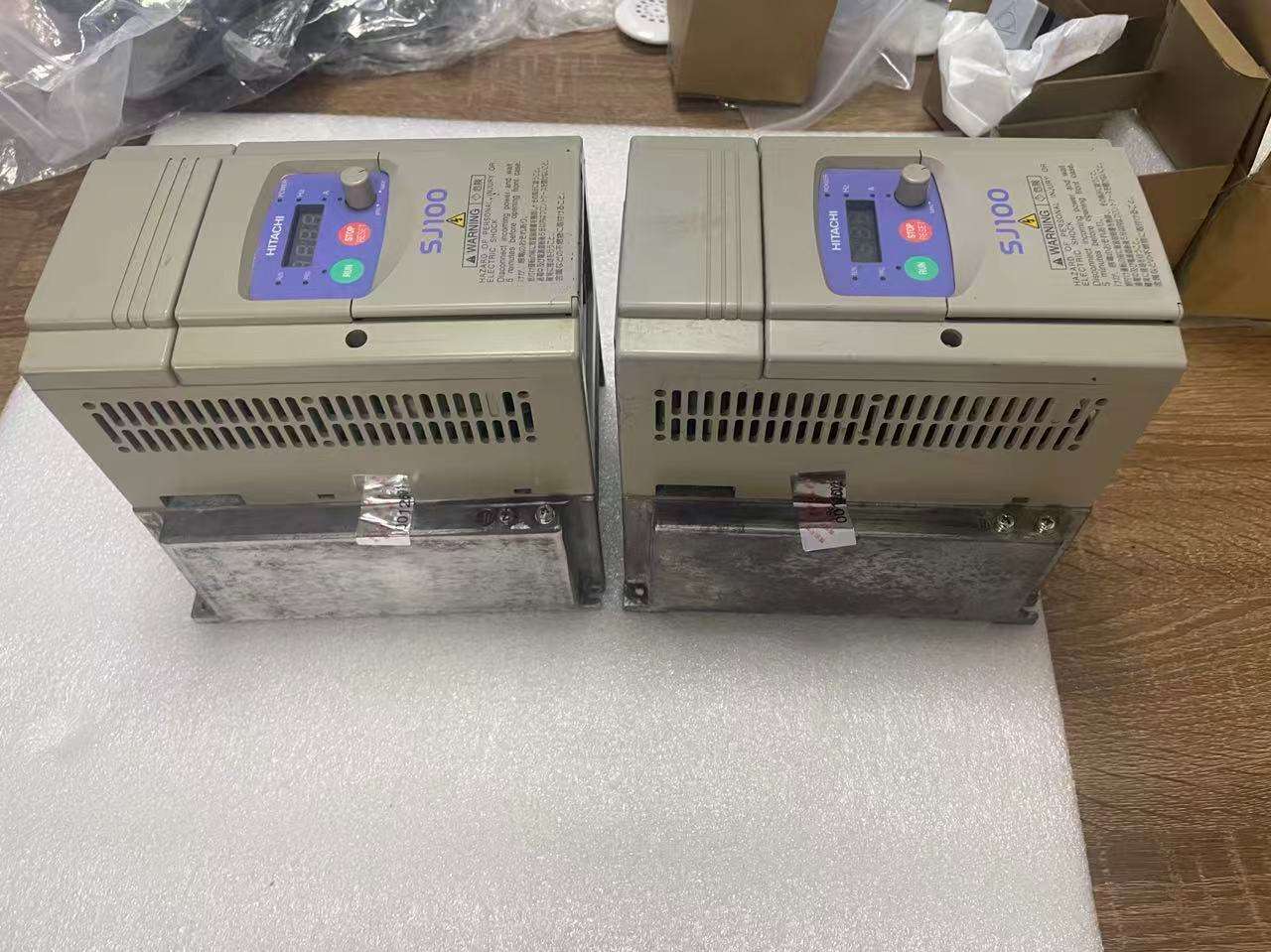
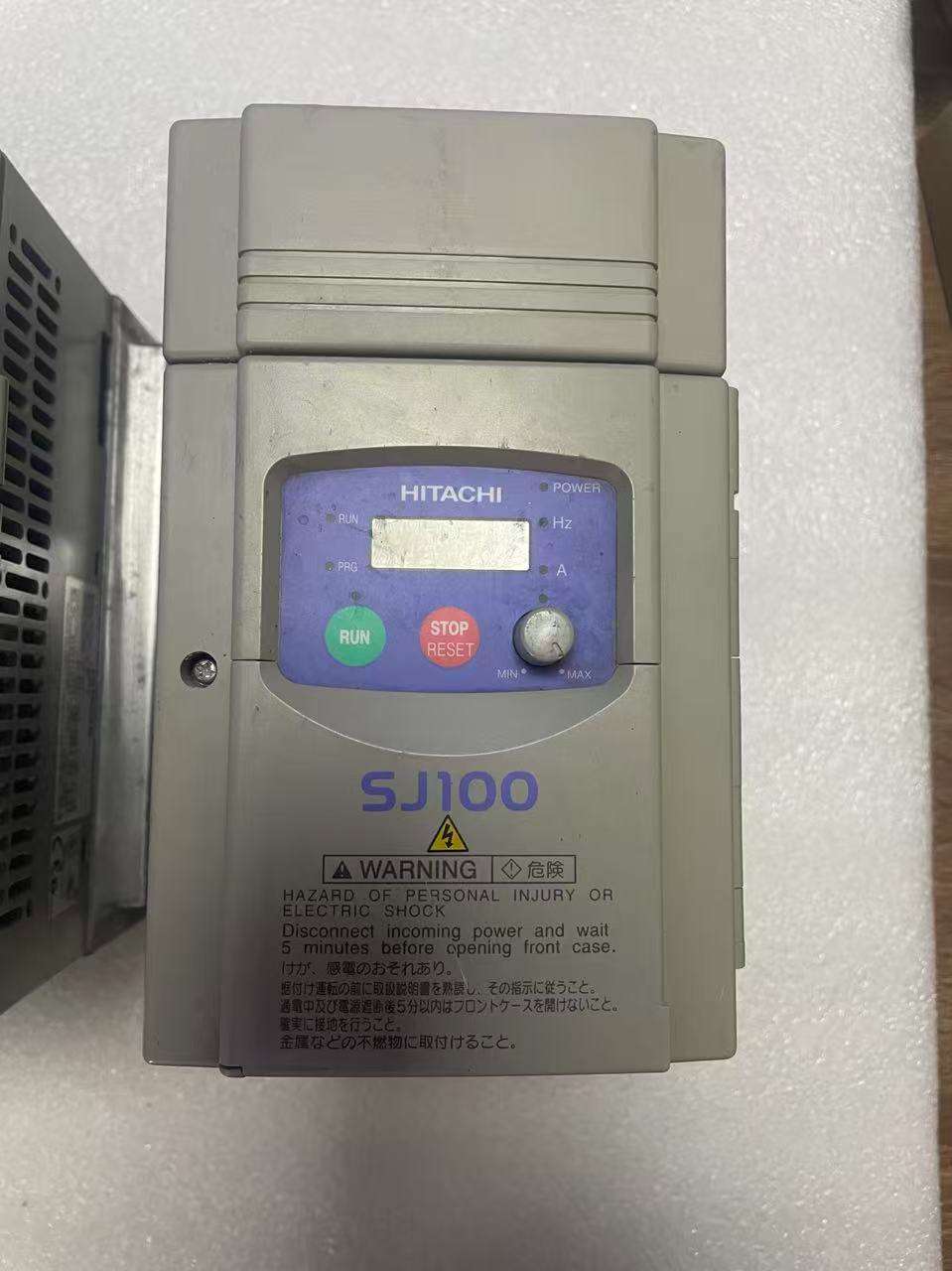
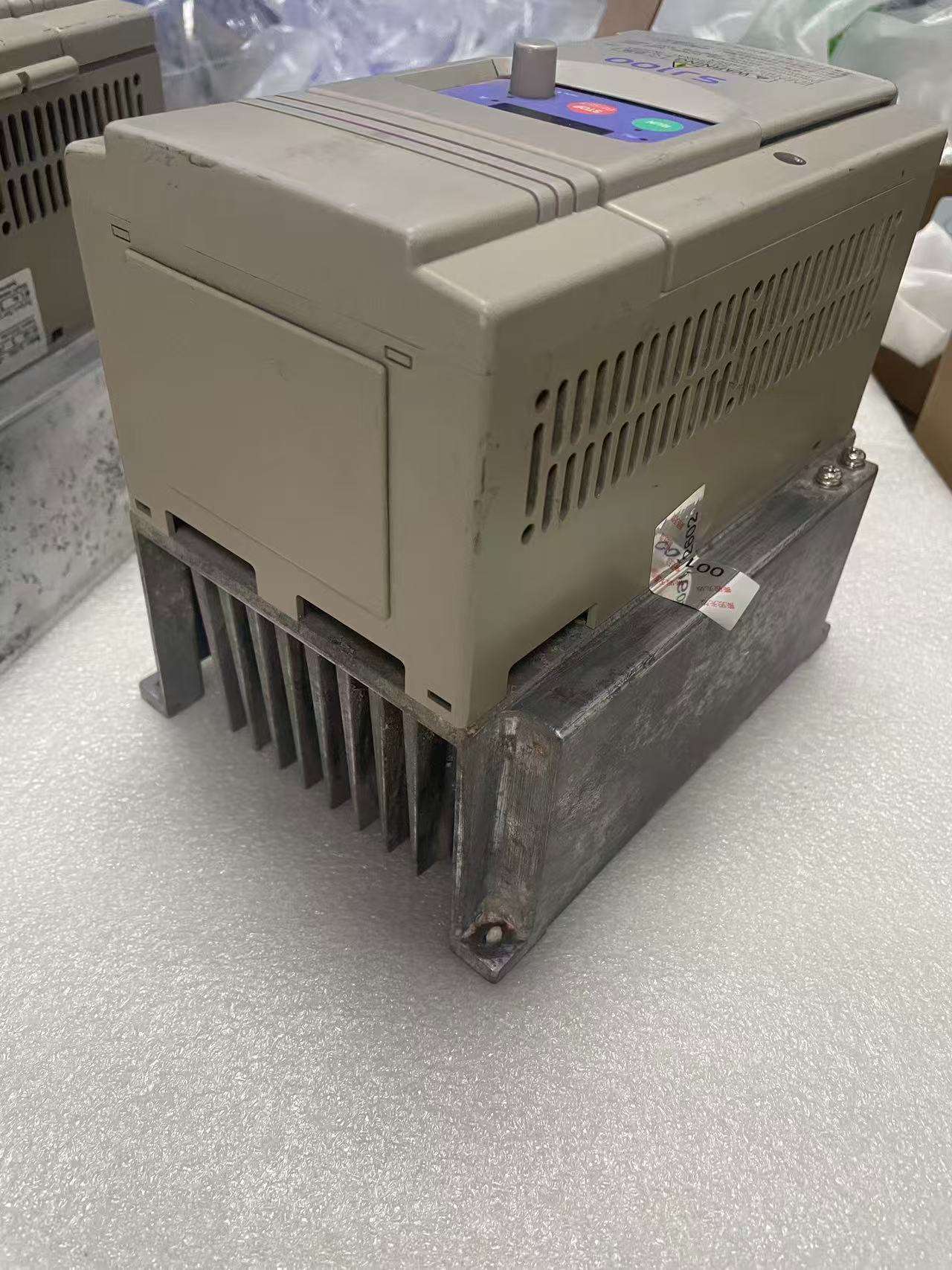
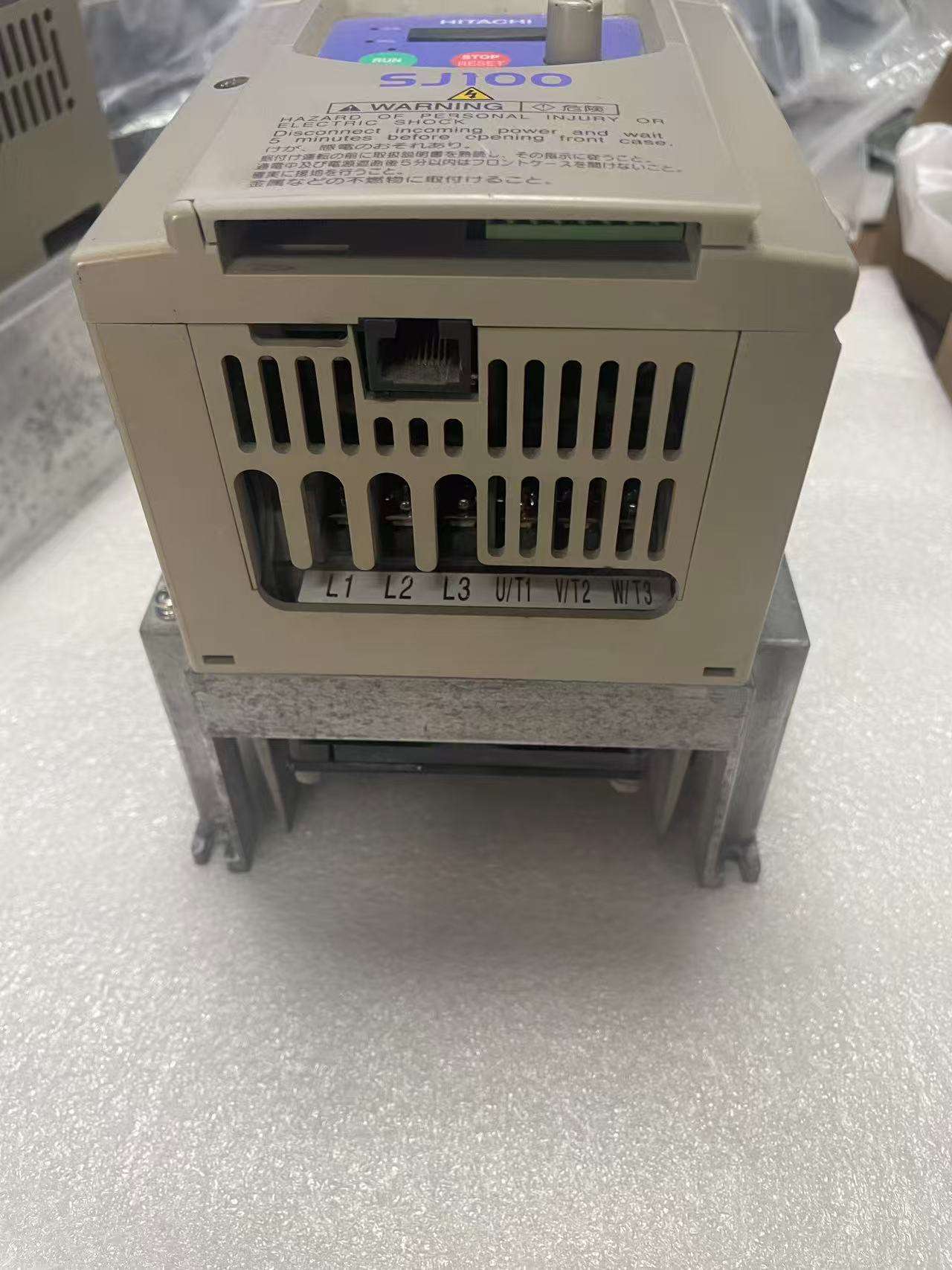
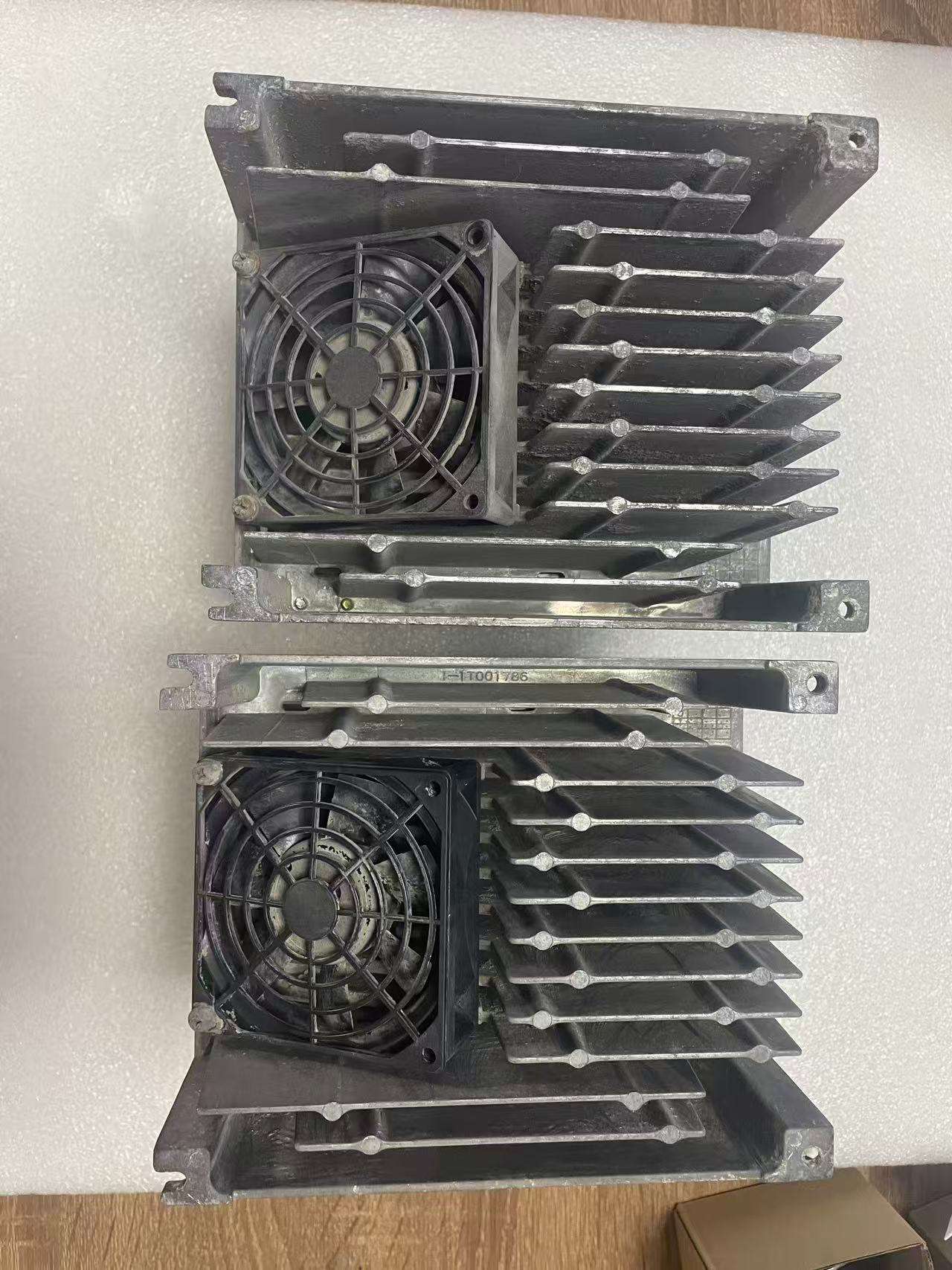
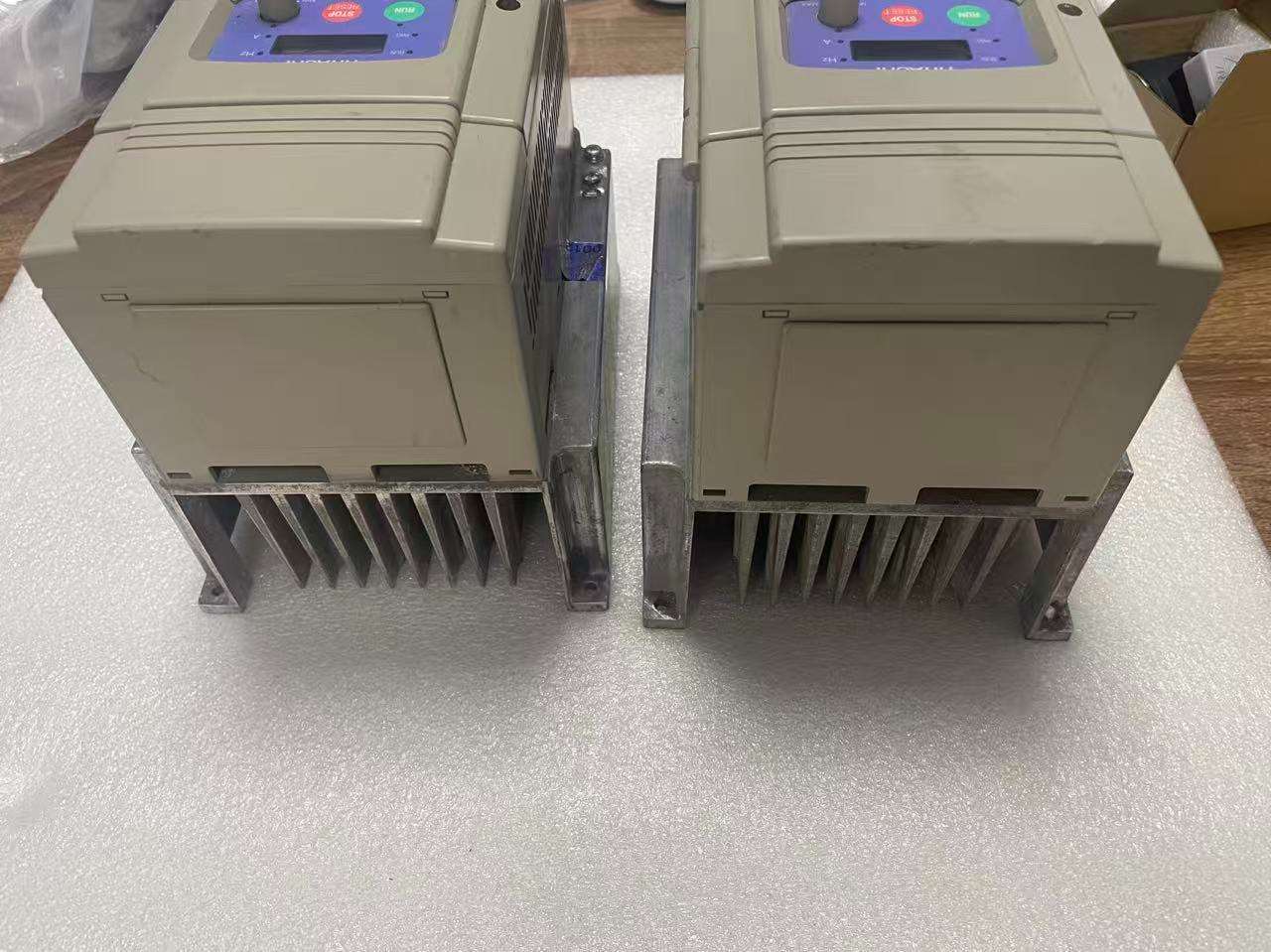
Every angle in the gallery below corresponds to the specific unit referenced in this article. Use these images to verify enclosure condition, terminal integrity, label legibility and keypad presence before you commit to a purchase.
Maintenance and Troubleshooting Playbook
Legacy Hitachi drives surface the same failure families year after year. The trip code tells you where to look first; the discipline is refusing to change parts before you have confirmed the cause.
Common Trip Codes and First-Line Diagnosis
| Trip Code Family | Meaning | First-Line Checks |
|---|---|---|
| E01 – E04 (over-current group) | Over-current during acceleration, deceleration, constant speed or at power-on | Motor insulation resistance; cable length and shielding; mechanical jam or seized load; acceleration time setting; ground fault on output leads |
| E05 (electronic thermal) | Motor overload protection operated | Verify the electronic thermal level matches the motor nameplate FLA; confirm cooling airflow; check for a genuine mechanical overload |
| E06 (braking resistor overload) | Regenerative energy exceeded braking duty | Reduce deceleration frequency/duty cycle; check resistor ohms and wattage; verify resistor wiring and thermal switch |
| E07 (over-voltage) | DC bus exceeded the 400 V class threshold | Extend deceleration time; confirm braking unit or resistor installed; check for input-side voltage transients or a leading power factor condition |
| E08 (EEPROM / parameter memory) | Parameter storage integrity error | Re-initialise parameters from your archived set; if the fault returns immediately, control board replacement is likely |
| E09 (under-voltage) | DC bus fell below the minimum threshold | Check all three input phases; input contactor and fuses; loose terminal torque; supply sag during other large load starts |
| E12 (external trip) | Intelligent input triggered by external contact | Trace the thermal overload, PTC or interlock wired to the intelligent input terminals |
| E13 (unattended start protection) | Power restored while a RUN command was still asserted | Reset the RUN source; verify PLC sequencing; reconsider USP enable/disable per application |
| E14 (ground fault) | Earth leakage detected on the output | Megger the motor and cable; inspect for moisture ingress in the motor terminal box |
| E15 / E16 (thermal / input over-voltage) | Inverter overheat or incoming over-voltage protection | Clean heatsink and fan; verify panel ambient and airflow clearance; check supply voltage and any upstream capacitor bank switching |
Trip code numbering and parameter group names vary with firmware revision. Always confirm the specific code against the manual revision that matches the drive's production date before replacing hardware.
Before you remove a failed SJ100-040HFE, capture all five of these. It turns a swap into a 30-minute job instead of a commissioning project.
1. Photograph every terminal with wiring intact. 2. Record the full parameter set, or export it if a copy tool is available. 3. Note the keypad display state at the moment of failure. 4. Measure incoming three-phase voltage and record it. 5. Log motor nameplate FLA and note any deviation from the electronic thermal setting. When the replacement arrives, you can restore and verify in a single visit.
DC bus capacitors retain hazardous voltage after input power is removed. Follow the drive's documented discharge wait time before touching terminals, verify zero voltage with a properly rated meter, and only work with qualified personnel under your site's lock-out/tag-out procedure. Never megger the drive output terminals.
Preventive Maintenance Interval Guidance
- Monthly: Inspect the heatsink and fan path for dust build-up; verify panel filter condition; confirm no abnormal noise or vibration from the drive bay.
- Quarterly: Thermographic scan of terminals and bus bars under load; check terminal torque; review trip history and ambient temperature logs.
- Annually: Verify parameter backup is current; inspect DC bus capacitors for swelling or electrolyte leakage; measure and trend heatsink temperature at a repeatable load point; test cooling fan operation and replace if rotation is sluggish.
- At 10+ years in service: Treat capacitor and fan replacement as planned maintenance. Cost the replacement drive against the intervention, and prefer a scheduled swap over a live failure.
Sustainability Angle
Keeping a functioning drive in service avoids the embodied carbon of manufacturing a new unit — but only if it does not carry an energy penalty. The practical position is nuanced and worth stating plainly:
- A legacy V/f drive on a fixed-speed pump or fan leaves substantial energy on the table. Adding or restoring variable-speed control is usually the single largest sustainability win on that asset.
- If the SJ100-040HFE is already controlling speed on a variable-torque load, its energy performance in that duty is broadly comparable to a modern unit at the same operating point. The incremental gain from replacement alone may be modest.
- Repair-and-reuse therefore makes strongest environmental sense where the duty is already variable speed, and strongest financial-plus-environmental sense where you pair it with a control-strategy improvement — closing a bypass, adding a pressure setpoint, or replacing a throttling valve with speed control.
Frequently Asked Questions
Is the Hitachi SJ100-040HFE rated 3 kW or 4 kW?
The model code follows Hitachi's capacity-index convention, where the three-digit figure in a 400 V class part number maps to the kW rating. In this series that places the 040 code in the 4.0 kW / 5 HP class. Some repair logs and third-party listings mislabel it as 3 kW or 3.7 kW, often because they are quoting an HP equivalent or copying from a different series such as the J100 or L100. The reliable verification method is the nameplate: confirm rated output current and rated output capacity, then match against your motor's full-load amps. If your application is marginal on current, always size up rather than down — see the specification record for this unit.
What does HFE mean in the part number?
Three separate designators. H indicates the 400 V three-phase class (200 V class units use N). F indicates a factory-fitted EMC/harmonic filter, which matters for CE compliance and cable-length limits. E indicates the European specification build. A 200 V class counterpart would read NFE — for example SJ100-004NFE at 0.4 kW.
Can I replace the SJ100-040HFE with a modern drive without rewiring the panel?
Usually yes for power wiring and often yes for control wiring, but the engineering effort is not zero. A modern 4 kW / 400 V drive typically accepts three-phase input and outputs to the motor in the same way, but control terminal layouts, analog scaling, digital input polarity and parameter structures differ. You will need to translate the I/O map, re-verify safety interlocks, and re-commission. Budget engineering hours accordingly. If your priority is minimising downtime rather than gaining new capability, a same-model replacement is the lower-risk option.
How do I back up the parameters before a swap?
Three approaches, in order of reliability. First, use a parameter copy function or configuration tool if one is available for the series. Second, manually read and record every non-default function code from the keypad and photograph the screens as a cross-check. Third, document the machine's operating setpoints — base frequency, max frequency, acceleration and deceleration times, electronic thermal level, and multi-speed settings — so you can rebuild the configuration even if the full parameter list is lost. Store the record with the machine's maintenance file, not just on a technician's phone.
How do I verify that a used or refurbished drive is actually good?
Ask for evidence in five categories: a clear nameplate photograph matching the advertised model code; images of the terminal blocks showing no heat discolouration, arcing or torque damage; confirmation that the keypad powers up and the display shows all segments; an operational video demonstrating power-up and display behaviour; and a stated warranty and return policy. The gallery above is exactly this kind of documentation for the referenced unit. Consistency between the advertised code, the nameplate and the physical appearance is your best fraud filter.
What is the realistic remaining service life of a legacy drive?
It depends on duty cycle and thermal history more than on calendar age. The dominant wear items are DC bus electrolytic capacitors and cooling fans. A drive that has run cool, in a filtered enclosure, at moderate load can serve many more years with fan replacement and periodic inspection. A drive that has run hot, in a dusty panel, at continuous full load will reach end-of-life sooner. Trend heatsink temperature and hours run; schedule the replacement before the failure, and keep a known-good spare on the shelf.
Do you supply accessories, spare parts or a tested alternative if this unit sells?
Yes. Drive positions are frequently available in more than one quantity or condition grade, and we can advise on braking resistors, reactors, filters and operator panels that match the existing installation. If you need a specific revision, a different voltage class, or a quantity quote for a multi-machine line, state the requirement in the quote request and the team will confirm availability rather than guess.
Order, Verify and Deploy
The SJ100-040HFE remains a practical, defensible choice in 2026 for one specific job: restoring an existing machine to production quickly, with no engineering change and no regulatory re-validation. If your requirement is new capability — closed-loop vector performance, integrated safety, native EtherNet/IP or EtherCAT, or a documented ten-year lifecycle — then the honest recommendation is a modern drive and a planned retrofit window.
For buyers who need uptime now, the fastest path is to confirm the exact unit, review the condition documentation, and lock in a quotation with warranty terms. Start here: Hitachi Frequency Converter SJ100-040HFE — Good Condition.
When you contact us, include four details and the quotation process becomes considerably faster: the exact model code as printed on your nameplate, the rated output current of your existing unit, the quantity required, and your destination country or Incoterms preference. If you are unsure whether the 040 index matches your motor, send the motor nameplate photograph as well — that resolves the sizing question immediately.
Get a Dated Quote or Technical Confirmation
Send your model code, quantity and application details. We will confirm availability, condition grade, warranty terms and shipping options — and flag it if a different unit is the better technical fit for your machine.
Request a QuoteChat on WhatsApp


