

Schneider LC1F185M7 TeSys F Contactor: 2026 Guide to 180A Industrial Motor Control, IT/OT Integration & Predictive Maintenance
Strategic Overview: The LC1F185M7 in the 2026 Industrial Landscape
As manufacturing floors evolve toward fully connected, data-driven ecosystems in 2026, the humble contactor remains the unsung workhorse of industrial motor control. The Schneider Electric LC1F185M7 — part of the renowned TeSys F family — stands as a flagship solution for heavy-duty switching applications up to 185A (AC-3) and 100kW at 400V. Far from being a legacy component, this 3-pole contactor has been increasingly deployed within IT/OT converged architectures, where edge gateways and PLCs monitor contactor health in real time to drive predictive maintenance strategies.
Available now at Koeed's dedicated LC1F185M7 product page, this contactor addresses the critical junction between raw power switching and intelligent automation. For system integrators and maintenance engineers upgrading aging motor control centers (MCCs) in 2026, the LC1F185M7 delivers a rare combination of proven electromechanical reliability and modern connectivity readiness.
🔑 2026 Value Proposition — At a Glance
AC-3 185A 100kW @400V 220V AC Coil 3-Pole NO 2,400 Cycles/h Bolt Terminals
Technical Benchmarking & Specifications
Understanding where the LC1F185M7 sits within Schneider's TeSys F ecosystem is essential for proper component selection. The table below benchmarks this model against key operational parameters and contrasts it with a typical legacy contactor that many facilities are still running in 2026.
| Parameter | Schneider LC1F185M7 (TeSys F) | Typical Legacy Contactor (Pre-2018) |
|---|---|---|
| Rated Operational Current (AC-3, ≤440V) | 185 A | 150–180 A (inconsistent under thermal stress) |
| Motor Power Rating @ 400V | 100 kW | 75–90 kW equivalent frame |
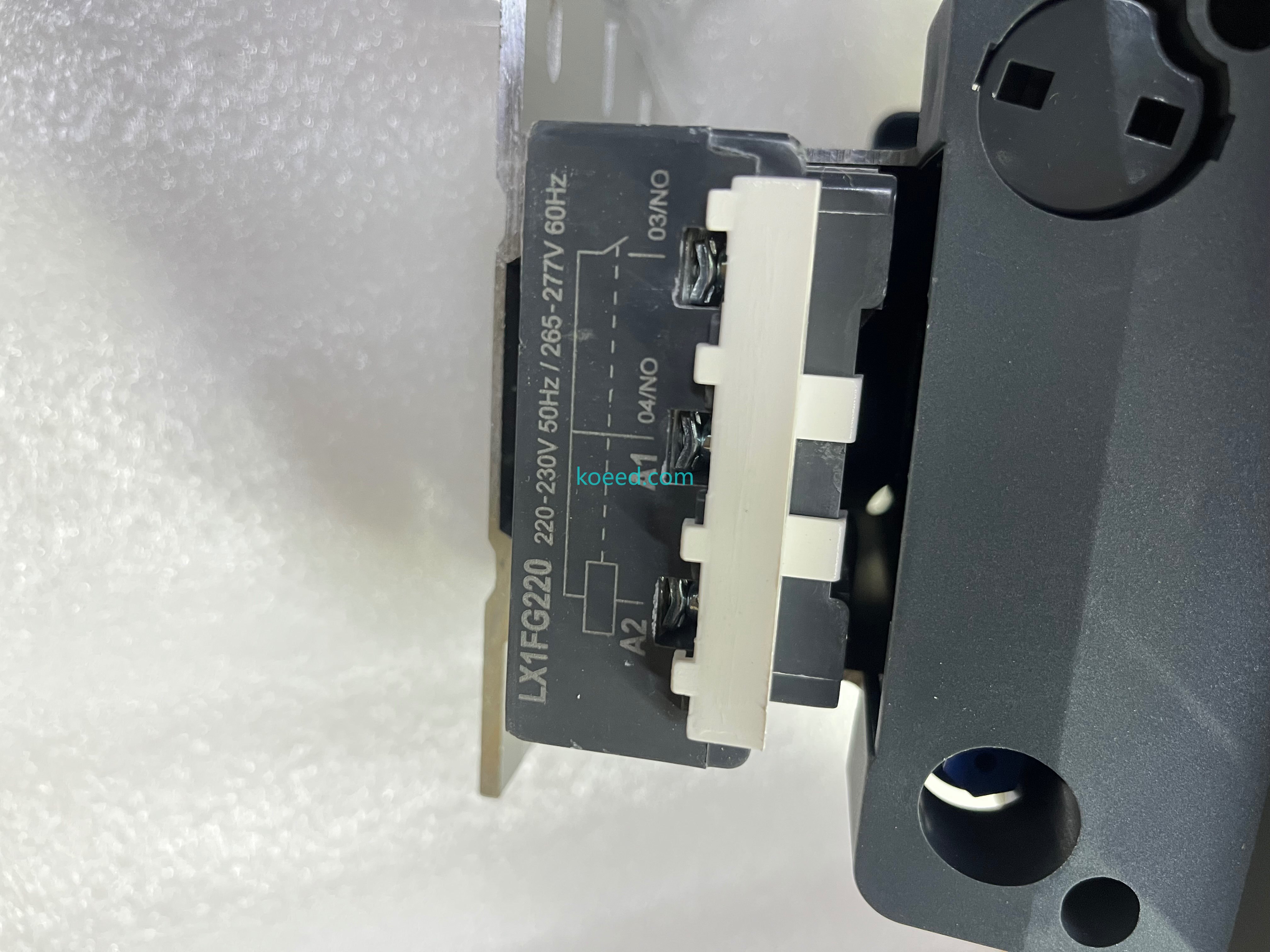
| Coil Voltage | 220 V AC, 40–400 Hz | 220 V AC, 50/60 Hz only |
| Pole Configuration | 3P (3 NO) — Main poles | 3P (3 NO) |
| Max Operating Rate | 2,400 cycles/hour | 600–1,200 cycles/hour |
| Terminal Type | Bolt terminals — bars or cables with lugs | Screw clamp (limited torque) |
| Mechanical Durability | 5+ million operations (typical TeSys F) | 1–3 million operations |
| Coil Consumption (Sealed) | Low sealed consumption design | Standard consumption (higher thermal loss) |
| Auxiliary Contact Expandability | Front-mount / side-mount compatible | Limited or fixed aux contacts |
| IT/OT Monitoring Readiness (2026) | Compatible with TeSys island & EcoStruxure | No digital interface capability |
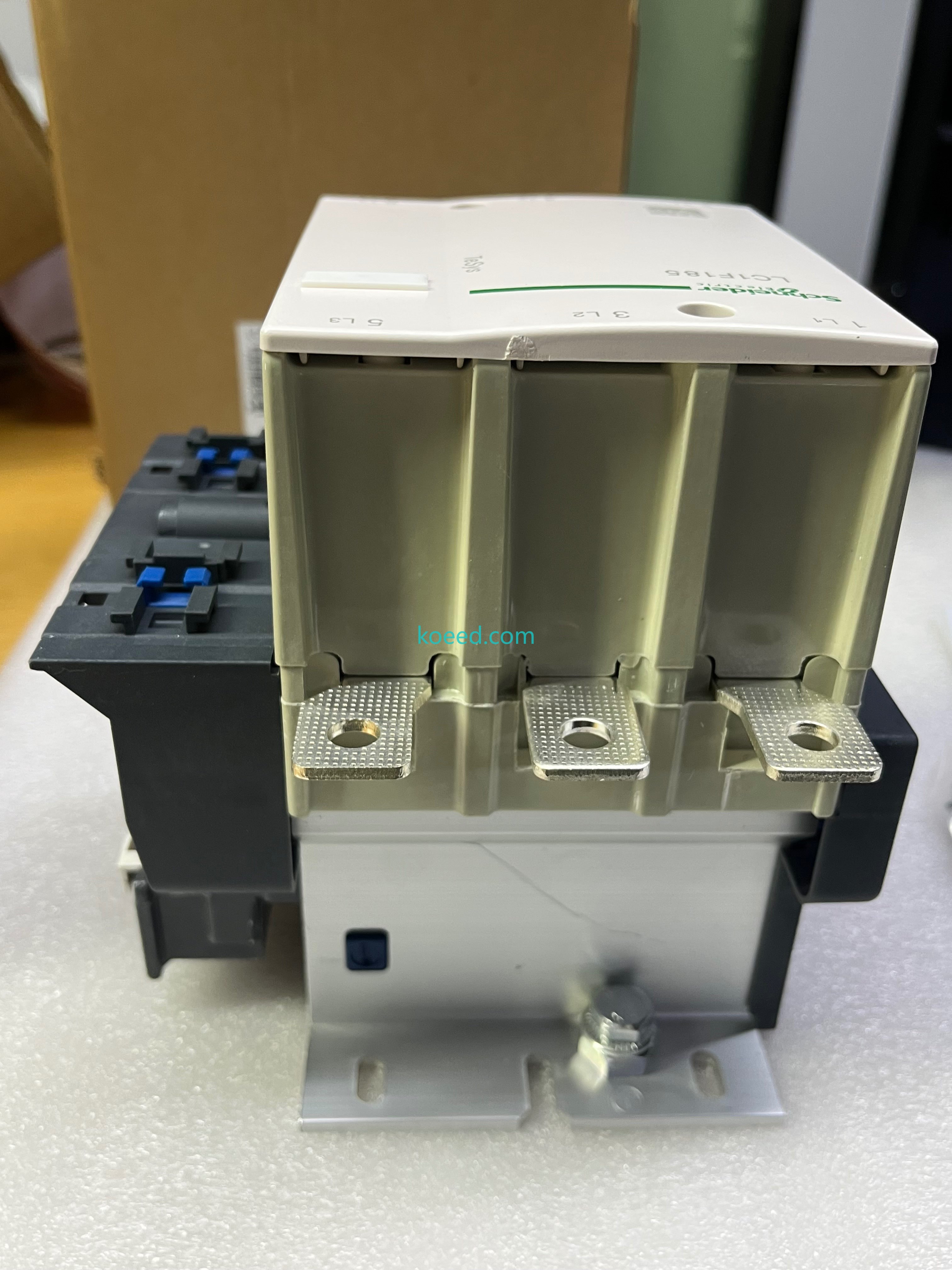
The LC1F185M7's 2,400 cycles/hour rating makes it particularly suitable for 2026's high-throughput manufacturing lines — think automotive assembly, packaging, and material handling — where rapid motor starts and stops are the norm. The bolt terminal design ensures secure, low-resistance connections even under vibration-heavy conditions, a critical factor as facilities push toward 24/7 lights-out operations.
Product Visual Gallery — Schneider LC1F185M7
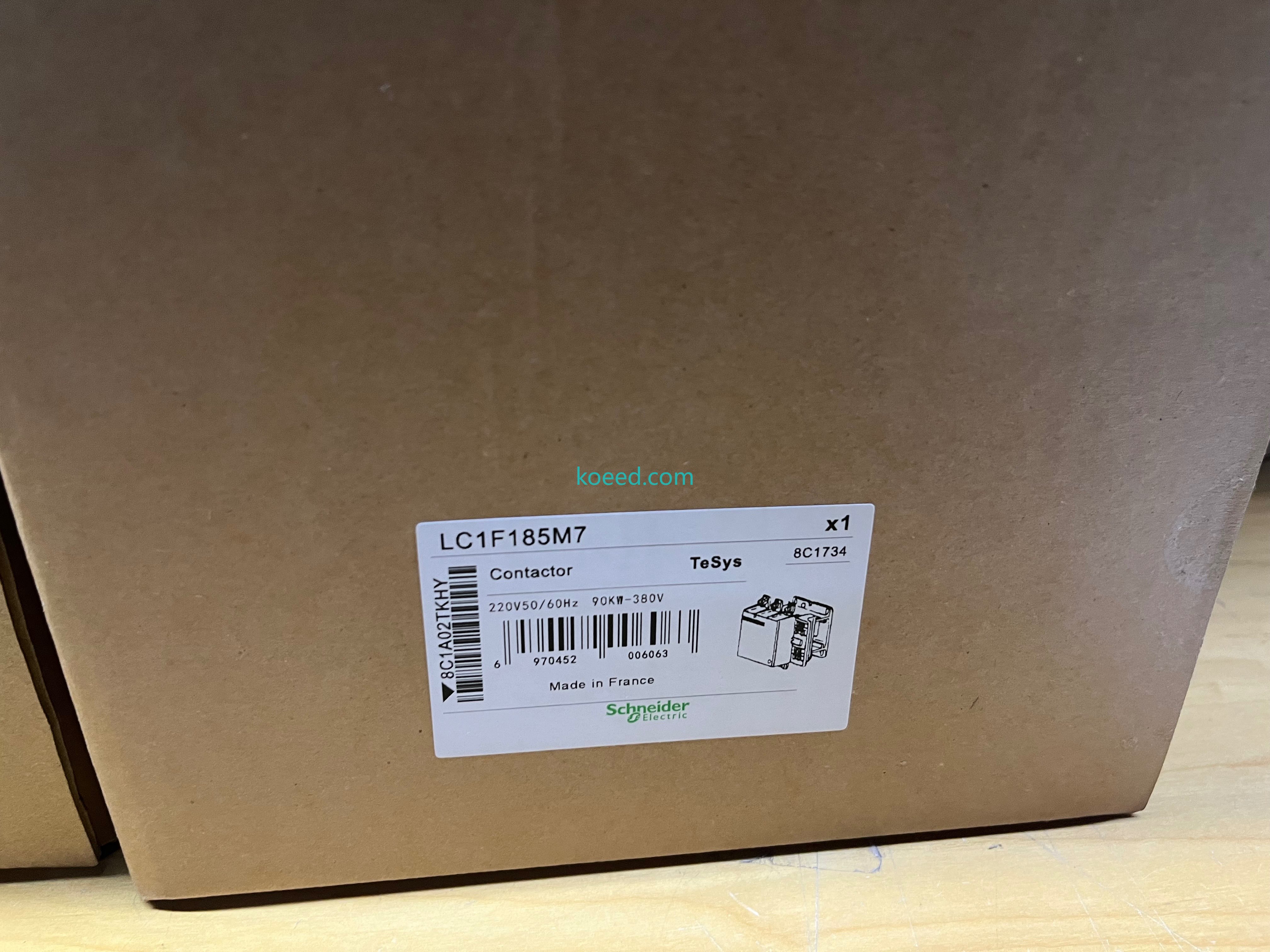
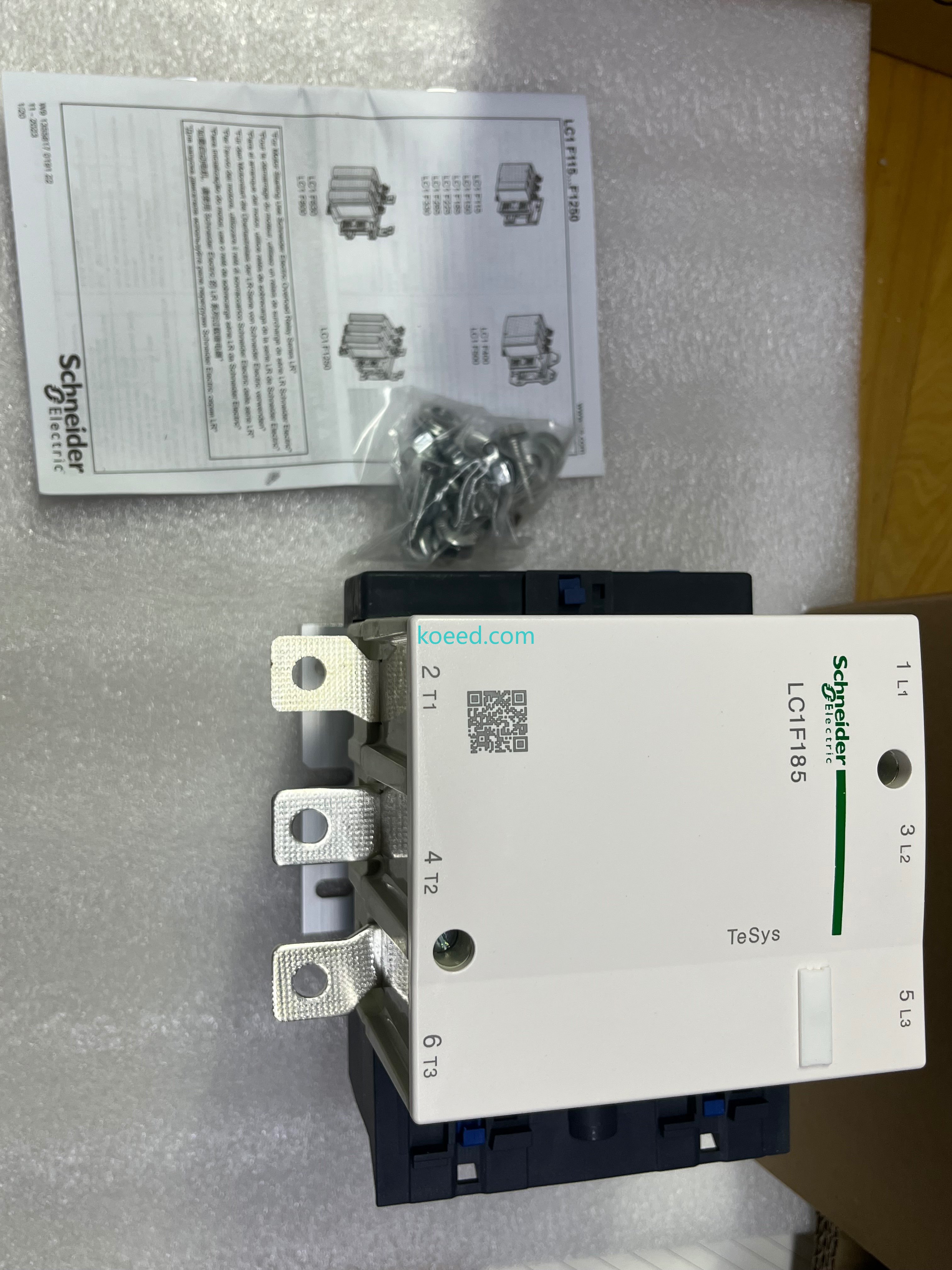
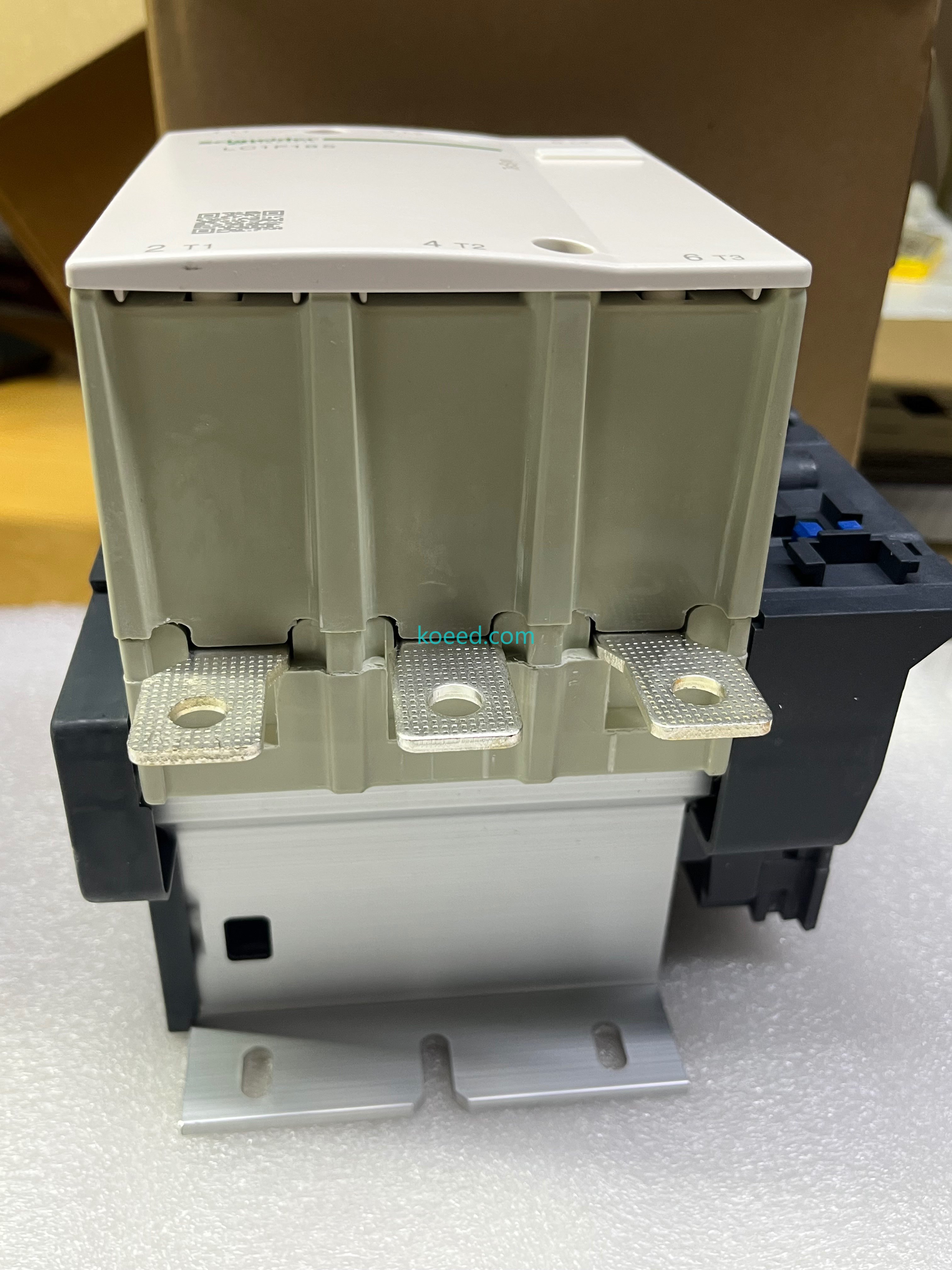
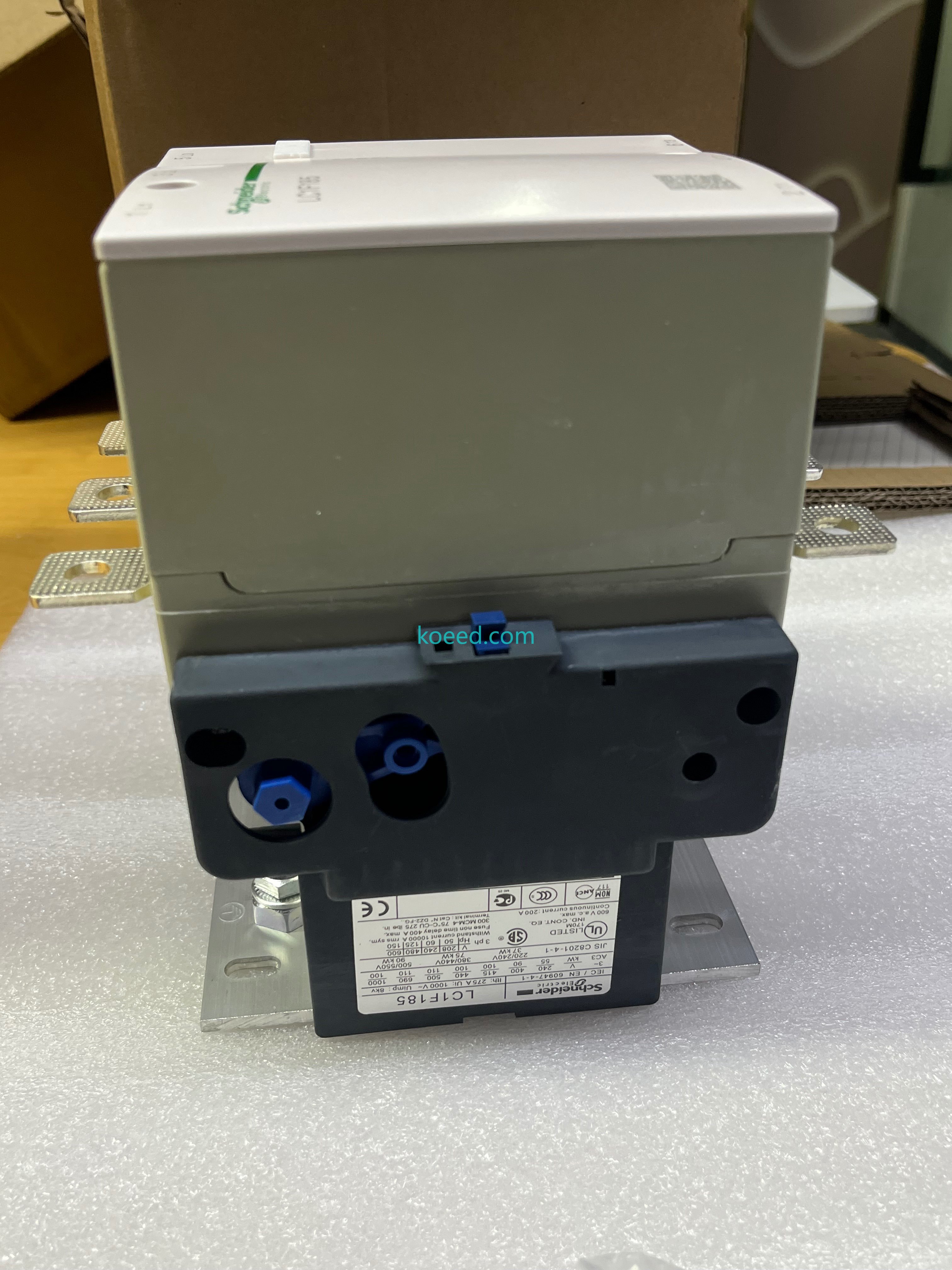
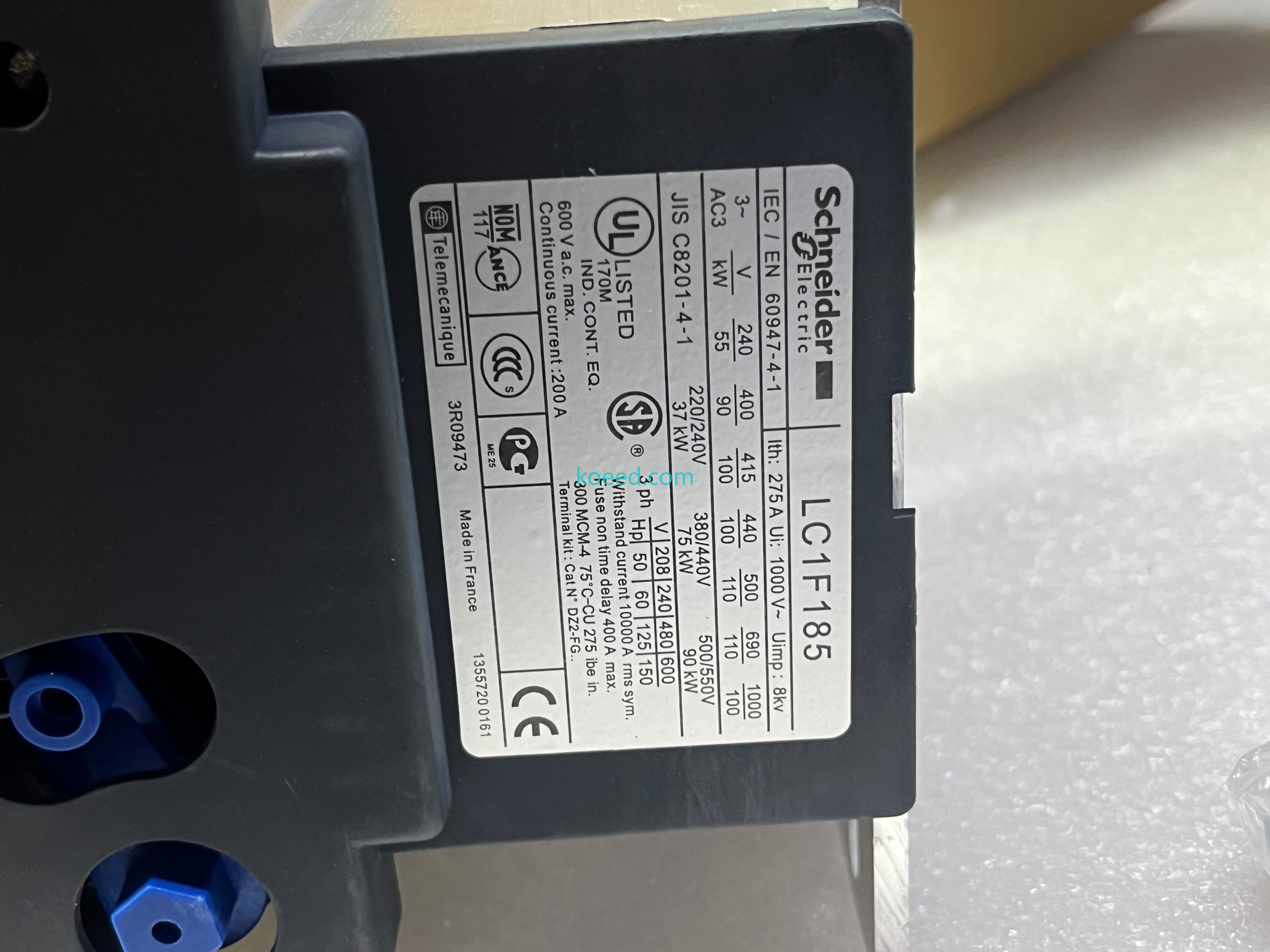
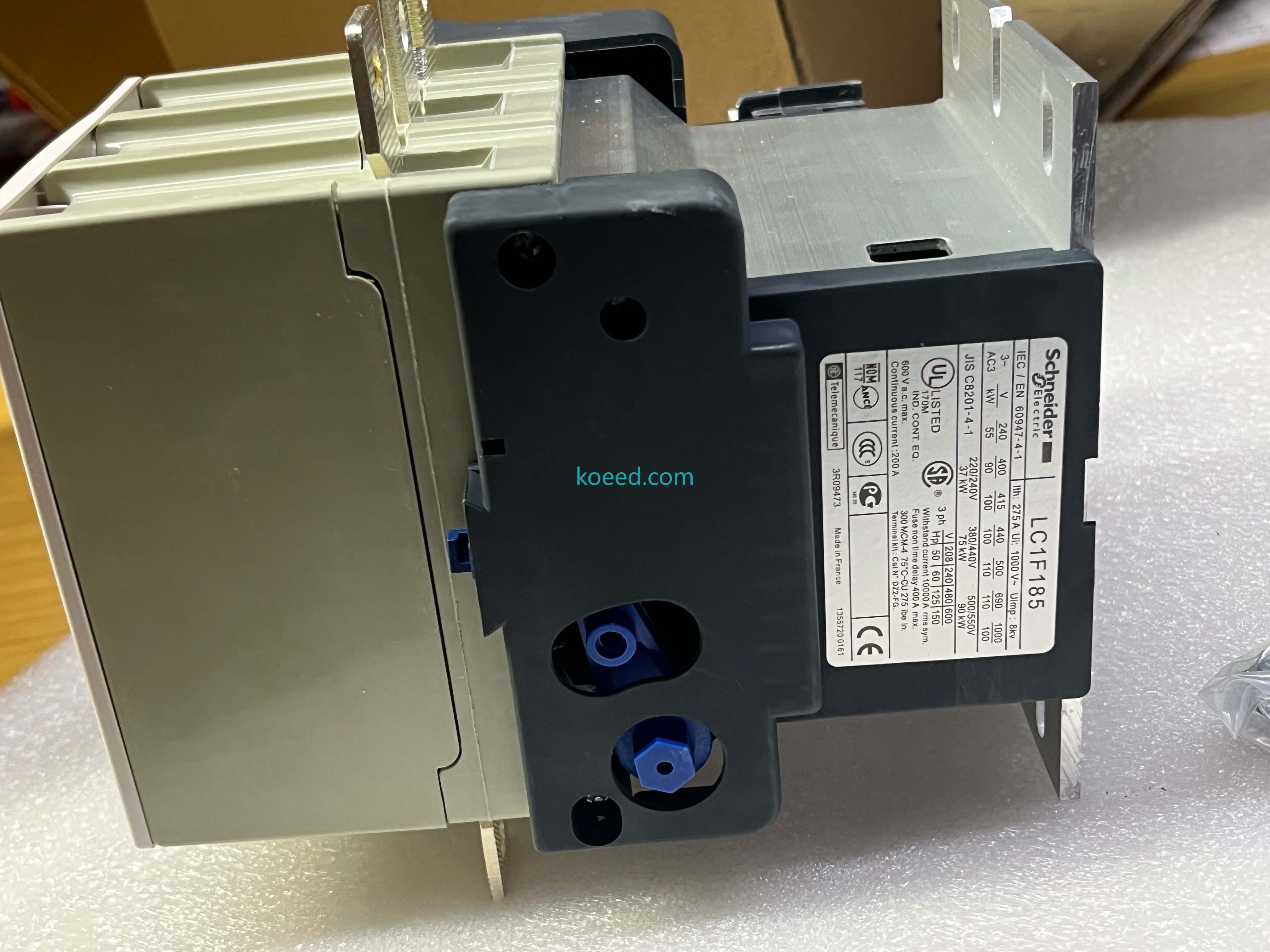
Below is a comprehensive visual inspection of the Schneider LC1F185M7 contactor available at Koeed. These images showcase the unit's build quality, terminal layout, nameplate markings, and packaging — all essential for incoming inspection and spares verification in 2026.
2026 Integration: IT/OT Convergence & Predictive Maintenance
In 2026, the boundary between operational technology (OT) and information technology (IT) has all but dissolved. Forward-thinking plants no longer treat contactors as "dumb" switches — they are critical data nodes within a broader predictive maintenance ecosystem. The LC1F185M7 integrates seamlessly into this paradigm through Schneider's EcoStruxure Machine architecture and compatibility with TeSys island digital load management systems.
How the LC1F185M7 Fits into a Connected MCC
While the LC1F185M7 itself is a traditional electromechanical contactor, its design accommodates auxiliary contact blocks and electronic timers that can feed status data — contact state, coil health, cycle count — into edge PLCs or IoT gateways. This data flows into cloud-based CMMS (Computerized Maintenance Management Systems) or on-premise SCADA platforms, enabling:
- Cycle Counting & Remaining Useful Life (RUL) Estimation: By tracking cumulative operations against the rated mechanical endurance, AI/ML algorithms can forecast replacement windows months in advance.
- Coil Current Signature Analysis: Anomalies in coil inrush or sealed current — monitored via smart relays upstream — can indicate impending coil degradation, contamination, or mechanical binding.
- Thermal Anomaly Detection: When paired with DIN-rail thermal sensors, abnormal temperature rises at the contactor's terminals trigger early warnings of loose connections or contact wear before catastrophic failure occurs.
- ERP-Integrated Spares Management: Once the RUL threshold is breached, the CMMS automatically generates a purchase requisition — and with Koeed's LC1F185M7 inventory, replacement units ship within hours, not weeks.
Maintenance & Troubleshooting: Pro-Tips for Longevity
Even in 2026, where predictive algorithms do the heavy lifting, boots-on-the-ground maintenance knowledge remains indispensable. Below are field-tested guidelines to maximize the service life of your LC1F185M7 contactors.
Preventive Maintenance Schedule
| Interval | Action | Tool / Method |
|---|---|---|
| Monthly | Visual inspection for dust accumulation, discoloration, or terminal oxidation | Thermal camera or IR thermometer |
| Quarterly | Torque verification on all bolt terminals (line & load side) | Calibrated torque wrench per Schneider specs |
| Semi-Annually | Measure coil resistance and compare against baseline; check for insulation degradation | Milliohmmeter / insulation tester (500V DC) |
| Annually | Inspect main contacts for pitting, erosion, or material transfer; replace if contact wear exceeds 50% | Borescope or disassembly (qualified personnel) |
| Event-Driven | After any short-circuit event, inspect for welded contacts and test coil integrity before re-energizing | Full functional bench test |
Common Fault Scenarios & Resolutions
Contactor Chattering or Buzzing
Likely causes: Low coil voltage (below 85% nominal), dirt/debris on the magnet faces, or a shading coil fracture. Verify supply voltage at the coil terminals under load. Clean pole faces with a lint-free cloth. If the shading coil is damaged, replace the entire coil assembly — do not attempt to repair the shading ring.
Overheating at Main Terminals
Likely causes: Loose bolt connections (most common), undersized cable lugs, or contact erosion causing increased resistance. Re-torque all connections to Schneider's specification. Use a micro-ohmmeter to verify contact resistance across each pole — values exceeding 100 µΩ warrant further investigation. Replace contacts if severe pitting is observed.
Coil Burnout (Premature Failure)
Likely causes: Overvoltage (sustained above 110% nominal), excessive ambient temperature beyond rated limits, or high switching frequency causing thermal accumulation. Verify that the control transformer tap is correct for your local supply. Ensure panel ventilation is adequate. For applications exceeding 1,800 cycles/hour, consider a DC coil variant with economizer for reduced thermal stress.
Failure to Pick Up (No Close)
Likely causes: Open coil circuit, control wiring fault, or mechanical obstruction. Test coil continuity with a multimeter — an open circuit indicates a burned coil. Check auxiliary interlocks in the control circuit. Mechanically verify that the armature moves freely and is not obstructed by debris or misalignment.
ROI & Total Cost of Ownership Analysis (2026 Perspective)
When procurement teams evaluate the LC1F185M7 in 2026, the conversation has shifted decisively from unit price to Total Cost of Ownership (TCO). Here is how the numbers break down over a typical 10-year MCC lifecycle:
TCO Comparison: LC1F185M7 vs. Budget Alternative
| TCO Factor | Schneider LC1F185M7 | Budget Generic Contactor |
|---|---|---|
| Unit Acquisition Cost | Premium tier (genuine OEM) | 40–55% lower initial cost |
| Expected Service Life | 10–15 years (normal duty) | 3–6 years |
| Mechanical Endurance | 5M+ operations | 1–1.5M operations |
| Unplanned Downtime Risk | Low (proven design, wide spares availability) | High (inconsistent QA, limited spares) |
| Energy Efficiency (Coil Sealed) | Low consumption design — ~5–8 VA sealed | Often 12–18 VA sealed |
| 10-Year Energy Cost (Coil, 24/7 operation) | ~$420–$670 (at $0.12/kWh) | ~$1,000–$1,500 |
| Replacements Over 10 Years | 0–1 | 2–4 |
| 10-Year TCO (est.) | ~$1,200–$1,800 | ~$3,500–$5,500 |
The verdict is clear: the LC1F185M7's TCO advantage of 50–65% over budget alternatives is driven primarily by avoided downtime, reduced replacement labor, and lower coil energy consumption. For a facility with 50+ contactors in operation, the savings compound into six-figure territory over a decade.
Sustainability & Energy Efficiency
Sustainability mandates in 2026 — including the EU's tightened Energy Efficiency Directive and emerging carbon-border mechanisms — mean that every watt matters. The LC1F185M7's low sealed coil consumption (typically 5–8 VA) contributes directly to Scope 2 emissions reduction. Across a 50-contactor installation running 24/7, the energy savings versus legacy or budget contactors can exceed 3,500 kWh annually — equivalent to approximately 1.6 metric tons of CO₂ per year (at the global average grid emission factor).
Furthermore, Schneider Electric's commitment to circular economy principles means the LC1F185M7 is designed with end-of-life recyclability in mind. The metal-dominant construction (copper, steel) ensures high material recovery rates, aligning with 2026's increasingly stringent WEEE and e-waste regulations.
Frequently Asked Questions
What is the exact motor power rating of the LC1F185M7 at different voltages?
The LC1F185M7 is rated for 100kW at 400V AC-3, approximately 90kW at 415V, and 125 HP at 460V (3-phase). At 690V, the AC-3 rating reaches 185A, suitable for motors up to approximately 160kW. Always consult the latest Schneider Electric coordination tables for your specific motor type and duty cycle. For current 2026 pricing and availability, visit the Koeed product page.
Can I use the LC1F185M7 in a DC motor application?
The LC1F185M7 is an AC-3 rated contactor optimized for 3-phase induction motors. While it can switch DC loads at reduced ratings, it is not recommended for high-current DC motor control without careful derating and appropriate arc suppression. For DC applications, Schneider offers specific DC contactors in the TeSys range. Consult the manufacturer for DC utilization categories (DC-1, DC-3, DC-5) and corresponding current ratings.
How do I integrate the LC1F185M7 into a safety system?
The LC1F185M7 itself is not a safety-rated device, but it can be used in combination with Schneider's Preventa safety modules or safety PLCs to achieve SIL/PL requirements. For emergency stop or safety functions, the control circuit should include positively guided auxiliary contacts or a safety-rated contactor in series. Always refer to ISO 13849-1 and IEC 62061 standards for proper integration.
What is the difference between LC1F185M7 and LC1D185 contactors?
The LC1F185M7 belongs to the TeSys F heavy-duty range, designed for harsh environments and high mechanical endurance (5M+ ops). The LC1D185 is part of the TeSys D compact range, offering a smaller footprint with slightly reduced mechanical life (approx. 3M ops). Both share the same AC-3 185A rating, but the F series provides bolt terminal connections (versus D series screw clamps) and extended frequency range for the coil. Choose LC1F185M7 for high-cycle, vibration-prone applications.


