5774002 EVAC Water Valve — Fitment, Verification & Sourcing Guide
By Moritta Chen · KOEED Sourcing Engineer · Fact-checked against unit nameplate data · Every quotation is confirmed in writing before dispatch
The 5774002 water valve is a spare for EVAC vacuum sewage and flush-water circuits — the kind of line item that holds up a toilet, a galley drain or a whole blackwater system until somebody can confirm which valve variant is actually fitted. This page explains what the part number does and does not tell you, which fields really decide fitment, and how to get a written quotation without a single unverified number in it.
TL;DR
- 5774002 is an EVAC spare-part number for a water valve used in vacuum sewage / flush-water circuits. The “1PC” in the listing is the quantity unit — one piece — not a model or a dimension.
- Fitment is decided by circuit position, port and mounting interface, seal material and actuator type — none of which the OEM publishes as a public, model-keyed datasheet for this number.
- This page deliberately publishes no numeric ratings. We do not underwrite numbers we cannot trace to a document; every figure that matters comes off your unit nameplate or system drawing.
- Email the nameplate, port photos and required quantity to Moritta@KOEED.COM — average response under 24 hours, quoted in writing before dispatch.
What the 5774002 part number identifies
EVAC builds vacuum toilet and vacuum sewage systems for ships, offshore units and rail applications, and supplies the wider water, wastewater and treatment chain around them. Inside those systems, water valves appear in several distinct positions: flush/rinse water control at the interface or toilet group, supply isolation for a water leg, and the water side of discharge or recirculation paths. A catalog number places the item inside that family. It does not, by itself, tell you the port size, the end connection, the seal compound, the actuator type or the electrical data of the pilot or coil.
If you are working from a requisition that reads “1PC 5774002”, read it the way the trade reads it: the number is the identifier, the 1PC is the count. Buying “one piece” against a number that may cover a bare valve, a valve with actuator, or a kit with seals and fasteners is the most common source of a second shipment — which on a dock schedule is worse than a late shipment.
What the published documentation confirms — and where it stops
EVAC distributes spare-parts documentation through its service and support network, keyed to the individual system on board or on site, rather than through a public datasheet index for each spare-part number. Public material describes the system families and the spare-parts service; it does not give us a citable numeric table for 5774002. So this page stops at the family level. Anything numeric — port size, pressure class, coil voltage, seal temperature range — has to come from the documents that belong to the actual unit in front of you. That boundary is stated plainly here because the alternative, a plausible-looking spec table assembled from a similar valve, is exactly how wrong parts get shipped.
Step 1 — The design family: what a water valve does in a vacuum sewage circuit
In a vacuum sewage system, blackwater and greywater move because of the differential pressure created by the vacuum source, with a small volume of flush or rinse water introduced at the toilet or interface valve. Valves in these circuits generally fall into two roles: (a) controlling low-volume flow of flush/rinse or technical water, and (b) isolating a leg of the water or discharge path for maintenance. Role (a) valves are built for intermittent clean or technical water duty; role (b) valves may see wastewater, sea water or treatment chemicals. The role decides more about whether a replacement will survive than the number prefix does.
Step 2 — Variant differences inside the same family
Two valves that carry interchangeable-looking numbers can differ in any of the following, and each one can stop an installation: body material and casting geometry; port size and end form (thread, flange, hose barb, compression); mounting footprint and face-to-face length; flow direction; seat and elastomer compound; presence of a manual override; actuator type (direct solenoid, pilot-assisted, pneumatic, motorised); electrical connection and coil data; and any marking or certification the installation requires. A cross-reference number on its own is therefore not sufficient evidence of interchangeability — it is a starting point for verification.
Step 3 — What to read off the unit itself
Valve bodies normally carry a manufacturer label with model/type and serial data, while the system builder adds a tag with the position number used on the piping drawing. That tag, not the spare-part number, is what ties the valve to its function on your installation. Photograph the valve label, the body casting marks, the actuator or coil label, the terminal/connection area, and one wide shot showing both pipe ends and the mounting face. Together those images let a sourcing engineer rebuild the interface without a site visit.
This table provides no numeric values — we do not underwrite unsourced numbers. It lists the fields that decide whether a 5774002 replacement will fit and survive, and where each answer has to come from.
| Field to confirm |
Why it decides fit |
Where it comes from |
| Circuit position / tag number |
The same catalog number can serve different functions; position decides the duty (flush water versus discharge side) and therefore the seal and body material. |
System piping drawing, valve tag plate, maintenance history |
| Valve function |
On/off, regulating or combined isolation duty changes the seat requirement and, with it, the correct variant. |
Label on the valve being replaced; OEM service documentation for your system |
| Port size and end connection |
Thread form, flange pattern, hose barb or compression: a nominally correct valve with the wrong end connection cannot be installed at all. |
Physical measurement or thread gauge on the removed valve; photo with a tape measure beside the port |
| Mounting footprint and orientation |
Bolt pattern, face-to-face length and flow direction decide whether the valve drops into the existing pipe run. |
Body casting marks; in-place photographs |
| Body and seal materials |
The elastomer has to survive the actual medium — flush water, wastewater, sea water or treatment chemicals — not a generic “water” assumption. |
Manual revision matched to the unit; medium data confirmed by the system owner |
| Actuator type |
Direct solenoid, pilot-assisted, pneumatic or manual override determines the control interface and the spares kit. |
Actuator label and coil marking; control cabinet wiring diagram |
| Electrical data of the pilot or coil |
Voltage, phase, frequency and duty must match the existing control supply; this is one of the two most common reasons a replacement “doesn’t fit”. |
Coil nameplate; cabinet drawing |
| Kit composition |
Whether the item is a bare valve, a valve with actuator, or a kit with seals and fasteners decides what you can actually install on the day. |
OEM parts list revision; packing list from your previous order |
| Supersession status |
Sanitation and water-system part numbers are re-indexed over the life of a vessel; the number on an old drawing may no longer be the number currently supplied. |
OEM service network; KOEED sourcing desk on request |
So what: the circuit position and the valve’s physical interface together decide whether a 5774002 replacement will fit and survive, and neither can be confirmed from a public catalog. Email the nameplate to Moritta@KOEED.COM and we will return the OEM datasheet that matches, together with a written quotation that states the fitment basis.
Confirm fitment in ten minutes — a seven-step checklist
- Photograph the valve label or model tag on the item being replaced — in focus, in good light.
- Photograph the actuator or coil label separately; the coil marking is a different data set from the body label.
- Take one wide shot showing both pipe connections and the mounting face in the same frame.
- Write down the system tag number from the drawing or tag plate, plus the position description (flush water, supply isolation, discharge side).
- Note the medium in the circuit and any treatment chemical used — this drives the seal material question.
- Record the quantity you need and the delivery window you are working to (dock date, outage date, spares holding target).
- Email everything to Moritta@KOEED.COM. We confirm fitment in writing before dispatch, and if the number has been superseded we tell you what it maps to.
Sourcing a valve for a legacy or out-of-service unit
When a part number is no longer actively listed, there are three honest routes, and we will tell you which one we are proposing and why. First, a verified like-for-like unit from OEM service stock or authorised dealer channels, matched on interface, materials and duty. Second, an approved equivalent from a specialist valve maker where the interface can be matched and, for classed vessels or regulated installations, where the class society, flag administration or system owner accepts the substitution. Third, refurbishment of the existing valve with a seal kit where the body and actuator are sound. For equipment that touches pollution prevention or safety functions, approval of any substitution is the owner’s and the authority’s decision, not the supplier’s — so confirm that path before the order is placed rather than after the part is on the dock.
Frequently asked questions
Is 5774002 a complete valve or only a spare-part position?
We cannot confirm the packing composition from the number alone, and “1PC” only tells you the quantity. A packing list from your previous order, or a photo of what is being replaced, settles it in one exchange.
Can you give me the port size or coil voltage for 5774002?
Not from a public source — and we will not estimate one. Those two fields are the most common reason a replacement valve cannot be fitted. Send the label photos and we will match against the OEM documentation for your system and confirm in writing.
My drawing shows a different number for the same position. Which is correct?
Supersession is routine in sanitation and water systems. Send both numbers plus the tag position and we will tell you which one is currently supplied and what changed between revisions.
Do you supply equivalents when the OEM item is unavailable?
Yes, where the interface, materials and duty can be matched and the substitution is acceptable for the installation. We label equivalents as equivalents — never as OEM — and we say so on the quotation.
How quickly can I get a quotation?
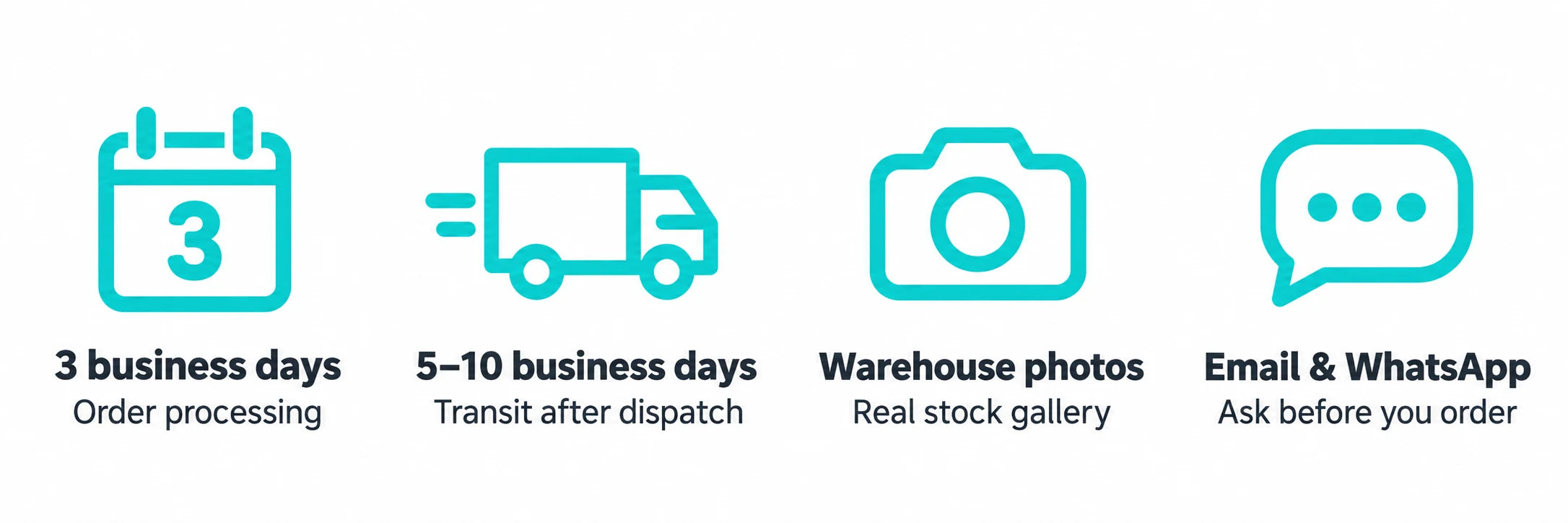
Under 24 hours on average once we have the nameplate photos, tag number, quantity and delivery window. The quotation is written and states the basis on which fitment was confirmed.
Need a quote for this valve or a verified equivalent?
Email us your nameplate photos, tag number and required quantity at Moritta@KOEED.COM — average response time under 24 hours.
Request a Quote
What to send with your enquiry
- Valve nameplate photo, or the exact model / type / serial number as marked
- System tag number from the piping drawing, plus the circuit position (flush water, supply isolation, discharge side)
- Port size and end form, or a photo of the port with a tape measure alongside it
- Actuator or coil label photo, including any electrical data marked on it
- Medium in the circuit and any treatment chemical in use
- Quantity and required delivery window
Email these to Moritta@KOEED.COM for fitment confirmation. We reply with the matching OEM documentation and a written quotation — no unsourced figures, no unconfirmed substitutions.
Moritta Chen — KOEED Industrial Sourcing Specialist. 8+ years in global automation and marine system spare parts procurement, specialising in Allen-Bradley, Siemens, Mitsubishi and legacy control and utility systems. Moritta leads KOEED's technical content program, delivering verified specifications and sourcing intelligence to maintenance and procurement teams worldwide.