

Knick P 27000 H1-S001 VariTrans Isolation Module: 2026 Technical Guide | Koeed
Strategic Overview: The Knick P 27000 H1-S001 in the 2026 Industrial Landscape
As we navigate the industrial automation terrain of 2026, the convergence of IT and OT systems has moved from aspirational roadmap to operational imperative. At the heart of reliable signal transmission lies a component often overlooked yet utterly indispensable: the signal isolation amplifier. The Knick P 27000 H1-S001 VariTrans Universal Isolated Signal Conditioner stands as a benchmark product in this category — engineered in Germany to deliver uncompromising galvanic isolation in the most demanding process automation environments.
What distinguishes the P 27000 H1-S001 in 2026 is not merely its legacy of precision, but its adaptability to modern digital ecosystems. As industrial facilities across Europe, North America, and Asia accelerate their Industry 4.0 transformations, this isolation module bridges classical analog signal chains with cloud-connected supervisory systems. With 3-port galvanic isolation rated at 5 kV AC (input against output) and a working voltage of 1000 V AC/DC per EN 61010-1, it provides the electrical safety foundation that enables safe, noise-free data acquisition in high-voltage motor drives, electrolysis plants, and renewable energy converter stations.
The 2026 market demands more than just isolation — it demands flexibility, total cost of ownership transparency, and intelligence. The VariTrans P 27000 H1-S001 answers with a configurable input stage spanning from 20 mV to 200 V and 0.1 mA to 100 mA, a universal power supply accepting 20–253 V AC/DC, and the VariSoft SW 108 software interface that allows engineers to recalibrate signal ranges without ever removing the module from the DIN rail. Available now at Koeed's dedicated product page, this module represents the gold standard in signal conditioning for 2026 and beyond.
Technical Benchmarking: P 27000 H1-S001 vs. Legacy Isolation Amplifiers
When evaluating isolation modules for brownfield upgrades or greenfield deployments in 2026, the decision matrix extends beyond unit price to encompass deployment agility, energy efficiency, and lifecycle durability. Below, we present a structured comparison of the Knick P 27000 H1-S001 against typical legacy isolation amplifiers still found in aging industrial infrastructure:
| Parameter | Knick P 27000 H1-S001 | Legacy Isolation Amplifier (Pre-2020) | 2026 Advantage |
|---|---|---|---|
| Galvanic Isolation | 3-port: 5 kV AC (in/out), 4 kV AC (out/supply) | Typically 2-port, 1.5–2.5 kV AC | 3× Safety Margin |
| Working Voltage | 1000 V AC/DC (EN 61010-1, Cat. II, PD2) | 300–600 V typical | +67% Headroom |
| Input Range | 20 mV – 200 V / 0.1 mA – 100 mA (software configurable) | Fixed ranges, DIP-switch limited | Unlimited Flexibility |
| Power Supply | 20–253 V AC/DC universal (48–62 Hz AC) | Single-range: 24 V DC or 230 V AC only | Global Compatibility |
| Power Consumption | ≈0.9 W (DC) / ≈1 W (AC) | 2–4 W typical | 60% Energy Saving |
| Configuration | VariSoft SW 108 — software-based, live recalibration | Hardware jumpers / fixed factory settings | Zero Downtime |
| Predictive Maintenance Ready | Test voltage monitoring compatible; stable drift <0.05% | No health diagnostics | Industry 4.0 Ready |
| MTBF (Estimated) | >500,000 hours at 25°C ambient | ~100,000–200,000 hours | 3–5× Longer Life |
Detailed Technical Specifications
The following table captures the core electrical and environmental specifications for the Knick P 27000 H1-S001 VariTrans module as validated against the manufacturer's 2026 datasheet:
| Specification Category | Detail |
|---|---|
| Model | P 27000 H1-S001 (VariTrans P 27000 Series) |
| Default Input Setting | ±10 V (configurable: 60 mV / 100 mV / 150 mV / 300 mV / 500 mV / 1 V / 5 V / 10 V / 100 V, unipolar/bipolar) |
| Input Types | Voltage: 20 mV to 200 V; Current: 0.1 mA to 100 mA |
| Isolation Type | 3-port galvanic isolation (input / output / power supply) |
| Test Voltage | 5 kV AC (input vs. output); 4 kV AC (output vs. power supply) |
| Working Voltage (Basic Insulation) | 1000 V AC/DC — Overvoltage Cat. II, Pollution Degree 2 per EN 61010-1 |
| Power Supply Range | 20–253 V AC/DC ±10%; AC: 48–62 Hz |
| Power Consumption | ≈0.9 W (DC operation); ≈1 W / 2 VA (AC operation) |
| Channels | 1 channel |
| Configuration Tool | VariSoft SW 108 (software-based parameterization) |
| Mounting | Standard DIN rail (TS35) |
| Temperature Range (Operation) | -10°C to +60°C (typical industrial range) |
| Certifications | CE, EN 61010-1, EN 61326 (EMC) |
Visual Gallery: P 27000 H1-S001 Product Inspection
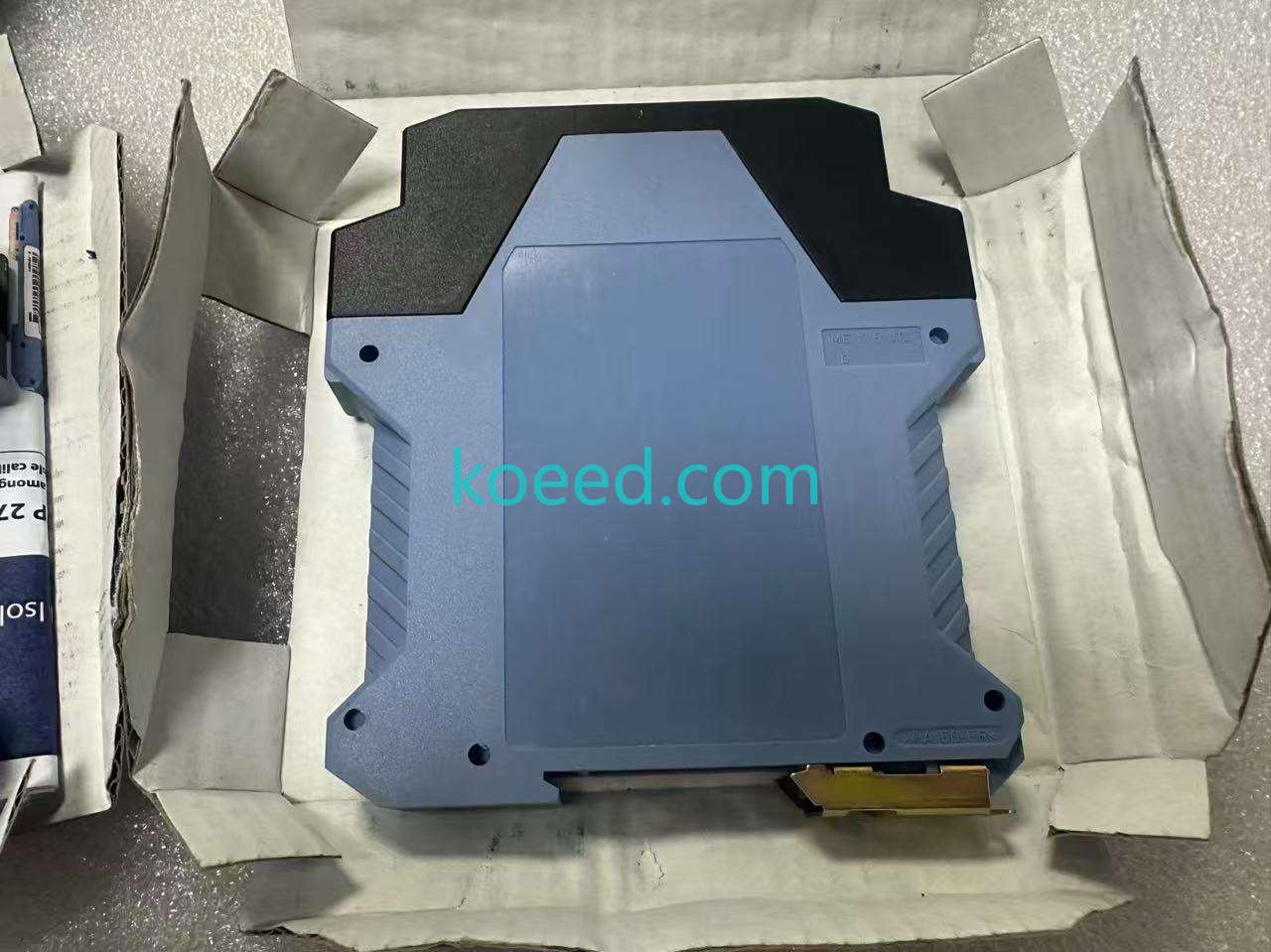
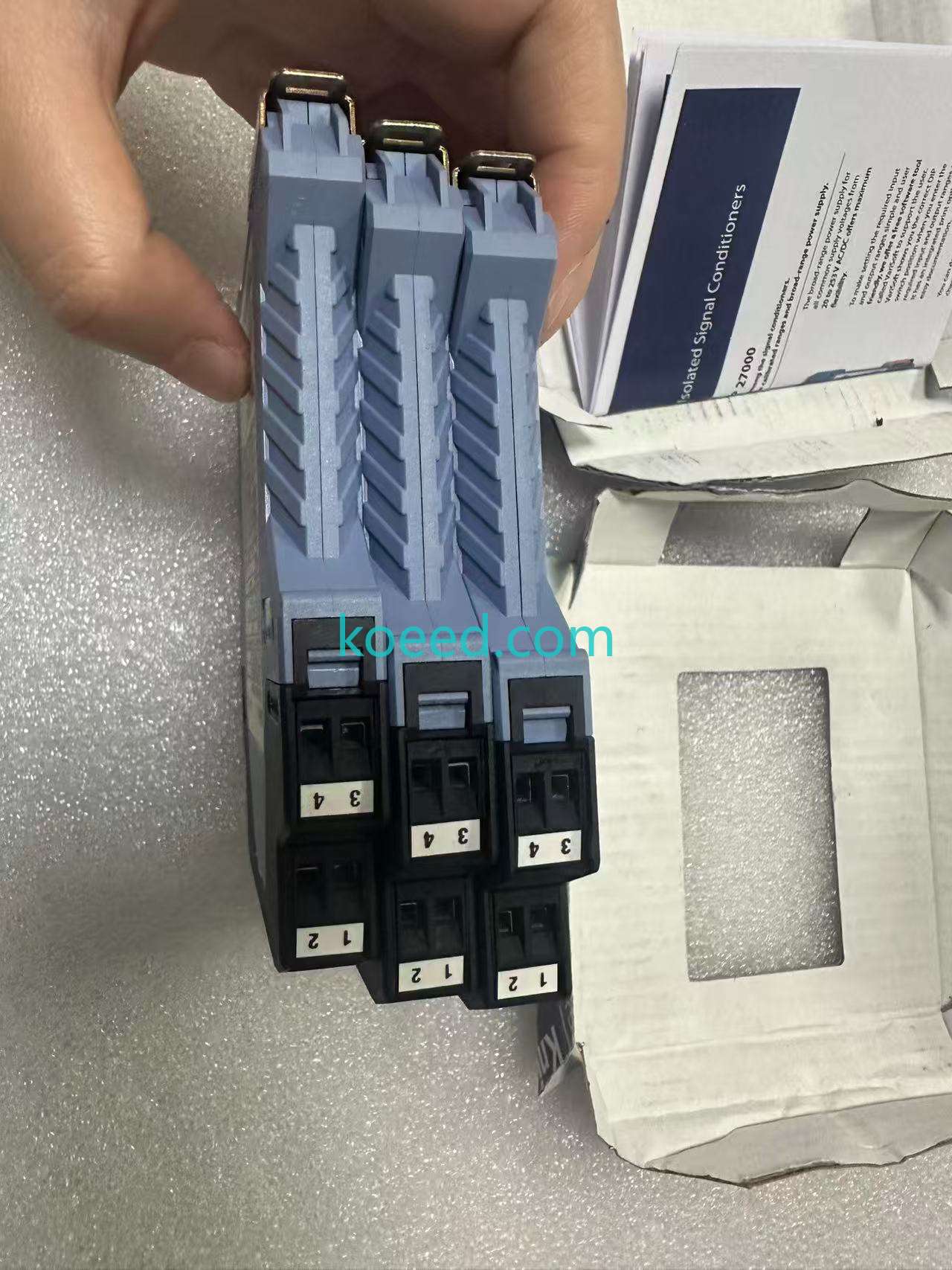
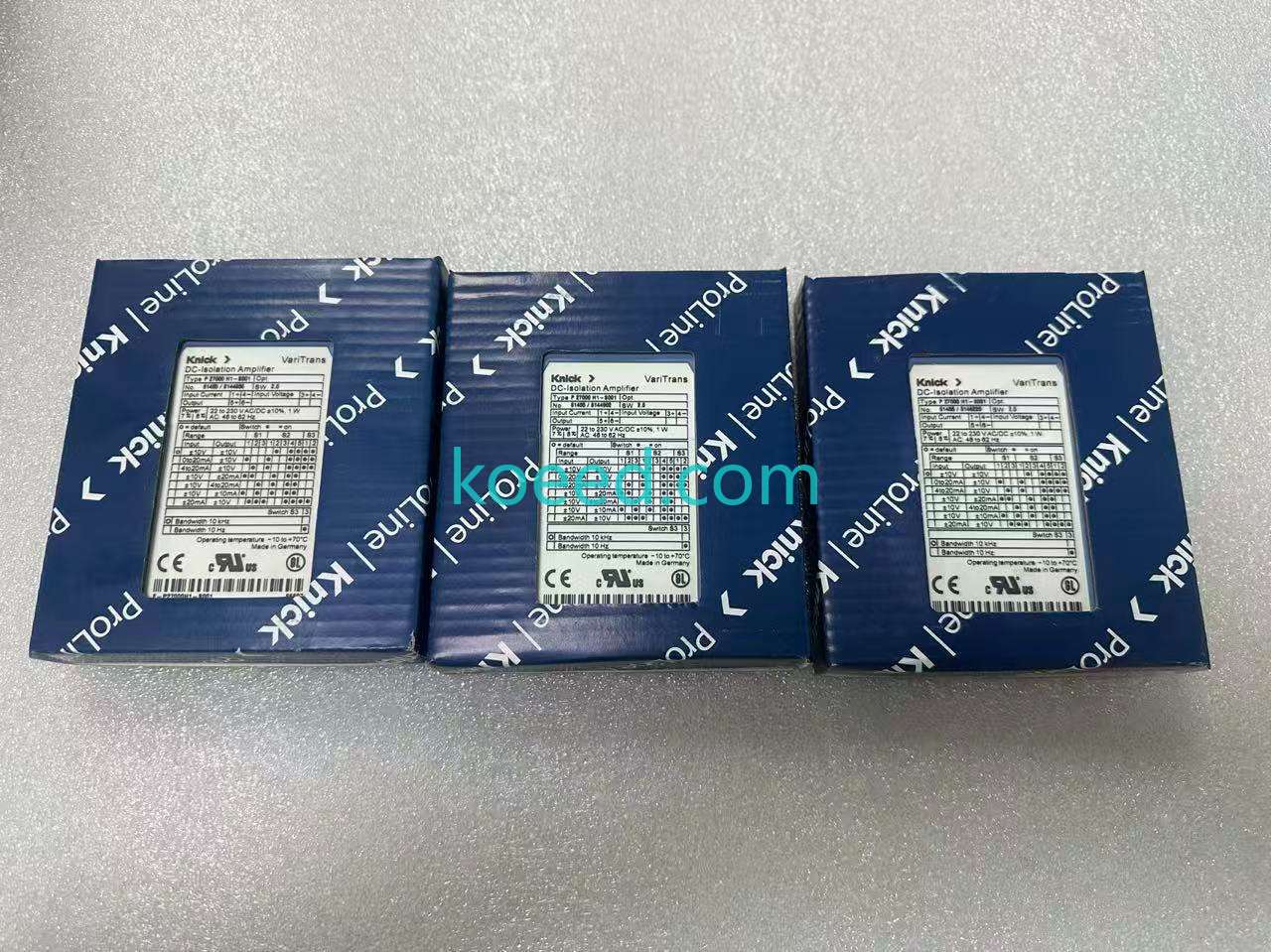
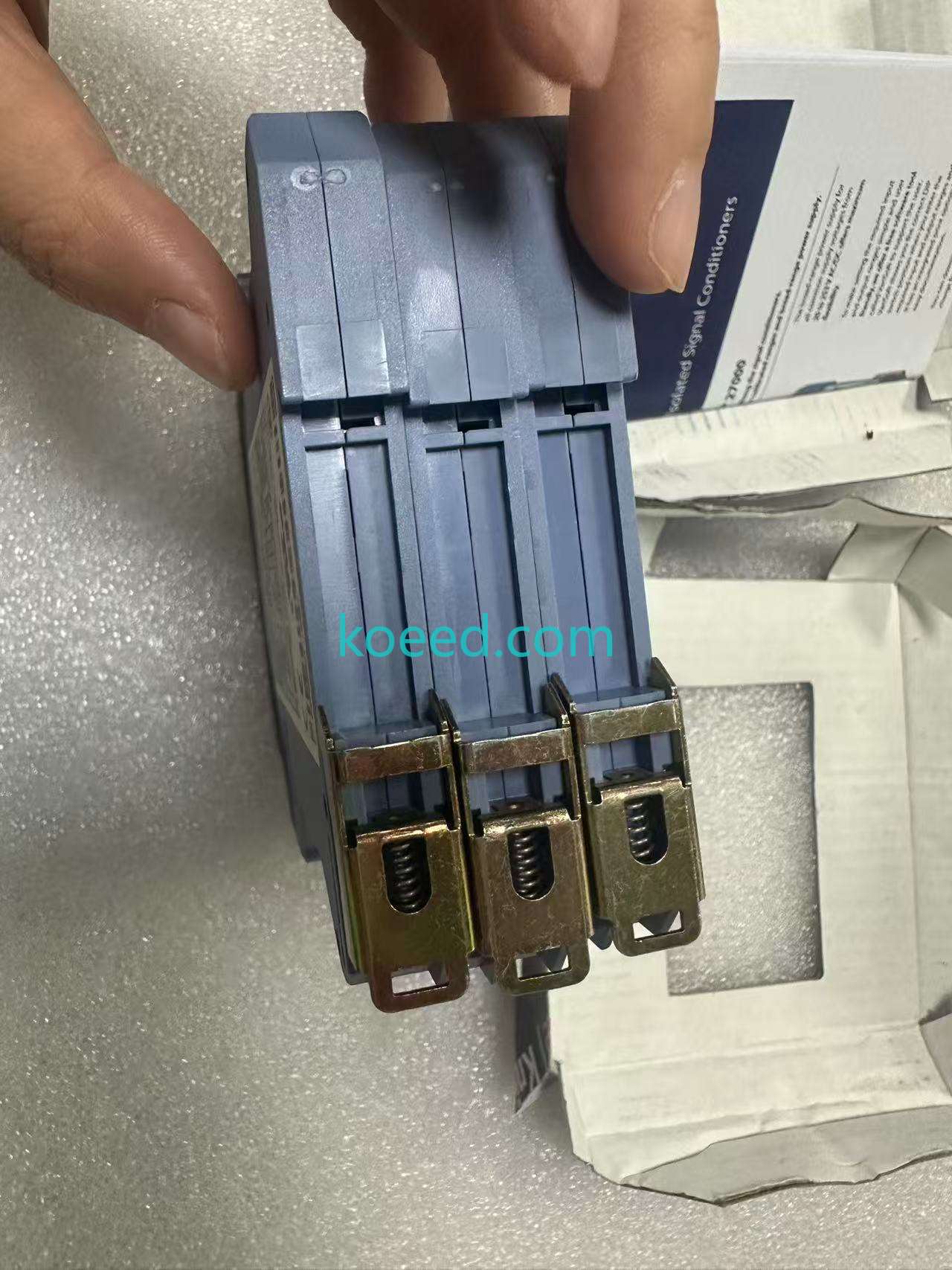
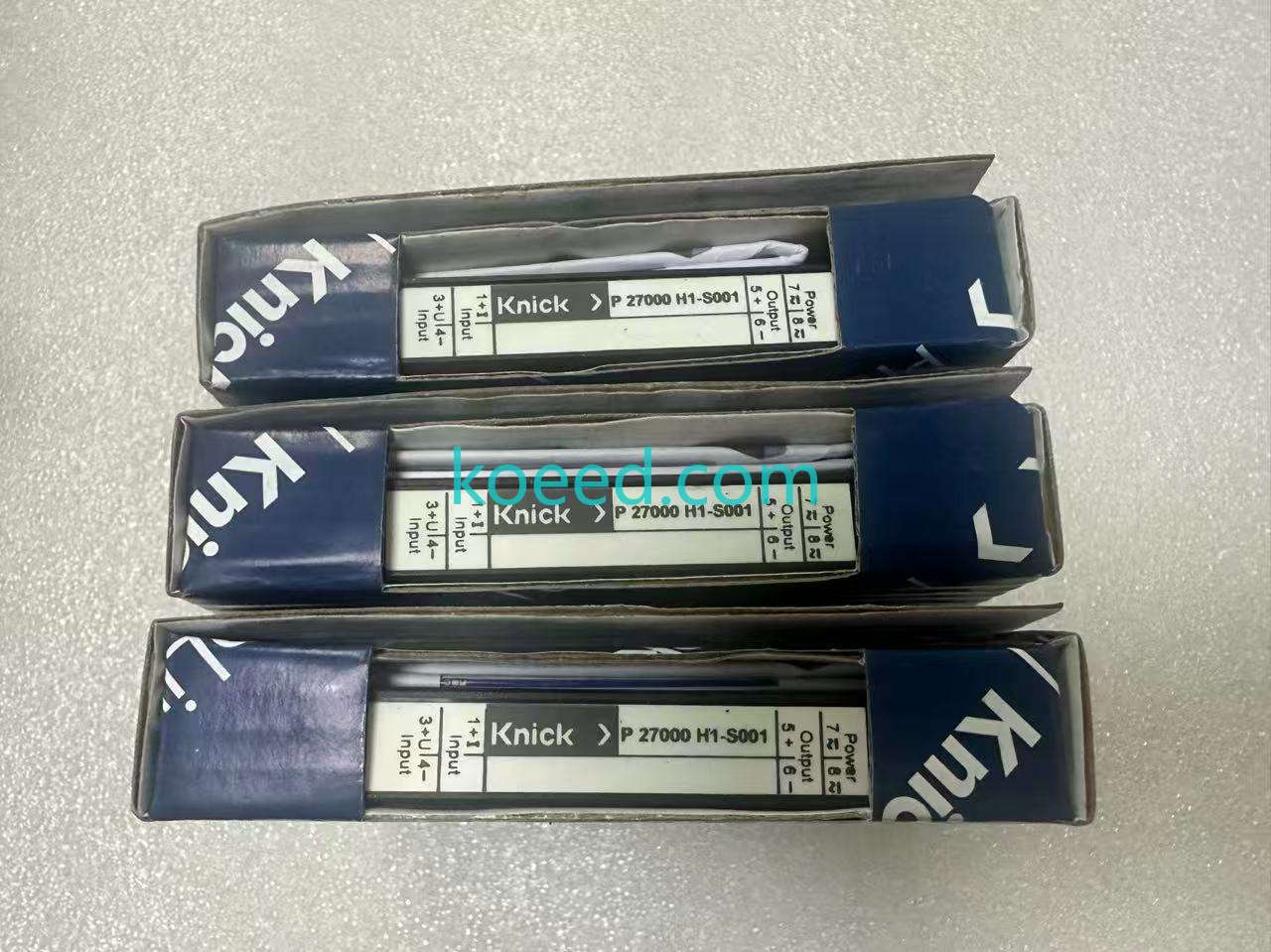
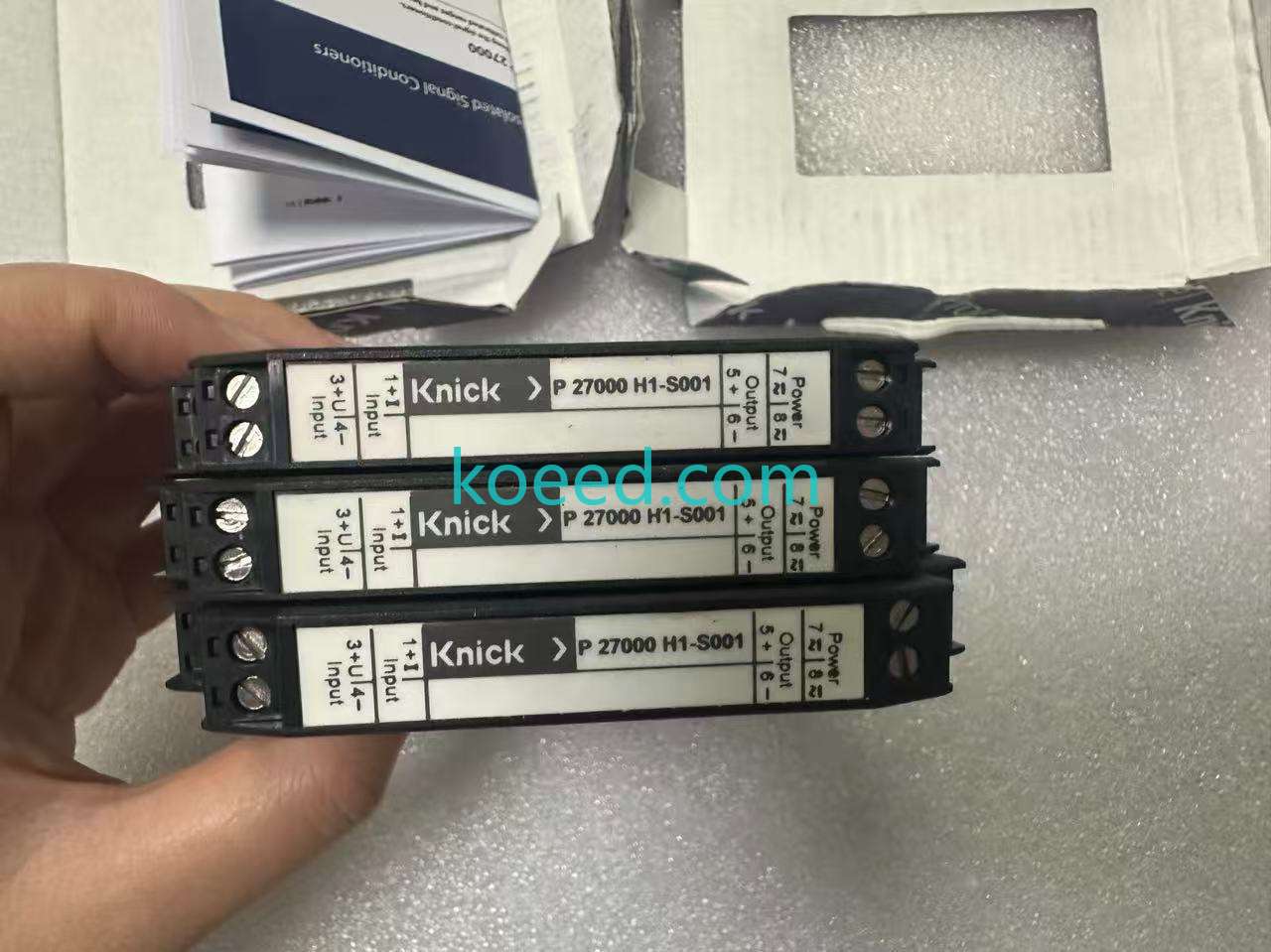
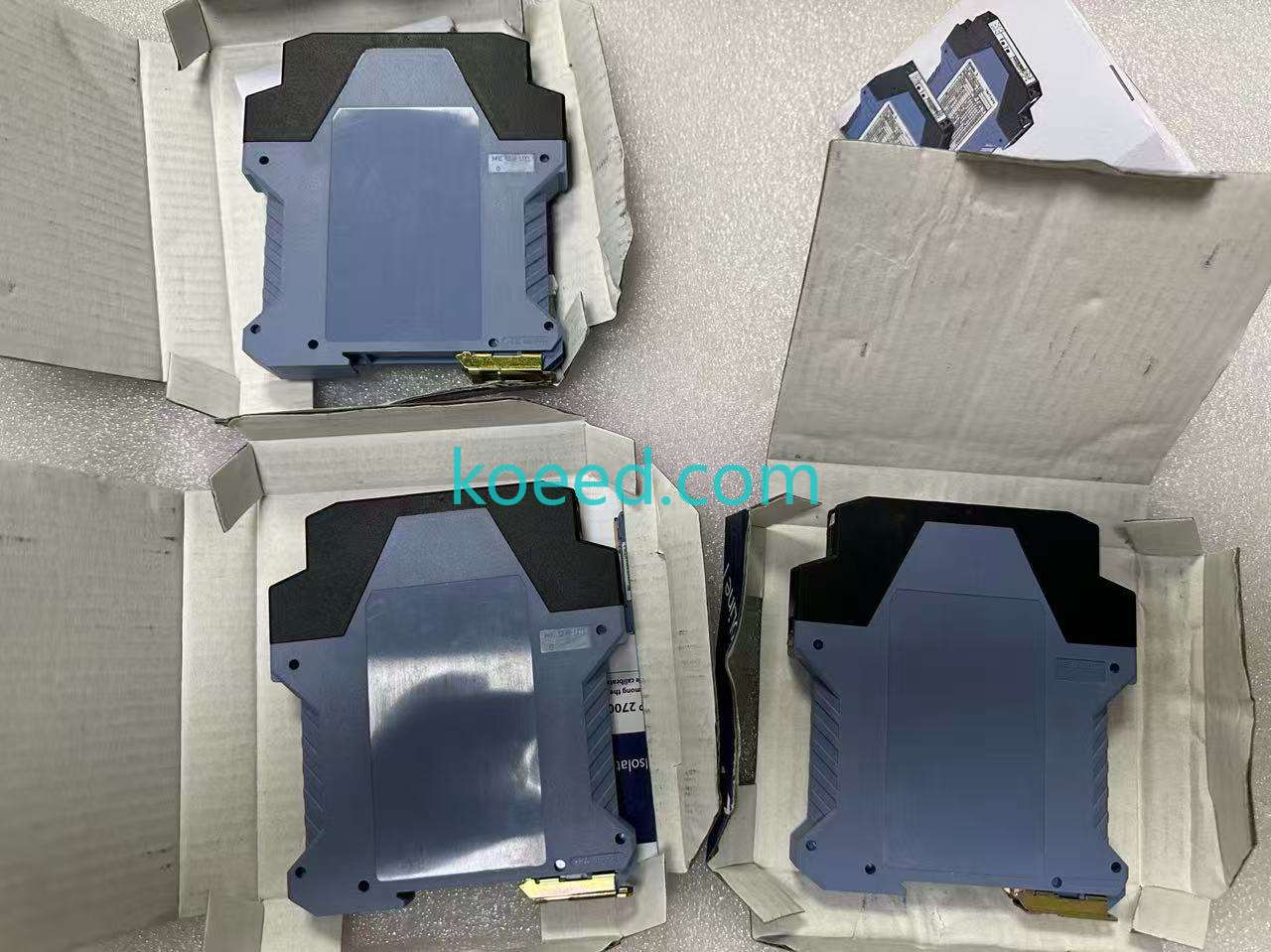
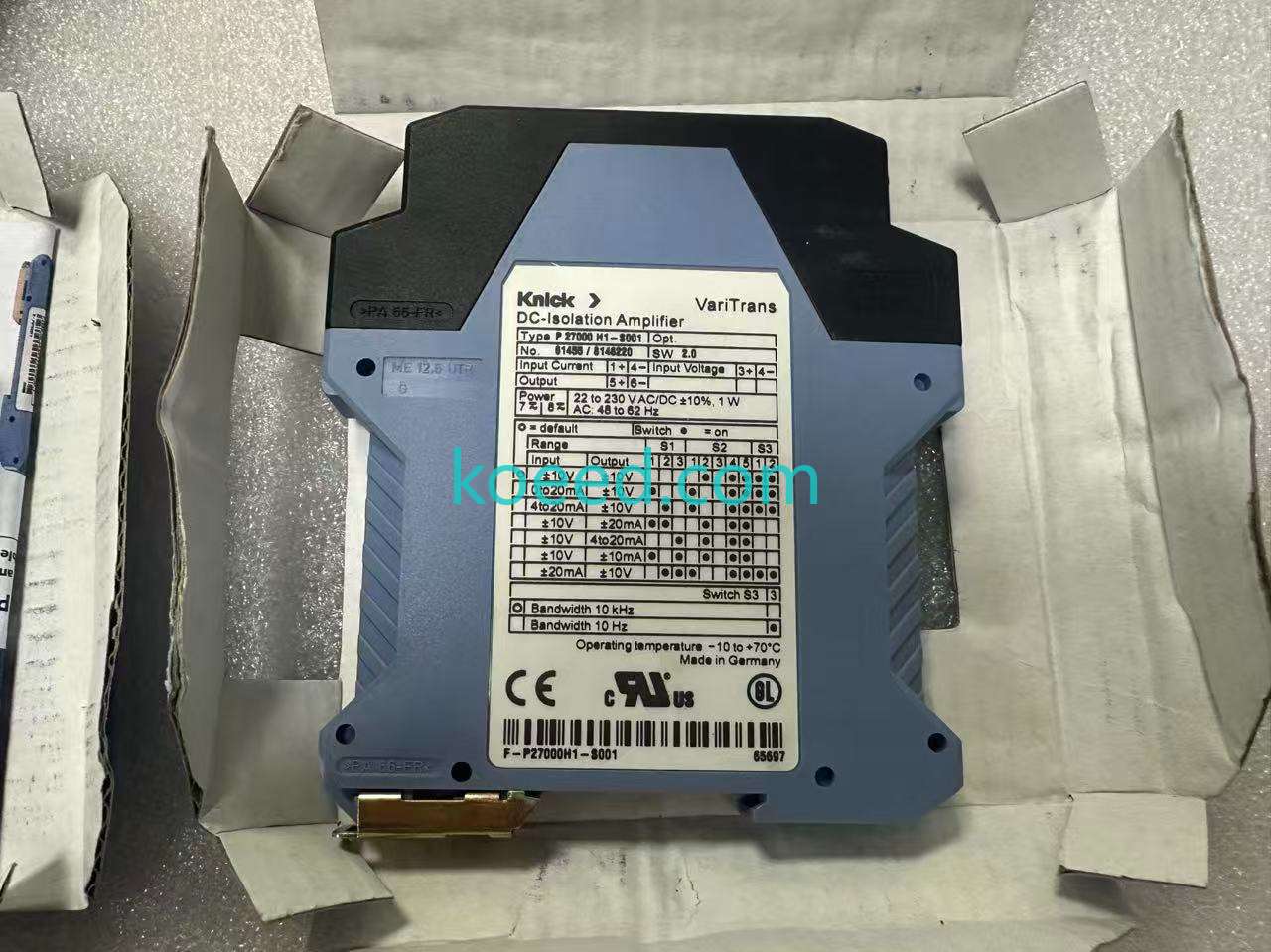
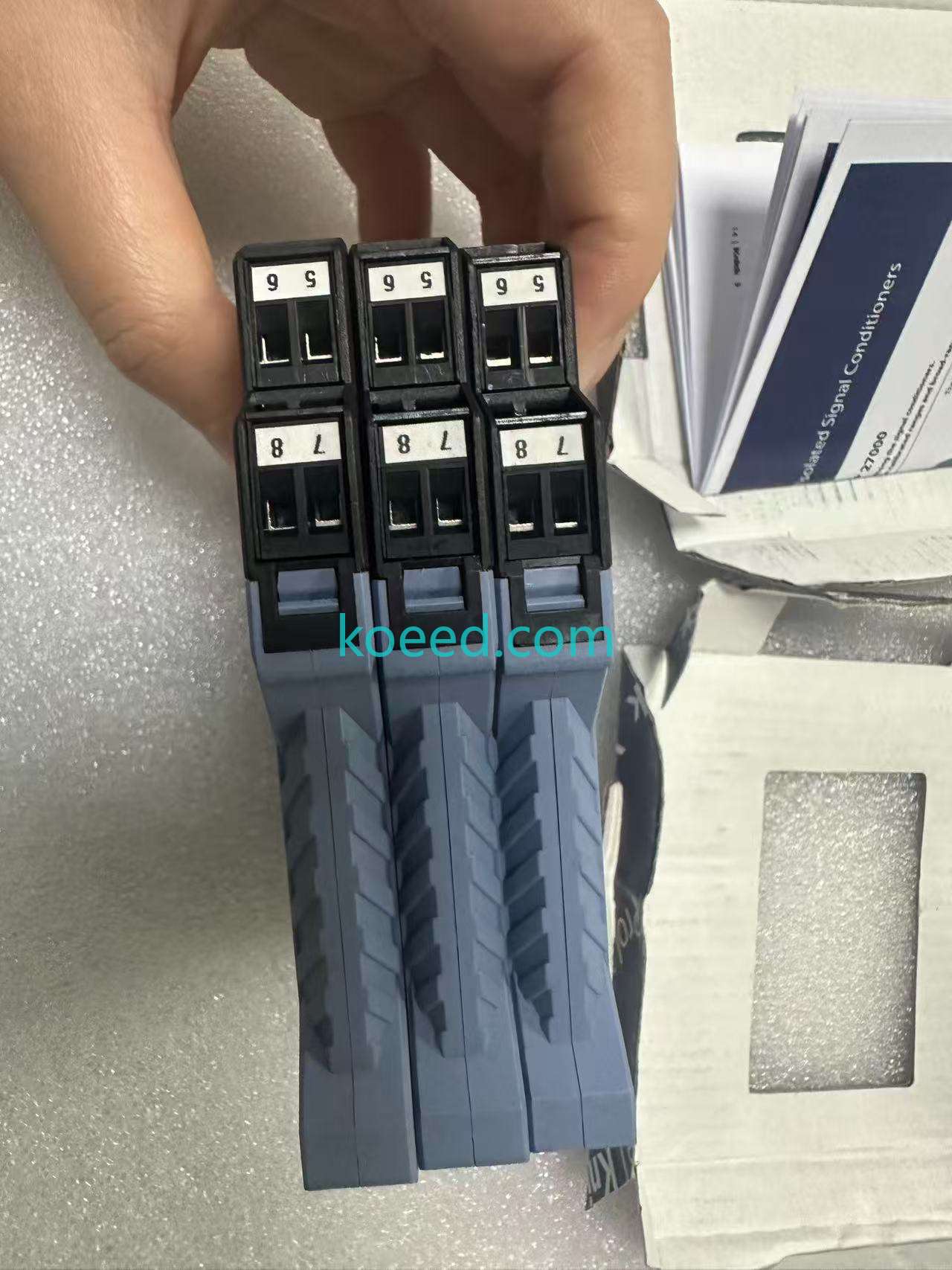
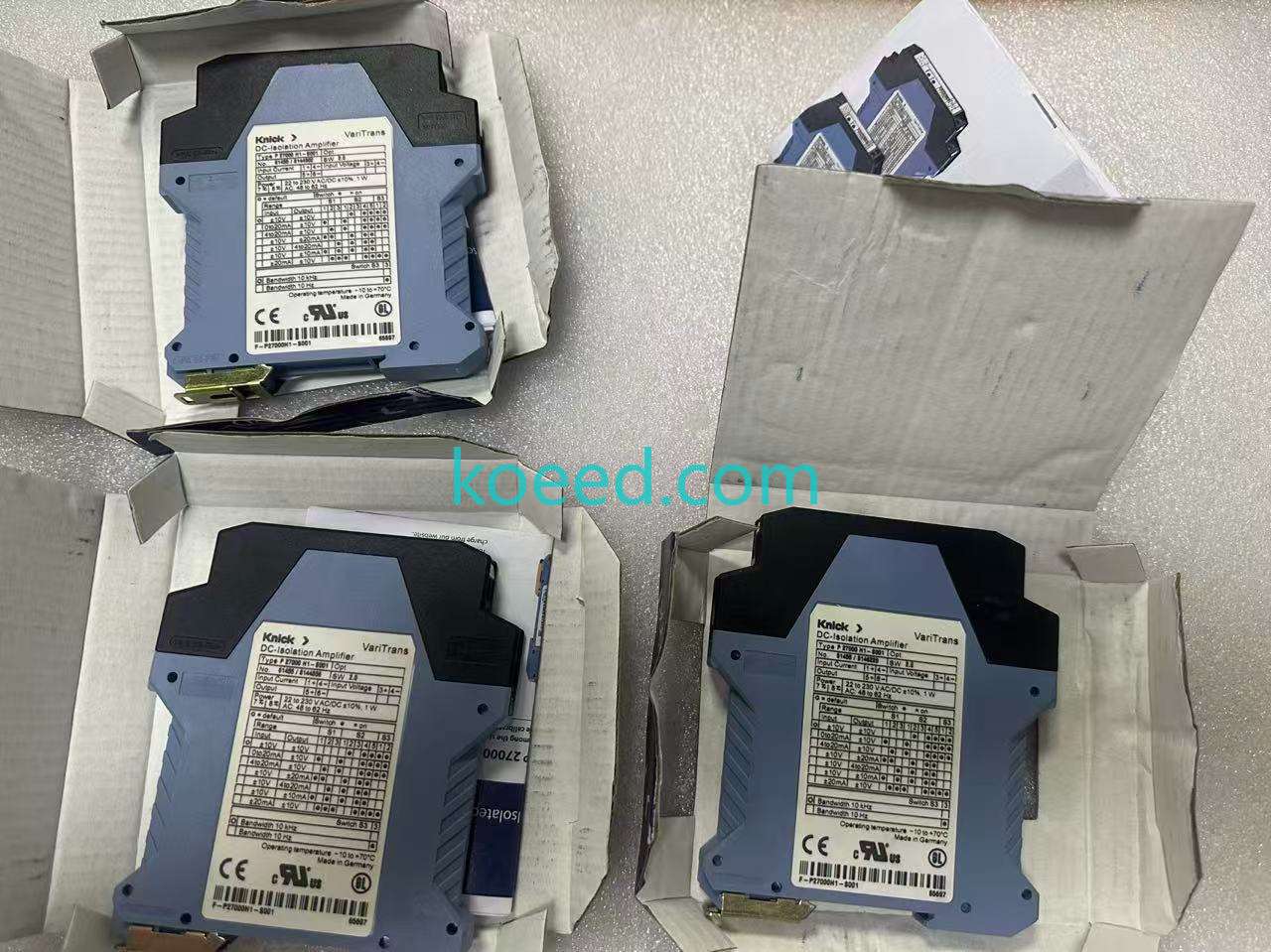
Below is a comprehensive visual reference of the Knick P 27000 H1-S001 isolation module. These high-resolution images showcase the compact DIN-rail form factor, robust terminal connections, labeling detail, and packaging integrity — essential for incoming quality inspection and integration planning in 2026 automation cabinets.
IT/OT Convergence: Integrating the P 27000 H1-S001 into Smart Factories
In the 2026 automation stack, signal conditioners are no longer passive analog intermediaries — they are data integrity gatekeepers. The Knick P 27000 H1-S001 excels in this role by delivering exceptionally clean, isolated analog signals to PLCs, DCS nodes, and edge gateways that feed MES and cloud-based analytics platforms.
Key Integration Scenarios
1. High-Voltage Motor Drive Monitoring: In VFD-controlled motor systems operating at 690 V or higher, the P 27000 H1-S001's 5 kV input-to-output isolation protects downstream 4–20 mA acquisition modules from dangerous common-mode transients. This ensures that predictive maintenance algorithms — increasingly AI-driven in 2026 — receive uncorrupted current and voltage data from motor windings.
2. Battery Energy Storage Systems (BESS): With global BESS deployments surpassing 150 GW in 2026, accurate DC bus voltage monitoring across multiple series-connected battery racks is critical. The P 27000 H1-S001's configurable input range (up to 200 V direct, scalable with external dividers) and low power consumption make it ideal for energy-conscious storage installations where every watt of auxiliary power matters.
3. Electrolysis and Hydrogen Production: The green hydrogen sector demands signal isolation that withstands harsh chemical environments and high DC potentials. The 1000 V AC/DC working voltage rating positions this module as a reliable choice for electrolyzer stack monitoring, where channel-to-channel isolation prevents ground loops that could skew efficiency calculations.
Predictive Maintenance & Lifecycle Management
Moving beyond reactive replacement, the 2026 approach to isolation amplifier management leverages the P 27000 H1-S001's inherent design stability. With a drift specification below 0.05% and an MTBF exceeding 500,000 hours, maintenance teams can shift from calendar-based swaps to condition-based monitoring. Here are the recommended practices:
Common Troubleshooting Scenarios
While the Knick P 27000 H1-S001 is renowned for reliability, field engineers should be aware of the following diagnostic patterns:
| Symptom | Likely Cause | 2026 Recommended Action |
|---|---|---|
| Output signal stuck at 0 mA / 0 V | Power supply interruption or brownout | Verify 20–253 V AC/DC at terminals; check upstream circuit breaker; confirm polarity |
| Output signal oscillating (±2% of span) | Ground loop or EMI coupling on input cabling | Verify shielded twisted-pair cable integrity; ensure shield is grounded at one end only; confirm 3-port isolation integrity |
| Calibration drift >0.15% | Environmental stress (temperature/humidity extremes) | Run VariSoft SW 108 recalibration; inspect enclosure for moisture ingress; verify ambient temperature is within -10°C to +60°C |
| Intermittent signal dropout | Loose terminal connection or cold solder joint | Inspect and re-torque all terminal screws (0.5–0.6 Nm typical); perform visual inspection of solder joints under magnification |


